Agnes Buen Garnås/Jan Garbarek: Rosensfole – Medieval Songs from Norway (ECM 1402)

Agnes Buen Garnås
Jan Garbarek
Rosensfole: Medieval Songs from Norway

Agnes Buen Garnås vocal
Jan Garbarek synthesizers, percussion instruments, soprano and tenor saxophones
Recorded Autumn 1988 at Bel Studio, Oslo
Engineers: Ingar Helgesen and Ulf Holland
Produced by Jan Garbarek and Manfred Eicher

One can hardly overstate the innovativeness of saxophonist Jan Garbarek. Having started as a strong arm of free jazz impressionism, Garbarek quickly turned to the future by mining the past, regaling the world of recorded music with an historical dimension. The crowning achievement of these efforts remains Rosensfole, for which we put the spotlight on folk singer Agnes Buen Garnås in lush settings of synthesizer, percussion, and tenor and soprano saxophones. These two complementary forces touch their cool torches to a tincture of medieval songs from their native Norway, making for an album that could exist nowhere but on ECM, a label ever at the forefront of vivacious interpretations of antiquities with the languages of the here and now.

Such explorations had by then already manifested themselves in Garbarek’s work, but with Garnås his vision was deepened in an entirely new direction. It is also because of her that we have the current program, which reads like a catalog of her work in the field. The scope of her commitment is clearest in “Innferd,” which comes from none other than the singer’s mother. Her bright calls to power blend the word into image and both into air, filling the listener with countless narrative possibilities. (On that note, one needs hardly a translated word within reach in order to appreciate the evocativeness thereof.) The title song carries forth an especially potent vibe, which is heightened by Garbarek’s attentive percussion and synth dulcimer strains. Like many of the tracks thereafter, its spell breaks all too quickly, leaving us still and in dire need of the nourishment that comes in the 16-minute “Margjit Og Targjei Risvollo.” Here the music heaves with the weight of legend, bringing the freshness of its wounds to bear upon the unsuspecting listener with unwavering drama.

In the wake of this epic statement, “Maalfri Mi Fruve” peaks above the mounting waves in an intimate call and response. This stunner sits at the edge of a towering abyss of life (and a love of the same), segueing us into sonic flowers like “Venelite” and “Signe Lita” that morph into drum-heavy expositions of the plains. The latter, along with the droning “Grisilla,” unlocks its secrets one string at a time, floating freely and with the tinge of a lullaby—its sweetness veneered by a hint of mortality—before riding into the sunset on a steed of light and poetry. “Stolt Øli” gives us an even bolder taste of the salty air, furthering that ride through a cloud-shadowed landscape of crumbling stone castles and widening vistas, while “Lillebroer Og Storebroer” diffuses its gallop with electronic voices surrounding a blacksmith’s beat.

Garnås ends this timeless date with “Utferd,” which yodels across the skies with the surety of a shepherd folding into pasture and melts into Garbarek’s plaintive whale song. The latter’s reeds are similarly understated throughout, providing nary a leading line but thickly drawn chords and ephemeral appendages.

Although Rosensfole may not have caught on so noticeably stateside, it proved to be an eye-opener in Norway, where generations of up-and-coming jazz musicians took it as a window into the neglected corners of their craft. One can still hear its influence in the work of Steve Tibbetts and in crossover acts like Vas. A fitting companion to Trio Mediaeval’s Folk Songs, Rosensfole shows a side of Garbarek’s evocative abilities heard only on his solo albums and, more importantly, has in Garnås introduced many to a voice for the ages.

<< Keith Jarrett: Paris Concert (ECM 1401)
>> Shankar: M.R.C.S. (ECM 1403)

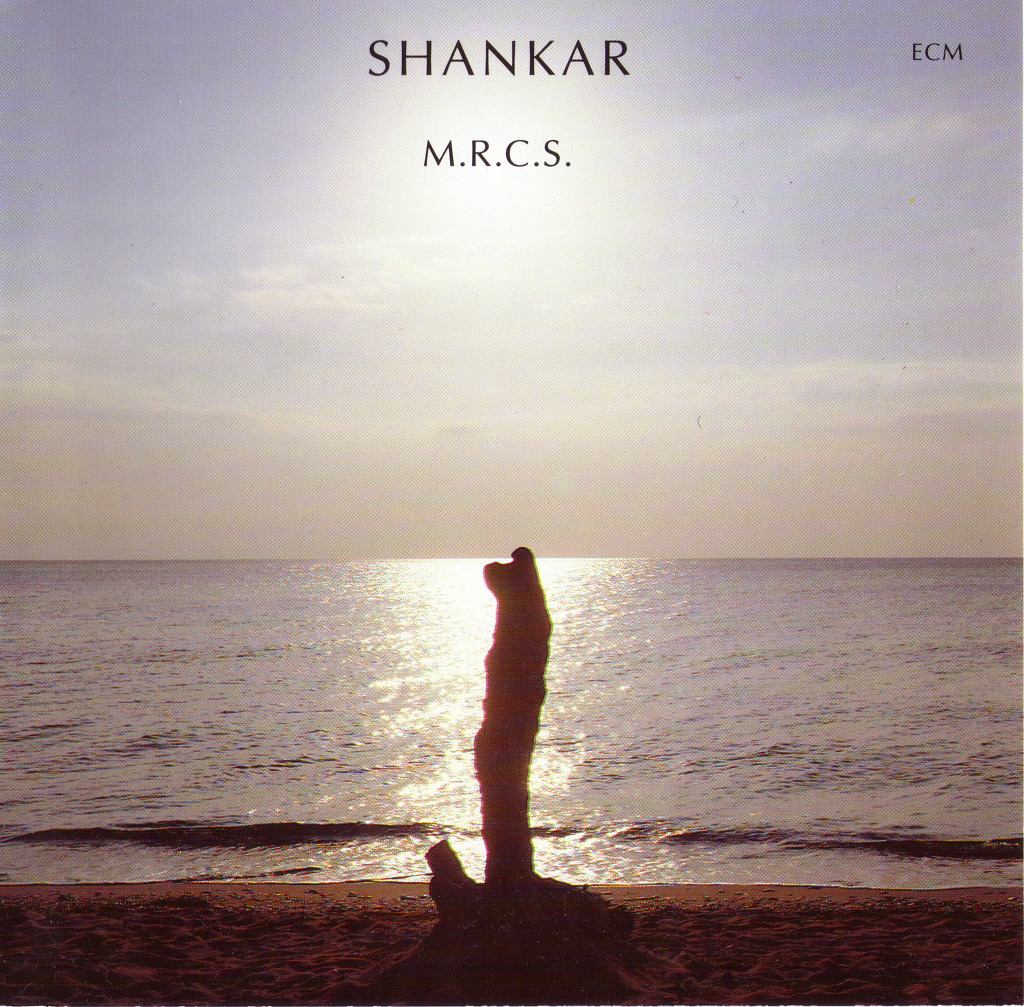
Shankar: M.R.C.S. (ECM 1403)

Shankar
M.R.C.S.

Shankar double violin
Zakir Hussain tabla
Vikku Vinayakram ghatam
Jon Christensen drums
Recorded 1987 and 1989 at Studio Bauer, Ludwigsburg and Rainbow Studio, Oslo
Engineers: Martin Wieland and Jan Erik Kongshaug
Completed and mixed 1989 at Rainbow Studio, Oslo
Engineer: Jan Erik Kongshaug
Produced by Manfred Eicher

Multi-instrumentalist L. Shankar’s fascinating evolution as a musician and composer took yet another intimate turn with M.R.C.S. Dedicated to Shankar’s father, V. Lakshminarayana, it also boasts master percussionists Zakir Hussain (tabla), Vikku Vinayakram (ghatam), and drummer Jon Christensen. The depths of the album’s experiences are forever aquatic, as in the opening “Adagio,” which floats Shankar’s double violin insights on a dark and winding current. Filmic and vivid, its gauche stretches a fine canvas for the pigments that follow. “All I Care” marries the rhythmic edge of “March” (an interlude from Christensen) with Shankar’s cosmic pizzicato and gossamer comet trails, the latter reaching glorious improvisational heights that can only end in fadeout, lest their perpetuity be harmed. The music travels away from us, ever tuneful, into the tabla-infused “Reasons.” Here, Hussain trail-marks a scurrying snare, backing more winged artistry from the leader. The lilting, homespun feeling of “Back Again” unravels from a deceptively simple line a heartfelt wash, as does “Al’s Hallucinations,” in which the melodiousness of Hussain’s tabla enhances the music’s playful melancholy. After the waltz-like and romantic “Sally,” Hussain and Vinayakram carry us on the back of a “White Buffalo” into the sparkle of “Ocean Waves.” For this final breath, Shankar adds a veneer of piano over his reverberant orchestrations, thereby ending this journey where it began: in and of the tide.

Shankar’s sense of melody is endearing and luminous, familiar from the first. Like a great klezmer clarinetist, he weaves a song that is at once mournful and exuberant.

Proof yet again that “fusion” is a misnomer. This is simply wonderful music that need be nothing else.

<< Agnes Buen Garnås/Jan Garbarek: Rosensfole (ECM 1402)
>> Aparis: s/t (ECM 1404)

Rite On: The Bad Plus Take on Stravinsky and More

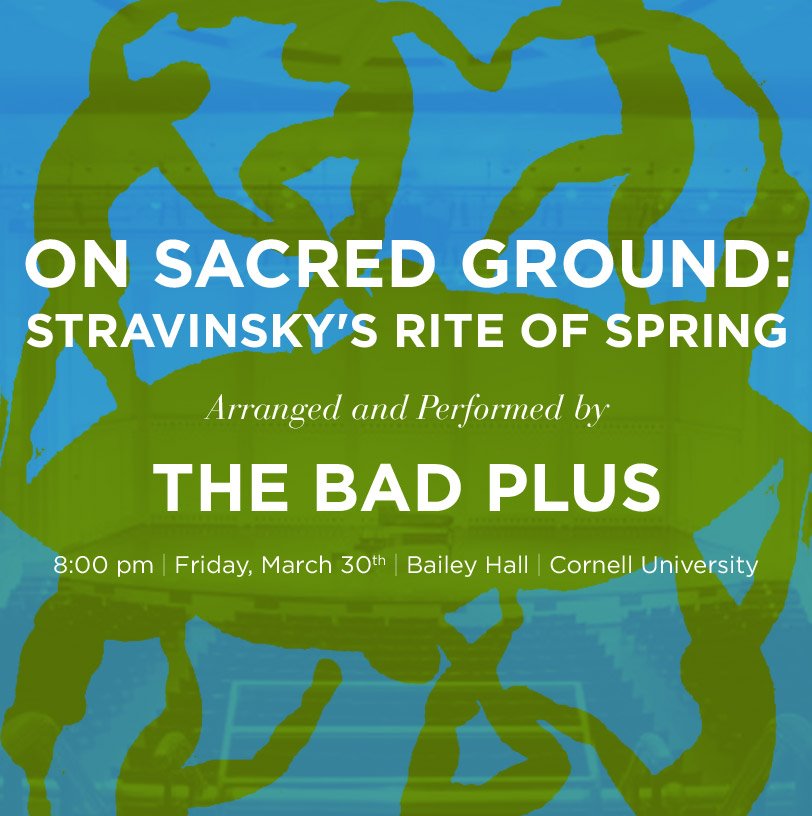
As a reviewer, my job is twofold: 1) to introduce artists to those who may not be familiar, and 2) to wax informative on the art they bring to studio or stage. The latter comes naturally. The former is where my pen begins to drag. Sure, I can mosey on over to any number of online bios and tell you that bassist Reid Anderson, pianist Ethan Iverson, and drummer Dave King—known collectively as The Bad Plus—have been wowing the discerning listener since the group’s 2000 redux. Sprung from the bedrock of Minneapolis (with Iverson’s biographical thread stretching back to neighboring Wisconsin), TBP lay their matches to a wealth of fuses, including a heaping portion of group originals and a smattering of enticing sidelines drawn from the popular canon. TBP now bring their latest project, “On Sacred Ground,” a reimagining of Igor Stravinsky’s The Rite of Spring, to Cornell’s Bailey Hall.

But does any of this tell you who Iverson, Anderson, and King really are? If you weren’t at the show (in a word: invigorating), then what service can these words glowing on your screen possibly bring to transient eyes? We can be thankful, then, that TBP is not the kind of outfit to hide behind publicity in lieu of interacting with fans, other musicians, and the errant reviewer whose starry considerations need not sugarcoat the already inexpressible. Out of graciousness and an abiding interest the spontaneity of open conversation (and what is jazz if not?), TBP participated in a Composer’s Forum on campus the afternoon of.


“Where are we in this?” posed King in reference to the band’s initial approach to Stravinsky. The transparency of their trial and error, of their frustration over and acceptance of the music, was refreshing. Of course, many words were spilt over the Classical vs. Jazz question, but by the end of the 90-minute discussion the trio had mopped them all up with one sentiment: “It’s honest to us.” They weren’t acting, King went on to say, but simply “playing our music.” Thus engaged, the band could discard the quibbles of classical expectations in favor of a feeling, of a kick and a smile, and steep both stage and audience in “the obviousness of how good everything is,” which is for them the heart of jazz.

It comes as no surprise that King was so adamant about integrity, for one imagines his challenge in the Stravinsky nexus to be the greatest of all: How does one bring out the rhythmic challenges inherent in Rite without coming across as “square”? Their solution was to approach these challenges from the inside out, laying the piece down before imagining what they could do with it. Working from the piano four hands arrangement, they began to see the Stravinskian tools they’d already been using in their own. Anderson expanded these sentiments by making a case for irreverence. In not being beholden to particulars, they could be true to the piece in a fundamental way. What was there, beyond and within the score at hand? How did their assimilation fit and what could they hear in it? To play a high concept piece like Rite, they realized, one needs to be an improviser. Score one for the away team.

Yet even with the orchestral peel and improvisational feel, how does one bridge the gap? Iverson’s answer: chamber jazz offers the guarantee of always hearing a voice. Consequently, instrumentation was not so much an issue. More important was maintaining faithfulness to a sense of communal spirit through the composer’s art. In this vein, Iverson admitted to a preference for older jazz recordings, which read for him more like folk music. In other words: freely. The goal in taking Rite was to give shape to those notorious rhythms in an attempt to move something forward.

Despite the lore surrounding its shocking 1913 premier, it was less the music and more the choreography (in combination with other social factors) of Stravinsky’s defining opus that induced the infamous riot that ensued. And sure, the structures are complex, the dissonances still formidable, but one would hardly have known it by the sheer exuberance with which TBP played it, for its outside-the-box aesthetic proved to be a smooth fit for the band’s avant-garde proclivities.

The performance was further enhanced by snazzy lighting design from architect Cristina Guadalupe and video from filmmaker Noah Hutton (all of these were cued in real-time response to the musicians). The imagery added an arguable dimension. On the one hand, it provided some moments of illustration, while on the other I found that it distracted from the decidedly acoustic processes unfolding before us. Either way, I appreciated those moments when sound and image fused well—in particular, in the movements of dancer Julie Worden, whose filmed body brought a taste of Nijinsky to “The Sacrifice.” Also effective was the opening sequence, a teetering journey through a melting winter landscape amid a collage of what sounded like manipulated scratchy LPs of Rite’s famous opening bassoon (familiar to anyone who’s seen Disney’s Fantasia and its churning creation sequence). Only now the bassoon line was intoned through the piano’s harp strings, toying with its own galactic edges in a swirl of resonant chains.

All of which made the band’s implosive entrance all the more exhilarating. The boom of that unified hit showed us just how dynamic a piano trio can be. Right off the bat, Anderson’s bass was a clear winner, especially in the distinctive refrains shared with Iverson. His slinking phrasings foreshadowed the more incendiary moments of cohesion, even as Iverson spread his fingers wide to capture every nuance he could. With King their language was even more lucid, and as a unit they translated the muddiness of it all with gritty, tactile clarity. Indeed, the presence of drums proved to be a guiding force in the fusion before us, seeming at once to react to and dictate the goings on.

TBP captured the freshness of a first hearing, such that even (if not especially) those of us familiar with the score could nod anew at the novelties therein. The shadows loomed somehow darker, the exuberances somehow brighter. And when the projection screen rose to bathe the audience in a vivid red light for the final dance, we were fully hooked in to the vibe they’d so diligently communicated.

TBP’s sacred ground was exactly that: a hallowed moment of music history poured into a bed of firewalking coals, still glowing. The playing was as gushing as the season it sought to evoke. The ultimate success, then, was whether or not the listener liked The Rite of Spring to begin with (my wife, for one, does not, but nonetheless appreciated the care and immediacy of the interpretation). One can only hope that those hearing it for the first time will have found doors newly opened.

“Thank you, that was a song by Igor Stravinsky,” said Anderson after this marathon introduction. With the ice of that intensity now broken by laughter, the band was ready to show us a different facet of its honesty, for now it was time to put away the music and dive into some originals.

First on tap was a jog around the memorable bass line of “Giant” (off their 2007 joint, Prog), which enchanted with its leapfrogging tenderness. Now in the absence of film, the cinematic qualities of these three talents came shining through with unstoppable vigor, glittering behind the veneer of Iverson’s downright oceanic pianism, riding a crescent moon’s arc into dreamland. This was the first of three tunes penned by Anderson, whose “Big Eater” (see 2003’s These Are The Vistas) rushed headlong into Iverson’s pointillist cascade, while the title cut off their latest, Never Stop, made for a fitting encore. With its hip lyricism and head-nodding charm, it was the perfect pick-me-up to let us down into the night.

Before the standing O, we were treated to two blasts of energy from King. The newish mosaic of staggered vistas and wild pianism that was “Wolf Out” made for a fitting window into its composer’s art. “1972 Bronze Medalist” (a touchstone of the TBP repertoire) was another colorful groove—machine music for the intelligent programmer.

Iverson’s contribution came in the form of “Re-Elect That.” This skittering romp off the beaten politic was like a tight fist uncurled finger by reluctant finger and sprinkled with gunpowder. It also sported King’s best solo of the night—a delicate, breathy thing of brushes and sensitivity—before ending on a John Jacob Jingleheimer Schmidt kind of fadeout.

The requisite cover came from the songbook of Aphex Twin, whose masterful “Flim” opened the trio to some of its most exciting territories. Those first notes had not a few gasping with recognition, leading into more of King’s superbly detailed visions, including a notable moment that found him pulling at the snare wires to get that unmistakable card-shuffling effect toward the end.

A house on fire? Hardly. More like a fire that needs no house to gain purchase. The moment is The Bad Plus’s kindling.

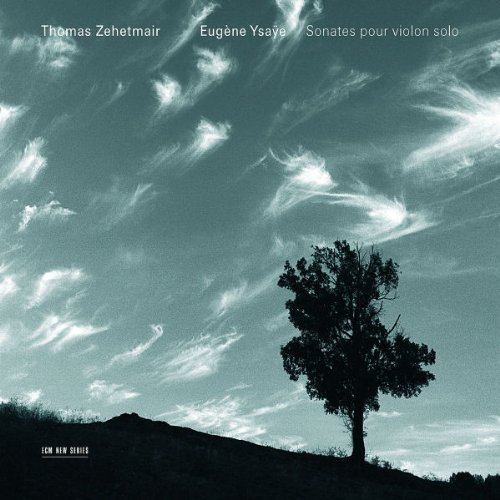
Eugène Ysaÿe: Sonates pour violon solo – Zehetmair (ECM New Series 1835)


Eugène Ysaÿe
Sonates pour violon solo

Thomas Zehetmair violin
Recorded September 2002 at Propstei St. Gerold, Austria
Engineer: Stephan Schellmann
Produced by Manfred Eicher

While I continue to wait—in vain, it seems—for a Thomas Zehetmair redux of Bach’s Sonatas and Partitas for solo violin on ECM, we do have, in this touchstone recording of EugèneYsaÿe’s comparable works for the same, easily one of the most enthralling albums to come from the repertoire in a long while. Composed between 1923 and 1924, Ysaÿe’s constructions emerged from a dearth of provocative solo violin literature to which his contributions were more than ornaments and seem as much predecessors as descendents of Bach (as if Bach had anticipatorily extracted from their less contestable passages a more concentrated form of solitude). If Bach’s is a perfect fruit, gilded by two centuries’ of difference, then Ysaÿe’s is both the soil that feeds it and nourishes its seeds, slumbering beneath a layer of frost in the morning sun.

The Grave of the Sonata No. 1 in G minor opens the set with a calligraphic flourish in reverse, funneling fanciful implications into an originary stroke. From these stirrings one already senses the many layers of historicity at work here. In the Fugato we encounter the sinewy balance of robustness and grace that infuses the performance as a whole, which glides off of Zehetmair’s bow like liquid mercury, those double stops seeming to come from a single string divided, opened rather than paralleled. His flexibility works wonders in the Allegretto, contrasting serrated runs with more amorphous shapes, before unwrapping its sweetest virtuosities in the Finale. This tour de force is on par with any of the Paganini caprices and again showcases the powerful subtleties of Zehetmair’s unparalleled (no pun intended) double stops.

The first movement of the Sonata No. 2 in A minor, appropriately titled “Obsession,” is many things to the Preludio of Bach’s Partita No. 3: fragmentation, recapitulation, homage, and parody, to name a few. Like two galaxies shuffled together, these monumental signatures share more than a few loops and hooks, exhaling nebulae on the muted strings of “Malinconia.” This call from distant shores is an afterlife brought into the continental drift of shadows. A lute-like interlude brings us to the ecstatic exposition that “Les furies,” from which Paul Giger draws (at 0:42) an intertextual marker in Chartres (listen for it in “Crossing”).

This distinct sense of exuberant introversion continues in the Sonata No. 3 in D minor (“Ballade”), the nuances of which we were given a taste alongside Heinz Holliger’s Violinkonzert. Thus do we bridge over into the Sonata No. 4 in E minor, which nods again in Paganini’s direction. Its tripartite structure cradles a languid Sarabande, after which the enthralling Finale—during which there hardly seems a moment when at least two strings are not being engaged—closes the most notoriously demanding piece of the set.

The movements pare down one by one, giving us the diptych of the Sonata No. 5 in G major. Equal parts Debussean ritual and imageless reflection, it concludes in a sensuous dance filled with avian throatedness. So, too, do the flying swoops of the single-movement Sonata No. 6 in E major regale us with songs of clouds and earth alike.

With a tone deferential yet trailblazing, Zehetmair captures and sets free the genetic codes enraptured by and through these sonatas. I cannot imagine a more ideal performer, or more ideal acoustics than the crisp reverberations of Austria’s Propstei St. Gerold. Every finger seems to rotate on its own axis in the grander solar system of Zehetmair’s playing, at the center of which shines the sun of Ysaÿe’s glorious music. Each planet is of such distinct character that as a family they seem to inhabit their own respective universes, meeting only in the aftermath of a binding cataclysm, which necessitates the retelling of their lost cultures. Picking through this referential hall of mirrors, we see exactly what we hear: a spontaneous recreation.

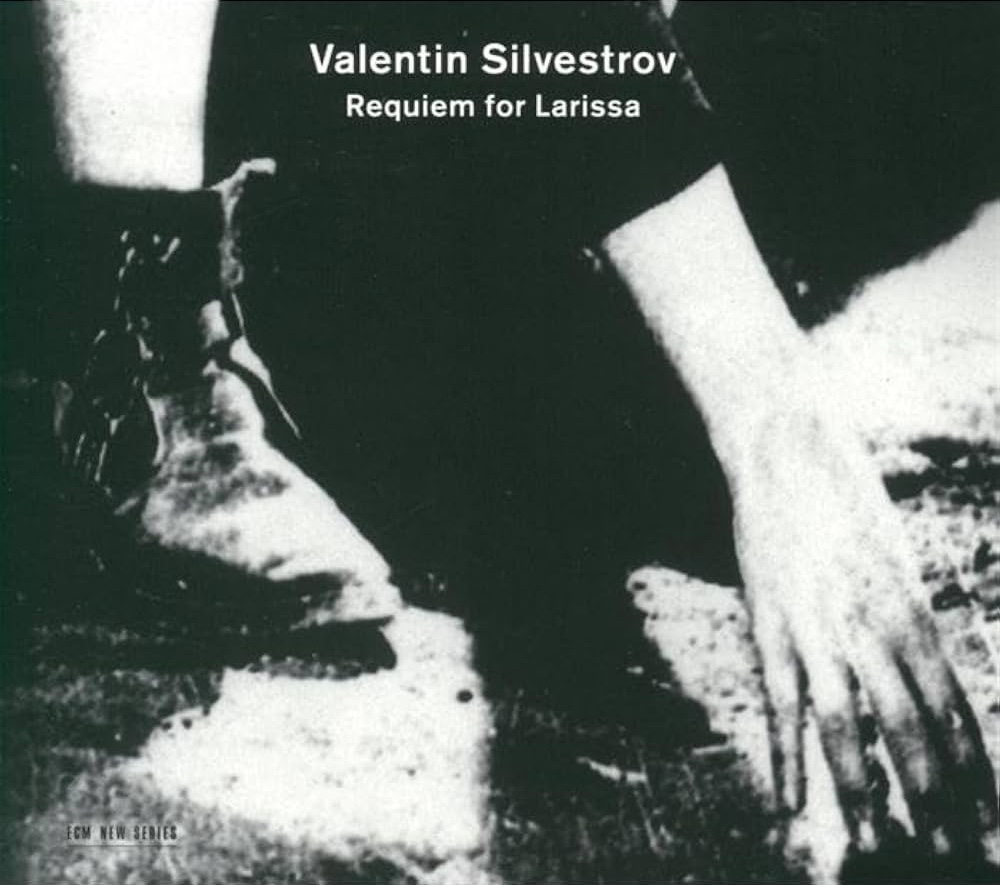
Valentin Silvestrov: Requiem for Larissa (ECM New Series 1778)

Valentin Silvestrov
Requiem for Larissa

Yevhen Savchuk
 choirmaster
The National Symphony Orchestra of Ukraine
Volodymyr Sirenko conductor
Valentin Silvestrov conductor
Recorded February 2001 in Kiev, Ukraine
Engineers: Arkady Vichorev and Valery Stupnitsky
Produced by Manfred Eicher

“I do not write new music.
My music is a response to and an echo of what already exists.”

The requiem is a curious object: on the one hand it memorializes someone important to the composer, while on the other most listeners will have never known the dedicatee. In that sense the requiem fulfills a transitory function, and a communicative one at that, bringing a sense of relational knowledge to the abyss. In the case of Valentin Silvestrov’s entry into the Requiem ledger, I feel only the mise-en-abyme of love, and the shape of its web after a cold wind has snapped half of its axial threads. Written between 1997 and 1999, it was intended to be the Ukrainian’s last composition—so affected was he by the death of his wife, musicologist Larissa Bondarenko. As with his above sentiments, the sound-world it introduces to us is a churning sea bordered in humility.

The more one listens to Silvestrov, the more one becomes accustomed to the piano’s (omni)presence in his orchestral imagination. It is both center and periphery of an ever-expanding field in which the wool of darkness is spun into light. And thus it is from the piano that the Requiem’s vocality proceeds, the choir sewn into the larger fabric with divided immediacy, such that emotions merely constitute an audible act shrouding an internal need for stillness. Tenor and alto solos shimmer against a reverberant mesh of harp and strings, each a clear path to struggle. In them Silvestrov admirers will recognize a redux of his Shevchenko setting in Silent Songs, and in the Agnus Dei a choral expansion of his Der Bote, the last piece of her husband’s Larissa ever heard. Though cut from a template, they whisper a self-taught language. Winds pressing in at all sides carry us back into the piano’s embrace, in which we realize that heaven is not a space above but one within. Retreating farther inward, morning glories all, we fold in moonlight with a simple bow, finding some respite in the laborious nature of our surroundings. Effervescence balances at the fulcrum of acceptance, only to be dispersed in the swirling pool of the final section, dissolving behind closed eyes.

I know I would not be alone in expressing thankfulness that Silvestrov has since continued to compose, but in doing so I would be missing the point. Aside from the long-distance comforts my meager consolations may or may not provide, such a gesture is as tear-distorted as the sounds that inspired it. I might also praise this recording for its engineering, performances, and packaging, but when reviewing a requiem these concerns are inconsequential. There is no way that such a project could defeat itself, for its heart has already been punctured by the loss from which it continues to grow. It is its own entity now, atrophied and crawling, searching for rest in a landscape without berth.

Larissa was unknown to me, but whenever I listen to this music in her honor, I feel as if that lack of knowledge becomes filled with something vaster, a nourishing remembrance that sustains everything we are once we have been thrown into the center of the universe to slumber whence we came.

<< Dave Holland Big Band: What Goes Around (ECM 1777)
>> Heiner Goebbels: Eislermaterial (
ECM 1779 NS)

Between One Embrace and the Next: Ulysses’ Gaze and the Pace of Discovery

And, if the soul is about to know itself, it must gaze into the soul.
–Plato, Alcibiades 133b

The film

In a quiet arthouse theater one night in May of 1997, a scene from Theo Angelopoulos’s 1995 masterwork Ulysses’ Gaze reached out and holds me still. In it the protagonist, A (Harvey Keitel), is relating a personal story to a curator from Skopje (Maia Morgenstern, who plays every woman Keitel encounters throughout the film’s nearly three-hour duration). As the latter runs alongside the train that threatens to vanquish their transient encounter, A’s story lures her into the clattering comforts of the car, and into the emptiness of his heart. He tells her of stumbling upon the birthplace of Apollo, of seeing there something so vivid that every Polaroid he attempted to take came out only blank, “as if my glance wasn’t working.” In those empty squares, those black holes made tangible, he sees both the past of which his body and mind were formed and the future into which he blindly walks.  Thus does Angelopoulos engage us, finding in this nameless figure an everyman whose quest for origins beyond his self leads only to a hollowing out of that self.
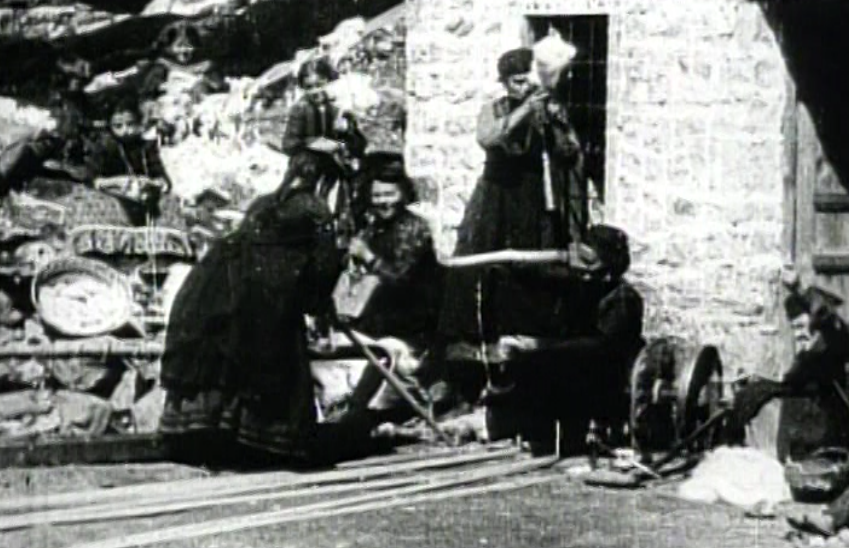
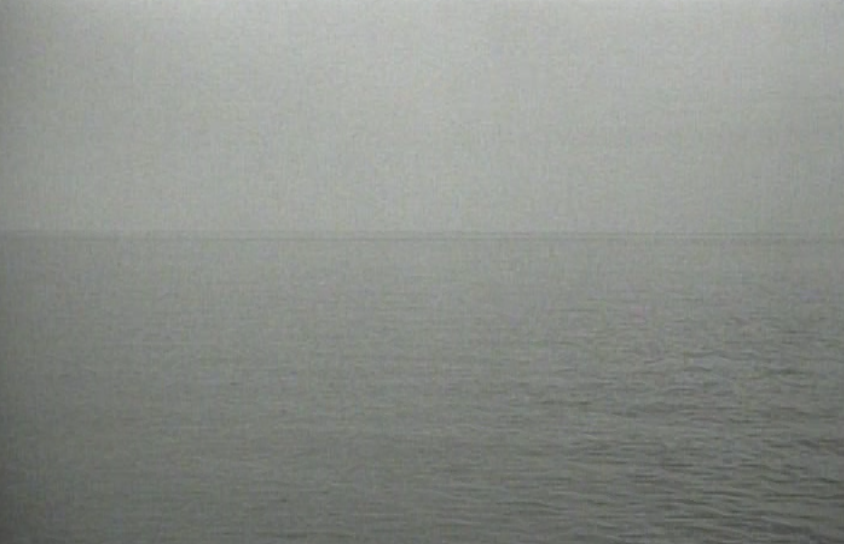
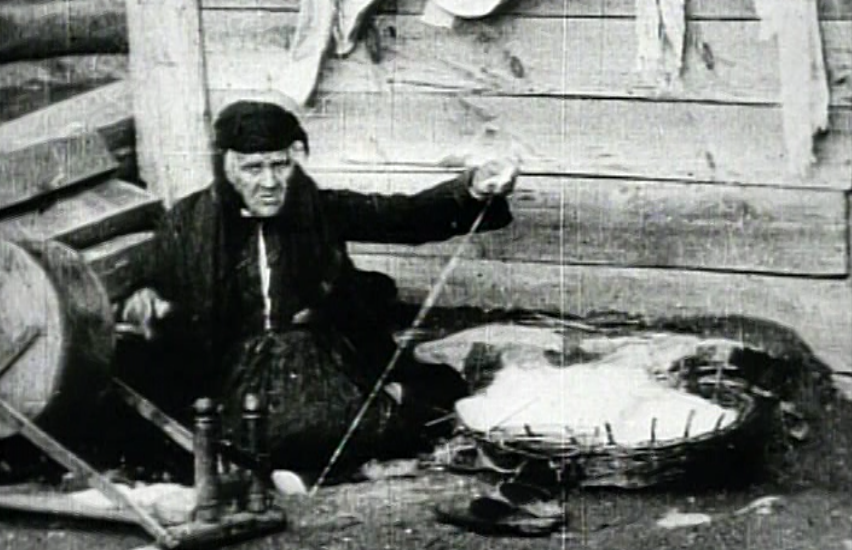
We see a film: Spinning Women by Yannakis and Miltos Manakias. It is perhaps the first film, speculates A’s voiceover. The first gaze. Yet once we are released from its black-and-white confines, the only gaze afforded us is of misty waters, indistinct and close to blanking out. Monochrome pales into color as we witness Yannakis’s last moments, and the single ship upon the sea that is his farewell.
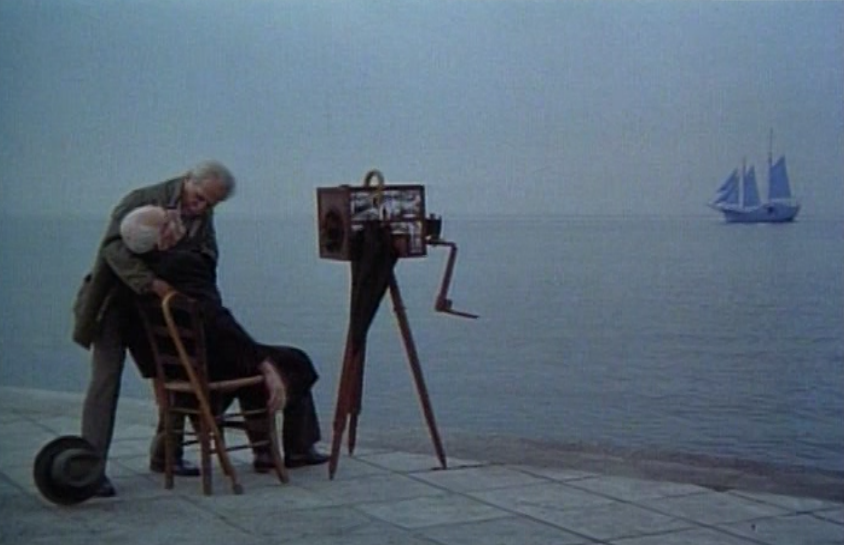
The vessel looms like a face, fills the screen with its expressive pace, and breaks the seal on a filmic letter like no other.
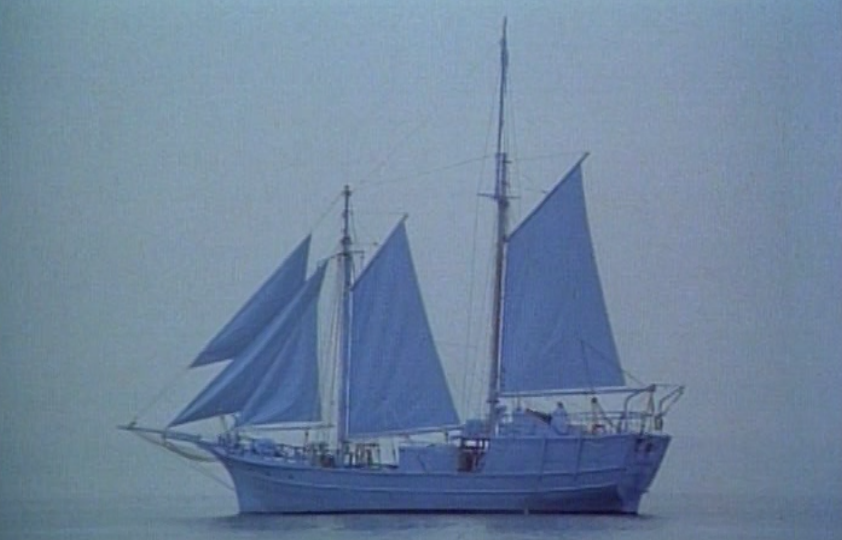

“How many borders must we cross to reach home?”

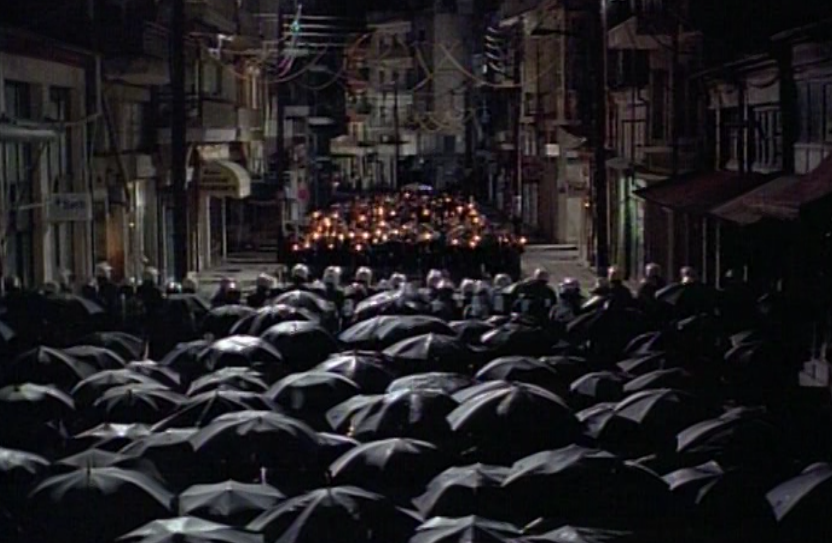
Yannakis, we learn, left behind three reels of undeveloped film, and it is these A wants like a light bulb hungers for electricity that will one day pop its filament. We contemplate the ship and the three missing reels as A sets out on his personal journey. He hopes a film archivist from Athens may be able to help him, but is instead escorted through crowded streets in which A has not set for 35 years, and which echo with the controversies of his latest film beyond the theater doors it has closed.
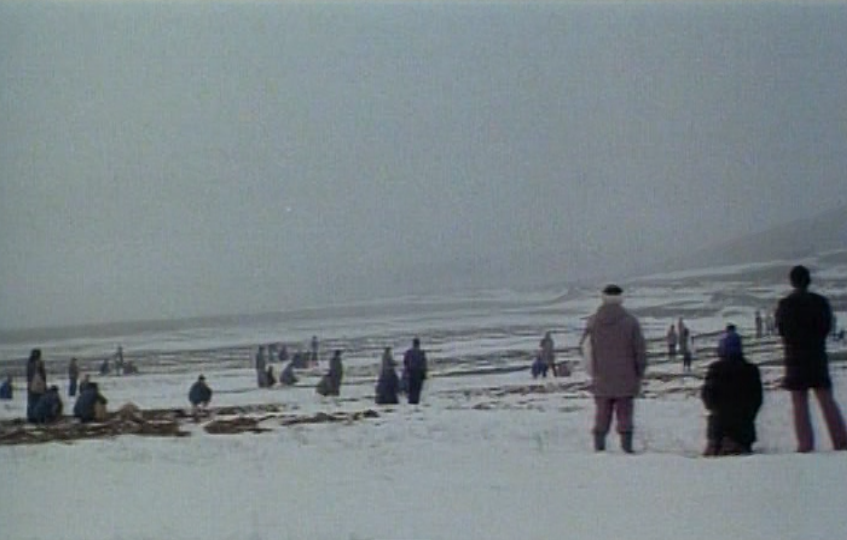
A follows the trail into Albania, a land of snow and silence where refugees stare at the mountainous border as if it might speak on their behalf.
A woman who hasn’t seen her sister in 47 years since the civil war asks if A might take her along. His cab driver agrees and drops her off at Korytsa. Only she doesn’t recognize it as the place of her girlhood. She stands in the middle of the street, empty save for the agony of her shattered expectations. Part of us stays with her, knowing that all the comfort in the world will never alleviate the wounds she has endured to get here.
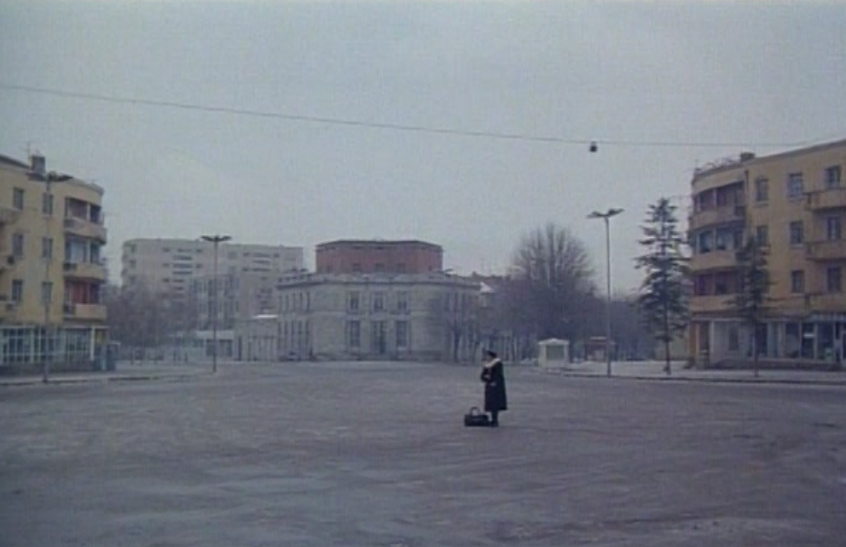
Haunted as much emotionally by the Manakias brothers’ film as we are visually by it, A maps a path of ruin through the Balkan Wars and the First Great War. The turmoil of the region is encoded in every frame of those missing reels. Yet the brothers were interested less in politics and more in people. They recorded “all the ambiguities,” A tells the woman from Skopje, who at first takes no interest in his obsession, which overtakes him to the point where he relives the brothers’ exile by the Bulgarian government as collaborators against the state, feels the confiscation of their archives like an artery ripped from his chest, smells the gunpowder of a mock execution. He wants to find his own first glance, long lost yet always tapping him on the shoulder, and his only way to know where it leads is to take on traumas of which he will never be a part.
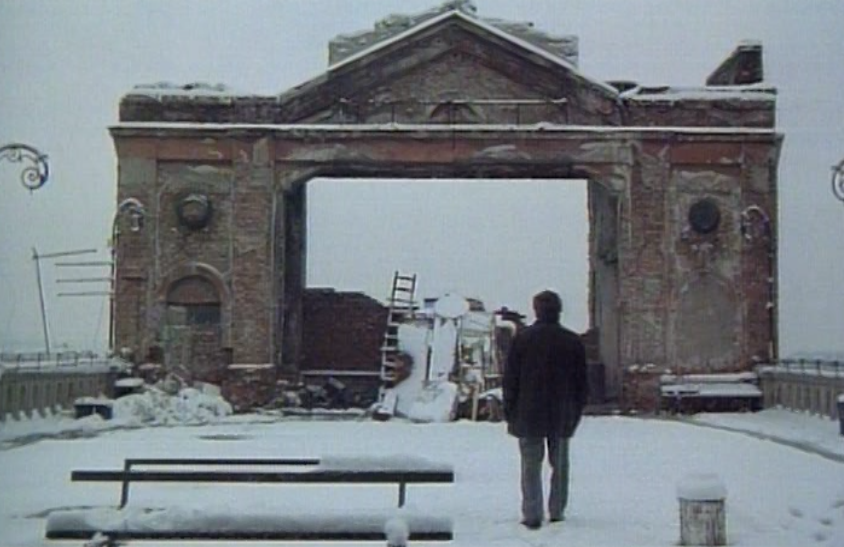
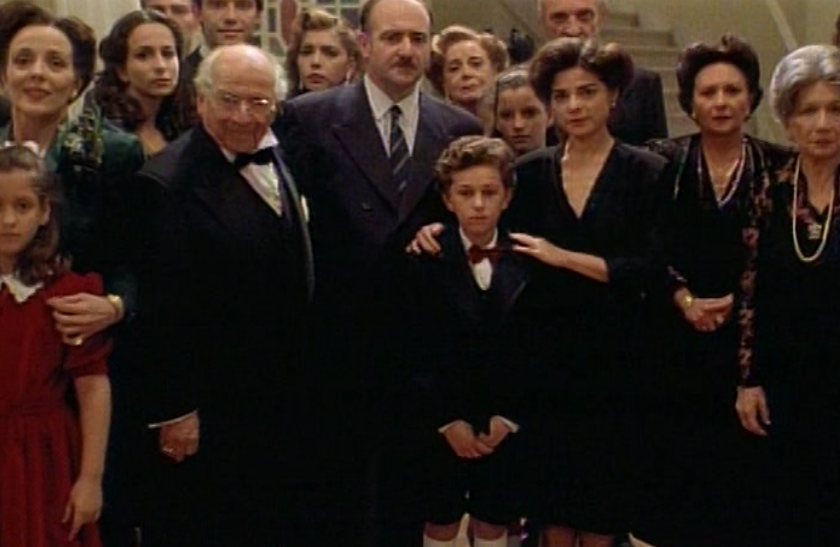
His itinerary reads like a litany of destruction. He follows footsteps into a time where his mother can care for him, a substitute in memory for what eludes him in the present. Then again, in this film there is no “present” as such, bearing as it does an eternal trace of that which bore it. A shares a dance with his mother, and in the space of that dance a family is destroyed, dispossessed, and broken before posing for its final group portrait by an illusory photographer who may be the director himself, if not us in his place.
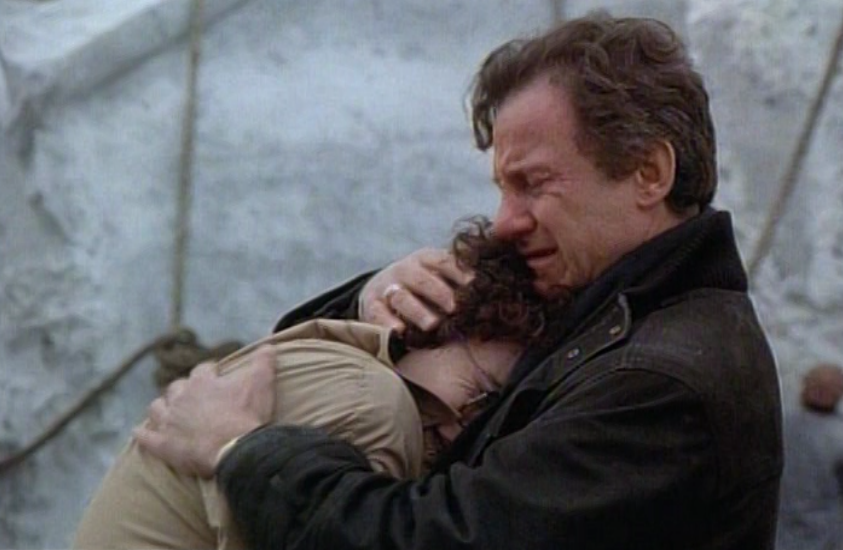
A awakens from that dream, shaken and silent. At the docks of an overcast morning, he bids farewell to Skopje, even as the head of an enormous statue of Lenin is craned onto a barge behind them.

The nameless woman questions his tears. “I’m crying because I can’t love you,” he tells her between sobs, and tears himself away from the only security he may ever know.
“The war’s so close it might as well be far away,” observes an old journalist friend in Belgrade, where the head of its Film Archives has agreed to meet. The man tells A he once had the reels, but after failing to devise the proper chemical formula to develop them, gave them to a colleague in Sarajevo with whom he lost touch during the war. Of course, A insists on going to Sarajevo. He rows a boat into dark waters (an allegory, perhaps, for the toughness of Balkan reality itself) and nearly falls into a double life with a widow in mourning.
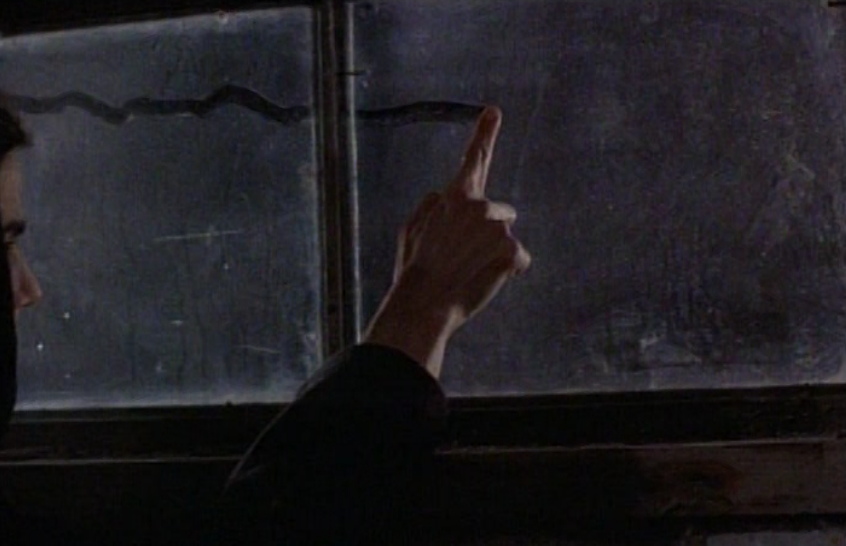

“The first thing God created was the journey, then came doubt…and nostalgia.”

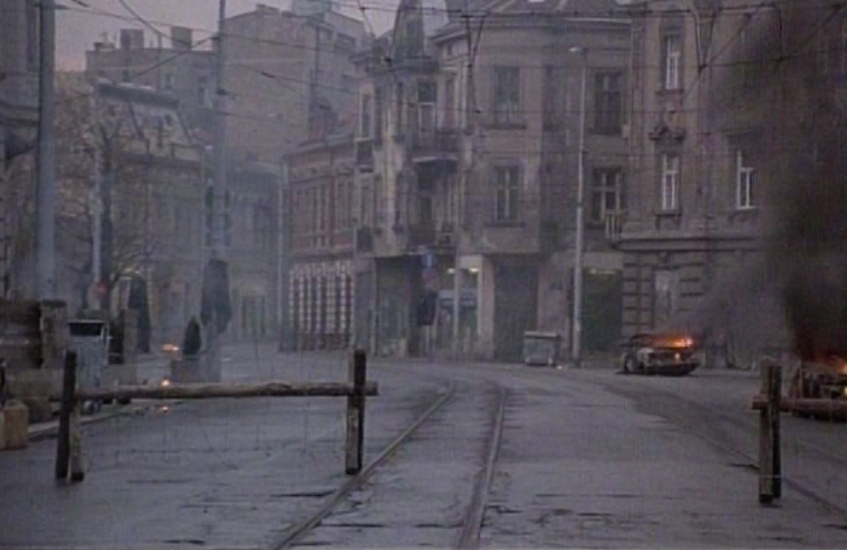
Upon arriving in the city, surrounded by bombs and crumbling edifices, he foolishly asks of those fleeing around him, “Is this Sarajevo?” as if his purpose in being there were more important than their demise. It is the deepest moment of denial, and therefore of weakness, in the film, and throws us into the soul of a man whose love for history has blinded him to the visceral impact of its making.
He finds who he is looking for: a film museum curator (the inimitable Erland Josephson) by the name of S. Even as the air explodes with dust and bloodshed, S commends A for his faith in having traveled this far for something believed to be lost.
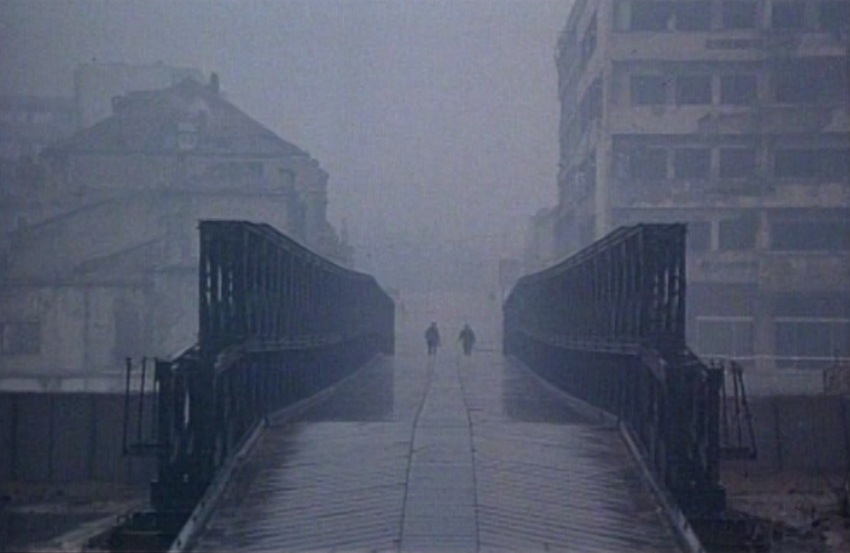
S, we learn, has been searching for that magic formula for years, and A’s persistence emboldens him to finish his task.
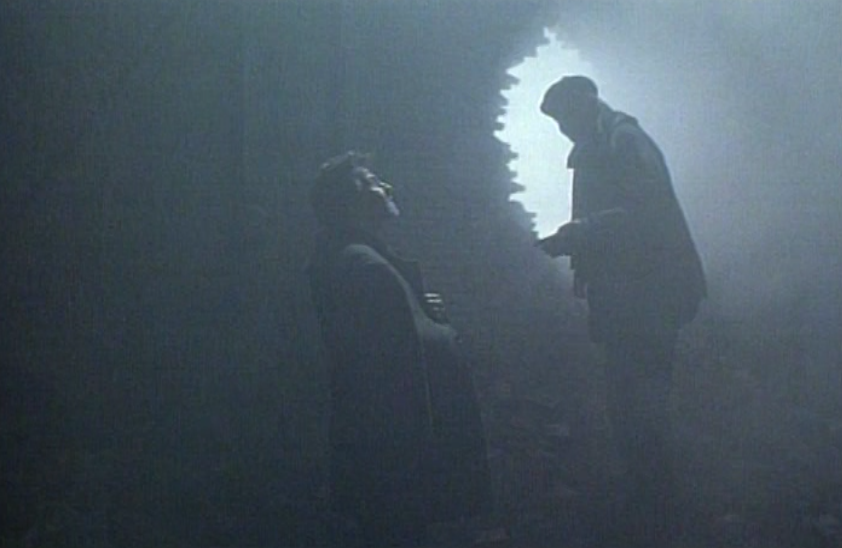

“You have no right to keep it locked away. The gaze…it’s the war, the insanity, the death…”

It is in Sarajevo that we learn the true meaning of the fog, which creeps in like a protective force, a shroud in which one can live without fear, if only for a brief time. In its embrace neighbors can speak without words. In its diffuse glow a youth orchestra made of Serbs, Croats, and Muslims, traveling from city to city during ceasefire, can play its song for all to hear.  But even this screen cannot keep them from harm, for behind its veil children are shot before their parents, thrown to the water from which they took shape. And so, the man who rescued a gaze from certain death now becomes a part of it, but not before leaving the successfully developed reels.
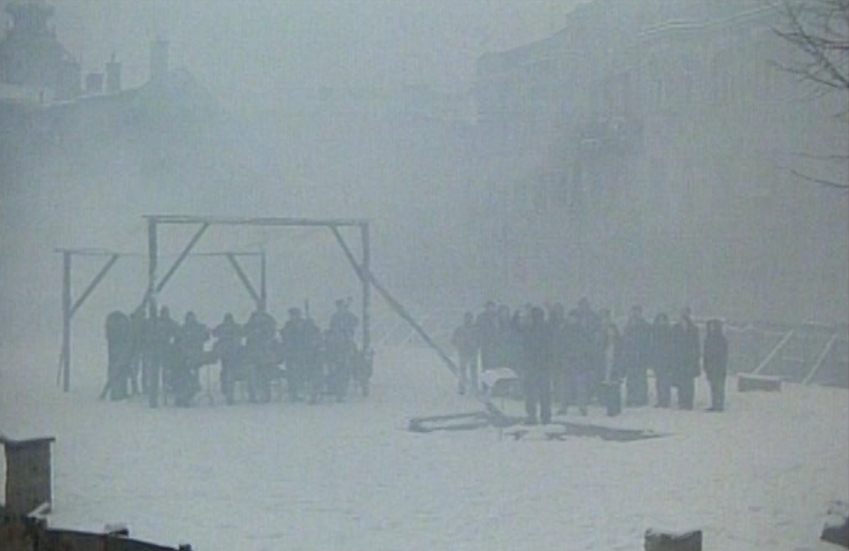
Yet we never see those reels, only their light flitting across A’s weary eyes. Whether or not he finds them is as immaterial as they legend they have grown to be. In those reels lies a dream, “a gaze struggling to emerge from the dark…a kind of birth.” And in birth there is no sight but the glare of strife, no sound but the wail of projection.


“What am I if not a collector of vanished gazes?”

And just what is all this gazing about? Beyond that of the camera, of the eye in reality (and of the soul in non), it is for me the slumber of the centuries, dismembered and left to drift like Lenin’s statue on river’s flow. It is the pathos of pathos, forever unrequited in the blink of a fettered eye.

As a teenager I used to have a recurring dream. In it I was younger still, perhaps 12, and clothed modestly in a tunic and brown leather sandals. I ran through a hilly landscape, dodging brush and fauna to the top of a rocky slope. And there I lay low beneath an olive tree, a quiver of arrows slung across my back, overlooking a landscape of ruins. I like to think that I was also gazing, like A, upon Apollo’s birthplace, of which I can remember nothing but the feeling: an unanswering abyss of rock and overgrowth into which I cast my questioning stones.

The more tangible it is, the more unrecoverable a past becomes, the more easily burned, the more easily dressed in the clothes of the dead.

The music

Among the many sonic cartographies it has innovated, ECM has redefined almost every genre it has touched. This includes the film soundtrack, which, through the work of Angelopoulos’s sonic partner, Eleni Karaindrou, has shown us music that stands alone before reaching toward the images it cradles.
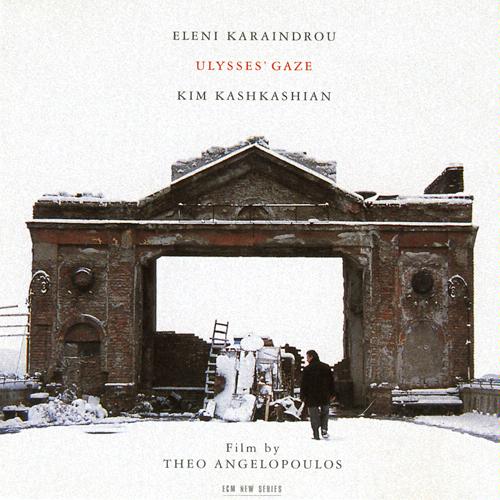
Eleni Karaindrou
Ulysses’ Gaze
(ECM New Series 1570)

Kim Kashkashian viola soloist
Vangelis Christopoulos oboe
Andreas Tsekouras accordion
Sopcratis Anthis trumpet
Vangelis Skouras french horn
Christos Sfetsas cello
Georgia Voulvi voice
Lefteris Chalkiadakis conductor
Recorded December 1994 at Sound Studio, Athens
Engineer: Yannis Smirneos
Produced by Manfred Eicher

This soundtrack introduced me to the Angelopoulos’s cinematic world long before I saw a single frame. It would be two years before I had a chance to see the selfsame film, by which time I had heard the soundtrack and stared at the booklet stills so many times that I felt like I knew every ventricle of Ulysses’ pensively beating heart. Though set against a backdrop of primal discovery, it ends up becoming its own discovery, linking the personal to the political to the universal in one red thread, represented to its fullest by Kashkashian’s gut-wrenching playing. Though mainly driven by the soloist, there are splendid moments of conversation with oboe, as in “Ulysses’ Theme Variation II.” Yet what comes across as an intensely mournful theme can, with just an intensification of speed, turn into an exuberant dance.

Among the more touching moments in both film and soundtrack is “The River.” With its elegiac horn wafting out over the misty waters like a requiem for a fallen past never to be recaptured in the crumbling ruins of an age blinded by innovation, it breathes through our rib cages with voices of passage. The 17-minute spread of “Ulysses’ Gaze – Woman’s Theme, Ulysses’” is the album’s most enchanting encapsulation, the entire narrative telescoped into a single epic mosaic, drawn from the same ink as the tears of its characters. A lilting accordion carries us like a feather on wind into the inner portal of a traditional Byzantine Psalm, from which we emerge with that same thread in our grasp, sinking deeper with every reiteration until the seedlings of our plight become the stuff of myth and melted celluloid.

Ulysses’ Gaze bears dedication to the memory of the great Italian actor Gian Maria Volonté, whose role in the film was cut short by a fatal heart attack and recast to Josephson. In kind, I can only dedicate this review to the memory of Angelopoulos (1935-2012), a director in whose oeuvre everyone seems to find a ghostly double self, whispering at the fringe of conscious imagination.

May his gaze live on.

“I live my life in ever widening circles that rise above things.
I probably won’t come last, but I’ll try. I circle around God.”
<< Alexandr Mosolov: Sonatas for piano Nos. 2 and 5, etc. (ECM 1569 NS)
>> Thomas Demenga: J. S. Bach/B. A. Zimmermann (ECM 1571 NS)

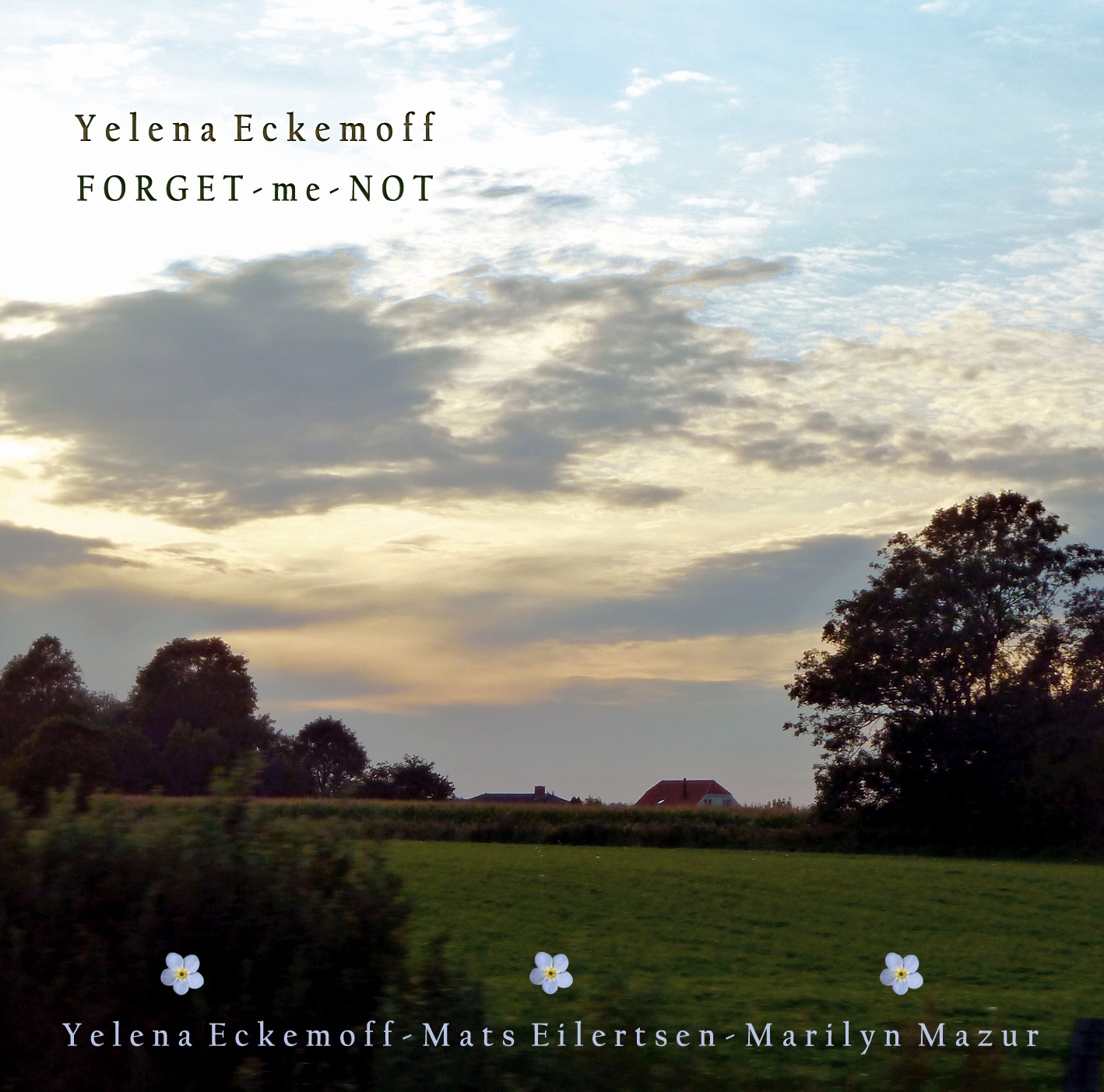
Yelena Eckemoff: FORGET-me-NOT

Yelena Eckemoff
FORGET-me-NOT

Yelena Eckemoff piano
Mats Eilertsen double-bass
Marilyn Mazur drums and percussion
Recorded August 17 & 18, 2011
STC Recording Studios, Copenhagen, Denmark
Engineer: Andreas Hviid
Mixed by Rich Breen, Burbank, CA
Produced by Yelena Eckemoff

Readers of between sound and space will, I hope, be familiar with Yelena Eckemoff, who has been skirting the ECM fringe for some time now in her working relationships with such artists as Peter Erskine and, most recently, Marilyn Mazur. The latter provides a crisp and delectable palette to the Russian-born pianist’s latest effort, FORGET-me-NOT, which also features Tord Gustavsen recruit Mats Eilertsen on bass. From the breathy clusters of “Resurrection of a Dream” it is clear that Eckemoff has written yet another distinct chapter in the storybook moods of her compositional development. Against a backdrop of twittering percussion and arco haunts she carries us through this slick opener with equal parts style and fortitude, riffing on the ether with her most unbound pianism yet. Mazur is splendid on cymbals amid a bevy of colorful kin, Eilertsen firm yet sensitive, soloing as if in memory of the lullaby that brought us here. Thus set, the album’s tone moves in shades through the child-like wonders of the title track to its densest dramas in “Welcome a New Day.” Along the way Eckemoff treats us to not a few surprises, of which the crumbling edifice of “Maybe” paints perhaps the most intriguing. The punctilious “Sand-Glass” further hones the set’s serrations and leaves us prepared to dissect the delightful little groove that is “Five” (in both title and number). Eckemoff’s classical roots come to the fore in “Schubert’s Code.” Making its timid entrance onto a stage draped with patterns of the nineteenth century, it nevertheless sparkles with clear and present reflections and showcases a real feel for detail. “Quasi Sonata,” on the other hand, rolls out the retro on a smaller scale and feels most like fleeting reminiscence. The pleasant dissonances sprinkled throughout “Seven” (in title but not in number) also bring us into the unexpected, a place where cascades and stepwise chains share a drink and a smile, while the more erratic “Trapped in Time” brings us into a swing to remember, replete with Mazur’s solid rim hits and spiraling energies.


(photo by Nicola Fasano)

FORGET-me-NOT is an album without borders, a gallery of animate snapshots that float on the wind. Its fluid transitions hang like a necklace from the neck of a mother who stares through the window of her past and finds a thousand songs to sing. Let’s hope this is a sign of things to come for an artist who continues to add feathers to her wings with each new release.

Bobo Stenson Trio: Serenity (ECM 1740/41)


Bobo Stenson Trio
Serenity

Bobo Stenson piano
Anders Jormin double-bass
Jon Christensen drums
Recorded April 1999, HageGården Music Center, Brunskog, Sweden
Engineer: Åke Linton
Produced by Manfred Eicher

Serenity is the Bobo Stenson Trio’s night and day. With bassist Anders Jormin and drummer Jon Christensen, pianist Stenson has not only carved a niche for himself but has also redefined the tools with which he carves. With this date the Trio takes itself to yet another level, fashioning anew the very material to which those tools are laid. Something in the opening harmonics of “T.” tells us so. Blossoming against percussive footfalls, Jormin dances a tango of shadow and light into cool slumber, the dreams of which are mapped by the cardinal points of the next four tracks (“West Print,” “North Print,” “East Print,” “South Print”), each a magnetic improvisation which draws its directionality not only from the earth but also from the gravity of our emotions. The surest of these attractions brings us into the exigencies of the “Polska of Despair (II).” This chromatic twist never winds into the legs it needs to stand but only dissolves even as it hoists itself up on crumbling melodic crutches. In “Golden Rain” Jormin’s bass emotes as if a tree might sing, dropping fruit to the tune of Christensen’s cymbals as Stenson’s keys take in their surroundings like chlorophyll to sunlight. The nod to Wayne Shorter (“Swee Pea”) that follows sounds more like the rain that precedes it in title, falling as it does with the rhythm of a weeping cloud. And by the time Jormin redraws those paths with a recognizable surety, we accept it not as a resolution but as an amendment to its scattered beginnings in the piano’s fertile soil. “Simple & Sweet” begins with a protracted intro from Jormin, which after two and a half minutes of brilliance guides Stenson into view against an organic flow from Christensen. This is followed by Hanns Eisler’s “Die Pflaumenbaum,” one of the most reflective turns in the album’s passage. Christensen is brilliant on cymbals along the way, with nary a drum in earshot. “El Mayor” (Silvio Rodriguez) smoothes us out into the comforts of another rainy afternoon, threading itself through every droplet with a grace of a prayer and the immediacy of its answering. Jormin stands out yet again, playing almost pianistically, while Stenson proves that in the sometimes mountainous terrain of the ballad he is our most reliable Sherpa. The haunting group improvisation “Fader V (Father World)” is deep to the last drop, beginning inside the piano (as if in the heart) and drawing from it an array of ribbons around the maypole of memory. Yet the pace is contemplative, filled with bittersweet joy. Jormin’s bass rings true like the voice of the past, at once domineering and loving. “More Cymbals” might as well be Christensen’s middle name, though its results forefront only whispering rolls along with Jormin’s pained arco trails. “Die Nachtigall” (Hanns Eisler) is another foray into smoother territories. It brushes its way through space and time like a street sweeper in the mind, quarantining all the refuse of a varicolored life into the sewers—only we follow it through those corroded pipes, past families of rats and dim reflections and out into the ocean where they are reborn along the waves. The rubato smattering of sticks and strings that is “Rimbaud Gedicht” brings us at last to the most awesome track on the record: “Polska of Despair (I)” embodies the perfect combination of propulsive drumming, buoyant bass work (Jormin even pays brief homage to Andersen’s “305 W 18 St” in his solo), and soaring pianism that every trio aspires to. Finally, “Tonus” is classic Stenson. Around a bass line for the ages he weaves vivacious improvisational lines into a braid from which we may wish never to detangle ourselves.

The topography of Serenity is as varied as that of life, speaking to and from the heart of what this outfit is capable of. This record is first and foremost about clarity, second about a distant storm whose image is its soundtrack. In balancing these two forces—circumstance and memory—Stenson and company forge a shining star whose light illuminates everything that we are. It’s easy to let the spell of its lyricism wash over you like a song, but we are reminded that the Trio speaks as much as it sings, bringing life to a vocabulary that can only be uttered at the keyboard, fingerboard, and drum, each traipsing at the edge where words fail.

<< Ensemble Belcanto: Come un’ombra di luna (ECM 1739 NS)
>> Crispell/Peacock/Motian: Amaryllis (
ECM 1742)

Striving for a Perfect Soul: Indonesian Shadow Puppetry Comes to Cornell


(photo source: Buda Wayang)

Purbo Asmoro
Gamelan Mayangkara
Bailey Hall, Cornell University
March 14, 2012
8:00 pm

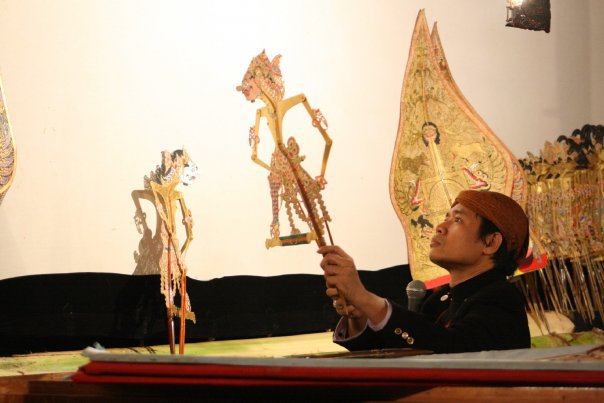
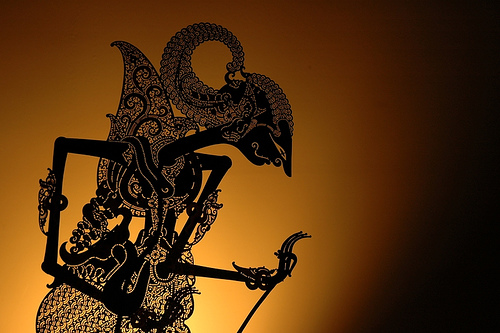
“I’m just happy to create,” says Purbo Asmoro, a living treasure of the art of Indonesian shadow puppetry. Born in East Java in 1961, Purbo embodies not only the legacy behind his immense skill—the performances of which are called wayang kulit—but he is also one of the art’s most creative practitioners. As a dhalang, or master of shadows, his duty is threefold: direction of the gamelan ensemble that accompanies his singing and the action it describes, recitation of dialogue and story, and manipulations of the puppets themselves. Not surprisingly, Purbo comes from a long line of puppeteers whose traditions he has expanded. His innovations span the gamut from the practical (he designs some of the sets used during performance, composes, and choreographs) to the political (by, for instance, introducing leading female characters in an attempt to equalize gender relations in this otherwise male-dominated tradition).


Asmoro

Audience members were treated to an overture as they walked into the venue—calls and responses over a drone provided by the Gamelan Mayangkara, an ensemble of gongs, percussion, and voices under the masterful direction of Wakidi Dwidjomartono. The sounds were as lulling as they were exciting, putting us in a frame of mind unlike anything experienced in Bailey Hall this season. Some were perhaps surprised to notice that we were behind the screen where the shadows work their magic. This practice has come about due to spectatorship in Indonesia, where audiences prefer to admire the beauty of the puppets themselves. To compensate, the shadows were shown by a clever projection on the left half of a large screen above the stage. The screen’s right half revealed another surprise in the form of a simultaneous translation by Cornell alumna Kathryn Emerson ’83, who typed in real time as Purbo worked his vocal stylings. Every performance has variations and this method is the only way they can be shared abroad. The fact that Emerson is the sole person in the world qualified to do this underscored the privilege of being there.

A rousing hit of gamelan and drums introduced us to the story proper. Our sorrowful protagonist was Arjuna, one of five brothers featured in the Indian Sanskrit epic, the Mahabharata. Banished to a forest for his immoral behaviors, Arjuna finds solace in meditation and reflects on the error of his ways. He rejects his past and desires instead to become of use to the world.


Arjuna
(photo source: Indonesia Impressions)

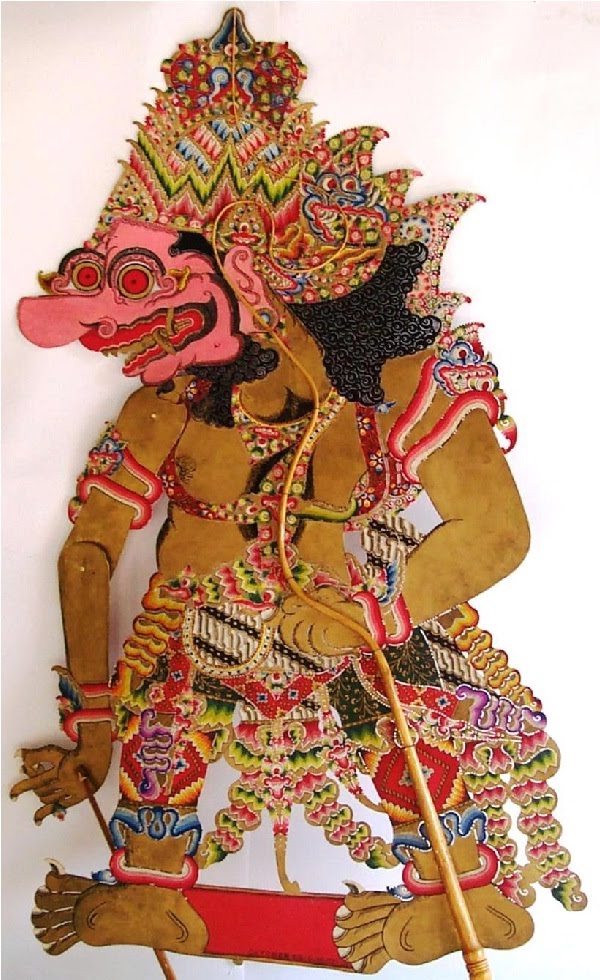
Meanwhile, Niwatakawaca, a malicious ogre king possessed of arrogance as unwieldy as his name, professes his love for the goddess Supraba. As he repulses us with his dreams of attaining her, he engages in a “generic macho dance that ogres do.” His advisors warn him against this infatuation. “A horse can’t marry a duck,” informs one. “The poor duck. Think about it.” Adds another, in a juxtaposition of bawdy humor and insight characteristic of Purbo’s delivery, “Do you really love her, or do you just want to control her?” Niwatakawaca pays them no heed and vows to accomplish the impossible by conquering the heavens and taking Supraba for himself, yet none other than Arjuna stands in his way. Before sending his troops heavenward, Niwatakawaca demands the mortal be brought to him.


Niwatakawaca

The ensuing battle scenes brought out a wonder in all and were infinitely more thrilling than any clash on screen or stage. To this end, Purbo kept the action sonically rich with the clanging of the keprak, metal plates played by the feet for the sake of emotional punch and as a means of signaling the gamelan players to match his timing.

Facing certain death amid this clamor, the gods call upon Arjuna, but first test him with three temptations, all of which he passes. Arjuna is promised great rewards for his dedication and battles with Niwatakawaca, using Supraba to bring out his weakness: an amulet in the roof of his mouth that becomes exposed when he laughs with pleasure at the seeming success of his conquest, only to fall prey to Arjuna’s arrow.


Supraba

In between all of this was a comic interlude. Utilizing only a fraction of the usual 60+ minutes, Purbo showed off his improvisational flair with a few good-natured jabs at Cornell (“founded on a lonely hill in the middle of nowhere”) and its gorges (“which now have fences”). These, along with a surprise appearance by an Obama puppet (“Look at his shoes,” says a groveler. “Made in Indonesia?”), had us laughing at every turn before Purbo waxed thankful on the efforts of those without whom wayang would never have been “something for the world to own.”


(photo source: Village Voice blog)

In context Purbo’s performances can last for hours, sometimes through the night, and I doubt anyone in attendance would have complained had he done so. In this regard he is clearly a holistic thinker who takes his audience into consideration: everything from the sounds to the visuals must fit like wing to bird, and beyond like bird to sky. And although between performances at home and abroad Purbo teaches at the Indonesian Institute of Arts, I would venture to say that his performances are equally instructive in what they say about life. In his own words: “The mission of wayang is to present moral messages. The entertainment aspect adds spice to the moral aspect, the main values in life: loyalty, heroism, messages for good.”

(See this article in its original form at the Cornell Daily Sun.)