Valentin Silvestrov: Bagatellen und Serenaden (ECM New Series 1988)


Valentin Silvestrov
Bagatellen und Serenaden

Valentin Silvestrov piano
Alexei Lubimov piano
Münchener Kammerorchester
Christoph Poppen conductor
Recorded February 2006, Himmelfahrtskirche, München
Engineer: Stephan Schellmann
Produced by Manfred Eicher

All too often, contemporary classical music is framed as a forward-looking genre, falling under the rubric of “new music,” as if it somehow grew of its own accord in lieu of outdated motives. But then we encounter a figure like Valentin Silvestrov, whose music always seems to look into a watery mirror and tells us that the more this art form progresses, the more it mines the depths of that which has passed. Such is the realization that brings purity his Bagatellen (2005), a set of simple piano pieces that practically weep at the composer’s fingers. Airy at first glance yet overwhelming in their melodic weight, they record rather than create, though they more than diaristic. These are images in constant motion, a far cry from family photos with timeworn edges. Some speak with the clarity of a digital home video, while others drown in the timelessness of grief. Their cyclical structures lend a delicate urgency, one that speaks to the validation of reminiscence as a primary mode of expression. After such quiet, inexpressible splendor, to be confronted with the extroverted qualities of the Elegie for string orchestra (2002) is to experience the trembling heart of something ancient. And as the strings continue their serenade in Stille Musik (2002), we feel an acute suspension. Not of winged flight but of the marionetted body that knows its limits in the grand scheme of falling, never quite sustaining its foothold once found.

A stilling rendition of Der Bote for strings and piano (1996) is the album’s centerpiece, and one of Silvestrov’s most masterful forays into harmony. This distorted Mozartean wind tunnel of cloud and afterlife lies also at the heart of his Requiem for Larissa. And it is into afterlife that we continue with Zwei Dialog mit Nachwort for string orchestra and piano (2001/02). Dripping honey from a ruptured hive, this is music that luxuriates in the full spread of its pathos. As might a drop of ink into water, it opens its tendrils slowly, well aware that without the invisibility of its surroundings its mapping would mean nothing.

It bears noting that the Bagatellen were recorded by chance when, before and after this album’s orchestral sessions, Silvestrov played alone at the piano while the tape (such as it is in the digital age) was running. Although he never intended to contribute to this recording in such a physical way, we can only bow in gratitude that he did. One gets the sense that each fragment is a portrait of his life in miniature. In a world of tiresome postmodern gestures, sometimes we need to wrap ourselves in something so mysterious that it can be nothing but a comfort. Let this be your blanket.

Playing it like it is: Jason Moran and Dave Holland take to the Barnes stage at Cornell

Comedian Hannibal Buress tells it straight: “People say, ‘I’m just taking it one day at a time.’ You know who else is? Everybody. That’s how time works.” And maybe that’s how jazz works, too. It’s a daily process, an ever-expanding diary of life experience that everybody’s being written into. Its pages ruffle and shuffle, rhyme in real time, bend and tear, yet through it all retain a cover as distinct and as battered as our Real Books. Every once in a while, a musician comes along who tapes up the binding, slaps on a new nameplate, and calls it fresh. Pianist Jason Moran is one such musician, one who knows there’s no past without a future. Bassist Dave Holland is another, one who knows there’s no future without a past. Though far from strangers, having been involved together in latter’s Overtone Quartet since 2009, as a duet they offer a rare chance to see two consummate artists in dialogue.

“My first opportunity to work with Dave,” says Moran in an e-mail interview, “was as a sub for Steve Nelson in his Quintet. This was the first time Dave’s quintet music was played with a piano, so it was quite a big space to fit in. Dave is an extremely supportive player. Meaning he is both a fantastic captain and a deck hand.” Yet the Houston native, who celebrates his 37th birthday this month, has spent much of his career rocking the boat. With influences ranging widely, from Thelonious Monk to Sol LeWitt, the avenue of his playing is lined with all manner of architectural styles. In addition to being one of the most important jazz pianists of his generation, he’s a thinker and, above all, a father. When I ask him about how he’d like to be remembered, he says, humbly, “That my children loved me, and that I taught them how to love.”

The title of his major debut, I think, says it all: Soundtrack to Human Emotion. It’s a philosophy to live by for someone who uses emotions as a writer might lay verbs on the page. From his jump outside the box with the immortal Sam Rivers on Black Stars (Holland also worked with Rivers on the seminal 1972 joint Conference Of The Birds) and on through to a trio session for the ages with Chris Potter and the late Paul Motian on Lost In A Dream, he has painted a veritable gallery of life-driven moods and impressions. Moran is also an educator. He teaches at the New England Conservatory of Music, where he places no small value in passing on ideas and conversations: “Young players should follow their heart. And if the music takes over their life, let the music lead the way, as there is so much to discover.” A harbinger of things to come, to be sure. Then again, why wait when you can experience it for yourself?
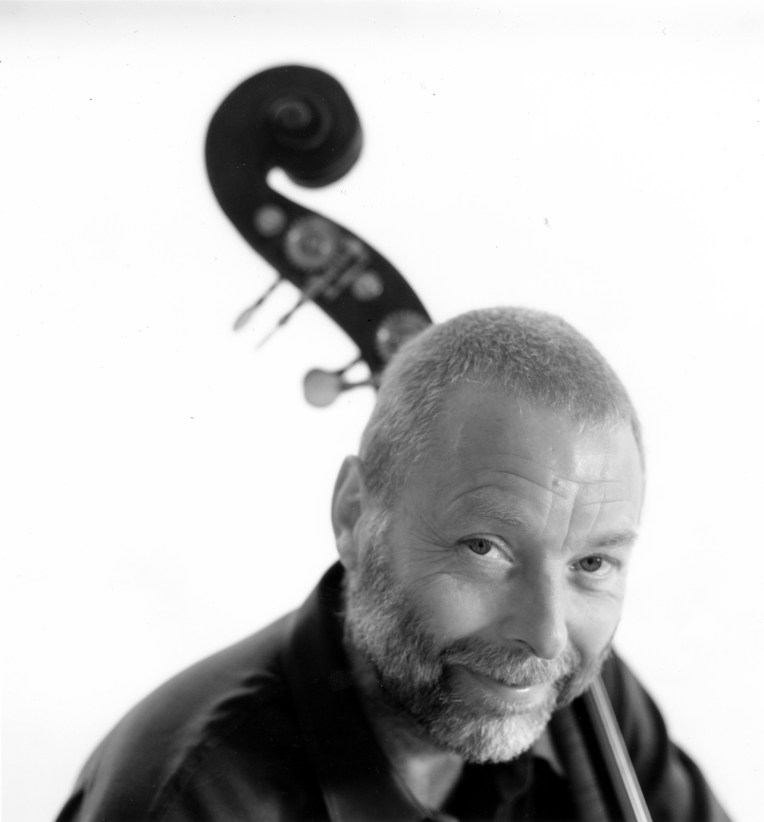
Most thumbnail sketches of Dave Holland, now 65, will include the requisite cameo by Miles Davis, in whose band the young bassist’s voice came to prominence. As a bandleader in his own right, the voice is so inimitable that those same sketches have since become a blur of dazzling color. To hear him in any group setting, one would never suspect—and rightly so—that he felt anything less than admiration for the talents he has enlisted over the years. His larger ensembles, beginning with the Quintet on 1984’s Jumpin’ In for ECM and expanding more recently to the Octet and beyond on his own Dare2 Records, have proven to be hotbeds for progressive thinking in the genre. Holland also redrew the upright landscape with 1978’s Emerald Tears, joining a growing roster of unaccompanied albums for an instrument all too often relegated to the rhythm section. There’s an enormous difference between playing solo and playing a solo. And while the lone piano is a relative mainstay in jazz recordings, Moran’s 2002 contribution, Modernistic, managed to make a comparably original statement: here is one who listens.

Indeed, listening is what these men do best. Whether it’s to themselves or to one another, their craft welcomes us to share in a compassion so hip that your head is already nodding before note one. Theirs are open, melodious hearts, and we are honored in their presence to step into an intimate circle where sound and peace walk hand in hand, taking it—you guessed it—one day at a time.

Jason Moran and Dave Holland will be performing at Cornell University’s Barnes Hall in Ithaca, New York this Saturday, January 28, at 8:00 pm. Tickets are sold out, but be sure to check back with me here at “between sound and space” for the post-concert report. The full Moran interview is below.

How do you define the power of a standard?

The power of a standard lies within how good it sounds when out of the hands of it’s original composer.

Can you tell us a little more about your classical background and how that fits into what you do at the keyboard?

My technique is where most of my classical background reveals itself. My first Suzuki method teacher was Yelena Kurinets. She had a very strict vision about what piano technique is, and that has helped keep my hands in good form, knock on wood.

When you’re on point, really feeling it, what is your state of awareness? Do you disconnect or plug in? Do you leave us behind or take us with you?

Well, I think it’s a combination of both disconnecting and connecting. I like to think of it as simultaneously talking and listening to someone. It’s the balance of those things. The audience is always on the ride. And as with all riders, some like to wear no seatbelt, some ride in the bed of a truck, some water-ski, and some simply look out of the window.

Tell us about working with Dave Holland for the first time. Will you be approaching the duo set any differently than your work with the Overtone Quartet?

My first opportunity to work with Dave was as a sub for Steve Nelson in his Quintet. This was the first time Dave’s quintet music was played with a piano, so it was quite a big space to fit in. Dave is an extremely supportive player. Meaning he is both a fantastic captain and a deck hand. So if I want to make a sharp left turn with the boat, he’s pulling the line quickly to help change the course. Given his extensive history, there won’t be much that will throw him off. So, we love having our musical dialogue shift languages.

You are clearly dedicated to passing along your passion and energy to the next generation. How has teaching informed your playing? What do you think is most important for younger players to understand as they grow into jazz, and vice versa?

Teaching allows me to hear the concerns of the next generation of musicians. Their concerns allow me to tailor my teaching methods to them. I continue to be a student myself, so I feel like we are all in the same boat, and we are all on the front line. As for my playing, I think having to discuss my methods so frequently, I realize I need to practice what I preach. Young players should follow their heart. And if the music takes over their life, let the music lead the way, as there is so much to discover. Most of all, young players need to study themselves, and secondly study the history.

Which artists, musical or otherwise, make you shake your head in wonder and think, “I’ll never get there”?

Bach.

What do you get from working with other musicians? What do you think they get from you?

This music is built around community. It works best when you work well with others. It’s more a life lesson than a musical one. Have respect for people and their ideas, and work with them. I’m not sure what they get from me, but “energy” is the term I keep telling myself.

How did you react to Paul Motian’s recent passing?

Paul was a fixture in NY, so it’s very different without him occupying the city. He let everyone in. Wonderful man.

Being an ECM nut, I adore your presence on the Athens Concert with Charles Lloyd and Maria Farantouri. How did you become involved in this fantastic project, and what was it like working with two such distinct legends at the same time?

I’ve been with Charles for almost 5 years, and it is an ongoing process. He shares so much knowledge with his band, and he shares his community as well. In one breath Maria gives us the history of vocal music. It’s all circular, as we like to say.  

When the day comes that you lay down your last note, how would you like your contributions to be remembered?

That my children loved me, and that I taught them how to love.

Who are you listening to these days?

Sam Rivers and Henry Threadgill. Sam also passed recently. For many years, he and Dave were very close. A wonderful catalog of music has been left behind. I’m working on a Henry Threadgill celebration. And lastly, I’ve been listening to a lot of comedy, and am loving Hannibal Buress.

Describe what jazz means to you in one word.

I can’t, so I won’t.

Giacinto Scelsi: Natura Renovatur (ECM New Series 1963)


Giacinto Scelsi
Natura Renovatur

Frances-Marie Uitti cello
Münchener Kammerorchester
Christoph Poppen conductor
Recorded June 2005, Himmelfahrtskirche, München
Engineer: Stephan Schellmann
Produced by Manfred Eicher

Giacinto Scelsi (1905-1988) was among the handful of composers I came to admire early on in my contemporary foraging. His galaxies opened my ears as only Gubaidulina, Ligeti, Penderecki, and Górecki could. Here was another whose ability to translate the instrumental utterance into an experience of integrity and parthenogenetic ecstasy, whose sheer reach of vision and inspiring attention to detail, shaped my impressionable mind into an open vessel. And while Scelsi’s music has been profoundly represented elsewhere (most notably on the Mode label), it was something of a momentous occasion for me to see his name fronting an ECM New Series cover at last.


Scelsi

The present recording is the result of various dedications. There is the dedication of cellist Frances-Marie Uitti, to whom the composer imparted the task of archiving and transcribing his hundreds of hours of improvisations on the ondiola, a monophonic instrument that was his mouthpiece. There is also the dedication of Scelsi himself for making those recordings in the first place, and for letting his mind open beyond the body in some audible form. And then there is the dedication of Christoph Poppen, whose commitment to modern music is superseded only by his oneness with the material he conducts. It is as if he were playing it himself.


Scelsi’s ondiola

The program consists of pieces mainly from his fruitful Third Period (1960-69), of which Ohoi (1968) for 16 strings defines the pinnacle of the larger ensemble works. On the surface, it seems to start from somewhere far beyond the earth, working its way ever so slowly toward us. Yet it doesn’t take long for us to realize that in its microscopic clusters thrums something utterly earthly. Every molecule is a building block to discreet crystals of harmony, which en masse achieve an overwhelming beauty through their collective dissonance. Voices ascend into a realm where screams become language and words are the screams that cut language into pieces.

If Ohoi is a knot, then the lyrical Ave Maria (1966) is the blinding love that unties it. Along with the Alleluja (1970) that ends the program, it comes from the Three Latin Prayers for solo cello. Both are nestled in the fur of larger beasts, picking at lice and ticks unseen. With a finely honed solemnity, they breathe with expansive power, made all the more enthralling through Uitti’s afferent performances. Prayers is by far one of the most arresting pieces ever written for the instrument, and to have two of its three sides in glorious ECM sound is a treasure. Uitti continues that brilliance in Ygghur (1965). Another trilogy for solo cello, this self-professed “autobiography in sound” compresses an orchestra’s worth of statements into a microcosm of gut and wood. With two, sometimes three, voices enhancing one another at any given time, it develops humanly. Yet it is not a conversation with the self, but rather a conversation about the self. Not unlike the throat singers of the Tuvan steppes, Uitti treats the extended techniques therein with an organic rusticity. We can wax technical all we like about microtonal double stops, but in the end we are left with handfuls of nutrient-rich soil.


Uitti

The hapless reviewer is at pains to articulate the sound-world that awaits us in Anâgâmin (1965). Written for 11 strings, it defies categorizations like “modern” and “post-modern,” is neither an example of deconstruction nor of reconstruction. It crawls on its own gelatinous legs with a gait much akin to the album’s 1967 title composition, also for 11 strings, only in the latter the infusions of micro-clusters are even deeper. It is an unbroken string of tension. Bowings grow more agitated, textures denser, and the underline of the lower strings turns gravity inward.

To call this music mysterious would be to do it a great disservice, for it is so internal that we cannot separate it from who we are. Scelsi professes nothing. In being so selfless, his work casts its light on us and us alone. Is this nature renewed, or has the renewal simply been natured? Only we, the individual listeners, can make or break such an arbitrary question. Like the circle above the horizon of Scelsi’s signature we may never know whether it is rising or setting, but we can always be sure that it is singing.

Valentin Silvestrov: Metamusik / Postludium (ECM New Series 1790)

Valentin Silvestrov
Metamusik / Postludium

Alexei Lubimov piano
Vienna Radio Symphony Orchestra
Dennis Russell Davies conductor
Recorded April 2001 at ORF Studio, Vienna
Engineer: Anton Reininger
Produced by Manfred Eicher

“Meta” is a prefix often thrown around without much thought as to its origins. The academic world of which I am a part is especially fond of it. Yet the nuance of “meta” as “transcending” (as in “metaphysical”) is a mistake born of frequent misuse and reinforcement. Its origins lie in the Greek preposition, which means “in the midst of, in pursuit or quest of.” These get us closer to the heart of Metamusik, the title of a one-movement symphony for piano and orchestra from Ukrainian composer Valentin Silvestrov that forms the bulk of the third album dedicated to his music on the ECM New Series. And indeed, the opening proclamation of the selfsame composition already sounds as if it were in the midst of, if not in pursuit of, something. And while I normally find that Silvestrov’s motivic denouements emote more effectively in concentrated settings, in this case I find that the 48-minute running time allows both listeners and performers all the breathing room they need to delineate its finer anatomies. The soloist here is Alexei Lubimov, who first introduced us to Silvestrov in the ghostly recital, Der Bote. His role, however, is neither to lead nor respond, but to inhabit as many particles as he can of the piece’s opening Big Bang. These, he connects through a wavering orchestral environment with planetary care. He opens every note like an ocean in and of itself, ebbing and flowing simultaneously, redrawing the same lines along the shores of unpopulated worlds. It is that rare sound which mesmerizes by way of dark matter and black holes, falling without end into a void of shifting pathos. Whether our eyes are closed or open, we see nothing but the nebulae of our own consciousness, naked and diffuse.

If by now any of us expect to achieve familiarity in the accompanying Postludium, then we need only still ourselves before we are ready to see. The title here is another didactic one. It is Silvestrov’s default modality, the aural afterword to a non-existent referent. In short: an epilogue to silence. And though these same musicians may exert themselves and the composer may labor over the staves that engender the music’s emergence, our experience of it lacks the immediate visceral connection of having performed it. (It is just such a chain of meteoric intentions that binds us to the postlude as “genre.”) In acknowledging an emptiness from which forms all matter, we also know there is emptiness to be squeezed from the tangible, somehow beautiful in the embrace of our acoustic validations. We may float without direction, but Silvestrov seems to say that our voices, the very notecraft of our being, are the only compasses we need.

The power of this music speaks differently to all of us. It is a living force that mimics whatever vessel contains it. It is also a blank page: present yet weightless with meaning. Silvestrov’s is a sound-world of punctuation marks. It is up to us to fill in the words.

<< Helmut Lachenmann: Schwankungen am Rand (ECM 1789 NS)
>> Heinrich Ignaz Franz Biber: Unam Ceylum (
ECM 1791 NS)

Frode Haltli: Looking on Darkness (ECM New Series 1794)

Frode Haltli
Looking on Darkness

Frode Haltli accordion
Vertavo String Quartet
Øyvor Volle violin
Berit Cardas violin
Henninge Landaas viola
Bjøg Værnes cello
Recorded August 2001 at Sofienberg Kirke, Oslo
Engineer: Jan Erik Kongshaug
Produced by Manfred Eicher

Much like its bellowed cousins, the accordion’s mystique lies in its duality. With one hand the chords are laid, with the other a melody is wrought. Yet just as easily those roles may switch, intermingling in a constant process of renegotiation. Although they share the same breath, pushed and pulled through the same lungs, there is always a separation between the two, so that when they are brought together in a program like this, they seem to unfold, one division after another, into a greater unity. This refraction of audible intent renders any introspection attempted by the musician a moot endeavor, seeking instead a window of opportunity in which to curl one’s fingers about the contours of an unspoken promise. In this way the accordion becomes a psychological instrument, providing more insight into its handler than psychoanalysis ever could. Through this window we can see that Frode Haltli’s is a mind of depth, conviction, in service to the music he plays. For his first solo album, the young Norwegian puts his bellows to four solo compositions and one for chamber ensemble.

First, the solos.

Bent Sørensen’s title study in decay is the perfect place to open our ears. It eases us into an uneasy sound-world, where light is darkness and the vocal becomes instrumental. The result sits somewhere between a declamatory statement and an uncertain question. From this we are awakened to different shades of vulnerability. Haltli shows no fear in exposing these snatches of tenderness, proving just how delicate a line he walks.

PerMagnus Lindborg’s abiding interest in all things electronic shines through in his Bombastic Sonosofisms. The sound is more pointillist here, and seems to peer into even darker recesses of the psyche. While it does require some astounding virtuosity, a shimmering, cosmic veneer obscures any possible wow factor that might get in the way of the listening. Where Sørensen drew in arcs, Lindborg favors the erratic, nesting us in a field of right angles.

Take away the “Per” and you are left with Finnish composer Magnus Lindberg and his Jeux d’anches. This piece thrives on identity crises and rhythmic leaps, gathering into its purview a life unfulfilled yet resigned. It is a puzzle unfolding piece by piece, only each is of uniform shape and size. In such great numbers, however, one is baffled to put them together. Haltli accomplishes the daunting task of forming a cogent picture out of them all.

Asbjørn Schaathun’s Lament explores the accordion more than any of its companions. From growling low notes to piercing highs, it surrounds a turgid middle ground. It is a church organ being born, coming into self-awareness as the music marks its slow passage through muddy terrain. Notes coincide, double, and fragment, seemingly unable to strike out on their own and achieve true independence. In the end, they are bound by air.

Then there is the program’s centerpiece, the gagaku variations of Maja Solveig Kjelstrup Ratkje, which pairs the accordion’s fullness with another: the string quartet. In this configuration, violins melt into Haltli’s richer sound like ghosts hidden in between its folds. The contrast between brief pizzicato passages and the more sinuous notes of the accordion cut through the very tensions they define. Some probing questions from the high strings bring our focus away from the sky and back to the soil, and in the end paint us with their own language. If this were a play, we would be the ones on stage, and the performers would be watching, waiting for us to speak.

The accordion is not an instrument one is used to hearing in a classical setting, and yet here it blossoms without generic borders. In Haltli’s hands, it attains a level of depth rarely heard. His performances are bold and detailed, as if he were holding a magnifying glass to a newspaper photograph in an attempt to show us the dots and blank spaces it is made of. The album’s title tells us all: rather than looking into darkness, we are looking on it, for the naked eye will never uncover the core of that which is infinite.

<< Zehetmair Quartett: Robert Schumann (ECM 1793 NS)
>> Arvo Pärt: Orient & Occident (
ECM 1795 NS)

Eberhard Weber: Orchestra (ECM 1374)


Eberhard Weber
Orchestra

Eberhard Weber bass, percussion, keyboards
Herbert Joos fluegelhorn
Anton Jillich fluegelhorn
Rudolf Diebetsberger French horn
Thomas Hauschild French horn
Wolfgang Czelustra trombone
Andreas Richter trombone
Winfried Rapp bass trombone
Franz Stagl tuba
Recorded May/August 1988 at Tonstudio Bauer, Ludwigsburg
Engineer: Carlos Albrecht
Produced by Manfred Eicher

Despite an overt lack of the very instruments implied by the title of this mysterious effort from bassist Eberhard Weber, it is far from misleading, for the orchestra is in our minds, and in Weber’s heart as he emotes with the fullness of his instrument. The album divides itself between two distinct halves. The first of these hones emphasis on the solo. Weber is the foreground, flexing like the backbone of a creature whose anatomy is otherwise invisible. After the fluttering opening statement of “Seven Movements,” the palette warms into a lush ostinato, which only seems to accompany itself as it coils its golden threads into a brass-gilded frame. Some percussive death throes provide rare drama. “Broken Silence” features a delicate arco bass soaring low above its droning shadow toward the horizons of “Before Dawn.” This, a gorgeous spell working its lilting magic like a funhouse mirror, except that here we find not laughter or distortion, but an expansion of our sonic worldview. Weber jazzes things up for “Just A Moment,” riding a slingshot into “Air,” itself but a pliant reed in a pond, a cattail waiting to cast its children into the wind.

“Two Early To Leave” blends a congregation of brass into tremulous strings, thereby evoking the sweeps of Weber’s earlier work and inaugurating us into the breathtaking second half. We continue with “One Summer’s Evening,” floating sinuous lines along a current of synthesizer. The tender solo of “Daydream” winds its embrace against a sunny drone, while the darker emotional urgency of “Trio” drops itself into a deep sleep, where it dreams of the “Epilogue,” a forlorn path tread by pizzicato footsteps until it is flattened and no longer kicks up dust.

Orchestra is Weber at his purest. A lovely exposition of his talents, technical and melodic alike. Certainly not the one you’ll want to start with, but by no means a shabby place to spend the night before continuing on your journey.

<< Dave Holland Trio: Triplicate (ECM 1373)
>> Dino Saluzzi: Andina (ECM 1375)

John Surman: Private City (ECM 1366)

John Surman
Private City

John Surman bass clarinet, recorders, soprano and baritone saxophones, synthesizer
Recorded December 1987 at Rainbow Studio, Oslo
Engineer: Jan Erik Kongshaug
Produced by Manfred Eicher and John Surman

If the title of Private City comes about as close as one can get to describing the sound-world of John Surman, then that of its first piece, “Portrait Of A Romantic,” does the same for the man behind it. Its quivering recorder blankets us in warmth, fully realized by an electric piano and bubbling as the waters in a forgotten loch. A bass clarinet swims, a creature of myth remembering a time when its kind were plentiful. Thus begins this widely regarded album of incidental ballet music that remains one of Surman’s most personal. The recorder returns, an elusive and mythic voice, “On Hubbard’s Hill,” calling forth steady electronics from the depths of its own dreaming, leaving us to look out on all we’ve done. The familiar sequencer shows its face in “Not Love Perhaps,” climbing itself like a self-generating ladder and carrying with it a sacred form of déjà vu, in which time is but a loop within the heart of learning. Surman’s soprano moves with the grace of a traditional melody that has only now come to the surface of our audible history. “Levitation” is exactly what he accomplishes with an unwieldy instrument like the bass clarinet. As it splinters into myriad offerings beneath a pregnant moon, an “Undernote” bobs on a current of its own regret. “The Wanderer” is another watery piece, that beautiful soprano melting over a wavering ground of synth lines and bass clarinet, and ending on a distant fanfare. The swaying “Roundelay” exemplifies Surman’s limitless talents, as well as the purity of his notecraft. Led by a fairy-like soprano, it feels like ice-skating along an infinity sign set to music. Last is “The Wizard’s Song,” the album’s crowning jewel, showing us again the inimitable delicacy with which its composer approaches the lower, neglected reeds. Like the ending credits to a movie that lives on even after it is done, the effects keep scrolling in our heads, wandering the darkness until they have reached the private cities inside all of us.

<< The Paul Bley Quartet: s/t (ECM 1365)
>> Masqualero: Aero (ECM 1367)

The Paul Bley Quartet: s/t (ECM 1365)

The Paul Bley Quartet

Paul Bley piano
John Surman soprano saxophone, bass clarinet
Bill Frisell guitar
Paul Motian drums
Recorded November 1987, Rainbow Studio, Oslo
Engineer: Jan Erik Kongshaug
Produced by Manfred Eicher

John Surman, Bill Frisell, and Paul Motian again join Paul Bley for a follow-up to the quartet’s stunning debut, Fragments. This self-titled record is another awe-inspiring session and chronicles some of ECM’s most beautiful tales. The slow, 20-minute first chapter, “Interplay,” frees each musician to make careful melodic choices. Motian’s sibilant cymbals are immediately recognizable, grounding Bley’s punctilious chording as Surman paints the night sky with his soprano. Bill Frisell’s rubbery playing proves complimentary in this yielding nexus. Then something happens: the effervescence curls in on itself and Frisell’s ghosted lines blossom from the stem of a bass clarinet before Bley flies away in a pollinated liberation. Configurations shift. Motian shares a masterful exchange with Bley, the former’s brushes skittering over the latter’s pianistic landscape like a field mouse without a predator in sight, for even the graceful hawk of Surman’s soprano cares not for hunting but rather knows it is already the prey of something sonorous, invisible. Frisell undulates like a dark veil between us and Bley’s stars, each lit by a nebulous match. Surman trembles, seeming to chase after his own echoes, as if losing them might spell certain death. And so, he takes solace again in the bass clarinet, making these switches so effortless that one hardly notices them until they peek above the horizon. His soprano treads more cautiously in “Heat,” which continues the chemical reaction. Bley provides the keystone, Frisell the mountain to be split by the unity of their harmonic registers, running like a crack in a windshield that wanders when you aren’t looking. “After Dark” is where the real flames start burning. Surman scampers through a host of constellations, looking for “One In Four,” finding in it a delicate rush of cascading pianism. This superbly erratic flight dips into the final vestiges of “Triste,” a powdery and effervescent solo from Bley that pulls the heart into a self-defeating smile, where the only comfort is the assurance that within music there is validation of our solemnity.

Like an eclipsed sun yawning into the brightness after its respite, the light of this enigma speaks to us quietly, having traveled unfathomable distances to warm our weary minds. It may be a challenge for some, but for those willing to fall without a safety net, it promises flight, flowering and nocturnal.

<< Tamia/Pierre Favre: de la nuit … le jour (ECM 1364 NS)
>> John Surman: Private City (ECM 1366)

Michael Mantler: The School of Understanding (ECM 1648/49)

Michael Mantler
The School of Understanding

Jack Bruce observer
Per Jørgensen teacher
Mona Larsen refugee
Susi Hyldgaard journalist
Karen Mantler student
John Greaves businessman
Don Preston doctor
Don Preston synth drums
Robert Wyatt guest observer
Michael Mantler trumpet, conductor
Roger Jannotta clarinet, bass clarinet, flute, oboe
Bjarne Roupé guitar
Marianne Sørensen violin
Mette Brandt violin
Mette Winther violin
Helle Sørensen cello
Tineke Noordhoek vibraphone, marimba
Kim Kristensen piano, synthesizers
Giordano Bellincampi conductor
Recorded and mixed by Largs Palsig
Danmarks Radio Studios, Copenhagen
August-December 1996
Occasional assistance by Henriette M. Frandsen
Orchestral strings recorded by Bo Kristiansson
Robert Wyatt recorded by Ewan Davies
Chapel Studios, Lincolnshire, England
Produced by Michael Mantler

“don’t mind me
I am just watching
and observing
asking questions
trying to understand”

Thus do we look into the heart of Michael Mantler’s magnum opus, The School of Understanding. Originally called The School Of Languages, the piece’s central theme came out in its final title, for which the composer did not, for once, work with Heiner Müller and wrote his first libretto instead. Mantler calls this “sort-of-an-opera” not just as a humble gesture, but also because it is an expression of the music’s unwillingness to mask itself in romantic decorations. Rather, it emotes through a powerful cast that includes Per Jørgensen, Jack Bruce, Mona Larsen, Susi Hyldgaard, Karen Mantler, John Greaves, and Don Preston. Whether familiar or not, these names fade into the roles they now adopt. As Teacher and Observer, Refugee and Journalist, Student, Businessman, and Doctor, they bring essential theatrical elements to the offering table.

But like an opera, we begin where voices can have no foothold: in the breathtaking “Prelude.” This tremulous coming into being cracks like the skin of time, filling in every new border with musical information. Against the program’s soft palate, the harder strings bounce like a rubber ball into stasis, leaving behind a trail of dots and lines. This moves us into “Introductions,” during which Teacher brings a raw professorship to bear on the lives of his students, who open like college-ruled notebooks before him. Though bound in primary colors, their stories intersect in all manner of hues and combinations, while Teacher’s haggard monochrome reflects those starry-eyed gazes, those hopeful dreams, those tortured pasts, like unpolished silver. Occupations, aspirations, and inspirations fall to the linoleum floor—itself an incomplete jigsaw puzzle, the pieces of which will never all be found.

The voices are as distinct as their characters, blending histories as they drip like turpentine from an unwashed easel. Still, there is one who holds back until all ears are on him. One who speaks through the act of witnessing. One whose drama is sonorous, heart-stopping. “First Lesson” is a call to mental action, an acknowledgment of tools both given and made. There is only one book and an ever-present television screen, both conduits of words and concepts to the outside world, which itself lies in ruins. And on that screen, we encounter the “News,” a catalogue of inhuman affairs, a string of adjectives, and a slow-motion punch to the winded gut of relevance. The hypnotic pulse of reiteration throws us into the quicksand of information. The orchestral colors that began the piece now merge into a tracking marimba and Mantler’s trumpet. The latter is the occasional placating force, adding brief but potent addendums to narratives of oppression.

There is also a satellite drama. We follow it from “Love Begins” to “Love Ends,” for it can never rise above fallacy in a world whose political architecture is brick-and-mortared with enmity. A clarinet takes off its shadowy muzzle to reveal a voice of reason and bleeds into a formative conversation, a date—as in dinner and a movie—that thrives on a hint of obligratory romance, yet which dies in the inevitable dismay of human connection.

“War,” in both length and content, is the heart of this composition, a tearful sermon on the iniquities of weapons and flesh which makes clear to us that this is a school not only of understanding but also of conversation, a school where education is nothing if not extracurricular. It is a church whose only preacher is whoever appears on a tendered note, and where terrorism is a font in which anyone may be baptized. The cry of an electric guitar bounces across faded frescoes. The students are shocked to realize that war is a reality one may live. The real learning begins in the knowledge that placing their minds in the hands of conflict is one thing, but that likewise placing their bodies is another entirely. An acoustic guitar is another veil of tears through which only the Refugee may see clearly to the memories beyond. She tells her story as might a mother to her child, as might a child to her mother. This street where once she ran is now a place of careful footsteps and homes reduced to ashes and dust.

We “Pause” for reflection and release, swimming through the confusions and contusions of “Understanding,” and awaken in the deeply rooted tremors of “Health And Poverty.” True sickness, we are told, ignores the corporeal and makes its nest in denial and vanity. Once the mirror is broken, we at last see ourselves for who we are, sucking life like parasites from those who need it most, those who’ve never known what it could be, to whom possibility is a passing ideology. Once suffering has clarified its cause, the rest of us latch on to the effect, as if it might give us answers. To the awakened mind, the truth is too much to bear, so that statistics become like words, speaking all too clearly. And while the banality of human interaction (“Platitudes”) is offset by alluring music, we check off our litany of exasperations in “Intolerance,” working our way toward silence, where only one question remains: “What Is The Word.” The Teacher’s voice grows distant as we fall from the source of all songs, sliding down the double-edged blade of knowledge, which both brought everyone here and glints with the promise of hard-won salvation. It cuts the playing field into same-sized pieces, repeating itself, repeating itself…

If you were ever unsure of Mantler’s genius before, then I can only hope this will convince you. The School Of Understanding is not the soundtrack to a film, but the film to a soundtrack. It scoops the idea of education like a dead fly out of stagnant water and resuscitates it to full buzzing flight. It is the pinnacle of Mantler’s craft. This definitive recording belongs on any “Best of ECM” list.

<< Dominique Pifarély/François Couturier: Poros (ECM 1647)
>> Selected Signs, I: An ECM Anthology (ECM 1650
)