Bach: Die Kunst der Fuge – Keller Quartett (ECM New Series 1652)

Johann Sebastian Bach
Die Kunst der Fuge

Keller Quartett
András Keller violin
János Pilz violin
Zoltán Gál viola
Ottó Kertész cello
Recorded May 1997, Altes Stadttheater Eichstätt
Engineer: Peter Laenger
Produced by Manfred Eicher

In the end, we self-perceiving, self-inventing, locked-in mirages are little miracles of self-reference.
–Douglas R. Hofstadter, I Am a Strange Loop

One is tempted, perhaps, to experience the fugue as a puzzle. In that puzzle are strings of numbers unraveling from a central rope, even as they spin into one. Yet when listening to Bach’s Art thereof, and especially in the Keller Quartett’s sensitive hands, we find that even our best similes are weak and arbitrary, for this music, this expression of internal power, is alive. By no means universal, it takes a different form every time to every listener. We in turn can take comfort in knowing that the final triple fugue was never finished, for into it the composer wove his signature B-A-C-H (B-flat-A-C-B) theme, as if signing off on a lifelong document. Thus is The Art of Fugue an “emancipatory work” in the estimation of Hans-Klaus Jungheinrich, who in his accompanying essay goes to great lengths to demythologize the unrealistic pedestals upon which the work has been placed. The instrumentation was never resolutely determined, though it was likely intended for the nascent pianoforte. The string quartet presents a compelling solution. In this respect the Kellers push the envelope, varying tempi considerably and in doing so point us to a humbling truth: namely, that if this was to be Bach’s most lasting statement, it had to be invisible.

One with a deeper background may train a musicological magnifying glass to every weaving line, but these ears are more interested in the effect than the cause. And of that effect, I am at pains to say anything worthwhile. Although its movements comprise a moving target of speeds and densities, a constant hum runs through them. It is something we feel rather than hear. Cellist Ottó Kertész is particularly well suited, evoking the slightly metallic continuo of yore with a tinge of intangibility. (This, I think, explains the curious production, which favors distance and cavernousness—it is not historically informed, but seeks to inform history.) That being said, the music is nothing if not expressible. It might very well be Bach’s swan song, and therefore the culmination of his craft, but I prefer to hear it as a homecoming, a clearing of clouds to let fall the darkness that nourishes all artists, paling into the light that embraces them once they’re gone.

One day, we encounter this music and it sings to us. But then the voices stop mid-phrase, as the Kellers have preserved them, and suddenly the galaxy unravels, leaving us floating in the stagnant pool of all silence. Listen, and you know there is truth in the number:

One.

<< Roscoe Mitchell: Nine To Get Ready (ECM 1651)
>> The Hilliard Ensemble: In Paradisum (ECM 1653 NS
)

Stephan Micus: Bold As Light (ECM 2173)


Stephan Micus
Bold As Light

Stephan Micus raj nplaim, bass zither, chord zither, bavarian zither, nohkan, sho, voice, kalimba, shakuhachi, sinding
Recorded 2007-10 at MCM Studios

All these ideas, striving towards one goal, thronged whirling through his head, blinding him with their light.
–Leo Tolstoy

Here it is, the dead of winter, and I am listening to Bold As Light, the nineteenth ECM release from renaissance man Stephan Micus. After a few days of heavy snow, the temperatures have risen and let slip a warmer precipitation. Ice melts in the downpour, and I find solace in this music, which works in similar intra-seasonal contrasts. Two transverse bamboo instruments form the audible crux of the sanctuaries therein: the Laotian raj naplaim and the Japanese nohkan. When multiplied, the former coalesces into a proto-harmonium of twirling skies, while the latter skates its wingtips along the clouds.

Like much of Micus’s later work, titles to individual pieces have again crept from the creative woodwork. Yet the music is so rich that one might just as well forego these sentimental tags and experience what they have to offer firsthand. And so, while the opening “Rain” might be a harbinger for the “Spring Dance” that follows, it is only through Micus’s profound playing that our spirits come into focus. “Flying Swans,” for instance, has not a feather in sight. Rather, Micus sings a different style of flight, the forest looming as high around us as the lake is deep, shielding a copse where voices gather to pay their respects to the wind. “Wide River” is barely distinguishable from what has come before, flutes winding themselves around a droning core like fibers to a tether that attaches every listener to a star. The clearest shadows come in the form of “Autumn Dance,” a beautiful and lilting shakuhachi solo falling like a leaf from the “Golden Ginkgo Tree” that follows. Dedicated to master teacher and maker Kono Gyokusui (1930-2008), that latter is easily one of the most enchanting improvisations Micus has ever recorded, and all the more so for being accompanied by the percussive rattle of a sinding (African harp).

Wood and flesh come together in “The Shrine.” Animated by a solemn congregation, it is a prayer unto itself. “Winter Dance” highlights the negative spaces in every snowflake, gaping like a mouth in a plant of infinite soliloquies, of which this is but one leaf. “The Child” would seem to be the recipient of every preceding color shift. Another awe-inspiring track, this one comes across as especially personal. We end in a bed of “Seven Roses,” blooming as if in the forgotten summer, and rocking on a seesaw of meditation and soaring dreams.

You can read more about the fascinating background to and instrumentation of Bold As Light here, but ultimately such explanations are, like the words you’ve just been reading, empty in the face of a music so full of life.

Krakatau: Matinale (ECM 1529)

Krakatau
Matinale

Raoul Björkenheim guitars, bass recorder, gong
Jone Takamäki tenor, alto, soprano and bass saxophones, krakaphone, reed flute, wooden flute, bell
Uffe Krokfors double-bass, percussion
Ippe Kätkä drums, gongs, percussion
Recorded November 1993 at Hardstudios, Winterthur
Engineer: Martin Wieland
Produced by Steve Lake

Krakatau is an ever-exciting fusion project from Finland that left two broad gasps on ECM. Matinale was the second, and remains the more politically astute of the pair. Guitarist Raoul Björkenheim is the main compositional force behind the album, and leads a quartet of hip multi-instrumentalists squared out by reedman Jone Takamäki, bassist Uffe Krokfors, and drummer Ippe Kätkä. The title track emerges from the gates with a blast of fresh energy in which Björkenheim and Takamäki dominate the left and right channels vying for the middle ground, which has been claimed as the rhythm section’s sole territory. Steve Lake’s deft production and Martin Wieland’s pointed mixing only enhance this plus sign, for the album is indeed all about the additions each musician brings to bear on this visceral studio date: (1) Björkenheim, a distorted and bubbling cauldron of emotional whiplash, (2) Kätkä, a persistent flavor one can’t quite brush out, (3) Krokfors, a counterweight to the constant threat of imbalance, (4) Takamäki, a smoothness that can be buttery yet also knows how to crack a wry smile now and then.

Three improv sessions follow this opening chunk. Krokfors’s bass hums like a sleeping whale through the roiling gong and windy shores of “Unseen Sea Scene,” dreaming of the Chinese gong and reeds of “Jai-Ping.” Björkenheim interrogates his lucrative solo here like some criminal aria, matching Takamäki’s incisions drop for drop until they are bled dry. “Rural,” on the other hand, is a bass-heavy piece that manages to be light on its feet, borne along by an entourage of low reeds.

After a mournful intro, “For Bernard Moore” blossoms into life through a frenetic bass and cymbals. It fast-forwards through that life with a lush sax solo, only to be retold by a tighter guitar line. Excellent stuff. Yet at twelve and a half minutes, the album’s meta-statement is “Sarajevo.” Björkenheim opens with something like a folk song before pressing onward into a viscous and sometimes morose landscape of ruin. This is a portrait in stark color of a body whose language is a bowed head. Sounding here like the vamp of a carnival organ slowed into frightening pathos, and there like a body struggling to be heard from under the rubble of a senseless act of destruction, it seeps into the bones like empathy. To keep us from falling too far, “Suhka” offers a dance of light on water by enacting the very song that has set it into motion. To finish, our fearless foursome slake a “Raging Thirst” with undeniable conviction.

Matinale reshuffles its own formula with every cut, and provides a window into Krakatau’s uniquely personal process. Don’t overlook it.

<< John Surman: A Biography Of The Rev. Absalom Dawe (ECM 1528)
>> Händel: Suites for Keyboard (ECM 1530 NS)

Jan Garbarek: Legend Of The Seven Dreams (ECM 1381)


Jan Garbarek
Legend Of The Seven Dreams

Jan Garbarek soprano and tenor saxophones, flute, percussion
Rainer Brüninghaus keyboards
Nana Vasconcelos percussion, voice
Eberhard Weber bass
Recorded July 1988 at Rainbow Studio, Oslo
Engineer: Jan Erik Kongshaug
Produced by Manfred Eicher

Legend Of The Seven Dreams is hands down one of Garbarek’s finest. A fantastic album that welcomed listeners into one of the versatile saxophonist’s most captivating sonic continents, one mapped further on Visible World (a personal favorite), it digs deep into the soils of his native Norway and beyond and marks a leaning toward the soprano that has colored so much of his playing since. And with Rainer Brüninghaus on keyboards, Nana Vasconcelos on percussion (including some vocal details), and Eberhard Weber on bass as his fellow journeyers, who could ask for more?

Garbarek’s lines are as smooth as the jet stream in the folk tale that is “He Comes From The North.” The immediately recognizable berimbau of Vasconcelos lifts this piece to even greater heights of emotive power. An inauguration ceremony in sound, this blissful opener holds attention for every second of its fourteen-minute expanse. “Aichuri, The Song Man” is another cavern of dreams, where the plodding footsteps of history echo and an otherworldly synthesizer speaks with the voice of the future. Into this swirling milieu Garbarek adds his distinct flavors, divining every bone with a flesh made music. The wooden clicks of the “Tongue Of Secrets” impart flight to a solemn flute, whose only soul hides in the undergrowth of an undiscovered country somewhere far below (the flute also makes a wayfaring appearance in the solo “Its Name Is Secret Road”). “Brother Wind,” a classic in the Garbarek canon, makes an early appearance here. Like its namesake, its pure, inspiring craftwork flows in all directions. This and “Voy Cantando” feature a beautiful synth harpsichord as progenitor of Garbarek’s lilting themes. As might a river over eons, Weber carves not a few winding paths in “Send Word,” for which Garbarek is ever the reliable guide. The missing capstone to this pyramid is the two-part “Mirror Stone,” which drifts, not unlike the smoke of the album’s cover, from the fissure of a solitary pyre.

In terms of its electronics, the mythological potency of this date is a vast improvement on the integrative experiments of All Those Born With Wings. Here is a musician coming into his own, as he continues to do throughout his career, yet again.

<< Steve Tibbetts: Big Map Idea (ECM 1380)
>> Keith Jarrett: Personal Mountains (ECM 1382)

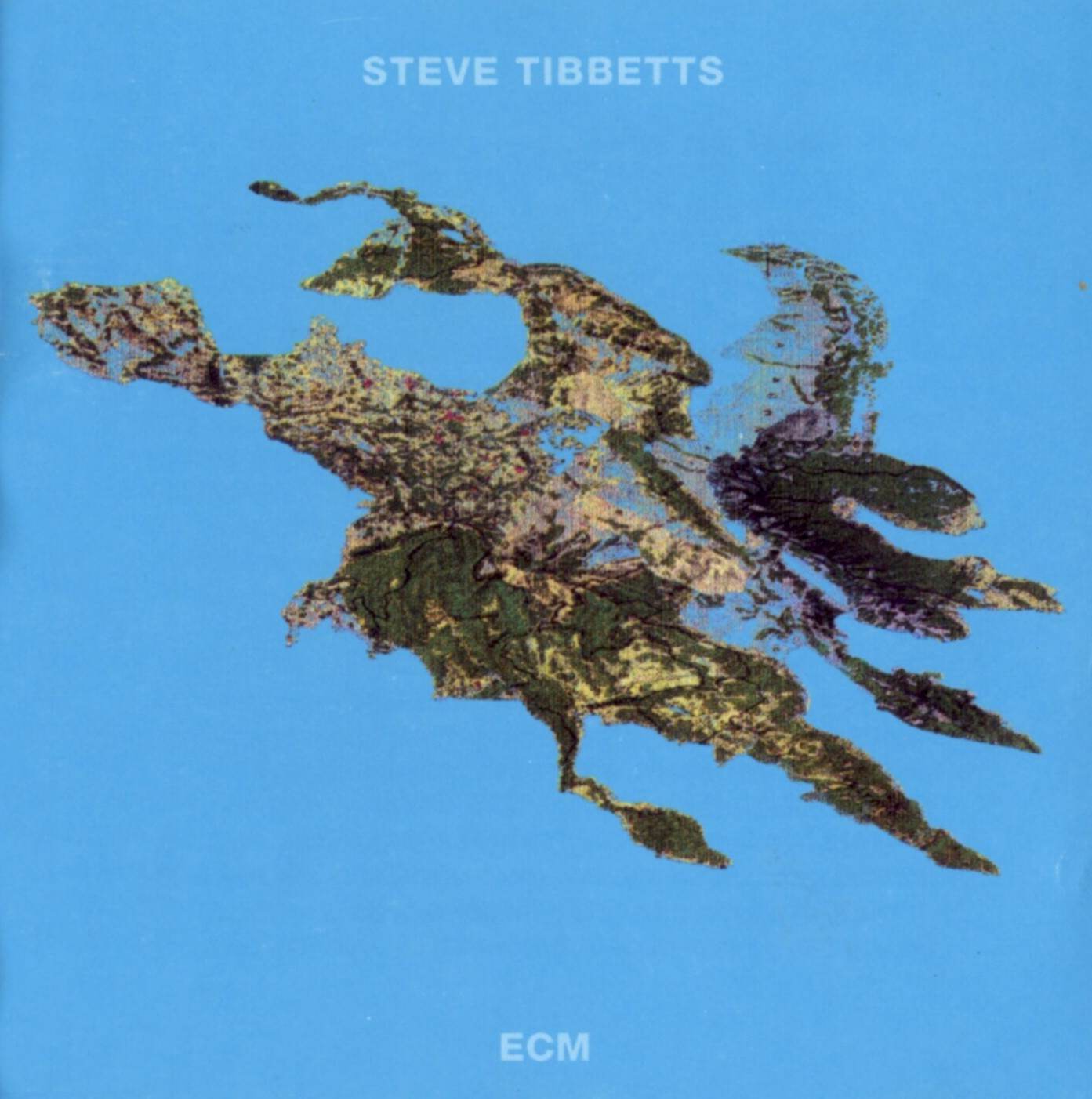
Steve Tibbetts: Big Map Idea (ECM 1380)

Steve Tibbetts
Big Map Idea

Steve Tibbetts guitars, dobro, kalimba, pianolin, tapes
Marc Anderson percussion
Marcus Wise tabla
Michelle Kinney cello
Recorded 1987/88 in St. Paul, Minnesota
Engineer: Steve Tibbetts
Produced by Steve Tibbetts

With this release, Steve Tibbetts turned a new leaf in his cartographic imagination. The album’s title betrays its creator’s humility, acknowledging the incompleteness of any landscape, which is never more than a cultural possibility. We see this the moment that signature slack-jawed guitar and worldly percussion paint for us a big map indeed in “Black Mountain Side.” And what’s this? A Led Zeppelin tune, artfully arranged and wrapped in a sparkling bow as only Tibbetts can tie it. But even when he strays into the dripping caverns of “Black Year,” where flames have burnt out long ago yet still flicker with feeling, we are never lost, for there is always something familiar to hold on to. Tracks like this and “Big Idea” teeter at the edge of an all-out frenzy, but stay respectfully perched atop cold mountains, watching the plains with eagle eyes. Each hit of the steel drum forms a new cloud, rustling the foliage in “Wish” and hopping like a bird from branch to branch. The finger tapping and kalimba-infused connections of “Mile 234” make it one of the more masterful turns on this trip. Some of that same instrumental color bleeds into “100 Moons” before an acoustic/electric dance lays track in “Wait.” Sampled voices flow throughout “3 Letters,” turning like a diorama lit by strings, and finish as if living in reverse, turning light into dark, warm and sustained by a maternal hope.

If the majority of Tibbetts’s work is a chant, then Big Map Idea is a lullaby. It is a florid expression of its ancestors, using a relatively intimate palette, one where wings and earth are far closer to one another than logic would dictate.

<< Keith Jarrett: Dark Intervals (ECM 1379)
>> Jan Garbarek: Legend of The Seven Dreams (ECM 1381)

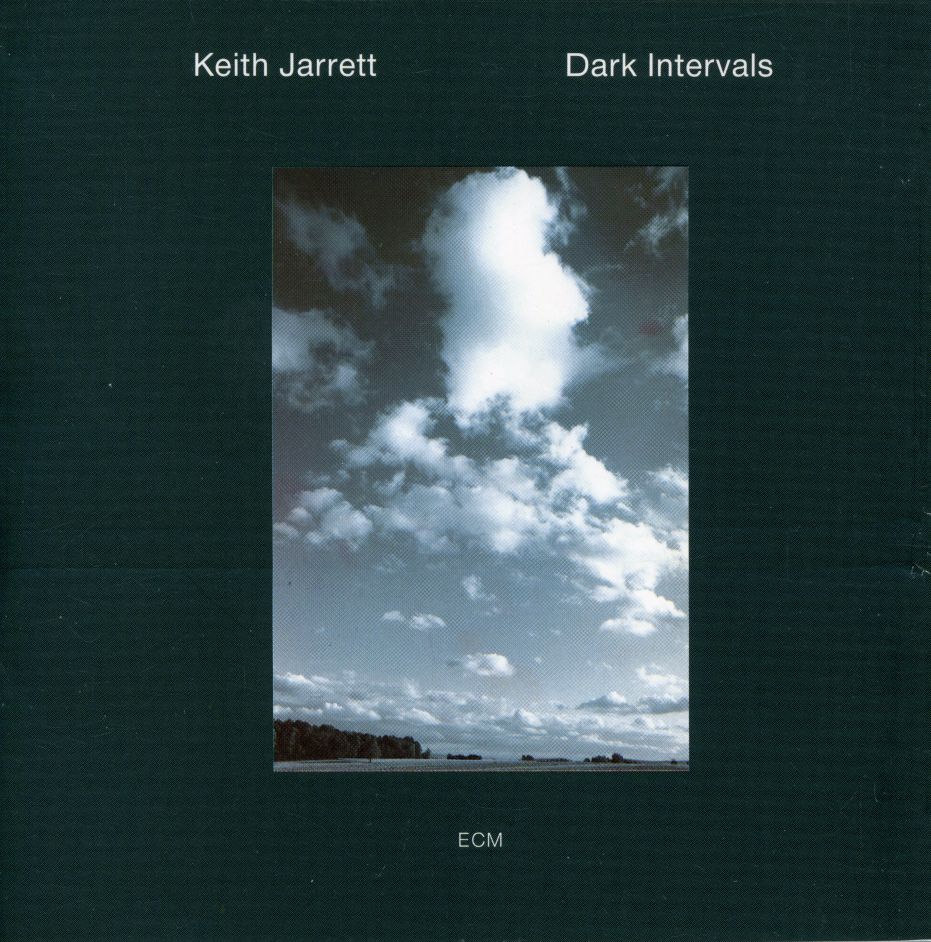
Keith Jarrett: Dark Intervals (ECM 1379)

Keith Jarrett
Dark Intervals

Keith Jarrett piano
Recorded April 11, 1987 at Suntory Hall, Tokyo
Engineer: Kimio Oikawa
Produced by Manfred Eicher

Keith Jarrett weaves a special kind of spell in his improvisations, one somehow connected to a greater humanity, for though the music and playing are ethereal, one is never mistaken that they are anything but earthly. Jarrett is not a mere vessel, but a creative force of flesh and bone whose fingers speak in ways we can only understand without words. This live recording from Tokyo’s Suntory Hall expands that flesh, and feels so intimate it might as well have grown away from others in the cave of his private studio.

In the roiling cascade of light and shadow that is “Opening,” there is much to ponder. At nearly 13 minutes, it is the set’s longest, and sweeps us away in an undercurrent of molten echoes. “Hymn” is a more resplendent foray into Jarrett’s emotional recesses, one that speaks as much to the future as it does to the past while embracing in its tender heart the impossibility of the present. Its light is always flecked with dust kicked up by the footsteps of a lost people whose only shelter is any that may be found. “Americana” breathes with a heaving gentility, one that soars even as it dreams on foot. “Entrance” walks with a gentle assurance onto the stage, trailing a monochromatic veil and finding solace in a skyward glance. “Parallels” is, ironically, the most skewed track on the album and yet also manages in its teetering journey to string a well-anchored tightrope between loss and resolve. “Fire Dance” is a spinning top of exaltation, a hand made of sparks stirring one’s emotional pot until it boils, while “Ritual Prayer” is proof positive of the lifetime’s worth of inspiration Jarrett must have absorbed from Gurdjieff. This piece is rich with spiritual beauty and is one of Jarrett’s most selfless exhalations ever recorded. “Recitative” is another gentle bob on the waters of introspection, a protracted fall into repentant pitch. There is forgiveness in this blindness, for only in the echo of a vibrating string can one feel the light of release.

<< Heinz Reber: MNAOMAI, MNOMAI (ECM 1378 NS)
>> Steve Tibbetts: Big Map Idea (ECM 1380)

Dino Saluzzi: Andina (ECM 1375)

Dino Saluzzi
Andina

Dino Saluzzi bandoneón, flute
Recorded May 1988 at Rainbow Studio, Oslo
Engineer: Jan Erik Kongshaug
Produced by Manfred Eicher

Each title on Andina, Dino Saluzzi’s second solo album for ECM, describes a different facet of the bandoneón prodigy’s creative process. He is the forlorn sonic architect, using melody to construct a world of indelible impressions, and perhaps nowhere more so than in “Memories,” which in both concept and execution seems the culmination of his notecraft and the spirit on which it thrives. Saluzzi makes an organ of his instrument, suspending a new ornament from every echoed moment, each a forgiving step into a shaded past. And in that past we encounter a life in miniature. A lively “Dance” introduces us to the music’s silver screen, on which rich insights flicker like a trailer for all that follows. “Winter” leaves a chain of cautious footsteps imprinted on the blanketed landscape. The promise of a warm hearth quivers in a single lit window, a beacon in the snowdrift. We feel this domestic comfort in every key change, in every “Transmutation” that balances agitation with resignation. The overwhelming solitude then splits into the eerie “Tango Of Oblivion,” moving with light footwork across heavy sentiments into “Choral.” This slow hymn-like progression is the one of the album’s most endearing, sounding like an organ touched by the fingers of a lone Kapellmeister, whose only muse is the absence of light. In contrast, the chording of “Waltz For Verena” twirls joyfully like a gymnast’s ribbon. And if by the time the title piece unleashes its emotional reserves you aren’t fully immersed, then you may want to get an EKG.

Another quiet stunner from Saluzzi, Andina is lovingly recorded, allowing perfect separation between both sides of the bellows. His leading lines in the right hand move like ice skaters across the blackened surfaces of the left. And while an unaccompanied squeezebox recital may not sound like everyone’s idea of a good time, Saluzzi holds rapt attention through a constantly metamorphosing array of moods, melodies, and atmospheres. Nothing short of magical.

<< Eberhard Weber: Orchestra (ECM 1374)
>> Werner Bärtschi: Mozart/Scelsi/Pärt/Busoni/Bärtschi (ECM 1377 NS)

Markus Stockhausen: Cosi Lontano … Quasi Dentro (ECM 1371)

Markus Stockhausen
Cosi Lontano … Quasi Dentro

Markus Stockhausen trumpet, fluegelhorn, synthesizer
Gary Peacock bass
Fabrizio Ottaviucci piano
Zoro Babel drums
Recorded March 1988 at Rainbow Studio, Oslo
Engineer: Jan Erik Kongshaug
Produced by Manfred Eicher

Trumpeter Markus Stockhausen follows, not leads, this haunting improvisation session with Gary Peacock on bass, Fabrizio Ottaviucci on piano, and Zoro Babel on drums. The colors are as rich as the names on the roster, and work their way through eight improvisatory spaces with varying degrees of clarity. “So Far,” for instance, begins like fingers groping along the wall of a pitch-dark room, awakening after an undisclosed period of unconsciousness. Like you, it doesn’t know where it is. You hear drums, cymbals, a bass, can feel the rattling of a piano in your ribcage. There is resolution only in that last morsel of starvation, where Peacock’s gentle scramble over a drone of horns in “Forward” bursts like a play of light and shadow while Babel plays 52 Pickup on the periphery. “Late” features a rare arco turn from Peacock, who scratches a treatise’s worth of indecipherable letters at the center of every galaxy Stockhausen traces around him. Yet the proceedings aren’t all slip and slide, for “Across Bridges” gives us a hefty dose of traction, as if throwing a final memory our way before capture. Bass and drums dance in a free conversation with Stockhausen, who lays down a refracted song “In Parallel.” This blossoming of after-midnight sentiments and avenues pales into “Breaking,” a concise staccato package unwrapped as if by a child at the base of a toppling Christmas tree. Babel sits out “Through,” another excursion into starlight, rising only upon the latter waves of “Almost Inside,” which over an inescapable hum rise and fall like eventide on the shoreline of a desolate island.

You’re not going to find your foot tapping to this one, but your mind will already know its rhythms before the first note graces your ears.

<< Arvo Pärt: Passio (ECM 1370 NS)
>> Alex Cline: The Lamp And The Star (ECM 1372)

Heiner Goebbels: Der Mann im Fahrstuhl/The Man In The Elevator (ECM 1369)

Heiner Goebbels
Der Mann im Fahrstuhl/The Man In The Elevator

Arto Lindsay voice, guitar
Ernst Stötzner voice
Don Cherry voice, trumpet, doussn’gouni
Fred Frith guitar, bass
Charles Hayward drums, metal
George Lewis trombone
Ned Rothenberg saxophones, bass clarinet
Heiner Goebbels piano, synthesizer, programming
Recorded March 1988, Sound On Sound Recording, New York
Engineer: Mike McMackin
Produced by Heiner Goebbels and Manfred Eicher

“Your home is a box. Your car is a box on wheels. You drive to work in it. You drive home in it. You sit in your home, staring into a box. It erodes your soul, while the box that is your body inevitably withers…then dies. Whereupon it is placed in the ultimate box, to slowly decompose”
–Arlington Steward in The Box

Heiner Goebbels continues his (man)made-in-heaven collaboration with Heiner Müller in this fascinating piece of hate mail to the modern condition. Drawing on talents as diverse as Arto Lindsay, Ned Rothenberg, George Lewis, Fred Frith, and Don Cherry, it begins as it ends: in a dance of doppelgangers. Lindsay carefully plots every step of this morbid ball with his delicate guitar. He is the everyman, the proverbial drone splashing his thoughts against the sphere of his labor, rattling like the many cages of transport that carry him through life’s many turns. Like his instrumental comrades, he is constructed by his attire, tuned to the plight of interaction. Lindsay’s omnipleasant diction luxuriates in every rounded r, a tempered steel to Rothenberg’s engaging reeds, the latter a guardian angel fluttering at our backs, constantly tapping the shoulder of those of us who cannot help but ignore the gesture, we in whom ignorance is a coping mechanism.

Lindsay introduces us to the Boss, Mr. Number One whom one never addresses directly. His is a name we must forget, for behind that visage of darkness lies the agitated voice of Ernst Stötzner, who seems to channel David Moss in a constant breakdown of communicative interest. Lindsay’s protagonist responds with a kneejerk expectoration, a James Brown-like cry rendered meaningless in a muzak-infested void. Two distinct voices tainting an urban desert, whose only oasis is circumscribed by the sweeping hands of a wristwatch.

This is a life written in indecipherable shorthand, a steno bound in human skin. A dripping, Peter Greenaway-like pillow book as résumé. A ball-peen hammer ticks away against the inside plane of a metallic skull, branded by the letterhead of a company whose product is never made clear. A desktop computer whines its woebegone tale. The elevator continues to glide along the shaft of our expectations, or lack thereof, smoothed along by the grist of mysteriously absent clerks and secretaries, every coworker a follicle in the dandruff-infested scalp of society.

A flapping of the lips, as if to proclaim, “I am here.” The batting of an eyelid, as if to deny the very same. Against the sparkling passage of data, one can only run in place. A voice over the PA. The boss tops himself, spilling his brilliance across the already untended battlefield of his planner. The populace ignorant, spawning the one serial number who refuses this lot. A warped record of Brazilian love songs melts in between floors, seeping into the sewer, which carries the muck of a single workday below the feet of protesters on the street. Their appeals blend into the signage that advertises their lives.

Intimations of a faraway people and their music laced with grasses of which one can only fantasize. The fume-infested club offers no solace, and only serves to hem the cloak of anonymity, which we can never seem to shrug off. The possibility of rising to the top of the bureaucratic food chain is as vain as hoping that a parachute might spring magically from one’s back the moment he jumps from the penthouse window like so many before. Still, at the end of the day, as the varicolored air burrows like a snake into one’s open shirt, a dream of love waves as one surrenders to a different sort of imprisonment, one in which bliss is real because it is self-selected. But this love belongs in another’s arms, those of the man you’ll never be, who sings as he lives: boisterously out of tune. Cherry’s trumpet cleans the slate before filling in the chrome grille of the last car you’ll ever see. A car whose license plate reads BOSS, and whose chassis was built on the predecessors into which your body will be absorbed in preparation for your replacement.

Such are the polyglot galleries Goebbels draws out of his distinct array of inceptions and spoken words. His is a scathing and evocative exploration of the urban landscape, but one that never smacks of moral self-righteousness. Rather, it involves itself in its surroundings, drawing red threads through death, the corporate environment, and noises of progress. Goebbels joins disparate elements to unite, at one moment pounding them together like two pieces of a jigsaw puzzle that won’t quite fit, the next letting them speak to one another in agreement.

This is an altogether evocative work. Like any self-respecting postmodernists, its creators always seem to implicate themselves in the very destructions they describe. Which is perhaps why the elevator is the perfect metaphor: its verticality is counterintuitive to the horizontal passage of human traffic. In that 90-degreee intersection lies more than a geometrical relationship, but something of a defining moment, a physical decay that can be felt in the indeterminacies of music-making, in the fragility of song, and in the power of speech.

<< Paul Hillier: Proensa (ECM 1368 NS)
>> Arvo Pärt: Passio (ECM 1370 NS)