Barre Phillips: Three Day Moon (ECM 1123)

ECM 1123

Barre Phillips
Three Day Moon

Barre Phillips bass
Terje Rypdal guitar, guitar synthesizer, organ
Dieter Feichtner synthesizer
Trilok Gurtu tabla, percussion
Recorded March 1978 at Talent Studio, Oslo
Engineer: Jan Erik Kongshaug
Produced by Manfred Eicher

I have said it before and I will say it again: Barre Phillips is one of ECM’s most underrecognized treasures. A maverick of the upright bass, his is a mind in which one revels getting lost. This follow-up to 1976’s Mountainscapes is the genesis to the latter’s messiah. From Dieter Feichtner’s opening synth in “A-i-a” and its attendant bass line, we are immediately engaged in a dialogue that is untranslatable except via the grace of its performance. Electric guitar accents from Terje Rypdal, who feels right at home here, billow backwards from the stratosphere into fissures of sonic earth. Rypdal swaps axe for organ in “Ms. P.,” unfurling a shimmering heat in which the breath of bass turns to steam. Even spacier touches await us in “La Folle” and “Ingulz-Buz.” Farther-reaching abstractions mesh into the neutral colors of electric guitar and bowed bass, respectively, throughout these intertidal interludes. “Brd” puts me in mind of Paul Schütze’s Stateless (especially the track “Cool Engines”): strung by a steady bass line and tabla, the latter courtesy of Trilok Gurtu, and Rypdal’s continued ploys, each bead reveals new insights with every listen. If Rypdal has been a key figure in the album’s narrative thus far, for the final “S. C. & W.” he morphs into a demigod. Backed by an insectile arpeggiator, alongside bombilations from bass, Rypdal gets tricky with the effects, at times lapsing into R2-D2-like articulations, but always with integrity. An emblematic closer.

Grandiose, cinematic, and meticulously constructed, Three Day Moon once more proves Phillips to be one of jazz’s best-kept secrets. The album also sports one of the most evocative ECM sleeves of the seventies, with sonic innards to match.

<< Enrico Rava Quartet: s/t (ECM 1122)
>> Steve Kuhn: Non-Fiction (ECM 1124)

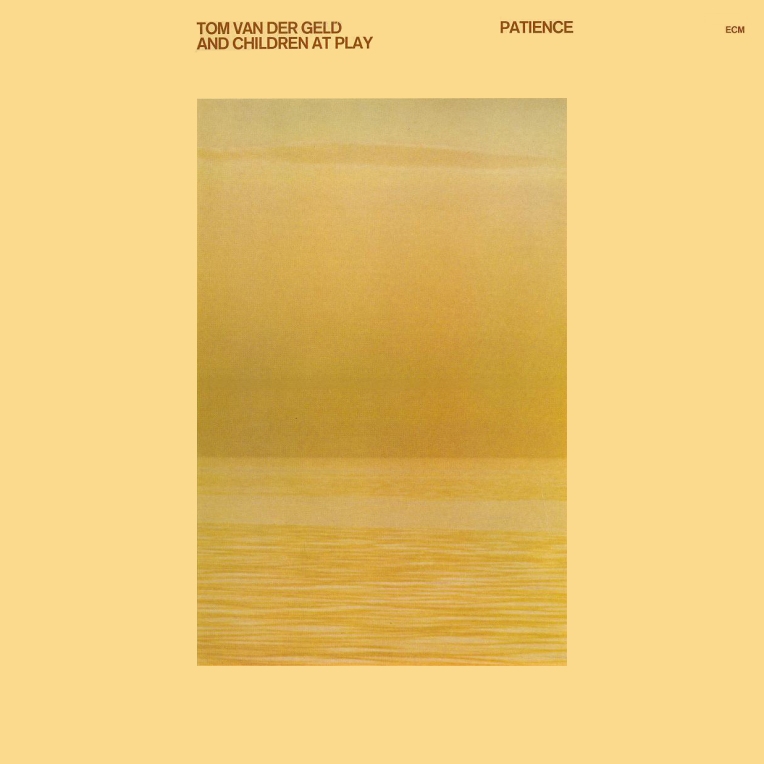
Tom van der Geld and Children At Play: Patience (ECM 1113)

ECM 1113

Tom van der Geld and Children At Play
Patience

Tom van der Geld vibraharp, percussion
Roger Jannotta soprano and baritone saxophones, flutes, oboe, bass clarinet
Kent Carter bass
Bill Elgart drums, percussion
Recorded May 1977 at Tonstudio Bauer, Ludwigsburg
Engineer: Martin Wieland
Produced by Manfred Eicher

As yet to provide choice “vibes” for Kenny Wheeler’s around 6, in addition to his elusive but well-worth-owning Path, mallet man Tom van der Geld made his ECM debut with this, his second of three “Children At Play” recordings. Less specific than his later work with the group, which was perhaps never meant to be a stable collective/concept in the first place, Patience may require just that. That being said, the abstractions of the opening title track have a charm all their own, seeming to inhabit that blurry space between fading night and the coming dawn. This diurnal circle unrolls into a relatively straight line in the flute of multi-instrumentalist Roger Jannotta through the vibes’ infrared lobs. With “Golden Stabs” we feel that dawn acutely, warming our faces with a gorgeous soprano that always remains tonally centered despite its erratic rays. Those smooth reeds carry over into the even smoother melancholia of “Alison.” “Celia” is an ever-changing mosaic of continental winds and underwater railways. Like a broken vial of liquid mercury, it recedes, unrecoverable, into the cracks of a melodious tessellation. “And Then…” ends the album on a pointillist reverie with the oboe as storyteller. We get the barest intimations of traction in the bass (Ken Carter) and drums (Bill Elgart) before taking shelter in more densely woven brush. It is here where the album at last begins to gel and its trajectory becomes known to us.

Viscous and profoundly solitary, van der Geld’s is an intimate world to be sure. Like the flute that haunts its darkest corners, it is a half-remembered death given a new body through the resurrection of the musical act. One feels Patience in degrees of heat, each track an incremental setting on a toaster that sets the coils aglow with varying intensity, leaving us with a distinct char every time.

<< Keith Jarrett: Ritual (ECM 1112)
>> Pat Metheny Group: s/t (ECM 1114)

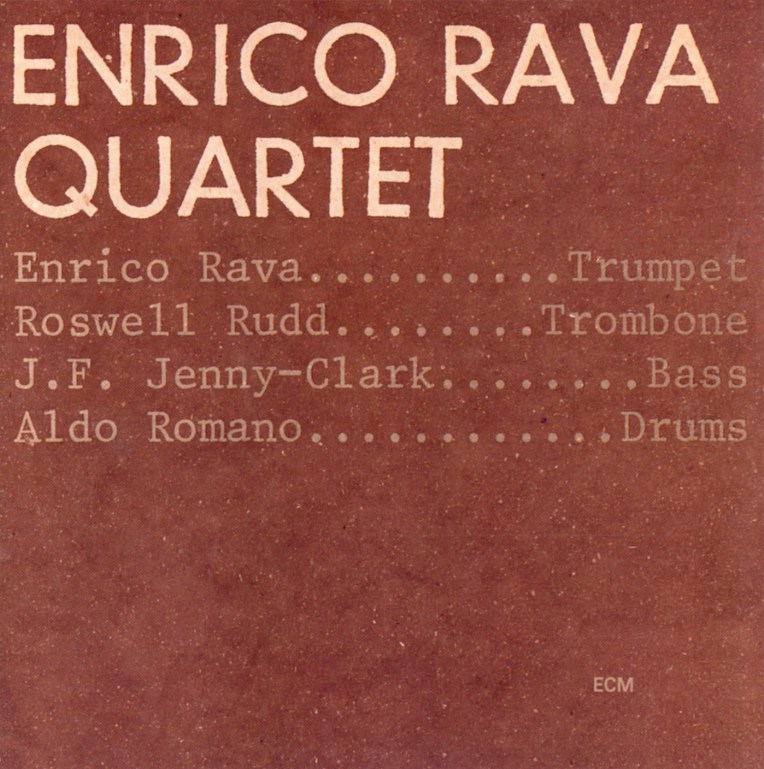
Enrico Rava Quartet: s/t (ECM 1122)

ECM 1122

Enrico Rava Quartet

Enrico Rava trumpet
Roswell Rudd trombone
Jean-François Jenny-Clark bass
Aldo Romano drums
Recorded March 1978 at Tonstudio Bauer, Ludwigsburg
Engineer: Martin Wieland
Produced by Manfred Eicher

Enrico Rava, one of the trumpet’s unsung heroes, unearthed a gem in this self-titled quartet offering from 1978. Although one can always expect an expertly realized variety in any Rava project, what makes this date so special is the assembly of its players. The Italian virtuoso’s hit-you-in-the-chest lyricism—matched perhaps only by label mate Kenny Wheeler—is foiled beautifully by trombonist Roswell Rudd, a free jazz specialist and Archie Shepp go-to whom ECM enthusiasts will recall from Michael Mantler’s CONCERTOS and a smattering of Carla Bley releases on Watt. Rudd’s fluid undertow brings our leader’s more incisive melodic lines to vivid light, gently laying down long thematic carpets upon which every improvisatory step leaves behind an indelible print.

The opening chunk of “Lavori Casalinghi” doesn’t so much kick things off as pull the curtains to reveal a slow sunrise. The drumming of Aldo Romano sets off a spate of powerful statements from the two brassmen, each linked by a chain of highly charged relays. The rhythm section never lags, and even spawns a nimble-fingered turn from bassist Jean-François Jenny-Clark before sliding back into the mournful twists with which it began. This is one of two substantial cuts, the other being “Tramps,” a fifteen-and-a-half-minute swell of sometimes frenzied proportions. Rava and Rudd draw each other into ecstatic exchanges, their playing at its most soaring. Wilder moments are short-lived, but always tasteful. Romano shows off one of the most fluid snare rolls in the business here, flanked by rousing phrasings from Rava and Rudd both. “The Fearless Five” is the first of three shorter numbers that flesh out this balanced effort. A bit of Monk creeps in, foreshadowing the well-worn “Round About Midnight,” which the crew buffs to like-new shine. Finally, the upbeat intro of “Blackmail” leads into some prime playtime for Rava. And as he skips his way across the sky, we take comfort in the somber closure into which he lays his final rest.

All in all, a fine session bubbling with personality and heft, and one well worth owning for the Rava newbie and veteran alike.

<< Ralph Towner: Batik (ECM 1121)
>> Barre Phillips: Three Day Moon (ECM 1123)

Bill Connors: Of Mist And Melting (ECM 1120)

1120 X

Bill Connors
Of Mist And Melting

Bill Connors guitar
Jan Garbarek saxophones
Gary Peacock bass
Jack DeJohnette drums
Recorded December 1977, Talent Studio, Oslo
Engineer: Jan Erik Kongshaug
Produced by Manfred Eicher

Three years after his astonishing acoustic turn on Theme To The Gaurdian and fresh from Jan Garbarek’s Places session, guitarist Bill Connors returned as leader for this moody quartet, for which one could hardly dream up a better roster: Garbarek (saxophones), Gary Peacock (bass), and Jack DeJohnette (drums) fill out the spectrum of this sound palette with the best of them. The synergy for which the latter two musicians have come to be so highly regarded is already plain to see here and spins the free and easy flow that characterizes the album’s ethos from beginning to end. While one might expect an electric guitar at anchor, Connors maintains his wireless interests with no loss of potency. One “side effect,” if you will, of this configuration is that the backing generally keeps its volume low and fades to near silence in order to give Connors ample soloing room. Garbarek’s chops are kept in check, for instance, in the opening cut, given only a single cosmic needle through which to thread their potentially overpowering strains. Similarly attractive negotiations abound in the heartrending tenor of “Not Forgetting,” in the lullaby effect of “Face In The Water.” Garbarek reignites in “Aubade” as if he were embodying the wavering reflections of a pool of fire. Where much of the album is diffuse and liquid, the groove of “Café Vue” is undeniably solid and allows for some engaging breaches of calm before being restored in “Unending.”

While perhaps less specific than Connors’s ECM debut, Of Mist And Melting is a worthy successor. It holds on to that same sense of freedom while charting an ethereal sound that could only come from those gathered.

<< Gary Peacock: December Poems (ECM 1119)
>> Ralph Towner: Batik (ECM 1121)

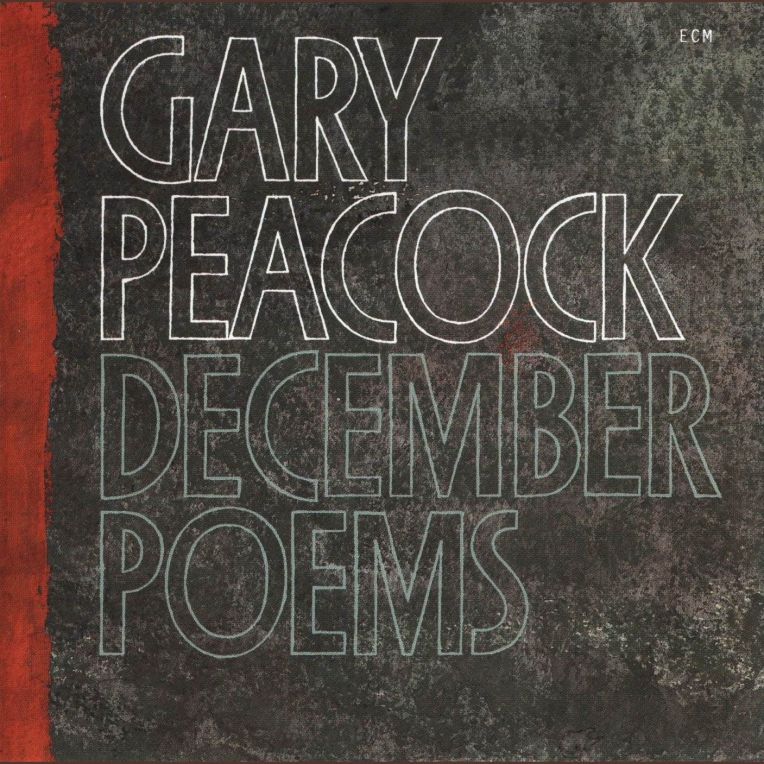
Gary Peacock: December Poems (ECM 1119)

ECM 1119

Gary Peacock
December Poems

Gary Peacock double-bass
Jan Garbarek tenor and soprano saxophones
Recorded December 1977 at Talent Studio, Oslo
Engineer: Jan Erik Kongshaug
Produced by Manfred Eicher

From the start of Gary Peacock’s December Poems, one revels in the sound of his instrument, the buzzing, raw quality of which comes to listeners at last relatively unmitigated. After a languid intro, “Snow Dance” lays down an unsinkable bass line, over which overdubbed improvisations abound. Jan Garbarek’s reports paint “Winterlude” like the sky outside my streaked window: that is, with only the barest of contrasts separating heaven and earth. “A Northern Tale” is a strangely airy segue into the wistful intro of “December Greenwings” and Garbarek’s subsequent reappearance. His winding paths intersect beautifully with Peacock’s straight and narrow in a track that is about as upbeat as the album gets. “Flower Crystals” changes the tone considerably with some internal pianism before settling into “Celebrations.” Like the opener, this also features two basses, only this time caught in a more erratic chain of events.

As I write this, it is indeed December—New Year’s Eve to be precise—and I am on a bus bound for New York City. Behind thoughts of friends and fun (the Metropolitan Opera’s performance of Pelléas et Mélisande awaits me), I feel in the starkness of this music the deeper roots of my travel. As the sun rises somewhere behind the cloud cover, I know that its light shines within. Recorded with unsurprising clarity, the album captures every creak, tap, and involuntary hum. Like a bare tree standing in a snowy field, its branches cut a bold hand-stretch of lines across a canvas of white and gray. As with Jack DeJohnette’s Pictures, this effort offers insight into an otherwise fiery group player whose free-spiritedness is akin to that of the label on which he has found his ideal home.

<< Jan Garbarek: Places (ECM 1118)
>> Bill Connors: Of Mist And Melting (ECM 1120)

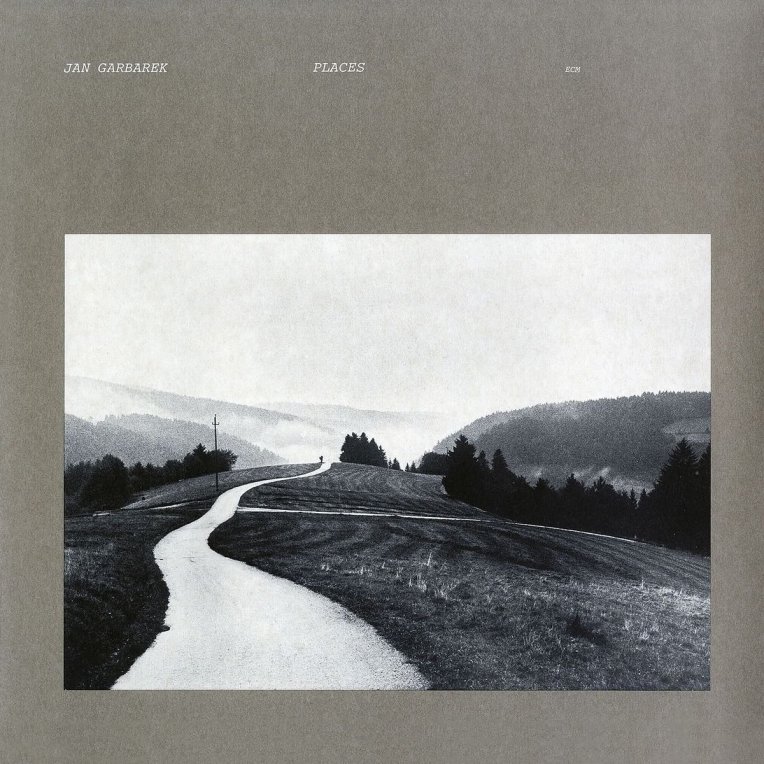
Jan Garbarek: Places (ECM 1118)

ECM 1118b

Jan Garbarek
Places

Jan Garbarek saxophones
Bill Connors guitar
John Taylor organ, piano
Jack DeJohnette drums
Recorded December 1977 at Talent Studio, Oslo
Engineer: Jan Erik Kongshaug
Produced by Manfred Eicher

Places brings together another congregation of musicians that could only come from ECM. Drummer Jack DeJohnette lassoes his scurrying loops to the acoustic hooks of guitarist Bill Connors, while John Taylor supplements most of the cargo with organ. At the helm of this vessel is Jan Garbarek, whose saxophonism starts high and goes only higher. With cumulative notecraft and a heartfelt commitment to atmosphere, he and Taylor unwrap a lush nexus in the stunning opener. The occasional harmonic falls like a dandelion seed onto this pool of night as cymbals splash all around us. Taylor weaves a fine spread, anchoring us with sustained bass lines and attentive chording, leaving Garbarek to seal every crack with his sonic caulk. Connors seeks to light his surroundings, striking at the flint with his percussive gesticulations in hopes that one spark might show the way. Garbarek sharpens himself with arid flavor and carves out a miniature oasis in the crumbling image of exotic desire. The organ weaves in and out like a halo circumscribing us with subtle urgency until it pulls us beyond the point of no return, where dwells only silence in these “Reflections.” We then find the organ “Entering” into an electric guitar embrace. Bass and drums give us footholds where we might not expect to find them. Thus, what began as an elegy turns into a far-reaching journey that is over too soon. But in the next track we’re still “Going Places,” spurred by DeJohnette’s steady pulse and Garbarek’s hidden thermals. The energy comes in waves, subsiding here for a guitar solo and swelling there at Garbarek’s call. “Passing” ends where the album began, in a fluid ostinato of organ over which Connors looses his wavering song. Garbarek draws an ascendant pattern between those quiet strings, lifting us to an arena in which age curls into a semblance of time.

For anyone who wished Aftenland had a beat, this one’s for you.

<< John Abercrombie: Characters (ECM 1117)
>> Gary Peacock: December Poems (ECM 1119)

Translating Time: Leonidas Kavakos Concert Review

Time
in places
becomes
so thin
you can see
through its
fading material.
–Lera Auerbach

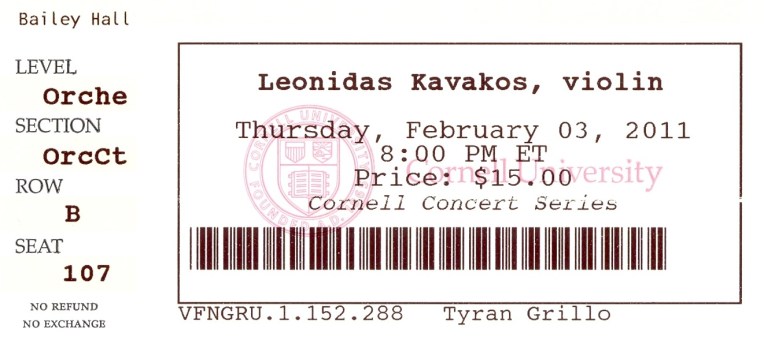
On Thursday, 3 February 2011, Cornell University’s Bailey Hall was graced by one of the world’s preeminent violinists. Having achieved this status through, among many other accomplishments, standout readings of Ravel’s Tzigane and the neglected works of Enescu (ECM, 2003) as well as his award-winning violin concertos of Sibelius (Bis, 1992) and Mendelssohn (Sony Classics, 2009), Athens-born Leonidas Kavakos has charted a rich swath of sonic territory. And therein lies the rub. With such a hefty cache of threads from which to spin his musical webs, a musician of Kavakos’s stature is faced with an unenviable amount of repertory choices. In a day and age when contemporary music is undergoing a deep shift into uncertainties and sometimes less-than-successful pastiches, this means a mounting challenge to give voice to underrepresented composers. Enter the music of Lera Auerbach, from whose Preludes for Violin and Piano, Op. 46 Kavakos and his accompanist, Enrico Pace, offered a hefty selection at the heart of the evening’s performance.
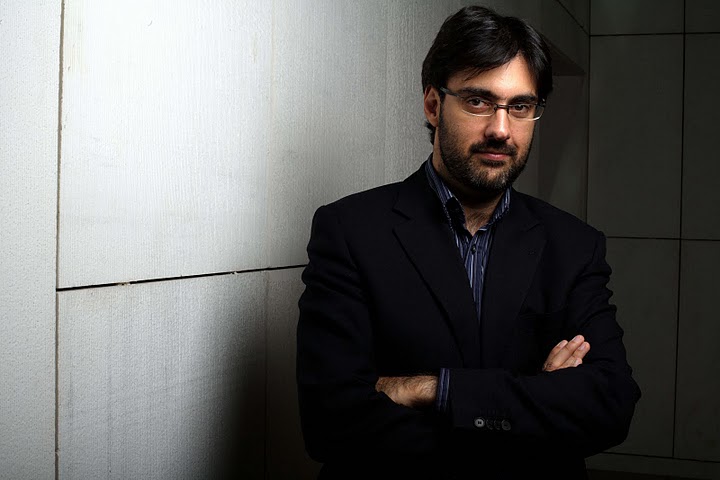
Leonidas Kavakos (Tchaikovsky Competition publicity photo)

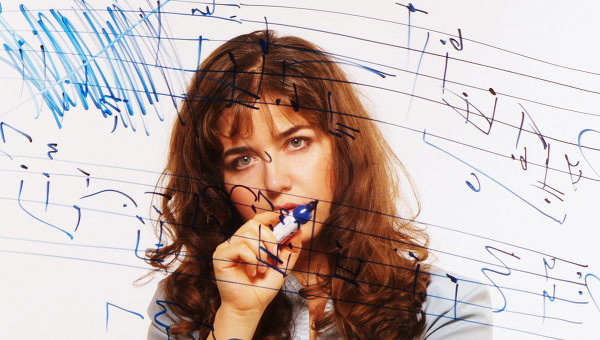
Born in 1973 on the Siberian border and sufficiently endowed with the gifts of her predecessors (Schnittke comes immediately to mind) and contemporaries (particularly Kancheli and Silvestrov) alike, Auerbach has emerged as one of her generation’s most influential voices. She is also an accomplished poet in her native Russia, where her writings have already been incorporated into literary curricula as required reading. To be sure, the Preludes speak with a grammar uniquely their own. That being said, listeners of the parenthetically aforementioned may find her motivic paths well-worn. At some moments deliberately contrived and at others innocent, the Preludes have been called a Well-Tempered Clavier for the 21st century. Such comparisons do nothing, however, to obscure what is already her rather cloudy aesthetic.

Since composing her first major opera at age 12, Auerbach has been no stranger to the complexities of vocal representation, but negotiating the “voice” of a single violin set against its most intimate partner, the piano, is a poetry in and of itself. Hers is what I might call “postludinal incidentalism.” Put another way, the music plays like a requiem for one who has yet to pass, and nowhere more so than in the fleeting march that was the Prelude No. 1. Its metronomic beginnings and breathy ascents set the tonal contrasts for all that followed. The strident yet haunting pianism of No. 18 unraveled what Kavakos could not with merely four strings at his disposal. From the long sustains of No. 20 to the pseudo-romanticism of No. 12, each contributed a potent cell to the overall kaleidoscopic effect. Also intriguing were the morose etude-like scales of No. 16 and the turbulent Bach deconstruction built into No. 24.
Lera Auerbach (photo courtesy of Auerbach’s official site)

Auerbach is a force to be reckoned with and one well adjusted to discerning contemporary audiences. Her plurivocity engulfs but never dominates. Unfortunately, many of her subtleties were lost in the shadows of the program’s opener. The origins of Prokofiev’s weighty Sonata No. 1 in F minor, Op. 80 in Stalinist Russia tend to mask this admittedly despondent work with associations of darkness and deprecation. Such interpretations are only underscored by the composer, who himself characterized the piece’s most recognizable motifs as “wind passing through a graveyard.” In the hands of our consummate duo, said wind was stilled in the eye of a storm that one could see but could not hear. The sonata’s four movements consisted of two pairs of Andantes followed by brisker counterparts. The funereal mood of the first struggled to hold its resolve in the glare of Kavakos’s glistening trills. Every double stop felt like an internal conversation over Pace’s Debussean tintinnabulations. The ensuing Allegro was pulled off with gusto. Staggered rhythms and crunchy arpeggios popped with requisite verve while a seesawing motif on the D and A strings seemed to caress the violin’s very architecture. And as the horsehairs went flying, I began to hear the music not as a conservation so much as conversion—from sentiment to statement, and from thought to action. The undulations of the third movement were accentuated by highs that glowed like hand-blown glass. So angelic was this passage that the final movement came almost as a shock, so that one now looked back on the Andantes as unrecoverable catharses. It also harbored an unexpected moment of whimsy when the sheer power required for this finale loosened a peg. As Kavakos stopped to retune, he graciously quipped, “It happens sometimes. We’ll try again.” And try again they did, giving an even sharper rendering the second time around. Amid more dangling horsehairs and gypsy flair, the duo finished with panache.

If any connection was to be drawn between the Prokofiev and Auerbach, it was that both were dark in theory but in practice danced on lines of light. Which leads us to Beethoven’s Violin Sonata No. 9 in A major, Op. 47 that concluded the program. Known as the “Kreutzer,” it was premiered in 1803 by its dedicatee, violinist George Bridgetower, with the composer at the piano. A subsequent disagreement prompted an outraged Beethoven to rededicate the piece to Rodolphe Kreutzer, the finest violinist of the time, who found the sonata “outrageously unintelligible” and refused to privilege it with his bow. If the first half of the evening’s performance felt curiously chosen, perhaps it seemed even more so in light of the inevitable “wow” factor that Kavakos and Pace unleashed through Beethoven. Wherever the variations ran, we could be sure that they never left their thematic mothers’ sights. And where the high notes from the Russians scintillated, here they trembled with a profound sense of emotional upheaval. This constant negotiation of tension and release worked its way into every lucid afterthought to spill from Pace’s fingers. The Andante, by contrast, unfolded in a slow skip. With protracted exuberance, every playful rumination from the violin found its better half in the keyboard. Kavakos’s delicacy made of these vignettes a window into the imagination of experience. Pace had us at A major with the raw statement that signaled the final Presto, and which worked through its anticipations with fortitude to the very end.

In spite of his reputation for symphonic density, as a chamber composer Beethoven clearly wanted his musicians to breathe. In the case of the Kreutzer, he accomplished this by placing strategic gaps throughout the score. These gaps allowed our musicians plenty of space in which to spread their wings together. This unity made all the difference and stretched a fine canvas upon which to brush in a lovely encore in the form of the “Garden Scene” from Korngold’s “Much Ado About Nothing” suite.

Kavakos’s instrument, an “Abergavenny” Stradivarius dating from 1724, was more than a mere vehicle for the music and provided a bird’s-eye view of the landscapes at hand. Sitting in the second row as I was, I could hear its every vulnerable detail. Its raspy highs and liquid lows coalesced into a formidable sound palette. Sadly, the same could not be said for the Steinway from which Pace struggled to elicit anything more than a muddy blur of sound, not to mention that anyone with perfect pitch would have cringed at the tuning problems in the lower register. Add to this an unpleasant squeak in the sustain pedal, and one begins to recognize Pace’s talents all the more for having poured on his meticulous attentiveness undeterred. The latter two issues at least were rectified during intermission, after which the Beethoven shimmered with noticeably brighter syncopations and octaval consonance.
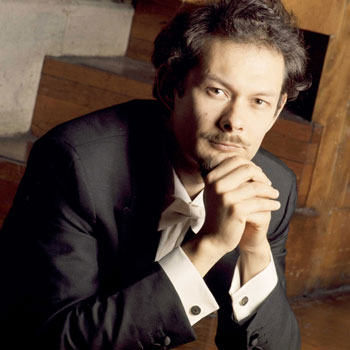
Enrico Pace (photo courtesy of Amadeus Online)

Pace is himself a native of Rimini, hometown of famed director Federico Fellini, who once said, “A different language is a different vision of life.” And perhaps nothing could better sum up the effect of this concert. Each piece inhabited such a distinctly “linguistic” space that it seemed the audience was hard-pressed to test its fluency across the board. At the very least, one can only admire the program’s adventurous spirit, even if it did not quite work as a whole. It also gave us the audible resumes of two performers at the peaks of their careers.

All in all, it was as fine a way to spend an evening as any, and I imagine that everyone walked away with mental tethers trailing behind them to an equally disparate selection of moments. As for this listener, though Kavakos is certainly a fiery performer when he wants to be, I left taking comfort in his conservatism, which continues to provide a valuable alternative to the histrionics of a Gidon Kremer or the technical favoritism of an Anne-Sophie Mutter. His restraint indicates a mind for which music is primary and its effects open to the indeterminacies of life itself.

(This review was published in its original form at the Cornell Daily Sun.)
Heiner Goebbels: Eislermaterial (ECM New Series 1779)

Heiner Goebbels
Eislermaterial

Ensemble Modern
Joseph Bierbichler voice
Recorded live October 1998 at Hebbel-Theater, Berlin
Engineer: Max Federhofer, SWR
ECM Records co-production with Ensemble Modern, Südwestrundfunk, Deutschlandfunk

“Fear is a false expression.”
–Hanns Eisler

Hanns Eisler (1898-1962) is the subject of Heiner Goebbels’s fascinating homage, which has become as beloved as the music that inspired it. Eisler was the third protégé, after Berg and Webern, of the Schönberg dodecaphonic school, and a German expatriate who fled with close friend/collaborator Bertold Brecht in the 1930s to the United States, where he would go on to compose two Oscar-nominated film scores (1943’s Hangmen Also Die!, for which Brecht also wrote the script, and None but The Lonely Heart one year later). Just as he was settling into his exile, however, Eisler was deported (he was among the first to find his name on the Hollywood blacklist), but not before a series of benefit concerts—sponsored by Aaron Copland, Roger Sessions, Charlie Chaplin, Igor Stravinsky, and Leonard Bernstein, to name an illustrious few—were given to raise funds for his defense. Virgil Thomson, writing for the New York Herald Tribune, said of the final program on 11 March 1948:

The impressiveness is due less to any profound originality, as in the case of his master, Arnold Schönberg, or in that of his sometime model, the German-language works of Kurt Weill, than to his graceful and to his delicate taste. Eisler’s music, whether the style of it is chromatic and emotional, diatonic and formalist, or strictly atonal in the dodecaphonic manner, always has charm. It has charm because the tunes are pretty, the textures bright and light, the expressive intentions thoroughly straightforward and clear. Eisler is that rare specimen, a German composer without weight. He uses no heaviness, makes no insistence.

When Eisler returned to East Berlin he penned the GDR’s national anthem amid a spate of intense musical activity, culminating in a Faustian opera that was characterized by Neues Deutschland as “a slap in the face of German national feeling” and therefore never completed. After the death of Brecht, Eisler’s disillusionment intensified and plunged him into depression, during which time he breathed his last.

Eisler and Brecht, 21 March 1950 (Bundesarchiv)

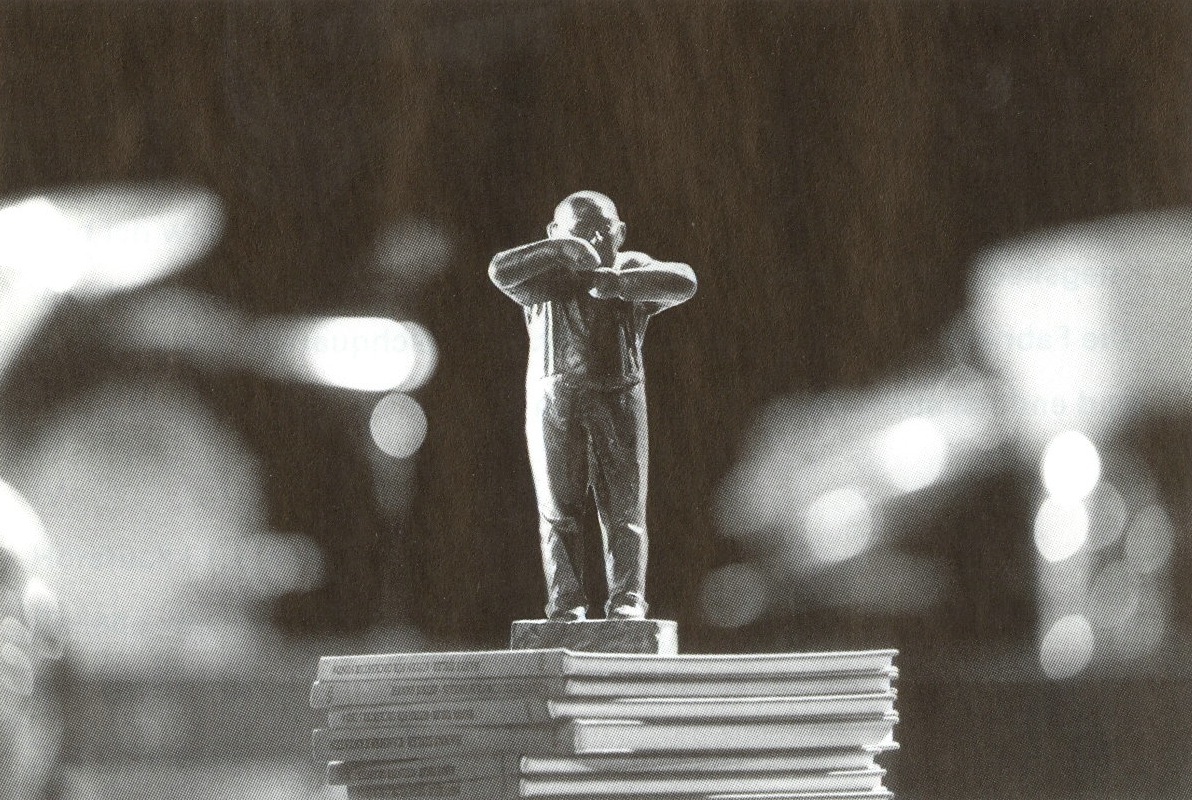
The dramaturgy of Eislermaterial calls for a small statue of its namesake to be placed at the center of the performance space: the surrogate conductor, standing in a field plotted like some gridless Go board. Befittingly, Eisler’s compositions make up the piece’s entirety. The resulting “assemblage” uses his many voices as raw materials for a tribute that shuns ideological heavy-handedness in favor of a bittersweet portrait comprised of lieder and relatively unknown instrumental pieces. The latter are artfully arranged and performed here by the discerning musicians of Ensemble Modern, who crack open the kinetic energy residing within. Of these, Suite for Septet No. 1 provides particularly delightful insight into this eclectic mind, while a fragment for string quartet is rendered all the more moving for being juxtaposed with a turn from his Orchestral Suite No. 3, which sounds like a big band falling down a flight of stairs. Wonderful.

Eisler statue, up close and in situ (photos by Matthias Cruetziger)

Surrounded as these are by nine of Eisler’s songs, they take on more than mere interludinal quality, rather embedding themselves like nodules of concentration. Eight of these are settings of poems by Brecht. Tones range from patriotic (Children’s Anthem) and nostalgic (And I shall never again see) to proletarian (Four Lullabies for Working Mothers), and cover such themes as adaptability (The Grey Goose), the visibility of privacy (Mother Beimlein), renewal (Of Sprinkling the Garden), and fatalism (War Song). On Suicide unfurls the set’s most pensive backdrop, both lyrically and musically:

In such a country and at such a time
There should be fewer melancholy evenings
And lofty bridges over the rivers
While the hours that link the night to morning
And the winter season too each year, are full of danger.
For having seen all this misery
People won’t linger
But will decide at once
To fling their too heavy life away.

A verse by Peter Altenberg closes the set with a melancholic picture of resignation: “Eventually, longing dies, too, / as blossoms languish in a cellar / waiting daily for a little sun.” The interpretations are sometimes augmented by stark contrasts, such as the scratchy free jazz solo of The Grey Goose and the morose rubato of Mother Beimlein. Singer Joseph Bierbichler makes no attempt to sing like Eisler and instead brings out subjective and endearing performances that are as genuine as they are vulnerable. Goebbels also includes two “Audio dramas,” making use of clips from the Eisler archive in true Glenn Gould fashion. In these we are treated to his thoughts on sound, culture, science, and contemplation, evoking an age of black and white imposed upon a world of horrid color.

The comprehensive booklet for Eislermaterial includes an interview with Goebbels, who credits Eisler with having jumpstarted his life in sound. Certainly, one need hardly look deeply to see the affinity. Not only did Goebbels find his own Brecht in Heiner Müller, but both he and Eisler have successfully united politics and music in such a way that one finds them impossible to separate in the listening and likewise to dilute in the thinking. Eisler was more than a Marxist cog with a creative streak, and no one is better suited than Goebbels to tell that story to its fullest. This is the most “filmic” of Goebbels projects and lends itself wisely to an aural and textual world bound by an undying love for theatre. A masterpiece on all counts and a crowd favorite among fans and newcomers alike.

<< Valentin Silvestrov: Requiem for Larissa (ECM 1778 NS)
>> Keith Jarrett Trio: Inside Out (
ECM 1780)

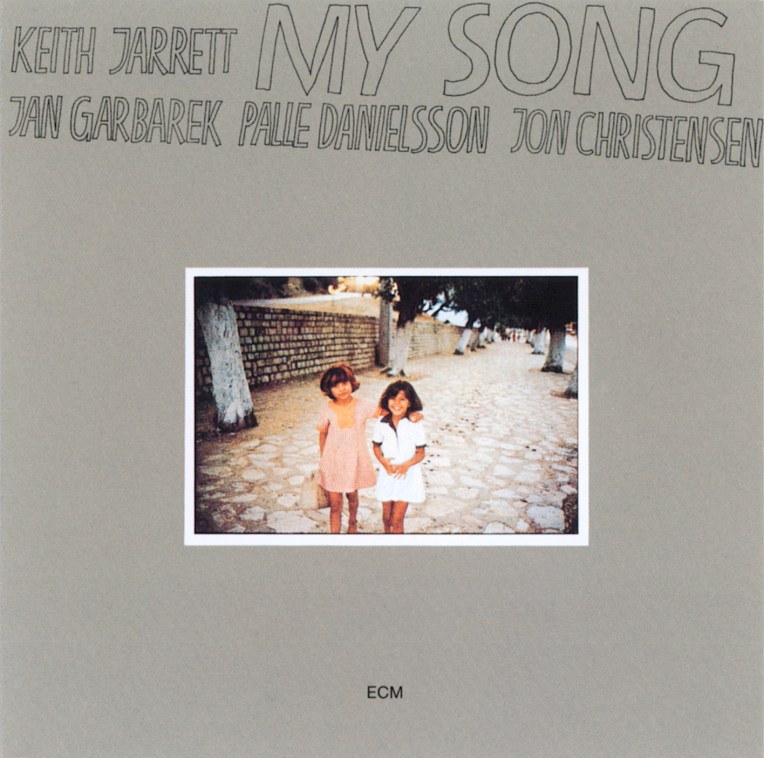
Keith Jarrett: My Song (ECM 1115)

ECM 1115

Keith Jarrett
My Song

Keith Jarrett piano, percussion
Jan Garbarek tenor and soprano saxophones
Palle Danielsson bass
Jon Christensen drums
Recorded November 1977 at Talent Studio, Oslo
Engineer: Jan Erik Kongshaug
Produced by Manfred Eicher

From the moment we step into the transport of Keith Jarrett’s European quartet, we know we are in for a comforting ride filled with lush scenery and temperate climes. “Questar” opens this set of six Jarrett originals by unfolding a melodic altar for the saxophonic offerings of Jan Garbarek, who trades prime invocations with Jarrett in a formula that pervades the rest of the album to great success. The gorgeous title track, in which we encounter a slightly mournful but always majestic invocation, widens the music’s embrace. Garbarek’s pleasing yet incisive tone works wonders and continues to lead the way in “Tabarka,” where nostalgia shares its berth with the dripping shadows of resolution, and which protects the Michael Naura-like buoyancy of “Country” like a dome over Palle Danielsson’s wonderful solo on bass.

Jarrett cultivates the talents of his fellow musicians in a garden rife with unique hybrids. While his left hand is firmly rooted in the soil of his rhythm section, his right seems to frolic in the rain that nourishes it, changing from liquid to gas and back to liquid in a perpetual cycle of self-renewal. He comes across as nothing less than perfection, sharing in this democratic spread of passion. The colorful scatterings of his solo in “Mandala,” for example, are made all the more so for the fantastic rhythm section backing him every step of the way. As Jarrett peaks with intensity, Garbarek arches his back like a sun flare, a whip cracking silently through time-space in slow motion, giving us an aftertaste of the Norwegian reedman at his early best. During another rich bass solo, Jarrett plucks the strings inside his piano as if to defuse the epiphany. After this palpable spurt of energy, “The Journey Home” breathes a sigh of relief and provides the album’s most gorgeous turns from Jarrett. Fluid as his song, his voice basks in the sunshine. Not to be outdone, Garbarek matches this elegiac acuity, at last fading into brushed cymbals.

The music of Keith Jarrett was already highly sustainable long before the concept became an obligatory buzzword. With My Song he brings that personal ecology in fullest force. Garbarek hardly sounds better than he does alongside the discerning piano man, and is here soulful, restrained, consolatory but also insistent, and never afraid to let loose once in a while. These are musicians bound by trust, which they express with every pellucid turn of phrase they utter on an album that represents one of ECM’s most stunning dates of the seventies.

<< Pat Metheny Group: s/t (ECM 1114)
>> Egberto Gismonti: Sol Do Meio Dia (ECM 1116)