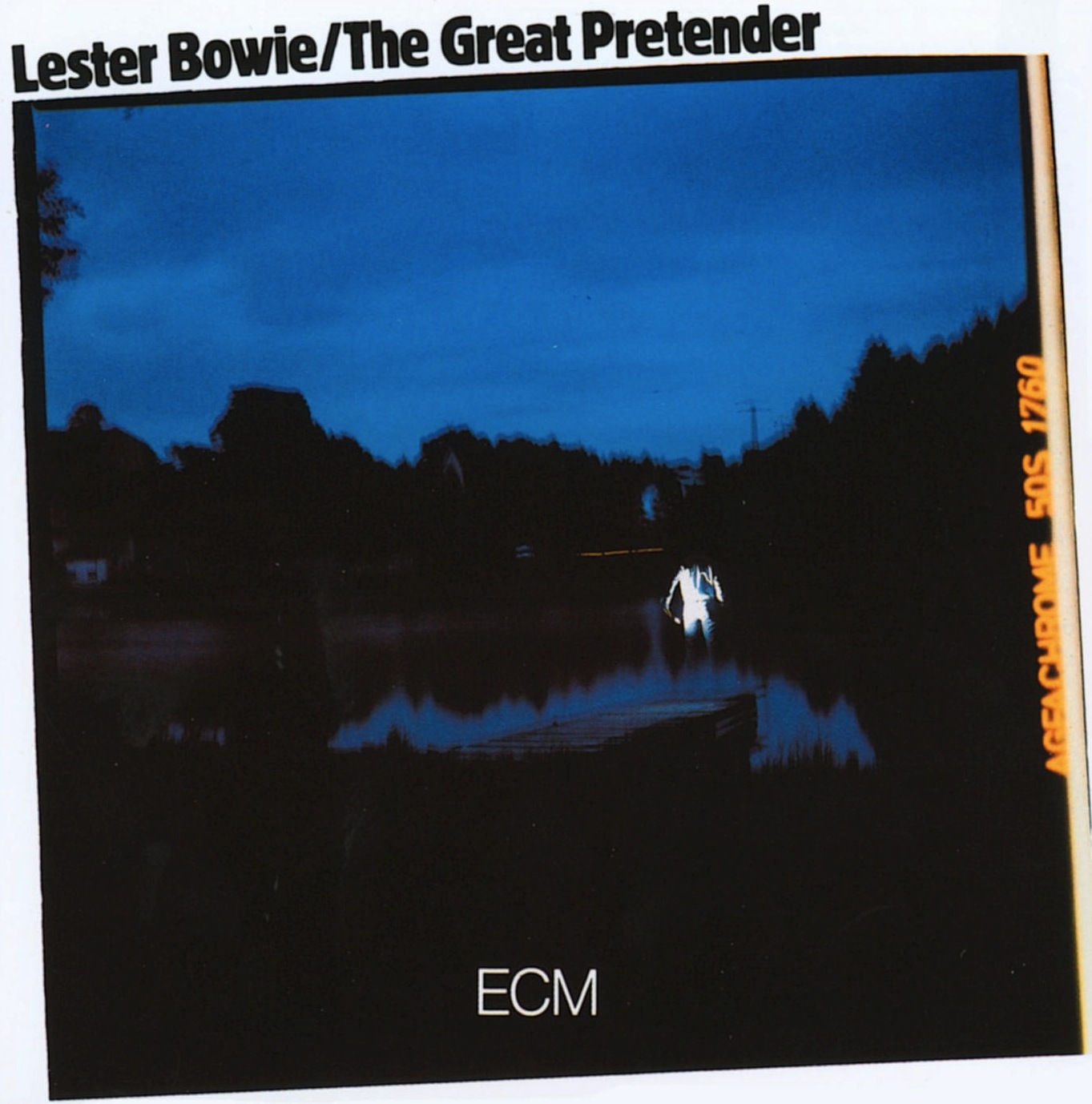
The CODONA Trilogy (ECM 2033-35)

ECM 2033-35The CODONA Trilogy

Don Cherry trumpet, doussn’gouni, flutes, organ, melodica, voice
Nana Vasconcelos berimbau, cuica, talking drum, percussion, voice
Collin Walcott sitar, tabla, hammered dulcimer, sanza, timpani, voice

When my mother had gone to Canton market to shop, her wallet had unfolded like wings…. She had hunted out the seed shops to taste their lichees, various as wines…. She had dug to the bottom of fabric piles and explored the shadows underneath awnings. She gave beggars rice and letter-writers coins so that they would talk-story (“Sometimes what I gave was all they had, and stories.”)
–Maxine Hong Kingston, The Woman Warrior

The music of CODONA, ECM’s most emblematic creation, invariably puts me in mind of the above passage from Kingston’s classic “memoir.” It describes the author’s mother as, having just received her diploma, she celebrates by spreading what little monetary resources she has. The word that always stands out for me, and which is a theme of the book as a whole, is “talk-story,” for it describes with no uncertain brevity exactly what CODONA enacted in the studio (and on the stage) throughout the four-year span represented on this Old & New Masters trilogy. CODONA’s name—a portmanteau derived from its members’ firsts: COllin Walcott, DOn Cherry, NAna Vasconcelos—melds minds and hearts in the deepest crucible of music making.

With their unique brand of pan-culturalism, CODONA developed an entire sonic landscape without needing to throw itself under the next promising classification to come along. These self-titled gems each plot a unique transition in ECM’s graphic and sonic development, reaching both beyond jazz and more deeply into it for hints of origins and possible futures. The improvisational spirit is very much alive at every turn, while also recognizing the pulse of its own maudlin journeys. There is always a sense that one has arrived at a truth, which through CODONA’s collective spirit(ualism) has transcended the misnomer of “universal” into a far more nuanced and selfless understanding of the relationship of sound to all creation.

Whenever we speak of “universal truths,” we delineate quite the opposite. Rather than tapping into a concept, an energy, or state of being that binds all life in however arbitrary a way, the only purpose of universalism is in fact to make us feel better about ourselves. It treats the human experience as primary target, the standard by which all else comes to be measured. The base concept of universalism implies, through its very anthropocentrism, self-obsession as the only path to connectivity. The music of CODONA remains an invaluable corrective to this assumptive attitude toward human experience. Rather than hide, it transcends its own sense of self into a disembodied sonority.

ECM 1132

CODONA (ECM 1132)

Recorded September 1978 at Tonstudio Bauer, Ludwigsburg
Engineer: Martin Wieland
Produced by Manfred Eicher

CODONA’s first album is particularly dear to my heart, for it is the only in the ECM catalog to have been recorded during the month and year of my birth. As such, it lends itself well to my imagination, where it plays as soundtrack to my emergence into this mortal coil. Careful arrangements, spontaneous though they may be, flavor our first taste of CODONA blood in “Like That Of Sky.” From the opening gong, this album enchants with its dramaturgy, in which time and space are one and the same. Against clicks and whistles, a subterranean sitar appears. In it, we hear the grumbling of voices. Cherry fills the vast emptiness with his sung trumpeting, so that the emptiness can only weep in return. Walcott’s sitar is respectfully articulated, ever so subtle in its reverberant twang, providing a gelatinous backbone, such as it is, for Cherry’s more immediate interpretations. From this, we get the tinny call of a clay drum and a flute hooked into every loophole, pulled to expose a more regular core. [This track reminds me very much of the work of the enigmatic duo known as Voice of Eye (especially their 1994 album Vespers), who achieve similarly evocative density from purely acoustic means.] Walcott’s tabla signals the phenomenological urgency with which divine creation takes form, as if finding amid the contact of fluttering fingers along pulled skin the key to unspeakable life. The second track takes the group’s name, and further slackens the threads that keep them bound to this mortal coil. Through an intriguing blend of wooden flute, hammered dulcimer, and some scattered percussive footsteps, the musicians manage to evoke a wide range of special effects from clear and present means. And as the rhythmic rope ladder unrolls itself step by step, we are enticed by its gentle sway into the enlightened space it has drawn for us of wood, metal, and touch. “Colemanwonder” deftly combines Ornette Coleman’s “Race Face” and “Sortie” with Stevie Wonder’s “Sir Duke” in an auditory hodgepodge that is as delightful as it is singular. Given Cherry’s formative history with Coleman back in the late 1950s, this is an important swath of light to note in the album’s otherwise stark shade, made all the more vivid by the grunts, barks, poundings, and knocks issuing from Vasconcelos’s Brazilian cuica drum. “Mumakata” (apparently a favorite of the group’s live shows) features Vasconcelos on berimbau, Walcott on sanza, and Cherry on doussn’gouni. Voices sing, as if evoking the past for past’s sake. Against this tapestry, Cherry breaks out his trumpet for some gorgeous legato phrasings. “New Light” begins with the tinkling of bells and an awakening sitar. We arise from a gentle coma even as we settle into another: from the beauty of awareness to the awareness of beauty. Cherry launches higher flights of virtuosity, underscoring all the more the humility that has led him to this point in the album. Shells hiss like the raspy leaves of a giant palm thrashing in the wind. The dulcimer returns with maraca as Cherry spreads thicker melodies with clarity of tone and posture. A track so nocturnal that it almost glows. Every telepathic moment sparkles before Cherry cracks open a box of blissful high notes and fluttering half-sung hymns, leading us out as dulcimer strings are brushed like a harp by breath without source.

<< Pat Metheny: New Chautauqua (ECM 1131)
>> John Abercrombie Quartet: Arcade (ECM 1133)

… . …

ECM 1177

CODONA 2 (ECM 1177)

Recorded May 1980 at Tonstudio Bauer, Ludwigsburg
Engineer: Martin Wieland
Produced by Manfred Eicher

CODONA 2 drops us immediately into a groovier pool with “Que Faser.” Over tabla and sitar, Vasconcelos exchanges tender thoughts with Cherry’s trumpet, traveling from the majestic to the falsettic in one fell swoop. This leads into “Godumaduma,” the briefest track of the collection, and also its most enchanting. What sounds like three overdubbed sitars in a gorgeous transitory interlude configure something akin to Steve Reich’s Electric Counterpoint had it been written for Walcott and not electric guitar. Switching colors from the sandy and windblown to the gravid and architectural, “Malinye” features Cherry on melodica and Walcott on timpani. As the latter tumble over a highly cinematic terrain, a ring of spirits whispers, cackles, and wails. This haunting piece ends in a sanza-led chorus that stretches far beyond the final vibration and into another state of mind. At the halfway point, we find ourselves feeling “Drip-Dry.” Sitar and voice creep around our circle of light, reaching with shadowy hands to grasp the trumpet’s song within. The buoyant “Walking On Eggs” that follows sounds, like all of CODONA’s work, simultaneously composed and improvised. A buoyant piece, it is also as tentative as its title suggests. “Again and Again, Again,” on which we end, might as well be our listening instructions for this most underrated album of the set. Sitar and trumpet provide some vivid runes, of which Vasconcelos makes a sonic rubbing with a string of sounds not unlike a tape in fast forward, if not a dreaming bird. Add to this the plurivocity of a melodica, and one begins to see subtle density and “vocal” qualities that make this one of the group’s most inward-looking statements.

<< John Clark: Faces (ECM 1176)
>> Barre Phillips: Music By… (ECM 1178)

… . …

ECM 1243

CODONA 3 (ECM 1243)

Recorded September 1982 at Tonstudio Bauer, Ludwigsburg
Engineer: Martin Wieland
Produced by Manfred Eicher

The traditional Japanese “Goshakabuchi” that begins the final leg of this triumvirate turns the mirror just so, flashing a glint into our eyes from a distance. Cherry’s brassy ether drips with sympathetic effect; hammered dulcimer hurls its delicate, insectile hiccups; untold lives tease us with their possibilities. This is perhaps the most haunting and coalescent track in the collection and shows the trio at the height of its signature synergy. Sanza and doussn’gouni back the chant-heavy “Hey Da Ba Boom,” which will adhere to your mind far more than any words I might use to describe it here. “Travel By Night” trailmarks its path with berimbau, sitar, and muted trumpet. Walcott’s arcing tones make for quiet narration. Hooded by the darkened firmament, it practically floats with the practiced steps of a modest caravan fleeing from its own histories. A trio of shorter rest stops follows, of which “Lullaby,” the only moment with Walcott alone, gives us a heartening glimpse into the mind of group’s creative nerve center. “Clicky Clacky” provides a dash of whimsy, a bluesy gem from the mind and mouth of Cherry, complete with train whistle. The final gasp comes from the “Inner Organs,” where the echoes of trumpet and, not surprisingly, organ move in concert like a jellyfish and its tendrils toward open closure.

The music world lost one of its most innovative figures when Collin Walcott perished in a car accident while on a European tour with Oregon in 1984, and the CODONA trilogy is but a flash of what this inimitable project might have further accomplished had he lived on. As rooted as the music is, the edge of time has severed its earthly ties. If jazz had developed from one mystical seed (and who’s to say it didn’t?), then certainly its originary tales would sound very much like the elder’s musings preserved here. Through their own brand of talk-story, these attuned sages brought forth truths of fragmentation, permeability of mind and body, and of the knowledge that nothing matters anymore once sound opens your ears.

Want to see ECM at one of its finest hours? Then set your clocks to CODONA time.

<< Miroslav Vitous: Journey’s End (ECM 1242)
>> Jack DeJohnette’s Special Edition: Inflation Blues (ECM 1244)

Pat Metheny: New Chautauqua (ECM 1131)

ECM 1131

Pat Metheny
New Chautauqua

Pat Metheny electric 6- and 12-string guitars, acoustic guitar, 15-string harp guitar, electric bass
Recorded August 1978 at Talent Studio, Oslo
Engineer: Jan Erik Kongshaug
Produced by Manfred Eicher

Pat Metheny is one of those rare artists whose virtuosity is so fluid that it is no longer a necessary lens through which to view his music. Despite the 43 strings at his disposal for this fourth ECM outing, Metheny opts for pure expanse over density. While his first three projects found him fronting equally captivating support, here we see the Missouri native charting heretofore-unrecorded autobiographical depths that remain as resonant as they ever were.

New Chautauqua is bookended by two travel diaries. The title opener cracks like a morning egg onto a sizzling griddle. Here, as throughout, we find an entire desert compressed into a single grain of sand, needing only the microscope of Metheny’s meticulous syncopations to make our way through its staggering terrain. At the far end of the tunnel is new life lit by “Daybreak.” Additional guitars and bass ooze with optimism in this divided smile, holding fast to the idea of—but never the physical need for—a destination.

Along the way, we encounter a string of contemplative rest stops, each the trail marker of a limpid night. Every verse of “Country Poem” makes for a fitting prelude to the diptych of “Long-Ago Child/Fallen Star,” in which the 15-string harp guitar dialogues with an open slide in the lead. Such delicacy can only be drawn in negative space, using pigments of regret and joy in equal measure. A heavy pause inhales deeply before expelling its acoustic splendor, hovering over arpeggiated flowers like a silent and thoughtful bee whose days are numbered, but whose memory lives on through a psychological pollen of sorts that cross-fertilizes vaster, less visible pastures. “Hermitage” might as well be the album’s title, so thoughtful are its steps, each a point along a circle of plot and resolution. Yet the needle in the New Chautauqua haystack is “Sueño Con Mexico.” Threaded by an acoustic ostinato, around which Metheny gilds ornamental embraces, its unyielding grace never fails to unhinge. It has the entire world’s natural cycles in its purview, turning as might an eddy in an April stream.

Metheny’s is a highly refined world that is as loose as it is exacting, written in the kind of polished script that can only come from a musical path forged through love of communication. Among decades of varied output, this stands as one of his most vivid sonic postcards for the yet-to-be.

<< Azimuth: The Touchstone (ECM 1130)
>> Walcott/Cherry/Vasconcelos: CODONA (ECM 1132)

Jack DeJohnette: New Directions (ECM 1128)

ECM 1128

Jack DeJohnette
New Directions

Jack DeJohnette drums, piano
John Abercrombie guitar, mandolin
Lester Bowie trumpet
Eddie Gomez bass
Recorded June 1978 at Talent Studio, Oslo
Engineer: Jan Erik Kongshaug
Produced by Manfred Eicher

This album was indeed a new direction for drummer Jack DeJohnette, by then an ECM mainstay who with this effort flirted with the free-flowing atmospheres then characteristic of the label’s popular European projects. John Abercrombie—another household name whose amplified strings do wonders for DeJohnette’s impulses—forms, along with Chick Corea veteran Eddie Gomez on bass, a triangular foundation upon which trumpeter Lester Bowie—the album’s shining star—builds his towering sentimentalism. Fresh off the Art Ensemble of Chicago’s Nice Guys session, Bowie lays it on thick, eschewing his whimsical asides for straight-on lyric fortitude. One is hard-pressed to keep from sweltering in the “Bayou Fever” that opens this forgiving tale. Abercrombie’s buttery-soft licks seem to adhere the rawer intensities of DeJohnette and Gomez, while Bowie deploys one potent bundle of melody after another. “Where Or Wayne,” a rubato pun anchored by a harder-edged bass, relays moments of ecstatic abandon with majestic guitar solos, expertly played off of by Gomez, who lights a few aesthetic candles of his own. The nebulous imagery of “Dream Stalker” and the old-school virtuosity of “One Handed Woman” make for a kindly pair and leave us with no other recourse than to take shelter in the “Silver Hollow.” Abercrombie goes acoustic in the album’s closer, trading sweeping lines with bass, all the while drowning in DeJohnette’s dawn-like pianism.

A spacious inner current, heir apparent to a straightforward jazz with no strings attached, feeds into every moment of New Directions. The performances are attentively recorded with a present, live feel that gives the drums all the room they need, and us all the sonic candy we crave.

<< Arild Andersen Quartet: Green Shading Into Blue (ECM 1127)
>> Steve Reich: Music for 18 Musicians (ECM 1129 NS)

Art Ensemble of Chicago: Nice Guys (ECM 1126)

ECM 1126

Art Ensemble of Chicago
Nice Guys

Lester Bowie trumpet, celeste, bass drum
Joseph Jarman reeds, percussion, vocal
Roscoe Mitchell reeds, percussion
Malachi Favors Maghostus bass, percussion, melodica
Famoudou Don Moye drums, percussion, vocal
Recorded May 1978 at Tonstudio Bauer, Ludwigsburg
Engineer: Martin Wieland
Produced by Manfred Eicher

The legendary Art Ensemble of Chicago, currently in their fifth decade of activity, ended a five-year studio silence with Nice Guys, their debut for ECM at the pinnacle of the label’s output. As children of Chicago’s groundbreaking Association for the Advancement of Creative Musicians (AACM)—which also finds Jack DeJohnette, Anthony Braxton, and Wadada Leo Smith on its formidable roster—Ensemble members bring to every project a sound as eclectic as their technology. Theirs is simply positive music-making that is loads of fun and possesses much to admire. Free of dangerous philosophical trappings and illusions of space, it forges through the loose aesthetic of its performance a circle in which any and all listeners feel included.

The group’s noted fondness for “little instruments” adds color at every turn, as in the blown menagerie that is “Folkus,” the sole contribution from drummer Don Moye. Amid accents from parallel dimensions, winds and brass get locked in a cacophonous traffic jam—recalling the opening of Jean-Luc Godard’s Weekend—before falling into shadowy gestures and other cosmic accidents. Out of this, we awaken with Moye’s footsteps as a flock of shawms flies overhead into a tease. Such enigmatic caravans are emblematic of the AEC at their most visceral. Leader and reed-meister Roscoe Mitchell delights with the title track and with “Cyp,” both likeminded forays into breath and time. In the latter, we get the first (and perhaps last) bike horn “solo” in all of jazz, as well as some powerful wails from trumpeter Lester Bowie, who also lures us in with the album’s opener, “Ja.” Here, we start in freefall, finding solid ground beneath our sonic feet as the group slips into a Jamaican free-for-all. Joseph Jarman brings his saxophonic skills to the tripping rhythms of “597-59.” Bassist Malachi Favors, who provides not a few captivating moments, is the bounding foil thereof. Yet it is “Dreaming Of The Master,” Jarman’s nearly 12-minute love letter to Miles Davis, that brings the album to its most emphatic conclusions. With more specific execution, it shows the depth and breadth of the Ensemble at their best. Moye kicks things up a notch or two, paving the way for star turns from Mitchell, so that when the vampy horns return we hear them not as a memory but as an entirely new collective experience. And in the end, this is what the AEC is all about.

<< Rypdal/Vitous/DeJohnette: s/t (ECM 1125)
>> Arild Andersen Quartet: Green Shading Into Blue (ECM 1127)

Rypdal/Vitous/DeJohnette: s/t (ECM 1125)

ECM 1125

Terje Rypdal/Miroslav Vitous/Jack DeJohnette

Terje Rypdal guitar, guitar synthesizer, organ
Miroslav Vitous double-bass, electric piano
Jack DeJohnette drums
Recorded June 1978 at Talent Studio, Oslo
Engineer: Jan Erik Kongshaug
Produced by Manfred Eicher

Terje Rypdal/Miroslav Vitous/Jack DeJohnette joins its eponymous crew in a one-off trio date for the ages. Although billed as something of a Rypdal venture, the album is primarily a canvas for Vitous, who bubbles forth with all the viscous potency of oil from a crack in the earth. The bassist and Weather Report founder culls from that selfsame influential oeuvre his classic tune, “Will” (a lilting and sentimental ride which made its first appearance on Sweetnighter), and pairs it with “Believer,” another original that is more Rypdal-driven. These two form the heart of a tripartite experience that begins with a pair of Rypdals. The first of these, “Sunrise,” floats in on DeJohnette’s scurrying drums, spurred by the air currents of Rypdal’s Fender Rhodes. Suspended plucking from bass stands out like heat lightning against Rypdal’s grittier monologues. Overdubs balance out the spacious surroundings with their fallow echoes. The guitar dominates here, its trembling accents seeming to grab clouds by their collars and shake them until melodies come falling out in patchy storms. He scrapes his pick along the strings, as if tearing holes in the very fabric of space-time. With respectful stealth, his gorgeous chording in “Den Forste Sne” manages to undercut the bowed bass, the latter recalling the tender songs of David Darling. This one is a stunner in its grandiose intimacy, accentuated all the more by Rypdal’s low-flying passes. We end with a diptych of group improvisations, each the shadow of the other. Between the frenetic syncopations of “Flight” and the pointillism of “Seasons,” we are given plenty of poetry with which to narrate our inner lives.

While, arguably, a pronounced variety of modes would have made this a “stronger” record, it seems content in being the languid organism that it is, and constitutes another enchanting landscape deservedly hung in the hallowed ECM Touchstones gallery. It might not be the best place to start, but what a detour to be had along the way…

<< Steve Kuhn: Non-Fiction (ECM 1124)
>> Art Ensemble of Chicago: Nice Guys (ECM 1126)

Steve Kuhn: Non-Fiction (ECM 1124)

ECM 1124

Steve Kuhn
Non-Fiction

Steve Kuhn piano, percussion
Steve Slagle soprano and alto saxophones, flute, percussion
Harvie Swartz bass
Bob Moses drums
Recorded April 1978 at Tonstudio Bauer, Ludwigsburg
Produced by Manfred Eicher

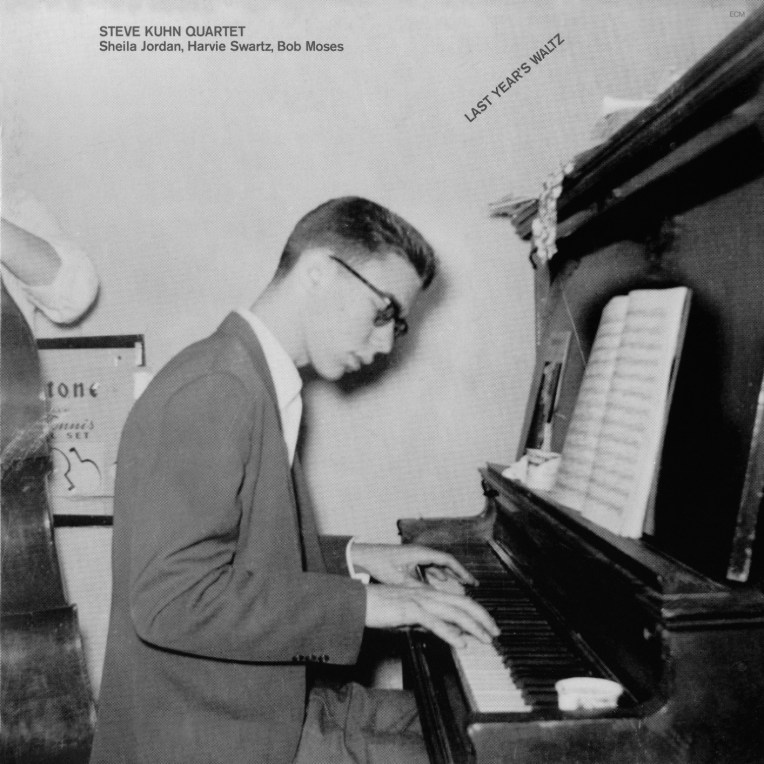
Steve Kuhn is the all-purpose element: his presence heightens any musical concoction. Like no jazz pianist I know, he is aware of the negative spaces between his notes and shapes those spaces to suit the emotional needs of the tune. And what a set of tunes we have in Non-Fiction, a sorely out-of-print firecracker in dire need of a digital fuse. Speaking of conflagration, nothing singes our brow in any Kuhn project quite like “Firewalk,” which, despite its characteristically spacious feel, is clear and present (I bow to the uncredited engineer on this one). Kuhn accolades aside, it’s the sopranism of reedman Steve Slagle that really sets these coals to glowing and cradles every assured step in the liberation of play. Bob Moses and Harvie Swartz—an ideally suited rhythm section if there ever was one—lock the “Random Thoughts” that follow into lively traction. Slagle opts for flute and alto sax over a constantly shifting sonic palette. Whenever he isn’t breathing, he keeps his hands busy with additional percussion. (Unfortunately, the latter comes across as intrusive to my ears during headphone listening. External speakers will remedy this.) “A Dance With The Wind” and “The Fruit Fly” reverse the scales with a collective dose of whimsy and nostalgia. Swartz is simply fantastic here, weaving deftly through Kuhn’s canvas of vamps with distinct yet harmonious brushstrokes of its own. If anything has been missing so far, we find it all collected in “Alias Dash Grapey,” which has it all: a sweeping piano intro, replete with unrestrained cries from Kuhn, a spirited collage of solos (Moses ever palpable), and a deep sense of communication.

This is a tight album with plenty to unpack through repeated listening. Its energies fluctuate in volume, but always to the beat of Kuhn’s erudite dictation. As worth tracking down on vinyl as it is waiting for an appearance on CD.

<< Barre Phillips: Three Day Moon (ECM 1123)
>> Rypdal/Vitous/DeJohnette: s/t (ECM 1125)

Barre Phillips: Three Day Moon (ECM 1123)

ECM 1123

Barre Phillips
Three Day Moon

Barre Phillips bass
Terje Rypdal guitar, guitar synthesizer, organ
Dieter Feichtner synthesizer
Trilok Gurtu tabla, percussion
Recorded March 1978 at Talent Studio, Oslo
Engineer: Jan Erik Kongshaug
Produced by Manfred Eicher

I have said it before and I will say it again: Barre Phillips is one of ECM’s most underrecognized treasures. A maverick of the upright bass, his is a mind in which one revels getting lost. This follow-up to 1976’s Mountainscapes is the genesis to the latter’s messiah. From Dieter Feichtner’s opening synth in “A-i-a” and its attendant bass line, we are immediately engaged in a dialogue that is untranslatable except via the grace of its performance. Electric guitar accents from Terje Rypdal, who feels right at home here, billow backwards from the stratosphere into fissures of sonic earth. Rypdal swaps axe for organ in “Ms. P.,” unfurling a shimmering heat in which the breath of bass turns to steam. Even spacier touches await us in “La Folle” and “Ingulz-Buz.” Farther-reaching abstractions mesh into the neutral colors of electric guitar and bowed bass, respectively, throughout these intertidal interludes. “Brd” puts me in mind of Paul Schütze’s Stateless (especially the track “Cool Engines”): strung by a steady bass line and tabla, the latter courtesy of Trilok Gurtu, and Rypdal’s continued ploys, each bead reveals new insights with every listen. If Rypdal has been a key figure in the album’s narrative thus far, for the final “S. C. & W.” he morphs into a demigod. Backed by an insectile arpeggiator, alongside bombilations from bass, Rypdal gets tricky with the effects, at times lapsing into R2-D2-like articulations, but always with integrity. An emblematic closer.

Grandiose, cinematic, and meticulously constructed, Three Day Moon once more proves Phillips to be one of jazz’s best-kept secrets. The album also sports one of the most evocative ECM sleeves of the seventies, with sonic innards to match.

<< Enrico Rava Quartet: s/t (ECM 1122)
>> Steve Kuhn: Non-Fiction (ECM 1124)

Tom van der Geld and Children At Play: Patience (ECM 1113)

ECM 1113

Tom van der Geld and Children At Play
Patience

Tom van der Geld vibraharp, percussion
Roger Jannotta soprano and baritone saxophones, flutes, oboe, bass clarinet
Kent Carter bass
Bill Elgart drums, percussion
Recorded May 1977 at Tonstudio Bauer, Ludwigsburg
Engineer: Martin Wieland
Produced by Manfred Eicher

As yet to provide choice “vibes” for Kenny Wheeler’s around 6, in addition to his elusive but well-worth-owning Path, mallet man Tom van der Geld made his ECM debut with this, his second of three “Children At Play” recordings. Less specific than his later work with the group, which was perhaps never meant to be a stable collective/concept in the first place, Patience may require just that. That being said, the abstractions of the opening title track have a charm all their own, seeming to inhabit that blurry space between fading night and the coming dawn. This diurnal circle unrolls into a relatively straight line in the flute of multi-instrumentalist Roger Jannotta through the vibes’ infrared lobs. With “Golden Stabs” we feel that dawn acutely, warming our faces with a gorgeous soprano that always remains tonally centered despite its erratic rays. Those smooth reeds carry over into the even smoother melancholia of “Alison.” “Celia” is an ever-changing mosaic of continental winds and underwater railways. Like a broken vial of liquid mercury, it recedes, unrecoverable, into the cracks of a melodious tessellation. “And Then…” ends the album on a pointillist reverie with the oboe as storyteller. We get the barest intimations of traction in the bass (Ken Carter) and drums (Bill Elgart) before taking shelter in more densely woven brush. It is here where the album at last begins to gel and its trajectory becomes known to us.

Viscous and profoundly solitary, van der Geld’s is an intimate world to be sure. Like the flute that haunts its darkest corners, it is a half-remembered death given a new body through the resurrection of the musical act. One feels Patience in degrees of heat, each track an incremental setting on a toaster that sets the coils aglow with varying intensity, leaving us with a distinct char every time.

<< Keith Jarrett: Ritual (ECM 1112)
>> Pat Metheny Group: s/t (ECM 1114)

Enrico Rava Quartet: s/t (ECM 1122)

ECM 1122

Enrico Rava Quartet

Enrico Rava trumpet
Roswell Rudd trombone
Jean-François Jenny-Clark bass
Aldo Romano drums
Recorded March 1978 at Tonstudio Bauer, Ludwigsburg
Engineer: Martin Wieland
Produced by Manfred Eicher

Enrico Rava, one of the trumpet’s unsung heroes, unearthed a gem in this self-titled quartet offering from 1978. Although one can always expect an expertly realized variety in any Rava project, what makes this date so special is the assembly of its players. The Italian virtuoso’s hit-you-in-the-chest lyricism—matched perhaps only by label mate Kenny Wheeler—is foiled beautifully by trombonist Roswell Rudd, a free jazz specialist and Archie Shepp go-to whom ECM enthusiasts will recall from Michael Mantler’s CONCERTOS and a smattering of Carla Bley releases on Watt. Rudd’s fluid undertow brings our leader’s more incisive melodic lines to vivid light, gently laying down long thematic carpets upon which every improvisatory step leaves behind an indelible print.

The opening chunk of “Lavori Casalinghi” doesn’t so much kick things off as pull the curtains to reveal a slow sunrise. The drumming of Aldo Romano sets off a spate of powerful statements from the two brassmen, each linked by a chain of highly charged relays. The rhythm section never lags, and even spawns a nimble-fingered turn from bassist Jean-François Jenny-Clark before sliding back into the mournful twists with which it began. This is one of two substantial cuts, the other being “Tramps,” a fifteen-and-a-half-minute swell of sometimes frenzied proportions. Rava and Rudd draw each other into ecstatic exchanges, their playing at its most soaring. Wilder moments are short-lived, but always tasteful. Romano shows off one of the most fluid snare rolls in the business here, flanked by rousing phrasings from Rava and Rudd both. “The Fearless Five” is the first of three shorter numbers that flesh out this balanced effort. A bit of Monk creeps in, foreshadowing the well-worn “Round About Midnight,” which the crew buffs to like-new shine. Finally, the upbeat intro of “Blackmail” leads into some prime playtime for Rava. And as he skips his way across the sky, we take comfort in the somber closure into which he lays his final rest.

All in all, a fine session bubbling with personality and heft, and one well worth owning for the Rava newbie and veteran alike.

<< Ralph Towner: Batik (ECM 1121)
>> Barre Phillips: Three Day Moon (ECM 1123)