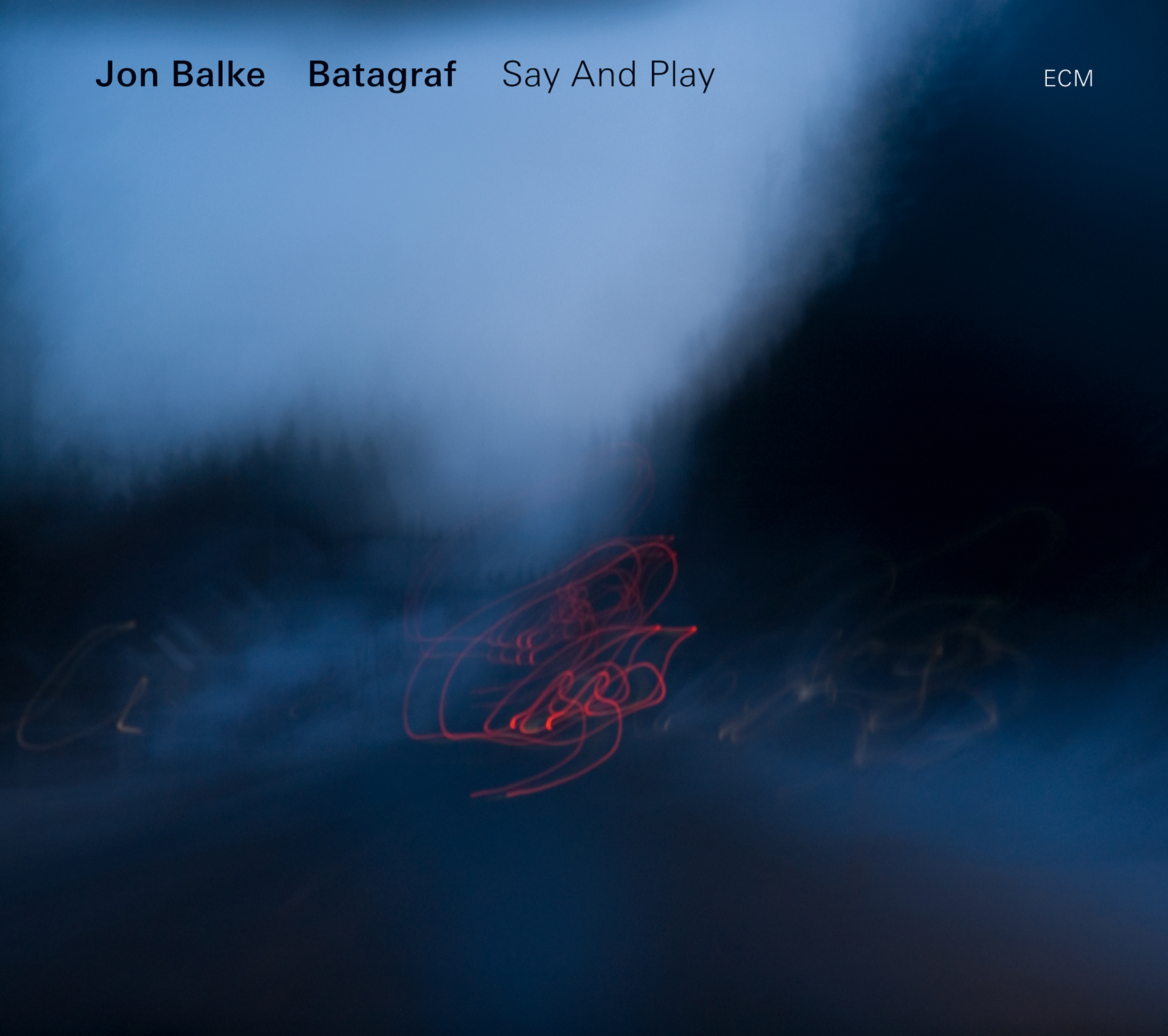
Jon Balke piano, keyboards, electronics, tungoné, darbouka, percussion Helge Andreas Norbakken sabar, gorong, djembe, talking drum, shakers, percussion Emilie Stoesen Christensen vocals Erland Dahlen drums Torgeir Rebolledo Pedersen poetry reading
Recorded in various locations 2009 Mixed by Olav Torget in Olav Torget’s studios Winter 2010/11 Recording producer: Jon Balke Executive producer: Manfred Eicher
An ECM Production
Jon Balke’s Batagraf project may feel for some to be an indecipherable thing. Yet beneath its calligraphic rib cage beats a primal language. It is both the life force of rhythm and the rhythm of life force, a generative cycle wherefrom speech unloads its dreams into the transport of a welcoming ear. At the core of this incarnation are Balke himself, percussionist Helge Andreas Norbakken, and drummer Erland Dahlen. To these the session adds the voice of jazz singer Emilie Stoesen Christensen and the poetry of Torgeir Rebolledo Pedersen, read in its original Norwegian by the author.
The latter augments some of the album’s most tetrahedral drumming, attaching roots and stems to the muted pianism of “Calmly” and shuffling its tongues in the garden of breathy synths that is “The Wind Calmer.” Further engagements include “Hundred-Handed” and analog textures of “Winds.” Balancing these are the vocals of Christensen, who in “Riddle #1” and “Riddle #2” fleshes out Batagraf’s philosophy most succinctly. These twisted songs of unanswered questions are gyroscopes forever wobbling but never falling. Unsettled rhythms and piano work their way into the subconscious, where knowledge is questioned, answers are deflated, and the clothes line from which every spoken word hangs trembles in anticipation of a new wash. As in the song “One Change,” Christensen embraces all of this as easily as she abandons recognizable words.
As for the drummers, we find them in manifold spirits in the tender “Baka #65,” and of an especially intimate mind in “Everyday Music” and “Vjup,” for the last of which Christensen embarks on a whimsical deconstruction of masculine pride. The level of psychological extraction realized here shows just how adept these musicians are with intellectual needles and sonic threads. Whether following the Jon Hassell-like current of “Tonk” or digging the IDM beat of “Azulito,” they all seem fully present in the moment. Norbakken’s concluding yet inconclusive “GMBH,” the only track not written by Balke, finds even more beauty in distortions—layers of an archaeological dig, each with its own color and interlocking history. By unbinding words from their referents, they learn to swim with the minnows.
Mark Turner’s tenor is a singular voice in modern jazz. He is that rare saxophonist who eschews the trend of thinking outside the box by recalibrating its inner space to the tune of freedom. Turner embodies his surname, navigating every twist and corner of whatever melody lies before him as if rafting down a brilliant stream of consciousness. On ECM, Turner has conquered some of the strongest currents of his career so far with a craft so multifaceted that even notes of chromatic scales seem worlds apart.
As a guest artist of Enrico Rava (New York Days) and Billy Hart (All Our Reasons), he has proven his unpacking abilities with uncanny assurance. As a leader, he has shown himself to be more than a musician. He is a consummate storyteller. Yet even as a storyteller he favors at least two major narrative modes, each embodied by the albums I’ve put together below.
FLY
Year Of The Snake
Mark Turner tenor saxophone Larry Grenadier double bass Jeff Ballard drums
Recorded January 2011 at Avatar Studios, New York
Engineer: Aya Merrill
Assistant: Fernando Lodeiro
Produced by Manfred Eicher
When Turner broke out with Sky & Country, the ECM debut of his so-called FLY trio, he set up, along with bassist Larry Grenadier and drummer Jeff Ballard, a towering structure of expectation, the heights of which have more than doubled with Year Of The Snake. Not only have Turner and friends stepped up their game; they’ve redefined it.
Turner carries an even more sizable portion of the composing credits this time around, providing the motif for “The Western Lands” and its four variations. Its stepwise beginnings coax the trio from slumber as the sun draws in the last traces of night with its yawn. Arco bass streaks the overhead with plane trails as Turner’s coated tone pulls roots from below. In other iterations, these pieces—meant to evoke the western United States, from which all the band members originate—become increasingly haunted by their own ghosts. Brushed drums and starry percussion sketch silhouettes of autobiographical history as Turner and Grenadier divine the bones left behind. Yet before Ballard closes the circle with a cymbal meditation, there’s much in the way of visions to be had.
The strengths of each composer play to those of the other bandmates. Turner’s three main tunes, for example, highlight the bond of his rhythmatists, who ride the title track with dressage-like synergy and pull out all the stops for the aptly titled “Festival Tune.” Even Turner’s high-beam walks through “Brothersister” regain their toe line because of Grenadier and Ballard’s watchful ears. Together they scope out a massive construction site, looking for clues into the nature of improvisation—only to discover that its origins are to be found in rubble and memory. Ballard’s tunes front dialogues of reed and bass. From the artfully geometric “Diorite” to the slicker “Benji,” melodies leap from the fingers like cats. Turner, for his part, generally sticks to the higher end of the horn on this set, digging for grit only when required, as on “Salt And Pepper,” a noir-ish track that is a bass-lover’s dream.
The biggest revelation here, however, is Grenadier’s “Kingston.” Something of a sectional track, it links a chain of solos and duos before latching on to a groovy backbeat. Turner runs wild with inspiration here, running up the thematic latter and mulching it into a thousand pieces. Transgressing one unexpected horizon after another, he rejoins Grenadier over a spiraling train track of destiny. Like the album as a whole, it is as much a leap of evolution as intuition for the trio and a significant exposition of what jazz can be when allowed to roam.
(To hear samples of Year Of The Snake, click here.)
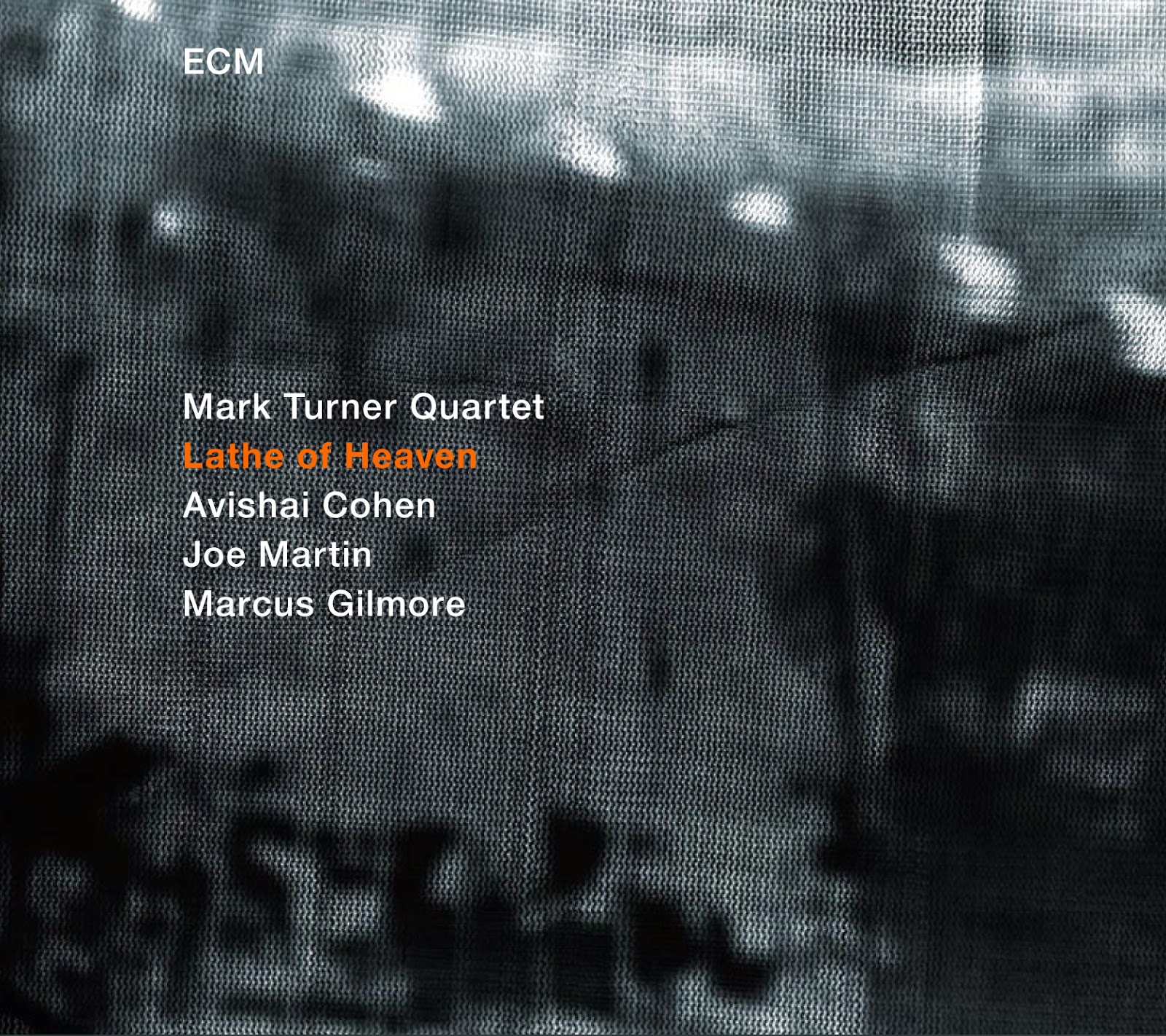
Mark Turner Quartet
Lathe of Heaven
Mark Turner tenor saxophone Avishai Cohen trumpet Joe Martin double bass Marcus Gilmore drums
Recorded June 2013 at Avatar Studios, New York
Engineer: James A. Farber
Assistant engineer: Akihiro Nishimura
Mixed January 2014 by James A. Farber, Manfred Eicher and Mark Turner
Produced by Manfred Eicher
Turner’s first nominal leader date for ECM is an altogether different animal. Named after a novel by Ursula K. Le Guin, it comes across as more interested in the science than the art of storytelling. Le Guin’s tale even gives us the perfect term: HURAD, which stands for Human Utility: Research and Development. Lathe of Heaven is indeed a laboratory of sonic utility, stretching the saxophone like a DNA profile chart and plotting its growth on staves.
As befitting of an album under his name, the entire set was written and conceived by Turner as an article of mystery. The title opener sets up a fresh dynamic between Turner’s tenor and the trumpet of Avishai Cohen. Their patterning reveals compositional acumen in spades, springing to life when bassist Joe Martin and drummer Marcus Gilmore kick in their four cents. But even as the full quartet guides the listener into a brilliantly populated landscape of urban memory, it’s clear that Turner is content to build his tunes in stages. Nowhere more so than in “Year of the Rabbit.” In addition to referencing Year Of The Snake, it throws a spotlight Gilmore, who at once lays out and navigates an intricate maze of snare and cymbal. It’s not surprising that the textural blend and modal harmonies here sound like John Zorn’s Masada, especially when one considers that Cohen has dipped into that songbook’s mystical waters in the context of his Lemon Juice Quartet. Amid his flurry of filament, Turner side-winds into focus to rearticulate the theme before moving vertically. “Brother Sister 2” nods again to Snake, expanding the spinal theme of its predecessor into a more protracted nervous system of (in)tensely rubato character. It unravels the thrumming heartstrings of Martin’s bass, breathing in deeper each time until a precordial catch snaps things back into place.
The remaining pieces of the puzzle pay homage in their own right. The tense, dissonant leads of “Ethan’s Line” evoke those of dedicatee Ethan Iverson. “The Edenist,” with its locked-in rhythm section and distinct soloing, references the possessions of sci-fi author Peter F. Hamilton. Combining Cohen’s low-flying dreams and Turner’s wider talons, it claws through branches to a moral nest within. And then there’s “Sonnet for Stevie,” Turner’s spacious tribute to the blues. There’s no need for “Wonder” in this or any other title, because this album is brimming with it. So ends the tale, in anticipation of another.
If Year Of The Snake is the dawn, then Lathe of Heaven is the dusk. Together they form a most satisfying day.
How brief in time, how infinite in measure.
(To hear samples of Lathe of Heaven, watch the video above or click here.)
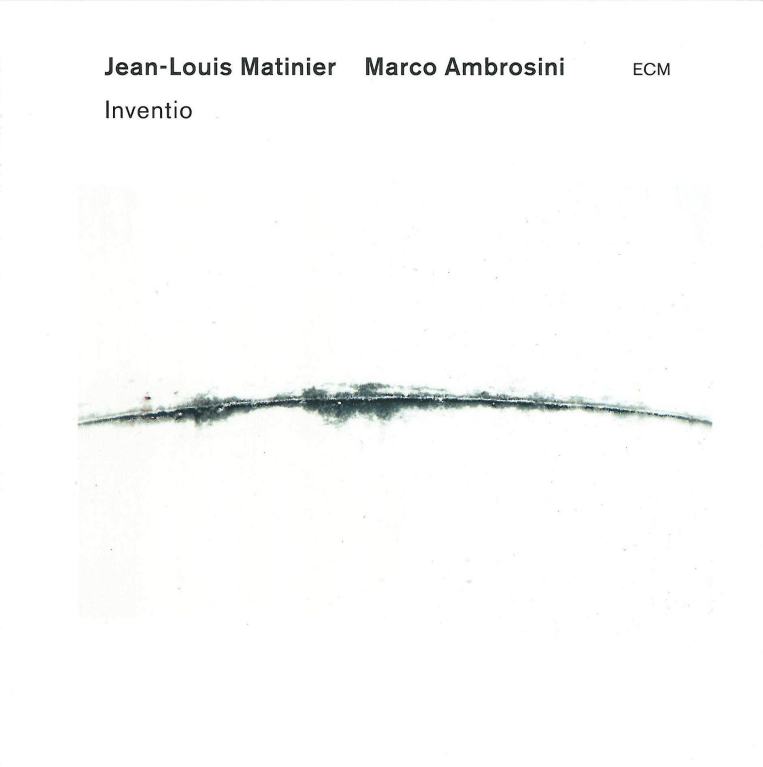
My latest review for RootsWorld online magazine is of Jean-Louis Matinier and Marco Ambrosini’s Inventio. For what it’s worth, this is so far (and by far) my favorite ECM release of the 21st century. No exaggeration. Click the cover to read my review and hear samples of this phenomenal album.
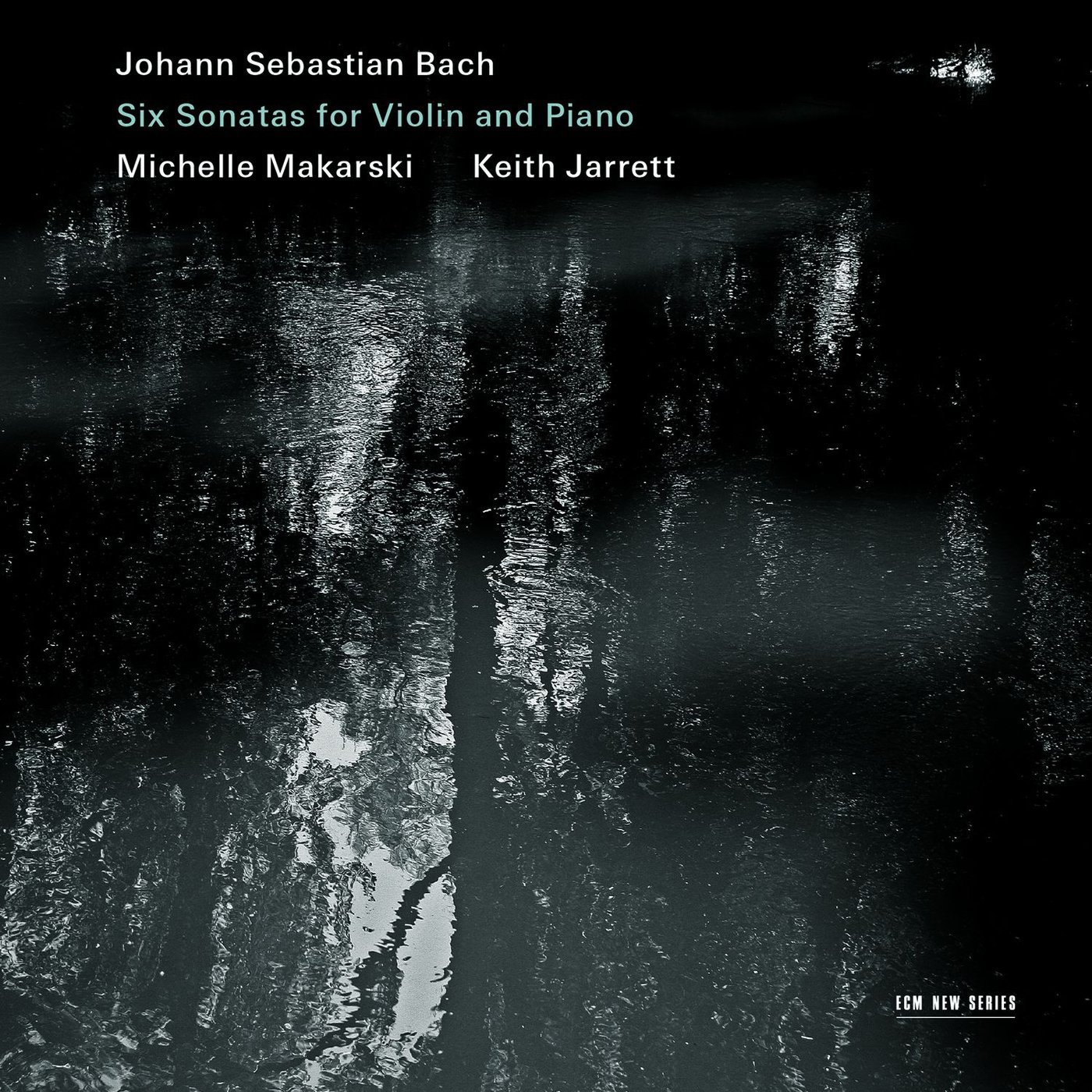
Johann Sebastian Bach
Six Sonatas for Violin and Piano
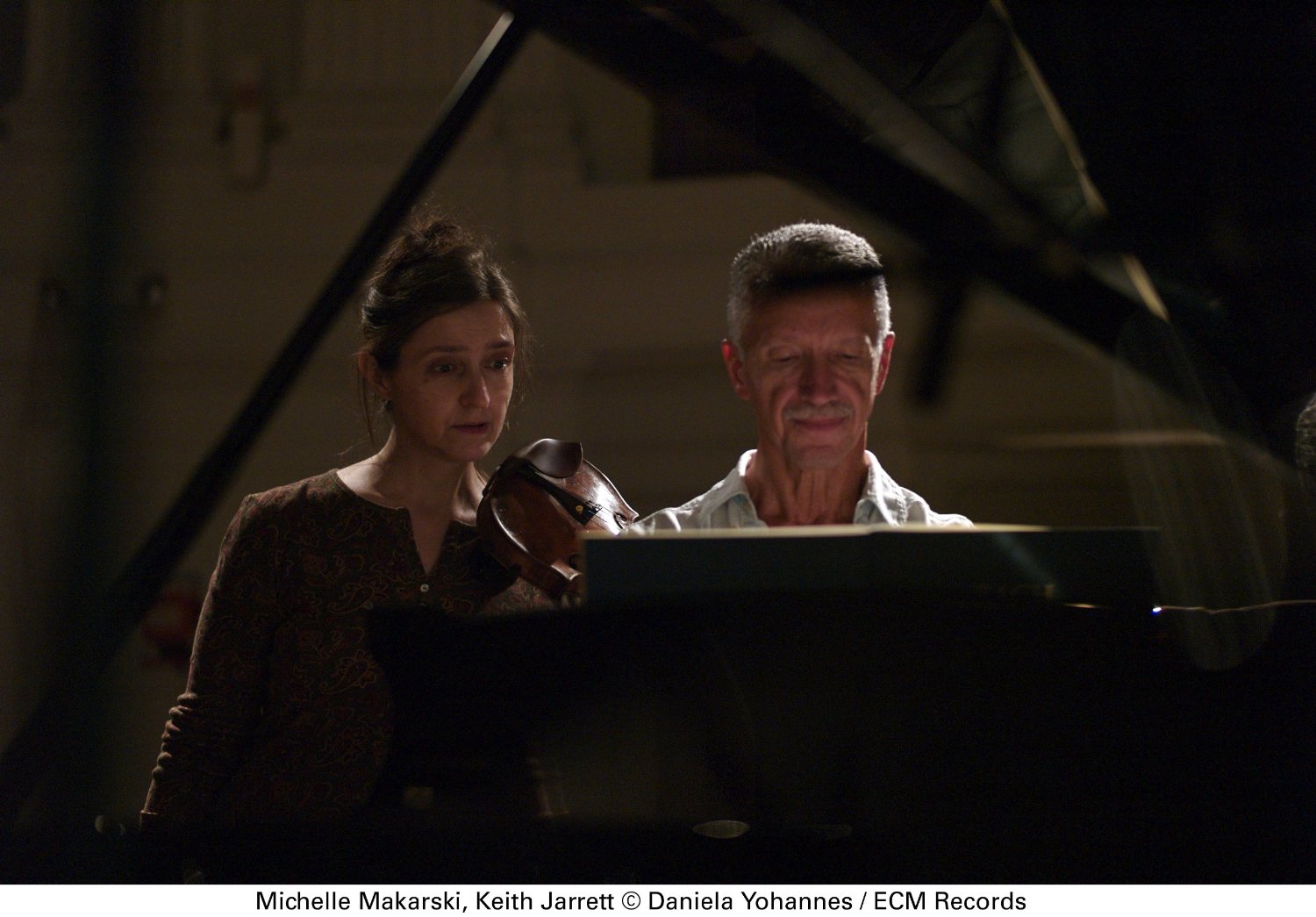
Michelle Makarski violin Keith Jarrett piano
Recorded November 2010 at American Academy of Arts and Letters, New York
Engineer: Peter Laenger
Executive producer: Manfred Eicher
An ECM Production
J. S. Bach’s Six Sonatas for violin and obbligato harpsichord (BWV 1014-1019) are not often recorded on piano, but few masters of the modern keyboard could make the combination work so articulately as Keith Jarrett. Although he might just as well have opted for harpsichord, as he did in duet with violist Kim Kashkashian for a benchmark recording of Bach’s Three Sonatas for viola da gamba and harpsichord (ECM New Series 1501), this time around the piano seems an intuitive choice. And for a partner, Michelle Makarski is ideal. Not only because she and Jarrett had been playing these pieces together on their own time for two years before stepping into the studio, but more importantly because she recognizes the power of an unfettered performance that serves the music over ego.
Written in the early 1720s during Bach’s Cöthen period, which encompassed both the tragedy of his first wife’s death and the triumph of his Brandenburg Concerti, these sonatas have rarely sounded more tessellated. There is a rounded quality to Jarrett’s pianism, which cushions Makarski’s pin-like precision. Thus, to the common characterization of the violin and keyboard as equal partners in these pieces, Makarski and Jarrett seem to say, “Let’s just see where the music leads us.” And indeed, spotlights of favor fall on either instrument at different points throughout the cycle.
Half of the sonatas are in major keys (Nos. 2 in A Major, 3 in E Major, and 6 in G Major), the other half in minor (Nos. 1 in b minor, 4 in c minor, and 5 in f minor). The majors are distinguished by their dulcet introductions and masterful harmonies, but each has its own idiosyncrasies. Where No. 2 balances spiraling architecture with pointillist delicacies, the astonishing No. 3 boasts interlocking color schemes and a heartrending Adagio, in which the violin emotes with all the history of a folksong. Yet the Sonata No. 6 is the most maturely constructed of them all. From its opening courtship of wing and wind, through the uniquely solo keyboard meditation at sonata center, and on to the boisterous finish, it follows a downright linguistic arc of development.
It is sometimes tempting to treat slow movements in Baroque repertoire as filler. Not so here, for in them Bach has cut some of the most precious jewels of his entire oeuvre. In addition to their robustness and lyrical integrity, Makarski’s uniquely nuanced vibrato lends them sanctity over ornament. Whether shining through Jarrett’s laden branches in the Andante of the Sonata No. 1 or chaining double stops through the Adagio of the Sonata No. 5, she treats each draw of the bow as a song in and of itself. Jarrett, by contrast, excels in the faster portions, showing in the final Allegro of No. 1 why his sense of rhythm is so acutely suited to Bach. The two find deepest equilibrium in the Sonata No. 4, which is like one giant helix, unbreakable and spinning.
The album’s booklet contains no notes—rare for an ECM classical release. Then again, the music has all the notes it needs. These roll off the fingers of the present interpreters like fluent speech from the tongue, creating a book on the first listen, the binding of which will only strengthen as its cover is opened time and again.
(To hear samples of Six Sonatas for Violin and Piano, click here.)
Carolin Widmann violin Alexander Lonquich piano
Recorded October 2010, Historischer Reitstadel, Neumarkt
Engineer: Stephan Schellmann
Produced by Manfred Eicher
“We cry, knowing in untold happiness, that this music is as it is in the promise of what one day we ourselves will be. This is music we cannot decipher, but it holds up to our blurred, over-brimming eyes the secret of reconciliation at long last.”
–Theodor W. Adorno, “Schubert” (1928),
trans. Jonathan Dunsby and Beate Perrey
If Adorno’s thoughts on Franz Schubert seem as indecipherable as the music they describe, it’s only because I have taken them out of context, arriving as they do at the tail end of a dense essay. Similarly, the C-Major Fantasie of 1827 that begins this all-Schubert program from violinist Carolin Widmann and pianist Alexander Lonquich comes to us excised from the tail end of a dense life. Just shy of 31, Schubert would die 11 months after committing it to paper in bipolar flurry of activity. The piece is widely considered to be the most significant he ever composed for violin, and is distinguished by the technical and emotional demands it places on worthy performers. Even Adorno was ambivalent about the overall success of the Fantasie, rightly praising its protracted Andantino as a melancholy masterstroke while in the same breath criticizing the final Presto as something of a cop-out. If we are to take the implications of this reaction to their fullest, however, then we must also accept that Schubert was less at ease proclaiming endings than he was contemplating their inevitability.
Over a traversal of seven movements, Widmann’s tone control yields thrilling restraint and expectorations by turns, while Lonquich matches her every move with an inward-looking fluidity. Together they crumple rays of light into balls of shadow, tossing them over cliffs of uncertainty until they learn to fly. To the latter end, the Allegretto has never sounded so uplifting than in their hands. With unforced drive and organic handling of tempi, the duo articulates the aforementioned Andantino as if it were a lullaby they’d heard since the cradle. In true Schubertian fashion, they feel intimately connected at a distance, stretching between them a connective emotional reserve. In so doing, they deviate from ECM’s previous recording of this piece (New Series 1699) by way of a less parallel approach that emphasizes the final movement’s reversal of the first.
Schubert’s Opus 70, the b-minor Rondo brilliant of 1826, fills the program’s sweet center with an intriguing diptych. A declamatory Andante sets up a nearly 12-minute Allegro, of which the running melodies and gorgeous key changes reveal a crystalline intellect at play. There is a seemingly inexhaustible energy about this piece, which cracks open each potential ending like an egg and scrambles it back into the shell.
The A-Major Sonata of 1817 closes with the youngest work of the program. Some Beethoven influence is palpable, especially in the leaping Scherzo, but the methodical, nuanced airiness of the opening Allegro is all Schubert, as are the kaleidoscopic Andantino and sly finale. Hearing Widmann and Lonquich navigate its many corridors, one may agree with their characterization of Schubert as the proverbial wanderer, but to these ears their interpretations depict the opposite. It was not Schubert but the landscape in which Adorno situated him that wandered in concentric circles, leaving the composer to pick and choose his songs until the circles closed their mouths far too early.
Keith Jarrett
Charlie Haden
Paul Motian
Hamburg ’72
Keith Jarrett piano, soprano saxophone, flute, percussion Charlie Haden double bass Paul Motian drums, percussion
NDR-Jazz-Workshop 1972
Radio producer: Michael Naura
Recording engineer: Hans-Heinrich Breitkreuz
Recorded live June 14, 1972 in Hamburg
Remixed July 12, 2014 at Rainbow Studio, Oslo by Jan Erik Kongshaug and Manfred Eicher
Album produced by Manfred Eicher
We may only speculate as to the untold Keith Jarrett riches still locked away in ECM’s vaults. The releases of Sleeper and, more recently, No End were but the tip of what is shaping up to be a majestic mountain indeed. Where those albums respectively showed us Jarrett’s European Quartet and homebody experiments, here lies something in between: a fearless document of a composer and improviser at the top of his game. Make that three.
We may make much of the fact that bassist Charlie Haden and drummer Paul Motian are no longer with us, and that hearing them in this impervious creative triangle is like witnessing a resurrection. The trio was Jarrett’s first power group and had been in existence for six years already before the capture of this live recording at Hamburg’s NDR Funkhaus. Mixed by Manfred Eicher from the master tapes with engineer Jan Erik Kongshaug at Oslo’s Rainbow Studio in 2014—one day, we learn from the album’s press release, after Haden’s death—it is now in the public ear and here to stay.
We may marvel at the nostalgic archaeology of Jarrett’s compositions, of which the thumbnail “Life, Dance” is exclusive to this album. Its breath of an intro gives the floor to Haden, who confirms mastery in less than three minutes. Haden and Jarrett slip hand-to-glove in “Everything That Lives Laments,” only now the pianist abandons keys for the spirit song of a wooden flute over Motian’s jangling percussion. Haden works the land until the piano sprouts from it like a tree. The sunny-side-up “Piece For Ornette” reminds us not only of Haden’s former tenure with Coleman, but also of what Jarrett might have been in another life: a soprano saxophonist of invention and merit. His dance finds purchase on an invigorating carpet, as laid down by attuned rhythmatists, lighting up the sky with firework potential. Motian is no less incendiary, but lights his playing as if by match to kerosene, keen to catch the ashes of Jarrett’s high-velocity chromatism in hands cupped like upturned cymbals. Lastly for this crop is “Take Me Back,” in which Haden’s echoes yield more reactive bassing. Equal parts jam band session (listen for Jarrett on tambourine for a spell before diving back into the keyboard) and gospel gush, it launches the trio into a prime, if not primal, groove.
We may further delight in the album’s outer edges. “Rainbow” opens with a hands-in-the-earth intro from Jarrett, whose first wife Margot pens the tune. In realizing the latter’s thematic structure, the full trio slides organically into place. Motian’s starry cymbals are foregrounded, while Jarrett caroms from one to another, leaving constellations in his wake. At the other end is “Song For Che,” which in this intimate, 15-minute version unclogs previously neglected arteries of interpretation. As the crowning jewel of Haden’s Liberation Music Orchestra, it defines personal and historic eras alike. After the leaping and lurking of Jarrett’s soprano, Haden works his arco magic to call the piano back into being before wading through the marsh alone toward closure, alive as ever.
We may do all of this and more, but forget that every act becomes part of the grander archive the moment it transpires. So while you’re enjoying this surprise dug up from the past with a glass of wine, take a moment to stare at your own reflection in that circle of burgundy and know that you are part of the music’s history as well.
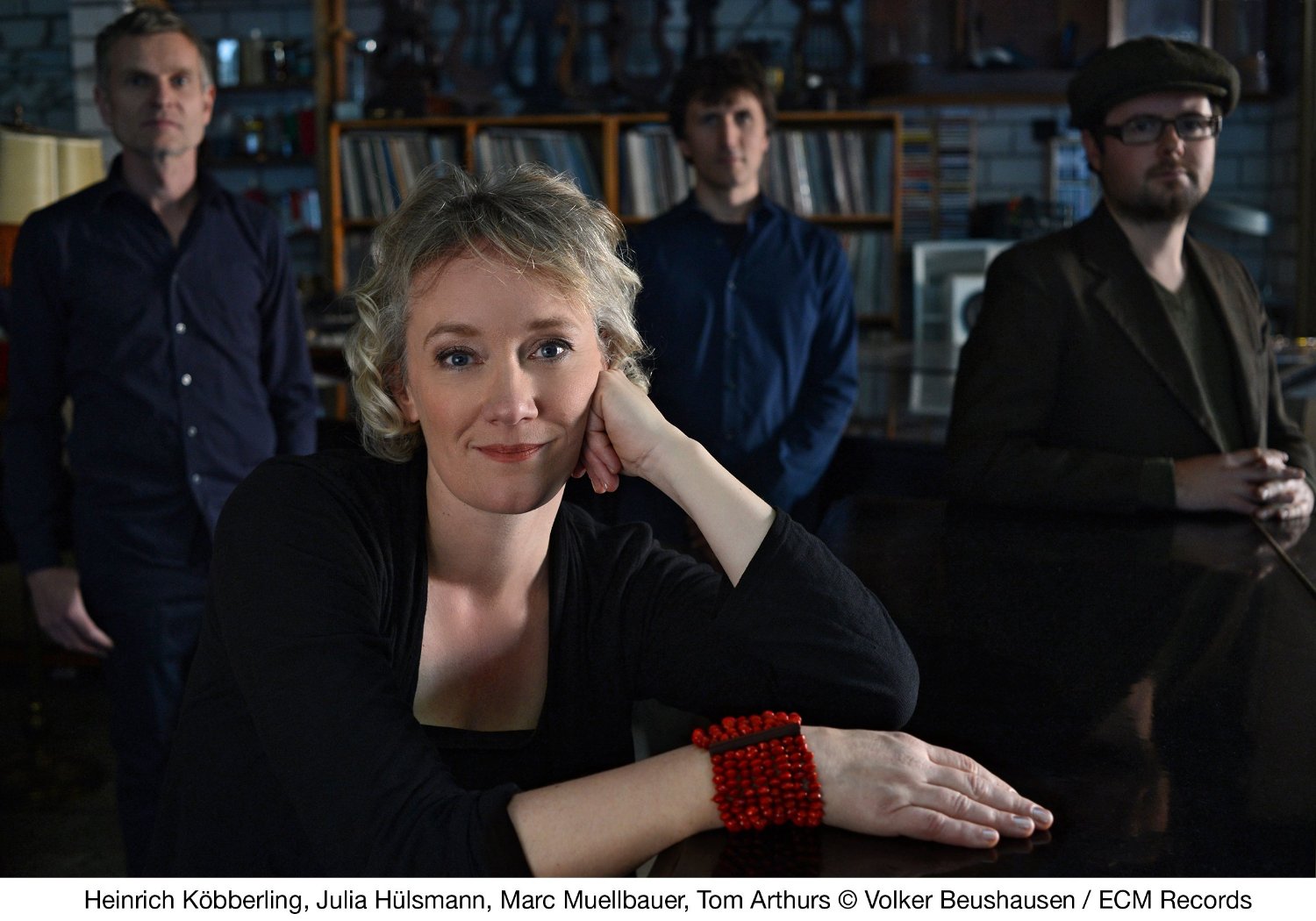
Julia Hülsmann piano Tom Arthurs trumpet, flugelhorn Marc Muellbauer double bass Heinrich Köbberling drums
Recorded June 2012 at Rainbow Studio, Oslo
Engineer: Jan Erik Kongshaug
Produced by Manfred Eicher
The harbor becomes the sea And lighting the house keeps its collision free Understand the lay of the land And don’t let it hurt you or it will be the first to –Feist
After the successes of The End Of A Summer and Imprint, pianist Julia Hülsmann joins bassist Marc Muellbauer and drummer Heinrich Köbberling for another round, only now with new collaborator Tom Arthurs on trumpet. Arthurs is a musician whose Kenny Wheeler-like feel for color and collaborations with other ECM artists makes him an inevitable fit for the label. Thus reborn, the Julia Hülsmann Quartet leaps into action with swing and vigor.
Much of said vigor comes by way of Muellbauer, whose pen begets the album’s hippest and most atmospheric numbers in kind. In the former vein we have “Quicksilver” and “Dedication,” in which Hülsmann takes the listener on journeys of discovery. In the latter vein, “Gleim” is a noteworthy gem. Between the composer’s soothing intro and Hülsmann’s floating clusters stretches an avenue of muted trumpet, along which Arthurs walks as if humming to himself. Köbberling’s sole offering is “Forever Old,” in which the drummer skims the surface of many oceans while Muellbauer surveys the coast in Arthurs’s footsteps toward a tessellated lighthouse. “Richtung Osten,” by Köbberling’s wife Fumi Udo, throws a narrower spotlight on Muellbauer, who traces peaks and valleys over the band’s rubato mappings.
Hülsmann contributes four tunes, including the bop-leaning title track and the syllogistic highlight, “Spiel.” In each one can hear her fanning approach to improvisation, as also in the photorealistic “Snow, melting.” For more than effect, she throws in two surprises. First is “The Water,” by Canadian singer-songwriter Feist, arranged here for the trio and crafted with subtle assurance. Second is the muted “Nana,” a lullaby from Manuel de Falla’s “Siete Canciones Populares Españolas” cycle.
From beginning to end, In Full View holds true to its vision without error. Fans of the trio are sure to feel right at home among the new company, for Arthurs provides many pleasures along the way, and even an intimate tune of his own: “Forgotten Poetry.” Which is precisely what this album is not. You will want to remember every word.
(To hear samples of In Full View, watch the video above or click here.)
Aaron Parks piano
Recorded November 2011 at Mechanics Hall, Worcester, MA
Engineer: Rick Kwan
Mixed at Avatar Studios, New York
Produced by Sun Chung
Into the forest again whence all roads depend this way and that to lead him back. –Robert Creeley
Aaron Parks’s solo ECM debut might just as well be called “Arbor Essence.” Not only because each of its 11 improvised tracks grows however it wants to, but also because as a forest they provide shelter from rain and screen against the sun’s blinding rays. The album belongs unquestionably alongside Craig Taborn’s Avenging Angel and any number of Keith Jarrett records as a significant contribution to the solo piano archive, though it owes as much to Erik Satie, Claude Debussy, and Paul Bley.
With so much foliage to reckon with, it’s no wonder Parks begins “Asleep In The Forest.” The apparent expanse of his playing is only enhanced by the engineering, which places us with him among the branches, looking down at the comings and goings of fauna below and wearing moonlight like a shroud. “Toward Awakening” confirms this feeling of night in a dreamlike pulse and builds waves with a surrendering intensity not heard since The Köln Concert. Unlike that classic predecessor, this excursion bleeds in more intimate ways, shared not with an audience of flesh but a congregation of souls. An awakening, yes, but into a realization that one always returns to slumber.
Like the album as a whole, “Past Presence” is a study in contrasts, of depth-soundings and highborn prayers. It’s a fantasy novel come to life, and in which kingdoms are built on foundations of magic just as they are undone by the same. In the looming shadow of its castle is where Parks follows more robust threads of melody in “Elsewhere,” an eerily distorted ballad of seeking and forgiveness that touches the horizon like a match to candlewick. So peaceful is its skewed vision of reality that the mechanisms of “In Pursuit” come as something of a surprise. In them is a whiff of philosophy that lingers over interlocking hands, the left’s rising bass lines bolstering the right’s gossamer speech. “Squirrels” and “Branchings” are, respectively, more whimsical and poetic, while “Homestead” favors the grays and browns of an Andrew Wyeth painting, its nautilus resting beneath a billowing curtain and chambered by the will to be heard.
This is one of those quintessential ECM albums that would not have existed without the label’s tireless archive on which to build, for one will catch hints of mainstays Ketil Bjørnstad (“River Ways”) and Arvo Pärt (“A Curious Bloom”) in addition to the ones already mentioned. By expanding minds on either side of the genre fence, it bespeaks the joy of creation for any who will take it—a gift without wrapping but the embrace of a welcoming ear.
Stefano Battaglia piano Salvator Maiore bass Roberto Dani drums
Recorded April 2012, Auditorio Radiotelevisione svizzera, Lugano
Engineer: Stefano Amerio
Produced by Manfred Eicher
When Italo Calvino writes in Invisible Cities, “And when my spirit wants no stimulus or nourishment save music,” one might finish: that music comes from the pen of Stefano Battaglia. Following 2011’s The River of Anyder, it was difficult to imagine that the Italian pianist’s trio with bassist Salvator Maiore and drummer Roberto Dani could ever yield a more delicate creation, but with Songways the band has done just that. It is one of the most sensitive jazz experiences available on ECM, rivaling even Tord Gustavsen’s inward glances in scope. Much of that scope has to do with Battaglia, who imbues his compositions with a characteristic wealth of literary allusions.
The album’s title track, in fact, pays homage to the same Calvino fable, and like it tells stories from different perspectives, only to realize that the language and the environments it describes are one and the same. Groovy shadings make it no less contemplative, and Maiore’s archaeological bassing assures that every melodic artifact is polished and museum ready. Maiore, in fact, glows noticeably throughout the album’s dreamiest passages, as those taken through the capital of Jonathan Swift’s Lilliput in “Mildendo Wide Song” or the twisted streets of Alfred Kubin’s “Perla.” As much a listener as a speaker, his erosions are so subtle that before you know it a river flows before you.
Battaglia, for his part, stands out in the philosophical (“Armonia,” inspired by Charles Fourier) and the surreal (“Monte Analogo,” from the book by Renée Daumal). Weaving through frames and brushes, he mines every artistic impulse until minerals have been exhausted. With increasing fervor, he paves avenues of abstract impressions. Yet the most rewarding gift of Songways is Dani. Whether brushing through Homer’s Odyssey in “Ismaro” in the wake of Battaglia’s footfalls, evoking the clock of Edgar Allan Poe’s fictional town “Vondervotteimittis” (hats off to engineer Stefano Amerio here for his miking of Dani’s cymbals), or transitioning from hands to sticks in “Babel Hymn,” his feel for tuning is ever on point.
Not only is this a brilliant album and the trio’s most thoughtful work to date; it is an experience that is sure to grow with you. This is jazz as alchemy, turning not lead into gold but gold into song.








 Between Sound and Space: ECM Records and Beyond