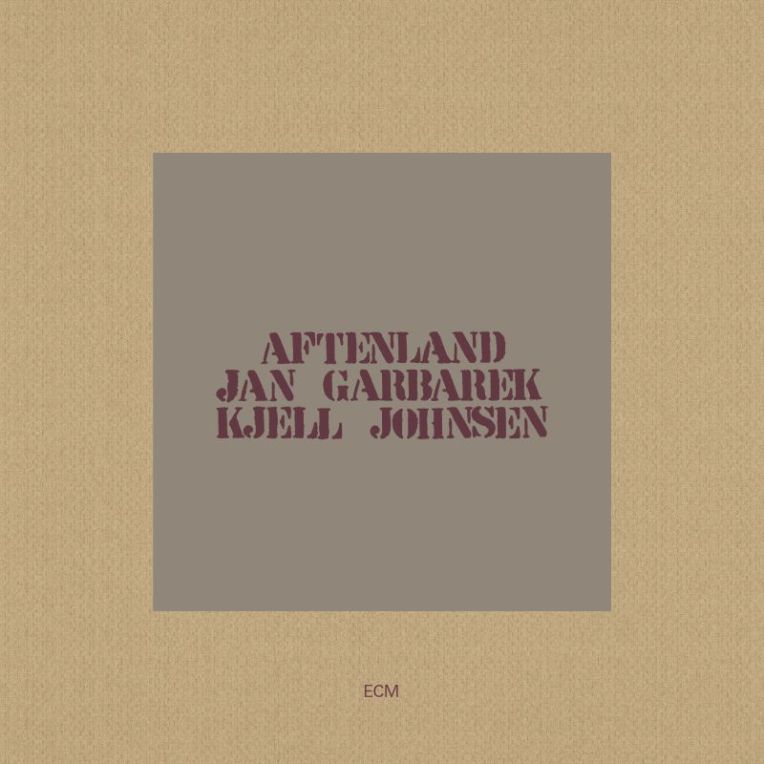
Jan Garbarek & Kjell Johnsen: Aftenland (ECM 1169)

ECM 1169 2

Aftenland

Jan Garbarek tenor and soprano saxophones, wood flute
Kjell Johnsen pipe organ
Recorded December 1979 at Engelbrektskyrkan, Stockholm
Engineer: Jan Erik Kongshaug
Produced by Manfred Eicher

If improvisation is a form of meditation, then meditation is also a form of improvisation. In being at peace with what one plays, one lives it.

Jan Garbarek is, of course, one of ECM’s longest standing composers and saxophonists, yet he is first and foremost a spectacular improviser who often manages to reach farther than (I imagine) even his own expectations in touching new melodic concepts. Paired with the Spheres-like church organ of Kjell Johnsen, he plumbs the depths of spiritual and physical awareness in a way that few of his albums have since. Here more than anywhere else, he shapes reverberation into its own spiritualism, exploring every curve of his surrounding architecture, every carved piece of wood and masonry.

The title track opens with a viscous solemnity, ever in shadow, while “Syn” reaps even more intense crops from the ethereal harvest it has sown. A trio of miniatures clustered around the session’s center reaches even more intimately into its heartbeat. “Kilden” seems to drip from the chapel ceiling like a weeping fresco. Garbarek unveils the rare recorders for a more playful exchange in “Spill.” “Iskirken” grips the heart with its piercing keen, dividing cloud and rain with the light of grief that shines like no other in times of greatest darkness. Lastly, the hurdy-gurdy drone of “Tegn” strings a delicate safety net for Garbarek’s robust defenestration.

This album predates his later Officium project by fourteen years, but is in parts just as effective in its vaulted evocations of hidden chants and invisible voices. At times, it also reminds me of the Licht/Haino/Hamilton/MLW one-off, Gerry Miles, only with less turbulent folds.

This is a pensive album, an unsung classic in the Garbarek oeuvre, filled with more than enough revelations to lodge a place in your musical heart.

<< Reich: Octet / Music for a Large Ensemble / Violin Phase (ECM 1168 NS)
>> Haden/Garbarek/Gismonti: Folk Songs (ECM 1170)

Haden/Garbarek/Gismonti: Magico (ECM 1151)

ECM 1151

Charlie Haden
Jan Garbarek
Egberto Gismonti
Magico

Charlie Haden bass
Jan Garbarek saxophones
Egberto Gismonti guitars, piano
Recorded June 1979 at Talent Studio, Oslo
Engineer: Jan Erik Kongshaug
Produced by Manfred Eicher

Along with the work of CODONA, Magico is perhaps a forerunner in what would come to be known as “world music,” and a pinnacle among ECM’s fruitful productions of the 1970s. Although the talents assembled could hardly be more geographically disparate, their musical heartbeats trace the same calm graph across the EKG paper that is our appreciation. What appears a modest effort in number (the group gives us a humble quintet) plies massive depths in execution. The tracks “Bailarina” and “Silence” alone comprise more than half of the album’s duration. The former’s graceful arcs and burnished veneer sparkle with understated virtuosity, while the latter features some of the gentlest relays between Garbarek and Haden alongside Gismonti’s frothy pianism. The jangly guitar of the title track guides us confidently through Garbarek’s incisive overlay before Gismonti switches over to classical on through “Spor.” Haden’s unassuming posture yields its darkest colors here, drawing a thick arco line beneath our feet just as we are about to fall. Where the album began in a blur, with “Palhaço” it ends in rounded focus, rendered portrait-like in pastels of agreement.

A companion album to the later Folk Songs, this is an all too easily overlooked soundtrack to a beautiful life, brimming with passions of the quietest kind. Like its title, it is a little piece of wonder wrapped in an enigma too real to deny.

<< Keith Jarrett: Eyes Of The Heart (ECM 1150)
>> Jack DeJohnette: Special Edition (ECM 1152)

Jan Garbarek Group: Photo With… (ECM 1135)

ECM 1135

Jan Garbarek Group
Photo With…

Jan Garbarek tenor and soprano saxophones
Bill Connors guitar
John Taylor piano
Eberhard Weber bass
Jon Christensen drums
Recorded December 1978 at Talent Studio, Oslo
Engineer: Jan Erik Kongshaug
Produced by Manfred Eicher

Now they are resting
in the fleckless light
separately in unison

like the sacks
of sifted stone stacked
regularly by twos

about the flat roof
ready after lunch
to be opened and strewn

–William Carlos Williams, “Fine Work with Pitch and Copper”

From the flowing introductory licks to the final exhalation that snaps this sonic locket shut, one look at the track listing of this debut nominal album from the Jan Garbarek Group can’t help but remind us of William Carlos Williams. The full title—Photo With Blue Sky, White Cloud, Wires, Windows And A Red Roof—is a Williams verse in itself, each element drawn from the cover photo into a sonic description thereof. Together they form a concept album in the deepest sense, the anatomy of which is known before the music even graces our ears. Garbarek is as incisive as the words, each the tooth of a widening grin.

Melody and circumstance cohabitate the sonorous waves that issue from every new turn that awaits us, and all in a language that is mellifluous, filled with open spaces, and drenched in Garbarek’s sunlit tone. The airy piano stylings of John Taylor and ever-moving bass of Eberhard Weber, not to mention outstanding contributions from guitarist Bill Connor and the omniscient Jon Christensen on drums, make for a most soluble palette. Even in such a pool of bases, Garbarek’s thematic bite loses none of its acidity. His is an ever-shifting kaleidoscope of worldly-wise meditations and humble commentary.

Each piece breaks a piece from the longer title and rolls it out into a photo in its own right. “White Cloud” works its way from the inside out, laying the tender kindling of a solo piano before being set aglow by Garbarek’s deep smolder. Slowly but surely, drums, bass, and electric guitar weave their way into this dreamlike fabric, cinched by soothing legato threads. We keep our eyes on the cover as its “Windows” are hung with lilting harmonies between Garbarek and Taylor. An acoustic guitar speculates through its translucent frame, enhancing Connors’s understated brilliance all the more. “Red Roof” finds Garbarek in a more pentatonic mode in his soaring reverberant passages, while “Wires” gives us a more animated, earthbound concept in which to contemplate the patterns of our psychic dentition. This track is composed not of melodies, but of wing beats tickling the edges of our brains with promises of light, and all the more soothing for its lack of vivid rhythmic separation. Every fragment falls into place in “The Picture,” which sprouts from the piano’s chromatic seeds into a small yet lush garden of life. Garbarek paints delicate images in the snatches of sky afforded to us while Weber’s bass navigates the soil below with the silent knowledge of an earthworm, closing in a gorgeous crepuscular fade.

Photo With… is far more than the “high-quality background music” it has been accused of being elsewhere. It was a finely polished stepping stone for the Norwegian saxophonist and composer, who with its ripples forged a distinct sonic shoreline that we continue to imprint every time we put our ears to its surface.

<< Tom van der Geld: Path (ECM 1134)
>> Egberto Gismonti: Solo (ECM 1136)

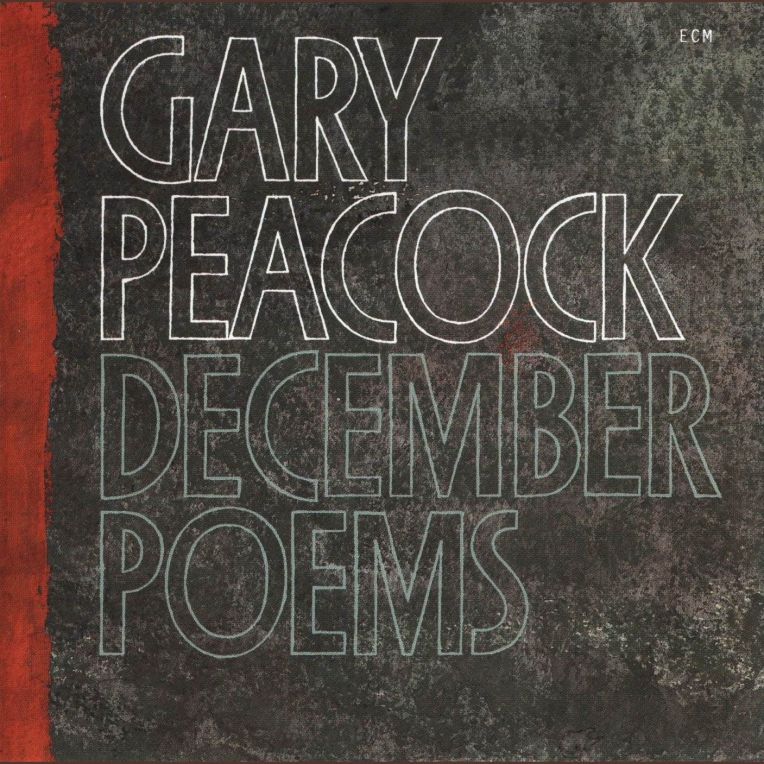
Gary Peacock: December Poems (ECM 1119)

ECM 1119

Gary Peacock
December Poems

Gary Peacock double-bass
Jan Garbarek tenor and soprano saxophones
Recorded December 1977 at Talent Studio, Oslo
Engineer: Jan Erik Kongshaug
Produced by Manfred Eicher

From the start of Gary Peacock’s December Poems, one revels in the sound of his instrument, the buzzing, raw quality of which comes to listeners at last relatively unmitigated. After a languid intro, “Snow Dance” lays down an unsinkable bass line, over which overdubbed improvisations abound. Jan Garbarek’s reports paint “Winterlude” like the sky outside my streaked window: that is, with only the barest of contrasts separating heaven and earth. “A Northern Tale” is a strangely airy segue into the wistful intro of “December Greenwings” and Garbarek’s subsequent reappearance. His winding paths intersect beautifully with Peacock’s straight and narrow in a track that is about as upbeat as the album gets. “Flower Crystals” changes the tone considerably with some internal pianism before settling into “Celebrations.” Like the opener, this also features two basses, only this time caught in a more erratic chain of events.

As I write this, it is indeed December—New Year’s Eve to be precise—and I am on a bus bound for New York City. Behind thoughts of friends and fun (the Metropolitan Opera’s performance of Pelléas et Mélisande awaits me), I feel in the starkness of this music the deeper roots of my travel. As the sun rises somewhere behind the cloud cover, I know that its light shines within. Recorded with unsurprising clarity, the album captures every creak, tap, and involuntary hum. Like a bare tree standing in a snowy field, its branches cut a bold hand-stretch of lines across a canvas of white and gray. As with Jack DeJohnette’s Pictures, this effort offers insight into an otherwise fiery group player whose free-spiritedness is akin to that of the label on which he has found his ideal home.

<< Jan Garbarek: Places (ECM 1118)
>> Bill Connors: Of Mist And Melting (ECM 1120)

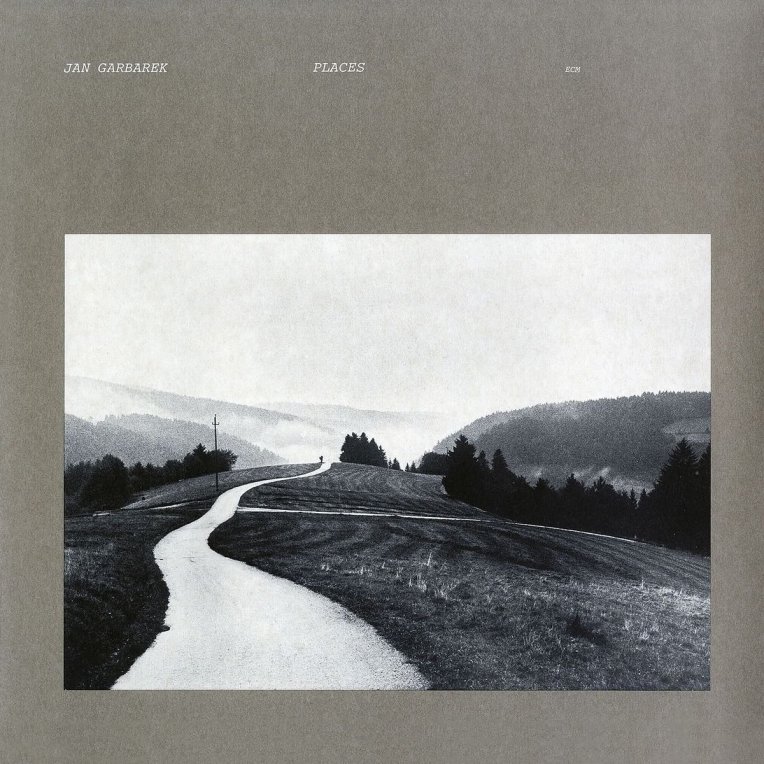
Jan Garbarek: Places (ECM 1118)

ECM 1118b

Jan Garbarek
Places

Jan Garbarek saxophones
Bill Connors guitar
John Taylor organ, piano
Jack DeJohnette drums
Recorded December 1977 at Talent Studio, Oslo
Engineer: Jan Erik Kongshaug
Produced by Manfred Eicher

Places brings together another congregation of musicians that could only come from ECM. Drummer Jack DeJohnette lassoes his scurrying loops to the acoustic hooks of guitarist Bill Connors, while John Taylor supplements most of the cargo with organ. At the helm of this vessel is Jan Garbarek, whose saxophonism starts high and goes only higher. With cumulative notecraft and a heartfelt commitment to atmosphere, he and Taylor unwrap a lush nexus in the stunning opener. The occasional harmonic falls like a dandelion seed onto this pool of night as cymbals splash all around us. Taylor weaves a fine spread, anchoring us with sustained bass lines and attentive chording, leaving Garbarek to seal every crack with his sonic caulk. Connors seeks to light his surroundings, striking at the flint with his percussive gesticulations in hopes that one spark might show the way. Garbarek sharpens himself with arid flavor and carves out a miniature oasis in the crumbling image of exotic desire. The organ weaves in and out like a halo circumscribing us with subtle urgency until it pulls us beyond the point of no return, where dwells only silence in these “Reflections.” We then find the organ “Entering” into an electric guitar embrace. Bass and drums give us footholds where we might not expect to find them. Thus, what began as an elegy turns into a far-reaching journey that is over too soon. But in the next track we’re still “Going Places,” spurred by DeJohnette’s steady pulse and Garbarek’s hidden thermals. The energy comes in waves, subsiding here for a guitar solo and swelling there at Garbarek’s call. “Passing” ends where the album began, in a fluid ostinato of organ over which Connors looses his wavering song. Garbarek draws an ascendant pattern between those quiet strings, lifting us to an arena in which age curls into a semblance of time.

For anyone who wished Aftenland had a beat, this one’s for you.

<< John Abercrombie: Characters (ECM 1117)
>> Gary Peacock: December Poems (ECM 1119)

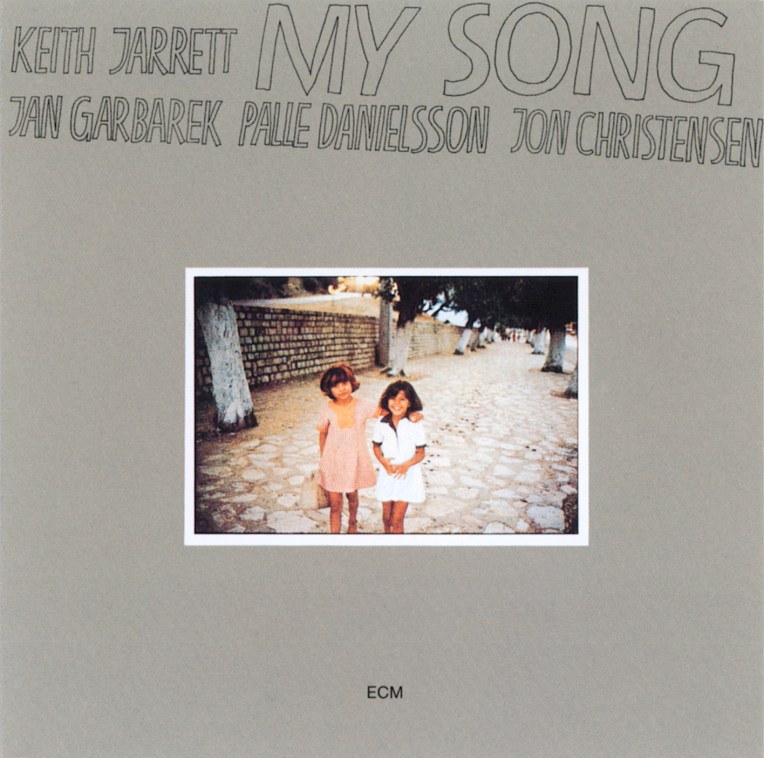
Keith Jarrett: My Song (ECM 1115)

ECM 1115

Keith Jarrett
My Song

Keith Jarrett piano, percussion
Jan Garbarek tenor and soprano saxophones
Palle Danielsson bass
Jon Christensen drums
Recorded November 1977 at Talent Studio, Oslo
Engineer: Jan Erik Kongshaug
Produced by Manfred Eicher

From the moment we step into the transport of Keith Jarrett’s European quartet, we know we are in for a comforting ride filled with lush scenery and temperate climes. “Questar” opens this set of six Jarrett originals by unfolding a melodic altar for the saxophonic offerings of Jan Garbarek, who trades prime invocations with Jarrett in a formula that pervades the rest of the album to great success. The gorgeous title track, in which we encounter a slightly mournful but always majestic invocation, widens the music’s embrace. Garbarek’s pleasing yet incisive tone works wonders and continues to lead the way in “Tabarka,” where nostalgia shares its berth with the dripping shadows of resolution, and which protects the Michael Naura-like buoyancy of “Country” like a dome over Palle Danielsson’s wonderful solo on bass.

Jarrett cultivates the talents of his fellow musicians in a garden rife with unique hybrids. While his left hand is firmly rooted in the soil of his rhythm section, his right seems to frolic in the rain that nourishes it, changing from liquid to gas and back to liquid in a perpetual cycle of self-renewal. He comes across as nothing less than perfection, sharing in this democratic spread of passion. The colorful scatterings of his solo in “Mandala,” for example, are made all the more so for the fantastic rhythm section backing him every step of the way. As Jarrett peaks with intensity, Garbarek arches his back like a sun flare, a whip cracking silently through time-space in slow motion, giving us an aftertaste of the Norwegian reedman at his early best. During another rich bass solo, Jarrett plucks the strings inside his piano as if to defuse the epiphany. After this palpable spurt of energy, “The Journey Home” breathes a sigh of relief and provides the album’s most gorgeous turns from Jarrett. Fluid as his song, his voice basks in the sunshine. Not to be outdone, Garbarek matches this elegiac acuity, at last fading into brushed cymbals.

The music of Keith Jarrett was already highly sustainable long before the concept became an obligatory buzzword. With My Song he brings that personal ecology in fullest force. Garbarek hardly sounds better than he does alongside the discerning piano man, and is here soulful, restrained, consolatory but also insistent, and never afraid to let loose once in a while. These are musicians bound by trust, which they express with every pellucid turn of phrase they utter on an album that represents one of ECM’s most stunning dates of the seventies.

<< Pat Metheny Group: s/t (ECM 1114)
>> Egberto Gismonti: Sol Do Meio Dia (ECM 1116)

Egberto Gismonti: Sol Do Meio Dia (ECM 1116)

ECM 1116

Egberto Gismonti
Sol Do Meio Dia

Egberto Gismonti guitars, piano, kalimba, percussion, flute, voice
Nana Vasconcelos berimbau, percussion
Ralph Towner guitar
Collin Walcott tabla
Jan Garbarek soprano saxophone
Recorded November 1977 at Talent Studio, Oslo
Engineer: Jan Erik Kongshaug
Produced by Manfred Eicher

Inspired by his time spent with the Xingu Indians of the Amazon, to whom the album is also dedicated, Sol Do Meio Dia (Midday Sun) is a consistently intriguing transitional album from multi-instrumentalist Egberto Gismonti. With him are percussionists Nana Vasconcelos and Collin Walcott and guitarist Ralph Towner, as well as Jan Garbarek on soprano saxophone for a brief spell. At this point in his career, Gismonti was beginning to fill in the porous sound of his 8-string guitar. To this end, Vasconcelos and Walcott flesh out much of the dizzying rhythmic space that defines his sound, while Towner’s 12-string laces the background with more explicit chording. Walcott traces magical circles in “Raga,” for which Gismonti engages us with nimble fingerwork on the guitar’s highest harmonics. Thus begins a chain of sporadic bursts acting in dialogue. With modest virtuosity, the musicians run hand-in-hand down this ecstatic path of music-making to an even more specific sound, this time marked by kalimba and thumb piano. Gismonti’s shrill flute and wordless chanting here recall the work of CODONA. “Coração” is a rich solo and, along with the album’s closer, is a perfect exposition of Gismonti’s notecraft. The disc finishes with a 25-minute suite. Garbarek makes his only appearance in the opening section, which glows with his mournful ululations. An inviting solo from Towner opens the ears to another fluted passage anchored by percussion and handclaps. One can feel the forest at such moments as if it were living and breathing all around us.

The combination of musicians is pure ECM and reflects the brilliant casting of producer Manfred Eicher. As airy as Sol Do Meio Dia sounds, it is also weighted with a certain nostalgia that is difficult to quantify. Like a memory, its actors are always out of focus even when their intentions ring clear. And in the end the intentions are what it’s all about.

<< Keith Jarrett: My Song (ECM 1115)
>> John Abercrombie: Characters (ECM 1117)

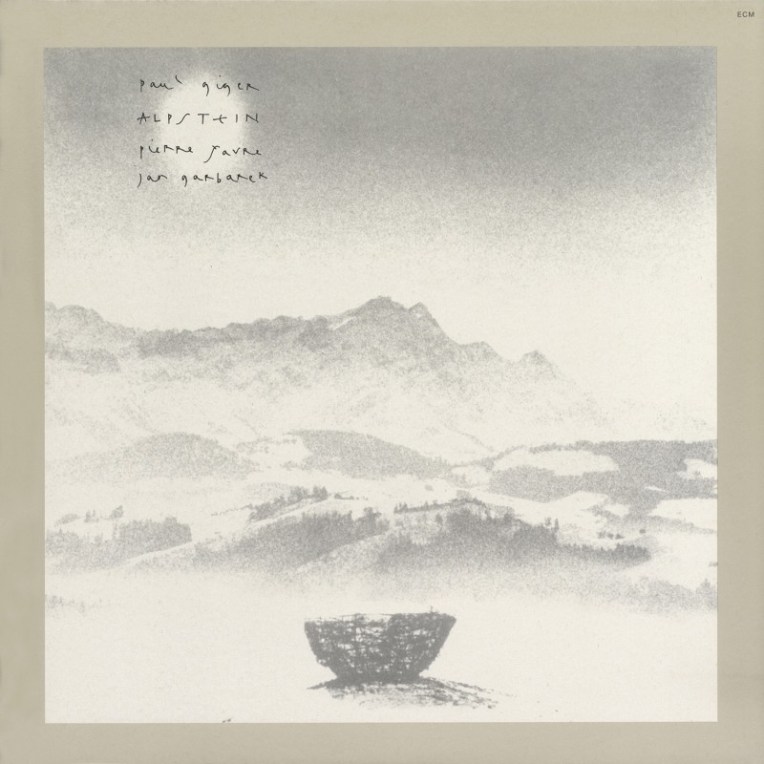
Paul Giger: Alpstein (ECM 1426)

1426

Paul Giger
Alpstein

Paul Giger violin
Jan Garbarek tenor saxophone
Pierre Favre percussion
Musicians from Appenzell (Switzerland) silvesterchlauseschuppel, schellenschötter
Recorded 1990/91 at Rainbow Studio, Oslo; 1990 at Trogen
Engineer: Jan Erik Kongshaug
Produced by Manfred Eicher

The first time I heard Swiss violinist Paul Giger, my soul might well have wept. His is a spiritualism beyond the trappings of human politics, a stage populated by human-animal hybrids, faceless musicians, and dancers of many forms. For this, his follow-up album, Giger is joined by saxophonist Jan Garbarek and percussionist Pierre Favre in a sonic portrait of his homeland. Delving into living folk traditions, this trio gives us as wintry a feeling as possible without ever stepping foot in into the Alps. Yet this is no mere sonic postcard, but a concerted effort to flip the land inside out and expose, as from under the logs we overturned as children, the life teeming within.

Anita's Alpstein
(Photo credit: Anita Brechbühl)

This music came into my life when I still had a violin in my hands. At the time, I was struggling with the idea of expressing my inner voice through an external instrument. Hearing Giger showed me it was possible, and this album’s second piece, Karma Shadub (Dancing Star), is something I played quite often in my ultimately futile attempts to emulate a sound that was beyond me. I even performed it once with an interpretive dancer at a high school assembly. Though the violin soon faded from my grasp, I remain ever in its shadow, a humble and open listener of its masters, of which Giger is a nonpareil example. Every dissolve of Karma reveals new visual combinations, each so rudimentary, so fundamentally alive. Garbarek’s throaty call dovetails with Giger’s in a symbiosis of dance and darkness. Alpsegen introduces the album’s first percussive colors. A caravan of metallic nomads, ranging from tambura to cymbals, processes across an ever-widening sound palette. Cowbells recede like ancestors as Giger leaps in evolutionary pirouettes. On Chuereihe, Garbarek revisits the herding calls that enthralled on Dansere, and climbs the peaks into which the cover photography beckons us. Giger’s violin here is sometimes insectile, sometimes onomatopoetic, but always anchored by Favre’s deepening drums. Chlauseschuppel gives us a taste of the Appenzeller bells, rung at the end of every year to ward off foul spirits as the new one is welcomed.

Silvesterchläuse by Vera Rüttimann
(Photo credit: Vera Rüttimann)

When I first heard Trogener Chilbiläbe, which closes the disc, its backdrop of urban sounds led me to believe it had been recorded in a church with the door flung open. Its inspiring solo cycles of fast runs and soaring meditations end with a slam, as if shutting out the noise of the outside world. Only later did I discover that the door in question belongs to a prison cell, and that the piece was recorded in the jail where Giger must serve out a few days of each year for refusing to pay military tax. As insightful as these biographical minutiae are, it is the Zäuerli, a haunting yodel particular to the Alpstein region making three appearances here, that is the album’s lifeblood. In order to evoke its polyphonic splendor via a single instrument, Giger taps his fingers on open strings, eliciting harmonics from within. These hidden voices are his aesthetic soil. As we come to be wrapped in their atmospheric blankets, we are awakened even as we slumber.

Alpstein is a cosmic alignment. Like all of the violinist’s albums, it is markedly different from the rest but digs just as deeply. Giger may not always look to the same future, but he does draw from the same mythic past. His playing is only one step removed from breath, for every stroke of the bow enriches the universe like air to a lung.

<< Kim Kashkashian: Shostakovich/Chihara/Bouchard (ECM 1425 NS)
>> Stephan Micus: Darkness And Light (ECM 1427)

Ralph Towner’s Solstice: Sound And Shadows (ECM 1095)

ECM 1095

Ralph Towner’s Solstice
Sound and Shadows

Ralph Towner 12-string and classical guitars, piano, French horn
Jan Garbarek soprano and tenor saxophones, flute
Eberhard Weber bass, cello
Jon Christensen drums
Recorded February 1977 at Talent Studio, Oslo
Engineer: Jan Erik Kongshaug
Produced by Manfred Eicher

If Ralph Towner’s classic Solstice was an overland journey, then Sound And Shadows is a subterranean dream. Featuring the same lineup as its predecessor—Jan Garbarek on saxophones, Eberhard Weber on bass and cello, Jon Christensen on drums, and Towner himself behind an arsenal of instruments—the results are perhaps not as focused. Then again, they don’t need to be.

Amid the spacious 12-string considerations of “Distant Hills,” we cannot help but feel a rich and complex topography curling into slumber above our heads. Weber’s electronic touches here deepen what is already clothed in darkness. The tighter “Balance Beam” is, like its titular object, steady and reassuring yet something to which one must pay respect if one is to navigate it successfully. Garbarek’s sopranic accents teeter across it, bringing with them the idea of light where there can be none. “Along The Way” is a collection of invisible snapshots animated by the life force of the musical gesture. Towner reprises his deft pianism in “Arion.” Caressed by the fluid unity of Christensen and Weber, he unhinges unspoken memories into the soil. “Song Of The Shadows” ends the album in a blend of classical guitar and flute over receding strings.

Along with Garbarek’s open splendor and admirable restraint, Weber’s snake-like pedal points comprise the ideal complement to Towner’s pinpoint metallic precision. Christensen’s cymbal work glistens as ever, proving that rhythm can be just as effective in a whisper. This is an album of sensations without images, one that reminds us that in order to have light, we must have umbrage, and this it brings in great quantity.

<< Steve Kuhn and Ecstasy: Motility (ECM 1094)
>> Collin Walcott: Grazing Dreams (ECM 1096)