Paul Bley: Play Blue – Oslo Concert (ECM 2373)

Play Blue

Paul Bley
Play Blue – Oslo Concert

Paul Bley piano
Recorded live August 2008 at Kulturkirken Jakob, Oslo Jazz Festival
Engineer: Jan Erik Kongshaug
Mixed October 2013 at Rainbow Studio by Jan Erik Kongshaug and Manfred Eicher
Produced by Manfred Eicher

Since appearing as bandleader on ECM’s third release in 1970, Canadian pianist Paul Bley has been a formative presence for the label. Yet despite the classic combos with Evan Parker, Barre Phillips, Gary Peacock, Paul Motian, and other legends, Bley has been at his own most legendary when alone at the keyboard. Open, to love was just the beginning of a highly intermittent journey that continued with Solo in Mondsee, both now achieving trilogy status with the addition of Play Blue.

It’s practically impossible, of course, to discuss ECM’s catalogue of solo piano improvisations without touching on Keith Jarrett and Chick Corea, to say little of younger additions Craig Taborn and Aaron Parks. And while it’s easy to lose oneself in the enchantments of these continents, perhaps none is so abundant as Bley’s. As the album’s anagrammatic title suggests, the illocutionary need to perform is in this very DNA. He has such command of his freedom at the keyboard, where he expresses such freedom in his command.

Bley

(Photo credit: Carol Goss)

Traversing five tracks averaging 11 minutes each, Bley’s program, recorded live at 2008’s Oslo Jazz Festival, is as hefty as his toolkit, from which he seems to draw on the entire history of jazz to make every invention shine. At just over 17 minutes, “Far North” might make for a top-heavy introduction were it not so intricately pocked by tunnels of play, exploration, and living for its own sake. There is, for lack of a more effective word, an unthreatened quality to this music, as if it were some final refuge of wilderness where fauna thrive by the safety of mutual trust. As with nearly everything Bley touches, the climate is constantly changing: now lush with foliage, now crisp like the tundra. There is sweeping grandeur and gnarled microscopy in equal measure. Like morning and evening, each is a reflection of the other.

From the far north, Bley shifts to the “Way Down South Suite.” Although ultimately more playful and chromatic, it sprouts a much knottier pine before expanding its reach to distant planets. With an open stance Bley navigates these changes as if he has known them before, despite their utter lack of repetition. Earth awaits us with open arms in “Flame.” With classically balladic contours, this intimate journey bears that characteristic Bley edge, which keeps us at full attention by never privileging a single mood over others. Even denser, but also bittersweet, is “Longer,” which leaves “Pent-Up House” to finish things off. This tune by Sonny Rollins, in whose band Bley played in the early 1960s, emerges from the rubble of its original structure. Bley rebuilds it cell by cell, until its compact circle becomes a period at the end of an epic tale.

With this masterful addition to his discography, Bley has proven that not only is he open to love, but also a style of beauty that comes only with age. Let this not be the end.

(To hear samples of Play Blue, please click here.)
Vijay Iyer: Mutations (ECM 2372)

Mutations

Vijay Iyer
Mutations

Vijay Iyer piano, electronics
Miranda Cuckson violin
Michi Wiancko violin
Kyle Armbrust viola
Kivie Cahn-Lipman violoncello
Recorded September 2013 at Avatar Studios, New York
Engineer: James A. Farber
Assistant: Tim Marchiafava
Produced by Manfred Eicher

In a brief liner note, MacArthur-winning pianist and composer Vijay Iyer defines the title of his ECM debut as “the noise in our genes.” The eponymous decalogue for piano, string quartet and electronics puts this theory into sonic practice with such organicity that fans and newcomers alike will find this laboratory to be a fascinating place in which to marvel at every biological compound. Having studied violin for 15 years, Iyer is anything but a stranger to the sounds of the string quartet, and so inclusion of that reduced orchestra is as timely as the gestures encoded into his score. Although one might read any number of influences into the piece (Terry Riley comes immediately to mind in the introductory movement, “Air,” and in the third, “Canon”), Iyer’s sound-world is very much its own ecosystem, where the randomness of sprouting leaves is just as vital as, and exists as an expression of, the roots that feed them. Subtitles thus reflect more the physical than emotional structure of individual movements. Some are more overt. “Rise,” for instance, consists of a rising tone that falls in on itself at the insistence of sirens and has its partner in the penultimate “Descent,” while small bursts of mechanical activity throughout “Automata” identify its clockwork soul behind the tasteful electronic appliqué. This is the key tone of the emerging landscape, drawn in the hue of dusk. Other portions are less obvious, such as “Chain,” which creates a feeling of linkage by the notes not played. Three distinct forces—the click track, piano, and strings—achieve remarkable unity here. From the concentrated (“Kernel”) to the frenetic (“Clade”), and even to the docked-boat knocking of “Time,” which closes out, the feeling is always one of fractals: the closer you get, the more detail is revealed. This might very well serve to describe Iyer’s entire output so far.

At the periphery of this program the listener will find three solo piano works that are anything but peripheral. Spellbound and Sacrosanct, Cowrie Shells and the Shimmering Sea, as the initiatory phase of both the album and a hopefully longstanding relationship with ECM, speaks with Iyer’s characteristic attention to detail. Contrasting pedaled sustains and shallower drops, he displays an unusual awareness of the piano’s timbral capabilities. In other words, he infuses the piano with a deeper knowledge of itself. He achieves this with no small effort of restraint, lest his territories become too ephemeral to grasp. The final two pieces factor electronics into the equation. Vuln, Part 2 emerges from an astutely urban palette. Augmented by a muffled bass beat, like that of trunk-mounted subwoofers as heard from a neighboring street, serves not as a rhythmic guide but as a reminder of the regularity and therefore fallibility of abstraction. Iyer illustrates that even the most fleeting movements of body and mind are driven by impulses that, when seen from far enough away, become regular and may even disappear. The piano’s beauties, then, exist only to be sworn to secrecy. When We’re Gone is the coda, and as such is trained to open two doors for each one closed. In its starker expansion of time, reflections of mortality tremble like icicles desirous of melting. So do we end as we began: at that indefinable edge between formation and destruction.

(To hear samples of Mutations, you may watch the EPK above or click here.)

Jacob Young: Forever Young (ECM 2366)

Forever Young

Jacob Young
Forever Young

Jacob Young guitars
Trygve Seim tenor and soprano saxophones
Marcin Wasilewski piano
Slawomir Kurkiewicz double bass
Michal Miskiewicz drums
Recorded August 2013 at Rainbow Studio, Oslo
Engineer: Jan Erik Kongshaug
Produced by Manfred Eicher

Forever Young is all Young. Jacob Young, that is. The Norwegian-American guitarist made his ECM debut with 2004’s Evening Falls, on which he joined a group of label regulars for a nuanced and strangely familiar encounter. Now for his third round (incidentally the title of a Manu Katché album on which he also appeared), Young enlists the help of saxophonist Trygve Seim and the Marcin Wasilewski Trio for an all-original set with all the evocative precision admirers will have come to expect.

Young band

Young’s experiences in Katche’s band seem to have rubbed off on two tunes. The mid-tempo groove of “Bounce” is luscious and slick as rain, and sports a solo from Young’s electric that lights up the night with its pale fire. “Sofia’s Dance,” for its part, is an acoustic-led excursion driven by drummer Michal Miskiewicz. Young sets a duly environmental precedent with his harp-strung picking, which is then fleshed out by Wasilewski toward some awesome group unity.

This dichotomy between instruments continues throughout the album, of which the acoustic tracks are marked by relaxed conversations. In this vein, Young and Seim share a musical relationship that reveals depth of friendship. The saxophonist often picks up the guitarist’s lunar phases and carries them toward new moon. In “Therese’s Gate,” for one, Seim emotes with the bareness of an experienced singer. This allows Young all the more room to stretch his fingers in that same vein of sincere expressiveness. Wasilewski’s pianism is notable for its beauty, as also in the track of the same name. “Beauty” finds Young in a strumming mood, thereby throwing more spotlight on the pianist and his wondrous rhythm section (hat tip to bassist Slawomir Kurkiewicz). The album’s opener, “I Lost My Heart To You,” brings all of these elements together and more. A stellar intro from the keyboard drops a starlit curtain, from behind which Young’s foundations begin a winning melodic combination, even as Miskiewicz’s cymbals leave shining breadcrumbs toward sunrise. It’s an ideal place to start for the way it frames Young’s guitar as one element in a fair trade system. Like the arcs of a group of ice skaters on a forest pond, the musicians’ collective tracery implies many infinities.

The plugged-in tracks are smoother. Young’s virtuosity is on full display in “We Were Dancing” but, true to form, constructs with sensitivity intact and leaves space for Kurkiewicz’s light unpacking. “1970” names the year of Young’s birth, and is brimming with flower power. The gymnastic soloing adds to its charm. “Time Changes” is another summery piece of nostalgia, which behind its upbeat veneer cradles a strangely meditative soul. Young takes us to school with unpretentious grace, as Wasilewski’s trio measures every detail around him. The album ends on a reflective note with “My Brother.” And what better place to leave us than in the spirit of family? For we, too, are welcomed to share in the love, forever young and impervious to the critic’s words.

(To hear samples of Forever Young, click here.)

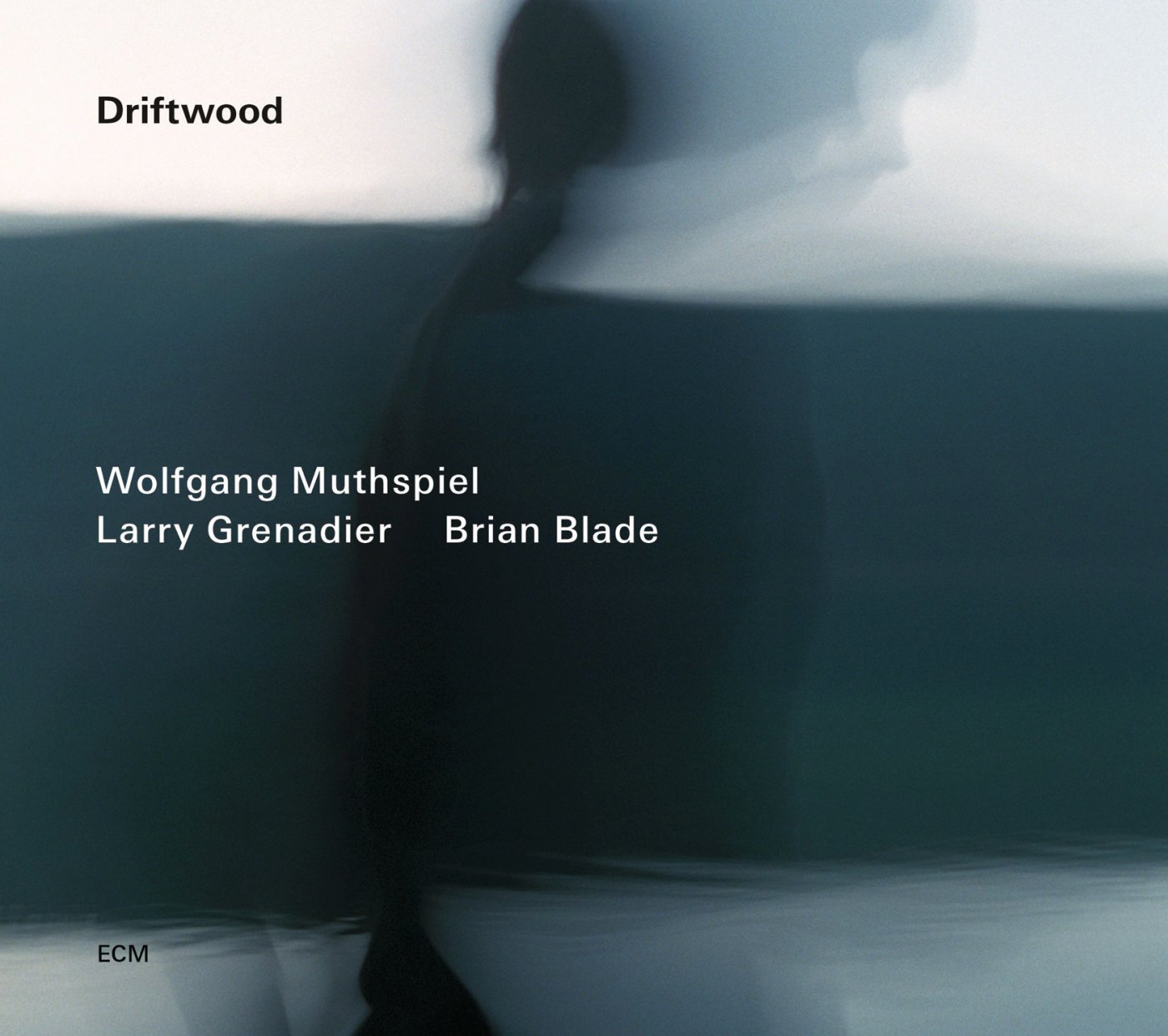
Muthspiel/Grenadier/Blade: Driftwood (ECM 2349)

Driftwood

Driftwood

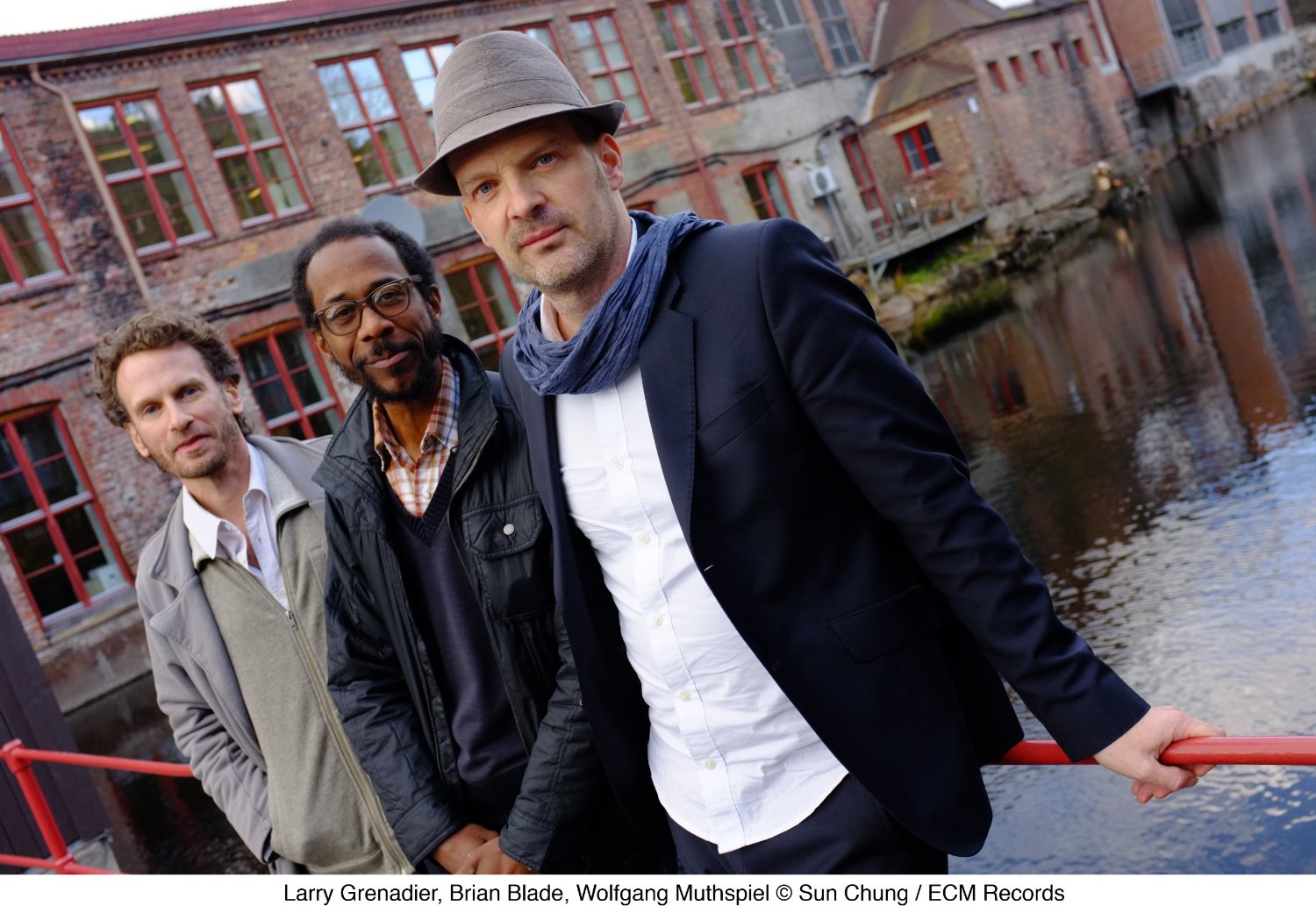
Wolfgang Muthspiel guitar
Larry Grenadier double bass
Brian Blade drums
Recorded May 2013 at Rainbow Studio, Oslo
Engineer: Jan Erik Kongshaug
Produced by Manfred Eicher

After making his ECM debut in the company of Ralph Towner and Slava Grigoryan on 2013’s Travel Guide, Austrian guitarist Wolfgang Muthspiel takes on his first leader date for the label. And with good cause, because its sounds have been an important part of his evolution as an artist, not least of all through his studies with the great Mick Goodrick. With such a background to go on, it should be no surprise that Muthspiel is a suitable fit for, while also expanding the exploratory mission of, ECM. And in the fine company of bassist Larry Grenadier and drummer Brian Blade, his star shines even more brightly.

Muthspiel and friends

Excepting the regenerating spiral of the instantaneously composed title track, all tunes are from Muthspiel’s pen, artfully shuffled between electric and acoustic leads. The former bookend the set, starting with the tracery of “Joseph”—in the center of which Muthspiel exploits a range of effects, from grunge to echoing parabolas in single turns of phrase—and ending with “Bossa for Michael Brecker,” an appropriately marbled tribute to the late, great saxophonist. Its opening gestures paint the dotted center line down a road that continues even after the album nominally ends. Muthspiel sails across its pavement toward a classic unity. The electric guitar glows with subconscious hues in the pastel-colored “Highline,” in which its overdubbed ghost keens distantly as the rhythm section gathers momentum for a runway jam that seems about to lift off at any moment but is content in dancing with the anticipation of doing so. And in “Lichtzelle” (Light cell), that same guitar joins drums in a duet of seeking points and lines.

“Uptown” starts off the acoustic selections in groovier territory and, from the underlying pulse and slightly dissonant borders, reveals a touch of Towner. Between the delicious syncopation and a nimble solo from Grenadier, it turns out to be one of the most unforgettable tracks to come from ECM in a long time. “Cambiata” is a uniform, laid-back piece of cinematic beauty, while “Madame Vonn” is the album’s consummate ballad. As the ponderous shadow of “Uptown,” it has a classic—if also melancholic—skin.

Driftwood may be a study in contrasts, but is ultimately one of enmeshment. It shows a musician not at the top of his game, but embodying the game itself, working his fingers into the strings with meticulous freedom until each scores a quiet, melodic goal without the need for fanfare.

(To hear samples of Driftwood, click here.)

Colin Vallon Trio: Le Vent (ECM 2347)

Le Vent

Colin Vallon Trio
Le Vent

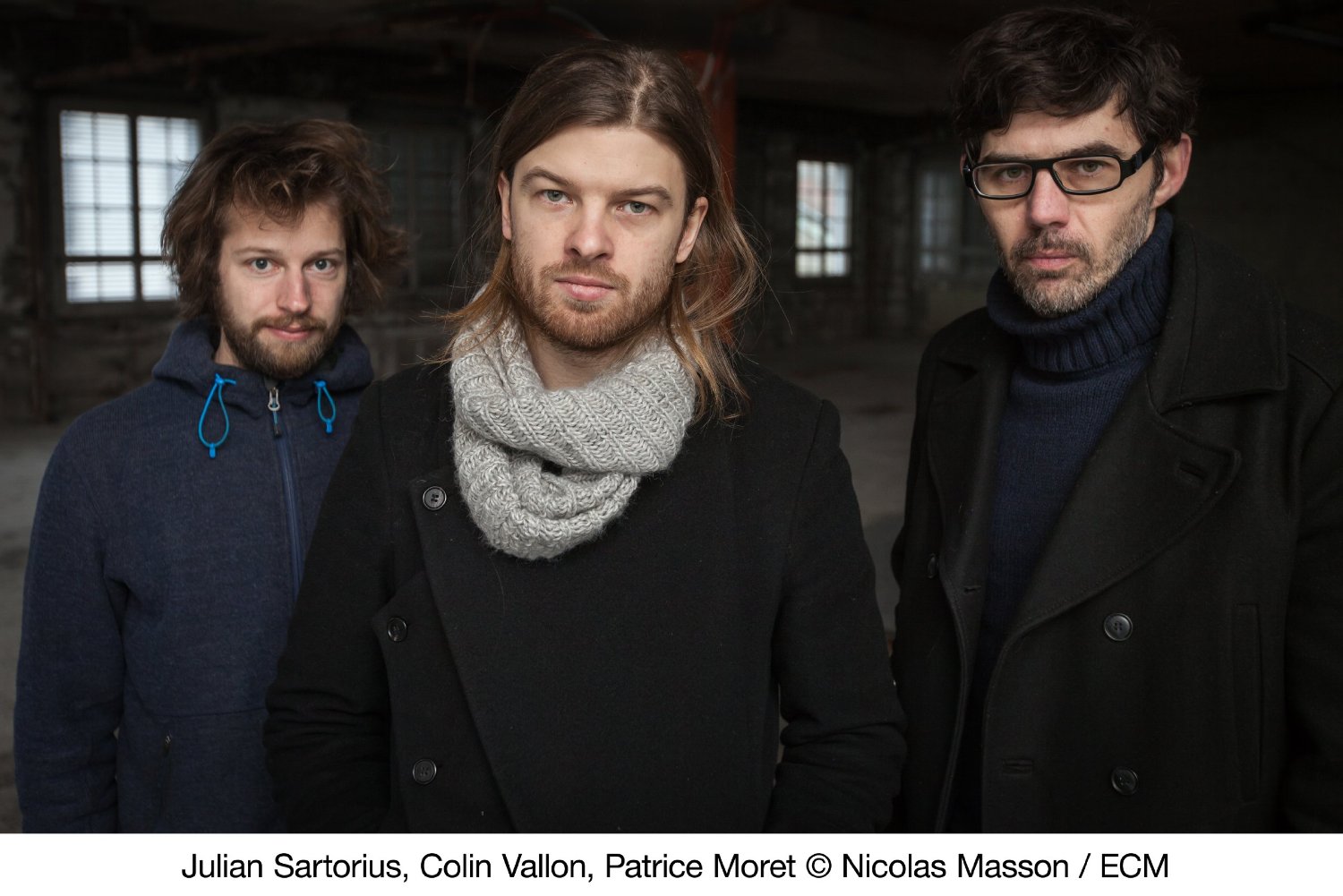
Colin Vallon piano
Patrice Moret double bass
Julian Sartorius drums
Recorded April 2013 at Rainbow Studio, Oslo
Engineer: Jan Erik Kongshaug
Produced by Manfred Eicher

Rruga marked the ECM debut of a peerless piano trio, and with that release opened new doors for the format. Pianist Colin Vallon again joins bassist Patrice Moret, and together with new drummer Julian Sartorius they unhinge those doors in absence of need. With an even more refined geometry, one that borders on white magic, these three young men quietly draft an unforgettable statement for the 21st century. Aside from being a master class in texture and atmosphere, Le Vent mines the element of surprise as if it were ore in rock. As the trio builds its quarry, it reveals itself as a creature of ritual. If Tord Gustavsen’s trio is the x axis (marking time) and Bobo Stenson’s is the y (marking distance), then Vallon’s selfless band is the z, by which we might gauge jazz’s inter-dimensional potential.

Vallon Trio

Moret’s sole compositional offering is also the album’s most significant. “Juuichi” opens the set with pulsing, unified chords. The title is an intriguing one, being Japanese for the number 11, and could refer to many things (I’m inclined to think of it as related to the stumbling time signature that shadows its every move). Growing in brightness and presence, it builds toward quiet reflection, spawning a tide of minnows. One immediately notices the care with which the trio builds its sonic worlds, each an ode to the value of patience. These musicians prove that, while indeed the best things come to those who wait, one must make music of the waiting for art to be born.

Skipping to the album’s end lands us in two freely improvised tracks: “Styx” and “Coriolis.” Both highlight Sartorius’s delicacy with brush and wand as he un-knots planks of wood until the album’s vessel resigns itself to a beautiful sinking. In these final statements are whispers of many others to come.

Between these two shores churns an ocean of Vallon originals, of which the title track further emphasizes Sartorius’s climatic tendencies. Here the melody from the composer’s fingers crystallizes like an icicle, but not before it traces a heart on a fogged train window. Though closed, that window allows a breath of current to make its briny notes known, a scent fecund with origins. Yet each time the trio switches tracks, it sets the tundra aflame with poetry.

Moret is a thrumming force, here and throughout, providing anchorage in “Immobile” and tactility to the soft-hued flames of “Cendre.” Elsewhere, he gives validity to every state, be it the protracted undulation of “Fade,” the bittersweet “Goodbye,” or even a clouded hint of “Rouge.” He also sets off evocative interactions between piano and cymbals, which in “Pixels” are light and glass.

Like grief, Vallon and his bandmates do not deny the immovable wedge of melancholy but grow larger to contain it. They are young in body but possess old souls, each with a space for the others in the name of living.

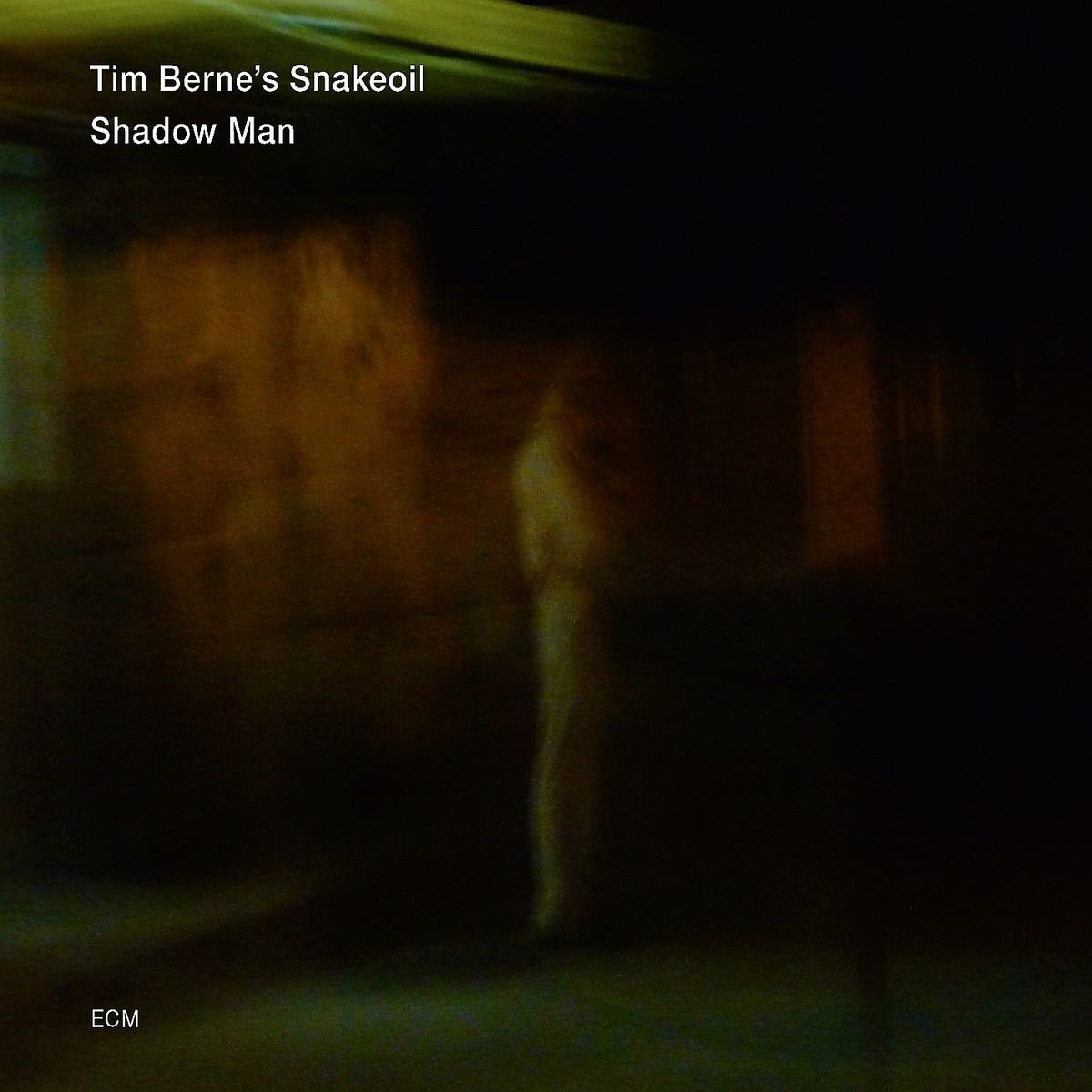
Tim Berne’s Snakeoil: Shadow Man (ECM 2339)

Shadow Man

Time Berne’s Snakeoil
Shadow Man

Tim Berne alto saxophone
Oscar Noriega clarinet, bass clarinet
Matt Mitchell piano
Ches Smith drums, vibraphone, percussion
Recorded January 2013 at Clubhouse, New York
Engineer: Joe Branciforte
Assistant: Bella Blasko
Mixed by David Torn at Cell Labs
Produced by David Torn and Tim Berne

In the world of Tim Berne’s Snakeoil, openness is the new closure. Having boomed into the ECM airspace with its self-titled debut, this band of powerhouse New Yorkers was ripe for a second coming. And in the throes of Shadow Man, it’s impossible to witness the musicians’ leaps of evolution and intuition and not be moved. We might easily throw around words like “cerebral” or “complex” to describe what’s going on here, but at the end of the way what really matters is its emotional impact, and this it possesses in spades. This is music that does more than speak to the listener; it embodies the listener.

With an average length of 12 minutes, and one track clocking in at just shy of 23, the album’s six tunes are more than that. They are living, breathing entities. The one outlier—or should I say inlier?—of the set is Paul Motian’s “Psalm,” which receives a heartfelt duo treatment from Berne and pianist Matt Mitchell. With such breadth of expression spilling from his alto (at points, one might swear it was a tenor), Berne is an ideal interpreter for this classic melody. The rest of the album is from his pen, thereby leaving us with far more dimensional puzzles to put together. Opening the occasion is “Son Of Not So Sure,” which begins in mid-utterance. The array of sounds elicited by drummer-percussionist Ches Smith is nothing to balk at. He is the creaking gate in the back yard, the window left open and the flies seeking refuge from the heat through it, the latch long untended and hanging by one last thread of the screw. Mitchell meanwhile sifts through the keys like memories and replaces them with fresh experiences. Only then does the bass clarinet of Oscar Noriega reveal its profile as Smith switches to vibraphone, calling forth some enchanting distortions. Through this, Berne and Mitchell join melodic hands in a collective reach toward the cooling stars. The stage is set.

Smith grabs more spotlight in the knottier “Static.” The mood is, of course, anything but. Noriega’s early solo on the lower reed founds Berne’s altoism, which in turn gets folded into Mitchell’s well-kneaded filo. Like some nocturne turned fierce, the tune moves with all the illusion of a Jacob’s Ladder toy—which is to say, in pursuit of the next idea with yet another already in mind—toward a strong-armed finish. Yet despite these moments of shine, the band is a well-oiled machine of which no cog is dispensable. Nowhere does this assertion hold more water than in the juggernaut “OC/DC.” A masterpiece for its length as much as for its strength, in swims through Berne’s meticulous tangle in a protracted degaussing of the proverbial screen. From the rubble of information before us, he builds a new icon, cell by cell, by which to double-click our acceptance. That the quartet dives into full-on, ecstatic control means less than it seems to say. Chaos is its mantra, because chaos fills in the gaps we are afraid to acknowledge. Mitchell on drums punches the spike, as it were, as Berne spits the sonic equivalent of an urban legend: so beguiling that it just might be true. Even when Noriega’s clarinet goes off by its lonesome for a bird’s eye view of what’s been left behind, it does this with a yearning to fall. This tune is so sharp, it can’t even handle itself without bleeding.

The 19-minute “Socket” is another evolutionary wonder. At any given moment of its passage, Berne speaks in two linear tongues, switching between them at will, while bass clarinet adds a third, internal register. Mitchell’s punctuations are liberal but on point, just as the others walk fault lines into coda. “Cornered (Duck)” tears off three minutes from the former’s duration like a chunk of taffy stretched between the two reedmen. With even greater attention to detail, the band plots its course here one angle at a time until sparkle becomes strangle.

It’s worth remarking on the album’s production, which puts Berne and David Torn at the mixing board—an unsurprising meeting of minds, given that the two appeared together on the legendary guitarist’s Prezens back in 2007. Here they have achieved the feeling of a live performance with all the lucidity of the studio. This was, in fact, Berne’s goal all along, and having seen Snakeoil perform some of these tunes live in Munich, I can attest to the validity of their capture.

There’s no such thing as the future of jazz. It’s already here.

(To hear samples of Shadow Man, click here.)

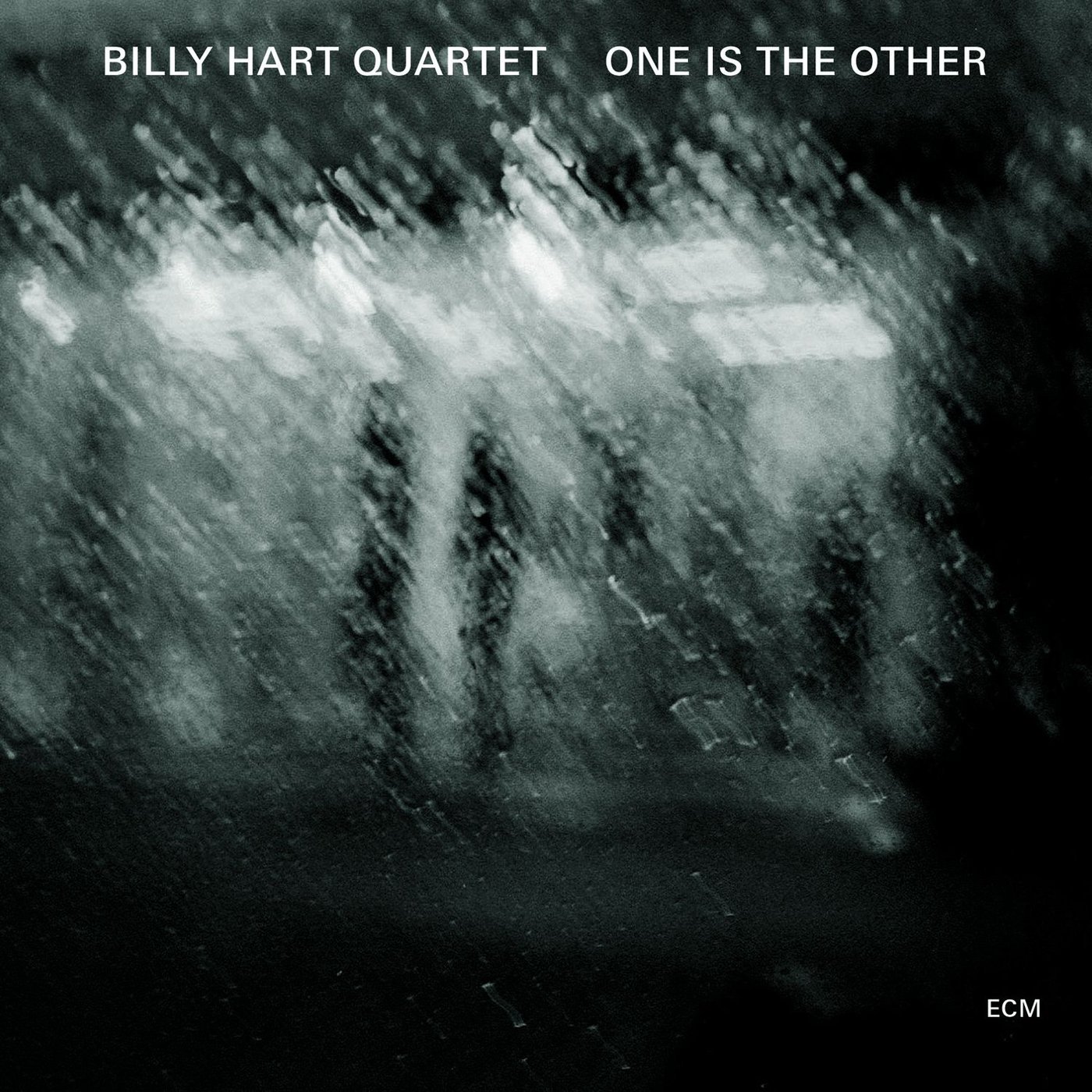
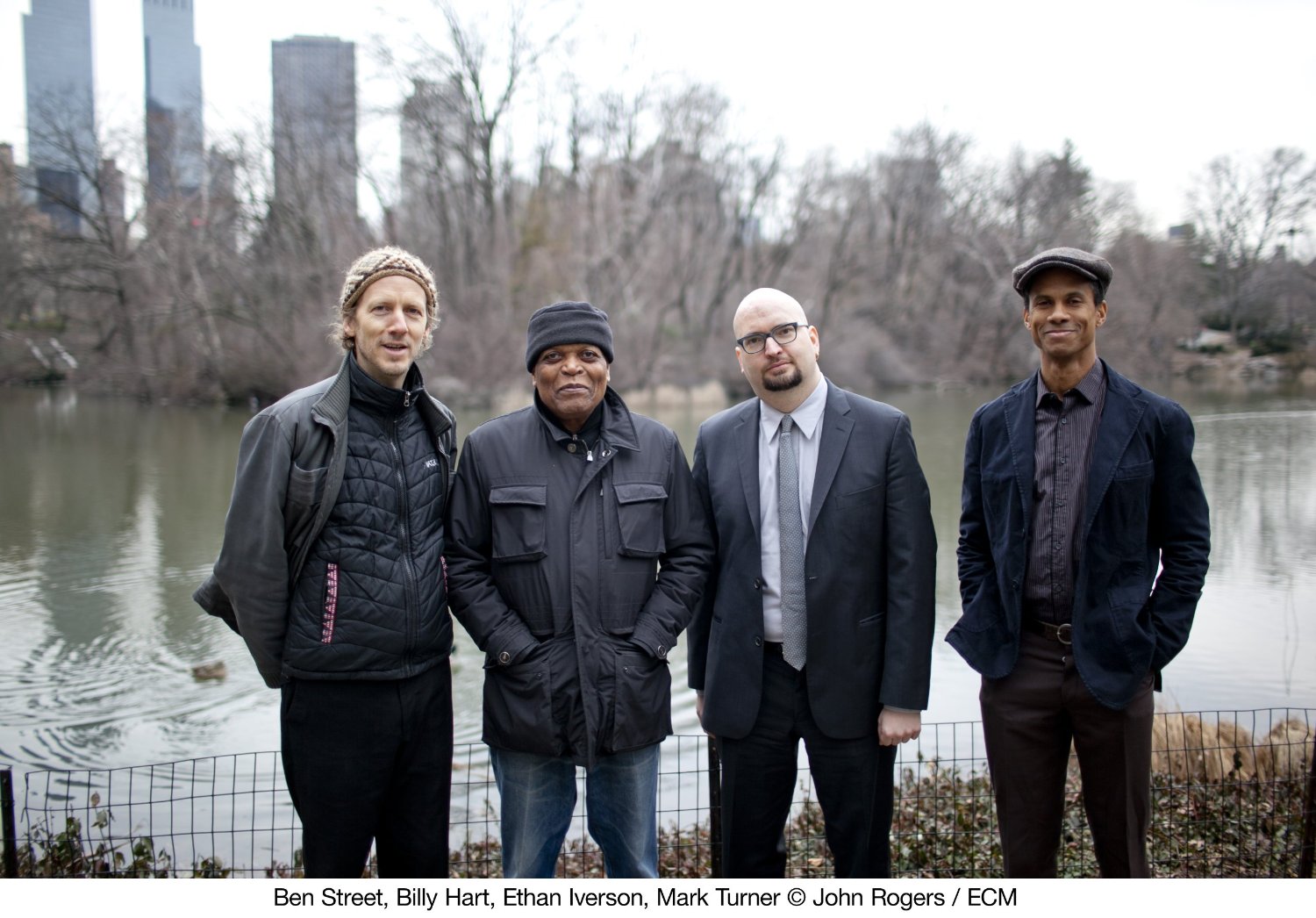
Billy Hart Quartet: One Is The Other (ECM 2335)

One Is The Other

Mark Turner tenor saxophone
Ethan Iverson piano
Ben Street double bass
Billy Hart drums
Recorded April/May 2013 at Avatar Studios, New York
Engineer: James A. Farber
Assistant: Bob Mallory
Produced by Manfred Eicher

It is like jigsaw pieces on a mission that tenorist Mark Turner, pianist Ethan Iverson, and bassist Ben Street have fallen into place around master drummer Billy Hart, with whom they return for a second ECM round. One Is The Other is therefore a manifold title for the achievements of this unique quartet. Not only does it imply something shared among the musicians, but also emphasizes the ways in which their individual voices interlock. With freshness of voices and depth of spirits, they ply an ancient trade of intergenerational communication. Teaching and learning occur in both directions. This sense of equality pervades every exchange.

BHQ

Turner contributes two tunes, including the flowering opener, “Lennie Groove,” in which so much of what happens is indicative of what follows. A geometric intro from Iverson gives way to the rhythm section’s smooth entrance and the composer’s own tenor arcing into focus. Solos are tasteful, keenly attentive to Hart’s timing and, above all, sincere—not a shade of pretension within earshot. The gorgeous “Sonnet for Stevie,” which reappears on Turner’s leader date, Lathe of Heaven, is even more intimate here than it is there. Anchored by soft two-part harmonies from Street and Hart’s glittering cymbals, pianist and reedman stay a course that cares little for arbitrary destinations. Iverson counters with a deuce of his own, of which “Big Trees” ends the album in style. The textural brilliance of Hart’s intro betrays little of the slippery groove that unfurls in its wake. Especially noteworthy are Turner and Iverson’s solo, which despite being their most abstract of the set are also their most grounded. Hart also blushes us into “Maraschino,” an endearing track made all the more so for its vulnerability. One can hear every process at work. This is no small feat.

Hart offers up a triangle of originals. Beginning with “Teule’s Redemption,” a groovier affair with turn-on-a-dime interaction between him and Turner, pushing on through the cymbal-splashed energies of “Amethyst,” and ending in the urban vibe of “Yard,” these tunes comprise a mini album in and of themselves and highlight the consummate skills of everyone involved. Top it all off with the cherry of “Some Enchanted Evening” (from the Rodgers and Hammerstein musical South Pacific), and you’ve got yourself quite the confection to savor.

People often talk of artists being in their “prime.” Hart, however, proves that it’s as much a matter of revealing as knowing yourself. Indeed, here is a peacock with plumage fully fanned and ready to play.

(To hear samples of One Is The Other, click here.)

Winstone/Gesing/Venier: Dance Without Answer (ECM 2333)

Dance Without Answer

Dance Without Answer

Norma Winstone voice
Klaus Gesing bass clarinet, soprano saxophone
Glauco Venier piano
Recorded December 2012, Auditorio Radiotelevisione svizzera, Lugano
Engineer: Stefano Amerio
Produced by Manfred Eicher

When a night black as coal
Placed a cloud in her soul.
Still she found the wings to fly
To the higher places…

When people compare something to a fine wine, they mean to say that its flavor deepens with age. But what of the color? It, too, changes, taking on new hues as light strikes the residuals of its enjoyment. This is more like what Winstone’s voice can do to her listener, who is but the glass to her vintage and through the prism of her words takes on something of their atmosphere. Indeed, here is an album that begs a fireplace, an upturned book, and shelter from a snowstorm.

Winstone has rarely sounded better than in the company of reedist Klaus Gesing and pianist Glauco Venier. On Dance Without Answer, she joins them for a third time on ECM. There has always been something therapeutic about Winstone’s music. It always seems to deal with coping, whether with joy or sadness, as expressed in the opening title track. The figure of Venier’s piano casts a long-drawn shadow like the body of Gesing’s clarinet. Their instrumental foundation bleeds through transitions from day to night, where truths and lies of love coexist as reminders of what might never be.

In spite of a thematic consistency, the moods of this trio are as varied as the linguistic colors of the titles. Winstone and her bandmates take the listener through the stark histrionics of “Cucurrucucu Paloma” (a portrait of abandonment) and the folkish “Gust Da Essi Viva” (filigreed by Gesing’s soprano) to the earthier “A Tor A Tor” (centered by a didgeridoo-like bass clarinet) and the evocative “Slow Fox” without lapsing into a single unnecessary detour. Yet Winstone shines brightest in the darkest places. In a wordless, raga-like style, she brings hope to “High Places” and follows what would seem to be the same female protagonist through the experiential dramas of “A Breath Away,” a remarkable lullaby that sets Winstone’s lyrics to a tune by Ralph Towner. And yet, while the poignant “It Might Be You” may seem to confirm its elusive presence—love in this album is an asymptote, so that even here she encounters the realization but not consummation of it.

Rounding out the set is a bouquet plucked from the popular canon. In Nick Drake’s “Time Of No Reply” Winstone mediates between realms of light and loneliness, while from Joe Raposo’s timeworn “Bein’ Green” she teases out visceral tenderness. Regardless of the words, she puts her all into each color change. But before Fred Neil’s “Everybody’s Talkin’” closes the album with a final survey of the palette, we also reckon with Madonna in the panoramic “Live To Tell” and Tom Waits in the bluesier “San Diego Serenade,” of which one line says it all: Never heard the melody ’til I needed the song. Prophetic words for those who never needed these songs until they heard the melodies, and a clue to the album’s name: the dance does have an answer, and it is the music itself.

(To hear samples of Dance Without Answer, click here.)

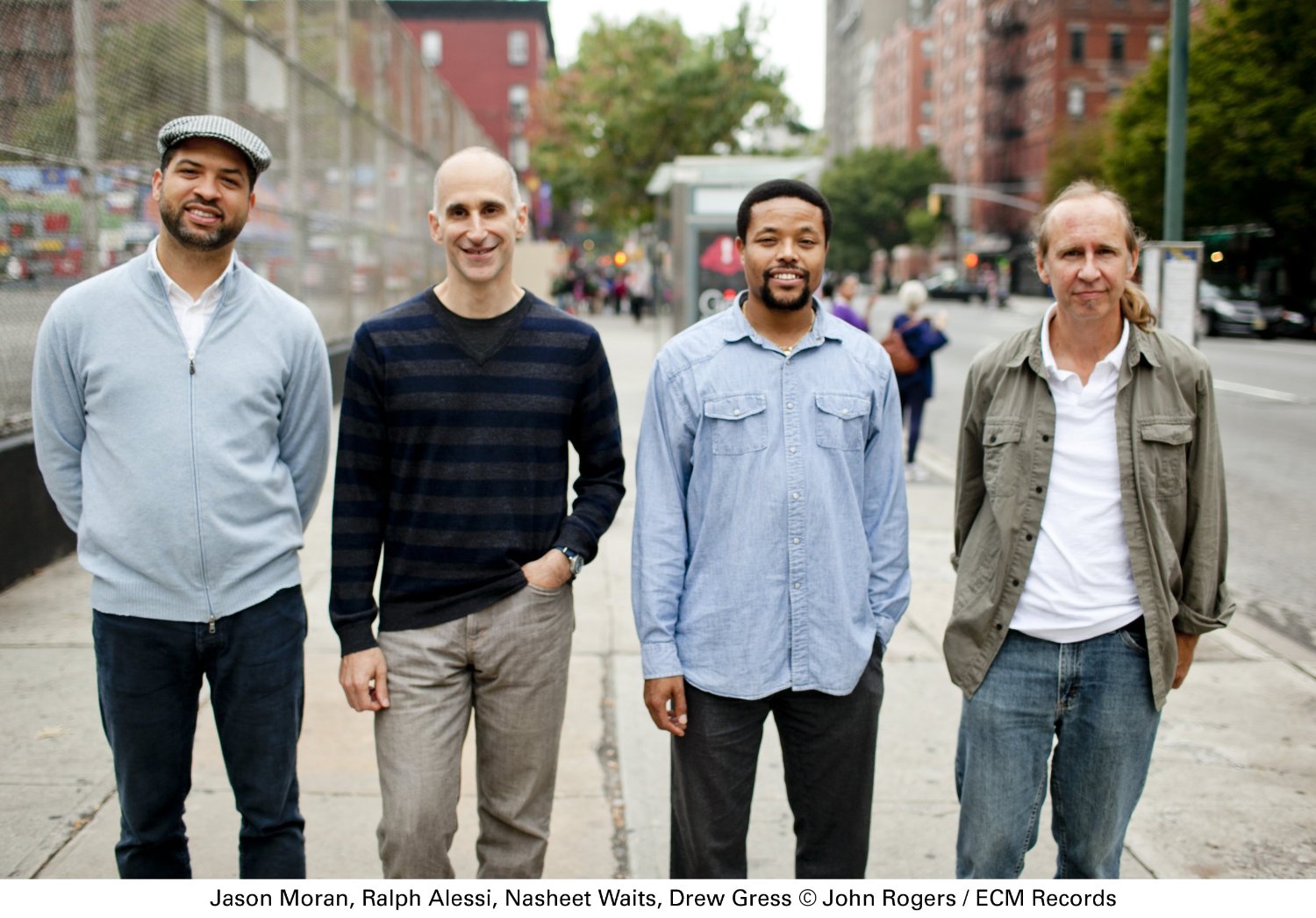
Ralph Alessi: Baida (ECM 2321)

Baida

Ralph Alessi
Baida

Ralph Alessi trumpet
Jason Moran piano
Drew Gress double-bass
Nasheet Waits drums
Recorded October 2012 at Avatar Studios, New York
Engineer: James A. Farber
Assistant: Charlie Kramsky
Produced by Manfred Eicher

Before making his ECM leader debut with Baida, trumpeter Ralph Alessi had only appeared once for the label on 1997’s underappreciated Circa, with pianist Michael Cain and saxophonist Peter Epstein. More importantly, he had already chiseled a fine reputation for himself on the New York jazz scene as an artist of limitless versatility. At last, those not privy to club appearances can experience his craft wherever exist the means to play an album. This all-Alessi program takes flight with pianist Jason Moran, bassist Drew Gress, and, in an ECM debut of his own, drummer Nasheet Waits all on board—only here we skip the safety announcement and go straight to the comfort of cruising altitude.

Baida Quartet

The title track opens the album with the rubato, unfastened introduction that has become a defining characteristic of so many ECM jazz sessions. Alessi and Waits walk the aisles with a sputtering yet precise sort of tracery before Gress and Moran sing of destinations not yet reached until the song’s reprise, muted upon landing, gives the all clear. Titles mark each leg of the journey with divergent associations. While “Baida” proudly fronts Alessi’s daughter’s word for “blanket,” “Maria Lydia” names the one woman who would have known his own babble: his mother, gone from this world shortly after the album’s completion. In such beautifully chromatic tunes as this, trumpet aficionados will hardly be able to deny an Enrico Rava influence at work. Neither in the swinging “Chuck Barris,” in which Alessi’s bold finesse, hiply relayed over rolling snare, pays further dues to the Italian master. Here is where the melodic turbulence really sets in as our craft reaches higher velocity speeds, especially in Moran’s solo, a flailing counterpart to Waits’s textured own.

As if to belabor the analogy, “In-Flight Entertainment” brings out the band’s most clean-shaven profile and puts Gress in the cockpit. Nearby selections are no less entertaining. The tongue-in-cheek “Gobble Goblins” opens with instrumental laughter from Alessi and Moran, both of whom flex their copiloting skills and, in the balladic “Sanity,” even go blindfolded for a spell. Other slow jams include “Throwing Like A Girl” and “I Go, You Go.” In these Alessi takes a nuanced approach, his every note rippling outward through the backing trio in alluring distortions. But it’s in the subtle under-bite of “Shank” and the rolling thunder of “11/1/10” that the crew puts it all together before making its final descent.

Alessi and his band never stray too far off course, flirtation just enough with danger to keep us on our toes while balancing maneuvers as would a skilled chef his flavors. Indeed, in an industry flooded with players who are all sugar, he is that rare combination of savory and sweet that encourages repeat business. Let’s hope that formula holds.

(To hear samples of Baida, click here.)