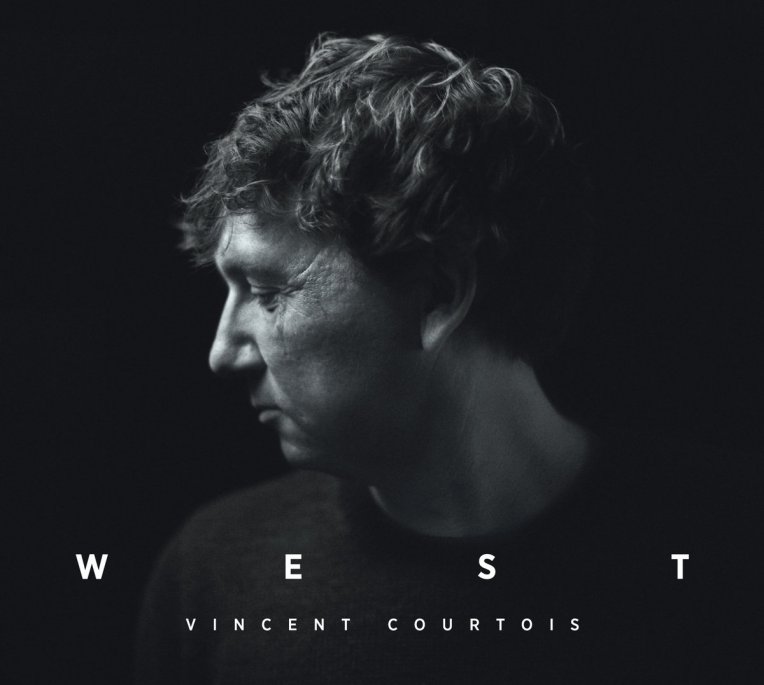
Vincent Courtois: L’imprévu (RJAL 397010)

Cover

Vincent Courtois
L’imprévu

Vincent Courtois cello
Recorded and mixed April 1-3, 2010 at Studios La Buissonne by Gérard de Haro
Mastered by Nicolas Baillard at Studios La Buissonne
Produced by Gérard de Haro and RJAL for La Buissonne
Release date: January 20, 2011

L’imprévu (The unexpected) is an album of unaccompanied short stories written and performed by Vincent Courtois. ECM listeners will know the French cellist from his work with Louis Sclavis. After toying with the idea of a solo album for more than 15 years, he and producer Gérard de Haro at last found a coincidence of schedules that brought them into the studio together. From the opening title piece, we can hear not only that Courtois is a player of sensitivity and poise but also that de Haro is a most suitable engineer to emphasize the nature of his sound.

The comfortable vibe established by such intimate borders as “Alone with G” (a pizzicato gem that treats the cello as a horizontal rather than vertical instrument) is occasionally broken, as by the scraping arpeggios of “Amnésique tarentelle” and “Skins” or the freely improvised strains of “Suburbs kiosk” and “No smoking,” so that no single mood never dominates. Neither is Courtois afraid to play with the idea of a solo project by multitracking himself into an orchestra. Such instincts feel not like additions from without but extensions from within. In the stretched-out chords of “Colonne sans fin,” “Sensuel et perdu,” and “Regards” (the latter two sounding nearly like lost tracks from David Darling’s Dark Wood), his experience as a composer for film bears deepest fruit. The one compositional outlier is “La visite” by Sclavis, a highlight for its thoughtful reading and tenderness, and its ability to say so much with so little. This is music for those who want nothing but.

Pierre Diaz/Trio Zéphyr: Jours de vent (RJAL 397009)

Cover

Pierre Diaz
Trio Zéphyr
Jours de vent

Pierre Diaz soprano saxophone
Trio Zéphyr
Delphine Chomel violin, vocal
Marion Diaques viola, vocal
Claire Menguy cello
Recorded on September 4/5, 2008 and November 5/6, 2009
Mixed on May 28, 2010
Recorded and mixed by Gérard de Haro at Studios La Buissonne
Mastered by Nicolas Baillard at Studios La Buissonne
Produced by Marc Thouvenot, Gérard de Haro and RJAL for La Buissonne
Release date: December 2, 2010

Pierre Diaz and Trio Zéphyr join forces as Jours De Vent in this congregation of soprano saxophone, strings, and voices. To start us on our journey, Diaz cradles his soprano in a swell of violin, viola, and cello in the pastures of “Le Lendermain Matin.” As the first of a handful of compositions by Trio Zéphyr, it opens our ears to a distinctly visual world. Other Zéphyr pieces fade into faraway climates. Whether in the arid modalism of “Au Coeur Du Dromadaire” or traveling along the locomotive tracks of “Como Lobos” (a highlight for its changing colors), their sense of movement is always purposeful and technically sound.

Diaz’s music is attuned to a darker past. Each of his contributions, but especially “Se Acaba Mi Soledad,” upholds the forgotten victims of the Spanish Civil War as a lens of refraction through which to view our own complicity in collective amnesia. As a quartet, he and the trio peel back even more layers to that tragic history in their collaborative writing. The mournful drawl of “Hasta La Luvia” and microscopic details of “…Je M’envolais” give us plenty to ponder, while the lilting “Agua Linda” pulls us from a spiral of despair into brighter days.

The only aspect of this program that pulls me from its spell is the singing. Though at its gentlest it is a lullaby, when emotions run high, as in the mounting tensions of Diaz’s “Abuela,” it loses focus and, despite its passionate delivery, feels derivative of a certain Orientalist vision of the East. Voices do, however, play an important role as archival beacons in “Erisa” and “Brume,” and the trio’s own do achieve an understated balance of the corporeal and the spiritual in “J’ai Rêvé Que…”

Then again, sometimes aesthetics should not concern us when crying out for salvation against the horrifying backdrops we humans create. All the more reason, perhaps, to throw buckets of honest reflection over those images until their evils become transparent.

Oliva/Tchamitchian/Jullian: Stéréoscope (RJAL 397008)

Cover

Stéréoscope

Stéphan Oliva piano
Claude Tchamitchian double bass
Jean-Pierre Jullian drums
Recorded on May 5/6 2009, except songs 1 and 2 (recorded on November 3, 2008)
Mixed on May 28/29, 2009 at Studios La Buissonne by Gérard de Haro, assisted by Nicolas Baillard
Mastered by Nicolas Baillard at Studios La Buissonne
Steinway tuned and prepared by Alain Massonneau
Produced by Marc Thouvenot, Gérard de Haro and RJAL for La Buissonne
Release date: October 22, 2009

It was La Buissonne director Gérard de Haro who discovered pianist Stéphan Oliva’s trio with bassist Claude Tchamitchian and drummer Jean-Pierre Jullian back in 1990, before his studio came to be known under its famed name. Since then, de Haro has engineered 13 of Oliva’s albums as leader, in addition to side projects with other musicians. In 2009, these four brothers in creative sound slipped easily back into their old groove to produce Stéréoscope. The resulting decalogue of Oliva originals, some new and some well-traveled, pays tribute to the 19 years of collaboration and life experience that have spun out from that initial point of contact.

It’s worth noting that quite a few La Buissonne releases open with their title track. An appropriate tendency, as the label’s recordings are often multi-versed poems, and like poems organically take names from their opening lines. The introductory feel of this one is the equivalent of a wide establishing shot, inclusive of a landscape far bigger than the characters on whose lives we will soon zoom in.

A more energetic system of transportation guides us through memories short and sweet in “Labyrinthe” and “Cercles,” and all with an ecumenical style. “Neuf et Demi” is another example of the trio’s geometric interplay, swinging and gone too soon. Likeminded triangles roll across the backdrops of “Cecile Seule” and “Hallucinose,” content to offer a lullaby in shadow to “A Happy Child.” As bass and piano joining in chorus over a splash of brushed drums, we understand the value of unbroken chains.

Still, there are moments when specific talents dominate our vision without force. Jullian’s drumming, for instance, is evocatively spotlighted in “Portée Disparue,” an examination of cymbals as windows into missed opportunities. Tchamitchian’s bassing is likewise the focal point of “Bangkok,” shifting from abstraction to traction without so much as a bump in the road (I would point also to his arco playing in “Nostalgia”). And Oliva’s pianism, at times wonderous, flows through “Cortege” like a river without end. This leaves us to behold the mountains of “Sylvie et les Americains” and “Illusion Desillusion.” In both, the inevitability of life is turned into a song without words.

Fans of ECM’s most lyrical piano trios, such as those of Stefano Battaglia and Bobo Stenson, will feel right at home here. If that’s you, then don’t hesitate to open the door (it’s unlocked), sit right down, and warm yourself by the fire.

Andy Emler: For better times (RJAL 397007)

Cover

Andy Emler
For better times

Andy Emler piano
Recorded and mixed August 2008 at Studios La Buissonne by Nicolas Baillard and Gérard de Haro
Mastered by Nicolas Baillard at Studios La Buissonne
Steinway prepared and tuned by Alain Massonneau
Produced by Andy Emler and Gérard de Haro
Release date: November 6, 2008

The La Buissonne debut of pianist Andy Emler is the result of a 15-year friendship with the studio and label director Gérard de Haro, whose encouragement to make a solo album resulted in For better times. It’s a brave and personal session brimming with ideas. Having said that, the result is not a solo album per se. Despite coming from the hands and mind of one performer, multitracking fleshes out Emler’s flexible compositional backbone with well-toned muscles and spontaneous movements. In the opening “There is only one piano left in this world,” we find his instrument taking on the role of drum, backing, and lead, wound like a clock spring and set to mark the passage of time with deep regularity. On top of that he spins a wealth of chimes to titillate the heart and mind. It’s also a meta-statement on the nature of ideas and the tragedy of their erasure. The piano plays on, crying to be heard when silencing threatens to become the norm. In “Fear no more, suffer no more,” he delineates a philosophy of interaction, and in the next two tracks—“Crouch, touch, engage” and “Father and son”—explores the darkest and brightest corners of human relationships. His physical approach gives us a sense of weight and armor, and bids us to strengthen our capacity for love. From the intimate to the grandiose, “Speak up! Tribute for better times” acts out conflict on a global scale, treating the inner strings like a palimpsest for failed arguments. Finally, he leaves on a high note with the dialogic “Let’s create together.” Thus, the ruthlessness of time and those who ignore its lessons is laid out like a meal we fear eating, for to do so would mean admitting our complicity in its creation to begin with. And so, we sing along with Emler, hoping for change, for harmony, and yes, for better times.

Jean-Sébastien Simonoviez: Crossing life and strings (RJAL 397006)

Cover

Jean-Sébastien Simonoviez
Crossing life and strings

Jean-Sébastien Simonoviez piano
Jean-Jacques Avenel double bass
Riccardo Del Fra double bass
Barre Phillips double bass
Steve Swallow electric bass
Quatuor Opus 33
Marie Lesage
violin
Anne-Céline Paloyan violin
Marie-Anne Hovasse viola
Nesrine Belmokh violoncello
Recorded on May 21 and 24, June 8, August 3/4 and mixed on September 6/7, 2007 at Studios La Buissonne by Nicolas Baillard and Gérard de Haro
Mastered by Nicolas Baillard at Studios La Buissonne
Steinway prepared and tuned by Alain Massonneau
Coordination: Manuela Vincendeau
Produced by Gérard de Haro and RJAL for La Buissonne
Release date: February 21, 2008

Following the atmospheric integrity of his La Buissonne debut, pianist and composer Jean-Sébastien Simonoviez teams up with producer Gérard de Haro, conceiver of this new project involving three double bassists (Jean-Jacques Avenel, Riccardo Del Fra, and Barre Phillips), Steve Swallow on electric bass, and the Opus 33 string quartet. Simonoviez pairs with each bassist in duo settings throughout, with occasional support by strings, before finishing with a tripartite suite for the roster in full.

The ache of Phillips’s bow is impossible to mistake for that of anyone else. Whether squealing unaccompanied into flowering strings in “Om #2” or fashioning a veritable Rorschach test in Stanley Myers’s “Cavatina,” he renders underwater songs for landlocked souls. His deftest passage is a balanced reading of John Coltrane’s “Welcome,” in which loving gestures and rougher interpretations swap stories.

Del Fra intersects with an equally diverse set of tunes, from the honeymoon feel of “Leonor Theme” to the poise of “My Ship” (Ira Gershwin/Kurt Weill). The only slight misstep is his soloing on Keith Jarrett’s “The Prayer,” which starts off tenderly before dipping into some derivative playing, even if it does emphasize the integrity of its surroundings. Some of his best playing is on “Om #1,” for which he unravels a colorful introduction into tasteful pulsing.

Swallow dialogues with Simonoviez on two occasions. Where “It Changes (The World)” finds both musicians tilling mineral-rich soil, touching the harmonic core of things as easily as breathing, Léo Ferré’s “A Une Passante” lays its balladry on thick: the sonic equivalent of a sommelier-poured glass of wine.

For me, however, Avenel is the star among them. The resonance of his arco arpeggios in “Leonard” glide across a river that flows in full assurance of its melodic destiny. And in “Diaguily Song,” his buoyancy and percussive flavor show us a player in total control of his instrument.

All of these idiosyncrasies come together in “Le Cosmos.” This sonic depiction of order from chaos actualizes a shift in time for all to hear, and remember, the origins we all share.

Foltz/Oliva/Chevillon: Soffio di Scelsi (RJAL 397005)

Cover

Soffio di Scelsi

Jean-Marc Foltz clarinets, percussion
Stéphan Oliva piano, percussion
Bruno Chevillon double bass, percussion, vocals
Recorded April 28/29, 2004 at Studios La Buissonne by Gérard de Haro
Mixed December 2006 at Studios La Buissonne
Mastered by Nicolas Baillard
Steinway prepared and tuned by Alain Massonneau
Coordination: Manuela Vincendeau
Produced by Gerard de Haro and RJAL, Jean-Marc Foltz, Stephan Oliva and Bruno Chevillon for La Buissonne
Release date: June 1, 2007

Inspired by the mind and music of Giacinto Scelsi (1905-1988), this set of 14 freely improvised pieces, each of which deepens an encounter with the Italian composer that could never be, merges the shoe impressions of clarinetist Jean-marc Foltz, pianist Stéphan Oliva, and bassist Bruno Chevillon in the same wondrous mud.

The droning qualities of the opening put me in mind of Scelsi’s onetime confinement in a psychiatric hospital, where he incessantly played an A-flat on the piano until his personal style emerged. In parallel, the music compresses itself until outer edges crack to reveal an encroachment. Such borders between inner and outer realms are what make this listening experience so self-aware. All the musicians play percussion as well, adding splashes of surprise, tactile drama, and color to an otherwise monochromatic landscape. If anything, we are made privy to a sound in which the details of our lives transform from solid to liquid to gas, and in that process wish themselves out of existence.

Contrasts abound in this intensely focused session: between a prayer bowl and an arco double bass at its most growling register, between a piano and the abandoned home throughout which it seems to echo, between the regularity of a spontaneous motif and the uncertainty of its denouement. But at the center of their wingspans beats a heart that unifies them by blood and call to flight. Other organs of this metaphorical body make their functions known. Chevillon’s bow has the quiver of a compromised lung, Oliva’s piano the struggle of an aging brain, Foltz’s reed the contraction of a throat too parched to speak. In the midst of such guttural ciphers, it is all we can do to piece together messages from whatever shreds of gloom are afforded us.

The sounding of drums is a wakeup call to every conductor to have ever lifted a baton in a dream, only to find that the orchestra plays not as expected, instead moving at a snail’s pace toward consonance. And as the curtain falls at half-speed, as if in morose accompaniment, the weight of time becomes apparent. The effect is so lulling that when a voice breaks from its cage in the penultimate vision, it can only signal a breaking dawn. Or so we think as the moon, setting again, leaves us stranded on the leaky vessels of our own expectation, paddling with tired hands.

Thus, Scelsi’s spirit lives on in a most tangible way, as if trickling through the fingers of musicians intent on catching as much inspiration as they can before it seeps into the dank earth, never to be touched anew.

Stéphan Oliva: Coïncidences (RJA 397004)

Cover

Stéphan Oliva
Coïncidences

Stéphan Oliva piano, Fender Rhodes
Bruno Chevillon double bass, typewriter
Recorded on April 4/5 and mixed on June 16, 2005 at Studios La Buissonne by Gérard de Haro
Mastered by Nicolas Baillard at Studios La Buissonne
Produced by Gérard de Haro and RJA for La Buissonne
Release date: November 10, 2005

“I had jumped off the edge, and then, at the very last moment, something reached out and caught me in midair. That something is what I define as love. It is the one thing that can stop a man from falling, powerful enough to negate the laws of gravity.”
–Paul Auster, Moon Palace

Where most albums of such beauty as this would be considered gifts to listeners, in Coïncidences pianist Stéphan Oliva offers something for readers. Indeed, this largely solo program of self-styled “book music” takes its inspiration from the writing of Paul Auster, whose clear-cut prose draws Oliva’s responses beyond the delineation of a mere soundtrack, constituting instead their own form of textual appreciation.

The album is framed by an arco sketch, via guest bassist Bruno Chevillon, of Jerome Kern’s “Smoke Gets In Your Eyes,” replete with the sound of a typewriter. The writer’s classical instrument makes further appearances in “Olympia’s Lullaby,” which evokes reading under lamplight, and an aphoristic improvisation called “Fuite–Poursuite–Suite.” In both we find ourselves awakening within as the world without falls asleep.

With the exception of a few appearances by Fender Rhodes (e.g., the nocturnally inclined “Levitation”), the album opens the piano itself like a book. The physical properties of literature are keenly explored across its keys. Given the studio in which he was recorded, Oliva takes full advantage of the space afforded him, wherein intimacy can be cultivated like a vocabulary. In “La Traversée,” which makes two appearances, we nearly expect a voice to sing, but the only words available to us are implied by movement over speech, melody over meaning. Such lyrical extensions of the printed word swirl around us in “En Aparte” and “Ghosts Of The Stereoscope.” Like a face turning to glance at something that would otherwise be forgotten, each is willing to let the details of another scene creep into the foreground.

Such actions, reading not only between the lines but also underneath them, are the musical equivalent of writing notes in the margins of a favorite book and looking back upon them years later with fondness, only now with a different color of pen in hand. Even the more dissonant tracks, like “Portee Disparue” and “Sachs March,” cling to us with their own static electricity, as if born from the pleasure of riffling pages at one’s fingertips.

Jean-François Jenny-Clark: Solo (RJA 397002)

Cover

Jean-François Jenny-Clark
Solo

Jean-François Jenny-Clark double bass
Recorded live on August 9, 1994 at Theâtre des Halles, Avignon (Festival Bass 94)
Sound recording: Gérard de Haro
Mastering: Gilles Olivesi at Studios La Buissonne
Coordination: Manuela Vincendeau
Produced by Gérard de Haro and RJA for La Buissonne
Release date: August 9, 1994

Solo documents a live performance from 1994 by Jean-François Jenny-Clark (1944-1998), one of the most talented bassists of his generation, who eagle-eyed ECM listeners will recognize from Paul Motian’s Le Voyage and Kenny Wheeler’s around 6, among others. Consisting only of two tracks, this archival treasure closes the irises of our ears around an intimate exposition of his artistry. Well-versed across idioms, Jenny-Clark was just as comfortable playing the music of Pierre Boulez as he was backing Don Cherry or Keith Jarrett, and his eclectic influences seep from every pore.

The lion’s share of the album is taken up by the pragmatically titled “Concert.” Throughout its 38 minutes of unwavering invention, Jenny-Clark crochets a chain of interconnected scenes at the soul level. His approach to the double bass is always from the inside out, as if diving into its waters to places where light normally doesn’t reach and emerging with unknown creatures of the deep. And while his willingness to surrender to whatever impulse taps his shoulder was always apparent, on this recording it is particularly foregrounded. He is cohesive at his most abstract, unchained at his grooviest, pliant and sincere against the unaccompanied backdrop that gives him contrast. Breathing in an elliptical atmosphere of regard, his body seems to fold into itself with every change of direction. Traction is never far away: there is always a sense of purpose and of having traveled somewhere. Even when digging into more percussive textures, we know that melodic denouements are close ahead, and that we are privileged to stand in one place as he unrolls a spontaneous scroll for our regard. Following this is a 5-minute epilogue called “Rappel” (Reminder). A chain of association in its own right, it is a quiet cultivation of whispering tides, each the supply to its own heart, beating onto shore.

A masterful swan song from one of Europe’s late greats that oozes with personality and muscular lyricism. We are there.

Jean-Sébastien Simonoviez: Vents & marées (RJA 397001)

Cover

Jean-Sébastien Simonoviez
Vents & marées

Jean-Sébastien Simonoviez piano
Recorded on February 22, 2000 and January 9, 2003 at Studios La Buissonne by Gérard de Haro
Mastered by Gilles Olivesi and Thomas Verdeaux at Studios La Buissonne
Release date: May 30, 2003

Vents & marées (Winds & tides) is the flagship release from the La Buissonne label, named for the studio of Gérard de Haro, famed engineer of many recent ECM productions and a soulful seeker of sound (ECM now distributes the label on its website). Appropriate, then, that de Haro should begin with the quintessential studio instrument: the solo piano. At the hands of Jean-Sébastien Simonoviez, its keys glisten like photographs just old enough to show patina but fresh enough to reflect the light just so under the lamp of interpretation.

The program shuffles together four distinctly different decks in a stack of magical proportions. A selection of standards stands out for its poise. An air of suspension permeates every molecule of “I Wish I Knew,” which Simonoviez plays as if unbound to time or place. “My Favorite Things” comes across with especial tenderness, and finds him enhancing the subtle balance of melancholy and joy that make the song so coniferous. And the way he shifts from reverie to glorious reality and back again throughout the course of “If I Should Lose You” is nothing short of exquisite.

Two John Coltrane tunes, “Naïma” and “Lonnie’s Lament,” showcase not only fearlessly self-reflective playing but also soulful engineering. Two dips into Bernard Herrmann’s film score to Fahrenheit 451, “The Bedroom” and “The Road,” are equally visual and flow with the precision of method actors who embody the power of every moment.

But the most substantive deck of all is comprised of Simonoviez’s own writing, which spans geographies and climates in a most organic way. The personal vibes of “Lumières (Pour Duke)” put in mind a bird flying for no other reason than to enjoy the sensation. The high clusters of “Tacha” fall like snow into happy memories, while “See” brings gentle urgency to the fore. “Winds & Tides” is the thesis statement and drips like candlewax into the abyss of time. Its gestures are palpable. Finally, “Paix” embraces us with thick harmonies and rolling waves.

As can be expected by anyone who has kept tabs on de Haro’s behind-the-scenes presence at ECM, the sound quality is impeccable—spacious without whelming, distant yet close enough to touch, and emotional without ever feeling ungenuine. Let this new journey begin, continue, and leave its mark.