Ken Hyder’s Talisker: Land Of Stone (JAPO 60018)

Land Of Stone

Ken Hyder’s Talisker
Land Of Stone

Ken Hyder drums
John Lawrence bass
Marcio Mattos bass
Davie Webster alto saxophone
John Rangecroft tenor saxophone, clarinet
Ricardo Mattos soprano and tenor saxophones, flute
Brian Eley vocals
Frankie Armstrong vocals
Phil Minton vocals
Maggie Nichols vocals
Recorded April 1977 in London
Engineer Martin Wieland
Produced by Thomas Stöwsand

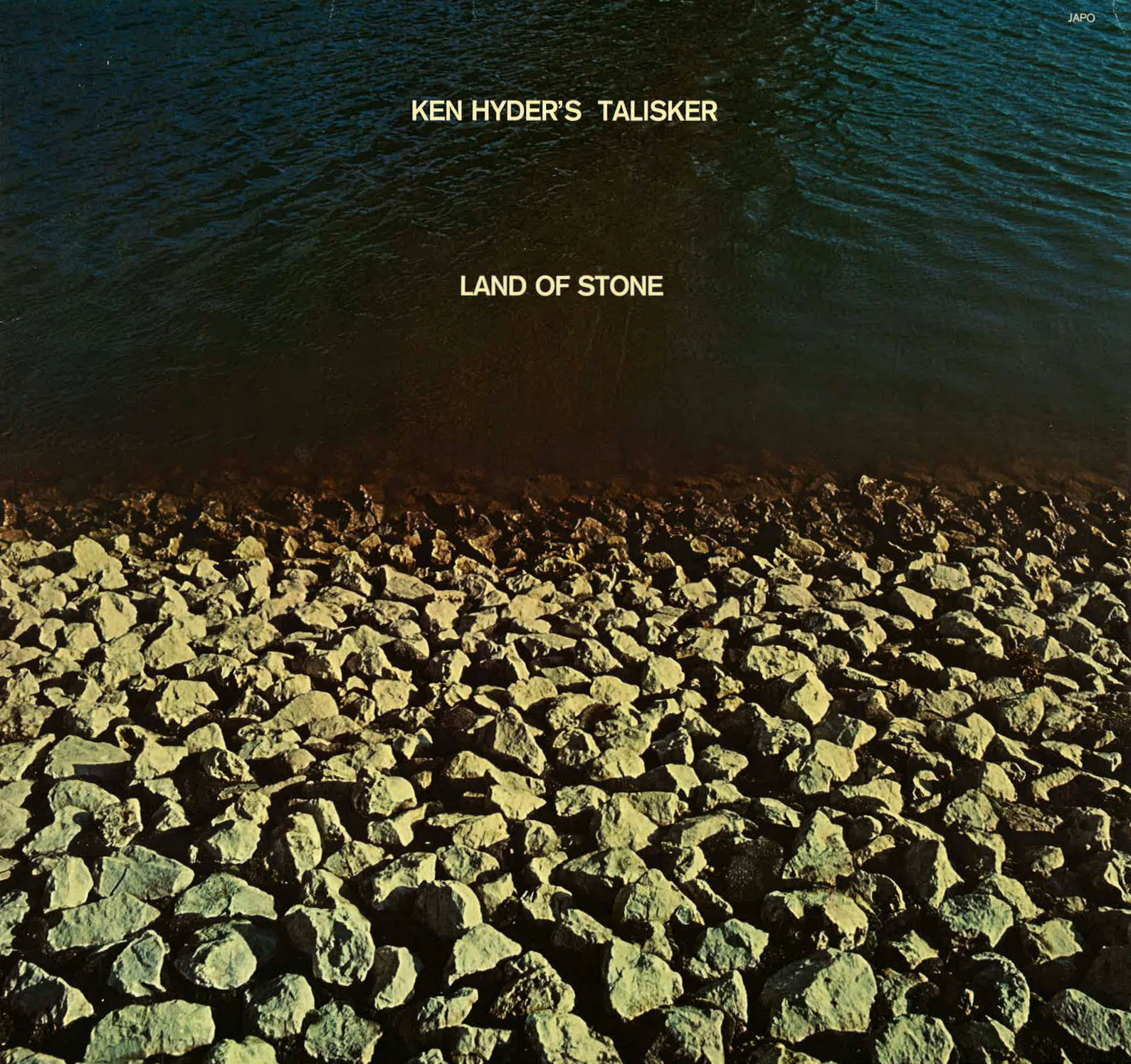
Over a career spanning more than four decades, Scottish percussionist and vocalist Ken Hyder has developed a strong body of work, though perhaps none so robust as his Talisker outfit. Combining Celtic and jazz influences, Talisker debuted in 1975 with Dreaming Of Glenisla on Virgin Records. Yet as Hyder’s musical interests began to expand to traditional Irish music and further to Asian monasticism, his sound opened itself to a world of possibilities. Enter album the second, Land Of Stone, which found a home on the JAPO label two years later.

“The Strathspey King,” a strangely swinging ode to Scottish master fiddler James Scott Skinner (1843-1927), sets a homegrown tone. Clarinetist John Rangecroft proves to be a vital presence in this increasingly enigmatic session, adding swagger aplenty. Like a young hopeful decked out in fresh threads and money in the pocket, he tricks the heart into thinking that harm is a while away. Hyder’s militaristic drum solo intercepts street-side, as if offering free samples of reality before a chorus of bidders drops into view with its haunting brand of Hebridean choral music in “The Men Of Barra Know How To Drink, But The Women Know How To Sing.” A boisterous and colorful chain, its syllables become actions, teetering like drunken instruments into “Close The Window And Keep It Down.” This likeminded island song is an onomatopoetic excursion into the inner lives of house wares and propriety. The latter quickly disintegrates as bonds loosen their friction and slide from grasp in screeching ululations, courtesy of ECM margin-bearer Maggie Nichols. The color wheel darkens further in “See You At The Mission, Eh, If It’s No’ Full,” in which a brood of instruments strains unison phrasings through an upturned colander. Bass and drums form a knot of support, eyes in a flowing wood grain. In the wake of these dirt-caked fingernails, “Derek Was Only A Bairn” rides into the dawn, a smooth caravan lead by Ricardo Mattos on flute and horse’s trot.

Hyder insists that improvisation was a vital component of Scottish bagpipe playing, and in a tripartite pibroch he explores the crossover from the Highlands to the fringes of American free jazz, dedicating parts respectively to the MacCrimmons (a notable family of pipers), John Coltrane, and Albert Ayler. After a microscopic dialogue between bassists John Lawrence and Marcio Mattos, soprano saxophone masquerades as bagpipe in piercing shepherd’s call. Hints of a jig rise and fall from deeper drones, a sky behind mountain silhouettes. Over the click of cymbal, dense voices weave in and out of earshot, taking solid presence in the loam of memory, to slumber and to molt. The banshees return with gentle persuasions, their ashen hair and earthward grins blistered by the rub of their limbo. Yet with the coming of rhythm they achieve communication somewhere on the other side of fear, ecstatic totems each passing through sea and grain until the wind puts fingers to lips and blows.

Cleaning off the dust of age, Talisker shakes out tunes old and new, and with the chaff pieces together charcoal fields as would a cobbler hammer a sole. Or is it soul? There’s plenty to be had in this land of stone.
A Dance of Strings: Sweden’s Premier Chamber Orchestra Takes on Beethoven and Mozart

Swedish Chamber Orchestra
Garrick Ohlsson piano
Thomas Dausgaard conductor
Bailey Hall, Cornell University
April 26, 2013
8:00 pm

SCO

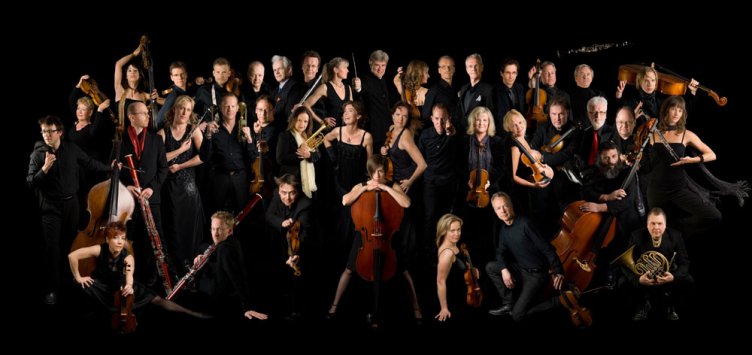
There is nothing like a heaping helping of Beethoven to cap off a prodigious concert season. That was just what we got on Friday night when the Swedish Chamber Orchestra, under the baton of Thomas Dausgaard, took to the Bailey Hall stage. Between the sweet concentrate of the Coriolan Overture and the unprecedented volume of the Third Symphony, there was much to savor. Like the spring weather that has finally waved its magic wand over the fertile Ithacan landscape, it was a veritable flowering of activity.

The overture revealed an orchestra blessed with just the panache and dynamic control required of any Beethoven interpreter. The piece contains two themes, one in C minor (representing the tenacity of its eponymous protagonist, an ancient Roman leader) and the other in E-flat major (representing the forlorn mother who shuns his bloodlust). The latter theme set the tone for the night, not only in spirit but also because the remaining works on the program followed the same key. The smoothness of execution was top-flight, achieving heartrending contrast between tense string arpeggios and recurring cinematic sweeps of battle.

In addition to superb control of dynamics and tempi, the players of the SCO found delightful traction in Dausgaard’s programming. In this regard, closing with the unwieldy “Eroica” symphony was a reflective choice. Not only did it embolden the exploits of Coriolanus with its martial overtones (the piece originally bore dedication to Napoleon Bonaparte), but it also transcended its political wrapping into the variegated gifts within. Long even for its time, Eroica feels even heftier in this age of quick sound bytes.

Notable are the three French horns, whose golden blasts resolve a brooding funeral march in the second movement and whose hunting calls add punch to an already agile scherzo in the third. Yet it was the first and closing movements that honed the orchestra’s deeper talents. Following intermission, Dausgaard (who conducted the symphony without a score) was barely on the podium before a swing of his arms threw us headlong into a storm of intense, restrained energy. Moving between the ethereal and the worldly at the flick of a bow, the strings never strayed into melodrama, and the wind section maintained admirable footing throughout.

Ohlsson

Yet the concert found its brightest star in Garrick Ohlsson, whose appearance spiced the meat of this classical sandwich at program center. A student of the late Claudio Arrau, the White Plains, New York native has since grown into one of our generation’s most elegant pianists. His poise and range at the keyboard were immediately apparent as he engaged the SCO in the exchange that opens Mozart’s Piano Concerto No. 9. Written when the composer was just 21 years old, it bears the subtitle “Jenamy,” so named for the daughter of a dancer whom Mozart befriended in 1773. Sure enough, dance was just what Ohlsson’s did as they navigated the tireless runs and trills (a highlight of his playing) so profuse throughout the opening Allegro. The contrast between his gritty left hand and airy right in the cadenzas was nothing short of remarkable. After the almost funereal sublimations of the Andantino, the concluding Rondo made for a flourish to remember. That Albert Einstein once referred to this piece as “Mozart’s Eroica” was no coincidence. Its scope and focus were comparably arranged. Both made for exciting performances.

“These days we like everything to be local,” said Ohlsson, who addressed the audience by way of pouring a sonic aperitif to the hefty concerto. He lamented not knowing anything by an Ithacan composer, but settled on The White Peacock by Charles Griffes (1884-1920) from nearby Elmira. Perhaps his most well known piece, its Gershwin-like swirls and touches of French impressionism made for a competent and programmatic detour. As if to carry over the feeling of dancing, the SCO closed the concert properly with “Wenn so lind dein Auge mir” from Brahms’s beloved Liebeslieder Waltzes. And with that, we were taken.

(See this article as it originally appeared in the Cornell Daily Sun.)

A Little Bit Wiser: Jason and Alicia Hall Moran

Jason Moran piano
Alicia Hall Moran voice
Barnes Hall, Cornell University
April 11, 2013
8:00 pm

JAHM

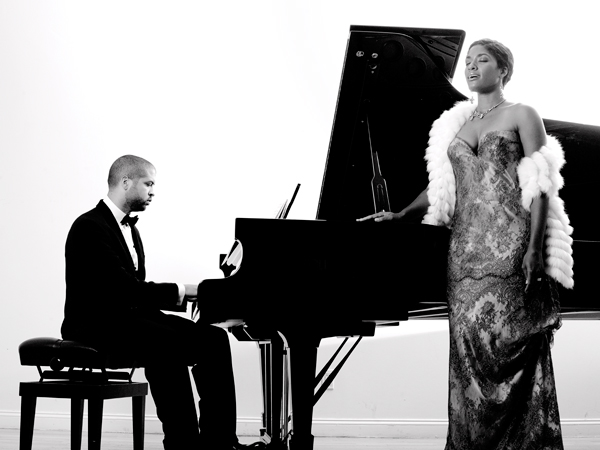
In January of 2012, pianist Jason Moran and his wife, mezzo-soprano Alicia Hall Moran, were slated to perform on Cornell University’s intimate Barnes Hall stage. A Broadway gig prevented Alicia from being able to appear and bassist Dave Holland was kind enough to substitute. The result was an unforgettable evening of music. Yet I always wondered what spells the original billing might have cast. At last, some 15 months later, that magic was realized. There was something about the way that Jason opened with his solo rendition of Fats Waller’s “Honeysuckle Rose” that assured us we were in for something special. His flourishes were straight from the heart, not the least bit rhetorical. He took those classic threads and re-spun them: same colors, different weave. It was the first of a handful of solo pieces, which also included John Scofield’s “Fat Lip” (a jauntier affair, coated in silver and wine) and some original music written for Alonzo King. The latter revealed the gentler side of an artist whose panache lays it all on the table: diamonds, clubs, hearts, and spades. Or maybe it was the way in which Lucille Clifton’s “blessing the boats” tumbled from Alicia’s lips. A poetess in her own right, she took to the platform fully prepared for the power of love in a world riddled with hindrances. Her resonance filled the room, sharing the rafters with spiders’ webs and history. Like Clifton’s timeless words, she manifested a fully embodied style, her pulse audible during sustained notes.

may the tide that is entering even now the lip of our understanding carry you out beyond the face of fear

Alicia used these interludes as doorways to personal reflection. Not only because she wrote the melodies, but also because in her was a storyteller whose loom was strung with moonbeams. By the end of the night we knew how she and Jason had met and fallen into oneness, how music had called to them as equals and set their phasers to shine. Their autobiographical transparency cut the fourth wall like butter.

may you kiss the wind then turn from it certain that it will love your back

A soulful rendition of a Stevie Wonder classic, endearingly altered as “I Was Made to Love Him,” set off a string of standards. Of these, “My Funny Valentine” stood out for its rasp, traversing a bridge of good fortune into a swinging “Summertime.” Leonard Bernstein’s “Big Stuff” was the icing on an already optimistic cake, boxed and tied with a bow.

may you open your eyes to water water waving forever

Two pieces by Jason from a commissioned suite based on hymns of the quilters at Gee’s Bend, Alabama were the reigning portion of the set. “Here Am I” was downright transcendent, melding supplications into sustained, train-like chords from the keys. “People are more important than things,” Alicia sang, and we could feel that theory made real in practice. This was followed by “You Ain’t Got but One Life to Live, You Better take Your Time,” the notes of which rubbed up against one another as Alicia looked us all in the eye and straight into our hearts. She walked offstage, her voice still carrying before boomeranging back to encore with Duke Ellington’s “I Like the Sunrise.” A glint of light at the end of this long winter, it glowed until we were warmed.

and may you in your innocence sail through this to that

By this point, we had experienced something more than a show. It was a life lesson. Thus spoken and sung for, we carried snatches of post-concert conversation in our pockets out into a maze of streetlights, strung to the gills with joy. Carry on, butterflies, carry on.

Lena Willemark album review

Click on over to RootsWorld magazine to read my review of a new album by Lena Willemark on the Swedish label, Country & Eastern. Readers will be familiar with her handful of ECM projects, including the popular Agram. Here she is joined by saxophonist Jonas Knutsson (also featured on Agram) and keyboardist Mats Öberg in a gorgeous folk-inspired program. I further encourage ECM fans to check out Country & Eastern. It is the brainchild of Bengt Berger, whose Bitter Funeral Beer album is among the best of ECM’s outliers.

ADS

All 4 One: The Anonymous 4 Sparkle at Sage Chapel

Anonymous 4
Sage Chapel, Cornell University
April 5, 2013
8:00 pm

Anonymous 4

Although the Anonymous 4 have been singing for over 25 years, to hear them is to experience what feels like centuries more. The current lineup of this all-female vocal quartet (two of its original members have moved on to other projects) consists of Ruth Cunningham, Marsha Genensky, Susan Hellauer, and Jacqueline Horner-Kwiatek, who together presented “Marie-Marion: Motets & Songs from 13th-century France” to a packed Sage Chapel audience last Friday night. Motets formed the bulk of the program, each built around Old French and occasionally Latin texts. The latter were mostly dedicated to Marie (the Virgin Mary), who along with an earthly counterpart, Marion, was the main protagonist of the evening’s dedications. The presence of both Marie and Marion made for a creative pastiche of the divine and amorous. The singers augmented this with a selection of plainchant standards and solo renditions of the trouvère (troubadour) love songs to which the grander settings often alluded.

Fans of the Anonymous 4 will be familiar with their classic Love’s Illusion. While in that program the focus was on courtly love, here a deft mash-up of sacred and secular themes formed the backbone of a dramatic and sometimes-prurient corpus. The motets were complex in their own right, with two or three voices singing from entirely separate texts over a wordless “tenor” line. The selections came from the Montpellier Codex, compiled in the south of France circa 1300. Paring its 315 motets down to an hour-long “best of” was certainly no easy task, but the end result was nonetheless intuitive and sure.

The flowing nature of the program was such that parsing of individual pieces seemed as unnecessary then as it does now. Moods ranged from forlorn to joyful, but were always flavorsome. If any distinction can be made, it is that the most secular passages were often also the most restless. Staggered rhythms and the occasional unexpected change in pitch attested to the singers’ sparkle of execution amid a landscape of maidens, shepherds, and holy visions.

The concert culminated in a final juxtaposition of the two “Marys,” who came to represent the fullness of consciousness, the depth and shallowness of human concern in the forest of life. For indeed, the Anonymous 4 achieved a verdant sound. Their blends, at moments uncanny, allowed single voices to rise and fall with the tide, so that the ringing qualities of each could shine through. Of those qualities we heard plenty in the solo chansons: Cunningham’s roundedness; Hellauer’s sweeter, raspier blush; Genensky’s sharper, earthy tone; and Horner-Kwiatek’s fair, supple lilt. In each was the flutter of a genuine medieval heart.

We might compare these ancient settings to contemporary popular songs, for in them were brief, simple introductions, engaging riffs and satisfying conclusions. That being said, we must remember that the motets especially were considered avant-garde for the time(s) in which they were composed. Either way, it is refreshing to know that one can still be privy to such splendor in concert, navigating its mazes as if they were our own, held only to the standard of our adoration, unadorned. Keeping true to their name, the talented songstresses of Anonymous 4 presented melodies without discernible authors, a dynamic that might seem as distant from us in this age of intellectual property as the Old French in which much of this music was sung. Whatever the language, we could not help but be fascinated.

(See this article as it originally appeared in The Cornell Daily Sun.)

Dominique Pifarély/François Couturier: Poros (ECM 1647)

Poros

Poros

Dominique Pifarély violin
François Couturier piano
Recorded April 1997, Festburgkirche, Frankfurt
Engineer: Markus Heiland
Produced by Manfred Eicher

Dominique Pifarély—violinist and former co-leader of clarinetist Louis Sclavis’s acclaimed Acoustic Quartet—and pianist François Couturier—who since Anouar Brahem’s Khomsa has recorded a string of varied albums for ECM—team up for this unique collaboration. The resulting admixture of folk and modern classical influences finds the duo charting waters that might have otherwise remained glassy and still without the cut of their oars. The image is no mere metaphor, for the album’s title comes from French philosopher Sarah Kofman, who characterizes the concept in precisely these oceanic terms: a path through aquatic expanse that is just as vulnerable to erasure as it is to discovery. Its trailblazing implications rest on a blade of uncertainty, and therein lies their beauty.

One might be hard-pressed, however, to read any of this into the music in the absence of such a setup. The listener is instead confronted with a tantalizing, if restless, chain of events. “Trois images” awakens in a fit of pique, only to realize that the object of its scorn has already fallen away like the house of cards that is any dream. The musicians seem to run frantically trying to rebuild it before it gives up the ghost of reality. In other pieces like “Retours,” “Vertigo,” and the title piece we encounter an even more gnarled grammar. It is a dialectical assemblage of action and thought, of secrecy and exposition. The album is a constellation of references whose stars belie hues of the French modernists, free improvisation, and Bartók, among others. We therefore never rest for too long on one idea. The occasional locks stand out for their beauty, only to drown in a sea of cat cries prancing into blackout. What with the bubbling streams of “Labyrintus” and the grinding gears of “La nuit ravie” there is far more going on below and within, locked away behind a shell of almost ritual design. Pifarély brings the occasional jazzy inflection to the arc of his swing, most notably in Mal Waldron’s “Warm Canto” (from his 1961 album, The Quest), in which he blends tiptoeing pizzicato into explosive resonant chords in a chromatic whirlwind. “Gala” offers a pileated ending.

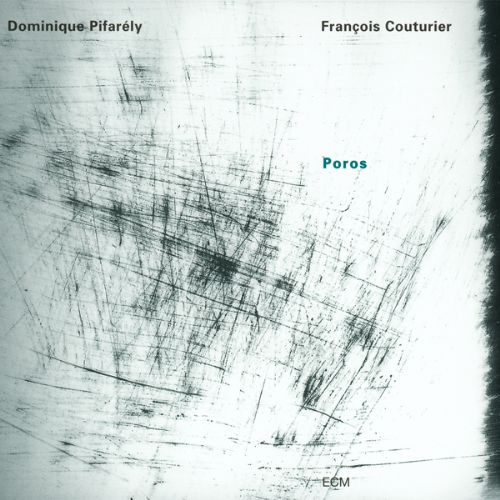
As on the album’s cover, the duo crosshatches incidentals in a knitted bruise. Pifarély trembles with the motion of a leaf obsessed with the fear of falling. His attention to detail and the precision of his agitations are thus remarkable. Couturier’s intricate astrology calls strangely from below, goading that leaf into decomposition. Only then do we see that the forest has been there all along, tilting, spinning, blurring into a looming mask of greens and browns. Traction is hard to come by, paths invisible. Our mind becomes the score, the stand on which its pages are turned, the sound dying to be released from within it. In thinking we believe, and in believing we know.

<< Giya Kancheli: Trauerfarbenes Land (ECM 1646 NS)
>> Michael Mantler: The School Of Understanding (ECM 1648/49
)

OM with Dom Um Romao (JAPO 60022)

OM with Dom Um Romao

OM with Dom Um Romao

Urs Leimgruber soprano and tenor saxophones, bass clarinet
Christy Doran 6- and 12-string electric guitars
Bobby Burri bass
Fredy Studer drums
Dom Um Romão percussion, berimbau
Recorded August 1977 at Tonstudio Bauer, Ludwigsburg
Engineer: Martin Wieland
Produced by Thomas Stöwsand

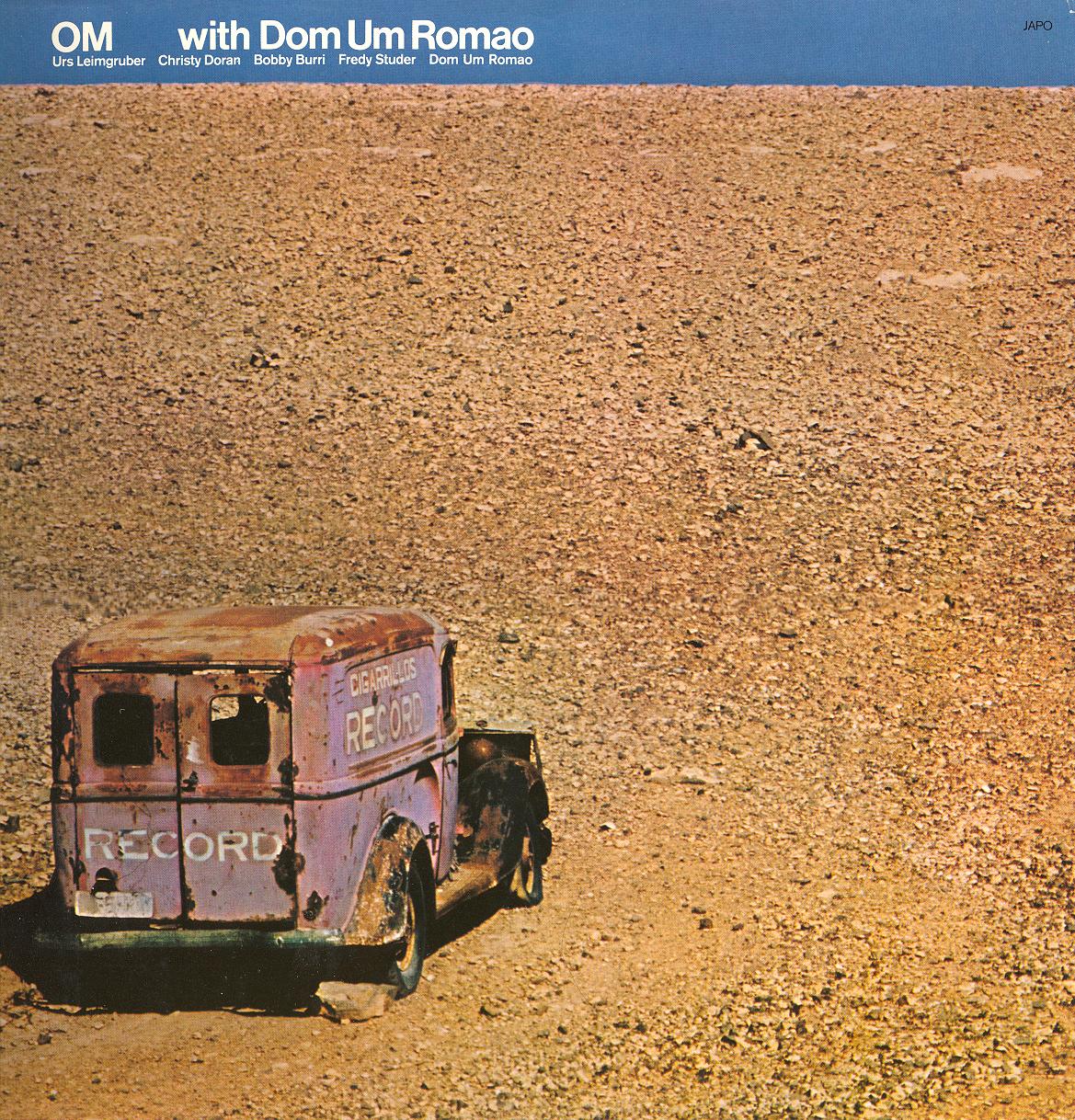
Is there a high road? This is the question asked by OM’s third of four albums for JAPO. For its junior effort, the renegade quartet of Urs Leimgruber (reeds), Christy Doran (guitar), Bobby Burri (bass), and Fredy Studer (drums) would seem to hold to a relatively accessible doctrine. But while it is the most groove-oriented in their potent discography—not surprising, given the driving center found in guest artist Dom Um Romão (1925-2005)—the core provided by the legendary Brazilian jazz drummer and percussionist, known for his work with Weather Report, allows a melodic brand of expressive freedom to take shape. The showdown is just as dreamy and feverish as anything OM had ever produced. This atmosphere comes about through the hypnotic effect of a steady pulse, the essence of all ritual. Burri’s “Chipero” opens the doors to a realm of bird and goddess, a forest where waters run shallow but sure. Romão provides the welcoming call, the rest evoking fauna and wounds of expectation. These energies sustain themselves throughout, especially in the two Doran-penned tunes. “Back To Front” swings us farther out into the cosmic stretch by way of some especially colorful picking from the composer, unwrapping a package of candy and strewing its contents over Saturn’s rings. The flow is not without its detours, as evidenced by the stark change of scenery as bass and guitar mellow for a concluding night flight. Doran’s other half is “De Funk,” which churns the butter to even smoother consistency. Romão’s Nana Vasconcelos vibe adds just the right touch of salt to Studer’s metronome. Doran, ebullient as over, can only defer to Burri, who works overtime to keep us in the here and now. Leimgruber’s bass clarinet turns like a jigsaw piece crying for fit and sets up a round of witty exchanges. Nestled among these propulsive journeys, the artful dodge of Leimgruber’s “Dumini” awakens the behemoth of memory in a lanky, sweltering pitch. Because it is the only track to have made the cut for OM’s retrospective album, this collaborative joint is worth checking out for the surrounding paths it lays. OM remains attentive to ebb and flow, an oarless boat reaching shore. What does oxygen breathe?

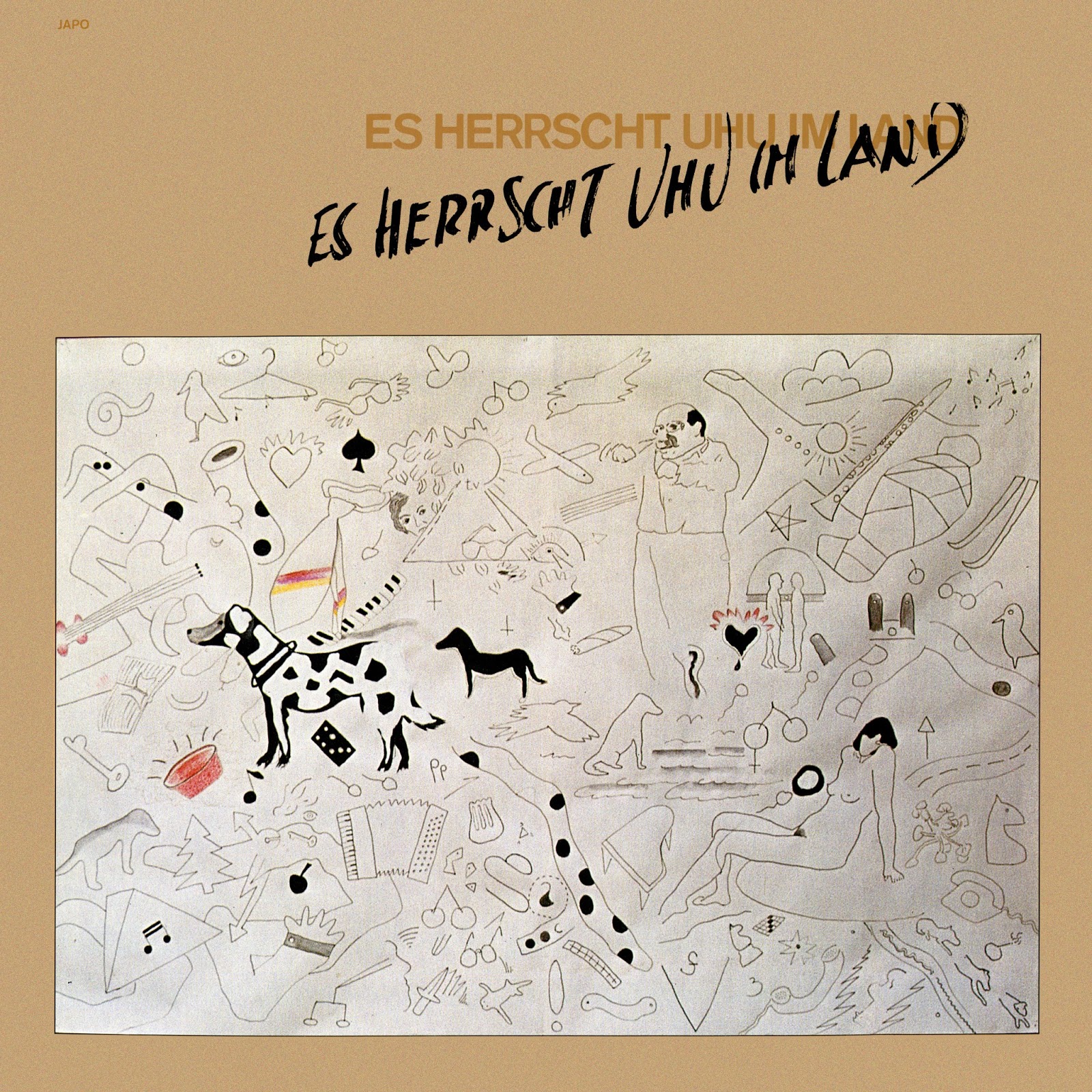
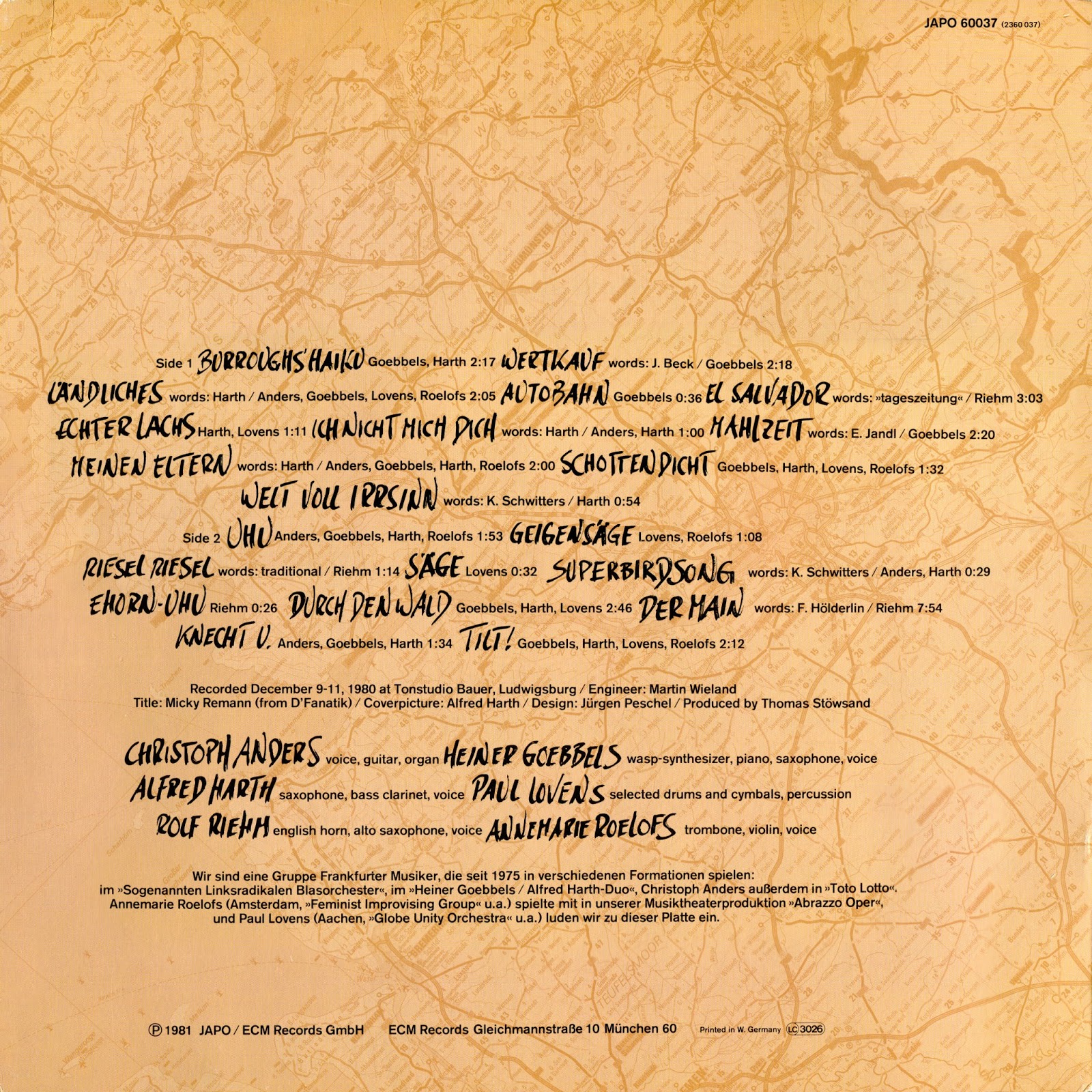
Es herrscht Uhu im Land: s/t (JAPO 60037)

Es herrscht Uhu im Land

Es herrscht Uhu im Land

Christoph Anders voice, guitar, organ
Heiner Goebbels synthesizer, piano, saxophone, voice
Alfred Harth saxophones, bass clarinet, voice
Paul Lovens drums, percussion
Rolf Riehm english horn, alto saxophone, voice
Annemarie Roelofs trombone, violin, voice
Recorded December 9-11, 1980 at Tonstudio Bauer, Ludwigsburg
Engineer: Martin Wieland
Produced by Thomas Stöwsand

This early collaboration from saxophonist Alfred Harth and composer Heiner Goebbels is a telling lens of intersection through which to mine two fascinating careers. Harth will be familiar to ECM devotees as the progenitor of the label’s second album, Just Music, and would go on to release two further albums in other venues before meeting Goebbels in 1975. The two came together musically in a jazz-rock outfit called Rauhreif which, being to neither’s liking, dissolved, leaving these powerhouses itching for freer means of expression. It was in the context of this collaboration that Harth introduced the young Goebbels to the music of Hanns Eisler, which would of course lead to Eislermaterial, his most successful project to date. After connecting the dots for five years as a duo in various German settings, Harth called on the services of an old friend, Thomas Stöwsand, who’d played cello and flute on Just Music and was now headlong into the ECM storm. Stöwsand agreed to produce and welcomed into the studio Chris Anders, Rolf Riehm, and Annemarie Roelofs, each accomplished multi-instrumentalists, and drummer Paul Lovens. Such is the tangled web of Es herrscht Uhu in Land.

In it ideas were already taking shape that would become touchstones for Goebbels’s work, such as “Autobahn,” which meshes rallying songs with a field recording of its eponymous motorway, while “Wertkauf” betrays a less delicate side, sounding like something out of an Otomo Yoshihide free-for-all. The reversed vinyl and crunchy guitar make for a powerful contrast, each groove a cavity waiting for a tooth. “Mahlzeit” is a trembling gift, enacting a sacred touch of tongue to circuit. And one can’t help but uphold the frozen wasteland and creaking wonders of “Durch Den Wald” as a precursor to Stifters Dinge.

Riehm also makes a significant contribution with “Der Main.” Composed around poetry of Friedrich Hölderlin, it thus lays another important keystone in the ECM ethos. This skip through space is like a sonic parlor trick, a knock on the door of memory, a wishful thought. Through a deft admixture of songs, the relay of word to voice moves in an extended meditation. At nearly eight minutes, it towers over the outlying tracks, which average around two minutes each, and underscores the otherwise restless musings therein with a bold cohesion.

The musicians turn air to solid with their touch. Intimate musings, talking brass, laughter, and wires share a bed, rolling in the sheets until something musical takes shape. Each body part becomes a note that in combination with other, activates instrumental ideas. Harth, for one, writhes in soprano-gilded spirals over the song of a hungry whale in “Echter Lachs” and pops the electronic bubble in “Knecht U.” Yet for the most part, the group works as a whole, spitting watermelon seeds out of cartoon mouths in “Ich Nicht Mich Dich” alongside the jackhammer of self-questioning. It pulls us into an underworld of radio signals, waltzing to the beat of a perverse drum (“El Salvador”) and changing channels with the twist of a rein (“Uhu”), all the while feeding voices through a sluice pipe of craft. A spate of translation (“Superbirdsong”), dust for wings and air, and we are in the forlorn wakeup call of “Tilt!” smoking monosyllables until they stain the lungs with honesty.

In this bedtime story for the escaped mind, the main characters are an adroit political insight, a leak in the colonial pen that ruins a fluid takeover with exposition of intent, and a crucible of retrospection. Neither derisive nor derivative, this project takes a good long look at the sandy areas of our consciousness and pours water on them for sandcastles. The water jug drains itself. The water jug waits for no one.

Es herrscht Uhu im Land (Back)
Back cover