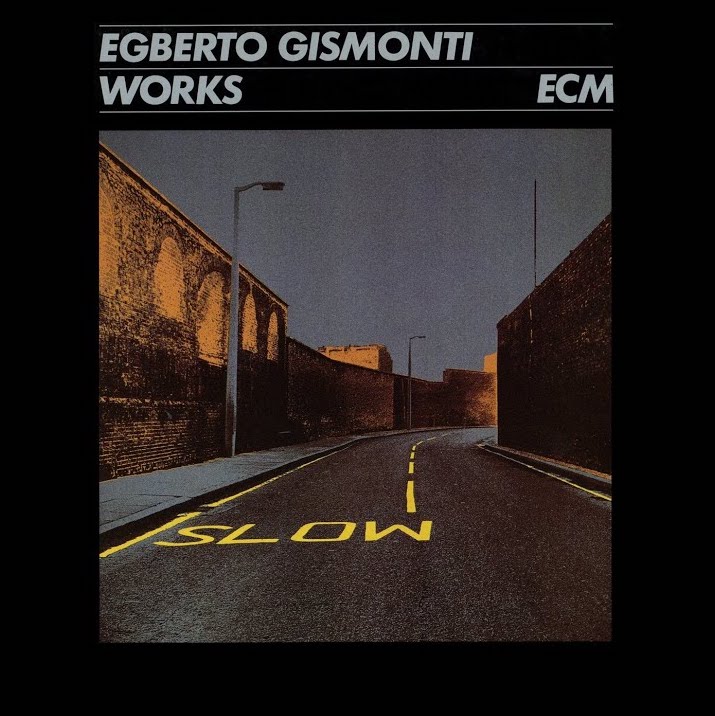
Egberto Gismonti: Works

Gismonti

Egberto Gismonti
Works
Release date: April 1, 1984

Egberto Gismonti is a force so enormous that ECM grandfathered his own label, CARMO, under its wing to archive much of his older material, as well as that of the younger musicians interpreting it still today. But to these ears his finest recordings have always intersected with ECM proper, and the late 1970s/early 1980s defined a golden age in this regard. Producer Manfred Eicher had a way of bringing out an inner peace in Gismonti’s frantic guitar playing and likewise enhancing something rough and ready in his sweeping pianism. It was therefore inevitable that such a sizable body of work would be faithfully abridged in his own “Works” compilation.

“Lôro” is one of two tunes from 1981’s Sanfona to find their worthy place in the mix. Impeccably recorded and performed, this jewel is one of Gismonti’s most precious on record and features the talents of his Academia De Danças band. Exemplifying the sound of both its era and its composer, its instrumentation, engineering, and execution glow in ECM’s resonant chamber aesthetic. “Maracatu” is another pianistic vehicle for Gismonti, whose rolling waves crash onto shore in the last rays of a setting sun. From here we jump back three years to Sol Do Meio Dia, a session shared with Nana Vasconcelos on percussion and Collin Walcott on tabla. Gismonti’s custom 8-string guitar is resolutely beat-driven throughout “Raga,” in which he experiments with harmonics and dissonances until only purest fusion remains.

“Magico” pays tribute to the 1980 album of the same name. This peerless trio with bassist Charlie Haden and saxophonist Jan Garbarek was the living definition of lockstep. As the latter two musicians embrace the space with hands of extremes, Gismonti solos over himself in a brilliant division into multiple voices. But nowhere does his ability clarify itself so resolutely than on his 1979 Solo, from which two tracks are excised. “Ciranda Nordestina” is a look inward through lenses of piano and bells, and is another stunning construction. “Salvador” returns to his 8-string guitar for a piece of remembrance. It is the musical realization that physical locations change just like those who inhabit them and can never go back to the way they used to be. We might flip (or click) through their histories, but the only way to know what things once were is to unbury them with things yet to be.

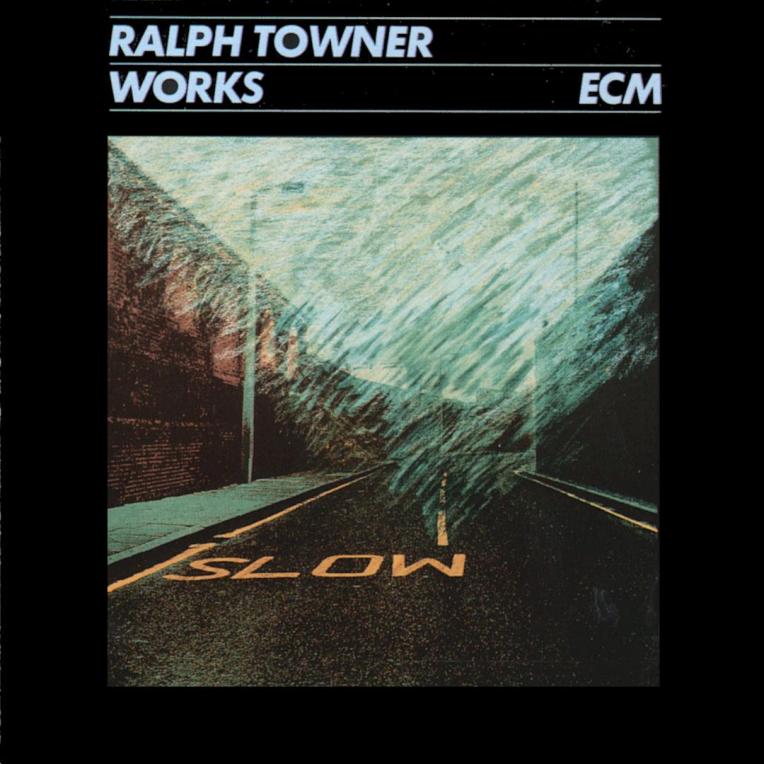
Ralph Towner: Works

Towner

Ralph Towner
Works
Release date: April 1, 1984

Guitarist Ralph Towner, like saxophonist Jan Garbarek (with whom he often collaborated during this formative phase), is one of ECM’s perennial talents and set a precedent for the label unlike any other on Solstice. Over the decades, the 1975 classic has acquired even more integrity than it exhibited when first released. “Oceanus” opens both it and this sensitively curated compilation, combining forces with Eberhard Weber, Jon Christensen, and Garbarek himself. It is perhaps the only logical first step with which to begin any foray into Towner’s universe. Weber’s cello, in combination with his plucked bass backbone, is an enchantment in and of itself, and elevates Towner’s resonating strings to nearly the same level as Garbarek’s tenor. Christensen’s sunlit cymbals complete the image. “Nimbus” finds Towner adding his piano to the mix. A patient intro unleashes the band’s total effect, Weber treading exuberantly across Christensen’s passionate soil.

The second album to be referenced is 1983’s Blue Sun, a solo effort from which two selections are presented. The title track features Towner on piano, Prophet 5 synthesizer, and percussion, alongside his trusted 12-string, for a nostalgic Polaroid that develops before our very ears. This is music that moves us, because it is movement in and of itself. “The Prince And The Sage” recalibrates the array to Prophet 5 and classical guitar only. Tracing a parabola over cities, villages, and waterways, it blends tastefully and in a way that would be unrepeatable with today’s ingredients.

Last we have two tracks from 1979’s Old Friends, New Friends. “New Moon” features Kenny Wheeler (trumpet and flugelhorn), David Darling (cello), Eddie Gomez (bass), and Michael DiPasqua (drums and percussion). If anything, it’s a memorable vehicle for Wheeler, who soars over landless expanse. “Beneath The Evening Sky” makes another reduction, this time to Towner’s 12-string and Darling’s cello. The latter unfolds a string quartet’s worth of backing in this deeply psychological character study.

And while there is some gold unmined in this collection, especially with regard to my all-time favorite Towner album, Solo Concert, there’s enough here to both satiate the hungry ear and inspire exploration for more.

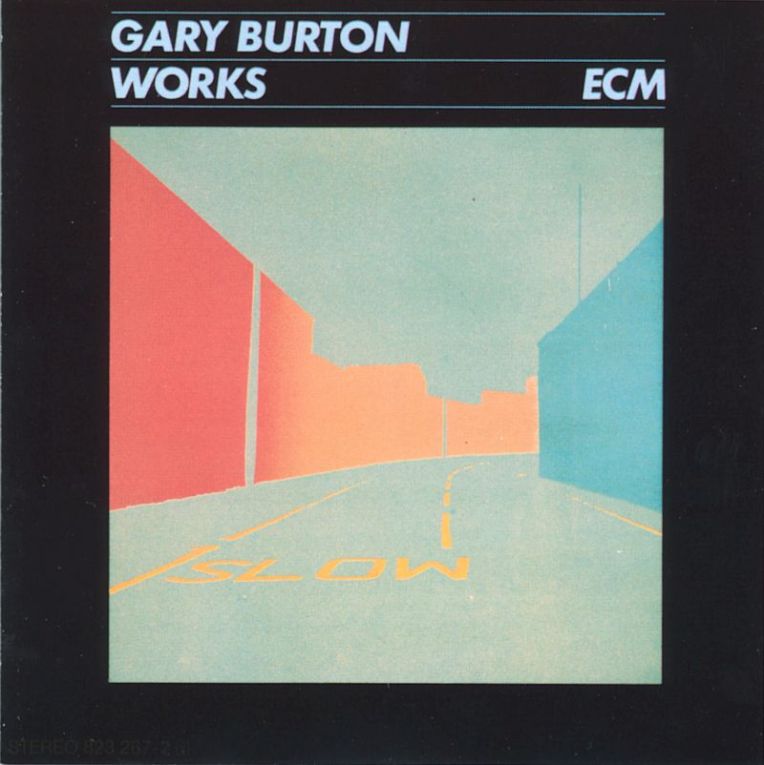
Gary Burton: Works

Burton

Gary Burton
Works
Release date: April 1, 1984

Vibraphonist Gary Burton, one of the defining voices of ECM’s formative years, is worthily honored in this second “Works” series installment. His contributions as virtuoso and interpreter of the instrument are unparalleled, and on ECM both aspects of his career found ample space in which to flourish. This particular era of the 1970s, which followed his RCA blitz, showed him also to be a musician of great patience, as on The New Quartet. The 1973 classic dropped him into a studio with guitarist Mick Goodrick, bassist Abraham Laboriel, and drummer Harry Blazer for a set as gorgeously played as it was conceived. From it we are treated to Keith Jarrett’s “Coral,” of which every spindly leaf is accounted for, and Carla Bley’s “Olhos De Gato,” which waters a groove that is laid back but never subdued. Those chamber sensibilities give way to more luscious details in “Vox Humana,” another Bley tune that references 1976’s quintet outing, Dreams So Real.

While Burton was quick to expound at length on any given theme, he also gave his bandmates room to breathe. This was especially true of 1974’s Ring, for which the quintet was augmented by bassist Eberhard Weber. From that album we are afforded “Tunnel Of Love.” Burton’s pitch-bending adds a degree of physicality to this nostalgic slice of life by Michael Gibbs. The third of 1974’s Seven Songs For Quartet And Chamber Orchestra is another master class in delayed gratification and defers to the bassing of Steve Swallow.

The remainder of this compilation features the deeper integrations of Burton’s duo projects. His highest achievement in this regard, 1973’s Crystal Silence, pairs him with pianist Chick Corea. The track chosen to represent it, “Desert Air,” is a springboard for some of the most virtuosic finishing of sentences one is likely to encounter in such a collaboration. Another duo project with Ralph Towner, 1975’s Matchbook, yields the title track, in which percussive impulses from the guitarist clear the road for an unimpeded ride over flatlands. And on “Chelsea Bells” and “Domino Biscuit” (Hotel Hello, 1975), both by Swallow, the composer joins Burton on piano with touches both anthemic and gospel-esque. All of which leaves us with an abridged version of an oeuvre steeped in timeless energy. A gift that keeps on giving, decades later.

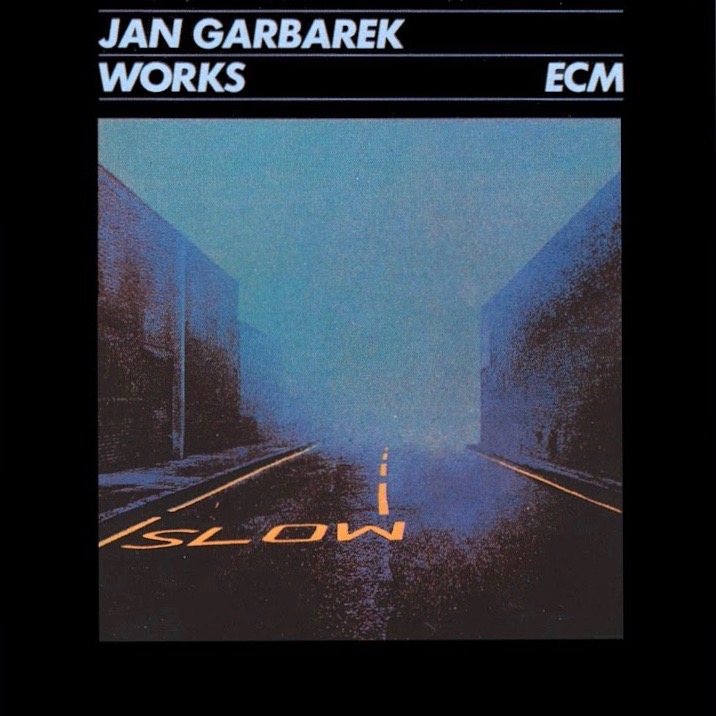
Jan Garbarek: Works

Garbarek

Jan Garbarek
Works
Release date: April 1, 1984

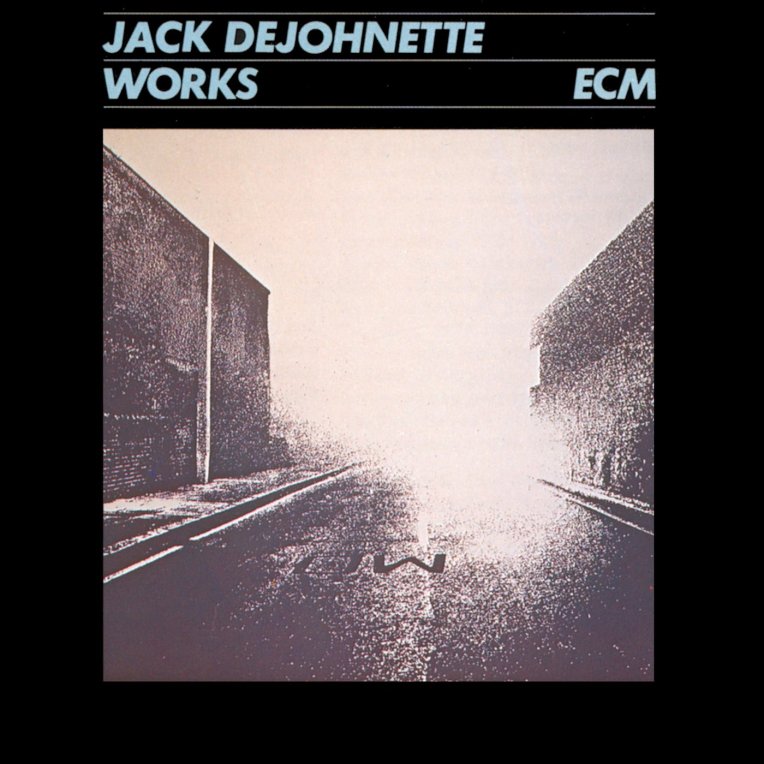
The “Works” series of ECM compilations began in 1984 to celebrate the label’s 15th anniversary, as it prepared to open a new chapter with its classically focused New Series imprint later that same year. It makes sense that Norwegian saxophonist and composer Jan Garbarek should be the subject of this first installment, as he defined not only the sound of ECM throughout the 1970s but also of a jazz scene that was relatively unknown outside its own borders until producer Manfred Eicher committed himself to the vision of broadening its wingspan.

Garbarek has taken on many roles throughout ECM’s now 50-year history, and even at this early stage had defined some key faces of his creative persona. In “Folk Song,” from 1981’s Folk Songs with guitarist Egberto Gismonti and bassist Charlie Haden, we find ourselves in the company of Garbarek the griot. With a telepathy as powerful as that of remembrance, the trio’s music transports us into ourselves. If Haden and Gismonti are shadow and light, respectively, then Garbarek is the one who wanders the valley between them, drawing a horizon wherever the sky will hold pigment. This is the spirit of Garbarek’s playing at all times: an itinerant yet grounded soul who understands the way of things to be carved in experience.

We also encounter Garbarek the sailor. In “Passing” (Places, 1978), he shares a vessel with John Taylor on organ, Bill Connors on guitar, and Jack DeJohnette on drums. With circadian rhythms and steady passage, marked like a fishing net by Connors’s acoustic wisdom, the quartet catches wind purposefully forward. And in “Svevende” (Dansere, 1976), inhaling brine and waves with Bobo Stenson on piano, Palle Danielsson on bass, and Jon Christensen on drums, Garbarek evokes sirens of both the mythical and preventative kind. Another track from Dansere, “Skrik & Hyl,” reveals a shepherd, now climbing a mountain with Danielsson alone. Sounding a call to the ether itself, Garbarek tends to his melodic flock without fear. Responding to said call are Terje Rypdal on guitar, Arild Andersen on bass, and Christensen again on drums in “Beast Of Kommodo” (Afric Pepperbird, 1970). This early build, from ECM’s seventh release, features guttural expression in a tactile setting. And in “Viddene” (Dis, 1977), his soprano meshing with the 12-string guitar of Ralph Towner over a windharp drone, he jumps from the cliff as one who looks down upon landscapes instead of up from them.

Finally, Garbarek the mystic welcomes us into internal spaces. In “Selje” (Triptykon, 1973), he turns to flute in the presence of Andersen, along with Edward Vesala on percussion, for an incantation of light. And in “Snipp, Snapp, Snute” (Eventyr, 1981), his flute is joined by Nana Vasconcelos on percussion, moving with the tide of biographical change.

Throughout these tunes, and regardless of focus, Garbarek activates thoughts of ancestors in the most undeniable terms: through sound. Vibrations thus activate us at the very core, stirring molecules of the heart with messages and songs. And while most compilers might use individual tracks to tell a larger story, Eicher has put together this sequence to show how that larger story feeds the individual.

John Cage: Music for Piano 4-84 Overlapped (YAN.006)

06_Cover

John Cage
Music for Piano 4-84 Overlapped

Pascale Berthelot piano
Recorded and mixed 2017 by Gérard de Haro at Studios La Buissonne
Mastered by Anaëlle Marsollier
Piano technician: Alain Massonneau
Produced by Marc Thouvenot & La Buissonne
Release date: May 24, 2018

What if I ask thirty-two questions?
What if I stop asking now and then?
Will that make things clear?
Is communication something made clear?
What is communication?
–John Cage, “Communication”

In her third intersection with the CUICATL sublabel, pianist Pascale Berthelot offers something truly unique in John Cage’s Music for Piano. Composed between 1952 and 1962 through a series of chance operations, Music for Piano grew into a set of 85 pieces. Numbers 4-84 took on a life of their own as incidental soundtrack for dancer Merce Cunningham’s 1953 Solo Suite in Space and Time, and these are presented in an unprecedented way: superimposed and played as one. Because Music for Piano indeed plays with notions of space and time—stretching, deconstructing, unraveling them as quantum material—it makes an ideal sort of sense in this collective reiteration.

Suggestions in the score were yielded by natural imperfections in the paper, where Cage decided to make a mark, thus freeing something that might otherwise have remained locked away in its planar prison. This fundamental action—of treating something noticeable as a rupture into sound production—gave emptiness to substance and substance to emptiness. In so doing, he proved the fallacy of silence altogether.

Despite the overlap (if not also because of it), an intense subtlety prevails. And because the notation is already so bare, the result is far from chaotic. It is, rather, like gazing upon a starry sky and hearing it for the first time. The deeper one goes into Berthelot’s performance, the more the piano sheds its associations as a center-stage instrument. Rather, in being plucked, strummed, depressed, and knocked from the inside out, it opens itself like a dictionary. Flipping through it as one would spin a globe and land a finger for want of random travel, Berthelot links one word after another until vocabularies, sentences, and paragraphs emerge. In reading them back to us, he fixes a narrative as such and allows us to wield it as a text. The beauty of it all is that we may cut a piece from anywhere along its trajectory and roll it out into another story altogether.

This recording is a gift that keeps on giving. A must for admirers of Cage, and for anyone who believes that music is something that should feel you, not the other way around.

Thomas Adès: Illuminating from Within (YAN.005)

05_Cover

Thomas Adès
Illuminating from Within

Winston Choi piano
Recorded 2015 by Nicolas Baillard at Studios La Buissonne
Produced by Marc Thouvenot & La Buissonne
Release date: October 30, 2015

If ever there was a composer who worked in light, it would be Thomas Adès. As the subject of this recital by Canadian pianist Winston Choi, he comes across as someone interested not so much in the metaphysical as the metaphorical. Traced Overhead (1995/96), for one, takes its inspiration from the iconography of angels, and in drawing that connection molds transcendence and ascension as motifs worthy of articulation at the keyboard. Such heavenly associations, however, remind us of flesh’s sinful tendencies and of the material world that keeps its desires running smoothly. As two relatively shorter movements shift into a protracted third, in which the scratch of thorns blood-lets a sacred disembodiment, the dichotomy of inner/outer ceases to be real. The Three Mazurkas (2009) that follow are brimming with detail. Originally written for Emanuel Ax and tipping their shared hat to Chopin, they showcase a full integration of sound, color, and environment even as dance steps are obscured through the filter of personal expression.

Thrift (A Cliff Tower) (2012) begins a chain of standalone works. Its roiling textures, viewed (and heard) as if from a precipice, are an appropriate prelude to Darknesse Visible (1992). This nervous translation of John Dowland’s “In darkness let me dwell” is strangely bright. The end result is no longer a song but something else entirely. Still Sorrowing (1992), also rooted in Dowland, lights a decidedly nocturnal stove. Muted strings and plant-like forms grow in honest profusion. All of which makes the Concert Paraphrase (2009) feel like a masochistic slap. This free transcription of Adès’s first opera, Powder Her Face, is dramatic, halting, and intensely physical. Between fiercely lyrical asides and gently tumultuous arias it strings tightropes of Weimar-era cabaret, romanticism, and fantasy. More real than anything, for nothing is real without a little makeup to offset the truth.

Samuel Sighicelli: Etudes pour piano & sampler (YAN.004)

04_Cover

Samuel Sighicelli
Etudes pour piano & sampler

Samuel Sighicelli piano, electronics
Recorded October 6-8, 2014 by Gérard de Haro at Studios La Buissonne
Mastered by Nicolas Baillard
Produced by Marc Thouvenot & La Buissonne
Release date: February 28, 2017

Pianist Samuel Sighicelli, known to La Buissonne Label listeners as a key member of Caravaggio, presents what this album’s press release calls a “bionic piano.” More than an amalgamation of flesh, metal, and wood, it is a meta-compositional tool. Sighicelli started this project by recording improvisations at home on the piano, treating curated selections therefrom as seeds for heavily constructed pieces. From this a series of 12. Though originally intended for two loudspeakers, he reworked them for live performance using digital sampling, thus allowing him to invoke the prerecorded material via electronic keyboard.

“Signes/Course” combines elliptical motifs with splashes of cold water, string treatments, and backward glances. If such descriptions feel vague, it is only because the music is so precise, and to capture it in like manner risks limiting its interpretive possibilities. So begins a psychological character study of psychology itself. The mix of submarine signals and deserted expanse that is “Carcasse dans la neige” haunts the brain. Upon hearing it, we immediately realize we lack the necessary equipment to interpret the pattern as a message. Instead, we flounder in our need for communication: isolated, undiscerned, voiceless. Those pulses continue to echo across the waters of our conscious mind in “L’horizon comme vouloir,” even as they find purchase in the piano’s physical body.

The more these pieces evolve, the more the sampler becomes integrated into the piano itself, as if it were hybridizing with the very instrument from which it emerge. Along the way, we are exposed to sound bites of human voice (“Édifices”), sinister ruptures (“Brèches”), sacred spaces (“Monolithe”), futuristic body scans (“Départ dans le bruit neuf”), and even the lull of cricket song (“L’âge du faire”). And when the keys sing to us from within minimal clothing, as in “Dernier regard” and “Presque l’aube,” the effect is startling. It is akin to being sonically operated on to disentangle us from an incursion of microscopic entities, each wielding a knife so small that every slash is felt only in dreams.

Daniel D’Adamo/Thierry Blondeau: Plier-Déplier (YAN.003)

03_Cover

Daniel D’Adamo
Thierry Blondeau
Plier-Déplier

Béla Quartet
Julien Dieudegard
violin
Frédéric Aurier violin
Julian Boutin viola
Luc Dedreuil violoncello
Recorded, edited, and mixed in 2012 by Gérard de Haro at Studios La Buissonne
Mastered by Nicolas Baillard
Steinway prepared by Alain Massonneau
Produced by Marc Thouvenot & La Buissonne
Release date: November 19, 2013

Plier-Déplier (Folding and Unfolding) is the title piece, jointly composed by Daniel D’Adamo and Thierry Blondeau, of this fascinating program of string quartet music. Played with astonishing (meta)physical accuracy by the Béla Quartet, it comes across as three-dimensional and tangible. Prerecorded snippets allow insight into the preparatory elements of these constructions. Some are distant, others intimately close. Such extremes give credence to the between-ness of things, just as the rising and setting of the sun confirms our allegiance to the day. Though nearly all of these 19 pieces average two minutes in length, there’s a sense of expansion at play from one to the next. Silence is as much employed for its notecraft as scored action. Calling these vignettes therefore feels grossly inaccurate, as they are no less narrow in scope than a haiku. So-called extended techniques become the norm, while traditional bowing serves to insist on the contrivances of measured speech, directed emotion, and impositions of time. In the present context, urgency of clarity becomes a disruption to the comforts of a given instrument’s tessitura, stretching the limits of possibility as naturally as blinking. Implications abound in the creak of a tuning peg, the scrape of an un-vocalized string. Contrasts of breezes and gales coexist in a fluttering storm, while harmonics resound like sirens of the heart, coaxing themselves to shore.

Blondeau and D’Adamo each offer a solitary composition as postlude. Where the former’s Last Week-End on Mars evokes air raids and space travel, using electronics to enhance the vagaries of time, the latter’s Découper – petite passacaille touches the edges of its own vocabulary—not with the tongue but with the fingertips. The quartet’s delicacy, interspersed with forthright expulsions of air, gives a taste of the meal that never reaches this proverbial table. Instead, it leaves us to ponder the empty plate before us as if it were our own life, scarred by years of silverware and unthinking consumption.

Ivan Fedele: Musica della luce (YAN.002)

02_Cover

Ivan Fedele
Musica della luce

Pascale Berthelot piano
Recorded in 2012 by Gérard de Haro at Studios La Buissonne
Edited, mixed, and mastered by Nicolas Baillard
Steinway prepared by Alain Massonneau
Produced by Marc Thouvenot & La Buissonne
Release date: November 19, 2013

The pianistic literature of Ivan Fedele is the subject of this recital by Pascale Berthelot, which follows her CUICATL debut. The program opens with the Italian composer’s Études boréales (1990). Meant to evoke the icy climate of Finland, it requires the performer to dig into the keyboard like a mountain climber might ascend by means of a pick. Such sharp attacks are resolutely luminescent, while the slower sections are murmurings of shadow. Internal resonances are beautifully enhanced in the third and fifth etudes, as if in a frozen cave exhaling its own voices across the valleys. The harmonics of the fourth are the tones of icicles falling from their state of overhang.

Études australes (2002/03) shifts to warmer, more forgiving spaces. Subtitles of individual etudes (Tierra del fuego, Cape Horn, etc.) suggest polar geographies but also the genera (e.g., Aptenodytes) and species of birds who inhabit them. With no pedal indications to lead the way, Berthelot is left to interpret the duration of every note cluster as if it were its own hybrid, jumping from sparkling cliffs into oceanic depths.

The Toccata (1983, 1988) is an ode to the composer’s own youth and the revelry of practicing at the piano. That feeling of repetition, of evolution and involvement, is omnipresent. Insistence and flowery ornamentation go “all in” throughout this fascinating and unabashedly honest music.

Cadenze is a set of nine aphorisms composed over a 25-year period (1983-2008). Though short, they practically insist on lingering long after being uttered. Thus, the markings of each are as much linguistic as environmental. Some particularly striking examples are numbers III (a psychic rush), VI (a dance that never gets off the ground), and VIII (a lullaby for DNA).

Nachtmusik (2008) concludes with a piano-only section from the longer Deu notturni con figura, itself for piano and electric piano. As the most brooding narrative at hand, it pulls itself through a thick emotional transference, ever aware of its age.

Fedele’s oeuvre is a collective study of contrasts in the same planetary body. Just as the Earth’s axis suggests two tilts—one toward the sun and the other away from it—it balances light and dark, warmth and cold, art and science. This is neither a treatise or a manifesto, but a short story collection rolled into a ball and kneaded until its words are no longer distinguishable.