Manfred Schoof Quintet: Resonance (ECM 2093/94)

Resonance

Manfred Schoof Quintet
Resonance

Manfred Schoof trumpet, flugelhorn
Michel Pilz bass clarinet
Jasper van ‘t Hof piano, electric piano, organ
Rainer Brüninghaus piano, synthesizer
Günter Lenz double-bass
Ralf-R. Hübner drums
Recorded August 1976 (Scales), December 1977 (Light Lines), and November 1979 (Horizons) at Tonstudio Bauer, Ludwigsburg
Engineer: Martin Wieland
Produced by Thomas Stöwsand
Executive producer: Manfred Eicher

Resonance compiles two discs of vital material from the early JAPO releases by German trumpeter Manfred Schoof: Scales, Light Lines, and Horizons. The first two albums are presented in full, while only half of the third is excerpted. As co-member with bass clarinetist Michel Pilz of the Globe Unity Orchestra (another group with a hefty JAPO footprint), Schoof was a hot ticket in the 1970s, when his quintet was all the rage in the European free jazz scene.

Schoof

What distinguished him from the avant-garde demimonde was an insistence on melodic integrity. For Schoof, “the term ‘free’ not only stands for a specific style of jazz that, in its beginnings, opposed with revolutionary gesture everything redolent of the past and reminiscent of tradition but rather the freedom to choose between a multitude of very different means of expression. Tradition, therefore, is viewed as a past experience that merges with and enriches a new style of sound.” His band mates in these recordings include Pilz, pianists Jasper van ‘t Hof and Rainer Brüninghaus, bassist Günter Lenz, and drummer Ralf-R. Hübner, most of whom will be familiar to the more adventurous ECM listeners.

Scales (JAPO 60013)
The title track of Scales opens both album and set with a primal trumpet cry. It is Schoof’s calling card: a rip in the ether from which flows undeniable light. Van ‘t Hof poeticizes this light from a place beyond waking. And indeed, the more instruments are added, the dreamier the music becomes. Over time, Pilz’s gorgeous rasp adds tactility, so that surreal gestures begin to feel familiar. Pilz stands out also in “Ostinato,” which finds him sharing a stepwise ground line with Lenz. We are so fully mired in this swampy unison that when he breaks free from the waves, his voice feels like a shaded benediction in what is easily among the finest tracks in the ECM archive. Van ‘t Hof’s organ drone is also notable here. Over it drums seem to describe abandoned castles, stone by stone, until they loom before us unscathed by time. The keyboardist provides deep color shifts throughout the program, evoking early Steve Kuhn vis–à–vis electric piano in “For Marianne” and spacy atmospheres in “Weep And Cry.” The former’s cloud rolls give Schoof vast chromatic freedom, while the latter evokes sunset before cooling into a twilit canopy, now alive as the darkness reveals its dance through the bass clarinet. The scene closes its eyes with “Flowers All Over” in the album’s most joyous music. Schoof rides a harmonic dolphin, plunging variously into intuitive digs, likewise inspiring Pilz to grand emotional heights.

Scales
Original cover

Light Lines (JAPO 60019)
“Source” introduces the second disc with the world of Light Lines. The middle of this JAPO sandwich finds Schoof swimming in an ocean of fire. Overall, the sound is more sparkling by way of Hübner’s clear and present kit work. The album boasts not only its own title track, a splash of sonic goodness in which Schoof’s trumpet is the very image of a bird in flight, but also that of the set as a whole. “Resonance,” for that matter, is more than a catchy word. It is the credo of a musician whose focus unnerves with its precision. Working through the changes like a card shark riffling to his cull, he holds our attention by means of powerful misdirection. “Criterium” and “Lonesome Defender” round things out, on the one hand, the glint of a blade catching sunlight and, on the other, an evocative blend of sweet and savory flavors.

Light Lines
Original cover

Horizons (JAPO 60030)
Brüninghaus steps from the Jan Garbarek/Eberhard Weber mold and into open Horizons, where he adds lilting undercurrents and cascading solos throughout. Pilz’s fierce, uncompromising blues is downright brilliant amid the pianist’s sparkle in the waterlogged title track, in which Schoof emerges like a butterfly from its chrysalis, fluttering to and fro with the determination of a man on fire in search of water. In “Hope,” he sweeps a guiding hand through waves of thematic life, Pilz ever the underwater acrobat. The band rounds up a school of fish hungry for soul in “Old Ballad,” with Brüninghaus and Lenz hauling a fair catch each, while the final “Sunset” fronts the trilogy’s brightest stars, Schoof and Pilz, against a gradual rhythm section, carrying us out toward a forever receding waterline.

Two worthy, if confected, tracks have been elided from Horizons—strange when you consider the collection could have accommodated both. “The Abstract Face Of Beauty,” penned by Hübner, paints a vista of clouds and barren land, every bit the sonic analogue to the album’s cover, and features prime soulful blowing from Pilz. “Sunrise” taps a similarly rubato vein and throws the spotlight on Schoof’s technical prowess. The 14-minute loss isn’t likely to matter to those new to this material, of whom many listeners of Resonance are likely to be. In any event, Schoof himself assembled the included tracks, and one can only imagine his good reason.

Horizons
Original cover

Although he is one diamond in a mine already chock full of them, Manfred Schoof deserves any ECM fan’s close attention. As a composer, he builds a welcoming world. As a player, he turns fantasy inside out and makes it feel possible. Like the solo concerts of Keith Jarrett, if the reader will forgive the otherwise groundless simile, his pieces are distinguished by their ostinatos, which thrum with the invisible energy of ley lines. This is music that looks at itself in the mirror and asks, “Am I the reflection after all?”
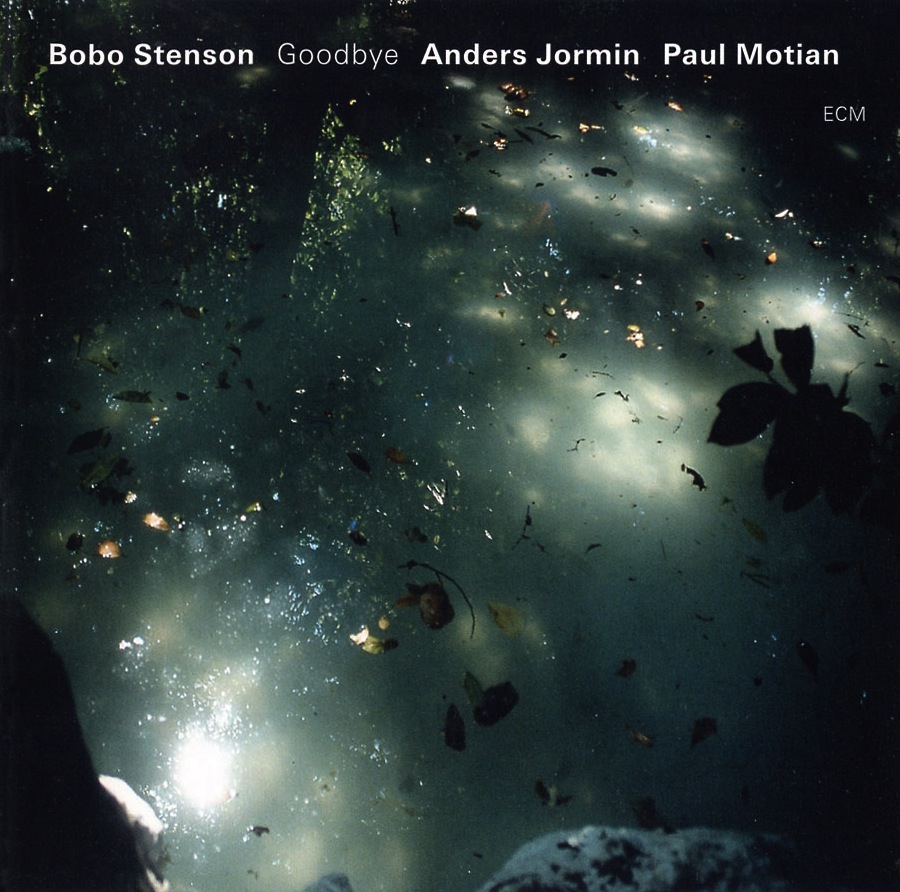
Bobo Stenson Trio: Goodbye (ECM 1904)

Goodbye

Bobo Stenson Trio
Goodbye

Bobo Stenson piano
Anders Jormin double-bass
Paul Motian drums
Recorded April 2004 at Avatar Studios, New York
Engineer: James A. Farber
Produced by Manfred Eicher

Bobo Stenson’s trio projects have brought a host of eclectic programs to fruition in ECM’s choicest studios. Like label mate Tomasz Stanko, the Swedish pianist’s repertoire is a balancing act of adventure and return. As with the follow-up, Cantando, the present session draws from classical sources (Henry Purcell’s flavorsome “Music For A While”), protest songs (Vladimir Vyotsky’s “Song About Earth,” here something of a meta-statement), standards (Stephen Sondheim’s “Send In The Clowns” and the title tune by Gordon Jenkins), and Latin American music. All of this and more, including new material by Stenson and bassist Anders Jormin, in addition to some tried and true from drummer Paul Motian. Goodbye is the first recorded meeting of these three greats, who comb the pelt of the cosmos until it glistens.

Whether by stick or by brush, Motian’s touch is meticulously impressionistic, reactive, and aware. His slipperiness is recognizable from the first quiver of the Sondheim classic. He adds so much patina to its well-polished surface, locking rough into smooth like the teeth of a zipper. Those unmistakable brushes continue to beguile in “Alfonsina,” which comes from the pen of Argentine composer Ariel Ramírez. We feel more than hear Motian as he blends into Stenson’s exquisite pianism with all the selflessness of a shadow. Only in the fourth track, “There Comes A Time” (Tony Williams), does he change over to sticks. Hooked on Jormin’s arm, he elicits a certain sweetness, fleeting as mist at sunrise. For his own tunes, “Jack Of Clubs” and “Sudan,” he overturns melodic warmth in spades and dips into resolution as might a painter into crimson. These share in the album’s concluding spate of briefer numbers, along with Stenson’s “Queer Street” and Jormin’s “Triple Play”—both tantalizing.

The bassist enlivens the set with three further tracks, shifting from the stark poetry of “Seli” to the more flexible “Allegretto Rubato” at the flick of a wrist. It is “Rowan,” however, that regards the listener most enigmatically. It lives below the water’s surface, gazing at its own reflection until it can no longer swim. Stenson weeps here with the viscosity of a maple tree. Of that tree, the leaf that is Ornette Coleman’s “Race Face” swings freely, making the jive sound so easy when in truth we can hardly comprehend the paths taken to get here.

Regardless of length, every bit of this moody and often-melancholic set feels complete. This is a jazz of evaporation; not the work of a trio but the feeling of another climate.

Bobo Stenson Trio: Cantando (ECM 2023)

Cantando

Bobo Stenson Trio
Cantando

Bobo Stenson piano
Anders Jormin double-bass
Jon Fält drums
Recorded December 2007 at Auditorium Radio Svizzera Italiana, Lugano
Engineer: Stefano Amerio
Produced by Manfred Eicher

After the epic statement that was Serenity, the Bobo Stenson Trio reshuffled not only its personnel (Jon Fält replaces Jon Christensen, by way of Paul Motian, on drums) but also its sources. Cantando takes these changes in stride, as is clear from the swish and sparkle that unwrap “Olivia.” The opener is by Cuban songwriter Silvio Rodríguez, whose left-leaning politics find traction in the haunting backpedaling toward the end, gelling in wordless spirit like a lake in winter. Astor Piazzolla’s “Chiquilín de Bachín” dips again into Latin American material. This is Fält’s moment, as he brings a painter’s awareness of color and nuance to bear on a groovy ride. Yet Jormin is the head and tail of this Ouroborous, adding much with his amplified amethyst sound. Overall, he is an even more defining presence than usual, ever evolving his navigation of Stenson’s winding turns of phrase. As composer, the bassist offers two tunes. “M” is the more swinging of the two, while “Wooden Church” spins a matrix of liturgical and secular impulses, especially in his solo, which scuttles through the walls like a mouse who knows his way blind. Jormin shines further in the loosened fray of Stenson’s night throughout “Pages,” which culls four of seven pieces freely improvised in the studio. Curious and enchanting, they give rare insight into the art at hand.

Cantando rounds out with a handful of tributes. “Don’s Kora Song” gives props to the late Don Cherry, whose far-reaching sense of mood and timing translate well into Stenson’s world. His mechanical yet intuitive precision in the left-hand ostinato reminds us that all music has a heartbeat. The obscure Ornette Coleman tune “A Fixed Goal” betrays its tongue-in-cheek title in a series of moving targets, of which Jormin’s are the blurriest. Nestled snug against a forward-thinking take on the standard “Love, I’ve Found You” is Alban Berg’s “Liebesode.” A sarangi-like intro evokes stretches of dunescape before the piece’s thick description balances the raw and the cooked in delicious proportion. Last is “Song Of Ruth.” Written by the late Czech composer Petr Eben and recorded here just two months after his passing, it follows wherever gravity may lead. It pulses on forested borders, cut from the cloth of the earth by rivers and footpaths. So veracious is it that it might as well be called “Song Of Truth.” The album contains two versions, a variation of which closes the set, most forthcoming in its philosophies and clothed in the iridescence of its will. Brilliant.

One can always count on Stenson to outdo himself, and this time is no different. He consistently pulls the listener in fresh improvisatory directions, all of which blossom as supply as ever in the spacious engineering, courtesy of Stefano Amerio in Lugano. This trio, in every incarnation, is a book unto itself: over time the binding relaxes but remains intact. All of which gives metaphorical strength to “Pages,” smelling still of the glue that holds them together.

(To hear samples of Cantando, click here.)

Selected Signs, I – An ECM Anthology (ECM 1650)

Selected Signs Ia

Selected Signs, I – An ECM Anthology

The essential, as the cover of ECM’s first true compilation so quietly proclaims, may no longer be visible, but it sure is audible. Unlike the classical New Series Anthology, which took an unexpected dip into ECM proper, here the label’s formative mining of (mostly) European jazz idioms (and idiom-breakers) fills in the clothing it was born to wear. Although one might expect a collection from a catalogue already so vast to span its then-28-year history, amazingly all of its tracks come from albums released in 1997, a critical year for all involved.

The disproportionate amount of material from Tomasz Stanko indicates his importance to the label (the Polish trumpeter has left one of the deepest genetic impacts on ECM’s evolution), if not also the label’s importance to him, for producer Manfred Eicher has extended such loving welcome to his formidable talent. It sparks no wonder, then, that the brooding, sweeping gestures of “Svantetic” (from Litania) should heave their weight from the start. Despite being played by a septet, the feel of it is characteristically hermetic. Like an eyelid weighted with sleep, “Morning Heavy Song” (from his quartet’s Leosia) plunges us into a thick pianistic fog. Another private sketch in charcoal, it places notes where footprints might otherwise have been and lifts us from the shadowy lullaby of “Sleep Safe And Warm” (also from Litania) like the final corner of a jigsaw puzzle destined to be incomplete.

Significantly or not, many of the anthology selections come from early on in their respective albums. As such, they breathe with storytelling power, and nowhere more so than in the bandoneón master Dino Saluzzi’s touching “Gorrión” (from his trio effort Cité de la Musique). This biological excursion was written for Jean-Luc Godard, who has in the past drawn from Saluzzi, among other ECM artists, for his intuitive soundtracks. It is not only air that courses through Saluzzi’s bellows, but also soil, family, and time. Guitarist Ralph Towner, another artist of inward renown, gives the only other solo performance in “Tale Of Saverio” (ANA). It is also cinematic, for like a Bergman film it clicks along at a ghostly pace and finds in its own reflection the arrival of memory, naked and fractured.

Ukraine-born pianist Misha Alperin’s “Morning” (North Story) cages a chamber jazz aesthetic, though its textures become rather dense as the other instruments join him, applied like foundation to give those splashes of color a surface on which to ruminate. In the humid atmosphere he creates, stillness becomes a fairytale. “Hyperborean / Patch Of Light” (Hyperborean) is a classic from Norwegian bassist Arild Andersen’s archive, one of ECM’s strongest. For all its classical associations and wandering lines, it puts a truth to heart. Like a bird with eyes closed, Andersen’s bass knows where it’s going long before wind touches feather. Percussionist and longtime Jan Garbarek collaborator Marilyn Mazur gets a brief nod in “Creature Talk” (Small Labyrinths), a twittering flyby of rainforest that lands us at the feet of the totem carved in “Desolation Sound” (Canto), a deep introduction to American tenorist Charles Lloyd’s moving art. His twilight is strong, his breath dancing from satellite to satellite. “Siegfried And Roy,” by the Michael Cain Trio (from the overlooked Circa), is another fleeting piece of chamber jazz. It is a slow pounce, a leaning of the head, a nocturne that never makes its way into recall.

Next are the keening wonders of the Joe Maneri Quartet in a haunting take on “Motherless Child” (In Full Cry), which turns the familiar spiritual into a DNA helix of healed bones. An illness surrounds these masters, for which Maneri’s reed is the cure. Kenny Wheeler’s drum-less Angel Song project gets due attention with “Past Present.” Threaded by the delicate metronome of bass and strung by hand through guitar, its memorable theme speaks in a language only it can, its breath a sunset turned into wine and poured down the throat of a dream. Jack DeJohnette’s vital contributions take shape in “Free Above Sea” (Oneness). This richly detailed piece showcases the drummer’s melodic brilliance, enhanced here by piano and icy guitar. The anthology concludes (or does it begin?) with the title track from Nothing Ever Was, Anyway, an all-Annette Peacock program featuring pianist Marilyn Crispell, bassist Gary Peacock, and late drummer Paul Motian. This is jazz flung into a wormhole and re-spun as it emerges, a body so unaware of itself that it soars.

Selected Signs creates its own sound story, the story of a label and its heartbeat, of a producer and his vision—a vision that sees as it hears. This being but a cross-section of a single year in ECM’s 40+ history, imagine what the others hold in store…

<< Michael Mantler: The School Of Understanding (ECM 1648/49)
>> Roscoe Mitchell: Nine To Get Ready (ECM 1651
)

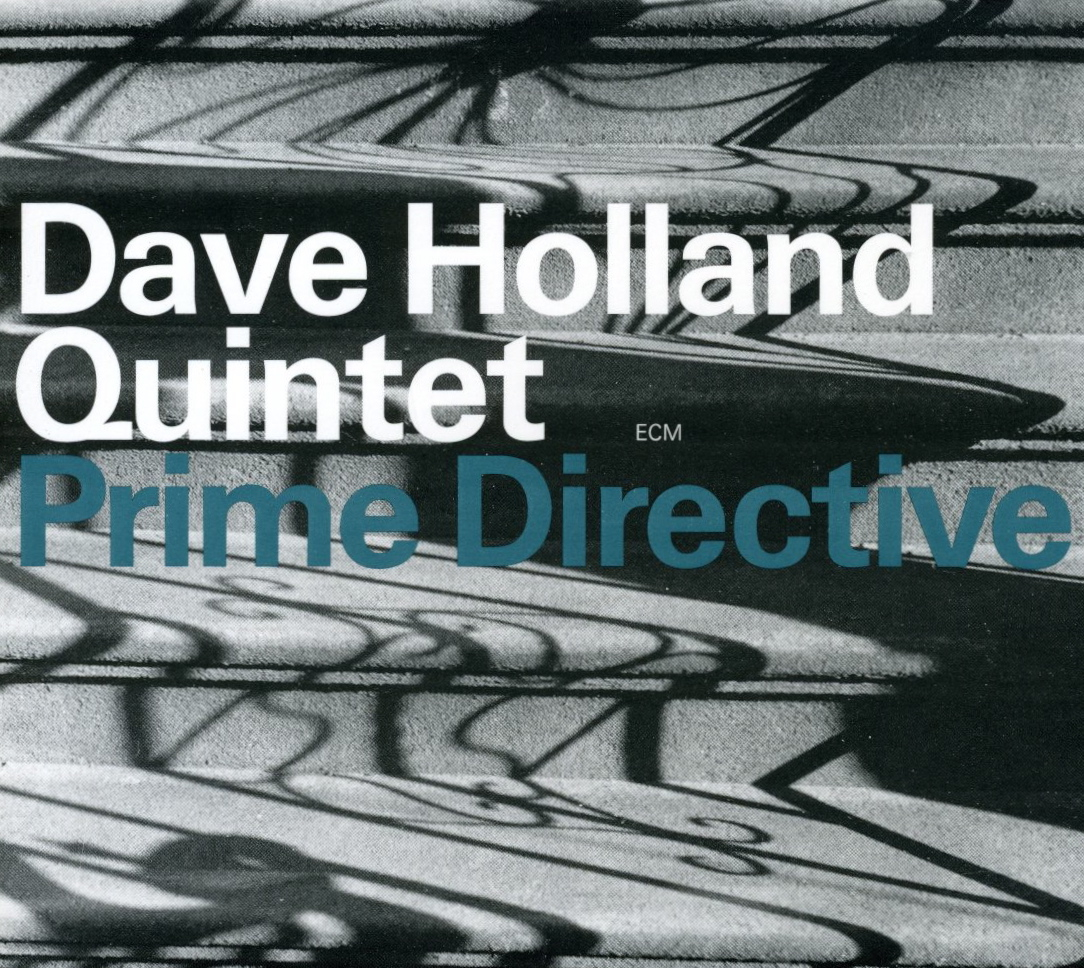
Dave Holland Quintet: Prime Directive (ECM 1698)

Prime Directive

Dave Holland Quintet
Prime Directive

Dave Holland double-bass
Robin Eubanks trombone
Chris Potter soprano, alto and tenor saxophones
Steve Nelson vibraphone, marimba
Billy Kilson drums
Recorded December 10-12, 1998 at Avatar Studios, New York
Engineer: James Farber
Produced by Dave Holland

Chris Potter replaces Steve Wilson as reedman in this follow-up to the Dave Holland Quintet’s Grammy-nominated Points of View. The band’s tremendous communication and obvious joy embolden a strong set of nine tracks, five of which come from Holland’s pen, starting with the title. The addictive rhythms are quintessential Holland and usher us into a sound-world that one hardly wants to leave. In this respect, drummer Billy Kilson rules the roost from start to finish. Working seamlessly with Holland as Potter and trombonist Robin Eubanks cast nets over Steve Nelson’s liquid crystal vibes, he engenders a pollinated groove without fail. Kilson further inspires his band mates to step up their rhythmic game, as in “Jugglers Parade,” which boasts a fine example of Holland’s ability to embolden even the most upbeat solos through an inborn lyrical power (not to mention some lovely sopranism from Potter on the recharge), and “Down Time,” the closing trio number with Eubanks in the lead. Potter takes up Kilson’s call most creatively in “Looking Up,” as does Nelson in an epic solo. The smoky rejoinder from Eubanks morphs into a percolating extravaganza and recedes for a quiet yet robust solo from Holland. The leader-bassist seems to deliver a caravan track in every session, and this time around “Make Believe” is it. A sandy and romantic excursion, it spreads the night sky like paper, across which Potter inscribes a love letter to the art of improvisation.

Holland’s coconspirators offer a tune each. Eubanks steals the show with his fireside dance, “A Searching Spirit,” pulling out a bubbling yet punchy solo, while Nelson gallivants through Kilson’s inescapable groove. The alto touches on the downswing foreshadow Potter’s equally upbeat “High Wire.” Nelson sweeps back with his forlorn “Candlelight Vigil,” which feels like an epilogue, a coda, an honest sigh. Kilson bows out here, while Holland picks up his bow for some fluid talk. The drummer returns on his “Wonders Never Cease,” which from a soulful intro by way of Holland looses a stream of inspired beats.

Prime Directive is a listener’s gift, wrapped and tied with a bow, and a viable contender for Holland’s finest ECM session.

<< John Dowland: In Darkness Let Me Dwell (ECM 1697 NS)
>> András Schiff: Schubert C-major Fantasies (ECM 1699 NS
)

Kenny Wheeler: A Long Time Ago (ECM 1691)

A Long Time Ago

Kenny Wheeler
A Long Time Ago

Kenny Wheeler flugelhorn
John Taylor piano
John Parricelli guitar
Derek Watkins trumpet
John Barclay trumpet
Henry Lowther trumpet
Ian Hamer trumpet
Pete Beachill trombone
Richard Edwards trombone
Mark Nightingale trombone
Sarah Williams bass trombone
David Stewart bass trombone
Tony Faulkner conductor
Recorded September 1997 and January 1998 at Gateway Studio, Kingston
Engineer: Steve Lowe
Produced by Evan Parker

A Long Time Ago takes another dip into the oceans explored on trumpeter-composer Kenny Wheeler’s Music For Large & Small Ensembles. Yet where that disc moved diaristically from one paragraph to another in an organic stream of consciousness, here the slant is toward Wheeler the essayist, toward his understanding of jazz as a space of melancholy theses.

At the album’s core is pianist John Taylor (whose years of experience with Wheeler in their Azimuth outfit with Norma Winstone bear clear fruit), guitarist John Parricelli (an eclectic talent whose dream of playing with Wheeler was at last realized with this recording), Derek Watkins (one of this project’s prime instigators), and Wheeler himself, who opts exclusively for flugelhorn. Aside from Taylor, there is no percussionist on the roster; only a sizable band of trumpets, trombones, and bass trombones. The resulting sound is multifarious, deep, and quintessentially Wheelerian.

Wheeler is a reassuring protagonist, and as he steps into the verdant morning fields of the album’s eponymous suite, painterly and brimming with feeling, he weaves a nostalgic tapestry of diamonds and circles. Between the lush arrangement and the synergistic nexus maintained by Taylor and Parricelli, the tone is generally somber and wood-grained. This does not, however, keep Wheeler from coloring outside the lines as the mood strikes him. These bright, squealing breaches are all the more vivid for their intermittence. “One Plus Three,” of which a second version ends the set on its most somber note, boasts further abstract moments in a distinct, naked voice.

If the album as a whole feels elegiac, then this feeling is brought home tenfold in “Ballad for a Dead Child,” a dirge which after a funereal intro opens into expansive duetting from Wheeler and Taylor. As the horns at large blend back in, they combine the here with the hereafter. While on a lonely train ride through twilit landscape in “Eight Plus Three,” the lively dream of “Alice My Dear” cracks its first smile. It is a smile of appreciation that sends positive energy into “Going for Baroque.” The latter has the quality of a royal fanfare and reveals the Renaissance sources that have long inspired Wheeler’s pen. It is also a vaulting segue into the “Gnu Suite,” which finds material from Wheeler’s ECM debut, Gnu High, dramatically re-imagined.

Wheeler is the photographer who, in a digital age, still prefers to step into a dark room, close the door, and let his music develop. His images embrace imperfections as a means of balancing all that is in focus. And so, while this is an album for brass lovers at heart and deserves a spot on any ECM collector’s shelf right next to the Surman/Warren Brass Project, it is also a prime example of how sound can transcend its means and become its own story.

<< Gudmundson/Möller/Willemark: Frifot (ECM 1690)
>> Eleni Karaindrou: Eternity and a Day (ECM 1692 NS
)

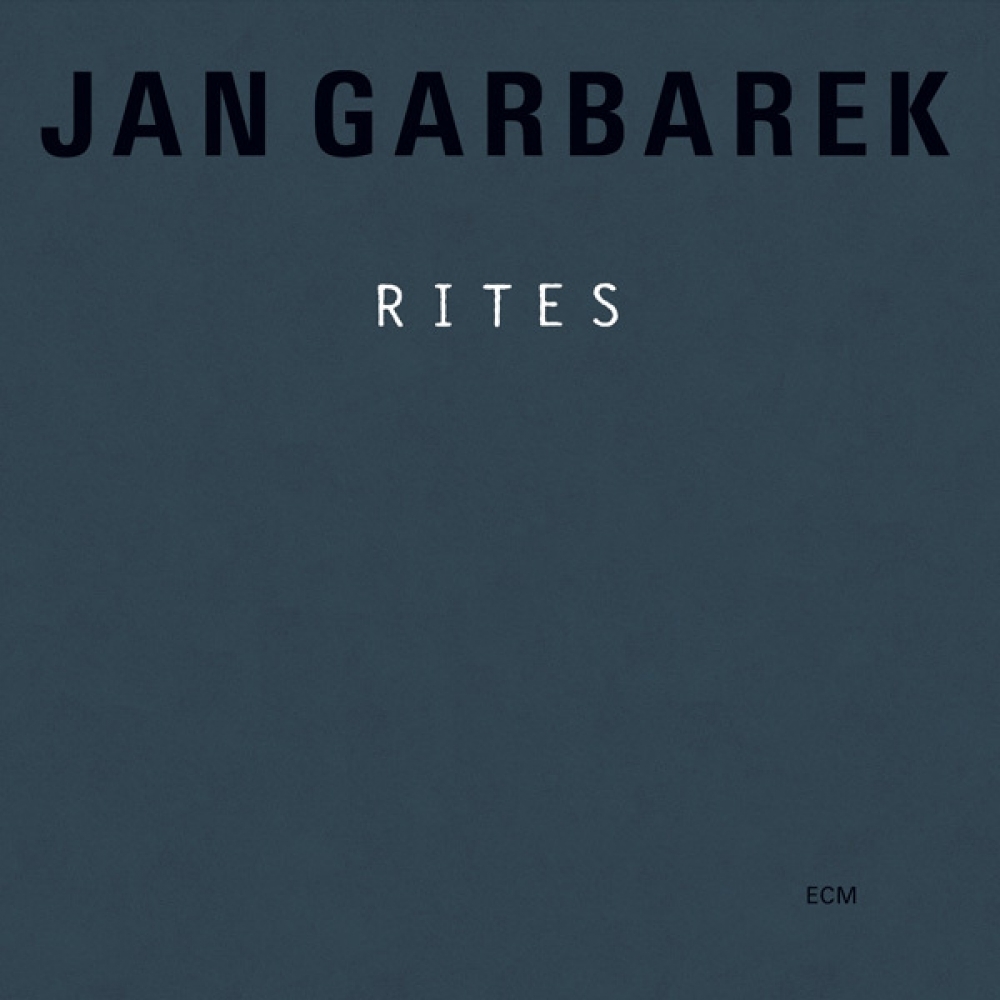
Jan Garbarek: RITES (ECM 1685/86)

RITES

Jan Garbarek
RITES

Jan Garbarek soprano and tenor saxophones, synthesizers, samplers and percussion
Rainer Brüninghaus piano, keyboard
Eberhard Weber bass
Marilyn Mazur drums, percussion
Jansug Kakhidze singer and conductor
Tbilisi Symphony Orchestra
Bugge Wesseltoft additional synthesizer and electronic effects, accordion
Recorded March 1998
Engineer: Jan Erik Kongshaug
Produced by Manfred Eicher

Our light is a voice.
We cut a road for the soul,
for its journey through death.

RITES is without question Jan Garbarek’s magnum opus. If not for the simple fact that it spans one and a half hours over two discs, it mines the deepest ores in the saxophonist-composer’s already vast oeuvre and polishes them just enough to let their colors speak. Every melody is a new stratum, a vein in the rock with a story to tell. The initiation begins with the cinematic title track. Accented by a light dusting of field recordings (taken during Garbarek’s travels in India), it follows a deep bass pulse and warm synths along an aerial view of mountainous terrain…barren, misty, and free. An eagle traverses these plains, the one who has seen it all: from ocean through volcanic eruption to solidification, from inhabitation through migration to desertion. Garbarek’s soprano peals like the lone survivor calling out to that eagle. The call goes unheeded. The eagle carries on, carrying nothing. In desperation, the survivor resigns himself to what must be and what never can. “Where the rivers meet” unspools his wayfaring in reverse, the last hopeful stage of a trek that brought him into the clearing. Like salmon leaping from the water, motives catch a glint of sun before they splash back into river’s flow. In that turgid reflection struggles the natural scope of “Vast plain, clouds,” where bassist Eberhard Weber leaves only the shadows of seedlings by way of drooping, willowed lines.

Garbarek flips back through the pages to his past with a haunting rendition of his quintessential “It’s OK to listen to the gray voice.” Its brushed cymbals and bubbling pianism invite us to look at our own lives anew. Keyboardist Rainer Brüninghaus provides epic touches to “So mild the wind, so meek the water” and “Her wild ways,” both of which give insight into the survivor’s maturation, while “It’s high time” brings us into the night of revelry that embraced his conception, further to the seat of his ancestry. The youthful candor of his discoveries, the newness of his faith, surprises one whose soles still bleed from the long journeys. And so, he bids, “Song, tread lightly,” cradling his own birth in a night vision.

The second disc thus replaces the survivor with a diary of things intangible. Here we come to know the profundity of joy. The memorable balance of “One Ying for every Yang” posits Garbarek and Weber against a shifting synth backdrop of liquid texture, while “Pan” and “Evenly they danced” enable likeminded playfulness. “Malinye” (written by, and offered in memory of, Don Cherry) is a distant carnival, an atmosphere emphasized in “The white clown,” which works its twisted spell in service of a childhood dream.

Two notable cameos come to us in the form of “We are the stars,” featuring the Norwegian youth choir Sølvguttene in a setting of a Passamaquoddy (Native American) poem, and another setting of Galaktion Tabidze’s “The moon over Mtatsminda” by Georgian composer Jansug Kakhidze. A tireless advocate of Giya Kancheli’s music, Kakhidze offers voice and baton in kind, conducting the Tblisi Symphony Orchestra in a heartrending song that hangs on a silver thread. This song is a rite unto itself, a window into cultural understandings that weave themselves into tapestries of experience until one day a tug sets off their colors just so. In light of this, “Last rite” rings prophetically. Though essentially a reprisal of the opening track, it elides the reed. With the survivor’s call now gone, we are left with a choice: implore the passing eagles in our lives for assistance or move on until we find what awaits us.

<< Ketil Bjørnstad/David Darling: Epigraphs (ECM 1684)
>> Veljo Tormis: Litany To Thunder (ECM 1687 NS
)

Ketil Bjørnstad/David Darling: Epigraphs (ECM 1684)

Epigraphs

Epigraphs

Ketil Bjørnstad piano
David Darling cello
Recorded September 1998
Engineer: Jan Erik Kongshaug
Produced by Manfred Eicher

Driven into the
terrain
with the unmistakable track:
grass, written asunder.
–Paul Celan, “The Straitening”

Until Epigraphs, the output from Norwegian pianist Ketil Bjørnstad and American cellist David Darling had been explicitly aquatic, as on The River the duo furthered ideas and atmospheres explored on the quartet project The Sea. Here there is a more grounded sense of architecture. And while some of it remains activated by water, for the most part it observes as it feels: on high ground. It is not a boat but an observatory, which allows the eyes to look freely into the heavens where feet and oars may not progress.

The resonance of the recording takes lantern shape. The “Epigraph” theme is its flame. As such, it flickers without ever losing hold of wick, a moment of dance lost as quickly as it fades. Much of this light comes through in song titles alone. There is enough dawn in “Wakening,” for one, to deny the imminence of dusk, so that the draw of “Silent Dream” moves with almost painful self-awareness. “The Lake” looks back through overtly drenched eyes toward a moving rite of passage. “Gothic,” too, sounds like a seed for The Sea that never sprouted, content in being self-contained. One can almost hear those distant cries, swooning electric between the clouds. In the spirit of balance, Darling digs low in “Upland,” reassuring us that Earth is not forgotten. He slips into the topography of Bjørnstad’s playing like a shoe to a foot, which follows wherever the wind may lead. Only at the end does he leap skyward through the narrow eye of a shooting star.

A smattering of Renaissance material by William Byrd, Orlando Gibbons, Guillaume Dufay, and Gregor Aichinger rounds out the disc and reveals itself as the core of everything that Bjørnstad and Darling have molded together. Byrd’s “Pavane” is replete with such gentility in the artists’ touch that one can almost taste the mythological impulses that nourish them. Aichinger’s “Factus Est Repente” ends with stark hymnal energy. Like the fountain pen that flows as long as there is ink, it fades only when the blood has left its poetry.

Epigraphs further yields two important tracks for both musicians and label. First is “After Celan,” which combines the shape of words and the shape of music. Second is “Song for TKJD,” a profound dip into Darling’s whirlpool of multi-tracked pathos. Here the landscape stretches, pixilates into a mosaic of monochrome. Like a lost traveler from his Cello, it comes to us fully bearded with the eternal youth of its message. It is a wavering tapestry in which Bjørnstad somehow finds purchase in the bones, a ladder of pages in absence of binding.

The quiet power of this music is its emphasis of reality over thought. It rounds the edges of our quotidian activities with intermittent variations, leitmotifs, and signposts. Bjørnstad and Darling share an ability to take something melancholy, even morose, and flood it with light to expose a spectrum in darkest hours. From the past to the present and back again, their path ties a loophole in space and cinches it until the moon closes her monocle.

<< John Abercrombie: Open Land (ECM 1683)
>> Jan Garbarek: RITES (ECM 1685/86
)

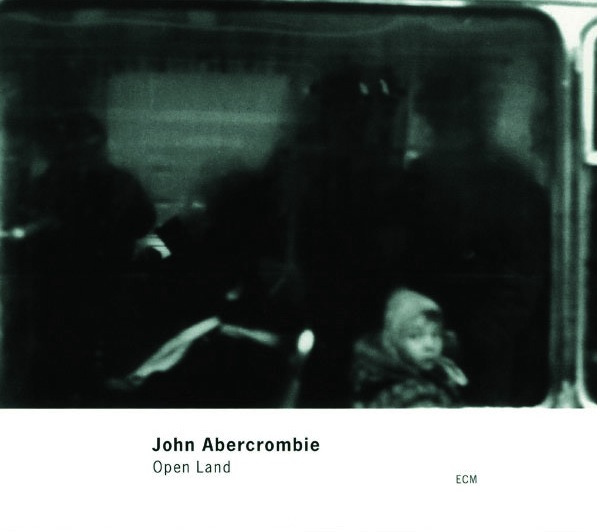
John Abercrombie: Open Land (ECM 1683)

Open Land

John Abercrombie
Open Land

John Abercrombie guitar
Mark Feldman violin
Kenny Wheeler trumpet, flugelhorn
Joe Lovano tenor saxophone
Dan Wall organ
Adam Nussbaum drums
Recorded September 1998 at Avatar Studios, New York
Engineer: James Farber
Produced by Manfred Eicher

After a string of intriguing albums for ECM, John Abercrombie’s organ trio welcomes violinist Mark Feldman, trumpeter Kenny Wheeler, and tenor man Joe Lovano into the fold for Open Land, a leader-penned session of unusual sound colors and depth. Like all great albums, it reveals more with each listen, so that its augmentations grow more inextricably fused as the music becomes more familiar. From the first lilt of Wheeler’s brass in “Just In Tune,” it’s clear that the increased number of musicians hones the band’s spirit at a microscopic level. To be sure, the rising tide spun by Nussbaum and Wall paints smooth expanse across which Abercrombie stretches his webs—a magic formula that served well in While We’re Young, Speak Of The Devil, and Tactics. By the same token, here the mirage falls inward, catching the phosphorescence of every solo in a jar of fireflies. Even in tracks like the far-reaching “Speak Easy,” Abercrombie builds a tower to the sun but unlike Icarus stops short and looks down at the world for a while, quietly musing to itself before regressing into its core. The lush grooves are still there (“Gimme Five”), as are the featurettes (“Little Booker” and “That’s For Sure”), and the horns coalesce beautifully in tracks like “Remember When.”

Yet it is Feldman whose presence pays highest dividends. A heartfelt take on Felix Mendelssohn’s “Spring Song” gives life to the violinist’s quivering mastication, which breathes anew in the crystalline acoustics of Avatar Studios. This track stands out also for the method of its soloing, which finds each musician echoing another in a perfect circle. Wall is particularly effervescent, bouncing from Abercrombie’s chording like a paddle ball. Feldman sandwiches a crunchy guitar center, sharing bursting thematic lines with downright mitochondrial energy. “Free Piece Suit(e)” is, however, the most fascinating little puzzle of this date and thus finds Feldman in his element, jumping from ecstatic cries to chromatic undertows in the blink of a bow. Nestled in Abercrombie’s network of nerves, he sings a life neurotic as if it were poetry to be savored.

<< Franz Schubert: Sonate B-Dur op. posth. D 960 (ECM 1682 NS)
>> Ketil Bjørnstad/David Darling: Epigraphs (ECM 1684
)