of shrieking and sleeping: powerdove live

powerdove live

powerdove
live at Cornell Cinema
December 5, 2013
7:30pm

Turn on the radio in Small Town, Nowhere, and you might just feel the sounds of powerdove emanating from your speakers, if not from your own skin. The brainchild of composer and multi-instrumentalist Annie Lewandowski, powerdove skirts the edges of distant counties even as it erases them in favor of a landscape populated by songs in place of people. Guitarist John Dieterich and Thomas Bonvalet (who forges a distinct percussive palette with various technological and organic accoutrements, including his own body) complete the cybernetic triangle by which the music navigates, corroded yet still trustworthily affecting.

To hear the group’s latest album, do you burn?, in the ugly comfort of your own home is to open a dusty diary of impressions that remain nevertheless crystalline. To hear those songs in the beautiful discomfort of a live setting is to take those pages, leaf by leaf, and fashion from them a bed of kindling. Such was the warmth felt as Annie and company brought their characteristic brand of washboard balladry to Cornell Cinema’s stage on a crisp December night.

Although short in duration, each song was a story brought to chest-piercing fruition by some enviable synergy. Miniatures, yes, but in the way of a white dwarf star. Annie’s presence—willowed in body yet avalanched in mind—was the eye of the supernova; John’s insightful picking wielded gaseous filaments, like the webs that hold every corner of a house together in semblance of memory; leaving Thomas to connect the evening’s constellatory dots. The latter’s apparatuses—which included contact mics, harmonica innards, mouth organ, and even a light-activated banjo—were only nominally technologic. Whether the distorted desk bell at his foot (not a bid for help but a signal to the helpless) or the two metronomes phasing in “Easter Story” (off 2011’s be mine), his periphery sang apart, for it was clear that powerdove was plugged into more than just amps. These were songs written by means of and through a body steepled by childhood, broken like bread along fault lines of the here and now.

Like Annie herself, who started offstage and coalesced into sight only when the second song (“California”) commenced, the music was docked in immediate reality but tangled itself in seafaring dreams. Her enunciation was as convex as the words were concave, all touched to flame by the spell of her accordion. From a blur of cacti and rustling sleeping bags, she emerged with bits of wisdom, unadorned. These took on the color of something bloody in her bellows—nothing macabre but fleshy, pliant. There was also in the words a naturalist slant. A hollowed-out willow could become the dance floor of an entire fungal congregation. With moss for a canopy and pulp for refreshment, the party mingled until no single appendage was discernible from the next.

The performance ended with three videos (these for “Under Awnings,” “Do You Burn?” and “Wandering Jew”), each of which plunged into a crumbling imaginary with vivid eye-breaks and uneven seams: the American dream sinking into its own cavity until only a single tooth remained. And so, filing back out into the chill, spurred by a click track of the soul, we the concertgoers knew the story would continue on only in the mouth’s void.

Mariinsky Theatre Orchestra: A Welcome Invitation

Mariinsky Theatre Orchestra
Ignat Solzhenitsyn, Conductor
October 7, 2013
Bailey Hall, Cornell University
8:00 pm

The Mariinsky Theatre Orchestra knows how to fill a hall both with people and with sound. Although it boasts a long history, during Monday night’s performance all one could think about were the precious moments at hand. Guest conductor Ignat Solzhenitsyn held the podium like a controlled tempest, injecting just the sort of energy expected of the all-Russian program. The palette at his disposal was accordingly rich with contrast. Smooth yet sometimes-rustic strings meshed with a superb wind section (the true litmus test of any such orchestra), while clarion brass mediated between the two with equal shares of rough and smooth.

Indeed, brass was foremost on the menu in the appetizer: Night on Bald Mountain. Modest Mussorgsky’s 1867 symphonic poem, the first of two in the concert’s first half, was originally titled St. John’s Night on the Bare Mountain and intended to evoke a gathering of witches on that same pagan holiday. Performed in full only posthumously, it was a relative outlier on the concert stage until it famously appeared in Disney’s Fantasia during the penultimate scene of unrequited souls. Such associations remain glued to the piece’s architecture and only served to heighten the opportunity to experience it in person, allowing concertgoers to indulge in their own associations. Its spiraling brilliance and instantly recognizable theme shook Bailey Hall to its core with all the threat of the tornado watch that had been hovering over Ithaca that same afternoon. It was tempting to hold fast to the piece’s backstory, but as the music went on, its motifs growing more distorted with every iteration, it begged to be taken on its own terms.

The same could be said about the rendition of Sergei Rachmaninoff’s Isle of the Dead. Penned in 1909, it was inspired by an engraved reproduction of Arnold Böcklin’s eponymous 1886 painting. The result was a dreamlike concert experience. What became obvious hearing it live, and in such capable hands, was that Rachmaninoff had successfully added a Z-axis of time to the painting’s X and Y of image and atmosphere. The end effect was, despite the dynamic curve, quiet resignation. One must know unrest, it seemed to say, in order to seek rest eternal.

The concert’s pre-intermission programming could not have been accidental, for Rachmaninoff himself conducted the 1909 world premiere of Isle of the Dead in Moscow alongside his Second Symphony and Mussorgsky’s Night on Bald Mountain. More novel, perhaps, was pairing these with the Fifth Symphony (1937) of Dmitri Shostakovich. One can hardly walk through writings about Shostakovich without stepping in the oppressive regime under which he lived. To be sure, he completed his Fifth at the peak of Stalinist Terror, thereby marking his return to the concert hall after a period of creative lockdown (Stalin had denounced the composer as a kink in the machine of Soviet spirit). Musicologists continue to hone from these details a dual-edged sword: Was Shostakovich being patriotic or snide? Does the piece leave us with hope or cynicism?

Yet hearing it “cold,” as it were, one begins to appreciate the variety of signatures in the opening Moderato alone. From the call-and-response of its awakening to its massive punctuation marks toward closure, there was much to admire in being face to face with this symphony. The MTO heightened the Mahlerian qualities of the second movement, a caricature of waltzes boasting many thematic handoffs. The third movement—forever one of the deepest statements in all of 20th century music—was all the more a requiem. It spun a false security by means of string-heavy, cornucopian pathos and haunting tremolos before the concluding Allegro burst onto the scene like a frantic mother in search of a lost child. With sweeping panache and urgency, it brought about triumph with sarcastic grandeur.

Whatever anyone might think about the politics surrounding and embedded in Shostakovich’s score, the MTO reminded listeners that such music is ultimately about the tension of extremes. One must therefore take caution in folding so much moroseness into the batter of Russian music. Such a proposition, of course, softens when we learn that even Igor Stravinsky called Rachmaninoff “six feet two inches of Russian gloom,” but anecdotal and circumstantial evidence do not a lasting message make. Lost in all of this is the music itself, sitting like Rodin’s thinker on an unwavering question: How long before a piece of music can be divorced from the context of its creation and take on a life of its own? Regardless of the answer, this performance was further proof that the power of orchestral music lies not in the strength of its ideological underpinnings, but in the immediacy of its invitation.

(See this article as it originally appeared in the Cornell Daily Sun.)

Proverb Trio: Steroidal Simpatico

Proverb Trio

Dafnis Prieto’s Proverb Trio
September 26, 2013
Bailey Hall, Cornell University
8:00 pm

Dafnis Prieto’s Proverb Trio has walked the earth as such since 2009, but one might as well count the past four twelve-moon cycles in dog years: such is the telepathy developed by percussionist Prieto, singer-emcee Kokayi, and keyboardist Jason Lindner. The Cuban-born Prieto and D.C.-based Kokayi first came together in 2004, after which they explored their possibilities as a duo before recruiting Lindner. If the performance at Cornell’s Bailey Hall was any indication, the results must have been explosive.

PT’s entirely improvised experience means what you hear is what you get, and what you get you’ll never hear again. “Generative” is the operative word. These three men share a spark, a molecule of springboard action waiting to bounce. It’s as if they’d been beamed aboard, genetically preloaded with full compositions sleeping in their veins.

Prieto is both heart and soul of the group. Sitting behind a kit as compact as it is colorful, and before a concentrated, engaged crowd, he opened by floating a martial snare down a babbling electronic brook, quickly recalibrated to reflect an inherent combustion. Thus the pattern of exchange, fading in and out until a breakbeat hit the air. And as Kokayi dropped a political Spirograph from his lips, Prieto rode the rim across Lindner’s grander carpet into an hour and a half of chain reactions.

Attempting to list every genre activated would be like counting the stars in the Milky Way. Indeed, the hall was a galaxy halved, faces concentrated front and center and scattering toward the back walls and balcony. From tender infusions of electric piano and indie blues, quasi-reggae vibes to incendiary hi-hat swing, video game jazz to space jams: everything was fair game in PT’s tapas.

Kokayi bled the thickest chips across this poker table. Balancing Bob Marley dialectics with Gift of Gab pyrotechnics, he swung low from a high trapeze. He was, in a sense, another drum, feeding off (and into) Prieto’s locomotion against psychedelic Moog accents. The latter’s alone time cast a S.E.T.I. signal like a fishing line into the nebular pond until it got a bite, freeing the soul of the room through stargate after stargate.

Not all was cosmic dancing, for Kokayi unleashed his fair share of secular laughter. Between his riff on the perils of ALL CAPS texting (“Who knows what syntax is when you’re spelling out a letter with a number?”) and his spontaneous public service announcement as Prieto repaired a broken bass drum, his verbal multi-verse was a tangle of mother tongues and motherlands. Humming through his urban konnakol was an implicit critique of human interaction (“No real I to I…”), shelter to a handful of solid grooves from his bandmates. Prieto’s wasn’t so much a question of his obvious virtuosity. Rather, it was an ability to find the pocket and stretch it to the fraying point, to read signs of variety into every moment, that impressed. Whether brushing through Lindner’s birdsongs or warping the night like a reflected moon, he was judge, jury, and executioner of every cell that divided on stage. And in the encore’s build from atom to molecule, he guided a heavenward craft from the shambles.

The trio lives up to its name, for a proverb is that which has become so fully integrated into the human landscape that its origin is unknown. So it is with they who live in the moment. In a brief address between songs, Prieto said as much when he acknowledged the open circuit of their unplanned approach and welcomed all of us in attendance as an integral part of that circuit. We were the sounding boxes for their craft, and these words the mental dribble of but one among them.

So ends my freestyle.

Laurie Anderson: An Instrument Unto Herself

Laurie

Laurie Anderson
State Theatre (Ithaca, New York)
September 21, 2013
8:00 pm

Laurie Anderson has been called many things: raconteur of the mundane, pop culture critic, electronics wizard, musician and composer. Yet, do not be mistaken: She is not a performance artist, but an artist of performance. Having placed some of the most harrowing social turns of the past four decades under her microscope, Anderson proves that individuals are not the constants of historical change. Rather, history attains a cyclical consistency, the agents and subjects of which are anomalies. The twenty-first century stands before us like a divining pool into which she cannot help but cast her soothing critiques to see how our reflections change. Her crafting of words thus reveals a cinematic imagination in the truest sense. As she once confessed in an interview: “I try to make records that are cinematic, movies that are musical.” The seen and the heard come from the same place.

Anderson is no stranger to central/upstate New York. Her stage debut, following a string of formative gallery exhibitions and writings on art, took place a stone’s throw away in Rochester where, in 1972, she premiered her outdoor symphony for car horns in The Afternoon of Automotive Transmission. Since then, her interest in the relationships between matter and space — specifically violin and voice, self and projection, microphone and venue — has come to define her role as a darling of the underground. Press surrounding Anderson has been rife with such characterizations, all the while ignoring the fact that she has been working above ground from the start. Firmly embedded in the goings on of society at large, her instincts have borne idiosyncratic approaches to language, multimedia  and sampling. Despite these innovations, she boasts no avant-garde badge — she is content to wander nomadically, solitarily, dropping crumbs for the weary.

As the title of her seminal 1982 record Big Science suggests, Anderson is no stranger to her right brain, a point invoked before Saturday night’s performance of her recent multimedia work, Dirtday! at The State Theatre. In his introduction, Museum of the Earth director Warren D. Allmon stressed the interconnectedness of art and science and championed Anderson for skirting the boundary between the two and softening that boundary along the way. That said, as the opening washes of her electric violin filled the hall, clearly something bigger than science was happening — an overt awareness of, and engagement with, the broader contexts in which her data streams multiply. Concertgoers presumably saw bits of themselves in those streams, swimming against the current in an effort to stand out. In this way, Anderson’s work lacks a clear center and allows listeners to anchor its assembly differently every time, and to be involved in its eternal unfolding.

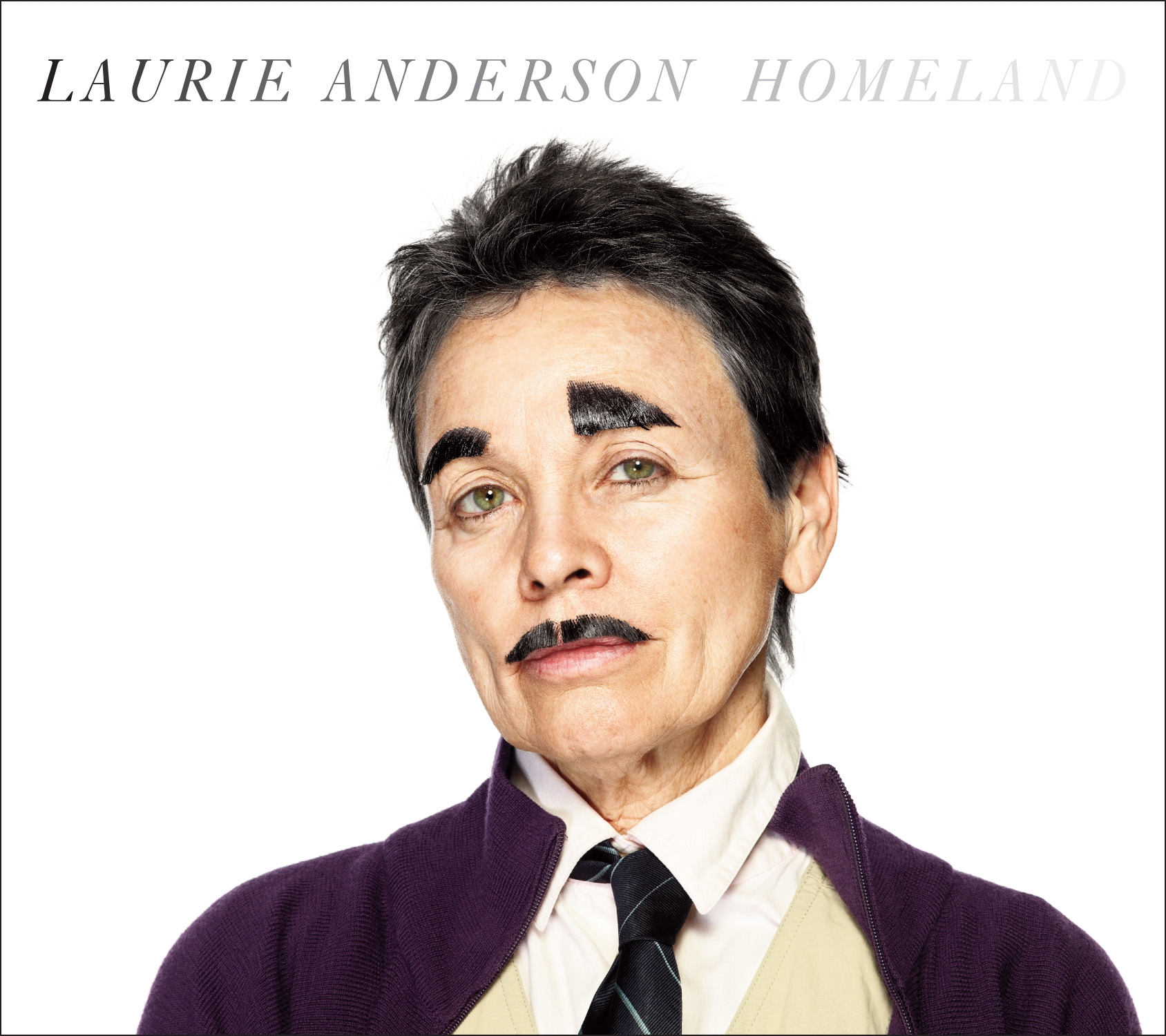
Fascinating though Anderson’s musical details may be, more so are the here and now of the messages in which she is enmeshed, and the futures bought and sold along her avenues of thought. For the latter image we can thank Fenway Bergamot, the male alter ego Anderson has long cultivated on stage and in the studio. To achieve the transformation to Bergamot, she bends the pitch of her voice by electronic means to that of a masculine register in a process she calls “audio drag.” It is not an adoption of a character for her, but a coming into being (the inflections and pauses of that voice are distinctly her own). Over the years, Mr. Bergamot has grown into a less confident observer, one who questions the self by questioning others. The chisel of time has chipped away at his resolve, leaving him world-weary and mistrustful. His memories are fuzzier, his dreams murkier than ever before. As an integral narrator of the evening, he was also a harbinger of memory, his voice creaking like the floorboards in a house of regret.

Fenway
Fenway Bergamot, as depicted on the cover of Homeland

Topics covered in Saturday night’s show were even more diverse than the vocal registers Anderson utilized to articulate them. Everything from SIDS to New Jersey tent cities, from governmental scare tactics to reflections on Darwinian anxiety — even a video appearance by her artistically inclined Rat Terrier, Lolabelle, was fair game. Couched in a lush sound mix of distant thunders, beats and loops, the “everydayness” of her philosophies breathed earthiness into the most cosmic moments. Impossible childhood dreams shared the air with an array of electronic gadgetry, each unit a means to a beginning. Passages of analogue warmth butted up against sharper denouements, broken intermittently by her bow. The violin was at once her empty cup and an overflowing vessel, an omniscient presence that hovered at the edge of total integration with its performer’s body — a fantasy made reality when toward the end of the show Anderson placed a pillow speaker into her mouth and turned herself into a live instrument.

In her magnum opus United States, Anderson de-scribes a night drive, concluding, “Eventually it starts to get light and you look out and you realize you have absolutely no idea where you are.” It’s a haunting image, a quintessential moment of confusion in her archive. And yet, sitting there in Ithaca’s historic State Theatre in a sea of flesh, gray matter and mutual regard, it was difficult to imagine ever becoming lost in a world where true solitude has become a chimera. Bathed in soundscapes as affecting as they were constructed, we knew exactly where we were.

(See this article as it originally appeared in the Cornell Daily Sun.)

A Dance of Strings: Sweden’s Premier Chamber Orchestra Takes on Beethoven and Mozart

Swedish Chamber Orchestra
Garrick Ohlsson piano
Thomas Dausgaard conductor
Bailey Hall, Cornell University
April 26, 2013
8:00 pm

SCO

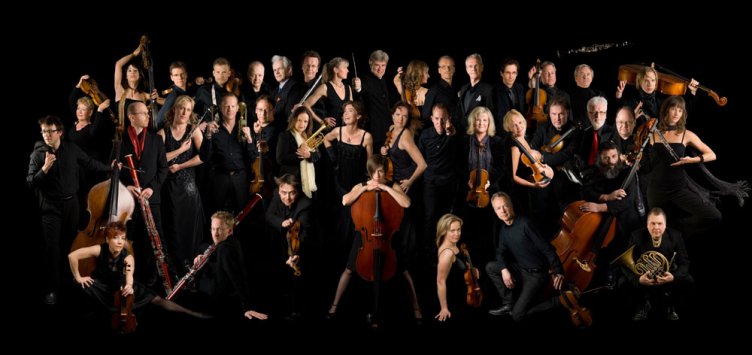
There is nothing like a heaping helping of Beethoven to cap off a prodigious concert season. That was just what we got on Friday night when the Swedish Chamber Orchestra, under the baton of Thomas Dausgaard, took to the Bailey Hall stage. Between the sweet concentrate of the Coriolan Overture and the unprecedented volume of the Third Symphony, there was much to savor. Like the spring weather that has finally waved its magic wand over the fertile Ithacan landscape, it was a veritable flowering of activity.

The overture revealed an orchestra blessed with just the panache and dynamic control required of any Beethoven interpreter. The piece contains two themes, one in C minor (representing the tenacity of its eponymous protagonist, an ancient Roman leader) and the other in E-flat major (representing the forlorn mother who shuns his bloodlust). The latter theme set the tone for the night, not only in spirit but also because the remaining works on the program followed the same key. The smoothness of execution was top-flight, achieving heartrending contrast between tense string arpeggios and recurring cinematic sweeps of battle.

In addition to superb control of dynamics and tempi, the players of the SCO found delightful traction in Dausgaard’s programming. In this regard, closing with the unwieldy “Eroica” symphony was a reflective choice. Not only did it embolden the exploits of Coriolanus with its martial overtones (the piece originally bore dedication to Napoleon Bonaparte), but it also transcended its political wrapping into the variegated gifts within. Long even for its time, Eroica feels even heftier in this age of quick sound bytes.

Notable are the three French horns, whose golden blasts resolve a brooding funeral march in the second movement and whose hunting calls add punch to an already agile scherzo in the third. Yet it was the first and closing movements that honed the orchestra’s deeper talents. Following intermission, Dausgaard (who conducted the symphony without a score) was barely on the podium before a swing of his arms threw us headlong into a storm of intense, restrained energy. Moving between the ethereal and the worldly at the flick of a bow, the strings never strayed into melodrama, and the wind section maintained admirable footing throughout.

Ohlsson

Yet the concert found its brightest star in Garrick Ohlsson, whose appearance spiced the meat of this classical sandwich at program center. A student of the late Claudio Arrau, the White Plains, New York native has since grown into one of our generation’s most elegant pianists. His poise and range at the keyboard were immediately apparent as he engaged the SCO in the exchange that opens Mozart’s Piano Concerto No. 9. Written when the composer was just 21 years old, it bears the subtitle “Jenamy,” so named for the daughter of a dancer whom Mozart befriended in 1773. Sure enough, dance was just what Ohlsson’s did as they navigated the tireless runs and trills (a highlight of his playing) so profuse throughout the opening Allegro. The contrast between his gritty left hand and airy right in the cadenzas was nothing short of remarkable. After the almost funereal sublimations of the Andantino, the concluding Rondo made for a flourish to remember. That Albert Einstein once referred to this piece as “Mozart’s Eroica” was no coincidence. Its scope and focus were comparably arranged. Both made for exciting performances.

“These days we like everything to be local,” said Ohlsson, who addressed the audience by way of pouring a sonic aperitif to the hefty concerto. He lamented not knowing anything by an Ithacan composer, but settled on The White Peacock by Charles Griffes (1884-1920) from nearby Elmira. Perhaps his most well known piece, its Gershwin-like swirls and touches of French impressionism made for a competent and programmatic detour. As if to carry over the feeling of dancing, the SCO closed the concert properly with “Wenn so lind dein Auge mir” from Brahms’s beloved Liebeslieder Waltzes. And with that, we were taken.

(See this article as it originally appeared in the Cornell Daily Sun.)

A Little Bit Wiser: Jason and Alicia Hall Moran

Jason Moran piano
Alicia Hall Moran voice
Barnes Hall, Cornell University
April 11, 2013
8:00 pm

JAHM

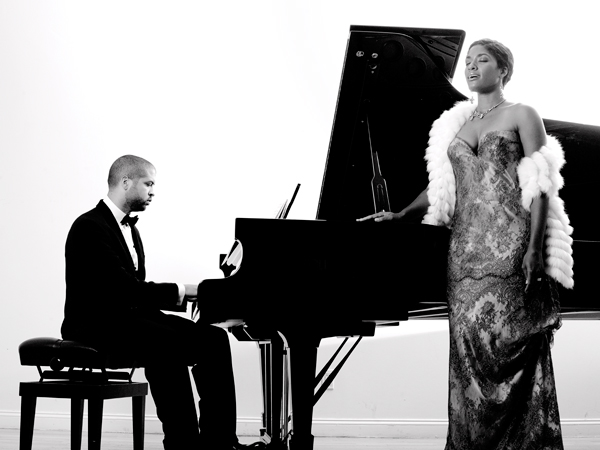
In January of 2012, pianist Jason Moran and his wife, mezzo-soprano Alicia Hall Moran, were slated to perform on Cornell University’s intimate Barnes Hall stage. A Broadway gig prevented Alicia from being able to appear and bassist Dave Holland was kind enough to substitute. The result was an unforgettable evening of music. Yet I always wondered what spells the original billing might have cast. At last, some 15 months later, that magic was realized. There was something about the way that Jason opened with his solo rendition of Fats Waller’s “Honeysuckle Rose” that assured us we were in for something special. His flourishes were straight from the heart, not the least bit rhetorical. He took those classic threads and re-spun them: same colors, different weave. It was the first of a handful of solo pieces, which also included John Scofield’s “Fat Lip” (a jauntier affair, coated in silver and wine) and some original music written for Alonzo King. The latter revealed the gentler side of an artist whose panache lays it all on the table: diamonds, clubs, hearts, and spades. Or maybe it was the way in which Lucille Clifton’s “blessing the boats” tumbled from Alicia’s lips. A poetess in her own right, she took to the platform fully prepared for the power of love in a world riddled with hindrances. Her resonance filled the room, sharing the rafters with spiders’ webs and history. Like Clifton’s timeless words, she manifested a fully embodied style, her pulse audible during sustained notes.

may the tide that is entering even now the lip of our understanding carry you out beyond the face of fear

Alicia used these interludes as doorways to personal reflection. Not only because she wrote the melodies, but also because in her was a storyteller whose loom was strung with moonbeams. By the end of the night we knew how she and Jason had met and fallen into oneness, how music had called to them as equals and set their phasers to shine. Their autobiographical transparency cut the fourth wall like butter.

may you kiss the wind then turn from it certain that it will love your back

A soulful rendition of a Stevie Wonder classic, endearingly altered as “I Was Made to Love Him,” set off a string of standards. Of these, “My Funny Valentine” stood out for its rasp, traversing a bridge of good fortune into a swinging “Summertime.” Leonard Bernstein’s “Big Stuff” was the icing on an already optimistic cake, boxed and tied with a bow.

may you open your eyes to water water waving forever

Two pieces by Jason from a commissioned suite based on hymns of the quilters at Gee’s Bend, Alabama were the reigning portion of the set. “Here Am I” was downright transcendent, melding supplications into sustained, train-like chords from the keys. “People are more important than things,” Alicia sang, and we could feel that theory made real in practice. This was followed by “You Ain’t Got but One Life to Live, You Better take Your Time,” the notes of which rubbed up against one another as Alicia looked us all in the eye and straight into our hearts. She walked offstage, her voice still carrying before boomeranging back to encore with Duke Ellington’s “I Like the Sunrise.” A glint of light at the end of this long winter, it glowed until we were warmed.

and may you in your innocence sail through this to that

By this point, we had experienced something more than a show. It was a life lesson. Thus spoken and sung for, we carried snatches of post-concert conversation in our pockets out into a maze of streetlights, strung to the gills with joy. Carry on, butterflies, carry on.

All 4 One: The Anonymous 4 Sparkle at Sage Chapel

Anonymous 4
Sage Chapel, Cornell University
April 5, 2013
8:00 pm

Anonymous 4

Although the Anonymous 4 have been singing for over 25 years, to hear them is to experience what feels like centuries more. The current lineup of this all-female vocal quartet (two of its original members have moved on to other projects) consists of Ruth Cunningham, Marsha Genensky, Susan Hellauer, and Jacqueline Horner-Kwiatek, who together presented “Marie-Marion: Motets & Songs from 13th-century France” to a packed Sage Chapel audience last Friday night. Motets formed the bulk of the program, each built around Old French and occasionally Latin texts. The latter were mostly dedicated to Marie (the Virgin Mary), who along with an earthly counterpart, Marion, was the main protagonist of the evening’s dedications. The presence of both Marie and Marion made for a creative pastiche of the divine and amorous. The singers augmented this with a selection of plainchant standards and solo renditions of the trouvère (troubadour) love songs to which the grander settings often alluded.

Fans of the Anonymous 4 will be familiar with their classic Love’s Illusion. While in that program the focus was on courtly love, here a deft mash-up of sacred and secular themes formed the backbone of a dramatic and sometimes-prurient corpus. The motets were complex in their own right, with two or three voices singing from entirely separate texts over a wordless “tenor” line. The selections came from the Montpellier Codex, compiled in the south of France circa 1300. Paring its 315 motets down to an hour-long “best of” was certainly no easy task, but the end result was nonetheless intuitive and sure.

The flowing nature of the program was such that parsing of individual pieces seemed as unnecessary then as it does now. Moods ranged from forlorn to joyful, but were always flavorsome. If any distinction can be made, it is that the most secular passages were often also the most restless. Staggered rhythms and the occasional unexpected change in pitch attested to the singers’ sparkle of execution amid a landscape of maidens, shepherds, and holy visions.

The concert culminated in a final juxtaposition of the two “Marys,” who came to represent the fullness of consciousness, the depth and shallowness of human concern in the forest of life. For indeed, the Anonymous 4 achieved a verdant sound. Their blends, at moments uncanny, allowed single voices to rise and fall with the tide, so that the ringing qualities of each could shine through. Of those qualities we heard plenty in the solo chansons: Cunningham’s roundedness; Hellauer’s sweeter, raspier blush; Genensky’s sharper, earthy tone; and Horner-Kwiatek’s fair, supple lilt. In each was the flutter of a genuine medieval heart.

We might compare these ancient settings to contemporary popular songs, for in them were brief, simple introductions, engaging riffs and satisfying conclusions. That being said, we must remember that the motets especially were considered avant-garde for the time(s) in which they were composed. Either way, it is refreshing to know that one can still be privy to such splendor in concert, navigating its mazes as if they were our own, held only to the standard of our adoration, unadorned. Keeping true to their name, the talented songstresses of Anonymous 4 presented melodies without discernible authors, a dynamic that might seem as distant from us in this age of intellectual property as the Old French in which much of this music was sung. Whatever the language, we could not help but be fascinated.

(See this article as it originally appeared in The Cornell Daily Sun.)

Serving the Music: Going Astral with Charles Lloyd

Charles Lloyd New Quartet and Friends
with Special Guest Maria Farantouri
March 15, 2013
7:00 pm
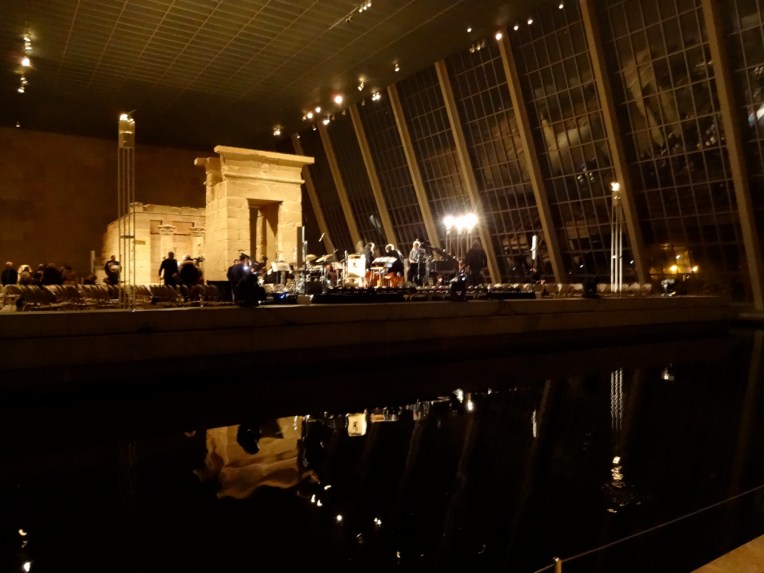
Met Museum, NYC

Charles Lloyd tenor saxophone, flute, tárogató
Maria Farantouri voice
Alicia Hall Moran voice
Jason Moran piano
Reuben Rogers bass
Eric Harland drums
Socratis Sinopoulos lyra

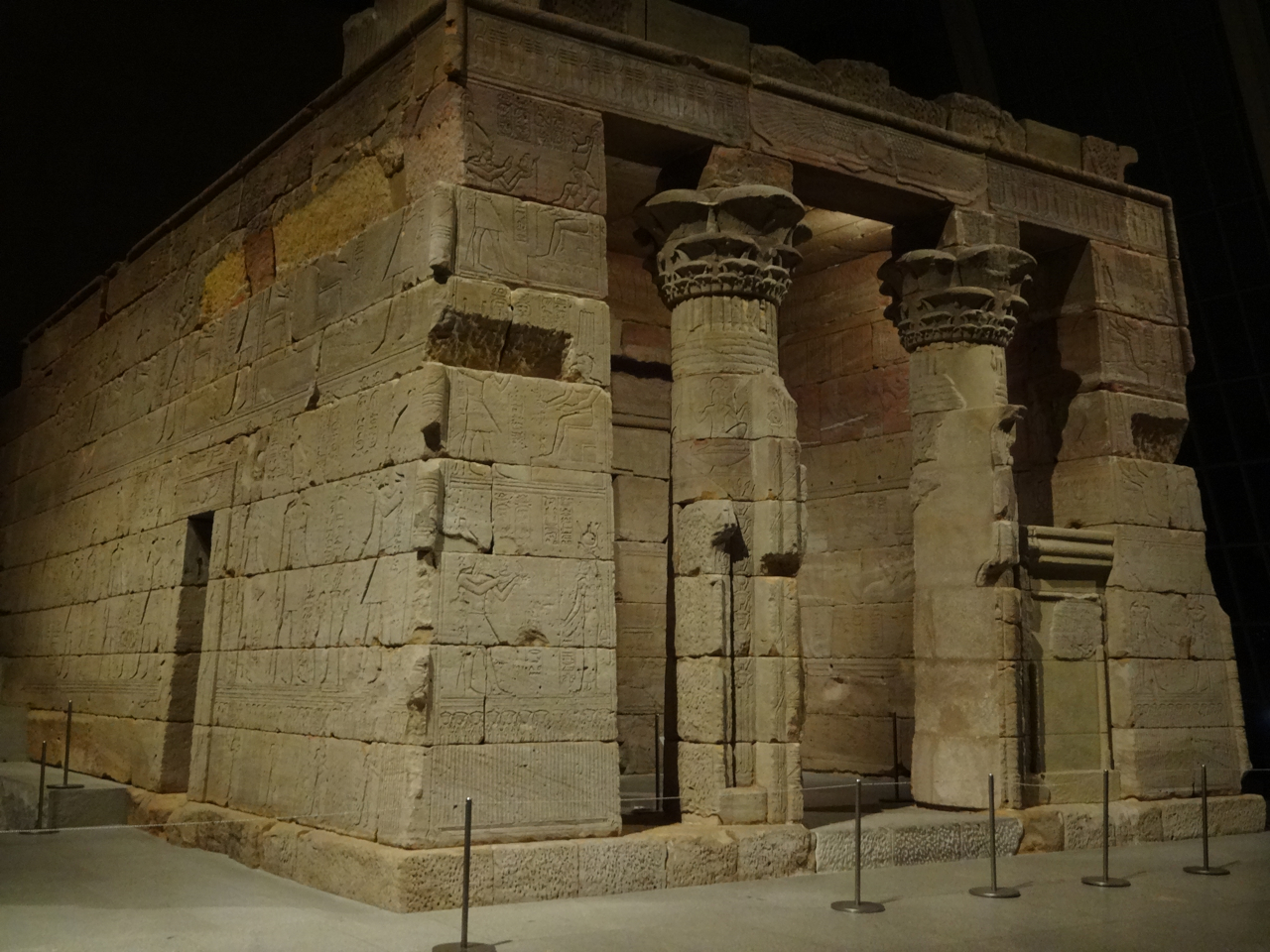
Temple of Dendur

Blessed. That was how Charles Lloyd expressed what it felt like to stand before the Temple of Dendur at New York’s Metropolitan Museum, nodding to the fortune of making a life in music, that torch of never-ending flame. The celebration was nominally in honor of Lloyd’s 75th birthday. Spiritually, however, it was in celebration of all creation, offering as it did the greatest gift of all: beauty. Like the Egyptian temple itself, each tune was transported and rebuilt, stone by stone, until its architecture stood by whim of its own gravity, channeling an energy that flows through rivers wide and narrow. Lloyd’s fingers thirsted for that water, gathering its holistic power in the vessel of his horn until the particles sang.

Strayhorn and Ellington loomed intimate in his opening gambit with Jason Moran at the keys. That unmistakable tenor filled a reverberant space with soul, soul, and more soul. Every run was a flutter of the heart, every split high note a distant supernova. Moran’s quiet flow brought the sound homeward, chiming the ashen bells of recollection until their surfaces glistened afresh. He brought with him a jagged array, sewing ragtime shadows to his Peter Pan feet and running through patchwork fields.

The duo’s brief exhale of “Abide With Me” welcomed the rhythm section to the stage. With a drum roll and a splash the band jumped into raging waters. So began the New Quartet portion of the evening, wherein fire and ice embraced their differences and found peace in aquatic compromise. A solo from bassist Reuben Rogers drew a sidewinder’s path in the dunes, turning heat into nourishment. Lloyd and his band not only rode the train, but also laid the tracks, stoked the fire, and wound through glowing thematic tunnels. Drummer Eric Harland left an ephemeral trail of steam, soloing with the strength of a thousand signal flares. Rogers further pinholed the darkness with constellations to the tune of Moran’s twenty-fingered chording.

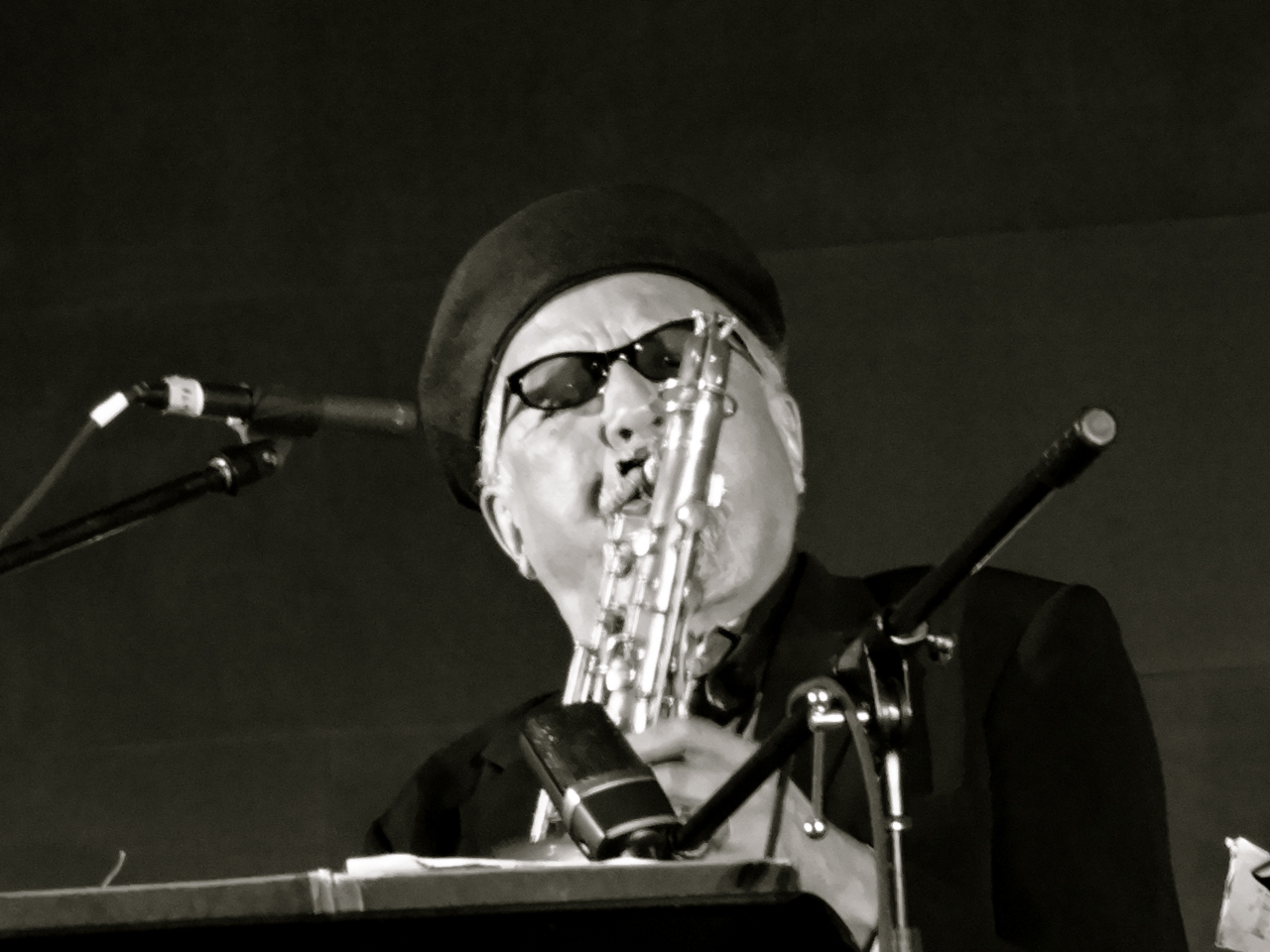
From behind his sleek shades, Lloyd turned day into night with every lick, keeping the sandman at bay and digging low only occasionally for effect. It was in this context that his gentle dream-weaving over a Saharan beat provided as yielding a surface as was needed to welcome Alicia Hall Moran into the mix for a spirited “Go Down Moses.” With its serpentine refrain of “Let my people go,” her operatic contralto painted the sheltering sky with prophecy. A gentle cascade from Moran trickled into Lloyd’s “New Anthem,” moving through rhapsodic changes reminiscent of Barber’s Knoxville: Summer of 1915. Fly, songbird, fly.

Yet it was Greek singer Maria Farantouri who spread the richest wings of the concert. Joined by lyra master Socratis Sinopoulos, she assumed a vast presence in her rendition of the Greek Suite from the Athens Concert album. A lone improvisation from Sinopoulos served to emphasize the holiness of the space. Farantouri was the twilight itself, an Adriatic dream realized before the ears. Lloyd and Farantouri always seem to bring out the best in each other, and on this stage the vibe was no different. Traveling down the River Styx and back again, Moran appending thoughtful diacritics along the way, the group inscribed its journey with nary a backward glance. Harland wound a fantastical roll to whisper strength, the lyra tracing a perfect horizon line.

After this two-hour tour de force, Farantouri lightened the mood by singing “Happy Birthday” to Lloyd before encoring with the joyous “Yanni Mou,” thus signing off on a living résumé of the saxophonist’s legacy and influence.

Lloyd live

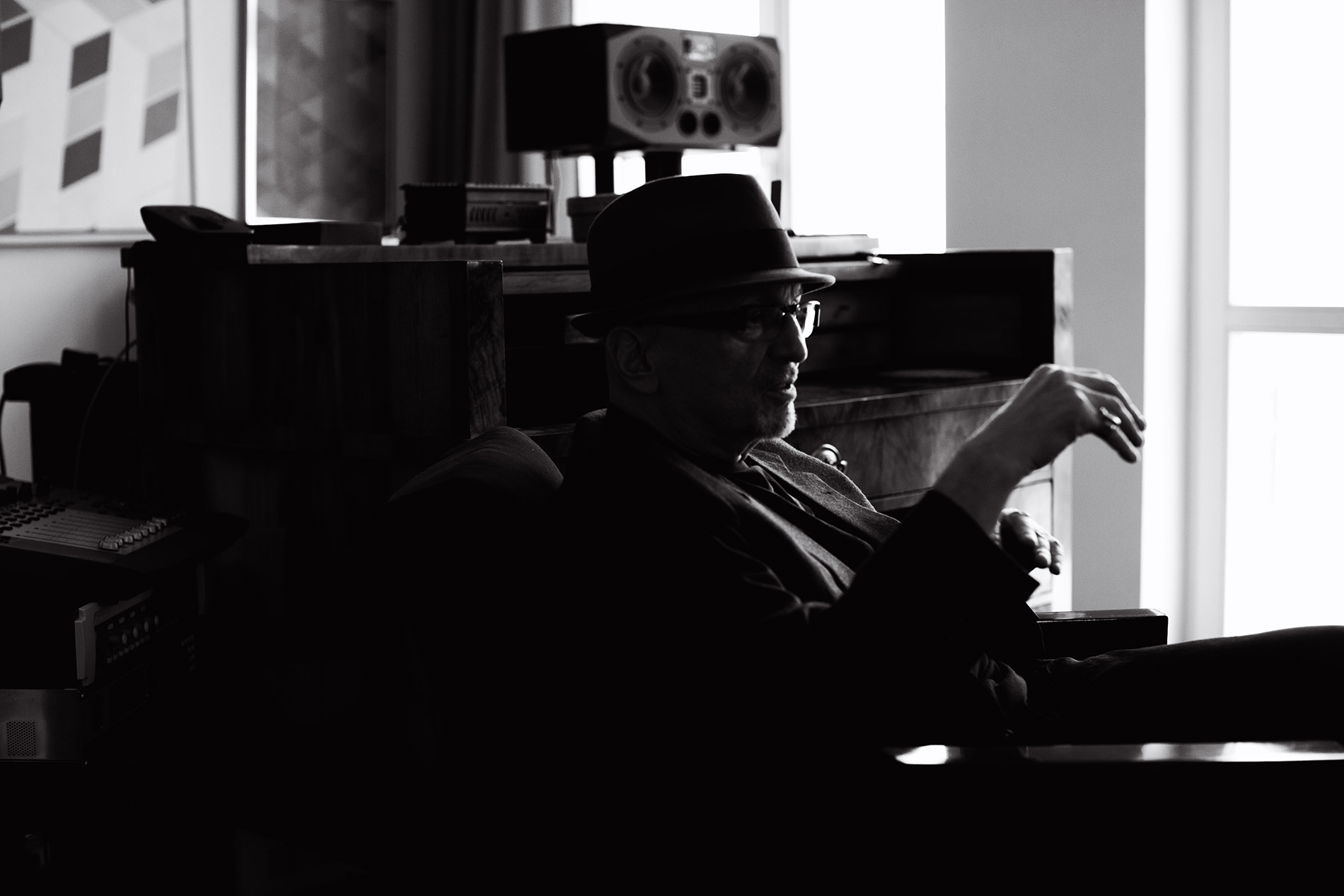
The morning following the concert found me well rested and in Lloyd’s hotel room, where the star of the hour was anything but. “After I play,” he explained, “I’m exhausted but exhilarated, so I can’t go to sleep. Two, three, four, five in the morning I go to sleep, and now I’ve got to recuperate.” Being the inquisitive soul that he is, he first took more interest in me, my wife, and our new son, asking about our family histories, how we met, the values that drew us together. By the time I got around to my brief questions, I forewent those I’d written down and went with the flow. I asked first about Hagar’s Song, for I’d noticed after listening to the album a few times, and having just heard him and Jason start the concert with some of its material, that a feeling of history far beyond music was coming through. “I can’t get over someone taking this 10-year-old child and wrenching her from her parents and then impregnating the daughter at 14,” Lloyd responded, referring to the great-great-grandmother to whom the album is dedicated, and whose history of enslavement only recently became clear to him. “It’s sick. But here’s the thing about that recording. It’s all part of that fabric. I don’t know why people are trying to separate them. ‘Why did you insert this into these beautiful ballads?’ Some people have asked me that.”

Well, the real question is: How do you take it out?

Right. That came to me, that information, and it was like a wall for me.

What impressed me—and I think this bears testament to the power of music, and the human spirit more broadly—is that an undeniable core of joy comes out in the music. And I’m wondering if that’s something you saw in her spirit as having been passed down through the story. She survived, she gave that feeling…

She’s obviously a beautiful soul. All I can do is reinvent the world. My thing is about beauty. There’s all that ugliness out there. I’m trying to wipe it out with beauty. I’ve always been trying to do that. I can’t change my stripes now. I’m an idealist and dreamer. My dreams are still bigger than my memories. Maybe that’s why I don’t succumb to age or polarities, lines of demarcation…. I’m not the one for that stuff. Obviously, to me she’s very beautiful and I wanted to enfold that. I started out with Strayhorn’s “Pretty Girl” because there was this flower and I don’t know how to not do what I do. Things just happen along the way. These things, they’re all my world.

Did you feel anything different this time around recording a duo album with Jason as opposed to the quartet, or is it all part of the same fabric?

Yeah, you’re naked. We made that sound. It’s a homemade pancake.

Can you talk more about that sound and how your relationship with ECM has built it?

I like the idea of being in one place for a long time and developing something. When I recorded Fish Out Of Water, I just went in and played. Some of the big companies have come to me, but I have a home here. I always knew that ECM made great sound, hermetically sealed, but I need what I need, because I’m a sound seeker.

Maybe sound seeks you as well.

What you’re looking for is looking for you.

On that premature note, it was time for us to go. Before leaving the hotel room, subject to whatever might be looking for us, my wife and I said our goodbyes, but not before Lloyd laid a hand on my son and said a prayer for him. The silent wonder in the boy’s eyes as life began to take shape in them was as inspirational as anything we’d heard the night before. Blessed indeed.

(To watch the concert in full, click here.)
Breaking down the set