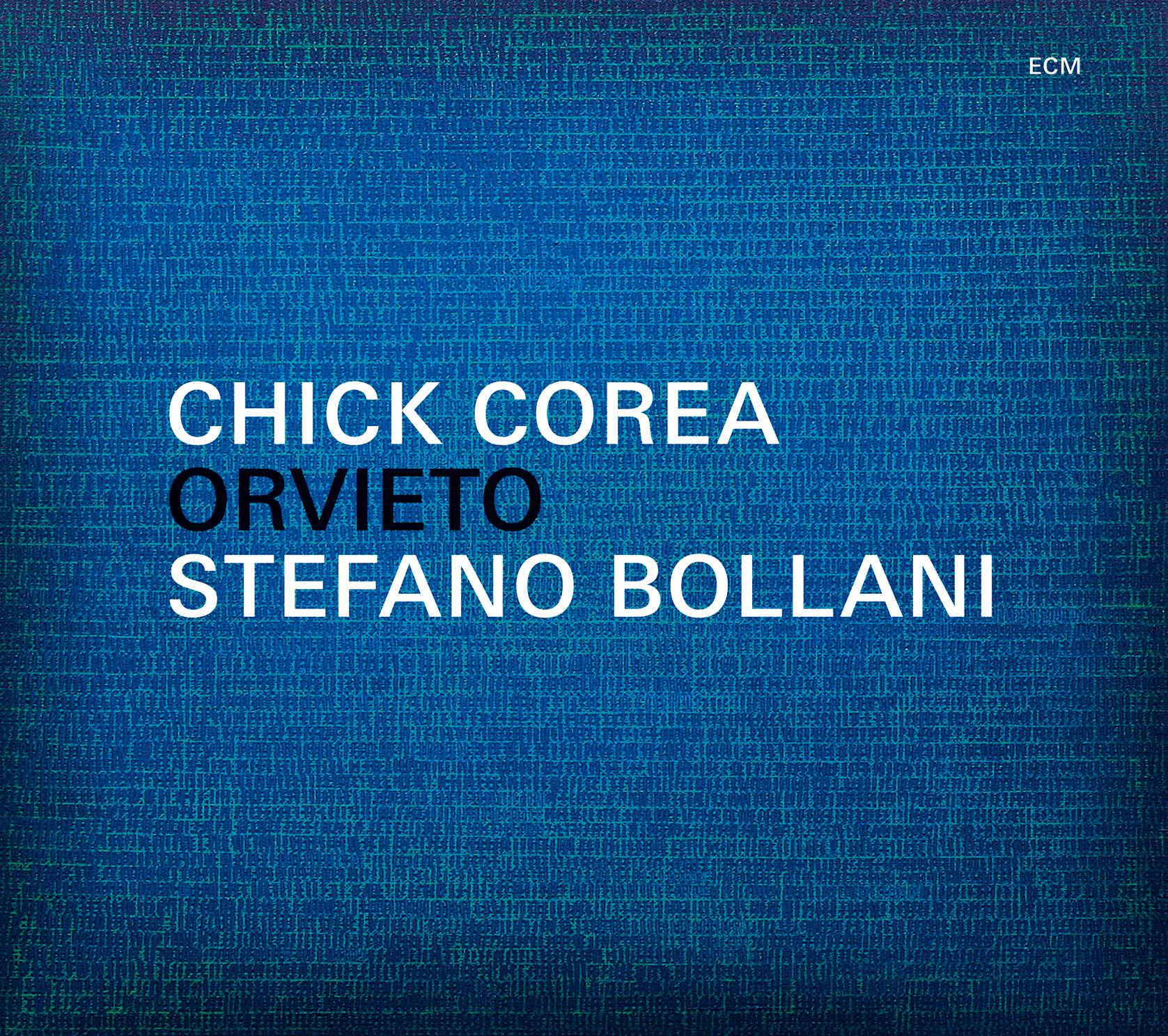
Chick Corea/Stefano Bollani: Orvieto (ECM 2222)

Chick Corea
Stefano Bollani
Orvieto

Chick Corea piano
Stefano Bollani piano
Recorded live at Umbria Jazz, December 2010-January 2011
Recording engineer: Bernie Kirsh
Assistant engineer: Roberto Lioli
Album produced by Manfred Eicher

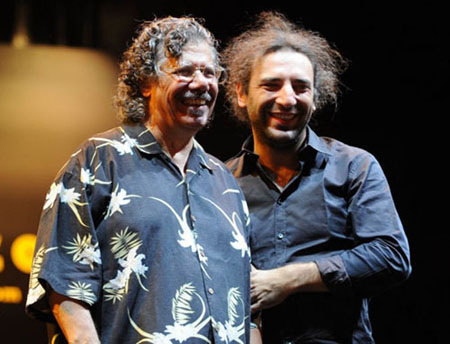
It’s impressive enough that untouchables like Keith Jarrett have taken the art of solo piano improvisation to the depths they have. To maintain comparable wonder and cohesion with the addition of another 88 keys is another feat entirely. For Chick Corea the prospect has flung open the windows of creativity out onto exciting new landscapes. Having already realized this vision with greats old and new (Herbie Hancock an Gonzalo Rubalcaba among them), Corea takes an instrument already so full at his fingers and uses it as an invitation to Italian virtuoso Stefano Bollani. Of their eponymous performances, Corea remarks, “Orvieto was winter-cold. The experience was summer-warm.” The analogy of temperature proves salient, for throughout these spontaneous gigs audiences surely felt tingly all over from the crystalline precision of these two powerful talents: one a legend, the other perhaps someday to be.

Were it not for Corea’s unmistakable pointillism and the softness of Bollani’s release, the two might be nearly impossible to distinguish. Which is not to say these qualities don’t switch places at any given moment, telling us that such parsing is arbitrary. An “Orvieto Improvisation” begins Parts I and II, clearing the air of any pollutants and diving into the thick of things with a synergy of purpose that betrays far more than the two years Corea and Bollani spent playing together before the present recording. The second of these dovetails into the Miles Davis classic, “Nardis,” in which the closeness of contact is wondrous. It is a twisted music box come to life, a look back through forward means. The duo continues to lay the nostalgia on thick along a select handful of standards. Of these, “Doralice” feels most like childhood, sprinkled with life and love and everything in between. Its freshness breathes like wind through autumn leaves and imbues these timeless tunes with clear and present animation. The interweaving of “If I Should Lose You” and bygone ambiance of “Darn That Dream” show humility to the music at hands. And the piano’s percussion instrument status is nowhere more obvious than in “Tirititran,” for which Corea and Bollani take their syncopation to its greatest heights. Similarly astonishing exchanges abound in their rendering of Fats Waller’s “Jitterbug Waltz.”

The soundtrack quality of Jobim’s “Retrato Em Branco E Preto” sparks all of these feelings and more, as does the rounded edge of “Este Seu Olhar,” the latter unwinding with the precision of a player piano yet with the abandon of a frolic. These are of a piece with the pianists’ own compositions. Bollani gives us a breath of the city streets in his “A Valsa Da Paula,” turning philosophies into rattled change in the pocket, a new spring in the step, and the force of opportunity on the horizon. Corea counters with “Armando’s Rhumba,” wherein he clothes the program’s most transcendent moments with “La Fiesta”-like exuberance. It is the pinnacle of what these two can achieve, and a whimsical lead-in to the resolute “Blues In F.”

The music of Orvieto is about nothing if not detail. Had Corea and Bollani become visual artists (and who’s to say they are not), they would be engravers, drawing out from cold metal canvases a fully rendered world of ideas. Their art is their stylus, their touch the acid that turns contact to shading and dimension, our ears the paper on which the final images are printed.

(To hear samples of Orvieto, click here.)

Keith Jarrett: Rio (ECM 2198/99)

Keith Jarrett
Rio

Keith Jarrett piano
Recorded live April 9, 2011 at Theatro Municipal, Rio de Janeiro
Engineer: Martin Pearson
Rio concert produced by OGM (Guillermo Malbrán/Augusto Tapia) and dell’arte (Myriam Dauelsberg/Steffen Dauelsberg)
Executive producer: Manfred Eicher

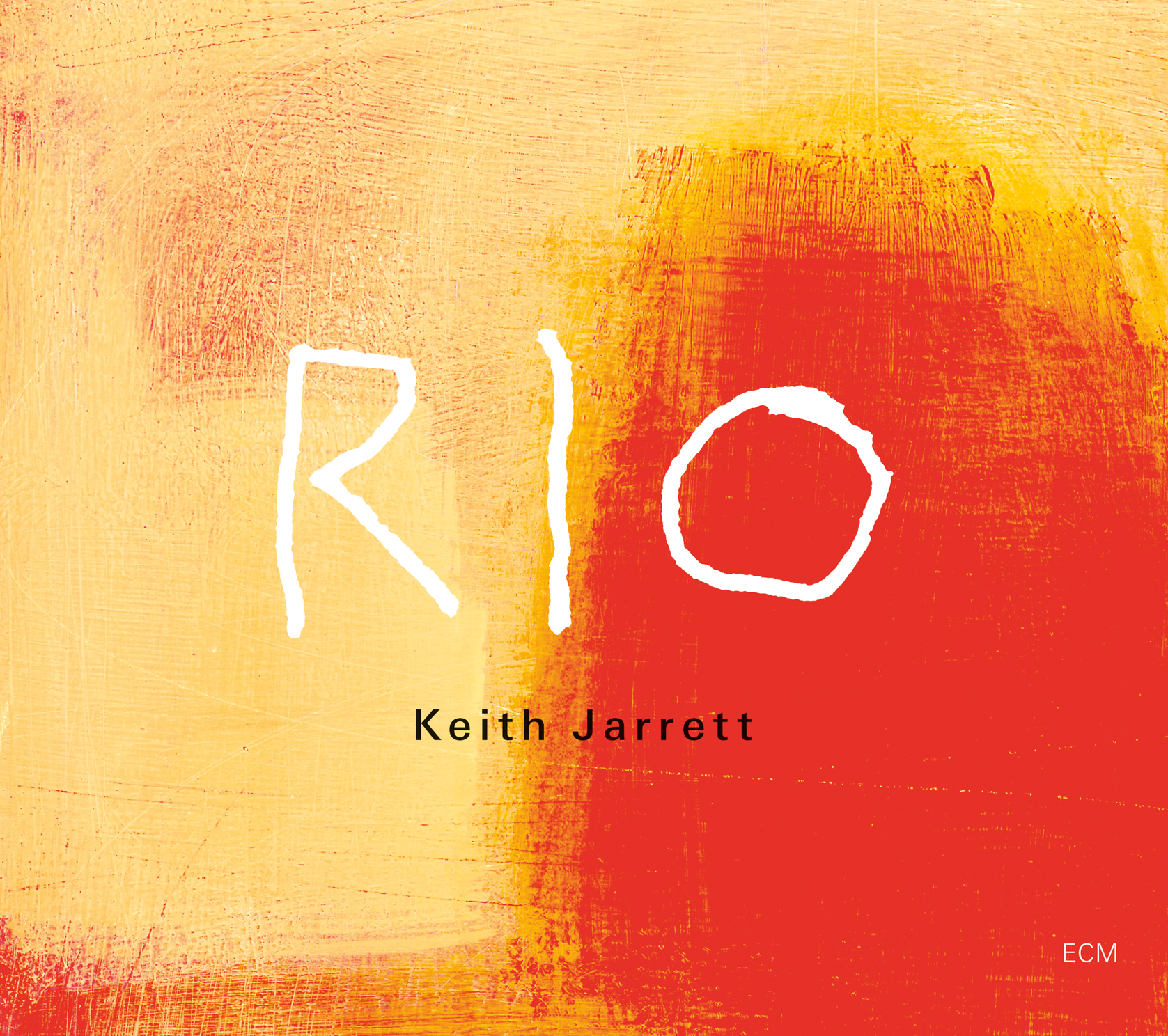
On 9 April 2011, Keith Jarrett took the stage at the Theatro Municipal in Rio de Janeiro for a concert of improvised music at the piano. Under any other artist’s name, this formula might ring as flat as the disc it’s printed on, bat Jarrett’s fingertips those keys do something unknown even to him. Like a marionette that comes to impossible life in the hands of a master puppeteer, an instrument before Jarrett is a broken circle waiting for its final arc. Rather than hang that circle as one would a mirror on the wall, he rolls it as a child would a hoop down the street. Such is the spirit of abandon that opens his every note like laughter at something intangible, and points to a destination so far away that it returns to its origin.

On Rio, he crosses 15 short bridges to get there, mapping a spectrum of interlocking terrains along the way. Still, the serial infrared beginnings are something of a surprise on his way to ultraviolet. Over a knotted, postindustrial dream, they reveal a spontaneous imagination at play. A wall rises before us. On one side is the melancholy we might come to expect of the musician who brought us wonders at Köln, Paris, and Kyoto. The listener cannot help but feel it in the rapt attention of the audience, which acts as spinner for the many fibrous experiences that had to come together to create such a shimmering veil of beauty. On the other side of that wall is the bluesy pointillism that never seems far away when Jarrett is near. Yet the more we listen, the more we realize that every brick is its own song, and bonds the spaces on either side with sound and sentiment. Part 4, for example, is a smooth ballad reminiscent of “As Time Goes By” that cracks open a bottle of Gershwin along the way, while the staggered overlay of 5 shows us two hands in fluid independence. Guitaristic flamenco dances change places with the sweeping elegy that is Part 7, one of two major turning points in the concert during which Jarrett and the audience must have known something unprecedented was happening. Its sister moment occurs in 9: sure to still your thoughts. If the concert’s second half seems but meteoric offshoots of the first, it’s only because every mirror has its dark side, so that when the blues returns in Parts 11 and 14, it feels twisted in spite of its enervations; and when Parts 12 and 15 revive those earlier rays of heavenliness, they have grown heavier, wiser. Not that this leaves us in any less a state of awe. Rather, these transmogrifications show us the nature of life, which teaches us that nothing is ever the same.

As the story goes, Jarrett called Eicher after this performance, professing it to be his best. Yet I would appeal to the earlier man, who once said that no night is better than any other. It all comes down to the moment, the experience, the pureness of making music that will forever evade definition. What we hear, then, is neither his “best” nor “worst.” Inhaled and exhaled through the digital lungs by which we have come to measure our listening pleasures, it is what it is: a gift to be lived on as it is fed.

(To hear samples of Rio, click here.)

Tout Court: Les Violons du Roy Brings Late Baroque to Bailey

Les Violons du Roy
Bernard Labadie music director
Emmanuel Pahud flute
Cornell University, Bailey Hall
October 19, 2012
8:00 pm

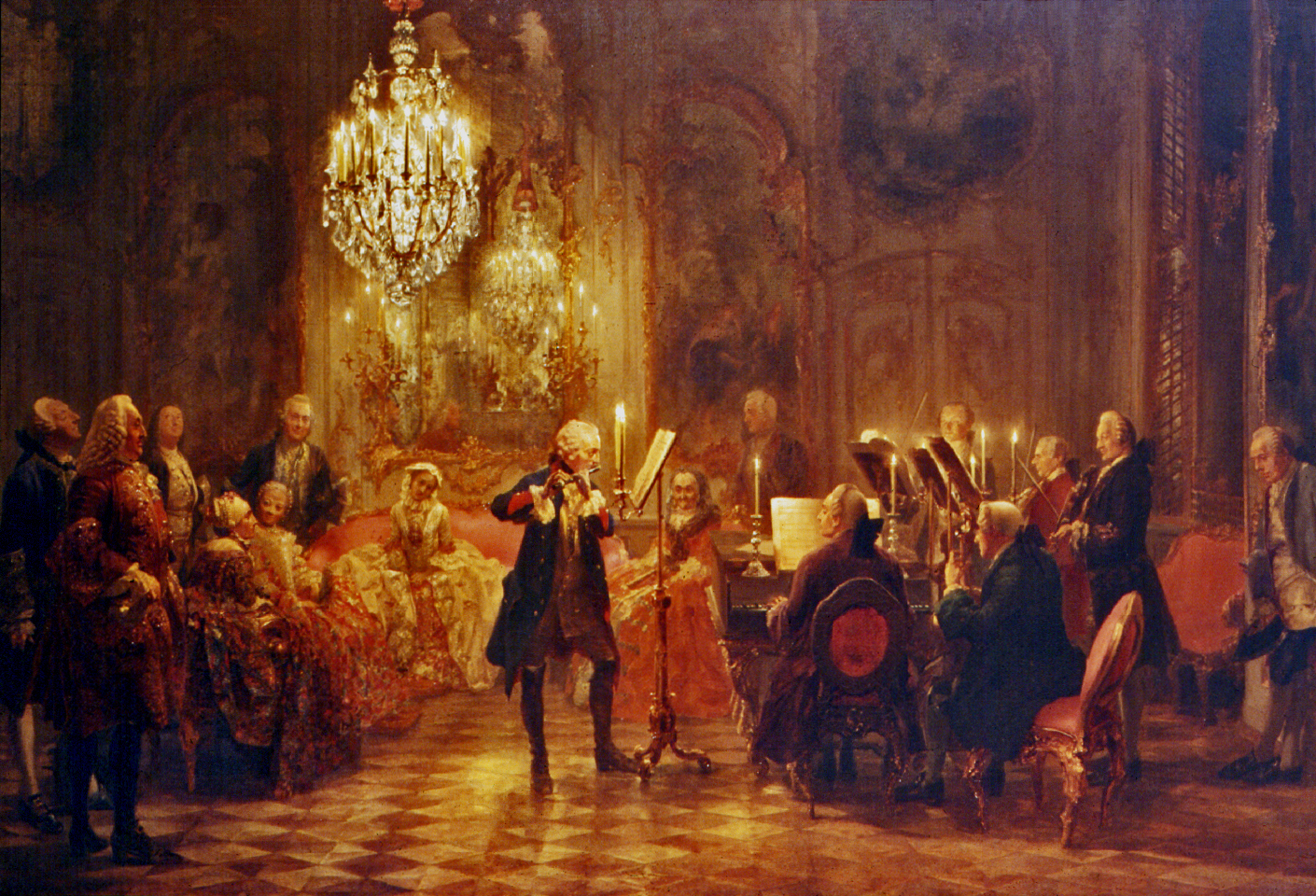
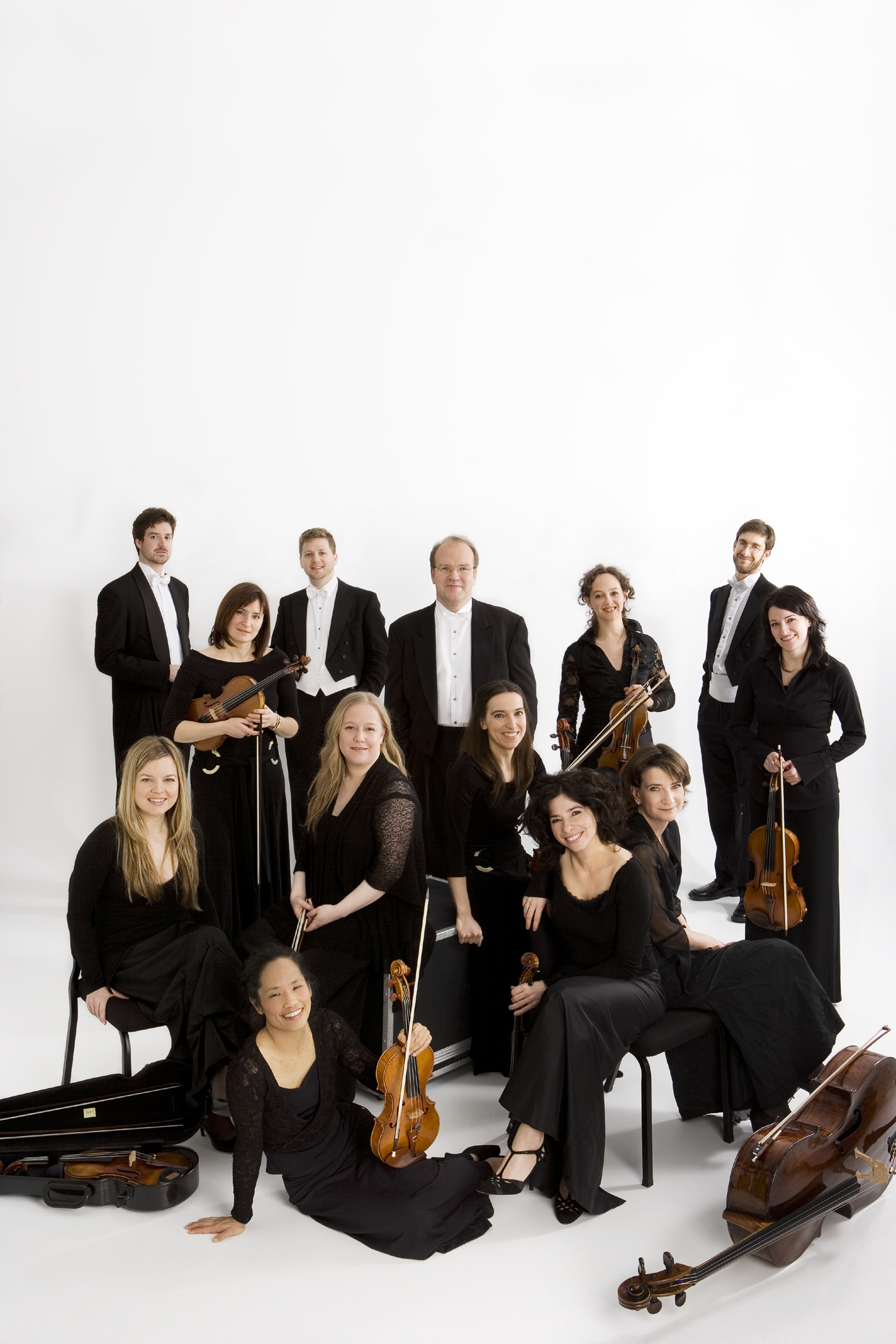
More than anyone, we have Frederick the Great (1712-1786) to thank for last Friday night’s program at Bailey Hall. Though progeny to the post-Enlightenment despotism of the times, the Prussian king was first and foremost a student of the arts. Enchanted as a lad of 16 by the virtuosity of Johann Joachim Quantz, he immediately began studying with the German flutist and, much to his warmongering father’s chagrin, added Czech violinist Franz Benda and Johann Sebastian Bach’s son Carl Philipp Emanuel to his roster at court. In due time his sonic coterie would grow to 50, the burgeoning hub from which our artists for the evening, Les Violins du Roy, drew their effervescent bows. The chamber orchestra hails from Québec City, where musical director Bernard Labadie has since 1984 nurtured its reputation for scintillating musicianship and spirited playing of the 17th- and 18th-century material in which it excels. Flutist Emmanuel Pahud, fresh from his tenure at EMI Classics with harpsichordist/conductor Trevor Pinnock, brought his expertise to bear with memorable panache.

Like many creatively inclined patriarchs before him, Frederick fancied himself a composer and penned the Flute Concerto No. 3 in C Major that proved Pahud’s delicacy with his entrance. Its stately dance evoked vine-drenched courtyards and butterfly wings, each a memory passing slowly like the reflections of clouds across water. An intimate interlude cast the final movement like a ray of light: swift, sure, and heaven-sent. Before this was the concert’s opener by Benda. The lilting cadences of his Sinfonia No. 1 in C Major spawned buoyant and programmatic side paths. Particularly evocative were the cautious footsteps in the Andante, like a lover for whom the forest was both prison and escape. Every sweep of violins painted a branch heavy with the foliage of parting.

While competent enough, these two pieces were thin on the ground in light of Quantz’s masterful G-Major Flute Concerto. From the luscious open chords of the Allegro, one thing was clear: here was the living echo unheard in the preceding architecture. Bach and Vivaldi peeked through that distinct veneer like recessive genes in search of expression. A heart-tugging slow movement, brimming with imagery for the hungry ear, found its dearest traction in the intermittent pizzicato shared by double bass and cellos. Incidentally, my newborn son, for whom this was his first live concert, at last settled into sleep during this passage, and on through the blossom of the final Presto. Transcendent.

J.S. Bach made his requisite appearance through the Ricercare from his Musical Offering. This seminal six-voice fugue is an epic in and of itself, and made for grave and inescapable listening. Cinematic before there ever was such a concept, its genius was all the clearer for Les Violons du Roy’s weighted playing—impressive after the concert’s gallant first half. The music of C.P.E. then brought its expressive foil through two works. His Symphony in B Minor was a treat to hear in close quarters. With sparkling invention and drama, it showed us a unique voice indeed, managing to step away from his father’s legacy while trailing just enough of it like a Peter Pan shadow. So too with the Flute Concerto in A Major. Despite being a younger work, it harbors some of his most mature lyricism in the Largo. From its inward sigh and downright Beethovenian tension in the lower strings, we felt a heart broken and restored. This made the final Allegro all the more cathartic for its implosive double stops. Pahud excelled here most of all, navigating a geography that was jagged but never sharp. The latter was a guiding philosophy for an orchestra that knows how to spike its punch, for even at their most intense, under Labadie’s direction the strings were never grating. Likewise, Pahud’s tone struck rare balance between the shrill and rounded capabilities of his instrument.

It would have been a travesty to have had a world-renowned flutist and Baroque chamber orchestra and not be treated to Father Bach’s famous Badinerie from the B-minor Orchestral Suite No. 2. In this respect they delivered with embellishments galore that had us leaving in the same laughter and lightness of spirit that this delightful encore provided.

Ricardo Villalobos/Max Loderbauer: Re: ECM (ECM 2211/12)

Re: ECM

Ricardo Villalobos electronics
Max Loderbauer electronics
Soundstructures by Ricardo Villalobos and Max Loderbauer
Developed and produced at Laika Studio, Berlin, September-December 2009
Pre-mastering: Rashad Becker
Mastering: Manfred Eicher and Christoph Stickel
Original recordings produced by Manfred Eicher

The term “acousmatic” was first used in reference to the philosopher Pythagoras, who delivered his lectures from behind a screen while his students sat mutely on the other side. Many centuries later saw the introduction of European closed-eye listening practices, blindfolding audiences to ensure a musical experience devoid of visual bias or distraction. Yet it would take musique concrète pioneer Pierre Schaeffer to realize the deeper potential of such a situation when he replaced screen with loudspeakers, from which issued sound collages of indeterminable origin. Now the ears wore the blindfold. According to Schaeffer, imaginary sounds are ontologically distinct from the objects that produce them. They begin with an effect and work back to cause. The acousmatic experience, then, fundamentally separates sound from source.

This equation is never foolproof. Once the sound in question has been activated it takes on a familiarity of its own. Where Schaeffer perhaps shortchanged his own convictions was in never turning the mirror around, for the mise-en-abyme of his sonic philosophy indicates not only an external distinction, but also an internal one—namely, that in their solicitation found sounds morph into experiences in and of themselves. The severance is a divided cell, an audible illusion whereby infinity speaks.

Another possibility: that, even in the intimate knowledge of a source, the acousmatic experience may thrive. Acousmaticity depends on spacing of source, case, and effect; on reversibility between inner and outer. At its heart is an aporia. It can never be more than an interpretive effect of the listener. In such a context, our instinct pushes us toward treating sound as material, especially when we can hold recorded art in our hands and manipulate its realization at will. The moment we press PLAY, two temporal realities—that of the recording and that of the listening—share a space. Time collapses.

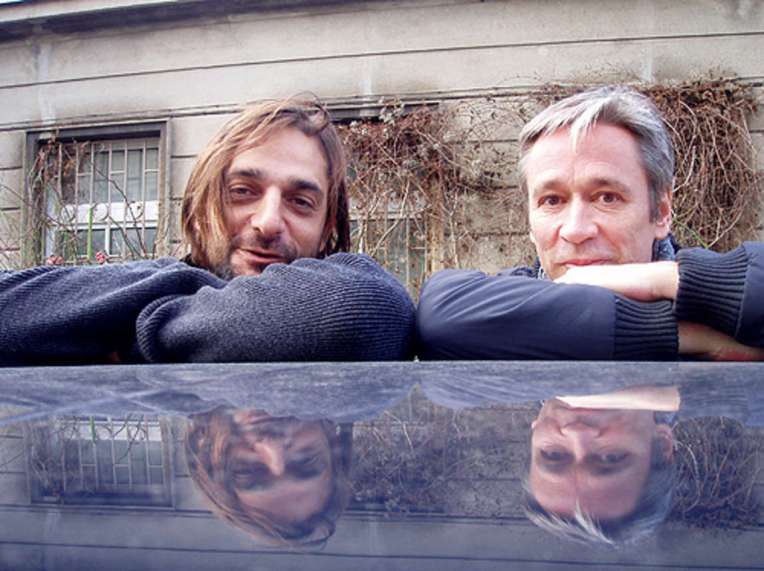
With this in mind, I turn to minimal techno wunderkind Ricardo Villalobos and experimentalist Max Loderbauer, who were given permission by Manfred Eicher to dip their hands into his label’s unfathomable catalogue and finger-paint a fresh compositional framework of suggestion and inner-space. As a self-styled “synthesis of two musical worlds,” Re: ECM does, in fact, create a third, acousmatic one. Without access to individual tracks, the Berlin-based DJs looked to separable bits for sampling, and to the gaps therein. In so doing, they went beyond effect to aftereffect, charting the ghosts of these pristinely recorded sounds (which, no matter how you splice them, betray their source). Yet in the hands of this artful duo, even the obsessive ECM listener (points to self) will find there is still an enigma to be had. Much of this feeling derives from the fact that Villalobos and Loderbauer took an improvisational approach to layering these loops and elements in the studio. Their acousmaticity goes from the outside in.
At the risk of oversimplifying, I am tempted to separate this recording’s mesh into its classical and jazz streams. Though the genres are not so distant, their approach manifests differently throughout. Looking to the latter first, we find a marked balance of organic and electronic. More than balance, even, is the unity of these two categories—again, not so distant. Said unity comes mostly from the Christian Wallumrød Ensemble, specifically the Fabula Suite Lugano, making adroit use of Giovanna Pessi’s baroque harp in “Reblop” and its counterpart, “Replob.” Both are sparkling odes. Pianos unravel chains of icicles, swaying hand in hand with satellite interruptions and wave distortions. The inevitable nod to Jon Hassell comes in “Requote,” for which a cunning horn winds its way in a bowed expanse of intimate measure. “Redetach” ends the album on a snare- and cymbal-driven journey into the center of a vast digital biome. Gloopy and viscous, this bubbling drone touches feet to ground, its back to sunset. The remaining Wallumrød refraction comes in “Recat,” this time from The Zoo Is Far, for a groovy, if subdued, drum ‘n’ bass vibe. Gut strings wince in self-reflective heartbeats as the ghosts of drums flip from open to shut. With its scattered rhythms, rusty veneer, and granola crunch, this track takes due cue from Boards of Canada. Out of this shadowy enclave we are dropped like buckshot into water for “Retimeless.” Penning its tale from the ink of Timeless, its windblown beats and vocal blips dance their gavotte in moonlight. Miroslav Vitous’s Emergence affords another fond look back at some of the label’s classics, as does “Rensenada,” drawn from Bennie Maupin’s The Jewel In The Lotus. Whereas “Reemergence” lives on the underside of a snare drum, the other lumbers across its top surface before liftoff. Louis Sclavis makes a knotted cameo in “Reannounce.” The raw material this time is his L’imparfait des langues. Metals and reeds flick their throats away like the cigarettes that have destroyed them, leaving a pile of dreams for ashes. Clay percussion trades places with outer contacts, devolving into a contest of morals for the sample-addicted. The Wolfert Brederode Quartet’s Currents finds new life in “Recurrence.” As much a mantra as a challenge to silence, it finds itself flanged for want of a sharper blade. Enrico Rava’s TATI feathers the wings of “Rebird,” a distorted pathway of grace.

From Russian composer Alexander Knaifel comes the bulk of the album’s classical skeleton. As the dark side of this moon, it puts the emotional back into the rhythm-formula of the club, seeking in its body-to-body connections something akin to the heart-to-heart. Much of this pulse comes from Svete Tikhiy and Amicta Sole, giving us soprano Tatiana Melentieva’s otherworldly rise above all in “Resvete.” In such primordial surroundings, she sounds like Cathy Berberian reborn, radiant still through a tintinnabulation of brushes and cymbals. Distant sirens splash through smoke and cloud, each indistinguishable from the other against the Ligeti-like whispers of “Retikhiy.” Where in this ritual passage rhythm remains paramount, sandy and free, in “Resole” it recedes for a spacy vibe reminiscent of Vesptertine-era Björk. BLAZHENSTVA yields its embryonic “Reblazhenstva,” laying choral strains on a bedding of digital beats while a cello spasms and swoons from its own melancholy residue. Swiss violinist Paul Giger’s Ignis makes a morose appearance in “Reshadub.” Its drums tremble before an oncoming train of opaque intentions, crumbling into radio dial anxieties at the moment of death. This leaves only Arvo Pärt, whose Kanon pokajanen inspires the throat-sung drones and sacred curtain of “Rekondakion.”

All of this shares a border with a glitch aesthetic, by which the crust of representation cracks open to reveal something intrepid and uncompromising. Its skin hosts as many nests of reality as there are humans, each a node of anxiety. Whether or not this anxiety yields pleasure has much to do with personal preference, but also with the fact that all sounds are phenomena. Only our allegiance determines their marketability. And so, if we instead let the organic experiments of Villalobos and Loderbauer breathe as they will, if we avoid weighing down their pockets with texts such as this, then the soundness of their message will grow of its own accord, rampant and unbridled in the photosynthesis of blind appreciation.

(My thanks to Brian Kane, whose discussion of acousmatics gave me context for the present review. To hear samples of Re: ECM, click here.)

Terje Rypdal: Odyssey – In Studio & In Concert (ECM 2136-38)

Terje Rypdal
Odyssey – In Studio & In Concert

Terje Rypdal electric guitar, synthesizer, soprano saxophone
Torbjørn Sunde trombone
Brynjulf Blix organ
Sveinung Hovensjø bass guitar
Svein Christiansen drums
Swedish Radio Jazz Group

Odyssey (ECM 1067/68)
Recorded August 1975 at Arne Bendiksen Studio, Oslo
Engineer: Jan Erik Kongshaug
Produced by Manfred Eicher

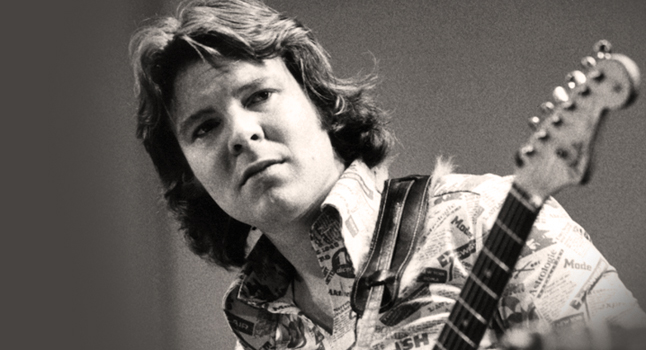
My first encounter with Odyssey came in the late nineties. Still young in my ECM explorations and having just barely crossed over into Jan Garbarek’s Visible World, I wasn’t quite sure what to make of the journey that label stalwart Terje Rypdal (a name as yet unfamiliar) had just taken me on. The CD fell out of rotation quickly, I’m afraid to say, buried under the pile of New Series albums then dominating my attention. Years later, and well into my own listening odyssey, I returned to it, only to find that it had never left me.

Rypdal has, of course, been under the ECM umbrella since almost the very beginning. The release of his self-titled debut in 1971 sparked an intrepid flame that continues to burn through a wide spectrum of colors. As the informative liner notes from John Kelman tell us, the band that was to define Odyssey was the product of circumstance. Drawing on a pool of musicians from previous sessions, including bassist Sveinung Hovensjø from 1973’s What Comes After, he also welcomed unexpected talents into the fold, such as drummer Svein Christiansen and organist Brynjulf Blix, the latter of whom contributed heavily to the album’s well-aged luster. The resulting sound proved a defining one, as inescapable bass lines danced touch-and-go with the guitarist’s unbridled narratives. We hear this most in the solid underpinnings of “Midnite.” Hovensjø lays down the rules for all of its 17 minutes, leaving Rypdal to stretch them to the pathos of his progressive solitude. Those carefully pedaled strings and alluring soprano sax (played by Rypdal himself) careen through its nocturnal billows with humble ferocity as Torbjørn Sunde brings comparable light to the sky with muted trombone. If the plangent cry of “Darkness Falls” that precedes this and opens the album tells us anything, it is that here is a terrain of emotional clarity and immediacy. The magic of this rendering lies in its continual flux, in its refusal to settle into one topographic pattern. The following “Adagio” plunges the album to new depths, even as it raises the bar from which it hangs. Solina strings owe their thickness to the charcoal yet discernible picture into which Rypdal’s guitar spills ether: a shout of autonomy in its coolest disguise. “Better Off Without You” walks in organic circles, occasionally poking its head above the watery depths of Blix’s ostinato haze, keeping an eye trained “Over Birkerot.” In this punchier setting, Rypdal keeps his feet planted amid a chain of horn blasts (think Hans Zimmer’s Inception soundtrack on a smaller scale). His cathartic rock-out midway through is a chance to let hair fly and pulls open the ribbon of “Fare Well.” Along with the final “Ballade,” it finds the musicians in languid suspension, crossing vibraphone-like paths toward elegiac destinations. It may feel blinding, but we can be sure this light comes to us by the force of a distant hope.

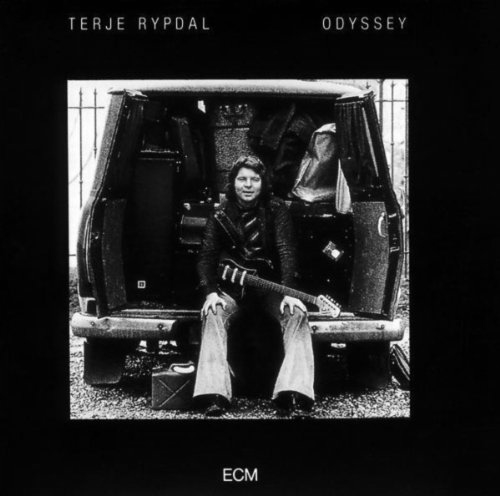
Rypdal has an incisive way of building anticipation, of dropping his solos at the most carefully thought-out points, his guitar an endless book of codas. Like the photo that graces its cover, Odyssey captures the life of a nomadic musician in candid monochrome. And while the album had been reissued on CD prior to this New & Old Masters set, the 24-minute “Rolling Stone” sadly did not survive that first digital makeover. An organ-infused underwater symphony of legendary status, its primal bass line and whammy bar ornaments flow like a meeting between Bill Laswell and Robin Guthrie before bringing on the album’s most rock-oriented developments. It also charts Rypdal in a pivotal moment of self-discovery where his tone began to coalesce into the sound for which he has come to be known. What a treasure to have in restored form.

As if this weren’t already enough to celebrate, ECM has gone above and beyond with another gem from the archives:

Unfinished Highballs
Recorded June 1976 by Swedish Radio, Estrad, Södertälje
Recording producer: Bosse Broberg
Engineer: Ola Kejving

This commissioned radio performance from 1976 features a streamlined Odyssey band (sans Sunde) fronting the 15-piece Swedish Radio Jazz Group. At under four minutes, the title track might blow by like the foreword to a novel were it not for its sheer theatricality. Rypdal’s vision cuts the darkness with a film projector’s eye, and blends into the Matterhorn bass of “The Golden Eye.” Icy synths challenge the thaw of Blix’s electric piano as fiery horns uncurl their tongues from the firmament and lick the snowcapped mountains of an unbridled story. Rypdal lifts this image skyward on waxen wings, which, unlike those of Icarus, are impervious to the light on which they feed. Next on this spacy ride is “Scarlet Mistress.” At once sharpened by muted trumpet and rounded by swinging textures, it gives wide relief to Rypdal’s laser etchings. One feels in its background the kick of eras when music’s enervation thrived in proportion to the harshness of its sociopolitical climate, so that the clubs of the 20s and 30s resurrect themselves and dance their ghostly dance. The soprano returns for a spell, for all a moonbeam peeking out from the clouds into a well of chords that pull us into “Dawn.” Melodies unwind, each a snake wrapped around the wrist of a god who whips it free into the glittering sky. Some enticing bass work dances amid Rypdal’s shimmers of water-harp enchantment, lowering us on a fishhook into the depths of “Dine And Dance To The Music Of The Waves,” in which sitar-like sounds pave a Nazca runway for the soprano’s grand coverage of worldly joy. Christiansen is the contortionist’s backbone of “Talking Back.” Sporting also high-flying reeds from Lennart Åberg and Ulf Andersson, its attunement is downright symbiotic. A real highlight. And speaking of which, where else to end but in “Bright Lights – Big City,” closing out the set on a signature dronescape.

With such a full sense of architecture to explore, it’s no wonder this newly unearthed companion has held its shape. In elevating the big band to a level of orchestral aliveness so rarely achieved, Rypdal has left a mark that is not only indelible, but also inimitable. With a nostalgic sound that distinguishes so much of ECM’s output from the decade, Odyssey – In Studio & In Concert shares the pedestal with Keith Jarrett’s Sleeper as release event of the year.

<< Eberhard Weber: Yellow Fields (ECM 1066)
>> Kenny Wheeler: Gnu High (ECM 1069)


OM: Rautionaha (JAPO 60016)

OM
Rautionaha

Urs Leimgruber soprano and tenor saxophones, bass clarinet, percussion
Christy Doran guitar
Bobby Burri bass
Fredy Studer drums, percussion
Recorded December 1976 at Tonstudio Bauer, Ludwigsburg
Engineer Martin Wieland
Produced by Thomas Stöwsand

The Swiss quartet of OM, which found just the freedom it needed in ECM’s studios for a good decade, flung open the doors with colorful aplomb on Rautionaha, a rare JAPO release. To this early date the group brings a kaleidoscope of shared experience. The sound is appropriately splintered. Guitarist Christy Doran pens the kick-in-the-gut opener, “For Ursi.” Unable to resist the attraction from the get-go, saxophonist Urs Leimgruber colors the twilight with his heady tenor, chaining ladders of virtuosity with attentive form. His gurgling expositions of momentary abandon give Doran just the break he needs to cast a reverberant magic with tails flying. The superb rhythm work from percussionist Fredy Studer and bassist Bobby Burri completes this wall of light. The latter gives us “Stephanie,” his first of two cuts. This meditation of gongs and electronics coalesces into some fine soliloquies from the composer, while the full drumming and six-string picking shimmer like morning sun on the horizon’s lip. The prickly tenor is a bonus. Speaking of which, Leimgruber puts his writing to the test in “Song For My Lady.” Something of a ballad, in it he becomes a crying wayfarer who walks the same circle of self-reflection until there is only music left of the one that produced it. Lifting this ponderous weight off our shoulders is Burri’s title offering, which grows like weed in a groovy embrace. His bass work glows here. Leimgruber opts for soprano, reaching heights of multi-phonic brilliance that no footstool can reach. The effect is nothing short of extraordinary. The quartet ends on a whimsical punctuation mark: a flag without a country, a star without a sky. In the absence of definite shape, we are free to induce our own.

Lennart Åberg: Partial Solar Eclipse (JAPO 60023)

Lennart Åberg
Partial Solar Eclipse

Bertil Lövgren trumpet, fluegelhorn
Ulf Adåker trumpet, fluegelhorn
Jan Kohlin trumpet, fluegelhorn
Håken Nyquist french horn, trombone, fluegelhorn
Stephen Franckevich trumpet (VI)
Lars Olofsson trombone
Sven Larsson bass trombone, tuba
Jörgen Johansson trombone (VI)
Lennart Åberg soprano saxophone, tenor saxophone, alto saxophone
Ulf Andersson alto saxophone, piccolo, flute
Tommy Koverhult soprano flute, tenor flute
Erik Nilsson baritone saxophone, bass clarinet, flute
Bobo Stenson piano, electric piano
Harald Svensson synthesizer (I, IV)
Jan Tolf electric guitar (I, II, III, VI)
Palle Danielsson bass (I-V)
Stefan Brolund Fender bass (I, II, VI)
Jon Christensen drums
Leroy Lowe drums
Okay Temiz percussion (I, II, III)
Recorded September 5-9, 1977 at Metronome Studios, Stockholm
Engineer: Rune Persson, Metronome
Produced by Håken Elmquist

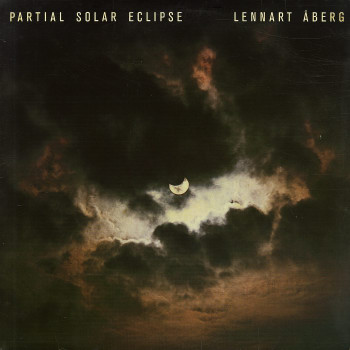
Swedish saxophonist Lennart Åberg assembles a force to be reckoned with for this out-of-print JAPO release. Fronting a 20-piece ensemble that includes early appearances by pianist Bobo Stenson, bassist Palle Danielsson, and drummer Jon Christensen, Partial Solar Eclipse plays out in a six-part suite of epic proportions. The trumpet-led swell of Part I gives way to a groovy bass line amid big band brilliance infused with Brazilian percussion (courtesy of Okay Temiz). A soaring solo from Åberg flirts with the clouds even as it transcends them in fiery sunset. The twinned bass action from Stefan Brolund and Danielsson impels the spirit toward Stenson’s winding finish. Out of these dense beginnings comes a mosaic of hues and textures. From the flanged ground line and backing horns of Part II, which sound like a warped version of “Baby, You’re a Rich Man,” to the oozing finality of Part VI, the album as a whole bursts with a jazz that squeals, “I made it!” Jan Tolf’s guitar work is the conclusive highlight, along with the florid and soulful tenor work of Åberg himself. Between the two we find the Motown edge of Part III, with its radiant flute and oceanic pianism, and the killer baritone work in Part IV of Erik Nilsson, who also unleashes a fabulous bass clarinet solo over the chalky backdrop of Part V.

This is an album that foregrounds itself by foiling the otherworldliness of all that came before. In so doing, it offers the glare of its namesake without the need for glasses. It’s an intense thrill ride, to be sure, but one that offers choice rewards even (if not especially) for those not tall enough to enter.

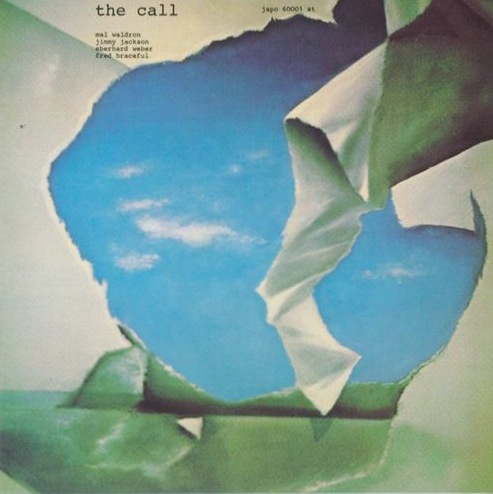
Mal Waldron: The Call (JAPO 60001)

Mal Waldron
The Call

Mal Waldron electric piano
Jimmy Jackson organ
Eberhard Weber electric bass
Fred Braceful drums
Recorded February 1, 1971 at Tonstudio Bauer, Ludwigsburg

Seeing as Mal Waldron inspired Manfred Eicher to put out his first release, Free at Last, on what was to become the legendary ECM label, it is only fitting that his name should also grace the first release of its relatively short-lived companion imprint, JAPO. Through the magic of digital reissue, many of these once elusive albums can now be experienced for the first time, if not anew. Dipping into the waters of The Call (not to be confused with the Charles Lloyd record of the same name) is like tripping on the past as if it were the Here and Now. Over two long takes, averaging 20 minutes each, he and an all-star team transport us to a warm and inviting sound that is equal parts hard bop jam, psychedelic dream, and free jazz meditation.

The title track brings an energizing sound, slick and classic as can be. Bassist and future ECM mainstay Eberhard Weber, along with drummer Fred Braceful, spurs us through some thickly settled spaces, courtesy of Jimmy Jackson on the organ, all led by Waldron’s interplanetary surf. This joyful epic peaks in a glorious bouquet of heat distortion, smooth as it is sere. Lively solo action from Weber and Braceful pushes the band’s sound into delicate relief, throwing us into a dark groove before restoring us to light.

“Thoughts” is an altogether different spoonful. A diary of aural scribblings, it unfolds private wishes with meticulous patience. After a watery intro, Waldron lays down a chalky little vamp. Subtler denouements and a twist of introspection complete the cocktail. You’ll find no miniature umbrella peeking out above this rim…only the curve of a listening ear. Waldron skips us like a stone into heavier grooves, which in return spiral into whispers. Drums curl inward, and in these quiet crawlspaces between the floorboards of the mind, we take our rest, lost among the dust bunnies whose filaments are string and wire and electric current.

This is music that tastes exactly like what it’s made of.


Alternate cover

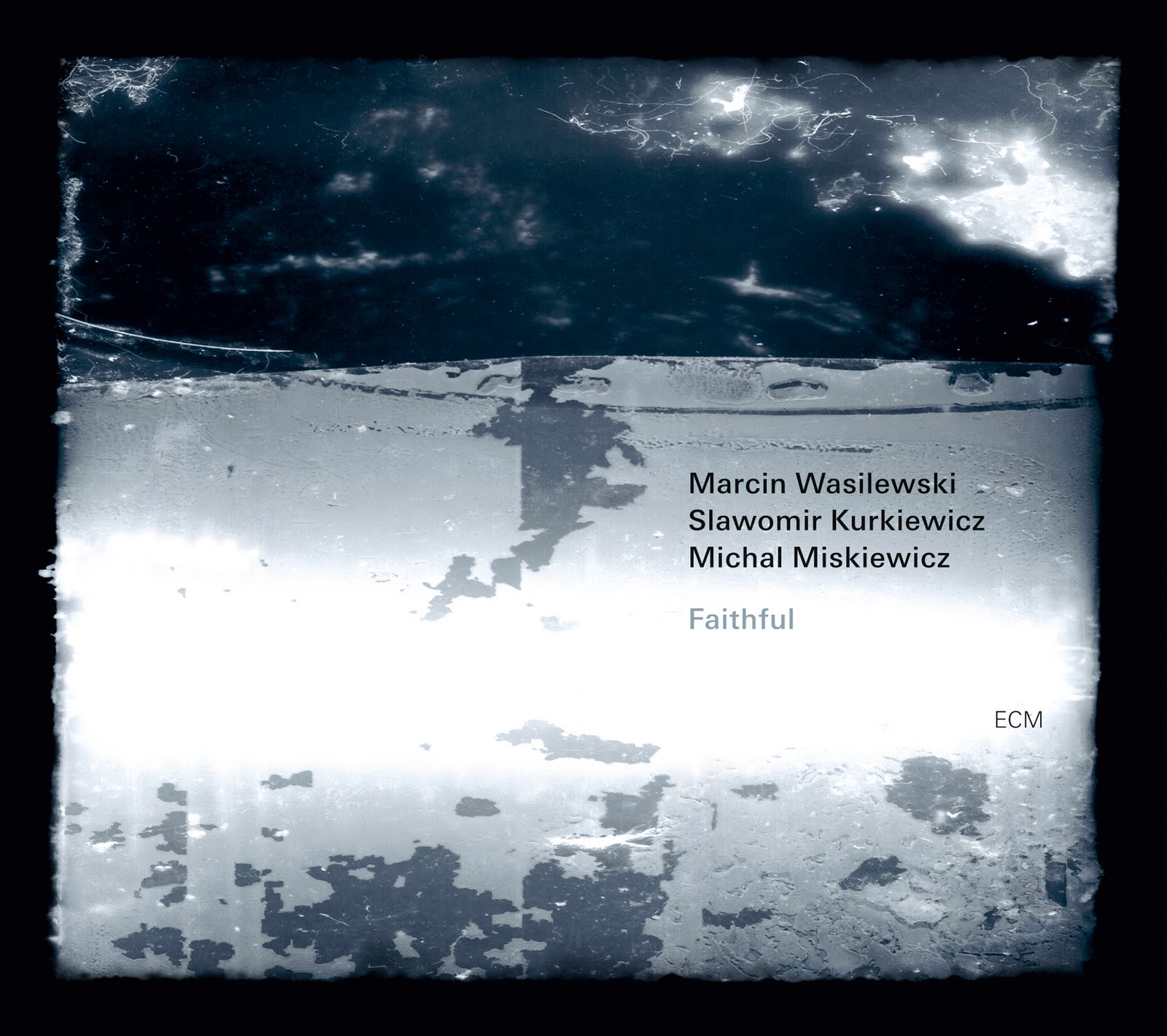
Marcin Wasilewski Trio: Faithful (ECM 2208)

Marcin Wasilewski Trio
Faithful

Marcin Wasilewski piano
Slawomir Kurkiewicz double-bass
Michal Miskiewicz drums
Recorded August 2010, Auditorio Radiotelevisione svizzera, Lugano
Engineer: Stefano Amerio
Technical Assistant: Marco Strigl (RSI)
Produced by Manfred Eicher

For its third ECM outing, the Marcin Wasilewski Trio expands the precious spaces delineated to such patient effect on TRIO and January. A pianist of uncommon insight, Wasilewski brings out the minimal best in bassist Slawomir Kurkiewicz and drummer Michal Miskiewicz, who in turn inspire reflections on those keys that might not otherwise reveal themselves in solitude. Together, they plant the seed of the album’s ever-expanding flower with a curious opener: “An den kleinen Radioapparat.” This song, by German composer Hanns Eisler (so vivaciously immortalized in Heiner Goebbels’s tribute), is meant to evoke the voices of radio, which haunt the now wordless protagonist in exile. After a 4.5-minute wait at this remote station of smooth and translucent contours, we are welcomed aboard the “Night Train To You.” The first of five Wasilewski tunes, its landscapes bleed watercolor beyond our window. We feel at home somehow, despite being so far from it. Yet with such attentive passengers sharing our car, how could it be otherwise? Their erudition is so fully ingrained into the surroundings that they are free to jump on and off these tracks at will, laying their own along the way. A riffling snare pulls us aside and whispers timetables into our ears, while Kurkiewicz supplies the dimly lit lanterns, the art deco screens, and lavish accoutrements of an Orient Express dining car. If we are the serviettes folded so neatly beside those empty plates, then the lush cut of the title track is the main course that awaits our dabbing. Shingled wave lines on the shore are the language of this Ornette Coleman classic, constantly redrawn to the rhythm of the tide. Which is very much like the flip-flopping of rubato and steady cells in “Mosaic,” also by Wasilewski. The rhythm section’s current polishes our ears to the smoothness of river-rolled stones, culminating in a sparkling waterfall finish. The long exhalation of “Ballad Of The Sad Young Man” follows. Its liberation of youthful fears and more mature reflections make for an utterly captivating experience. Then again, the tenderness of “Oz Guizos” (by Brazilian composer Hermeto Pascoal) makes the last feel like sandpaper in comparison, standing as one of the gentlest and most heart-stilling pieces in the ECM catalogue. Its heartbreak drips like rain from leaves after a quiet storm. The somber piano intro of “Song For Świrek” leads us into the album’s grooviest execution. Written by Wasilewski in memory of Marek Świerkowski, a close friend of the trio, its Ferris wheel pace turns skyward with the breadth of a hang glider. Miskiewicz caresses his kit, appropriately enough, as if it were in need of healing. The pianist’s final offering is “Woke Up In The Desert,” indeed a haze, a dream, a sun pressed into the scrapbook of the sky. Paul Bley’s “Big Foot” finds itself duly revived since its first label appearance on Paul Bley with Gary Peacock. The lively sasquatch of a solo from Kurkiewicz mixes wonderfully with the cameraman’s excitement in the piano. A true delight that reveals also superb detail in the drumming. Wasilewski ends things with his “Lugano Lake,” a protracted gaze through the studio window from one who would rather leave the condensation intact and examine every bead of upturned scenery as it drips into the proportion of something true.

Faithful represents a new direction. It favors protracted treatments and heightened sensitivity. The trio plays as it breathes, knowing just when to pause before moving on. Particularly well recorded, with just the right balance of intimacy and the infinity beyond it, it lives in soft focus. If you wish to know to whom they are being faithful, you need only turn the CD over and look at your reflection.

(To hear samples of Faithful, click here.)