ECM Special IV: New Music in Trumpet & Saxophone

For the fourth volume in the Japan-only ECM Special series, we turn to a selection of tracks devoted to trumpet and saxophone, though the premise soon feels less taxonomic than metaphysical. Across the album, horn and reed serve as emissaries of the instant once melody slips free of intention. “Viddene” opens that passage with a descent into the font of Dis, the legendary duo album between saxophonist Jan Garbarek and guitarist Ralph Towner. Beneath them, a field recording of a wind harp stretches its drone into an almost mineral patience. Garbarek’s soprano, piercing yet hospitable, does not merely climb above the mountaintops but renders altitude a place where yearning can thin itself into radiance. Towner’s 12-string answers with wholesome grain and resonant wood, giving the saxophone’s aerial hunger a body to return to. The result is a soundscape of deep order, moving from abstraction toward groove.

In the wake of this dense conversation, “Tale” enters from Tomasz Stanko’s Balladyna, where the trumpeter speaks into the tensile architecture built by Dave Holland and Edward Vesala. The piece has a robust sense of motion, lumbering forward without losing balance, its gait full of alleyway intelligence and nocturnal cartilage. Stanko’s horn seems to carry a private flame cupped inside brass, illuminating only what it needs to continue. Nothing here explains itself, which is precisely why it convinces. The music fades while still in possession of secrets, leaving the listener with the sensation of having overheard a confession through a wall of smoke. “Svevende” returns us to Garbarek’s sound-world by way of Dansere, where his throaty reed cries with genuine emotional register in a setting only this band could have conjured. Bobo Stenson gathers the harmonic field around him, while Palle Danielsson and Jon Christensen give the rhythm a nervous, breathing intelligence. What begins in fragmentation gradually gathers into a more progressive pulse, around which Stenson and Danielsson inscribe their own Fibonacci sequence of lore.

Enrico Rava’s “By the Sea,” despite retaining the same rhythm section, changes the mood considerably, smoothing the surface until the music seems to stretch horizontally across an enormous inner screen. Taken from one of the trumpeter’s finest albums, The Pilgrim And The Stars, it sparkles all the more through John Abercrombie’s electric guitar, whose presence adds a filament of electricity to the surrounding calm. Rava’s melody moves with slick assurance, skating forward without needing to open its eyes, trusting the contours beneath it with almost dangerous grace. For listeners in 1977, the sound must have felt newly minted, a silver organism arriving from some studio out of time. Rava also closes the album in identical company with “Tribe,” from The Plot, and there the body returns with more visible muscle. A propulsive bass line is doubled by guitar, the cymbals flicker with chromatic wit, and Rava’s tone stays rounded yet incisive, peaking without snapping even the smallest twig in its surroundings. The groove has earth under its nails, but its mind is elsewhere, busy drawing constellations on the inside of the skull.

Between those two Rava signposts, Dave Liebman’s “The Call,” from Drum Ode, widens the album’s ritual dimension. One of only two ECM albums Liebman made as leader, Drum Ode remains a singular document, and this excerpt distills an ecstatic logic. His echoing tenor leaps joyfully amid a gathering of percussionists, a figure absorbed into a larger ceremony of impact and resonance. The title feels exact. This is a call, though not a summons, toward any ordinary destination. It is a signal sent backward through the body, toward the ancient percussive alphabet beating beneath thought. The energy is enormous, yet the recording never collapses into mere heat. ECM’s characteristic spaciousness gives even the densest passages a lucid edge, making the performance feel both historic and strangely unborn, a document whose ink has not yet dried in time.

Garbarek returns once again in “Belonging,” from Keith Jarrett’s timeless record of the same name. The duet opens in pianistic reverie before Garbarek’s soulful tenor walks into frame. Such seamless balladry grows rarer in an age increasingly trained to mistake synthesis for soul, yet here it stands, towering and alive, carrying its vulnerability without theatrical varnish. Then comes “’Smatter,” a gem among gems from Kenny Wheeler’s inimitable Gnu High. The bandleader’s flugelhorn converses with Jarrett’s unstable radiance while Holland and Jack DeJohnette keep the ground elastic beneath them. The piece lifts the spirits without sacrificing complexity, and Wheeler’s richness seems to come from a chamber deeper than technique. To hear this music now is to recognize that joy, when properly documented, becomes a difficult proof.

ECM Special IV is an evergreen meditation on breath under pressure, and its performances preserve the sensation of musicians listening so intensely that sound appears to enter the world through them rather than from them. The album’s profundity lies in its refusal to treat music as expression alone. This music suggests something stranger: that the self may be an instrument briefly borrowed by breath, a rented room through which larger silences pass on their way to becoming audible.

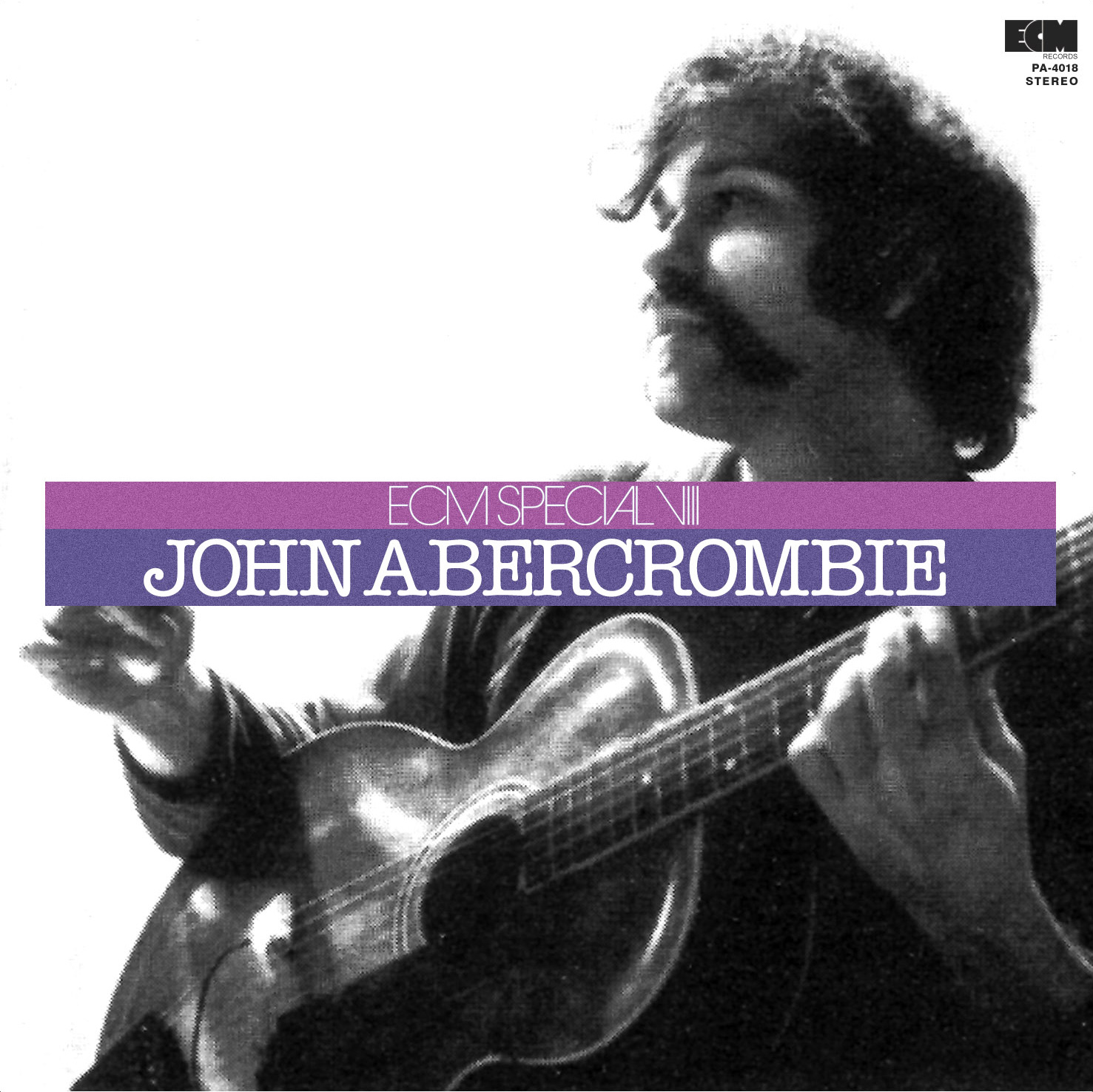
ECM Special III: New Music in Guitar

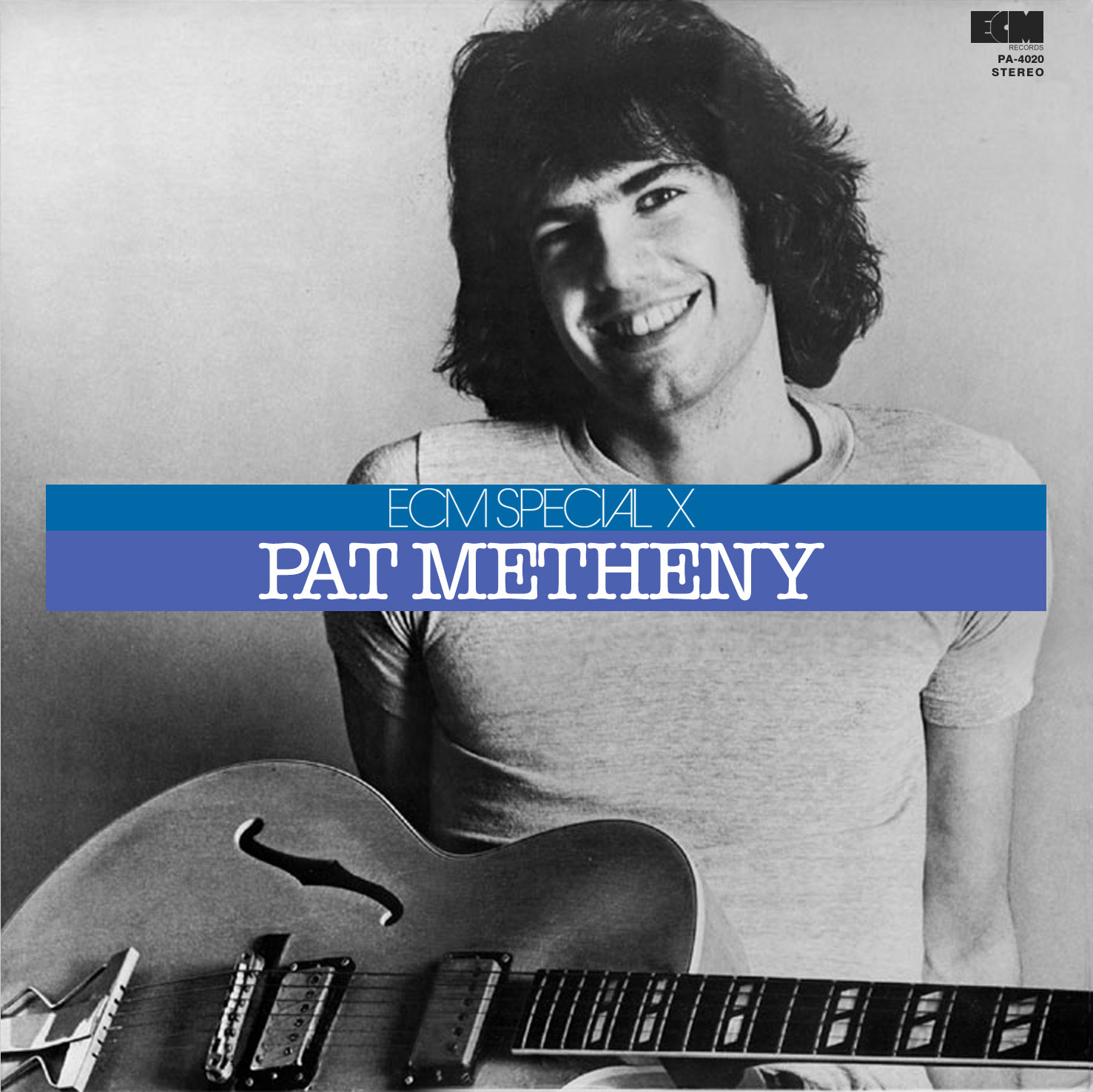
Following the first two ECM Special albums from the Japanese Trio Records imprint, this subsequent volume is the series’ first proper compilation, drawing finished tracks from a handful of canonical albums in the label’s history under the subtitle New Music in Guitar. That phrase is already a small philosophical disturbance. Not new music for guitar, as one might expect, but in guitar, as though the instrument were an interior world all to itself. Across these selections, the guitar becomes a threshold between the solitude of the hand and the vastness that opens when strings agree to tremble.

The journey begins with “Love Song” from John Abercrombie’s Timeless. On acoustic guitar, Abercrombie is joined by Jan Hammer on piano for a reverie that seems to hover in the afterglow of an otherwise phenomenally kinetic listening experience. The melody is tender and circular, a moonflower in fullest bloom of night. Interestingly, although drummer Jack DeJohnette is billed on the album, he does not appear on this duo track. Yet DeJohnette emerges alongside Abercrombie in the next selection, “Unshielded Desire,” taken from the first Gateway session, and the contrast is electrifying. This improvised powerhouse awakens the nervous system to the inspiring forces of these late greats, as Abercrombie’s guitar opens a fissure in the floor of the music, revealing a furnace underneath.

Next comes “Sad Hero” from Bill Connors’ enchanting Theme To The Gaurdian. Although Connors made only a handful of appearances on ECM, none were as intimately crafted as this. The present selection is a multitracked wonder in which different moths seem to gather around a single hidden lamp, each one casting a separate shadow from the same source. Connors plays with heartfelt attention to detail, yet the result never feels polished into sterility. The music carries the ache of an inward epic compressed into a few minutes of glowing filament. This track feels strangely inevitable beside Terje Rypdal’s “Like a Child, Like a Song,” the concluding piece from After The Rain. Another superior example of a single musician creating an entire world from scratch, it is characteristically fluid and dreambound in its quiet intensity. Amplified strings and piano are the primary voices, for all an elegiac vapor that erases the wall between composition and dream inscription.

No such sequence would be complete without Pat Metheny, and here we receive two prime examples of his early ECM language. “Watercolors,” from the album of the same name, threads his seamless lines through the fine needles of Dan Gottlieb’s drums and Eberhard Weber’s bass, giving the music a buoyancy both relaxed and exacting. Metheny’s phrasing already has that unmistakable sensation of forward motion carried by inner light, each note advancing with the composure of a traveler who knows the road because he has invented it beneath his own feet. “Missouri Uncompromised,” from Bright Size Life, shifts the terrain with Bob Moses and Jaco Pastorius at his side. The track veers into more twisted paths of improvisational continuity, its angles brighter, its logic more elastic. Metheny’s unwavering commitment to notecraft remains intact, but here the music refuses the straight corridor, choosing instead a route through mirrored stairwells and sideways doors.

“Matchbook” brings together Ralph Towner and vibraphonist Gary Burton, and the title track of their first duo record holds up beautifully for its shining atmosphere and fluid morphology. Towner’s guitar finds an ideal counterpart in Burton’s luminous attack, and together they construct a miniature habitat of suspended lines in which every tone has a tensile purpose. Last is “Elbow Room” from Sargasso Sea, which carries Towner forward with Abercrombie, bringing the compilation full circle. Its combination of electric and 12-string signatures continues to sparkle through an inventive exchange that feels conversational without lapsing into casualness.

Listening to this album now, one can only imagine what it must have felt like for Japanese audiences encountering these sounds at the time, gathered under careful curation. What a treasure, certainly, but the treasure may not reside only in the tracks themselves. Perhaps it lies in the act of transmission, in the record as a vessel crossing languages without translating anything, carrying the grain of fingers, circuits, wood, and breath into another listening culture. In that sense, ECM Special III is a small ceremony of distance overcome. The guitar, held close to the body, becomes a machine for imagining elsewhere. And somewhere in that elsewhere, the listener discovers that music’s deepest intimacy may be its refusal to belong entirely to the one who made it.

ECM Special II

Returning to ECM’s formative years can feel like entering a chamber where the future has been stored in mineral form. The label’s early catalog still radiates that paradoxical condition of sounding both newly born and long remembered, and in the context of this rare Japanese compilation series, the effect deepens into something almost ceremonial. Following its 1973 predecessorECM Special II gathers fragments from separate iterations of the same dream, arranging them not as a set of nested thresholds. Taken as a concentric circle, the album moves from exploratory outskirts toward a luminous core, asking us to hear outtakes and canonical statements as parts of one larger organism, a spiral of unfinished thoughts becoming articulate in the dark.

At the outer rim are two outtakes from the classic album A.R.C., with Chick Corea at the piano and Dave Holland on bass, while Barry Altschul’s percussion scatters sparks across the floorboards. Holland opens “Country Song” with a line that seems to hitch itself to some imaginary caravan, sturdy yet strangely weightless, giving the track its momentum. Altschul adds a granular shimmer, while Corea moves between muted-string color and full-throated pianism with an Americana feeling that never settles into nostalgia. The foot-stomping vamp has charm, certainly, but its deeper value lies in the sense of musicians testing the tensile limits of a shared intuition. Holland’s soloing is robustly delightful, his amplified twang stretching across flat plains and invisible roads until the music begins to smudge at the edges. Corea’s atmospherics gradually loosen the frame, and what might first appear to be a minor archival curiosity begins to glow as a document of cognition in motion. “Vadana II” pulls the circle outward into more abstract terrain, where the trio’s passion seems almost too volatile for the vessel meant to contain it. The thread loosens, vanishes, returns with a changed face. Structures rise and collapse into their own scaffolding. What remains is a sonic kaleidoscope whose beauty comes from the audible heat of refinement.

One ring inward brings us to two pieces from Red Lanta, the singular collaboration between Arte Lande and Jan Garbarek, one of the most quietly enchanted productions of ECM’s first decade. Their pairing possesses a delicacy that never becomes fragile, a pastoral intelligence sharpened by inward pressure. Garbarek’s flute enters with a lilting candor, while Lande’s pianism opens corridors inside the harmony. In “Miss Fortune,” the duo cultivates a bucolic edge without turning picturesque, breathing through a faintly impossible geometry of sunlight combed over fields. “Cherifen Dream of Renate” leans further toward folk inflection, yet its dream logic resists any simple earthbound reading. The piece seems to remember a village that may never have existed, a place built from half-sung names and the amber residue of sleep. Together, these tracks deepen the compilation’s circular design, translating the restless inquiry of A.R.C. into a more inward grammar of tenderness.

At the album’s center stands “Kukka,” from Garbarek’s seminal Witchi-Tai-To, where his tenor assumes the foreground with a calm intensity. Bobo Stenson’s piano keeps opening new surfaces beneath him, Palle Danielsson’s bass crests with lyrical force, and Jon Christensen’s drumming seems to occupy every corner of the room without crowding it. Though it is among the more laid-back selections from an often kinetic album, “Kukka” is no less dizzying for its abundance of internal motion. Stenson’s soloing has that rare quality of sounding inevitable only after it happens, while Christensen transforms time into a field of hidden hinges. Danielsson’s lines rise with a singing patience, giving the performance one of its most quietly magical moments. What makes the piece endure is its refusal to announce its profundity. It simply unfolds, and in unfolding reveals that restraint can be a form of velocity.

And then there is “The Colours of Chloë,” from Eberhard Weber’s album of the same name, a masterpiece whose presence here serves as a subterranean engine. With Rainer Brüninghaus on keyboards and Ralph Hübner on drums, Weber shapes a sound that remains unmistakable even when stripped of context, intimate yet vast in its truth. Against the rolling tide of synthesizer, images of the past flicker with cinematic charge, allowing the ears to remember what the eyes never witnessed. That whistling threadline comes alive with possibility, opening a path for Weber’s elastic bass and Brüninghaus’s photoreal sense of color to shine forth. Few artists have ever assembled atmospheric and melodic architecture with such uncanny poise. Weber’s sound world found its perfect complement in Manfred Eicher’s production sensitivity, which here feels like a form of listening made visible.

ECM Special II embodies a small philosophy of adjacency, a record of how music migrates from margin to center and back again without losing its ambient temperature. The outtake, the duo miniature, the iconic statement, the remembered masterpiece: each occupies its place in a mandala that turns archival miscellany into metaphysical cartography. These tracks arrive from the past without behaving as relics, each bearing questions that have not finished asking themselves.

Perhaps that is the unexpected gift of this album. It does not merely remind us that ECM’s early years were fertile; it suggests that listening is a form of archaeology practiced on the unborn. We lower the needle and discover not what was, but what still waits inside what was.

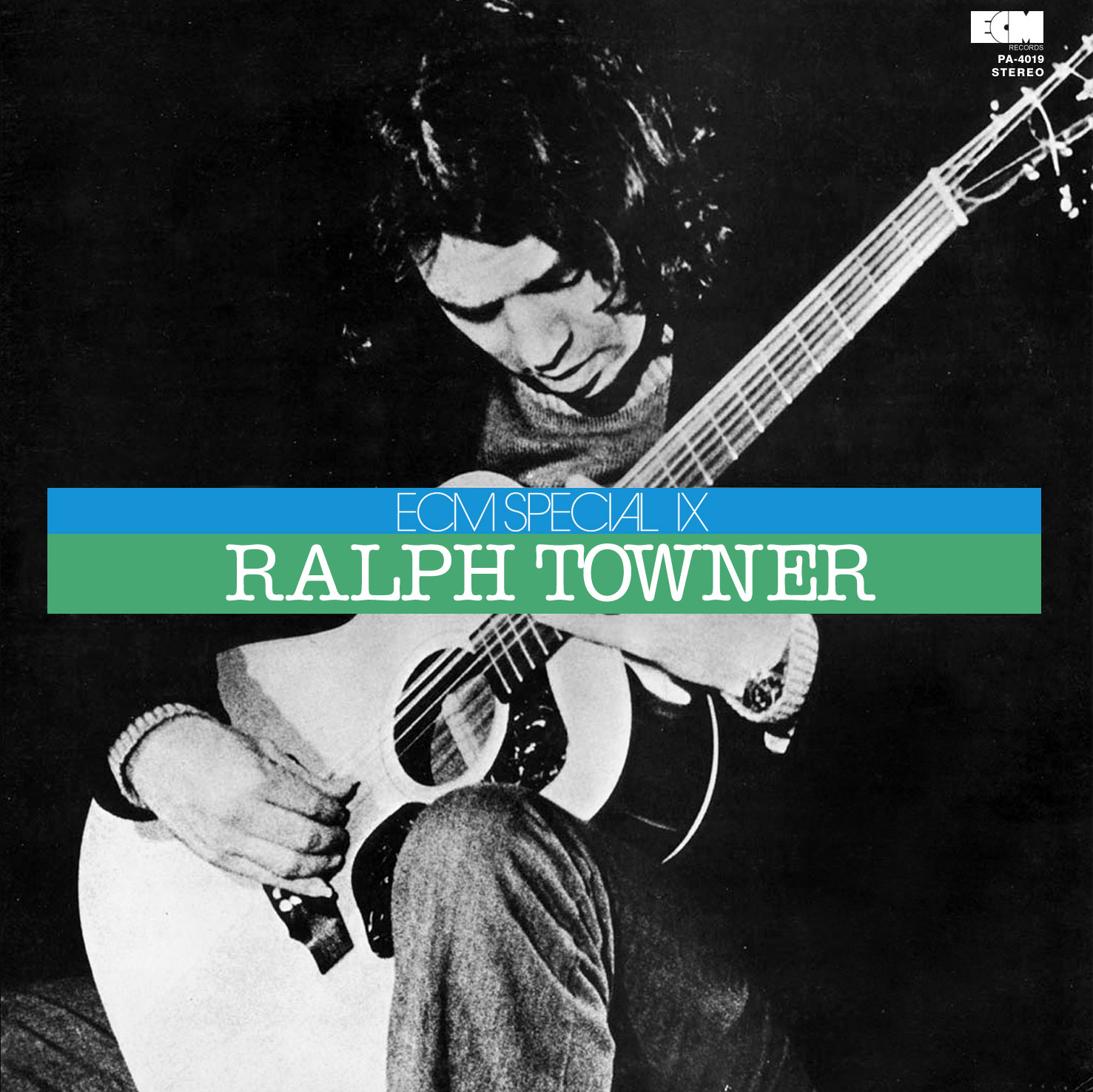
ECM Special I

Among the many rarities I’ve come across in this journey to review all things ECM, few are as intriguing as the 10-part “ECM Special” series released in Japan on Trio Records throughout the 1970s. The tracks on this inaugural album, all recorded in the earliest part of that decade, exude the energy of an unlocked room. The compilation gathers music from a formative stretch in ECM’s history, but its deeper fascination lies in the way it catches artists at the edges of statements they were still learning how to make. These are not simply leftovers, alternates, or marginalia, but apertures into manners of completion. Thus, the album offers a small constellation of provisional illuminations, each track carrying the charge of musicians moving through the half-lit corridor between impulse and form.

The Japanese liner notes deepen the sense of this release as both a historical document and a carefully considered act of transmission. Manfred Eicher contributes a brief but telling note of thanks to Trio, giving the label his blessing not only for preserving ECM’s commitment to sound quality but also for helping introduce its artists to Japanese listeners with the seriousness and care their music deserved. Hisamatsu Noguchi’s accompanying history of the label situates the compilation at an especially early stage in ECM’s development: his note that ECM had released only about 20 LPs by that point reminds us how close this music still was to the label’s origins. “Over the last three years or so,” he writes, “the musically rich jazz records released by ECM have, in no small measure, also served as a warning to existing jazz records that have become bogged down in commercialism.” In that formulation, ECM emerges not simply as a new label with a distinctive aesthetic but as a corrective pressure within the broader jazz marketplace, insisting on space, intention, and fidelity at a time when such values could feel imperiled. Noguchi extends that idea in his praise of Eicher for providing his musicians with “a concert-like setting […] in which to realize their pure intentions and musical plans.” 

And yet, the first track on the album is not an “ECM” track at all, though it comes with a relevant provenance in tow. In February 1972, Chick Corea formed the first iteration of Return to Forever with Stanley Clarke, Joe Farrell, Airto Moreira, and Flora Purim, recording the band’s eponymous ECM debut under the production of Manfred Eicher. During this same period, Corea and Clarke were also working with Stan Getz in a group that included Tony Williams, and on March 3, 1972, that ensemble recorded Captain Marvel for Columbia. The album included several Corea compositions, among them “Captain Marvel” and “500 Miles High.” Because of label entanglements, with Return to Forever associated with ECM in Europe and the Getz/Corea project issued by Columbia in the United States, later reissues and compilations sometimes drew these worlds into partial alignment. On ECM Special I, this music carries the feeling of a border crossing, jazz history folding its passport into a paper crane and sending it over several oceans at once.

Featuring Corea on electric piano, Farrell on flute, Clarke on electric bass, and Moreira on percussion, “Captain Marvel” bursts forward with radiant, forthright energy. The Return to Forever identity is unmistakable. Clarke’s bass does not merely propel the tune. It persuades it, shoulders it, gives it a muscular itinerary and a gleaming set of wheels. Everything interlocks with rare confidence, the groove sustained by an internal combustion that never clots or dims. Farrell’s flute surveys the whole journey from a height of untroubled clarity, while Corea’s solo reaches outward with quicksilver assurance, threading brightness through the piece’s open frame. The result is evangelically kinetic, a song with its windows flung open to the luxurious irresponsibility of motion.

In light of all this extroverted velocity, “Seven II,” an unreleased take from Paul Bley’s Open, to loveThis version offers a more compact reading of the Carla Bley tune, turning toward realms of infolding affection. Bley’s touch seems to ask questions that the piano answers only in fragments, with the gravity of a mind reluctant to flatten feeling into explanation. Dissonant turns open small fissures in the lyric surface. Improvisational asides appear and disappear with the delicacy of thoughts glimpsed in profile. Moments of friction and concentrated resistance somehow grant the music its most lucid affirmations. By the final bluesy flourish, the piece has bowed to its own interior turbulence.

“Georgian Bay,” from Conception Vessel, features bandleader Paul Motian on drums, Charlie Haden on bass, and Sam Brown on guitar. It is a richly flowing track that surrenders itself to fluctuations of astonishing clarity. The music feels hyper-real in its depiction of time and place, yet the longer one listens, the more unreachable its world becomes. Brown’s arpeggios ripple with patient luminosity, Motian’s cymbals and percussion scatter points of mineral brightness, and Haden’s bass moves through the piece with lyrical sinew and grave freedom. The track evokes a landscape without illustrating it, which is always the harder and more mysterious achievement. Its minimal means generate an immense field of suggestion. Nothing is overdrawn, yet everything seems haunted by a fullness just outside the frame.

“Strings” is an unusual track, with Chick Corea improvising on the internal strings of the piano. Brief, kinetic, molecular, and intricate, it feels torn from the instrument’s hidden nervous system. The piano becomes a cabinet of bones and metallic dreams from which Corea coaxes a dense concentration of gesture and possibility. Drawn from the archives of the Piano Improvisations duology, the piece has the quality of a private experiment that accidentally opens onto metaphysics. In less than a handful of minutes, it suggests that an instrument is never singular. It is a society of concealed mechanisms waiting for a sufficiently curious intelligence to disturb its sleep.

“Brujo II,” from the vicinity of Trios/Solos, brings together Ralph Towner on 12-string guitar, Glen Moore on bass, and Colin Walcott on tabla. The track begins with sparkling guitar, then Walcott’s tabla gives the music traction while Moore’s arco bass draws its shapes into audible being. The chemistry is sometimes looser than what ultimately made it onto the album, yet that looseness has its own revealing quality, a sense of musicians finding the floor as they walk across it. Towner’s guitar glints with prismatic discipline, Walcott supplies an earthy centrifugal pull, and Moore’s lines turn the surrounding space into a darkened planetarium. The piece feels exploratory in the truest sense, testing how much unknown territory an ensemble’s shared breath can hold.

“Counterphonymic,” a track that fell by the wayside of Facing You, is a brief improvised piece with a twisted, jazzy flavor that refuses to stand still. Its rhythms falter yet lurch onward with a strange uprightness, producing an anxious but satisfying momentum. One might call it drunken, were it not for the crystal-clear intentionality beneath the surface. Keith Jarrett’s phrasing keeps slipping through trapdoors of its own devising, yet every stumble becomes a decision retroactively revealed as necessary. The piece is full of crooked intelligence, a miniature theater of imbalance in which poise is achieved by declining all conventional forms of poise.

“Bruremarsj,” with Jan Garbarek on tenor saxophone, Arild Andersen on bass, and Edward Vesala on drums, comes from Triptykon. A traditional tune, it works beautifully through proudly air-filled lungs, carrying a heartfelt and playful quality. Garbarek’s tone has a rural austerity that does not exclude tenderness. Andersen’s bass grounds the piece with quiet conviction, while Vesala’s drums complicate the path without disturbing its communal spirit. The track feels unified in a way that does not require polish. Its open grain is the point.

“Noon Song II,” an outtake from Piano Improvisations Vol. 1, shifts between lyrical reverie and upbeat dance with an almost mercurial sense of character. Corea moves between inwardness and buoyancy without making either feel stable for long. The piece keeps discovering new rooms inside itself, some intimate, some vividly animated, each entered with the fluency of an artist for whom improvisation is not wandering but instantaneous architecture. Its beauty lies in the way tenderness can suddenly acquire a pulse and motion can suddenly turn reflective. Corea lets moods infiltrate one another until the distinction between them begins to blur.

Taken as a whole, ECM Special I offers a timely glimpse into the recorded and performing process during a foundational period in ECM’s history. Yet its value extends beyond historical curiosity. The album reveals that the periphery of a catalog can contain some of its most charged material, precisely because these performances have not been embalmed by canonical expectation. They show musicians shaping sound at the edge of decision, making art before art has fully recognized itself in the mirror.

The deepest pleasure of this collection is that it refuses the museum logic of secondary material. Rather than asking us to treat these pieces as supplements to more authoritative albums, it invites us to imagine creation itself as an incomplete archive, a series of rooms opening behind the rooms we thought were barred from entry. In that sense, ECM Special I teaches that music’s most profound revelations may not arrive as monuments. Sometimes they appear as side doors, pencil marks, fragments saved by accident, faint signals from the workshop of becoming. And perhaps the life we call finished is also only another take, preserved on some impossible label, waiting for an unknown listener to lower the needle and hear, beneath all our official versions, the trembling master we never knew we had recorded.

Joe Lovano: Paramount Quartet (ECM 2855)

Joe Lovano
Paramount Quartet

Joe Lovano tenor and G mezzo soprano saxophones, tarogato
Julian Lage guitar
Asante Santi Debriano double bass
Will Calhoun drums
Recorded February 2025 at Studios La Buissone
Engineer: Gérard de Haro
Mastering: Nicolas Baillard
Produced by Manfred Eicher
Release date: May 29, 2026

Since making his ECM debut on Paul Motian’s Psalm in 1981, saxophonist Joe Lovano has carried himself like an artist forever standing at the threshold of another doorway, one hand still touching the past while the other disappears into a future no one can predict. His discography refuses the comfort of a straight line. One hears instead a constellation, each recording illuminating a different contour of the same restless spirit. Whether navigating post-bop abstraction, folk lyricism, or the broad geometry that ECM has so often cultivated as its own secret dialect, Lovano approaches reinvention as a moral condition. Paramount Quartet, his new collaboration with guitarist Julian Lage, bassist Asante Santi Debriano, and drummer Will Calhoun, deepens that philosophy into something cartographic. The music feels concerned with passage itself: migration between traditions, between cities, between inwardness and communion. Lovano has described the ensemble as carrying “a real global awareness,” yet the phrase barely contains the sensation of listening to these musicians move through one another’s instincts. After meeting Debriano and Calhoun at a 2023 fundraiser for Puerto Rican hurricane relief, Lovano recognized a current already running beneath the conversation. Bringing Lage into the fold, after nearly two decades of imagined possibilities, completed the circuit with uncanny inevitability.

Lage, making his own ECM debut here, plays with remarkable translucence. His guitar rarely announces itself as accompaniment because it is atmosphere incarnate, altering the temperature of every phrase around it. Sometimes he arrives as a flicker in the corner of the eye, a filament of thought stretching across Lovano’s meditations. Elsewhere, he becomes startlingly corporeal, dragging steel across silence until the music smells faintly of rain striking hot pavement. There is an almost frightening sincerity in his touch.

Lovano’s longstanding affection for Charlie Haden’s “First Song” finally finds its ideal habitat here. The performance opens with Lage casting chords into the darkness like silver coins into black water, each ripple widening across the band’s collective breath. Lovano enters without ceremony, his tenor carrying the grain of memory itself. The sound feels lived in, rain-stained, touched by years that no longer separate grief from tenderness. He does not merely interpret the melody so much as trace his fingers across the cracks in its walls. Debriano and Calhoun move beneath him with exquisite patience, allowing an underlying emotional gravity to reveal itself slowly. What lingers is not melancholy exactly, but the strange warmth of realizing how loneliness can preserve the shape of love long after language has failed it.

“Amsterdam” shifts the perspective dramatically, opening onto a landscape of reflective surfaces and impossible angles. The quartet navigates the piece as nocturnal pedestrians crossing bridges slick with electric glow. Lovano’s improvisational logic slithers through the composition with reptilian elegance, hugging corners, vanishing into harmonic crevices before reappearing somewhere unforeseen. Debriano’s solo unfolds with muscular lyricism against Calhoun’s finely threaded percussion, each note carrying the heft of wrought iron suspended above moving canals. Lage responds by loosening the tune’s internal knots until his phrases spiral outward in widening rings. The titular city gradually ceases to feel geographical, becoming a psychic terrain assembled from fragments and sleepless reflections.

“The Call” draws us inward again. The chamber-like interplay between saxophone and guitar generates harmonies of microscopic precision whose emotional consequences feel almost cosmic. Debriano’s arco bass darkens the atmosphere with strokes that resemble charcoal dragged across damp stone. Lovano’s movement between reeds produces ghostly impressions at the edge of perception, subtle hauntings that alter the barometric pressure of the room without announcing their arrival. Ideas dissolve before they can fully materialize, replaced by others equally transient. Listening becomes an act of wandering through unfinished corridors where every open door reveals another unanswered question waiting patiently in half-light.

“Fanfare for Unity” erupts with kinetic exuberance, though even at its most rhythmically charged, the quartet avoids simple catharsis. Calhoun presides over the track with dazzling elasticity, shaping pulse into something simultaneously grounded and volatile. Beneath Lovano’s acrobatic phrasing, Lage stretches harmonic thread into intricate lattices that shimmer on the verge of collapse. His solo arrives like a sudden burst of graffiti across concrete, angular and luminous and impossible to ignore. Yet what makes the performance resonate beyond technical brilliance is the sense of collective trust animating every turn. The musicians lean toward one another with fearless attentiveness, creating a music that swings hard while retaining the vulnerability of open conversation.

Wayne Shorter’s “Lady Day” receives perhaps the album’s most psychologically expansive reading. Lage introduces the piece with reverential restraint, leaving enough space around each chord for silence to gather its own emotional residue. Lovano responds with phrasing that feels almost autobiographical, every note carrying the weight of private reckonings never fully disclosed. The quartet approaches the composition from within its emotional bloodstream rather than from its exterior form. Seasons seem to pass through in miniature, tiny climates of sorrow and resilience blooming and fading in the same breath. Lage’s counterpoint hovers beside Lovano like a second soul, intimate without imitation, shadowing the saxophonist’s movements while preserving the integrity of his own distinct language.

“The Great Outdoors” channels a life force unmistakably indebted to Motian, though the influence surfaces less in imitation than in attitude. The tune drifts with loose-limbed intuition. Each musician contributes with striking equality, allowing the composition to evolve communally rather than hierarchically. Lage sounds especially liberated here, his lines bouncing with almost childlike wonder, while Lovano pulls rougher-hewn textures from his horn. The music evokes open air without lapsing into pastoral cliché. One hears instead the wilderness of consciousness itself, untamed pathways winding through instinct and recollection.

By the time “Congregation” arrives, the album has already transformed fellowship into something sacred without ever announcing sacredness as its destination. The track glides forward with disarming warmth, its rhythmic ease carrying the listener into an atmosphere of genuine collective presence. There is joy here, certainly, though it is the kind born from survival rather than naïveté. The quartet sounds profoundly at ease inside one another’s company, every gesture shaped by trust accumulated in real time. Yet beneath the celebratory surface runs a quieter revelation. As the music fades, one begins to sense that the album has never truly been about collaboration at all. What Lovano and company uncover across these performances is the fragile miracle of permeability, the terrifying possibility that identity itself may only exist through continual exchange with others. Every solo becomes a temporary shelter built inside another person’s listening. Every rhythm carries fingerprints from elsewhere. By the end, the quartet no longer resembles four musicians negotiating shared space. They sound like evidence that self-awareness may itself be communal, that somewhere beneath the noise of individuality there exists a deeper reservoir where all voices dissolve into one trembling human breath moving through darkness toward whatever waits beyond it.

Judith Berkson: Thee They Thy (ECM 2741)

Judith Berkson
Thee They Thy

Judith Berkson voice, piano
Trevor Dunn double bass
Gerald Cleaver drums
Recorded July 2021
Oktaven Audio Studio
Mount Vernon, NY
Engineer: Ryan Streber
Cover: Fidel Sclavo
Mastering: Christoph Stickel
Album produced by Manfred Eicher
Release date: April 24, 2026

Mezzo-soprano, pianist, composer, and improviser Judith Berkson returns to ECM with a compelling new trio project. Conceptual art, liturgical inquiry, chamber abstraction, and jazz formalism: each arrives carrying its own gravity, yet none bends submissively toward a central identity. To call Berkson “multifaceted” feels insufficient, flat in a way her music refuses to be. These practices do not orbit a core. They are neighboring rooms illuminated at different hours of the day. If her 2010 solo album Oylam fashioned a private syntax from fractured song, Thee They Thy inhabits the classical jazz trio format as though entering an ancestral home whose walls still remember fire. Longtime associate Gerald Cleaver joins on drums, alongside new recruit, bassist Trevor Dunn, making his ECM debut with the calm authority of someone stepping into a river already moving beneath his feet.

The album opens with “Slow,” a through-composed prelude that reveals itself with the cold shimmer of arithmetic carved into glass. Beneath its measured surfaces lies an unguarded study of human behavior and the invisible fissures where our most sacred opportunities collapse under the weight of hesitation. Berkson’s voice enters neither as narrator nor confessor. Rather, it touches every object it describes without claiming ownership of any of them. Her words retain an open voltage, charged enough to bring interpretation to its knees. Dissonances bloom at the edges of the arrangement as bruises darkening beneath pale skin, while the trio advances through the piece with the patience of astronomers mapping a dying star.

Then comes “V’shamru,” and the atmosphere pivots completely, as though the record has opened a hidden window inside itself. Berkson’s original cantorial song tears through the stale fabric of expectation, allowing something ancient and inward to cross our eyeline unscathed. Her voice recedes slightly into shadow, gathering resonance from depths untouched by performance instinct. The modal pianism moves tidally, lifting and withdrawing with ritual precision, while Dunn’s arco bass offers a second pair of lungs. For a fleeting instant, one hears an accidental ghost of Chopin’s “Minute Waltz,” though the resemblance dissolves just as quickly into stranger territory, somewhere between prayer and mirage. The words orient the music without pinning it down. Easts and wests gather around the instruments’ norths and souths, forming a compass that points nowhere stable, nowhere singular.

“Torque” returns the listener to geometric terrain. Berkson’s note choices leap and contort like ladders folding back into themselves, each rung briefly becoming a horizon before disappearing. Built around improvisations on 12-tone rows, the piece visualizes cognition in motion, thought discovering fresh corridors while the walls rearrange themselves. Cleaver’s drumming behaves almost tectonically here, creating subtle pressures beneath the trio’s surface language, while Dunn anchors the abstraction with a presence that feels carved from volcanic stone.

“Dust” follows with startling restraint. Based on 19th-century harmonic language yet rendered through a minimalist lens, it carries the quiet devastation of an emptied ballroom after the candles have consumed themselves. Every chord seems suspended in the air a moment too long, as though uncertain whether to continue existing. Berkson understands silence as a living material. She places it beside sound the way a painter leaves bare canvas exposed, permitting absence to complete the image.

“Cleav,” the lone non-Berkson composition, offers Gerald Cleaver a solitary expanse in which rhythm becomes autobiography. His solo drumming circles through traditions without settling permanently inside any of them. Earth tones dominate the piece. One hears soil breaking beneath rain, wood splintering under pressure, iron cooling after contact with flame. The piece possesses a rare humility. Nothing seeks transcendence. Everything seeks honesty. Even at its most expansive, the performance maintains the intimacy of someone speaking quietly to themselves in a dark field.

“Notice,” with its insistent refrain, is the album’s pulse point, while the scat-inspired title track reveals Berkson at her most untethered. Her vocalizations fracture syntax into pure muscular expression. Aphasia becomes a kind of integrity here, a refusal to allow meaning the comfort of fixed borders. Beneath her, the rhythm section creates a living lattice around the piano, supporting angular phrases as they skip and recoil through chains of miniature ascensions.

“Amerika” arrives as a vast instrumental plain of shifting sands and mirage heat. Without voice, the trio communicates through contour alone, and the silence left by absent lyrics becomes strangely eloquent. Dunn contributes one of the record’s most tender passages during his solo. The music evokes impressions without illustrating them directly. Empty highways at dusk. Electrical hum beneath motel signage. The loneliness of fluorescent light.

Voice and text return in “Slowly Walk Into It,” freely improvised alongside Berkson’s piano. The result resembles an anthem for unseen presences, the peripheral shadows trailing human life with patient hunger. Her singing here feels startlingly mortal. Words emerge half-formed, carrying the fragility of thoughts overheard inside dreams. Lastly, in “Sated,” stepwise motions drift through the scales while the vocal lines hover weightlessly above them, neither ascending nor descending so much as evaporating.

Throughout the album, Berkson never conceals her vulnerabilities. She wears them openly, transforming fracture into protection, uncertainty into method. Many singers pursue purity as though it were evidence of transcendence. Berkson seeks the sound of a soul rubbing against its own limitations.

And then there is the title. Three pronouns orbiting one another without grammatical completion, each gesturing toward identity while dissolving certainty around who speaks and who is spoken to. The sequence feels devotional and fragmented at once, intimate enough for liturgy, unstable enough for philosophy. Perhaps Berkson understands personhood itself as a kind of unfinished chord, forever shifting between self, other, and the unnamed force binding both together. Language spends centuries attempting to stabilize the human experience through categories and declarations. Music witnesses how quickly those structures soften in the presence of feeling. By the album’s end, Thee They Thy resembles a doorway left slightly open in the middle of the night, revealing nothing clearly, yet altering the entire shape of the darkness around it.

Elina Duni/Rob Luft: Reaching for the Moon (ECM 2866)

Elina Duni
Rob Luft
Reaching for the Moon

Elina Duni voice, percussion
Rob Luft guitars, electronics
Recorded June 2025 at Studios La Buissonne
Engineer: Gérard de Haro
Cover photo: Jean-Guy Lathuilière
Mastering: Christoph Stickel
Album produced by Manfred Eicher
Release date: April 24, 2026

Stranger is the heart
In the shadows it has grown apart
Lonely dancer, lonely lark
Your song is lost, adrift from the start

For her sixth foray into the ever-expanding territory of ECM records, singer Elina Duni returns alongside her most intuitive counterpart, guitarist Rob Luft, shaping a shared breath sustained across time. This meeting dispenses with the quartet format of their previous studio collaborations and settles into a two-person orbit, where every gesture carries even greater weight of intention. The result is a listening experience in which language itself becomes a constellation, each tongue a different shade of twilight, flickering against the dark. Italian, French, English, Albanian, and Arabic drift as migrating birds, presence the invisible translator between them.

The title track by Irving Berlin already bears the fingerprints of history, yet here it sheds its familiarity. Luft lays down chords that feel weathered by recall, soft as footsteps on a path that no longer exists, while Duni’s voice rises in quiet illumination. There is a sensation of recognition without name, of sketching a horizon that recedes as one approaches, inviting pursuit rather than arrival.

From this invocation, “Cammina Cammina,” by Italian singer-songwriter Pino Daniele, deepens the album’s nocturnal terrain. The old man it pictures wandering through the past becomes less a character than a mirror held up to the listener’s own sediment of experience. Duni traces his solitude with exquisite restraint, allowing each syllable to carry the weight of absence. The moonlight here feels tangible, something one might gather in the hands only to watch it dissolve. Luft bends toward fragility, his phrases hovering at the edge of dissolution.

The duo’s thematic commitment is further unraveled in “Les Berceaux.” This setting of René-François Sully-Prudhomme to the music of Gabriel Fauré embodies the rocking motion of its title (French for “The Cradles”), allowing us respite in the warmth of a lullaby. Speaking of lullabies, we are treated to two further examples of this ancient art. First is “Leili Lullaby” by Mahsa Vahdat, the astronomically talented Persian singer in whose lineage I might easily place Duni in terms of psychological acuity and somatic transferrence, breathes with a rhythm all its own. Second is “Sleep Safe and Warm” by Krzysztof Komeda, a haunting piece of art from Roman Polanski’s Rosemary’s Baby that, despite being relieved of its cinematic veneer, reminds us that a mother’s song is sung only to become a memory in her eventual absence. The latter is paired with “Yumeji’s Theme” by Shigeru Umebayashi, which references the 1991 Seijun Suzuki film, Yumeji. Both are offered with Duni’s voice as pure instrument.

Two Kosovar songs introduce the pulse of the earth. “Ani More Nuse” conveys vitality, its rhythmic foundation grounding the album’s more ethereal tendencies. Duni’s percussion adds a tactile dimension, a reminder of the body’s presence within this otherwise weightless landscape. “Zambaku I Prizrenit” by composer Akil Koci blooms with a different energy, its melodic contours unfolding under an unseen sun. Luft navigates its modal terrain with a sense of curiosity.

Three originals serve as emotional waypoints within this journey. “Foolish Flame” flickers with restless energy, its chromatic lines tracing the unpredictable path of desire. There is vulnerability here, though it is not offered as confession but as an open question. “Magnolia” answers with certainty, a rootedness that feels earned rather than assumed. The voice carries a newfound steadiness, an acceptance of the self’s shifting contours. “Your Arms” extends this feeling outward, exploring the architecture of intimacy. Luft’s solo glows with the warmth of a fire one might sit beside in the depths of winter.

The inevitable farewell comes in the form of “Lonely Woman.” The Ornette Coleman standard, paired with lyrics by Margo Guryan, brings us back into the fold of night, allowing the hesitations of life to wander free from the trappings of the flesh, so that they might achieve the spiritual journeying that human ways so often tarnish.

Throughout, there are moments when Duni abandons words altogether, allowing vocalese to emerge as a self-sustaining channel of communication. These passages offer glimpses into fragments of thought and feeling that resist translation. Luft’s subtly altered arpeggios lay down tectonic plates beneath them, creating a sense of movement even in stillness. It is here that the album reveals its deepest truth, not as a statement but as an experience.

Ultimately, we are left with a sensation akin to standing beneath a sky so vast it erases the boundaries of the self. Indeed, music invites a willingness to dissolve into something larger, where the distinction between listener and sound becomes irrelevant. What remains is the fragile yet enduring glow of a star whose light continues long after its source has vanished.

Duo Gazzana: Prokofiev/Pärt/Schnittke (ECM New Series 2854)

Duo Gazzana
Prokofiev/Pärt/Schnittke

Natascia Gazzana violin
Raffaella Gazzana piano
Recorded February 2025, Reitstadel Neumarkt
Engineer: Markus Heiland
Mixed September 2025
by Manfred Eicher and Michael Hinreiner (engineer)
Cover photo: Michael Kenna
Produced by Manfred Eicher
Release date: April 17, 2026

Since 2011, Duo Gazzana have occupied a rarefied space within the ECM New Series realm, where sound is uncovered as a relic from beneath layers of listening. Across their previous recordings, the sisters Natascia and Raffaella have cultivated a language of intimacy that resists spectacle, drawing the ear inward, toward a threshold where precision meets vulnerability. Their artistry thrives not on assertion but on trust, a quiet confidence that what is essential will endure without artifice.

This latest album extends that ethos while threading it through a program shaped by endurance, fracture, and the fragile grace of survival. The chosen composers speak across time not through stylistic unity but through shared confrontation with hardship. As Stefano Carucci observes in his booklet essay, these figures, despite their divergent origins and trajectories, all encountered forms of sociopolitical suffering that threatened to silence them, and yet found in music a passageway beyond constraint. What emerges, then, is not merely a collection of works but a meditation on resilience. Each piece becomes a chamber where pressure resonates.

Sergei Prokofiev (1891–1953)
Sonata for Violin and Piano No. 1 in f minor, op. 80

Written under the oppressive weight of the Stalinist regime, interrupted by war, and completed in 1946, this sonata bears the imprint of a mind navigating both external censorship and internal unrest. The opening Andante assai does not so much begin as seep into being. The piano murmurs from its lower depths, a shadowed resonance that seems to remember something it cannot name. The violin responds with a tremor, not quite a voice yet no longer silenced. Their exchange unfolds like a fragile correspondence between distant selves, each phrase arriving slightly worn by travel.

Textures accumulate slowly, their friction almost tactile. One senses thought grinding against itself. Then, unexpectedly, a glint of irony surfaces, a crooked smile glimpsed through fog. The piano drifts into an impressionistic shimmer, while the violin traces an erratic line above, a figure balancing along a fence that refuses stability. A final whisper of pizzicato settles the air before the Allegro brusco asserts its presence, not with brute force but with a taut clarity that holds its ground. The Gazzanas render this movement with astonishing poise, maintaining a paradoxical separation. It feels as though violin and piano inhabit parallel rooms, their dialogue conducted through walls that neither obstruct nor reveal entirely.

The subsequent Andante opens a window. A stream appears, modest and unassuming, its flow uninterrupted by spectacle. Yet even here, unease lingers beneath the surface. The music twists subtly, its beauty edged with something watchful. By the time the Allegrissimo erupts, the earlier calm reveals itself as prelude rather than respite. Motion accelerates into a language of leaps and surges, returning to earlier motifs not as closure but as transformation. The ending resists finality. It suggests continuation beyond hearing, as though the sonata persists in some unseen dimension, spiraling outward long after the last vibration fades.

After such intensity, the arrival of Arvo Pärt’s Spiegel im Spiegel feels like stepping into a space where time loosens its grip. This work, among the first articulations of Pärt’s tintinnabuli style, invites a relinquishing of self. The performers become vessels rather than agents, their gestures stripped of excess until only essence remains. The piano’s arpeggios unfold with crystalline patience, while the violin sustains a line that seems to hover between presence and absence.

In this interpretation, the Gazzanas uncover a depth that resists articulation. The music breathes within a threshold where the physical dissolves into the ineffable. It carries the faint suggestion of something sacred, not declared but intimated. Each note appears as if reflected in another, a mirror that does not duplicate but reveals hidden dimensions. The simplicity is deceptive. Beneath it lies an infinite regress, each tone containing the seed of another, extending endlessly into silence.

Prokofiev
Five Melodies, op. 35a

Originally conceived as vocalises for soprano and piano in 1920 and later transcribed for violin, these miniatures form a bridge between tradition and innovation. They are concise yet expansive, each piece a self-contained world that flickers into being and vanishes before it can be fully grasped. The Gazzanas approach them with a sensitivity that honors their dual nature.

The second melody stands out in particular. Its opening pizzicato gestures evoke a tactile immediacy, as though the music were being plucked directly from the air. The flowing ostinato that follows transforms this grounded beginning into something buoyant, almost dance-like. Yet the energy never settles into predictability. It shifts, folds inward, then reemerges with altered contours. The final Andante non troppo balances restraint and exuberance, its voice alternating between whisper and exclamation. The conclusion does not resolve so much as dissolve into a state of luminous equilibrium.

Alfred Schnittke (1934–1998)
Gratulationsrondo

Schnittke’s polystylistic language introduces a different kind of tension. Here, contrasts are not reconciled but allowed to coexist in uneasy proximity. Familiar gestures are tinged with unease, while dissonance acquires an unexpected radiance. The Gazzanas navigate this terrain with a delicacy that reveals the work’s inner vulnerability. Beneath its shifting surfaces lies a candid exposure, as though the music has shed its defenses and stands unguarded before the listener.

What ultimately defines Duo Gazzana’s performance throughout this album is a quality that might be called bareness, though the term hardly captures its fullness. Their playing does not impose meaning. It creates space for meaning to emerge. Each phrase feels unencumbered by expectation, as if the music were discovering itself in real time. Their sisterly connection is evident, yet it is not the focal point. Rather, it is the organic foundation upon which a more profound dialogue unfolds.

And perhaps this is where the album leaves us. Not with answers, nor even with questions, but with a shift in how we attend to sound itself. These works, shaped by hardship and carried forward through fragile persistence, remind us that music is not merely an object of listening. It is a mode of being, a way in which experience transforms into something that can be shared without being diminished. In the end, what lingers is not the echo of suffering but the realization that even in silence, something continues to resonate. Whether we call it memory, spirit, or simply presence, it carries us forward with hope.

Miroslav Vitous: Mountain Call (ECM 2673)

Miroslav Vitous
Mountain Call

Michel Portal clarinet, bass clarinet
Miroslav Vitous double bass
Jack DeJohnette drums
Esperanza Spalding voice
Bob Mintzer bass clarinet
Gary Campbell soprano and tenor saxophones
Gerald Cleaver drums
Members of Czech National Symphony Orchestra
Recorded 2003-2010 at Universal Syncopation Studios, Prague
by Miroslav Vitous
Cover photo: Thomas Wunsch
Produced by Miroslav Vitous and Manfred Eicher
Release date: March 27, 2026

Mountain Call marks the end of a decade-long wait since the last ECM leader date from Miroslav Vitous, who presents us with a program of duets and small ensembles. Recorded between 2003 and 2010, the result is a broad portrait in detailed brushstrokes, showcasing his talents as composer, improviser, and arranger. 

The opening tracks with reed virtuoso Michel Portal, who was last heard alongside the Czech bassist on 2009’s Remembering Weather Report, unfold somewhere between what is remembered and what has yet to be. “New Energy” emerges already in motion, clarinet and bass entwining in lines that bend across uneven terrain. It carries a strange familiarity, the sensation of hearing something long forgotten yet intimately known.

“Second Touch” introduces movement of a different kind, a dance grounded in continuation. Modal currents ripple beneath the surface, tinged with distant geographies, suggesting lands both real and imagined. The two instruments circle each other with a quiet understanding, travelers who have never met yet share the same destination etched somewhere on their hearts. Lines coil and uncoil, never colliding, always converging.

By the time “Unexpected Solutions” arrives, rhythm begins to pulse more insistently, Vitous drawing percussive language from the body of his instrument while Portal deepens his tone into something almost primal. The feeling is grounded and tactile. Confidence emerges here through direction, a sense that the journey requires no explanation.

That latent need for propulsion finds its answer in “Tribal Dance,” a brief yet luminous duet with Jack DeJohnette. Knowing this performance lands among DeJohnette’s final released statements lends the piece an unspoken gravity. Each cymbal touch lingers as a fading footprint, implying both immediacy and permanence. The brevity sharpens its impact, a final glance exchanged between companions before diverging paths.

The subsequent duets with Portal on bass clarinet drift inward, their abstraction guiding a descent. These pieces fill quiet spaces between landmarks, where reflection takes precedence over motion. From this interiority emerges “Epilog,” a work that expands outward while retaining its core. The orchestral sampling transforms Vitous’s voice into a chorus of selves layered across time.

With “Evolution,” the landscape widens dramatically. Joined by Bob Mintzer and the Czech National Symphony Orchestra, Vitous constructs a triptych of transformations. Strings tremble with distant force, while timpani resonate with deep structural weight beneath the surface. The music unfolds with cinematic inevitability, guided by forces that seem larger than the individuals involved. Within this expanse, the dialogue between Vitous and DeJohnette remains the axis around which everything turns (so much so that everything else feels peripheral).

“Rhapsody” introduces the voice of Esperanza Spalding, whose presence alters the album’s emotional temperature. Her singing carries intimacy and radiance, inhabiting the music from within. Vitous’s compositional touch becomes painterly here, each gesture placed with care yet open to reinterpretation. “Africa” pulses with a soulful urgency, a call that feels both personal and collective, while the closing “Lullaby” compresses an entire day’s passage into a fleeting moment, light folding into shadow with quiet inevitability.

These two larger-scale pieces are framed by duets with Portal on bass clarinet. “Delusion” pushes the mechanics of improvisation. Here, melody becomes a question, one that both musicians address in fleeting alignments that dissolve as quickly as they form. The title track concludes the journey with a return to the elemental. Vitous’s bow draws out tones that are forthright and resonant, the instrument revealing its own hidden history. There is no ornament here, no excess, only the raw exchange of sound and intent. Each phrase feels necessary, each silence earned.

These are musicians who understand that sound is produced and received in equal measure, shaped by what lies between intention and perception. Thus, the true subject of Mountain Call concerns the strange continuity that binds time together. Old paths travel with us, reconfigured with each step. Beginnings carry traces of what came before, endings open toward what cannot yet be named. Somewhere between stasis and motion, identity loosens its grip, and in that loosening, something wider than self begins to listen back.