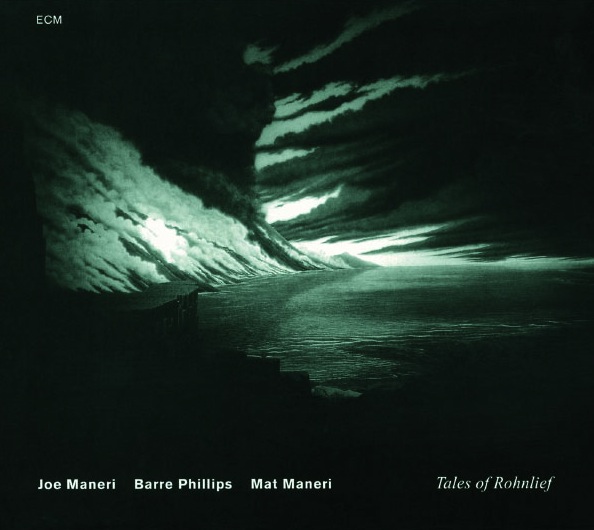
Maneri/Phillips/Maneri: Tales of Rohnlief (ECM 1678)

Tales of Rohnlief

Joe Maneri alto and tenor saxophones, clarinet, piano, voice
Barre Phillips double-bass
Mat Maneri electric 6-string and baritone violins
Recorded June 1998 at Hardstudios, Winterthur
Engineer: Martin Pearson
Produced by Steve Lake

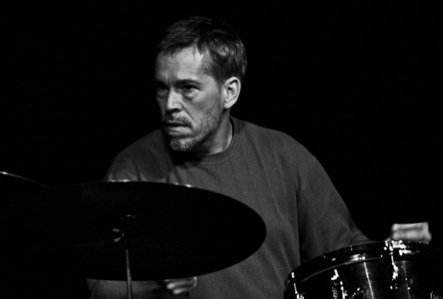
Tales of Rohnlief is an exercise in recitation. Joe Maneri’s histrionics call out to grasslands and briny spray. He preaches at the edge of the world, where rocks cut like scissors through wrapping paper: only a push and not a squeeze. In his voice is all the landscape one needs to find purchase for the journey that follows. The voice expresses itself by way of throat and reed, a pitch-bent nightmare turned frosty and sweet. It pales into a spontaneous croak as Barre Phillips and Mat Maneri press their palms to an elaboration of surrender. And with that, these three uncannily attuned improvisers touch the sky with more sky. A break in the clouds reveals a backdrop of revelry.

“A Long Way From Home” feels like anything but, so intimate is its delivery. It whisks us through points of contact as familiar as our subcutaneous selves, and just as sensitive to the errant touch. Mewing cats trade places with stone idols flicking their tongues in the face of condemnation, licking away the possibility of failure as a hand wipes away condensation. Paltry rhyme schemes fail, however, to express the depth of this game of halos. We may, then, search for another method to the genius we now face. I propose that we turn our ears away from what is being told and focus rather on the telling itself. For if we look beyond titles like “When The Ship Went Down” and “The Aftermath,” neither of which help us despite the wonders of their contents, we realize that the inaugural voice has never left us. Its register curls a ghost’s hand and guides us through the gnarled lessons of “Bonewith” until, lo!, it casts its oracle shadow across the “Flaull Clon Sleare” and watches, silent, as we attempt to “Hold The Tiger” (a particularly brilliant pop-up). Watery yet never watered down, the song cackles. “The Field” is another notable mention, if not for its mournful qualities then for the color of its blood. Three dark and winding paths bring us to the tongue-tied destination of “Pilvetslednah.” Now that he’s shown us the yard, Joe welcomes us into his home, forever full of warmth.

There is so much sincerity in this music that it hurts.

<< András Schiff/Peter Serkin: Music for Two Pianos (ECM 1676/77 NS)
>> Alexei Lubimov: Messe Noire (ECM 1679 NS
)

Philipp Wachsmann/Paul Lytton: Some Other Season (ECM 1662)

Philipp Wachsmann
Paul Lytton
Some Other Season

Philipp Wachsmann violin, viola, live electronics
Paul Lytton percussion, live electronics
Recorded October 1997 at Hardstudios, Winterthur
Engineer: Martin Pearson
Produced by Steve Lake

Following one untouchable duo with another, producer Steve Lake and engineer Martin Pearson fly ECM’s banner into further uncharted waters. Taking the label’s exploratory spirit to heart, they bring us Some Other Season. Last heard among the roaring mitochondria of Toward The Margins, here Philipp Wachsmann and Paul Lytton render that flame blue, gaseous. The two are more than experimental pioneers of their respective instruments, violin and percussion. They are, too, more than the electronic parasites that have grafted themselves so organically on to their craft.

The title of “The Re(de)fining of Methods and Means” says it all: the hermetic tinkerer must splash his craft against the earth and revel in the sounds. There is treatment to be had, to be discovered in the walls, lurking among asbestos and frayed electrical wire. It is the voice of a profound past cloaked in future guise. One can almost hear fingers tapping in the interstices, flipping signatures like fuses of the brain. In “Shuffle,” the violin sheds a skin with every utterance, stirring its accoutrements with impending fury while bells and cymbals dance in the upper atmosphere. Lytton dips “Leonardo’s Spoon” into the shadow of a painted veil, and from this ladles the prompt for Wachsmann’s solo “Choisya.” Like “The Peacock’s Tale,” it finds a choir in the single string, fanned and feathered.

This duo, then, is redefining at every turn, tapping the fractures of “Shell” to reveal the five-part “The Lightning Fields.” At its core is the ecstatic interaction of Field 3, which bubbles over into something like an Ikue Mori experiment in Field 4. Hereafter the session reveals its deepest biological secrets. From the thin, gurgling colors of “Whispering Chambers,” essential to what the album is (not) trying to achieve, to the final title track, which contrasts drones with the skittering vocabulary of finality, it rolls its tongue through a series of linguistic asterisks.

Sounding at times a hurdy-gurdy’s dream, at others a biological nightmare, Some Other Season wafts through our aortas with the wind of Luigi Nono’s La Lontananza Nostalgica Utopica Futura and the immediacy of a London Improvisers Orchestra bonfire. A scraping and gravelly spelunk into the depths of communication, it skates along the surface of consciousness with a playfulness at once mammalian and insectile. This music is four-dimensional. One can smell it burning.

<< Joe Maneri/Mat Maneri: Blessed (ECM 1661)
>> Dave Holland Quintet: Points of View (ECM 1663
)

Joe Maneri/Mat Maneri: Blessed (ECM 1661)

Joe Maneri
Mat Maneri
Blessed

Joe Maneri alto and tenor saxophones, clarinet, piano
Mat Maneri violin, electric 6-string and baritone violins, electric 5-string viola
Recorded October 1997 at Hardstudios, Winterthur
Engineer: Martin Pearson
Produced by Steve Lake

The stone gate. Vagary of an age lost to the water that swallows its knees. To listen to this record is to step through that gate, and find on the other side not ocean but a new kind of air in which water and vapor bleed like the sun’s light from the moon, the parent in the child. Many father-son teams have thus riddled the history of jazz, but between Joe and Mat Maneri one not only hears the biological bonds at play, but feels their electrical charge, and nowhere more so than on this first duo recording for ECM. Much can be made of the microtonal grammar that Maneri Senior has perfected over decades and which rests so intuitively at his fingertips, but at the end of the day it’s all about physicality and attunement. “If I play a thousand microtones, what’s that worth if the rhythm isn’t happening,” he tells us. “In some ways the rhythm is the most vital part of what we’re doing.” Listening to them emote is akin to listening to Paul Motian on the drums. Such is their fluency. Comparing them and their fashionable counterparts, however, is night and day. Which is to say, night on Earth and day on a different planet. By the same token, there is something so deeply integrated about the playing that we cannot help but look inward to find its pulse.

And yes, we may search for the pulse, but in doing so forget that the search is itself the pulse. Its most potent strain breathes through the lungs of “There Are No Doors,” “Never Said A Mumblin’ Word,” and the title track, all three of which feature Maneri Senior at the piano. If the titles seem to be proclamations, it’s only because the Maneris practice what they preach, tracing the crevices of experience for all the grit we’ve left behind. From this they build microscopic castles and flag them with rapid eye movement. “Sixty-One Joys” is perhaps the most achingly beautiful animal Maneri Junior has ever tamed, an electric baritone violin solo that drinks pathos like honey and exhales sugar in the raw. The insectile blues “From Loosened Soil,” another thing of elemental attraction, bridges us into “Five Fantasies,” which draws on Webern’s bagatelles and ends on a light scream. “Is Nothing Near?” comes closest to an identifiable place, a place where reedmen convene to spit life in the dead of night. Waves of arco fortitude flounder in slow motion, the outtakes of a film starring cigarettes and rainwater. And what of light? For this, we turn to “Body And Soul,” an acoustic violin solo knocking at the door of a homespun dream. It is the rat in the kitchen who eyes the cheese, the teacher in the classroom who nods off mid-lesson, the child in the playground who sees a rainbow and cries, “Race You Home.” The clarinet gets a klezmer test spin in “Gardenias For Gardenis” before shifting into a Lombard Street drive in “Outside The Whole Thing.” At the end of it: a hole in the ground.

Unearthed is what this music is, like a gold nugget or gemstone—only these two mavericks are not interested in priceless rarities but rather take exquisite interest in the sifted dirt. When watered by the gifts of these performances, the dirt burgeons with syllables. They may not be of a language we can all produce on command, but it is one we can always translate.

<< Mats Edén: Milvus (ECM 1660)
>> Philipp Wachsmann/Paul Lytton: Some Other Season (ECM 1662
)

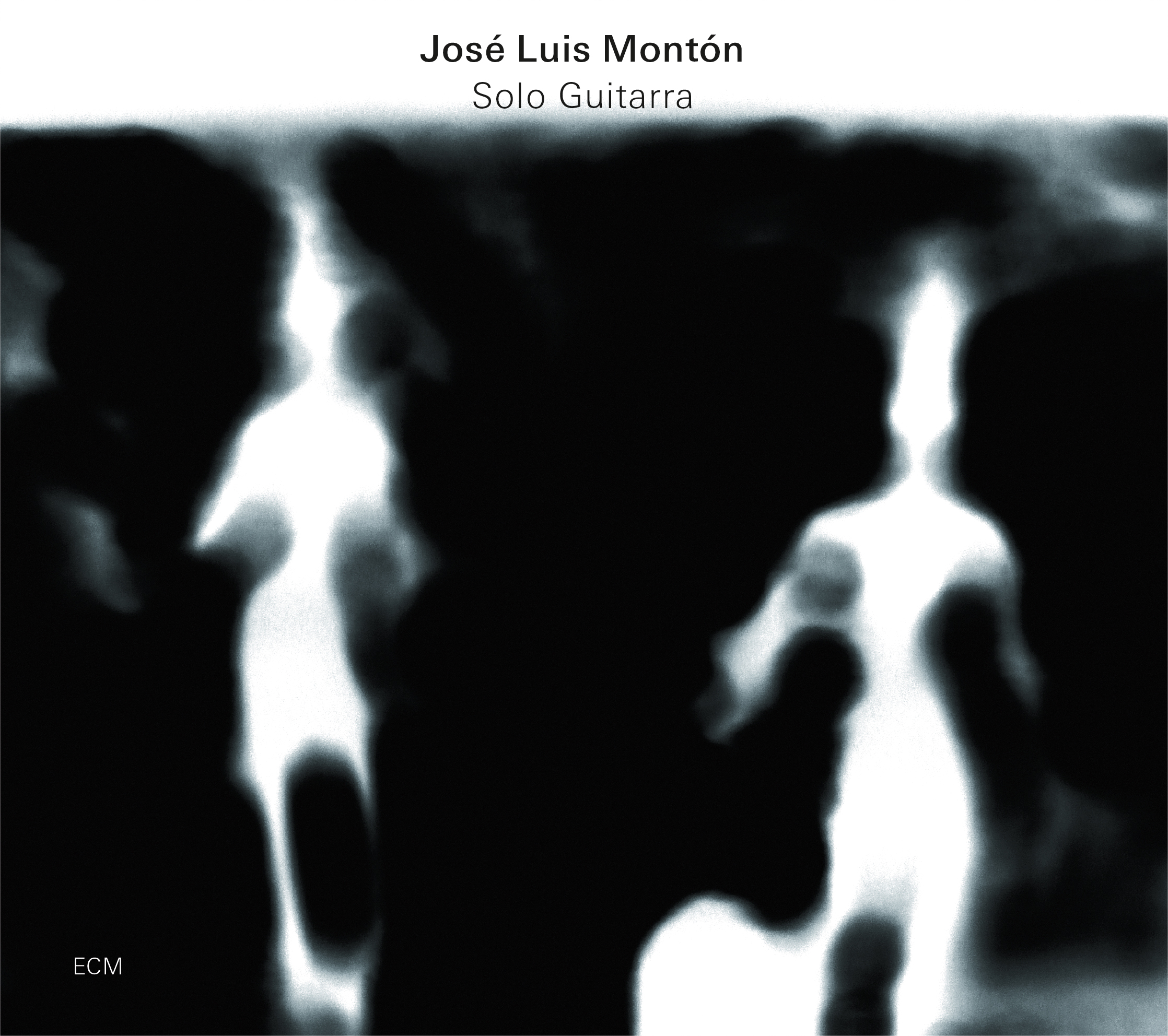
José Luis Montón: Solo Guitarra (ECM 2246)

José Luis Montón
Solo Guitarra

José Luis Montón guitar
Recorded April 2011, Auditorio Radiotelevisione svizzera, Lugano
Engineer: Stefano Amerio
Produced by Manfred Eicher

“In this music I have tried to translate all the sincerity and love of art that I appreciate so much when I encounter it.”

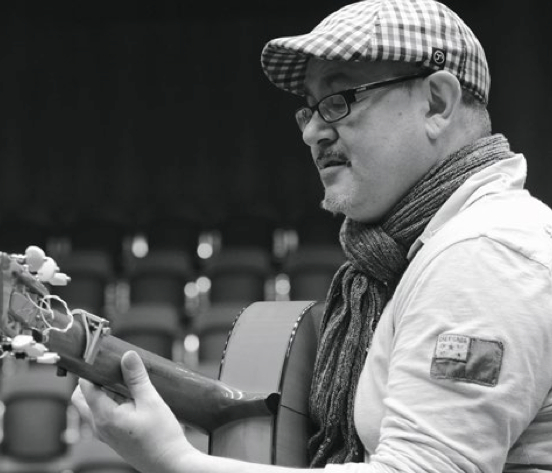
After hearing José Luis Montón play so dazzlingly in Amina Alaoui’s Arco Iris, one of ECM’s finest records of this or any year, producer Manfred Eicher invited the Barcelona-born guitarist back twelve moons later for a solo session. The result: Solo Guitarra. Paying homage to the flamenco music that continues to challenge and inspire him, Montón took this opportunity, as he did with Alaoui, not to build on or recreate some monolithic tradition but rather to use his instrument as the starting point for independent compositions through which a mythic past flows unimpeded.


(Photo by Dániel Vass)

As with the implied figures of the Max Franosch cover photo, there is nothing “solo” about this guitarra, for the architecture of its player’s technical and idiomatic acuity has many chambers. The farruca, a (possibly) Galician strand similar to Portuguese fado, is referenced in the two opening pieces. This light and airy style is most evident in the understated virtuosity of “Rota,” but also shows a darker side in “Española.” Already we have witnessed the depths of Montón’s abilities, turning six strings into a choir just yearning to proclaim and meditate in turn. The acrobatics of the bulería come out through “Son & Kete,” a spiraling and almost tense flurry of activity. “Altolaguirre” and “Hontanar” give us the chameleonic tango. On the surface fragile as rose petals yet thorny as the supporting stem, it lives as it sings: without the need for words, and in service of that one moment when all is cast away. Next is an enraptured tarantella. “Con permiso” turns said folk dance into a diary of consummated love. There is the unsure touch, the cheek quivering at first caress, the pile of shed inhibitions cushioning every pinpoint of oneness. The relatively unornamented shapes of the Andalusian cantiñas and soleá roll like children down a hill through “Al oído” and “Conclusión,” respectively. Theatrical use of slaps and rasgueado (those distinct hummingbird strums) speaks to Montón’s experience as a composer of incidental music. The seguirilla, one of flamenco’s most expressive and formidable variations, shows him at his spirited best in “Detallitos.” The inventiveness of his mid-range melodies is second only to his intuitiveness of rhythmic control. “Tarareando” is without citation. As a result, its wide steps bolster the innocent joy of “Piel suave,” a rustic Cuban guajira that turns like a Rubik’s Cube, the solution of which glows flush in an endearing rendition of “Te he de querer mientras viva.” Nestled in the heart of all this is the Bach-inspired “Air,” which gives respect to the famous movement of the Orchestral Suite No. 3. It is an enlightening reminder of the many paths we travel to find the sound that best expresses us, only to discover that those paths all lead to a shared origin.

(To hear samples of Solo Guitarra, click here.)

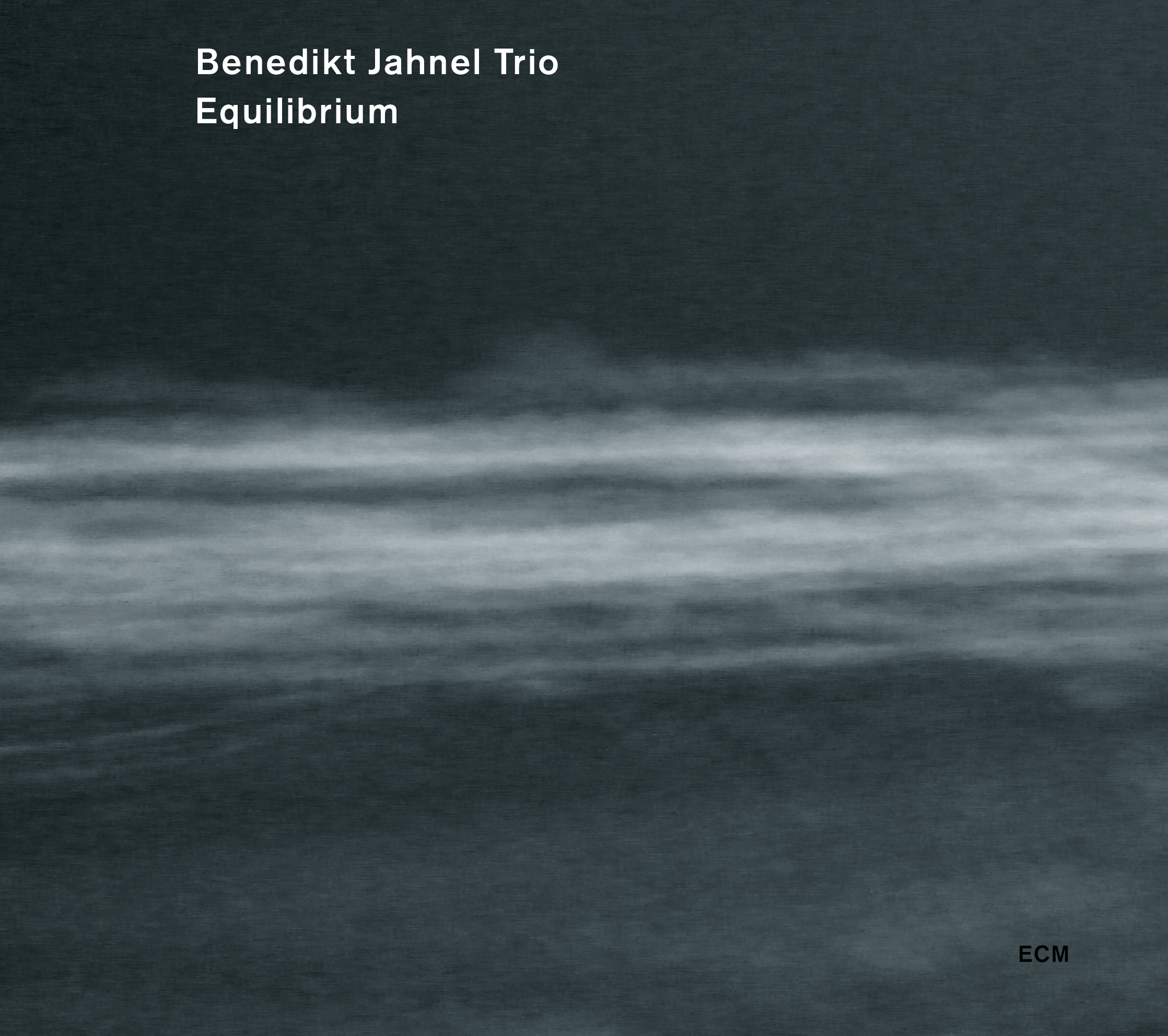
Benedikt Jahnel Trio: Equilibrium (ECM 2251)

Benedikt Jahnel Trio
Equilibrium

Benedikt Jahnel piano
Antonio Miguel double-bass
Owen Howard drums
Recorded July 2011, Auditorio Radiotelevisione svizzera, Lugano
Engineer: Stefano Amerio
Produced by Manfred Eicher

Making its ECM debut is the phenomenal Benedikt Jahnel Trio, for whom Equilibrium is more than a title. Under direction of the eponymous German pianist, already familiar to label listeners as a backing member of Cymin Samawatie’s “Cyminology” project, the Trio marshals two of the New York contemporary jazz scene’s brightest—bassist Antonio Miguel (by way of Spain) and Owen Howard (by way of Canada)—who share his penchant for strong dynamic twists, meticulous rhythms, and lyrical touch. Recorded at the same Lugano studio that has brought such sparkle to recent recordings by Amina Alaoui, Marcin Wasilewski, and Bobo Stenson, this leader date retains engineer Stefano Amerio and follows a similarly eclectic trajectory through a set of seven originals.


(Photos by Uli Zrenner-Wolkenstein)

From the muted-string depths of “Gently Understood” we can draw analogy to the work of Nik Bärtsch’s Ronin. Similar is the Zen groove aesthetic and modular approach that has its roots in the Trio’s first album (unsurprisingly, Modular Concepts), uncoiling from a filamented core lasting gestures of great melodic sweep. Howard’s tracings build character, coalescing into an idol of dreams. After a light intro, the theme of “Sacred Silence” speaks in undulating phrases. It whisks away our angst with the flutter of an eyelash and leaves us primed like archival paper for the impressions that follow. Miguel in his solo follows the paths left behind by tears to their sources as Howard whites out every vein with a nocturnal sigh.

For all its auspicious beginnings, “Moorland & Hill Land” brings smiles to the faces of its history, for in being so remembered they live anew, unimpeded by the shackles of convention into which they were born. Jahnel is both the voice of reason and its crumbling philosophies. As the snowball rolls and the slope increases, the overall sound becomes only more permeable, and ends with a flick of the wrist, striking a match of silence. Howard’s delicate interactions between snare and cymbals make “Wrangel” the most rhythmically deft track of the set. Miguel keeps us keyed into reality, while Jahnel brings fantasy so close we can taste it. Together, “Augmented” and “Hidden Beauty” form a decidedly rubato interlude toward the final (and title) track, which closes the door and opens another. Here is the traction and romance of life in less than ten minutes.

The Trio’s approach to soloing is remarkable. Vague is the cordoning of instrumental voices. In its place, an effortless symbiosis, an equilibrium of contribution. Like an archaeologist, the Trio moves clods of earth before working methodically at the details with brushes and breath, leaving only the value of every sonic relic to shine as it once did before it was buried.

Without question, among ECM’s Top 5 releases of 2012.

(To hear samples of Equilibrium, click here.)

Eivind Aarset: Dream Logic (ECM 2301)

Eivind Aarset
Dream Logic

Eivind Aarset guitars, bass guitar, electronics, percussion, samples, programming
Jan Bang samples, dictaphone, programming
Recorded and mixed 2011/12 at Punkt Studio and Tjernsbråtan by Jan Bang, Erik Honoré, and Jan Erik Kongshaug
Mastering: Jan Erik Kongshaug, Rainbow Studio
Produced by Jan Bang

Eivind Aarset, without whom Nils Petter Molvær’s breakthrough Khmer might never have reached its full potential, gets an ECM space of his own at last. As much a child of the label as he is of Jimi Hendrix and Miles Davis, the Norwegian guitarist brings attunement to every touch of the strings. Into the synchronicity of technique and vision he has sculpted since his early teens, Aarset has absorbed inspiration from a variety of musicians, including Bill Laswell, Marilyn Mazur, and, above all, Jon Hassell. That said collaborators are all masters at creating dream logics of their own is no coincidence, for he too is the student of another time-space continuum. With guitar as writing instrument and an array of electronics as his paper, he takes down field notes of a culture we’ve never known, a culture that slides down the ladders of our DNA and airbrushes mantras onto our microbes. Partner Jan Bang—who worked alongside Aarset most recently on Hassell’s Last night the moon came dropping its clothes in the street—adds rivers and landmarks, making the overall effect that much more immediate. Given the above history, one would expect long dronescapes, à la Re: ECM, to prevail. What we get instead is a set of eleven glimpses averaging four minutes apiece. These are no scale models, but self-aware biomes along whose ghostly borders flourish colonies of samples and contact wire.


(Photo by Luca Vitali)

In spite of the technological array in which it finds itself, the guitar of Dream Logic is naked as can be. The ensuing digital offshoots, as much reflections of the instrument as they are of it, are elementally no different than steam and water: only their physics has changed. Thus, the spidery crawl space of “Close (For Comfort)” feels less like an introduction and more the extension of life cycles as yet unheard. Its throats sing to us in two further variations, each slightly more corroded than the last. Contrast this with the texture of “Surrender,” which with its amniotic undercurrents gives no indication of flaw.


(Photo by Soukizy)

As the credits inform us, koto virtuoso Michiyo Yagi gave “Jukai (Sea Of Trees)” its title, an evocative one that carries the same double meaning in Japanese (樹海) as it does in English. Here, Aarset opts for the literal, painting with underwater gamelan a forest of internality. The level of development in its few short minutes is astounding, indicative of the thought put into the album as a whole. A subterranean bass tickles the soles of our feet in “Black Silence,” where slumbers a leviathan prayer. Its pizzicato veins chart every contour of our spines in “Active” and “Reactive” before spreading into the viscous pulchritude of “Homage To Greene.” Through a Taylor Deupree-like veil, Aarset weaves threads of guitar in a swaying rhythmic tide. If the foliage of “Jukai” could speak, it might sound like “The Whispering Forest,” which opens itself to concretely melodic shapes. Of the drone, we get only a teaser in “The Beauty Of Decay.” In the same way that the beginning was an end, so is this end a beginning. With a methodical sweep of the minute hand, it resets us to local time, that we might take this slow plunge into jet lag once again.

(To hear samples of Dream Logic, click here.)

Bobo Stenson Trio: Indicum (ECM 2233)

Bobo Stenson Trio
Indicum

Bobo Stenson piano
Anders Jormin double-bass
Jon Fält drums
Recorded November and December 2011, Auditorio Radiotelevisione svizzera, Lugano
Engineer: Stefano Amerio
Produced by Manfred Eicher

The anticipation of a new Bobo Stenson Trio release may be too much to bear, but the release of one is too much to ignore. This seventh album for ECM finds the Trio in new rags and old. Bill Evans’s “Your Story” was a favorite of Paul Motian, to whom the present version is dedicated, and starts the set off on a bittersweet note. It’s a heartfelt solo from Stenson that gives us perspective on the life of an artist whose contributions to the genre were incomparable. It also lulls us into a state of such openness that “Indikon,” the first of three freely improvised tracks, can be the only logical way to proceed. Along with its like-mindedly titled cousins, it reveals the album’s innermost thoughts. The title track even more so, as it threads slow and spiraling footprints along a haunting arco wire. Breathing room narrows to the point of claustrophobia, and slumbers there under a blanket of dead leaves. Here is the trio in its finest cohesions, spontaneous yet blossoming with organic comfort. Stringing one eureka moment after another, none of the musicians ever tries to lead the others, opting instead for close-eyed trust. “Ermutigung,” a protest song by East German dissident and Hanns Eisler protégé Wolf Biermann, levels off a scoop of political history with a smoothness of execution few can match. Fält’s subtleties keep its textures porous and susceptible to whatever comes in Stenson’s flights of abandon. Jormin steps forth in his deepest solo of the set and sweeps us like autumn into the cavernous “Indigo.” Amid rustlings of toms and cymbals, we hear the echo of a faraway song, changed by its journey from source to destination. Jormin pens two tunes. Between the frozen lake sheen of “December” and the creeping rays of “Sol” there is another album’s worth of imagery to ponder. The latter’s beginnings are remarkably enigmatic, every stroke of the horsehair a branch ready to fall. Both embody a depth of solitude that can only be seen in optimistic light. Jormin also offers his co-arrangement with Sinikka Langeland of a traditional Norwegian Ave Maria, which over its nearly eight-minute articulation of church rafters and prayerful thanksgiving recalls his work with Stenson on Matka Joanna. “La Peregrinación” is yet another unassuming vehicle for the bassist. Written in 1964 by late Argentine composer Ariel Ramírez, it sways like a playground swing in the wind of a tumultuous past. The lilting feel, maintained throughout, is all kinds of wonderful and fades into a sparkling finish. “Event VI” is adapted from George Russell’s eight-part suite, Living Time, thus bringing the Bill Evans connection full circle. Fält is as colorful as ever in his attempts to evoke the orchestral flavors of the original. Danish composer Carl Nielsen gets a nod in “Tit er jeg glad,” while another from across the water in Denmark, Ola Gjeilo, gets his in “Ubi Caritas.” Both are brushed and polished to a resonant shine, the second keening in aching curves of finality.


(Session photo by Nadia F. Romanini)

It’s encouraging to know that bands like Stenson’s exist. What the trio lacks in quantity, it makes up for in quality and, more importantly, in its ability to morph into a new animal with every title uttered from its lips. In this sense, “Indicum” is more than a vision of what could be. It is the solution to darkness.

(To hear samples of Indicum, click here.)

Arvo Pärt: Adam’s Lament (ECM New Series 2225)

Arvo Pärt
Adam’s Lament

Latvian Radio Choir
Sinfonietta Riga
Vox Clamantis
Estonian Philharmonic Chamber Choir
Tallinn Chamber Orchestra
Tõnu Kaljuste conductor
Recorded November 2011 at Niguliste Church in Tallinn by Peter Laenger and Stephan Schellmann, except for Estonian Lullby and Christmas Lullaby, recorded May 2007 by Margo Kõlar
Mixed at Rainbow Studio in Oslo by Arvo Pärt and Manfred Eicher with Jan Erik Kongshaug (engineer)
Produced by Manfred Eicher

“The text is independent of us; it awaits us. Everyone needs his own time to come to it. The encounter occurs when the text is no longer treated as literature or artwork, but as reference point or model.”

If the above is any indication, Arvo Pärt is one who understands text for what it is: a stepping-stone. With an attention equaled perhaps only by Alexander Knaifel, he holds words like votive candles, giving them flame by the touch of his gift for sound. Whatever we bring along the way is welcomed as it is, broken and hungry for a voice to lift its spirits. To this end, the writings of Saint Silouan (1866-1938) again form the touchstone for a program shaped as much by lips and tongue as by the Holy Spirit that guides them. If we never forget Silouans Song, the strains of which bled through the Estonian composer’s groundbreaking Te Deum recording of 1993 with especial scintillation, it is because its source had already been surpassed by the first draw of a bow. On Adam’s Lament, texts come to us as travelers with distant knowledge in their satchels. For ECM’s thirteenth program devoted to his art, Pärt builds on the tintinnabulation that shrouded his work of the eighties and nineties. He looks even more internally, seeking not only the echo’s path but also its unknowable spark.


(Photo by Kaupo Kikkas)

Paradise as Adam knew it may be lost, but in the eponymous piece we find our own. Though it is an illusion made possible by reverberation and microphones, its power rings beyond the circumscription of its capture. Here, Pärt works from the inside out, finding in every contour of its ecclesial Slavic text a vision of flesh and nature. Holding these together is the touch of one whose own humility exceeds him. And is not humility the greatest mystery to be enhanced through the act of putting pen to staves? It is, says Pärt, an enigma to the stained mind: “like marble, its beauty radiates from its depths.” The locus of that beauty takes form through the body’s destruction. Even then, its reality is partial. To be sure, the gaze of science goes far in this regard but stops at the threshold of something invisible. In the absence of eyes to see, the Lord’s grace gives us receptacles to hear.

Pärt’s microscopic approach sees us as something more than the sum of our parts. Shouldering the vagaries of time, we drag our feet toward a light on the horizon. Its name is stillness, and we are its destroyers. Strings and voices do not so much blend as talk with one another, finding synchronicity through varying degrees of unrest. Paradise, then, lives on as an idea of its former self. And perhaps it was never anything more. It was the voice of generative silence. Only through its fall—which looms wispily at best in the violins—can we look back to our infancy.

Adam’s Lament is about lineages: of us as descendants of Adam, of our future as reflection of the decisions we make today, of that single thread still being spun from the breath of its Creator. As the newest of the present recording, it looks back on a singular catalogue of sonic truth-seeking and self-reflection. The handful of older pieces reworked thereafter shine like the inner circle of its rosette.

My soul wearies for the Lord, and I seek Him in tears.

“The feathery lightness of Beatus Petronius and, by contrast, the potency of Statuit ei Dominus are two sonic worlds,” says Pärt, “like the two sides of God, which I tried to touch, to trace in these works.” Composed in 1990 and revised in 2011, both embody the architectural wonders of their service. In offering themselves so directly, they take off their masks of freedom in search of the real thing. Their departure balances on the apex of a steeple, poised for the coming of sun and moon. In their brevity lies the secret to faith: never waste your words. Every syllable becomes a community in and of itself, bustling with activity in trade with those around it.

The Lord made to him a covenant of peace…

The composer imagines his Salve Regina (2001/2011) as a funnel, turning in progressively smaller circles until its center manifests like a dwarfed star. That he manages to evoke such cosmic brilliance in earthly terms is barely short of the miracle it so ardently expresses. It draws lines from cloud to soil in ways that transcend all obstacles. Starlight trades footprints with human history, filling each with enough hope to light the way in darkest night. Astonishment comes nowhere near to describing its effect.

To thee do we send up our sighs…

The Alleluja-Tropus (2008/2010) sets liturgical words devoted to St. Nicholas of Myra (270-345), whose relics absorbed its first performance in Bari. The refrain is key to this jagged string game of antiphony. Although short in scope, its feathers engage in a spectral bit of play as they float free of their bones toward skies clouded by ash and fear.

A rule of faith and a model of meekness…

L’Abbé Agathon (2004/2008) tells the story of St. Agathon, whose carrying of a leper—later, it turns out, a testing angel—is evoked in the music’s heavy gait toward awareness. A soprano of infirmity spills like ink across the baritone’s selfless paper. The resulting patterns are what the strings fill in. Like onlookers to moral awareness, they take in what is before them, realizing only later the folly of their inaction.

“For mercy’s sake, take me forth with you.”

The Estonian and Christmas lullabies (2002/2006) are, according to their composer, “for adults and for the child within every one of us.” Both arise as if of their own volition. The use of pause and reflection is genius, allowing us to bask in the delicacy of a border-crossing nostalgia while adding to it the lessons of our lives.

And she brought forth her firstborn son…

If Tabula rasa was a revelation and Te Deum a call to harmony, then Adam’s Lament is the birth of our Messiah, wrapped in Christ child’s swaddle. The association sets me to marvel at my own firstborn sleeping next to me as I attempt to recast this music into meager sentences, to seek in his contented face the promise of a time when the world will no longer hold a knife to its own throat. The manger smells of song, and its name is Love.


(My 2-month-old son basking in the warmth of Christmas Lullaby)

All of this puts a finger on the pulse of a divinity beyond the prescription of any religion, which necessarily flows in opposing directions as an embodiment of universal balance. Were it not for the bleakness of our transgressions, such music might never find our hearts, but simply flow through them, unnoticed, as part of the hum of Time. That it comes to us so undeniably is due to many talents, including engineers and producers. Yet we must thank above all Tõnu Kaljuste and the musicians at his cue. Their undying commitment to Pärt’s mission has yielded one of the most indomitable partnerships in music, classical or otherwise. One hardly needs to reiterate the fact that, as with every label project, Pärt participated fully in all stages of this production. His contact is palpable in what we hear, reaching for us like a grandfather we never knew we had and whispering a story into our souls. Much of that story has already been written. The rest is for us to inscribe.

(To hear samples of Adam’s Lament, click here.)

Manu Katché: s/t (ECM 2284)


Manu Katché

Jim Watson piano, Hammond B3 organ
Nils Petter Molvær trumpet, loops
Tore Brunborg tenor and soprano saxophones
Manu Katché drums, piano solo on Dusk On Carnon
Recorded March 2012, Studios La Buissonne, Pernes-les-Fontaines
Engineers: Gérard de haro and Romain Castera
Produced by Manfred Eicher

French-Ivorian drummer Manu Katché first caught my ear on Jan Garbarek’s Visible World, for which he provided a comforting balance of the smooth and the jagged. Since then, I’d heard him lurking in many of the saxophonist’s records, including Ragas and Sagas, I Took Up The Runes, and Twelve Moons. Yet it wasn’t until 2005’s Neighbourhood that he blossomed before my ears as a composer of economy, straightforwardness, and panache. Thus began the Manu Katché “band,” the makeup of which has changed with every album since. Horns remain a constant, and this latest effort puts him in studio contact with Nils Petter Molvær on trumpet and Tore Brunborg on reeds, along with Jim Watson on piano and Hammond B3. Molvær is a particularly welcome addition to the roster. Like Katché, he’d been a sideman for his fair share of memorable ECM sessions, including projects with singer Sidsel Endresen and Arild Andersen’s Masqualero, but his breakout moments came as a leader on 1997’s Khmer. As for Watson, he and Katché share a double life in the world of popular music—the former with Meshell Ndegeocello, the latter with Peter Gabriel—and for this outing the keyboardist takes the place of bass and completes an unbeatable (no oxymoron intended) rhythm section. This constant change in lineup speaks to the maturation of an artist whose instrument is so often forgotten in the grander mix, for even among these fiery talents his voice rings with a binding energy all its own.


(Session photo by Monika Rokicka)

It’s no coincidence, then, that those drums should lead us into the smoothness of “Running After Years,” the first of ten new originals. From its monochromatic groove and descending horn lines, we get a prime taste of Katché’s melodic sensibilities and of his band’s invaluable contributions toward realizing them. Molvær takes the first solo, walking avenues on winged heels. “Bliss” turns the lights down even lower on this city of love, giving Watson a chance to go a-Hammonding on fresh snowfall. “Loving You” funnels moonlight into the quietest corners of the heart, and with the last shows that keyboard and drums could take this album and run at any time if they wanted to. Molvær’s Jon Hassell-like touches in “Walking By Your Side” paint over an already smoky sky with charcoal before Brunborg’s tenor rides a wave of organ to distant shores. “Imprint” is a song without words, a quiet anthem for the departed that bleeds good memory. Its contrast to the surrounding tracks is starkly beautiful, and leaves us cored for the fluid energy Brunborg brings to “Short Ride.” As extroverted as its predecessor is veiled, it shows Katché’s kit skills at their bubbliest. “Beats & Bounce” is an easy favorite. Swinging from a piano hook that stays with you, this emblematic tune finds itself from the get-go and doesn’t let go. At moments you’d swear there was a bass there in the mix, but it’s Watson all the way. “Slowing The Tides” pushes us deeper into the album’s nocturnal engineering, through which organ wavers like dragon’s breath. The band ends its tenure on “Loose.” This simple chapter turns our protagonists inward, leaving only Katché alone at the piano for “Dusk On Carnon.” Originally trained on the instrument, he shucks the music from its husk, offering an ear to those who will partake.

With a feel for the evocative that is his trademark, Katché’s self-titled latest brings freshness wherever it goes. One listen is all it takes to convince us of its sheer enjoyment.

To hear samples of Manu Katché, click here. And for some footage in the studio, look no further: