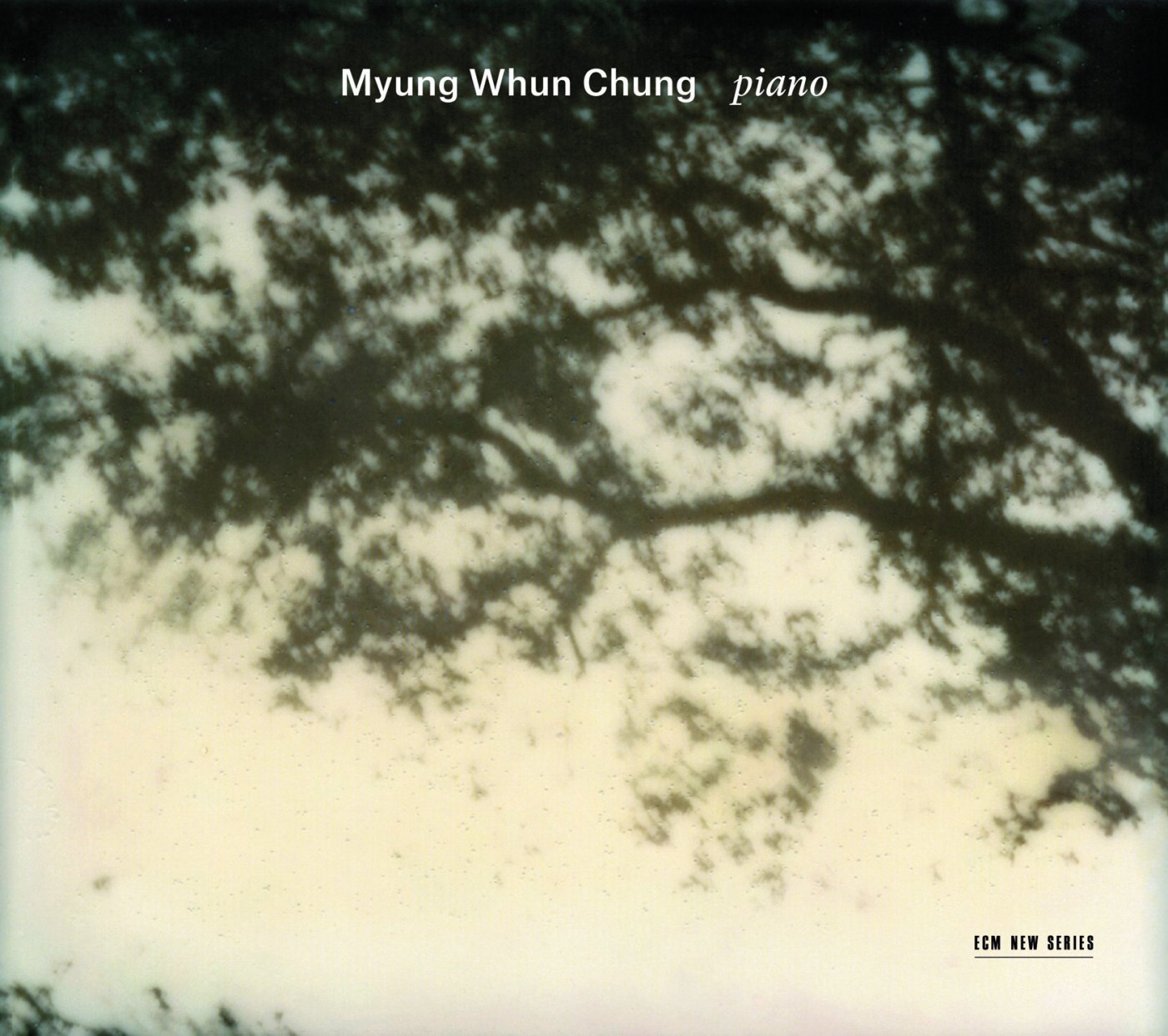
Myung Whun Chung: piano (ECM New Series 2342)

piano

Myung Whun Chung
piano

Myung Whun Chung piano
Recorded July 2013, Teatro La Fenice, Venice
Engineer: Rainer Maillard
Produced by Manfred Eicher

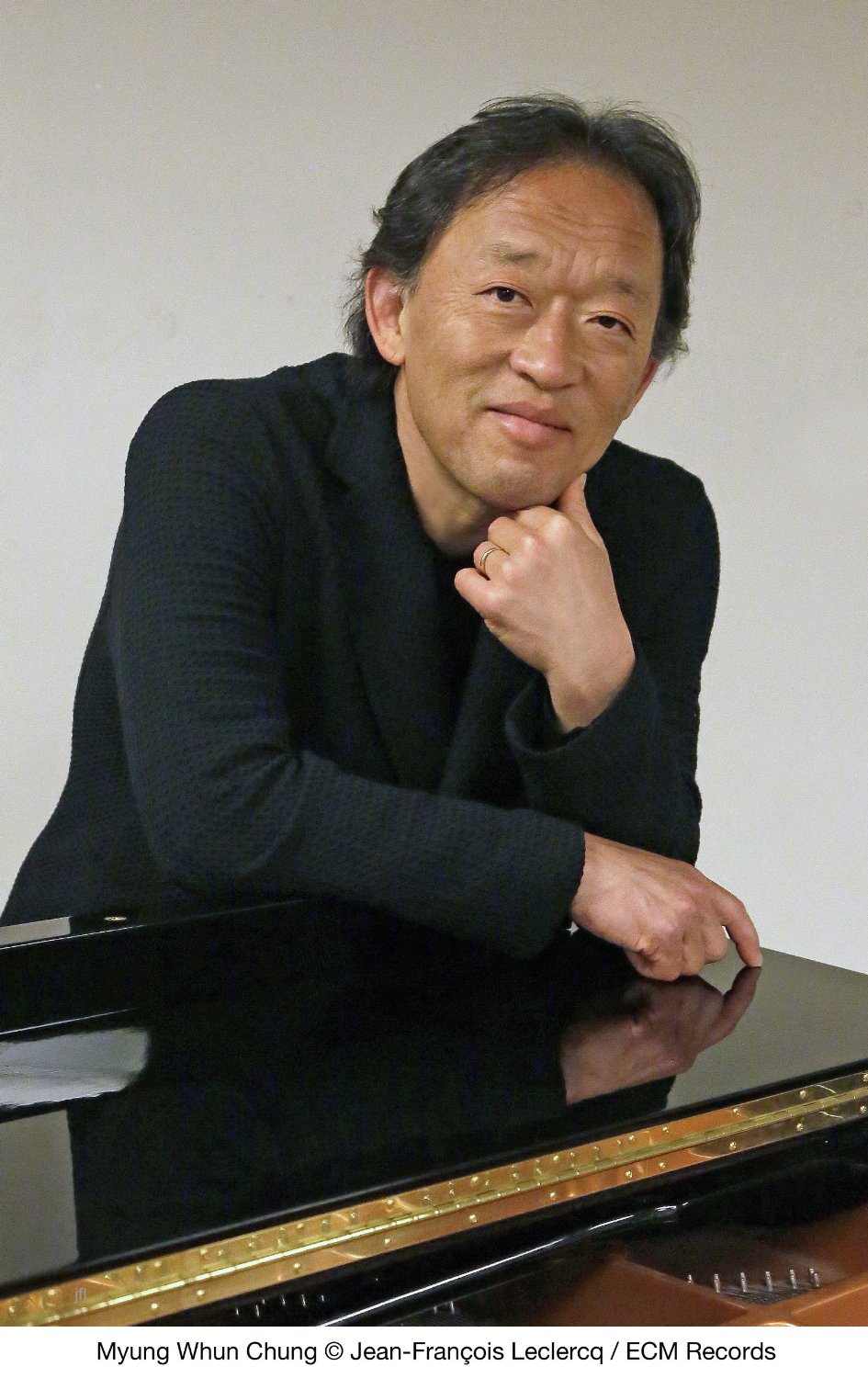
“I believe that musicians are only responsible for half of the real musical experience—the other half must be done by the listener. How one listens and receives the music is perhaps the most important gesture.” So writes Myung Whun Chung in a gracious liner note accompanying his ECM debut. One could receive no more fitting an invitation to a program for which the renowned conductor puts down his baton and takes to the piano, sharing his thoughtful inscriptions across some of the most immovable palimpsests of the classical canon.

In keeping with the spirit of listening, his barely titled piano is more a gift than a recital. It is also a brilliant instance of presentation, and of music’s personal necessity. The melodies we will know—some by name, others by association, each so ingrained in our subconscious that they would seem to exist of their own impulse.

Myung Whun Chung

Chung’s forte is his commitment to texture. True to reputation as a conductor, his interpretations are remarkable for their studied pacing and dynamic appropriateness. The giants of the set list are also its greatest ambassadors for intimacy. Among them, Debussy’s Clair de Lune is paramount. Yet where this much-copied painting, excised from the composer’s Suite bergamasque, so often drifts through our outstretched hands, in Chung’s it has palpable elasticity, made material by a heartfelt triangulation of playing, instrument, and engineering. His Für Elise is likewise weighed, Beethoven’s castaway gem taking on a driven quality through a balance of whimsy and despair.

Intimacy also reigns over Chopin’s Nocturnes in D-flat Major, op. 27/2 and in c-sharp minor, op. posth. Chung draws out the fidelity of their singing and underlying dance, walking that ephemeral path between slumber and waking. Even Mozart’s twelve Variations on “Ah! Vous dirais-je, maman” (better known to many as “Twinkle, Twinkle, Little Star”) don a patina of solitude. Despite their jovial development, they retain a cerebral edge that looks back to Bach even as it looks ahead to Beethoven, and conjures up imagery of self-enclosed genius.

Even with all the evening hymns, two Schubert Impromptus—these in E-flat Major, D899/2 and G-flat Major, D899/3—render the album’s darkest shades. Lovely in their own way, not least of all by their performer’s evocative makeover, they clutch within their sparkling ribcages hearts of unresolved tensions. So too do Schumann’s melancholy Träumerei and whimsical Arabeske, each an ode to closed eyes. Yet nowhere do Chung’s intentions take such unforced flight as in Tchaikovsky’s Autumn Song, in which he gives proper attention to the open spaces of the score, allowing them to breathe so that we may share in that breath.

I can assure you that none of the above is mere reviewer’s hyperbole. To dismiss it as such is to misrecognize the music’s inherency and the selflessness with which it is presented. You will, of course, hear these pieces again, just as you have heard them many times before, but it is unlikely that you will find them so lovingly unpacked. This is music that recognizes us before we recognize it.

(To hear samples of piano, you may watch the video above or click here.)

Erkki-Sven Tüür: Seventh Symphony/Piano Concerto (ECM New Series 2341)

Seventh Symphony

Erkki-Sven Tüür
Seventh Symphony/Piano Concerto

Laura Mikkola piano
Frankfurt Radio Symphony Orchestra
Paavo Järvi conductor
NDR Choir
Werner Has Hage choirmaster
Recorded June 2009 at Alte Oper, Frankfurt and June 2010 at hr-Sendesaal, Frankfurt
Recording producers: Eckhard Glauche (Piano Concerto) and Hans Bernhard Bätzing (Symphony No. 7)
Recording engineer: Thomas Eschler
Executive producer (hr): Andrea Zietzschmann
An ECM/Hessischer Rundfunk (hr) co-production

We are what we think.
All that we are arises with our thoughts.
With our thoughts, we make our world.
–Siddhartha Gautama

ECM’s sixth New Series album dedicated to Erkki-Sven Tüür spins the Estonian composer’s pen like the hand of a great karmic clock until it lands on some of his most ambitious writing to date. Tüür has come a long way since being introduced to ECM listeners on Crystallisatio, changing his compositional method not only nominally but also materially as he branches further into the cosmos by means of more orthodox assemblages. No longer do we get the standalone tone poems, the vocal juggernauts, or architectonic fragmentations—or, it might be more accurate to say, we get all of these together, now compounded into a fresher biological code, the dots and dashes of which find kindred souls on the pages of two massive scores in the proverbial formats of symphony and concerto.

The Piano Concerto of 2006 resounds with consciousness. Laura Mikkola is the soloist, nestled in the silvery tones of the Frankfurt Radio Symphony Orchestra, under Paavo Järvi’s erudite direction. Although the concerto assumes a tripartite structure, each movement dovetails into the next by means of an inexhaustible life force. The low piano hit and high bell that open the piece are pure Tüür: compactly dynamic and self-aware. Like the outer rim of an eclipse, it exposes arcs of fire normally obscured by the sun’s extroverted shine. This change of light allows us to see that everything is quilted. Due to its fragmentary grammar, the piano allows us to perceive only the asteroids it gifts to the atmosphere. Mikkola takes on no small task in finger-pedaling fault lines along the orchestra’s landscape. Fans will note the flutes from Crystallisatio making a distant cameo, but find them short-lived and intermittent in the grander scheme at hand. And while the piano, as a compositional tool, is this music’s genesis, in performance it feels rather like a membrane of intellectual freedom.

If the first movement is interactive, the second is retroactive. The beauties of the latter’s solo piano introduction cannot be emphasized enough. It’s wonderful to hear Tüür’s piano writing in unaccompanied snippets, for these reveal a composer who gathers his sweep with nothing wasted. The string writing in this instance is overtly narrative in style, cutting the scene with razor-thin sheets of rain and giving more pronounced voice to percussion and brass. A jazz piano trio signals the final movement, which morphs into a deep-space drone of starlight and comet-tail blues. Whether one sees such idiomatic choices as tried or true, they nevertheless tease out a playful heart beneath all overlap.

EST

The Symphony No. 7, subtitled “Pietas” (Devotion), is something of a spiritual hodgepodge. Dedicated to Tenzin Gyatso (the Dalai Lama) and his lifelong endeavors, it pairs the same orchestra with the NDR Choir, singing words attributed to the historical Buddha (from the collection known as the Dhammapada), as well as a lyrical potpourri from such diverse sources as Jimi Hendrix, Saint Augustine, Mother Teresa, and Deepak Chopra. Any opinions about its interfaith message are easily quelled by the symphony’s command of scope, which becomes more microscopic the larger it grows. Like the minnow to the frog, it speaks in origins.

So vast is Tüür’s vision that one can hardly be surprised at the entrance of the chorus, because the singers seem built of the same primordial stuff. The relationship between elements—strings, percussion, winds, and voices—is one of neither construction nor deconstruction, for they swim in parallel. The second movement hurtles its satellites farther into space, catching them in galactic nets with athletic precision. The third begins in helical spirals of brass and timpani but becomes more jagged with polyglot idioms. This leaves the 20-minute final movement, which is a symphony unto itself. There is a thick undercurrent to the singing, as if barely hanging on for all its gravidity, which is then atomized by the orchestra’s gradual materialization. Heavenly geometries unfold overhead, even as shadows crystallize below. Strings take on increasingly vocal qualities in the “thrown-ness” of their utterances, uniting with choir into a closing benediction of vibraphone.

Tüür seems always to have abided by his own string theory and awareness of the interconnectedness of things. In a marketplace where fellow Estonian Arvo Pärt has dominated contemporary classical music’s outreach even to those professing little interest in the genre, I can only hope that Tüür will continue to gain wider recognition for his comparable mastery and that others will realize there’s a little bit of all of us in the genetic evolution of his compositional voice.

Tim Berne’s Snakeoil: Shadow Man (ECM 2339)

Shadow Man

Time Berne’s Snakeoil
Shadow Man

Tim Berne alto saxophone
Oscar Noriega clarinet, bass clarinet
Matt Mitchell piano
Ches Smith drums, vibraphone, percussion
Recorded January 2013 at Clubhouse, New York
Engineer: Joe Branciforte
Assistant: Bella Blasko
Mixed by David Torn at Cell Labs
Produced by David Torn and Tim Berne

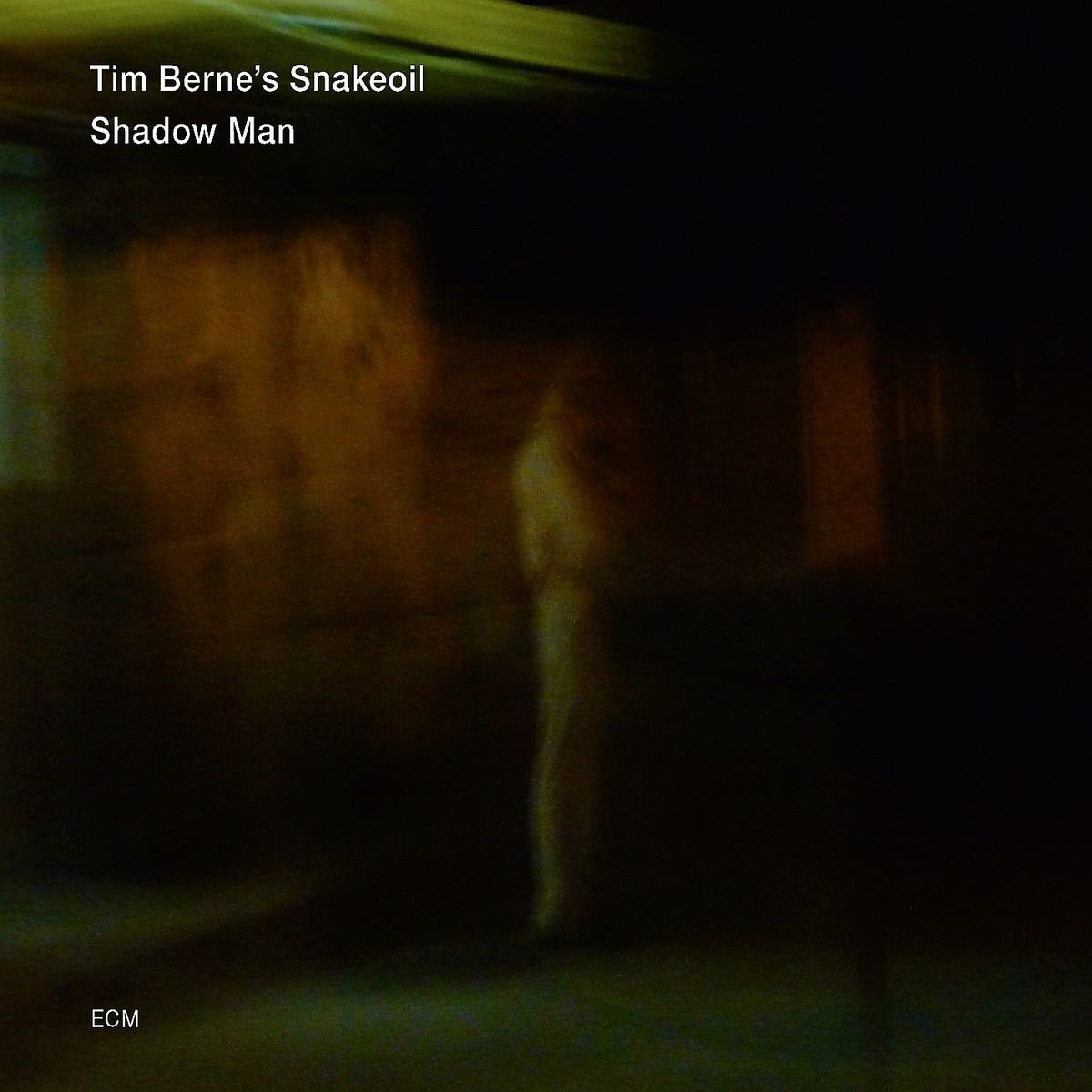
In the world of Tim Berne’s Snakeoil, openness is the new closure. Having boomed into the ECM airspace with its self-titled debut, this band of powerhouse New Yorkers was ripe for a second coming. And in the throes of Shadow Man, it’s impossible to witness the musicians’ leaps of evolution and intuition and not be moved. We might easily throw around words like “cerebral” or “complex” to describe what’s going on here, but at the end of the way what really matters is its emotional impact, and this it possesses in spades. This is music that does more than speak to the listener; it embodies the listener.

With an average length of 12 minutes, and one track clocking in at just shy of 23, the album’s six tunes are more than that. They are living, breathing entities. The one outlier—or should I say inlier?—of the set is Paul Motian’s “Psalm,” which receives a heartfelt duo treatment from Berne and pianist Matt Mitchell. With such breadth of expression spilling from his alto (at points, one might swear it was a tenor), Berne is an ideal interpreter for this classic melody. The rest of the album is from his pen, thereby leaving us with far more dimensional puzzles to put together. Opening the occasion is “Son Of Not So Sure,” which begins in mid-utterance. The array of sounds elicited by drummer-percussionist Ches Smith is nothing to balk at. He is the creaking gate in the back yard, the window left open and the flies seeking refuge from the heat through it, the latch long untended and hanging by one last thread of the screw. Mitchell meanwhile sifts through the keys like memories and replaces them with fresh experiences. Only then does the bass clarinet of Oscar Noriega reveal its profile as Smith switches to vibraphone, calling forth some enchanting distortions. Through this, Berne and Mitchell join melodic hands in a collective reach toward the cooling stars. The stage is set.

Smith grabs more spotlight in the knottier “Static.” The mood is, of course, anything but. Noriega’s early solo on the lower reed founds Berne’s altoism, which in turn gets folded into Mitchell’s well-kneaded filo. Like some nocturne turned fierce, the tune moves with all the illusion of a Jacob’s Ladder toy—which is to say, in pursuit of the next idea with yet another already in mind—toward a strong-armed finish. Yet despite these moments of shine, the band is a well-oiled machine of which no cog is dispensable. Nowhere does this assertion hold more water than in the juggernaut “OC/DC.” A masterpiece for its length as much as for its strength, in swims through Berne’s meticulous tangle in a protracted degaussing of the proverbial screen. From the rubble of information before us, he builds a new icon, cell by cell, by which to double-click our acceptance. That the quartet dives into full-on, ecstatic control means less than it seems to say. Chaos is its mantra, because chaos fills in the gaps we are afraid to acknowledge. Mitchell on drums punches the spike, as it were, as Berne spits the sonic equivalent of an urban legend: so beguiling that it just might be true. Even when Noriega’s clarinet goes off by its lonesome for a bird’s eye view of what’s been left behind, it does this with a yearning to fall. This tune is so sharp, it can’t even handle itself without bleeding.

The 19-minute “Socket” is another evolutionary wonder. At any given moment of its passage, Berne speaks in two linear tongues, switching between them at will, while bass clarinet adds a third, internal register. Mitchell’s punctuations are liberal but on point, just as the others walk fault lines into coda. “Cornered (Duck)” tears off three minutes from the former’s duration like a chunk of taffy stretched between the two reedmen. With even greater attention to detail, the band plots its course here one angle at a time until sparkle becomes strangle.

It’s worth remarking on the album’s production, which puts Berne and David Torn at the mixing board—an unsurprising meeting of minds, given that the two appeared together on the legendary guitarist’s Prezens back in 2007. Here they have achieved the feeling of a live performance with all the lucidity of the studio. This was, in fact, Berne’s goal all along, and having seen Snakeoil perform some of these tunes live in Munich, I can attest to the validity of their capture.

There’s no such thing as the future of jazz. It’s already here.

(To hear samples of Shadow Man, click here.)

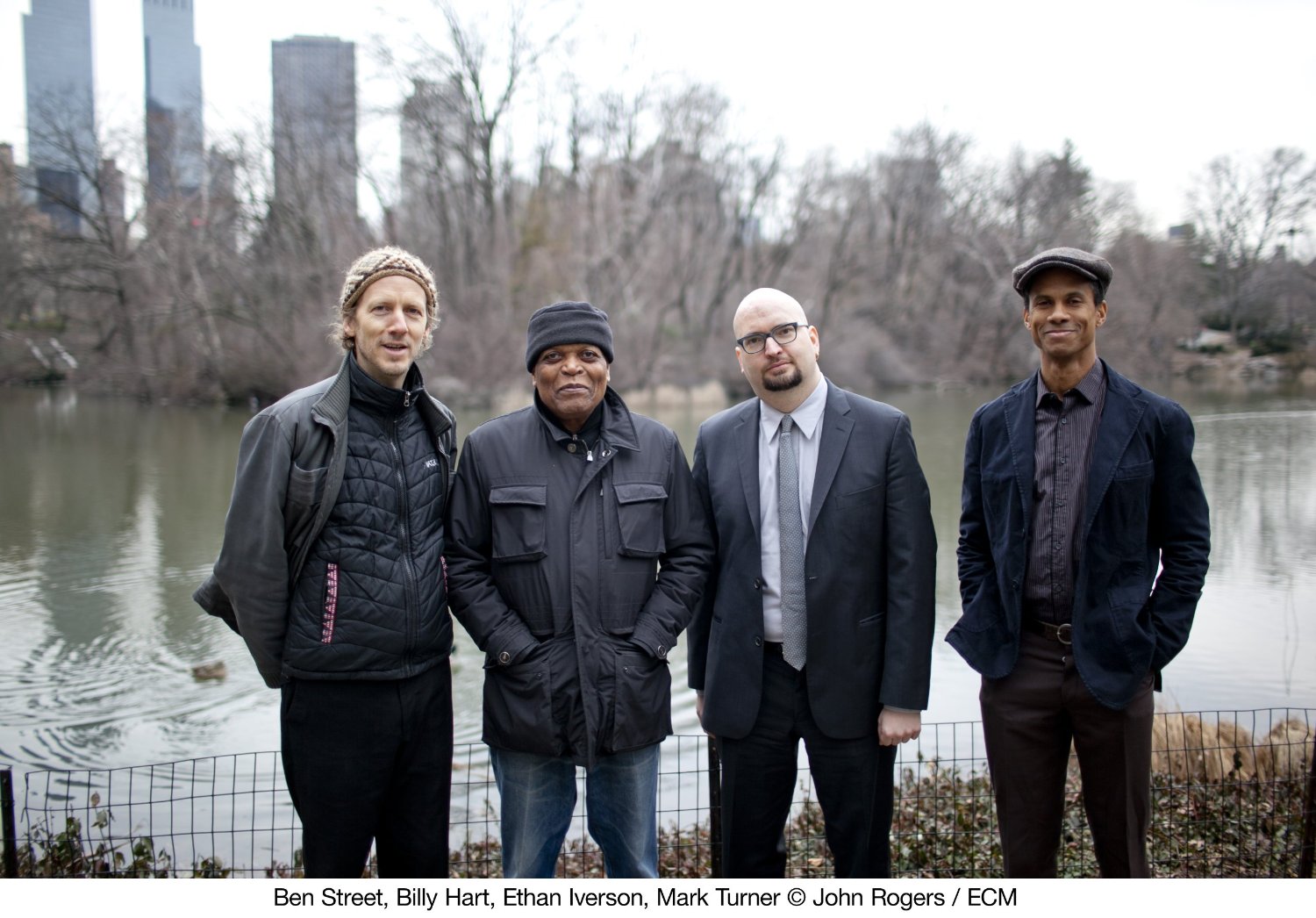
Billy Hart Quartet: One Is The Other (ECM 2335)

One Is The Other

Mark Turner tenor saxophone
Ethan Iverson piano
Ben Street double bass
Billy Hart drums
Recorded April/May 2013 at Avatar Studios, New York
Engineer: James A. Farber
Assistant: Bob Mallory
Produced by Manfred Eicher

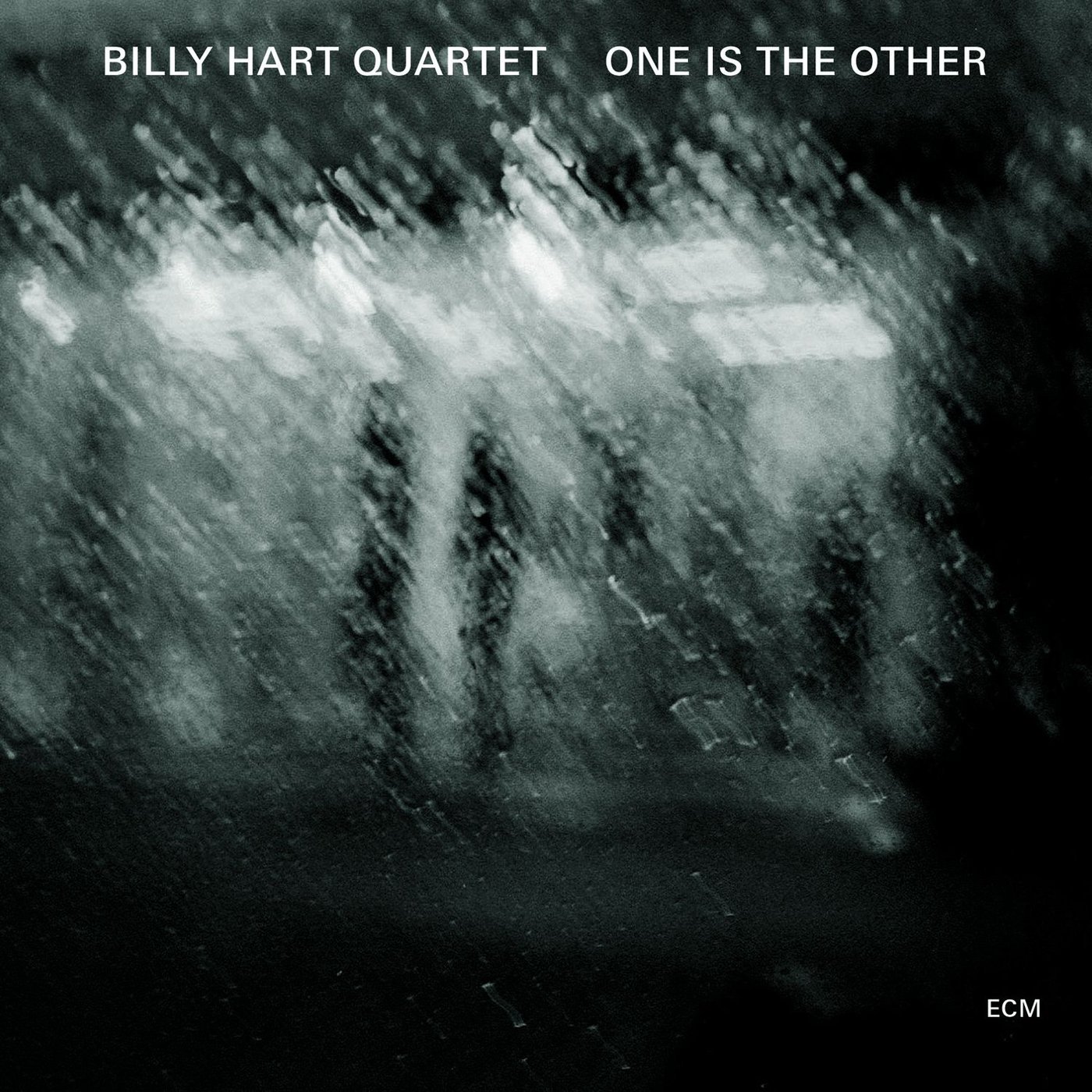
It is like jigsaw pieces on a mission that tenorist Mark Turner, pianist Ethan Iverson, and bassist Ben Street have fallen into place around master drummer Billy Hart, with whom they return for a second ECM round. One Is The Other is therefore a manifold title for the achievements of this unique quartet. Not only does it imply something shared among the musicians, but also emphasizes the ways in which their individual voices interlock. With freshness of voices and depth of spirits, they ply an ancient trade of intergenerational communication. Teaching and learning occur in both directions. This sense of equality pervades every exchange.

BHQ

Turner contributes two tunes, including the flowering opener, “Lennie Groove,” in which so much of what happens is indicative of what follows. A geometric intro from Iverson gives way to the rhythm section’s smooth entrance and the composer’s own tenor arcing into focus. Solos are tasteful, keenly attentive to Hart’s timing and, above all, sincere—not a shade of pretension within earshot. The gorgeous “Sonnet for Stevie,” which reappears on Turner’s leader date, Lathe of Heaven, is even more intimate here than it is there. Anchored by soft two-part harmonies from Street and Hart’s glittering cymbals, pianist and reedman stay a course that cares little for arbitrary destinations. Iverson counters with a deuce of his own, of which “Big Trees” ends the album in style. The textural brilliance of Hart’s intro betrays little of the slippery groove that unfurls in its wake. Especially noteworthy are Turner and Iverson’s solo, which despite being their most abstract of the set are also their most grounded. Hart also blushes us into “Maraschino,” an endearing track made all the more so for its vulnerability. One can hear every process at work. This is no small feat.

Hart offers up a triangle of originals. Beginning with “Teule’s Redemption,” a groovier affair with turn-on-a-dime interaction between him and Turner, pushing on through the cymbal-splashed energies of “Amethyst,” and ending in the urban vibe of “Yard,” these tunes comprise a mini album in and of themselves and highlight the consummate skills of everyone involved. Top it all off with the cherry of “Some Enchanted Evening” (from the Rodgers and Hammerstein musical South Pacific), and you’ve got yourself quite the confection to savor.

People often talk of artists being in their “prime.” Hart, however, proves that it’s as much a matter of revealing as knowing yourself. Indeed, here is a peacock with plumage fully fanned and ready to play.

(To hear samples of One Is The Other, click here.)

Winstone/Gesing/Venier: Dance Without Answer (ECM 2333)

Dance Without Answer

Dance Without Answer

Norma Winstone voice
Klaus Gesing bass clarinet, soprano saxophone
Glauco Venier piano
Recorded December 2012, Auditorio Radiotelevisione svizzera, Lugano
Engineer: Stefano Amerio
Produced by Manfred Eicher

When a night black as coal
Placed a cloud in her soul.
Still she found the wings to fly
To the higher places…

When people compare something to a fine wine, they mean to say that its flavor deepens with age. But what of the color? It, too, changes, taking on new hues as light strikes the residuals of its enjoyment. This is more like what Winstone’s voice can do to her listener, who is but the glass to her vintage and through the prism of her words takes on something of their atmosphere. Indeed, here is an album that begs a fireplace, an upturned book, and shelter from a snowstorm.

Winstone has rarely sounded better than in the company of reedist Klaus Gesing and pianist Glauco Venier. On Dance Without Answer, she joins them for a third time on ECM. There has always been something therapeutic about Winstone’s music. It always seems to deal with coping, whether with joy or sadness, as expressed in the opening title track. The figure of Venier’s piano casts a long-drawn shadow like the body of Gesing’s clarinet. Their instrumental foundation bleeds through transitions from day to night, where truths and lies of love coexist as reminders of what might never be.

In spite of a thematic consistency, the moods of this trio are as varied as the linguistic colors of the titles. Winstone and her bandmates take the listener through the stark histrionics of “Cucurrucucu Paloma” (a portrait of abandonment) and the folkish “Gust Da Essi Viva” (filigreed by Gesing’s soprano) to the earthier “A Tor A Tor” (centered by a didgeridoo-like bass clarinet) and the evocative “Slow Fox” without lapsing into a single unnecessary detour. Yet Winstone shines brightest in the darkest places. In a wordless, raga-like style, she brings hope to “High Places” and follows what would seem to be the same female protagonist through the experiential dramas of “A Breath Away,” a remarkable lullaby that sets Winstone’s lyrics to a tune by Ralph Towner. And yet, while the poignant “It Might Be You” may seem to confirm its elusive presence—love in this album is an asymptote, so that even here she encounters the realization but not consummation of it.

Rounding out the set is a bouquet plucked from the popular canon. In Nick Drake’s “Time Of No Reply” Winstone mediates between realms of light and loneliness, while from Joe Raposo’s timeworn “Bein’ Green” she teases out visceral tenderness. Regardless of the words, she puts her all into each color change. But before Fred Neil’s “Everybody’s Talkin’” closes the album with a final survey of the palette, we also reckon with Madonna in the panoramic “Live To Tell” and Tom Waits in the bluesier “San Diego Serenade,” of which one line says it all: Never heard the melody ’til I needed the song. Prophetic words for those who never needed these songs until they heard the melodies, and a clue to the album’s name: the dance does have an answer, and it is the music itself.

(To hear samples of Dance Without Answer, click here.)

Tigran Mansurian: Quasi parlando (ECM New Series 2323)

2323 X

Tigran Mansurian
Quasi parlando

Patricia Kopatchinskaja violin
Anja Lechner violoncello
Amsterdam Sinfonietta
Candida Thompson concertmaster
Recorded October 2012, Muziekgebouw aan ’t IJ, Amsterdam
Engineers: Peter Laenger and Stephan Schellmann
Produced by Manfred Eicher

ECM’s ongoing relationship with Tigran Mansurian yields what is perhaps the Armenian composer’s most integral archive yet. In a program of works spanning nearly three and a half decades, Quasi parlando brings together a roster of committed interpreters—musicians who live and breathe in order to allow the music of underrepresented composers that same privilege on an international stage. Yet if the image of a stage seems too formal for music that emerges as a butterfly from its chrysalis, it’s because Mansurian does not write music to be validated by the fleeting sanctity of the concert hall. Rather, he builds it as a craftsman would a piece of furniture, so that every joint fits without need for the glue of representation. In this respect, analogies fall short of his mastery even as they feel necessary to make sense of the darkness therein.

Patricia Kopatchinskaja and Anja Lechner are the respective soloists of the Double Concerto for violin, violoncello and string orchestra. Composed in 1978, it is the earliest work on the program and consists of two Largo movements. The first, marked “concentrando” (indicating an intensification of tone over time), is a concentric maze from opposite sides of which the lone cello and barely dancing violin seek an interactive center. Even when distanced by walls and dead ends, they share a certain elasticity of purpose that inhales even as it exhales. Only when the internal geometries of their capture begin to waver in the emerging chaos do open double stops cry through barriers toward their asymptotic meeting. Each instrument occupies its space at intervals of unaccompanied reset, inspiring the orchestra to unravel itself, one vine at a time. Yet where the effect here is exponential in the manner of a Fibonacci sequence, the second movement follows its designation of “sostenuto” (sustained) by means of a rhythmic core. From this extend tendrils of memory, guiding a single droplet of experience from mountaintop to river. A resolute tenderness ensues, creating suspension in a dream of lucid impulse.

The two pieces that follow are the disc’s most recent. Romance (2011) for violin and string orchestra once again features Kopatchinskaja, to whom it is also dedicated. In characteristic fashion, Mansurian constantly shifts the role of soloist and orchestra, as if between cause and effect, or among tiles in a sliding puzzle. Each aspect of its ungraspable emotions has the constitution of an after-effect. Kopatchinskaja emphasizes this and so much more, treating her bow as kindling to a growing fire that looses controlled tongues in every unaccompanied breath. The 2012 title composition for violoncello and string orchestra also bears dedication to its soloist. Lechner’s role, however, is more integrated, very much a part of the ecosystem in which it finds itself. Though possessed of a kindred robustness in its unaccompanied passages, the writing for cello abides by an even more self-directed faith in its own surroundings. There are quiet triumphs in this piece, intersections of light and cloud that stay locked in place through the simple act of acknowledging them, left to drift only by the final pizzicato strum.

Mansurian’s Second Violin Concerto carries the subtitle Four Serious Songs” (2006), a translucent bridge perhaps to Johannes Brahms’s scriptural settings of the same name. Compared to the music that came before, these movements come across with consistency. Denser and of more mournful quality, they morph from teeth to ribbons toward a final, subterranean resolve, following the magma to its womb.

If Mansurian’s corpus is a truth, then we are its clothing of mystery. It hides nothing of itself, but is hidden by our knowing of it. Let this be a lesson, then, unto the hit-and-run listener: you will leave a scar unless you tend to the wound of your interruption.

(To hear samples of Quasi parlance, click here.)

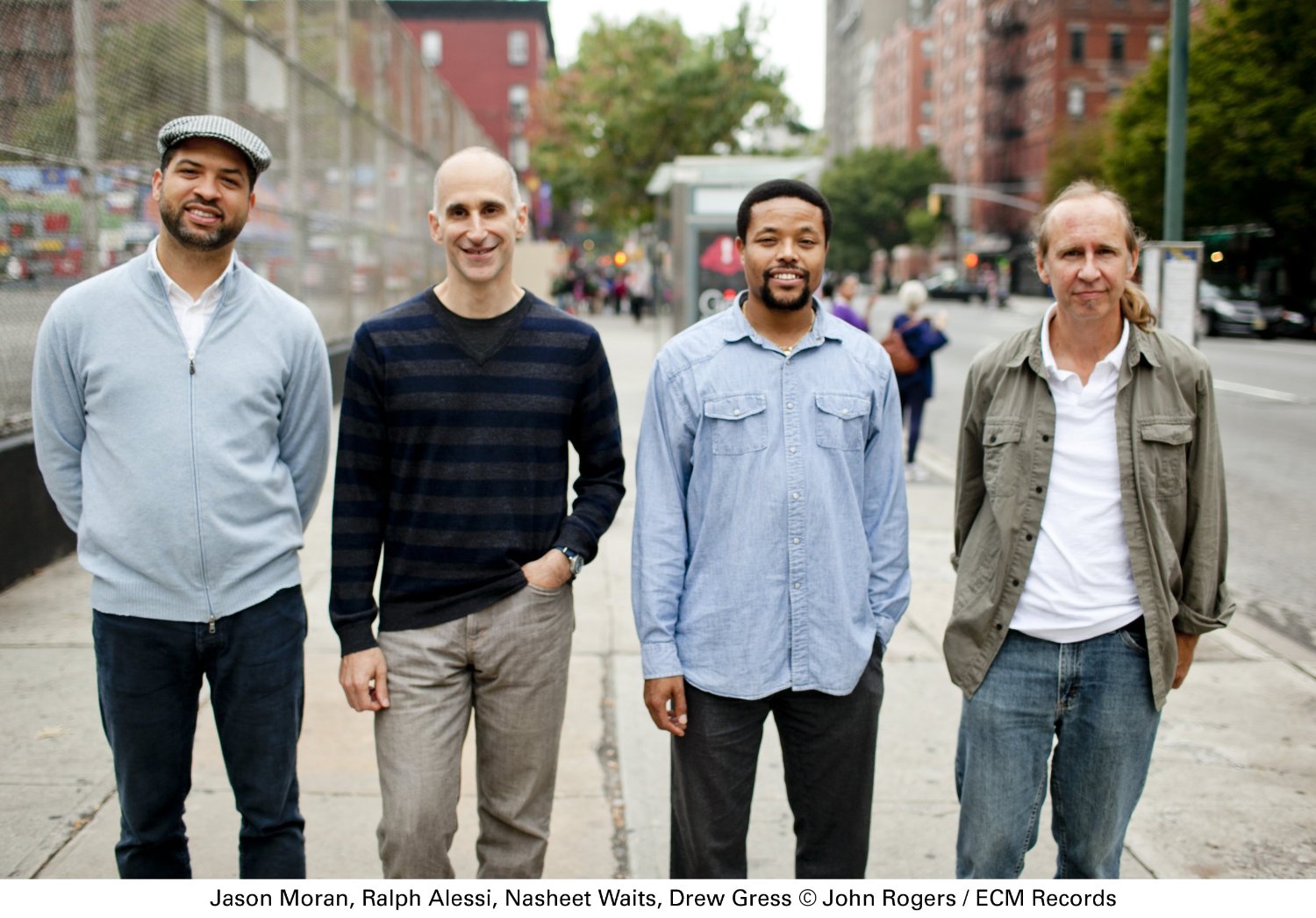
Ralph Alessi: Baida (ECM 2321)

Baida

Ralph Alessi
Baida

Ralph Alessi trumpet
Jason Moran piano
Drew Gress double-bass
Nasheet Waits drums
Recorded October 2012 at Avatar Studios, New York
Engineer: James A. Farber
Assistant: Charlie Kramsky
Produced by Manfred Eicher

Before making his ECM leader debut with Baida, trumpeter Ralph Alessi had only appeared once for the label on 1997’s underappreciated Circa, with pianist Michael Cain and saxophonist Peter Epstein. More importantly, he had already chiseled a fine reputation for himself on the New York jazz scene as an artist of limitless versatility. At last, those not privy to club appearances can experience his craft wherever exist the means to play an album. This all-Alessi program takes flight with pianist Jason Moran, bassist Drew Gress, and, in an ECM debut of his own, drummer Nasheet Waits all on board—only here we skip the safety announcement and go straight to the comfort of cruising altitude.

Baida Quartet

The title track opens the album with the rubato, unfastened introduction that has become a defining characteristic of so many ECM jazz sessions. Alessi and Waits walk the aisles with a sputtering yet precise sort of tracery before Gress and Moran sing of destinations not yet reached until the song’s reprise, muted upon landing, gives the all clear. Titles mark each leg of the journey with divergent associations. While “Baida” proudly fronts Alessi’s daughter’s word for “blanket,” “Maria Lydia” names the one woman who would have known his own babble: his mother, gone from this world shortly after the album’s completion. In such beautifully chromatic tunes as this, trumpet aficionados will hardly be able to deny an Enrico Rava influence at work. Neither in the swinging “Chuck Barris,” in which Alessi’s bold finesse, hiply relayed over rolling snare, pays further dues to the Italian master. Here is where the melodic turbulence really sets in as our craft reaches higher velocity speeds, especially in Moran’s solo, a flailing counterpart to Waits’s textured own.

As if to belabor the analogy, “In-Flight Entertainment” brings out the band’s most clean-shaven profile and puts Gress in the cockpit. Nearby selections are no less entertaining. The tongue-in-cheek “Gobble Goblins” opens with instrumental laughter from Alessi and Moran, both of whom flex their copiloting skills and, in the balladic “Sanity,” even go blindfolded for a spell. Other slow jams include “Throwing Like A Girl” and “I Go, You Go.” In these Alessi takes a nuanced approach, his every note rippling outward through the backing trio in alluring distortions. But it’s in the subtle under-bite of “Shank” and the rolling thunder of “11/1/10” that the crew puts it all together before making its final descent.

Alessi and his band never stray too far off course, flirtation just enough with danger to keep us on our toes while balancing maneuvers as would a skilled chef his flavors. Indeed, in an industry flooded with players who are all sugar, he is that rare combination of savory and sweet that encourages repeat business. Let’s hope that formula holds.

(To hear samples of Baida, click here.)

Charles Lloyd: Quartets (ECM 2316-20)

Charles Lloyd Quartets

Charles Lloyd
Quartets

Not only is saxophonist Charles Lloyd a gentle warrior; he is a fierce dancer. By “fierce” I mean not in the manner of a predator but of sunlight: which is to say, all the more life-giving for his quiet grace. With Lloyd, at the time of this writing, in his 77th year, the critics will tell you he has never sounded better. But the simple fact is: he never sounded worse, either, as attested by the refined levels of meditation achieved on the five albums collected for this essential Old & New Masters boxed set from ECM. Indeed, meditation is an unavoidable flower in the field of his biography, as he famously walked away from the stage in the early 1970s, only to return to the horn a decade later with formidable selflessness. This period also saw his association with producer Manfred Eicher take first flight. Listening to these albums as a set, however, one realizes that his comeback was not the most important celebration. His truest essence as a musician remained cupped like a pocket of air in a lotus in which was contained a universe of song. And so, to assert that Lloyd was at last going forward is to do his spirit a disservice. If anything, he was going inward.
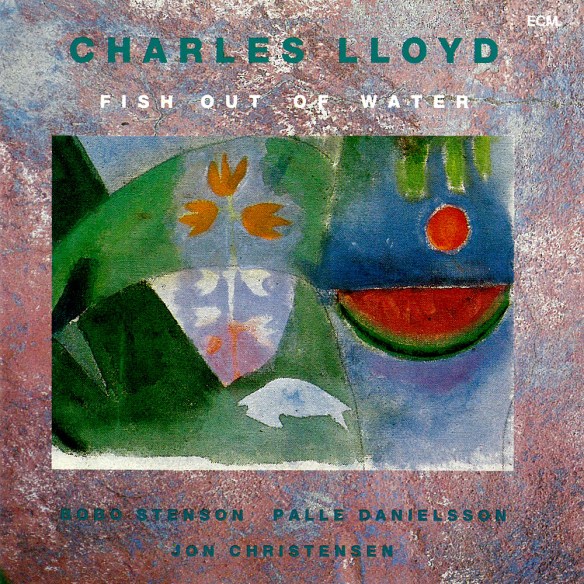
Fish Out Of Water

Fish Out Of Water (ECM 1398)

Charles Lloyd tenor saxophone, flute
Bobo Stenson piano
Palle Danielsson bass
Jon Christensen drums
Recorded July 1989 at Rainbow Studio, Oslo
Engineer: Jan Erik Kongshaug
Produced by Manfred Eicher

As Thomas Conrad notes of Lloyd in his accompanying reflections, “With eight notes, he can put you in the presence of his immortal soul.” And from the opening breaths of this ECM debut, the truth of Conrad’s statement becomes crystal. Here Lloyd is joined by pianist Bobo Stenson, with whom he would forge a significant working relationship, and Keith Jarrett’s European rhythm section: bassist Palle Danielsson and drummer Jon Christensen. Lloyd’s signature tenor, smoky of flavor and viscous of texture, floats through Stenson’s smooth action at the keys in the nine-minute title cut, which opens a program of seven originals. The delicacy of these two melody makers is the album’s bread and butter, as intensely apparent between notes as in them. Stenson draws freshly honed memories from Lloyd’s comforts, while the reedman takes pause and feeds back into the loop with darker nuances. The unwrapping of lyrical presents continues under the Christmas tree of “Mirror,” throughout which brushed drums and a resonant bass provide a landscape of fulcrums on which Lloyd balances smooth hits and fluttering asides alike, only to diversify the climate with flute in the contemplative “Haghia Sophia.” Again, from this Stenson manages to emote so complementarily that we almost get lost in the swirling oceanic foam from which arises a tenored Aphrodite. “The Dirge” is another drop into a limpid pool of soul that is reason enough to ingest this album’s nourishing vibes.

Two grooves await us in “Bharati” and “Eyes Of Love.” The former is seek, refined, and oh so moving. Lloyd speaks mostly in half-whispers, never louder than a private declaration, while the latter unfolds some of his softest playing on record. A buoyant yet introspective solo from Danielsson trips us into the rejoinder, which keeps the cool, blue fires stoked well into the flute-driven “Tellaro.” Lloyd releases Stenson adrift as if a flower upon a river, swimming as a fish beneath him into a forest where we cannot follow.

Mythology would like paint Lloyd’s hiatus prior to this album as a period of soul searching, during which he is said to have nearly abandoned music, only to return refreshed and pouring his all into the art form that so defines him (if not the other way around). And yet we clearly see that in the recordings since his soul searching has never stopped, for it continues to inhabit every breath that passes his reed. Even when Lloyd isn’t playing, there always seems to be a thin line connecting every stretch of silence. In this respect, we find here a spiritual level of jazz from artists all the more prodigious for their humility. In spite of their incendiary potential, they choose to cook rather than flare, each bringing his sensitivity to bear upon these insightful forays into melody and surrender. Tender to the utmost.

<< Shankar: nobody told me (ECM 1397)
>> Meredith Monk: Book of Days (ECM 1399 NS)

… . …
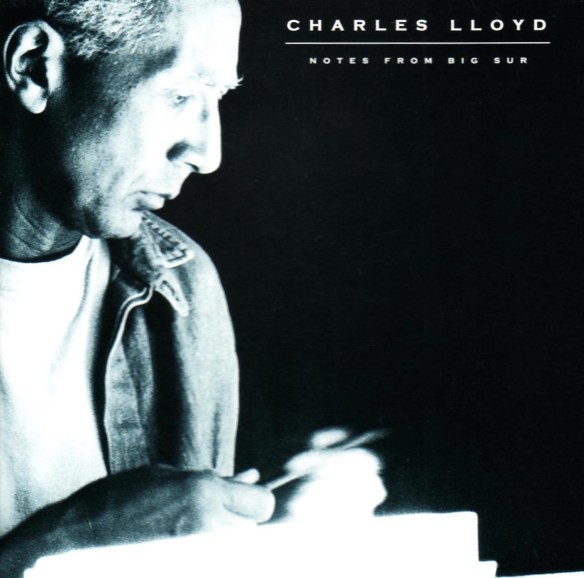
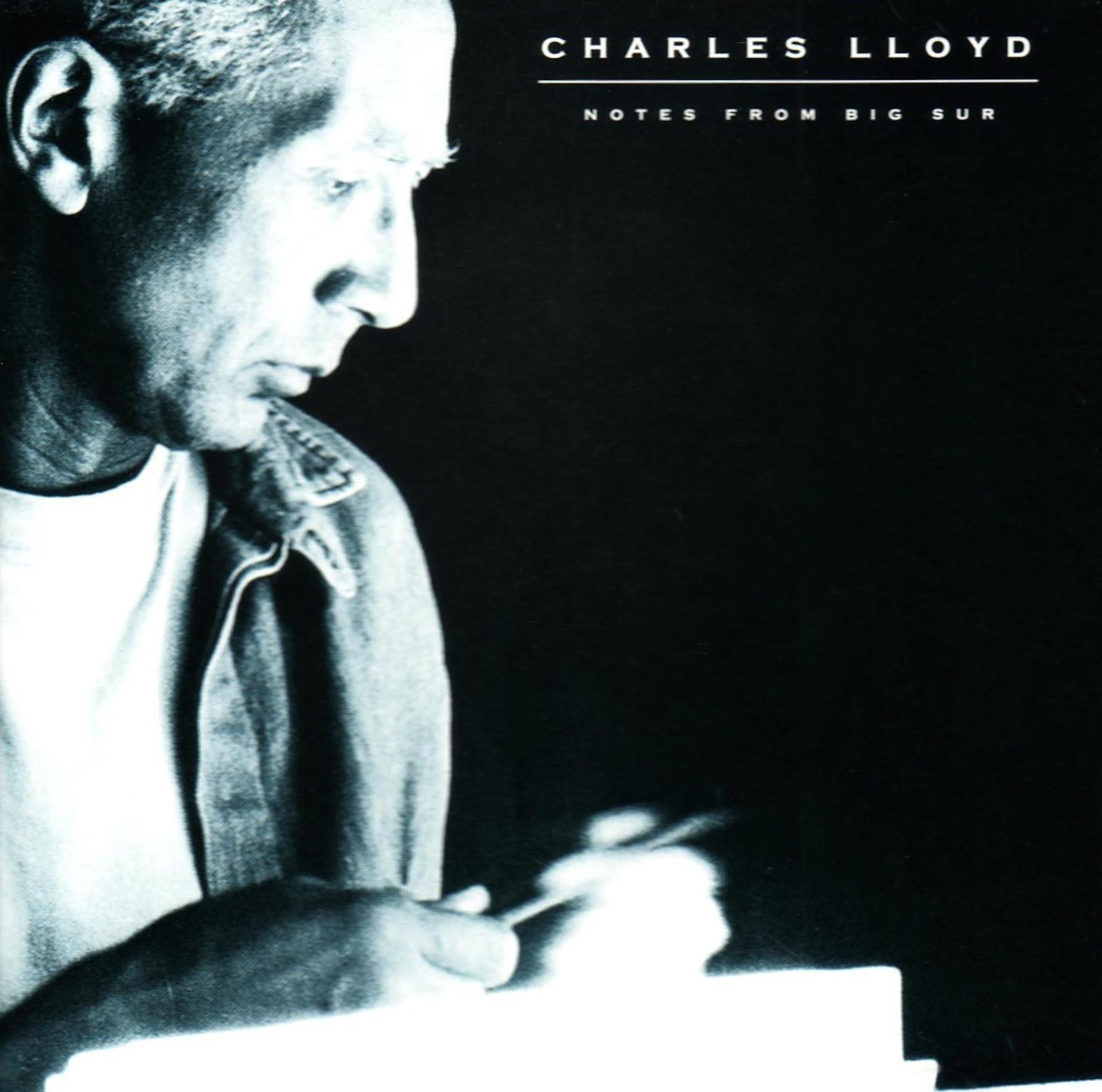
Notes From Big Sur

Notes From Big Sur (ECM 1465)

Charles Lloyd tenor saxophone
Bobo Stenson piano
Anders Jormin bass
Ralph Peterson drums
Recorded November 1991 at Rainbow Studio, Oslo
Engineer: Jan Erik Kongshaug
Produced by Manfred Eicher

When listening to these albums in chronological order, one’s appreciation for Lloyd’s notecraft can only increase. On Notes From Big Sur he finds himself in fine company: Bobo Stenson remains at the keys, but this time bassist Anders Jormin and drummer Ralph Peterson (in his only ECM appearance) take up a coveted rhythmic role. The feeling of afterlife offered in the opener, “Requiem,” is immeasurable. Arcing into a gorgeous cradle of sound, set off by Lloyd’s unerring climb into tuneful bliss, this is one of his most profound statements on record. Smooth-as-caramel pianism widens the doors into a vista of reflection, even as Lloyd pins a tail to this comet with a ribbon of his own. Were the band to stop here, the album would already be a masterpiece.

Gratefully they press on into the more free-flowing “Sister,” in which Lloyd takes occasional punctuations in the backing as prompts for chromatic essays. Stenson has his moments in the sun, as in his spiky solo for “Monk In Paris,” cascading runs in “Takur,” and buoyant commentary of “Sam Song.” Lloyd’s pointillism comes to the fore in the latter for a formidable rendering. Jormin, too, makes a notable statement here. “When Miss Jessye Sings” (dedicated, one imagines, to Norman) is another achingly soulful track, with enough dynamics to spread over the entire album’s surface and then some. The glue that binds comes in “Pilgrimage To The Mountain.” This two-part prayer draws us into the session’s core intentions. Peterson has just the right touch in both. He traces that same mountain with footprints, leaving Lloyd to paint a sunset, and us to reckon with the secrets of its pyramidal shadow.

<< David Darling: Cello (ECM 1464)
>> Krakatau: Volition (ECM 1466)

… . …
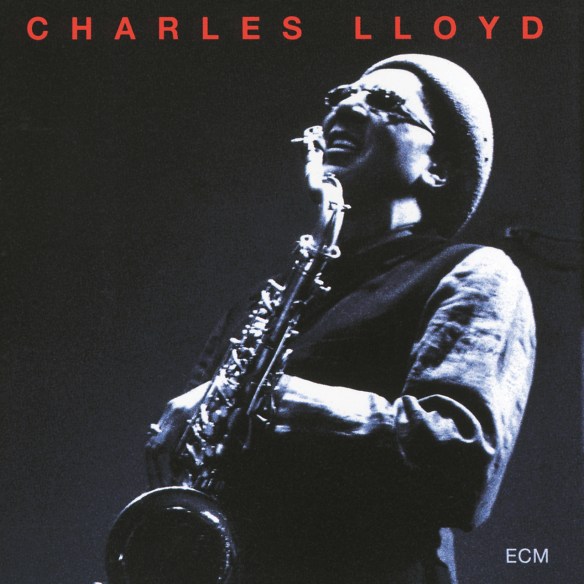
The Call

The Call (ECM 1522; also included as part of ECM’s Touchstones series)

Charles Lloyd tenor saxophone
Bobo Stenson piano
Anders Jormin bass
Billy Hart drums
Recorded July 1993 at Rainbow Studio, Oslo
Engineer: Jan Erik Kongshaug
Produced by Manfred Eicher

With The Call, Lloyd hit his ECM stride. Having pianist Bobo Stenson, bassist Anders Jormin, and drummer Billy Hart didn’t hurt. “It’s a full-service orchestra of love,” Lloyd once said in reference to this lineup. I decline to come up with a more fitting slogan, for the tender ode of “Nocturne” that opens this set of nine originals is bursting with it—that love which bears the weight of dreams on its shoulders and sews itself into the quilt of history. Stenson rings true, here and throughout, blending us into “Song” with a mélange of pointillism and legato undercurrents as Jormin’s buoyant solo carries us deeper into this moonlit cave. That Lloyd only joins in three quarters of the way through a nearly 13-minute odyssey reveals but one facet of his humility. His expression uncurls like the fist of a pacifist in “Dwija” while holding in its relief the possibility of defense. “Glimpse” has its own story to tell, painting a lakeside soiree under hanging lights, each wrapped in fragile paper and lending purpose to a slow dance one wishes might never end. Such bittersweet softness is the album’s emotional eigentone, fashioning a double-edged sword between the urgency of “Imke” and the blissful “Amarma,” the thoughtfulness of which shows Lloyd at his barest. Our leader is also irresistible in the celebratory “Figure In Blue, Memories Of Duke” (note also Stenson’s complementary touches) and the audio kiss of “The Blessing,” but saves the best for last with “Brother On The Rooftop,” an ululating duet with drums that might very well have planted the seed for his duo album with Billy Higgins, Which Way is East.

Lloyd knows not only how to tell a story, as any great jazz musician should, but also binds it in soft leather and tools it into a one-of-a-kind symmetry. He needn’t even inscribe it, for his spirit is in the details. Never one afraid to think out loud, he lets us in on everything.

<< Demenga/Demenga: 12 Hommages A Paul Sacher (ECM 1520/21 NS)
>> Federico Mompou: Música Callada (ECM 1523 NS)

… . …

All My Relations

All My Relations (ECM 1557)
Charles Lloyd saxophone, flute, chinese oboe
Bobo Stenson piano
Anders Jormin double-bass
Billy Hart drums
Recorded July 1994 at Rainbow Studio, Oslo
Engineer: Jan Erik Kongshaug
Produced by Manfred Eicher

Lloyd was positively soaring by the 1990s, during which time ECM’s microphones were there to catch every glorious note before it disappeared beyond the clodus. The Coltrane comparisons so often made in regard to his playing are more than justified on this especially bright, sometimes boppish, session, which like its cover speaks in bold contrasts of red, white, and gray. Lloyd blasts his colorful invention in cuts like “Piercing The Veil,” “Evanstide, Where Lotus Bloom,” and the anthemic title track with the conviction of a prophet, finding himself bonded along the way by superb kinship. Jormin always manages to find room where there seems to be none, painting his lines as he does into an intimate canvas, as if by the tip of Dali’s moustache, thereby rendering the darkened waters into which Lloyd prefers to deploy his vessels. Stenson is equally present. His gorgeous spate of calypso magic in “Thelonious Theonlyus” and luscious soloing in “Cape To Cairo Suite (Hommage To Mandela)” are the water to Lloyd’s arid valley. In both Lloyd shoulders stories of unerring ingenuity, stringing chants of hope on their way toward rapture. This leaves only Hart, who brings a ceremonial edge to the proceedings. In those two tracks for which Lloyd swaps his brass for flute (“Little Peace”) and Chinese oboe (“Milarepa”), Hart flickers, a tranquil flame of justice, spreading decks of cards to reveal an unpretentious flush, luring shadows and breathing energy into a gunmetal sky. So does this quartet begin on earth and end in heaven.

Even more powerful than the execution is the content: themes and interpretations spun from a well-pollinated mind. And so, it is Lloyd to whom we return. He catches every tiger by the tail, playing with a willingness to look beyond his licks and into the sun that grows them. From the way his sound circles the center, one can feel his horn swaying, loving, speaking. All My Relations is a celebration not only of roots, but also of the branches and leaves that would be nothing without them. This is what mastery feels like.

<< Michael Mantler: Cerco Un Paese Innocente (ECM 1556)
>> Jack DeJohnette: Dancing With Nature Spirits (ECM 1558)

… . …
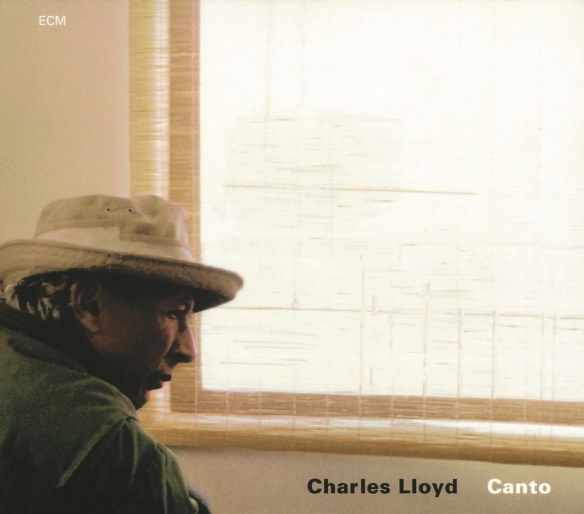
Canto

Canto (ECM 1635)
Charles Lloyd tenor saxophone, Tibetan Oboe
Bobo Stenson piano
Anders Jormin double-bass
Billy Hart drums
Recorded December 1996 at Rainbow Studio, Oslo
Engineer: Jan Erik Kongshaug
Produced by Manfred Eicher

A picture may be worth a thousand words, but the cover photo of Charles Lloyd’s Canto shows a man who takes comfort in one: solitude. In that lingering, outward gaze into the light we see the immensity of his art more clearly than any number of words might ever hope to achieve. Which makes all the more incredible his acclimation to the talents of Stenson, Jormin, Billy Hart, with whom he again shares a bond (and a studio) for his fifth ECM outing. As if any proof were needed, Lloyd confirms that he has yet to fully chart the shadows cast some seven years earlier on Fish Out Of Water. If we have Eicher to thank for rescuing his music from the obscure corner into which it had been so carelessly painted by the media, we must also acknowledge the many inspirations that make their way into this book of seven chapters.

We might as well expand the title of the opening “Tales of Rumi” to “Tales of Rumination,” for such is the nature of the ancient Sufi mystic’s presence as Stenson tickles the piano’s oft-neglected lungs. A needle of thought appears and recedes, pinholing the night’s canvas with stars, each a camera obscura of time. As the trio steps into the foreground, giving blossom to this fragrance, Lloyd filters the spotlight with his rusted tenor, peaking above clouds of golden tenure. He would sooner slow down this train than ride it to the last station, content as he is to linger in patient refraction. We hear this also in the chromatic disc that tiddlywinks us into “How Can I Tell You.” He rolls and bakes this and every theme into a perfectly layered filo, never afraid to favor certain notes over others. It is his way of defining a center from which all other centers grow. Each is of equal weight. If anything, the balance of fadeout and all-out burn in “Desolation Sound” emboldens us to accept that weight as if it were our own. A Satie-like descriptiveness welcomes us into the title track. Built of air and memory, it features the rhythm section’s most attuned work of the set and epitomizes the tender robustness at which Lloyd is so adept. “Nachiketa’s Lament” draws its name from a tale in the Upanishads and the selfsame boy who frees himself from saṃsāra in his rejection of material things. Lloyd finds solace for this retelling in the Tibetan oboe, in combination with drums, for a portrait of fruitless plains and empty bodies. Jormin and Stenson reveal their signatures only as the sun sets into the hills of “M,” of which the mineral-rich bass provides a solid perch for the tenorist’s heavy wing beats. Hart shakes off his fair share of stardust in a solo to remember before the grand sweep of “Durga Durga” disturbs the mandala in the immediate wake of its completion.

Listening to Lloyd, especially as part of the quartet with which this set ends, is a multisensory experience. By the filament of his restraint he spins earth-shattering hymns. Opting always for a restorative edge, Lloyd finishes his tunes like someone who never wants to. He practices what he preaches and passes through criticism like a ghost through walls.

“Do not look at my outward form, but take what is in my hand.”
–Rumi

<< Bjørnstad/Darling/Rypdal/Christensen: The Sea II (ECM 1633)
>> Tomasz Stanko Septet: Litania (ECM 1636
)

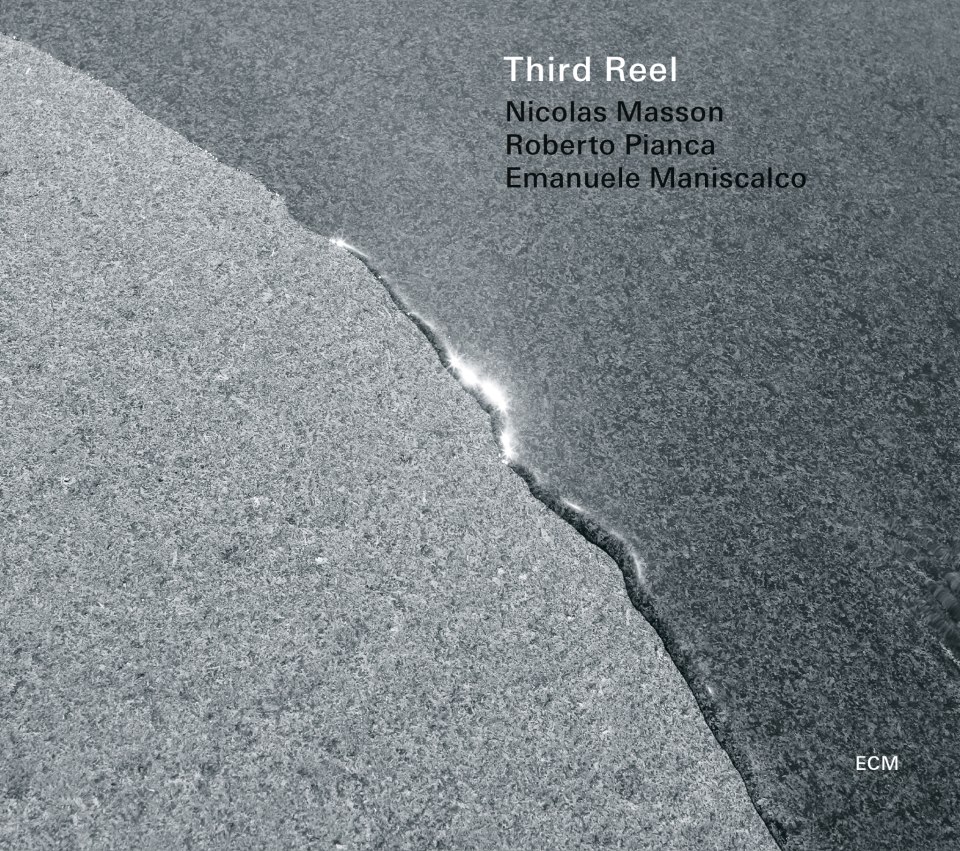
Third Reel: s/t (ECM 2314)

Third Reel

Third Reel

Nicolas Masson tenor saxophone, clarinet
Roberto Pianca guitar
Emanuele Maniscalco drums
Recorded February 2012 Auditorio Radiotelevisione svizzera, Lugano
Engineer: Lara Persia
Mixed by Lara Persia and Manfred Eicher
Produced by Manfred Eicher

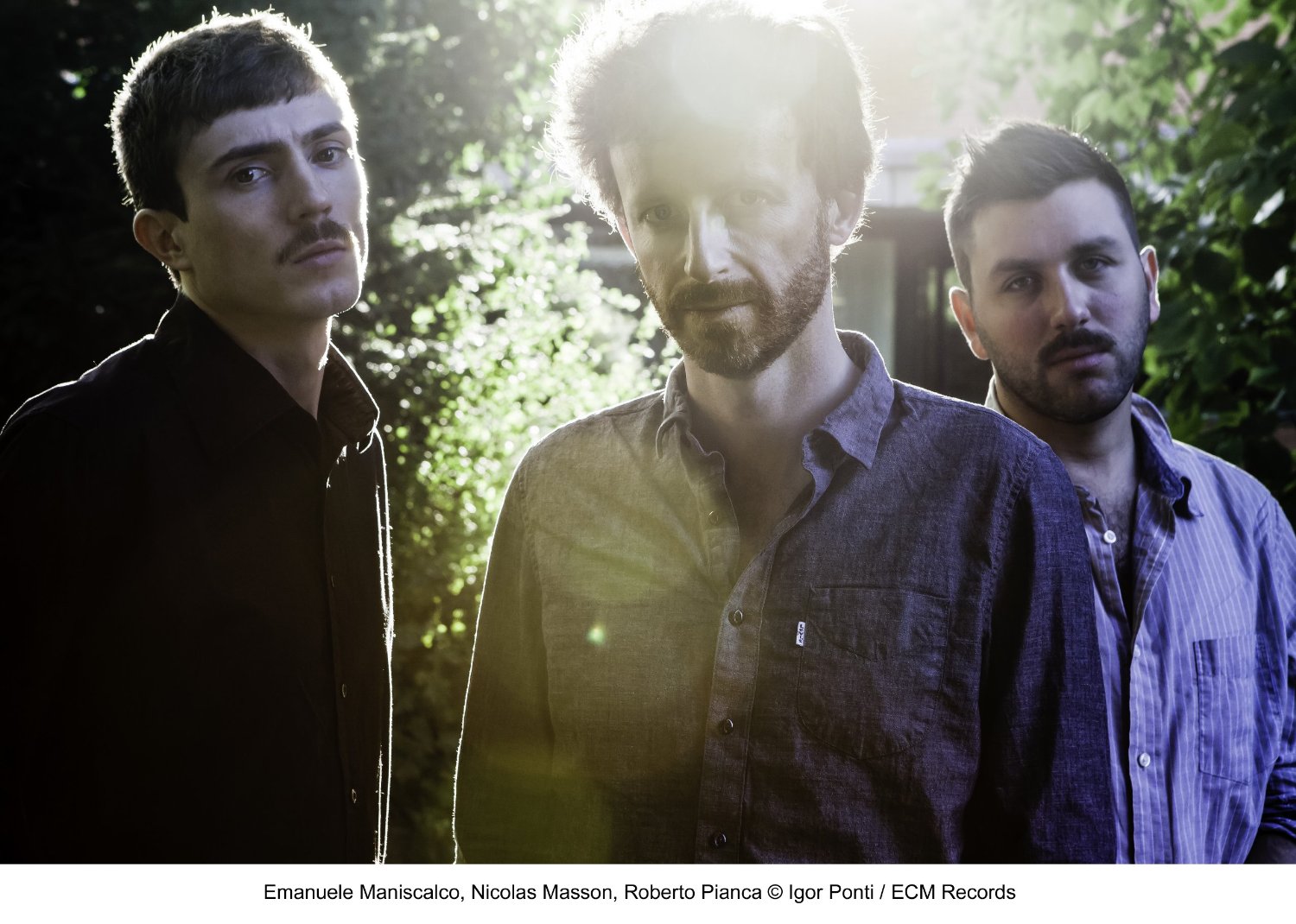
Third Reel is reedman Nicolas Masson, guitarist Roberto Pianca, and drummer Emanuele Maniscalco. On its surface, their collaboration yields something of a throwback to ECM’s heavier hitters, such as Krakatau. Closer inspection, however, reveals a highly nuanced solar system with intimate knowledge of its own orbits, eclipses, and asteroid belts. The heart of both album and band are the free improvisations peppered throughout the set list. Though selective and brief, they range from elastic twangs to a pollinated solo from Maniscalco, who further unleashes the brushes in a duet with Masson on tenor.

TR

In general, there’s no generality to be had. Atmospheric signatures can be as tender as Jimmy Giuffre (cf. Masson’s clarinet in “Miserere”) or as headlong as going over Niagara in a barrel (“Furious Seasons”). In this respect, titles seem retrospective. Like a Polaroid photograph, by the time their images catch up, the moments they describe have already gone to that nameless land of the past. Only through the magic of the recorded message do their realities seem to occur for the first time.

Some would seem to be more explicit with their references. “Bley,” for one, is a ligament of butterfly-kissed cymbal and bare, melodic gestures, which like the improvisations of its eponymous pianist seeks the lyrical in unexpected places. But then there is “Sparrow,” its dark balladry evoking Paul Bley even more, particularly his early quartet recordings for ECM with John Surman, Bill Frisell, and Paul Motian. The elliptical string games of the nouns (“Orbits” and “Spectrum”) are decidedly verbal, while the verbs (“Freeze” and “Fasten”) are as tangible as ash. They are the flame in the ice, a heart attack of musical proportions. And in the moodier “Eleventh Winter Tale,” brilliance becomes its own animal, stalking the methodical terrain of “Neuer Mond” with a distant prey in its eyes.

In the wake of this listening experience, one might deduce Third Reel’s name to be synonymous with a third dimension, Pianca being the x axis, Masson the y, and Maniscalco the z. Together they plot every audible point in space as if it were a droplet of water on a spider’s web after a storm, only to thrum its anchors until those droplets come raining down in a shower of sparks.

(To hear samples of Third Reel, click here.)