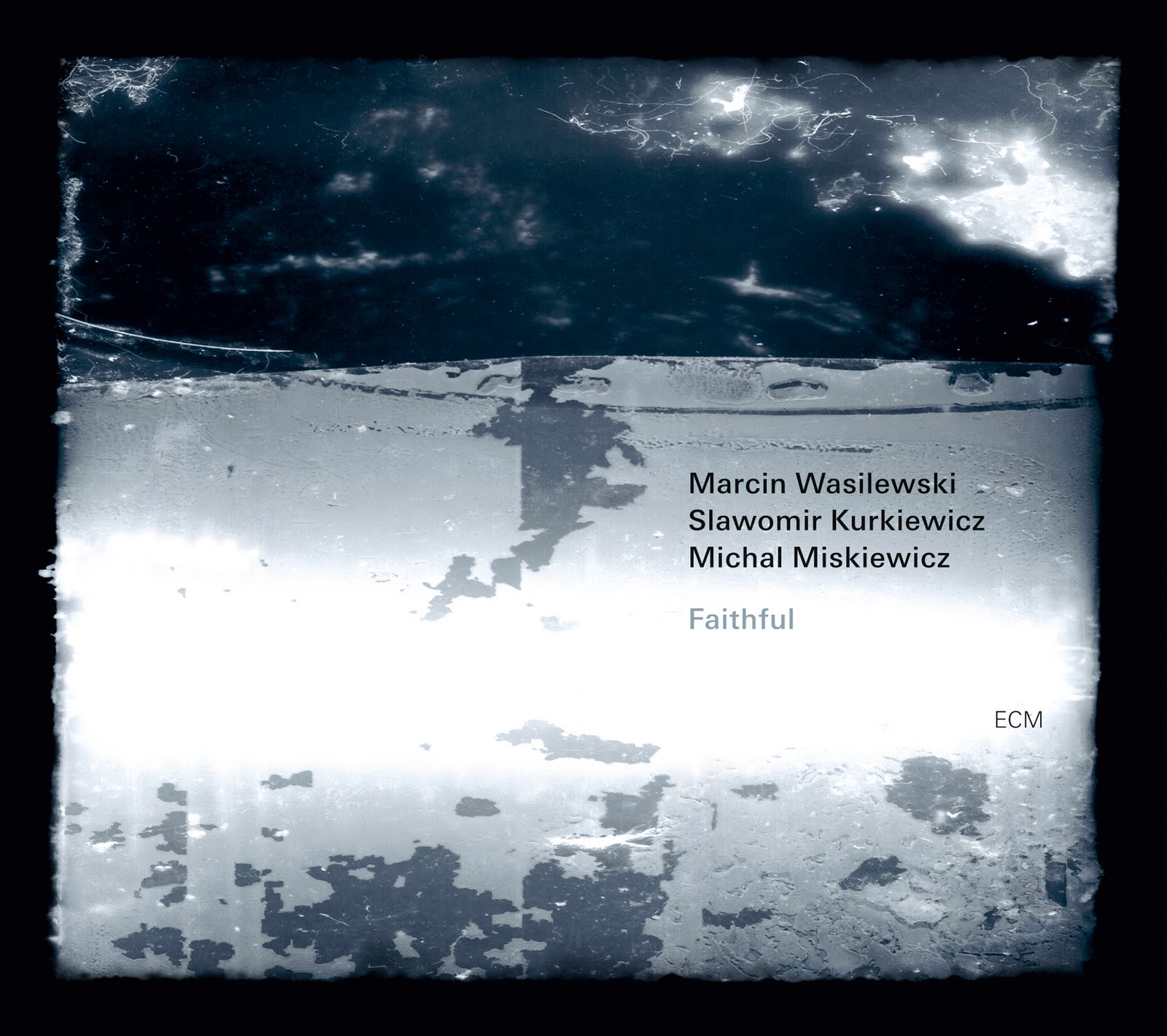
Marcin Wasilewski Trio: Faithful (ECM 2208)

Marcin Wasilewski Trio
Faithful

Marcin Wasilewski piano
Slawomir Kurkiewicz double-bass
Michal Miskiewicz drums
Recorded August 2010, Auditorio Radiotelevisione svizzera, Lugano
Engineer: Stefano Amerio
Technical Assistant: Marco Strigl (RSI)
Produced by Manfred Eicher

For its third ECM outing, the Marcin Wasilewski Trio expands the precious spaces delineated to such patient effect on TRIO and January. A pianist of uncommon insight, Wasilewski brings out the minimal best in bassist Slawomir Kurkiewicz and drummer Michal Miskiewicz, who in turn inspire reflections on those keys that might not otherwise reveal themselves in solitude. Together, they plant the seed of the album’s ever-expanding flower with a curious opener: “An den kleinen Radioapparat.” This song, by German composer Hanns Eisler (so vivaciously immortalized in Heiner Goebbels’s tribute), is meant to evoke the voices of radio, which haunt the now wordless protagonist in exile. After a 4.5-minute wait at this remote station of smooth and translucent contours, we are welcomed aboard the “Night Train To You.” The first of five Wasilewski tunes, its landscapes bleed watercolor beyond our window. We feel at home somehow, despite being so far from it. Yet with such attentive passengers sharing our car, how could it be otherwise? Their erudition is so fully ingrained into the surroundings that they are free to jump on and off these tracks at will, laying their own along the way. A riffling snare pulls us aside and whispers timetables into our ears, while Kurkiewicz supplies the dimly lit lanterns, the art deco screens, and lavish accoutrements of an Orient Express dining car. If we are the serviettes folded so neatly beside those empty plates, then the lush cut of the title track is the main course that awaits our dabbing. Shingled wave lines on the shore are the language of this Ornette Coleman classic, constantly redrawn to the rhythm of the tide. Which is very much like the flip-flopping of rubato and steady cells in “Mosaic,” also by Wasilewski. The rhythm section’s current polishes our ears to the smoothness of river-rolled stones, culminating in a sparkling waterfall finish. The long exhalation of “Ballad Of The Sad Young Man” follows. Its liberation of youthful fears and more mature reflections make for an utterly captivating experience. Then again, the tenderness of “Oz Guizos” (by Brazilian composer Hermeto Pascoal) makes the last feel like sandpaper in comparison, standing as one of the gentlest and most heart-stilling pieces in the ECM catalogue. Its heartbreak drips like rain from leaves after a quiet storm. The somber piano intro of “Song For Świrek” leads us into the album’s grooviest execution. Written by Wasilewski in memory of Marek Świerkowski, a close friend of the trio, its Ferris wheel pace turns skyward with the breadth of a hang glider. Miskiewicz caresses his kit, appropriately enough, as if it were in need of healing. The pianist’s final offering is “Woke Up In The Desert,” indeed a haze, a dream, a sun pressed into the scrapbook of the sky. Paul Bley’s “Big Foot” finds itself duly revived since its first label appearance on Paul Bley with Gary Peacock. The lively sasquatch of a solo from Kurkiewicz mixes wonderfully with the cameraman’s excitement in the piano. A true delight that reveals also superb detail in the drumming. Wasilewski ends things with his “Lugano Lake,” a protracted gaze through the studio window from one who would rather leave the condensation intact and examine every bead of upturned scenery as it drips into the proportion of something true.

Faithful represents a new direction. It favors protracted treatments and heightened sensitivity. The trio plays as it breathes, knowing just when to pause before moving on. Particularly well recorded, with just the right balance of intimacy and the infinity beyond it, it lives in soft focus. If you wish to know to whom they are being faithful, you need only turn the CD over and look at your reflection.

(To hear samples of Faithful, click here.)

Gianluigi Trovesi and Gianni Coscia: Frère Jacques – Round about Offenbach (ECM 2217)

Frère Jacques – Round about Offenbach

Gianluigi Trovesi piccolo and alto clarinets
Gianni Coscia accordion
Recorded January 21-23 and March 2-4, 2009, Centro Civico Musicale Sant’Anna, Perugia
Engineer: Francesco Ciarfuglia
Produced by Manfred Eicher

In search of Brother Jacques, Mr. Offenbach, the great iconoclast, composer of operettas and wound-bringer to discerning classical minds. Our guides, multi-reedist Gianluigi Trovesi and accordionist Gianni Coscia. The itinerary destroys borders, forges new ones in their wake, and takes every path with more than a grain of salt. The melodies take on an ember glow, gesticulating in the manner of an oil painter’s brush and leaving behind a portrait that is offering and caricature in one. We stumble and marvel at what impedes our feet, knowing that we can only sit this one out and accept the frivolity of its passage. It is the pageant, and we the hapless spectators, ears sharpened to the whim of interpretation.

Scholar Heather Hadlock writes of Offenbach’s Les Contes d’Hoffmann as a “death-utterance,” so concerned is his only (and unfinished) opera with death and its many reflections, to say nothing of its emergence from the pen of a dying man himself. In the course of the work, Offenbach “reviews his own compositional past, drawing its various elements into a musico-dramatic kaleidoscope.” And so, Hadlock concludes, we might better see it as “undead,” for the narrator lives and speaks on even after his symbolic passing. Doubtless, the listener will find in Trovesi and Coscia’s striking reinventions a death-defying vivaciousness on par with their sources. Breath and bellows jump from their digital oven like myriad gingerbread men, running nakedly and wittily through Hoffmann with all the requisite stagecraft such activity would require to convince us of its aliveness. Fitting, too, is the “Epilogue” drawn from the same, which ends the album on a funereal pitch.

Most of what precedes it, however, seats us at a banquet table of delights. The four opéras bouffes—operettas rich in parody and farce named for the Théâtre des Bouffes-Parisiens at which Offenbach premiered them, if not the other way around—sampled here come out of a particularly fruitful tenure, during which time the composer produced some of his most popular work. Of La belle Hélène (1864), La vie parisienne (1866), La Grande-Duchesse de Gérolstein (1867), La Périchole (1868), he quipped most characteristically, “I am certainly the Father, but together they are the Son and the Wholly Spirited.” Trovesi and Coscia are more than happy to toss these ingredients almost cartoonishly in their kitchen. With herbs and stalks a-flying, they include whatever comes to mind in the largest pot they can find, only to ladle the resulting concoction with butler-like care into our bowls. It’s all we can do as their guests to not dip our spoons in unison, and join in the after-dinner dancing into which the sheer joy of these flavors bids us welcome.

To be sure, these provide a rich and complementary tasting experience. The truffle of Trovesi’s alto clarinet blends into Coscia’s creamy leeks, each enhancing the other to infinite effect. La vie parisienne provides some of the album’s maddest brilliance, ambulating like feet on a mission to stir up gossip in the village square. From Mozartian prances to fervent declarations, the remainder flies. Yet it is in the improvisatory hands of our fantastic duo where lie the deepest treasures. Among them are the vivid gems of “Tangoffenbach” and “Dedicated to Hélène and her little birds,” each an aperitif of smoothest finish. These are monologues that sing and move, bringing shadow to can-can, and lipstick to statues.

This is a diarist’s playbook, a sincere exploration of passion and obsession that not only pays tribute to but also transcends its namesake, all the while caging the spark of creativity in action. What’s left is an affirmation…and a smile.

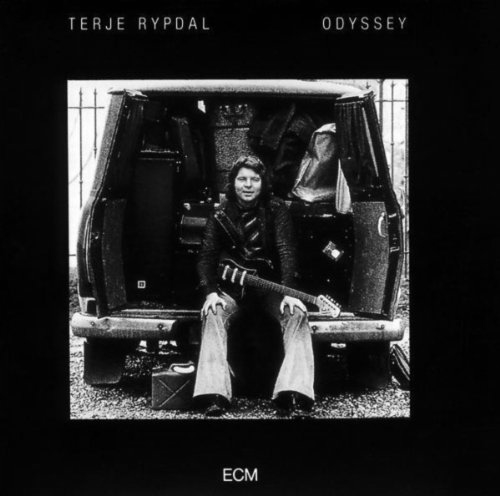
Bjørnstad/Darling/Rypdal/Christensen: The Sea II (ECM 1633)

The Sea II

Ketil Bjørnstad piano
David Darling cello
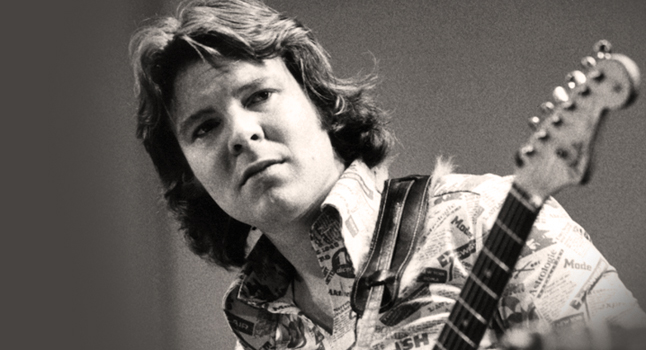
Terje Rypdal guitars
Jon Christensen drums
Recorded December 1996 at Rainbow Studio, Oslo
Engineer: Jan Erik Kongshaug
Produced by Manfred Eicher

If The Sea was a sweeping journey along the surface of its namesake, then this sequel is a plunge into its darkest depths. With the focus of an underwater camera, Ketil Bjørnstad and his peerless group render visible entire worlds we would otherwise never have known. Unlike its predecessor, The Sea II unfolds its map in 10 titled sections, each a different island strung along a melancholy chain. Cellist David darling joins the pianist for the introductory “Lalia.” In so doing, he carries on the sentiments they so beautifully wove together on The River, the chronological and elemental link between the two seas. A voyage in and of itself, it emotes in all directions until guitarist Terje Rypdal brings forth his blade in “Outward Bound.” Jon Christensen’s orchestral drumming is the only reminder of land to be found as we approach the sandy floor. And while Darling does crest a wave in “Brand,” holding fast to boxes from a forgotten shipwreck, within those boxes lie innumerable others. Rypdal rockets off into the night, where more water awaits him as he jumps into that great river in the sky. Anchorage returns in “The Mother,” its quivering arcs the salve for a wounded heart. “Song For A Planet” takes a solemn look at our own, settling into the album’s most understated cradle. Darling and Bjørnstad are simply transcendent on this duo track, as they are on the forlorn “Agnes” and “December,” the latter an ode to the month in which the album was so sensitively recorded. All three speak to the astonishment of their craft. “Mime” is Rypdal’s time to break into the current, a veritable shaft of sunlight lassoed to a dolphin’s fin, while“South” shuffles to the beat of Christensen’s drum, ever detailed and sincere, as Rypdal plies the ether with inquiries of rain and fertility.

This is music to swim in, to touch and be touched by. Don’t let it leave you dry.

<< Stephan Micus: The Garden Of Mirrors (ECM 1632)
>> Charles Lloyd: Canto (ECM 1635
)

Stephan Micus: The Garden Of Mirrors (ECM 1632)

Stephan Micus
The Garden Of Mirrors

Stephan Micus voice, steeldrums, sinding, shakuhachi, suling, nay, tin whistles, percussion
Recorded 1995-96 at MCM Studios

Just as one look at the many instruments Stephan Micus plays is sure to impress, so too does one experience of what he produces with them dispel arbitrary interest in those means. Music flows from his fingertips in such an organic way that the source catches light in all of us. Nothing feels out of place. It’s worth noting, however, that The Garden Of Mirrors makes especial use of that most intuitive instrument of all: the human voice. Like water in sunset, Micus’s wordless songs collect light-years of travel along the glittering surface of their multiplication. Twenty such voices manifest themselves first in “Earth.” Accompanied by the bolombatto, an African gut-stringed harp, this world traveler speaks to the very marrow of life. A binary star leaves his lips, the being to our nonbeing. These twins become triplets, and so forth, until the galaxy is alive in a choir whose rhythms are the stuff that binds. “Violeta” and “Night Circles” exchange the bolombatto for its hemp-stringed cousin, the sinding, melting into a future where hope may breathe like an autumnal wind through leaves. Dry and crackling fields shape syllables with the ferocity of a linguist. Vocal flocks outline the sky in chalk, coloring it in like the white of a giant eye. Veins become songs. These become the world. “Passing Cloud” bands steel drums, two sinding, and shakuhachi for a sound at once vapor-like and heavy as soil. Those who are content see in it animals, trees, and faces, while others see sighs, depressions, and hardships. For “Flowers In Chaos” we get a coterie of 22 suling (Indonesian bamboo ring flutes), dispelling that very cloud with tales of earthly things. “In The High Valleys” is the album’s most insightful contemplation. In its intimate pairing of sinding and voice, it moves, to reference an album title of the Alial Straa, in a lumbering intransitive dream, and would seem to invoke the origin myth of the jazz bass. “Gates Of Fire” marks its passage with ashen footprints, bringing atonement in circular motions, each a brand on the side of a mountain. “Mad Bird” is a living solo for Irish tin whistle that traverses its own boundaries in search of landing, for life on the wing desires stillness. This singles out the final “Words Of Truth,” where the breath of life courses through six shakuhachi in self-reflective bliss. It is the sailor and his reflection, the storm and its rainbow, caressing the shores of a fading continent, of which we are the only inhabitants left standing.

<< Arild Andersen: Hyperborean (ECM 1631)
>> Bjørnstad/Darling/Rypdal/Christensen: The Sea II (ECM 1633
)

Cain/Epstein/Alessi: Circa (ECM 1622)

Circa

Michael Cain piano
Peter Epstein soprano and tenor saxophones
Ralph Alessi trumpet
Recorded August 1996 at Rainbow Studio, Oslo
Engineer: Jan Erik Kongshaug
Produced by Manfred Eicher

Having heard Michael Cain through his associations with Jack DeJohnette, but not his session mates, avant-garde saxophonist Peter Epstein and trumpeter Ralph Alessi, I went into this album blind and emerged fully sighted. The influence of Charlie Haden, under whom the latter two both studied, lingers in “Ped Cruc” and “Egg,” each of which brings a watery current to the album’s classically inflected aesthetic, as well as in “The Suchness Of Dory Philpott” (a John Surman-inspired title if there ever was one). The soprano’s gorgeous sustains carry over into the title track, which, changing shape like a bubble on the wind, walks a fine edge between script and adlib. This same balance percolates through “Siegfried And Roy” and its later companion, “And Their White Tigers.” Both linger like an aftertaste, casting nets toward elusive memories of the night before. More postmodern meditations await us in “Social Drones” and “Top O’ The Dunes,” for which the trio offers tapas portions of alienation and playful distance. In such a context, humor retains a certain depth of hue, as realized in “Miss M.” Here more than elsewhere, the two horns dance, two birds of a feather, from branch to branch while the piano preens their nest in wait. What begins as a simple tune in unison turns into an intense free-for-all: the session’s highlight by far, set against the caresses of “Red Rock Rain” and earthen mixtures of staggered harmonies and pointillist speech acts in “Marché.”

Fans of Oregon and ECM’s earlier chamber jazz experiments (Gallery and the like) should feel right at home here. Newcomers, perhaps even more so.

<< Jean Barraqué: Sonate pour piano (ECM 1621 NS)
>> John Abercrombie Trio: Tactics (ECM 1623
)

Joe Maneri Quartet: In Full Cry (ECM 1617)

Joe Maneri Quartet
In Full Cry

Joe Maneri clarinet, alto and tenor saxophones, piano
Mat Maneri six-string electric violin
John Lockwood double-bass
Randy Peterson drums, percussion
Recorded June 1996 at Hardstudios, Winterthur
Engineer: Martin Pearson
Produced by Steve Lake

It’s safe to say that the work of improviser Joe Maneri and his son Mat, whose combination of acoustic reeds and electric strings baffled and astonished listeners in turn on Three Men Walking, is as legendary as it is underappreciated. For that ECM debut, they swabbed the deck with guitarist Joe Morris, whose likeminded spirit never once compromised the duo’s slippery needlework. Here they meld minds with bassist John Lockwood and drummer Randy Peterson. Vivid idiosyncrasies abound. So much so that, more than microtonal, the music is multilingual. Borrowing from blues, free jazz, 12-tone serialism, chamber music, and another indefinable source, the sounds that issue from this quartet span centuries and continents of influence. While perhaps unsettling in isolation, as part of a musical worldview these languages shine with a boggling fluency of translation. The album’s title, then, is something of a mission statement.

Then again, so are the titles of every song therein. For indeed, these instantaneous introspections are bursting with the urges of songcraft. We hear this from track the first. “Coarser And Finer” is, like sandpaper grit, an adhesive and shaping tool, rounding lyrical beginnings to a smile. An agile clarinet finds purchase in “Tenderly” and “Nobody Knows,” the latter one of two spirituals to open their eyes to this wilting landscape. Its lines find barest intimation in that burnished reed and condense into the arresting falter of Peterson’s bangers and mash. Joe warbles like a bird gnawing at is own branch until he falls, begging with feet extended and wings clipped. “Motherless Child” plummets that bird like a seed for future trees. Such distortions breathe in the shadow of what any by-the-book version might romp through. Performers and subject hold each other so tightly that they pass through one another. Rather than make something new of traditions and standards, these sages peel back the many added layers and chart the veins beneath to find something essential to their persistence.

We’re taken also “Outside The Dance Hall,” a space where frenzy and madness stick like the residue of abandoned presentiment, and on through the primordial soup of “A Kind Of Birth,” in which Mat’s violin swims in search of “The Seed And All.” This blistering whisper, if not a whispering blister, carries forth the dreams of elders made new in puppet form, an intimate marionette for whom the bell sings fitfully. “Pulling The Boat In” is the swan song of a warped unicorn, writhing under the title track’s gravid thumb—only the belly of this beast is quiet and self-reflective. “Shaw Was A Good Man, Peewee” is the tapeworm’s song, ribboned with guilty pleasure; “Lift” a puff of air from puerile lips, cackling as if on slowed-down tape. As if this weren’t enough to whet our appetites, this outing ends like the last with a piano solo. Now protracted and exploratory, it wrenches from Duke Ellington’s “Prelude To A Kiss” a spectrum of shades. In so acknowledging his compositional roots, he leaves us dangling in pursuit of a drop that never speaks.

Four brains, eight hands, infinite secrets.

<< Dino Saluzzi: Cité de la Musique (ECM 1616)
>> Heinz Holliger: Lieder ohne Worte (ECM 1618 NS
)

Dino Saluzzi: Cité de la Musique (ECM 1616)

Dino Saluzzi
Cité de la Musique

Dino Saluzzi bandoneón
Marc Johnson double-bass
José Maria Saluzzi acoustic guitar
Recorded June 1996 at Rainbow Studio, Oslo
Engineer: Jan Erik Kongshaug
Produced by Manfred Eicher

While my rummaging through ECM’s back catalogue has produced a substantial body of personal discoveries, it has also deepened my admiration for artists with whom I was already familiar. One of these is Dino Saluzzi, the Argentinian bandoneón player who enhances his instrument with a mastery that is undeniably sincere. For this trio date he joins his son, guitarist José Maria, and bassist Marc Johnson, ever the idiomatic chameleon, for a set of nine pieces. All bear the compositional stamp of Saluzzi, save for a heartfelt rendition of Earl Zindars’s “How My Heart Sings.” The album also contains two dedicatory pieces. First is the lilting “Gorrión,” for Jean-Luc Godard, which melts our hearts like an Anna Karina close-up and transplants us gently into the soil of “Coral para mi Pequeño y Lejano Pueblo.” Written for an unnamed childhood friend, it ends the album in an eddy of fond memories that practically jump from his keys. On the way to these Saluzzi leads us down a path dusted by careful footprints. Johnson takes an early lead in the title track, while José adds flowering touches to “Introduccíon y Milonga del Ausente,” each pluck liberating a petal from its soft hub. Saluzzi’s playing here recalls Milhaud’s Prélude No. 1 and proves the reach of his art. “El Rio y el Abuelo” introduces whispers of rhythm before Johnson’s swirling airflow lifts the bandoneón ever higher. “Romance” is an endearing duet between father and son, and gives voice to their admirable restraint. Even at his most plaintive, Saluzzi is always warm, which makes “Winter” all the rarer for its icy depths. The guitar’s rounded tone grinds every shadow’s blade into soft light, revealing the hopeful core within.

With nary a single note for mere effect, Cité de la Musique sings to us as a wolf might howl to the night, which is to say: instinctively, without judgment, and without fail.

<< The Hilliard Ensemble: A Hilliard Songbook (ECM 1614/15 NS)
>> Joe Maneri Quartet: In Full Cry (ECM 1617
)

Ralph Towner: ANA (ECM 1611)

Ralph Towner
ANA

Ralph Towner classical and 12-string guitars
Recorded March 1996 at Rainbow Studio, Oslo
Engineer: Jan Erik Kongshaug
Produced by Manfred Eicher

The release of ANA marked the return of Ralph Towner the solo artist. Following the 17-year gap since his Solo Concert, the Washington-born guitarist/pianist/composer had certainly left behind some immense shoes to fill on that earlier masterpiece. Yet once the strains of “The Reluctant Bride” ladle their waters over our ears, we know that comparison is a dirty word. The depth of nocturnal energy bespeaks an artist of even deeper resolve, one who approaches his guitar pluralistically. The tenderness therein introduces us to a colorful mosaic of programming. Lobbing bright yellows over muted blues in “Tale of Saverio,” Towner looks skyward while never forgetting the earth that bore him. As in the music of Dino Saluzzi, we sense children and laughter mixed into a nostalgic cocktail. He then looks beyond the palette into the ethereal schemes of “Joyful Departure,” in which his field of dreams requires not building but a gaze that transcends life and fantasy put together. To this he adds hues “Green And Golden,” casting moods like chaff into the wind. Shades of Marc Johnson’s “Samurai Hee-Haw” haunt the ground line of “I Knew It Was You,” a reflective piece that presages the album’s most painterly strokes in “Les Douzilles” and contrasts the buzzing preparations of “Veldt” in an enchanting way. Towner ends with Seven Pieces for Twelve Strings. Like the album as a whole, it is a set of vignettes you want to linger before, to take in and appreciate. Between distant shimmers and proximate footsteps, he stretches a chain of thoughtful pauses unleashed by bursts of narrative activity.

On the whole a contemplative album that resonates with insight, ANA shows Towner at his most flexible, not so much plucking as bending the strings to the will of an unmistakable lyrical drive, and all with a comfort natural enough to sing without ever needing to part its lips.

<< Lena Willemark/Ale Möller: Agram (ECM 1610)
>> Evan Parker EAE: Toward the Margins (ECM 1612 NS
)

Lena Willemark and Ale Möller: Agram (ECM 1610)

Lena Willemark
Ale Möller
Agram

Ale Möller mandola, lute, natural flutes, folk-harp, shawm, wooden trumpet, hammered dulcimer
Palle Danielsson double bass
Mats Edén drone fiddle
Tina Johansson percussion
Jonas Knutsson soprano and baritone saxophones, percussion
Lena Willemark vocal, fiddle, viola
Recorded March 30–April 3, 1996 at Rainbow Studio, Oslo
Engineer: Jan Erik Kongshaug
Produced by Manfred Eicher

Although Lena Willemark and Ale Möller surely made a lasting first impression with Nordan, Agram was for a long time my only exposure to the Swedish duo. This sequel of sorts finds them carrying the project to new heights (and depths) among a more intimate group. The pared-down roster makes for an open sound and leaves room also for Willemark’s fantastic compositions. In the latter vein is the title piece, which rests her vocal powers on a bed of dulcimer and bowed sentiments. It is the hallmark of an album wrought in soil and breath, and realized in a landscape distant but ever familiar. The soprano saxophone of Jonas Knutsson is a distinct voice throughout, drawing water for the fiddle’s inky swirls in “Syster Glas” and hanging a wreath of tradition on the door of “Sasom Fagelen.” As in the likeminded Dowland Project, the high reed’s presence is welcome one, dovetailing to bagpipe-like effect in “Fastän” and bringing ancestral energy to “Blamairi,” another Willemark original. Arousing percussion from Tina Johansson provides traction for that liberating voice, which, as it rings out across the plains “Samsingen” and “Josef fran Arimatea” (two standouts among ECM’s folkways), tells a story as much with words as through the music that is its shelter. Meanwhile, bassist Palle Danielsson works his own divinations along trails of cast bones. These share the same destination: “Lager och Jon,” an exhilarating chorus of activity that buffs the clouds to invisibility before rushing headlong through a stream of bows and alley-oops. Möller unfolds his shawm’s biting wonders in “Slängpolskor,” leading us into the epic “Elvedansen.” The images here feed on sound, each a chariot of belonging rescued by the hands of “Simonpolskan,” a flowing script of a piece that throws us into comforting waters and closes our eyes, adrift and safe.

In addition to the unfailing music, Agram is yet another benchmark for production and sound quality for the label. It delineates a space where voices and instruments are shadows of one another. Willemark need hardly sing, because even when she stops, her voice lingers.

<< Bley/Parker/Phillips: Sankt Gerold (ECM 1609)
>> Ralph Towner: ANA (ECM 1611
)