John Surman: Private City (ECM 1366)

John Surman
Private City

John Surman bass clarinet, recorders, soprano and baritone saxophones, synthesizer
Recorded December 1987 at Rainbow Studio, Oslo
Engineer: Jan Erik Kongshaug
Produced by Manfred Eicher and John Surman

If the title of Private City comes about as close as one can get to describing the sound-world of John Surman, then that of its first piece, “Portrait Of A Romantic,” does the same for the man behind it. Its quivering recorder blankets us in warmth, fully realized by an electric piano and bubbling as the waters in a forgotten loch. A bass clarinet swims, a creature of myth remembering a time when its kind were plentiful. Thus begins this widely regarded album of incidental ballet music that remains one of Surman’s most personal. The recorder returns, an elusive and mythic voice, “On Hubbard’s Hill,” calling forth steady electronics from the depths of its own dreaming, leaving us to look out on all we’ve done. The familiar sequencer shows its face in “Not Love Perhaps,” climbing itself like a self-generating ladder and carrying with it a sacred form of déjà vu, in which time is but a loop within the heart of learning. Surman’s soprano moves with the grace of a traditional melody that has only now come to the surface of our audible history. “Levitation” is exactly what he accomplishes with an unwieldy instrument like the bass clarinet. As it splinters into myriad offerings beneath a pregnant moon, an “Undernote” bobs on a current of its own regret. “The Wanderer” is another watery piece, that beautiful soprano melting over a wavering ground of synth lines and bass clarinet, and ending on a distant fanfare. The swaying “Roundelay” exemplifies Surman’s limitless talents, as well as the purity of his notecraft. Led by a fairy-like soprano, it feels like ice-skating along an infinity sign set to music. Last is “The Wizard’s Song,” the album’s crowning jewel, showing us again the inimitable delicacy with which its composer approaches the lower, neglected reeds. Like the ending credits to a movie that lives on even after it is done, the effects keep scrolling in our heads, wandering the darkness until they have reached the private cities inside all of us.

<< The Paul Bley Quartet: s/t (ECM 1365)
>> Masqualero: Aero (ECM 1367)

The Paul Bley Quartet: s/t (ECM 1365)

The Paul Bley Quartet

Paul Bley piano
John Surman soprano saxophone, bass clarinet
Bill Frisell guitar
Paul Motian drums
Recorded November 1987, Rainbow Studio, Oslo
Engineer: Jan Erik Kongshaug
Produced by Manfred Eicher

John Surman, Bill Frisell, and Paul Motian again join Paul Bley for a follow-up to the quartet’s stunning debut, Fragments. This self-titled record is another awe-inspiring session and chronicles some of ECM’s most beautiful tales. The slow, 20-minute first chapter, “Interplay,” frees each musician to make careful melodic choices. Motian’s sibilant cymbals are immediately recognizable, grounding Bley’s punctilious chording as Surman paints the night sky with his soprano. Bill Frisell’s rubbery playing proves complimentary in this yielding nexus. Then something happens: the effervescence curls in on itself and Frisell’s ghosted lines blossom from the stem of a bass clarinet before Bley flies away in a pollinated liberation. Configurations shift. Motian shares a masterful exchange with Bley, the former’s brushes skittering over the latter’s pianistic landscape like a field mouse without a predator in sight, for even the graceful hawk of Surman’s soprano cares not for hunting but rather knows it is already the prey of something sonorous, invisible. Frisell undulates like a dark veil between us and Bley’s stars, each lit by a nebulous match. Surman trembles, seeming to chase after his own echoes, as if losing them might spell certain death. And so, he takes solace again in the bass clarinet, making these switches so effortless that one hardly notices them until they peek above the horizon. His soprano treads more cautiously in “Heat,” which continues the chemical reaction. Bley provides the keystone, Frisell the mountain to be split by the unity of their harmonic registers, running like a crack in a windshield that wanders when you aren’t looking. “After Dark” is where the real flames start burning. Surman scampers through a host of constellations, looking for “One In Four,” finding in it a delicate rush of cascading pianism. This superbly erratic flight dips into the final vestiges of “Triste,” a powdery and effervescent solo from Bley that pulls the heart into a self-defeating smile, where the only comfort is the assurance that within music there is validation of our solemnity.

Like an eclipsed sun yawning into the brightness after its respite, the light of this enigma speaks to us quietly, having traveled unfathomable distances to warm our weary minds. It may be a challenge for some, but for those willing to fall without a safety net, it promises flight, flowering and nocturnal.

<< Tamia/Pierre Favre: de la nuit … le jour (ECM 1364 NS)
>> John Surman: Private City (ECM 1366)

Michael Mantler: The School of Understanding (ECM 1648/49)

Michael Mantler
The School of Understanding

Jack Bruce observer
Per Jørgensen teacher
Mona Larsen refugee
Susi Hyldgaard journalist
Karen Mantler student
John Greaves businessman
Don Preston doctor
Don Preston synth drums
Robert Wyatt guest observer
Michael Mantler trumpet, conductor
Roger Jannotta clarinet, bass clarinet, flute, oboe
Bjarne Roupé guitar
Marianne Sørensen violin
Mette Brandt violin
Mette Winther violin
Helle Sørensen cello
Tineke Noordhoek vibraphone, marimba
Kim Kristensen piano, synthesizers
Giordano Bellincampi conductor
Recorded and mixed by Largs Palsig
Danmarks Radio Studios, Copenhagen
August-December 1996
Occasional assistance by Henriette M. Frandsen
Orchestral strings recorded by Bo Kristiansson
Robert Wyatt recorded by Ewan Davies
Chapel Studios, Lincolnshire, England
Produced by Michael Mantler

“don’t mind me
I am just watching
and observing
asking questions
trying to understand”

Thus do we look into the heart of Michael Mantler’s magnum opus, The School of Understanding. Originally called The School Of Languages, the piece’s central theme came out in its final title, for which the composer did not, for once, work with Heiner Müller and wrote his first libretto instead. Mantler calls this “sort-of-an-opera” not just as a humble gesture, but also because it is an expression of the music’s unwillingness to mask itself in romantic decorations. Rather, it emotes through a powerful cast that includes Per Jørgensen, Jack Bruce, Mona Larsen, Susi Hyldgaard, Karen Mantler, John Greaves, and Don Preston. Whether familiar or not, these names fade into the roles they now adopt. As Teacher and Observer, Refugee and Journalist, Student, Businessman, and Doctor, they bring essential theatrical elements to the offering table.

But like an opera, we begin where voices can have no foothold: in the breathtaking “Prelude.” This tremulous coming into being cracks like the skin of time, filling in every new border with musical information. Against the program’s soft palate, the harder strings bounce like a rubber ball into stasis, leaving behind a trail of dots and lines. This moves us into “Introductions,” during which Teacher brings a raw professorship to bear on the lives of his students, who open like college-ruled notebooks before him. Though bound in primary colors, their stories intersect in all manner of hues and combinations, while Teacher’s haggard monochrome reflects those starry-eyed gazes, those hopeful dreams, those tortured pasts, like unpolished silver. Occupations, aspirations, and inspirations fall to the linoleum floor—itself an incomplete jigsaw puzzle, the pieces of which will never all be found.

The voices are as distinct as their characters, blending histories as they drip like turpentine from an unwashed easel. Still, there is one who holds back until all ears are on him. One who speaks through the act of witnessing. One whose drama is sonorous, heart-stopping. “First Lesson” is a call to mental action, an acknowledgment of tools both given and made. There is only one book and an ever-present television screen, both conduits of words and concepts to the outside world, which itself lies in ruins. And on that screen, we encounter the “News,” a catalogue of inhuman affairs, a string of adjectives, and a slow-motion punch to the winded gut of relevance. The hypnotic pulse of reiteration throws us into the quicksand of information. The orchestral colors that began the piece now merge into a tracking marimba and Mantler’s trumpet. The latter is the occasional placating force, adding brief but potent addendums to narratives of oppression.

There is also a satellite drama. We follow it from “Love Begins” to “Love Ends,” for it can never rise above fallacy in a world whose political architecture is brick-and-mortared with enmity. A clarinet takes off its shadowy muzzle to reveal a voice of reason and bleeds into a formative conversation, a date—as in dinner and a movie—that thrives on a hint of obligratory romance, yet which dies in the inevitable dismay of human connection.

“War,” in both length and content, is the heart of this composition, a tearful sermon on the iniquities of weapons and flesh which makes clear to us that this is a school not only of understanding but also of conversation, a school where education is nothing if not extracurricular. It is a church whose only preacher is whoever appears on a tendered note, and where terrorism is a font in which anyone may be baptized. The cry of an electric guitar bounces across faded frescoes. The students are shocked to realize that war is a reality one may live. The real learning begins in the knowledge that placing their minds in the hands of conflict is one thing, but that likewise placing their bodies is another entirely. An acoustic guitar is another veil of tears through which only the Refugee may see clearly to the memories beyond. She tells her story as might a mother to her child, as might a child to her mother. This street where once she ran is now a place of careful footsteps and homes reduced to ashes and dust.

We “Pause” for reflection and release, swimming through the confusions and contusions of “Understanding,” and awaken in the deeply rooted tremors of “Health And Poverty.” True sickness, we are told, ignores the corporeal and makes its nest in denial and vanity. Once the mirror is broken, we at last see ourselves for who we are, sucking life like parasites from those who need it most, those who’ve never known what it could be, to whom possibility is a passing ideology. Once suffering has clarified its cause, the rest of us latch on to the effect, as if it might give us answers. To the awakened mind, the truth is too much to bear, so that statistics become like words, speaking all too clearly. And while the banality of human interaction (“Platitudes”) is offset by alluring music, we check off our litany of exasperations in “Intolerance,” working our way toward silence, where only one question remains: “What Is The Word.” The Teacher’s voice grows distant as we fall from the source of all songs, sliding down the double-edged blade of knowledge, which both brought everyone here and glints with the promise of hard-won salvation. It cuts the playing field into same-sized pieces, repeating itself, repeating itself…

If you were ever unsure of Mantler’s genius before, then I can only hope this will convince you. The School Of Understanding is not the soundtrack to a film, but the film to a soundtrack. It scoops the idea of education like a dead fly out of stagnant water and resuscitates it to full buzzing flight. It is the pinnacle of Mantler’s craft. This definitive recording belongs on any “Best of ECM” list.

<< Dominique Pifarély/François Couturier: Poros (ECM 1647)
>> Selected Signs, I: An ECM Anthology (ECM 1650
)

Bach: Die Kunst der Fuge – Keller Quartett (ECM New Series 1652)

Johann Sebastian Bach
Die Kunst der Fuge

Keller Quartett
András Keller violin
János Pilz violin
Zoltán Gál viola
Ottó Kertész cello
Recorded May 1997, Altes Stadttheater Eichstätt
Engineer: Peter Laenger
Produced by Manfred Eicher

In the end, we self-perceiving, self-inventing, locked-in mirages are little miracles of self-reference.
–Douglas R. Hofstadter, I Am a Strange Loop

One is tempted, perhaps, to experience the fugue as a puzzle. In that puzzle are strings of numbers unraveling from a central rope, even as they spin into one. Yet when listening to Bach’s Art thereof, and especially in the Keller Quartett’s sensitive hands, we find that even our best similes are weak and arbitrary, for this music, this expression of internal power, is alive. By no means universal, it takes a different form every time to every listener. We in turn can take comfort in knowing that the final triple fugue was never finished, for into it the composer wove his signature B-A-C-H (B-flat-A-C-B) theme, as if signing off on a lifelong document. Thus is The Art of Fugue an “emancipatory work” in the estimation of Hans-Klaus Jungheinrich, who in his accompanying essay goes to great lengths to demythologize the unrealistic pedestals upon which the work has been placed. The instrumentation was never resolutely determined, though it was likely intended for the nascent pianoforte. The string quartet presents a compelling solution. In this respect the Kellers push the envelope, varying tempi considerably and in doing so point us to a humbling truth: namely, that if this was to be Bach’s most lasting statement, it had to be invisible.

One with a deeper background may train a musicological magnifying glass to every weaving line, but these ears are more interested in the effect than the cause. And of that effect, I am at pains to say anything worthwhile. Although its movements comprise a moving target of speeds and densities, a constant hum runs through them. It is something we feel rather than hear. Cellist Ottó Kertész is particularly well suited, evoking the slightly metallic continuo of yore with a tinge of intangibility. (This, I think, explains the curious production, which favors distance and cavernousness—it is not historically informed, but seeks to inform history.) That being said, the music is nothing if not expressible. It might very well be Bach’s swan song, and therefore the culmination of his craft, but I prefer to hear it as a homecoming, a clearing of clouds to let fall the darkness that nourishes all artists, paling into the light that embraces them once they’re gone.

One day, we encounter this music and it sings to us. But then the voices stop mid-phrase, as the Kellers have preserved them, and suddenly the galaxy unravels, leaving us floating in the stagnant pool of all silence. Listen, and you know there is truth in the number:

One.

<< Roscoe Mitchell: Nine To Get Ready (ECM 1651)
>> The Hilliard Ensemble: In Paradisum (ECM 1653 NS
)

Stephan Micus: Bold As Light (ECM 2173)


Stephan Micus
Bold As Light

Stephan Micus raj nplaim, bass zither, chord zither, bavarian zither, nohkan, sho, voice, kalimba, shakuhachi, sinding
Recorded 2007-10 at MCM Studios

All these ideas, striving towards one goal, thronged whirling through his head, blinding him with their light.
–Leo Tolstoy

Here it is, the dead of winter, and I am listening to Bold As Light, the nineteenth ECM release from renaissance man Stephan Micus. After a few days of heavy snow, the temperatures have risen and let slip a warmer precipitation. Ice melts in the downpour, and I find solace in this music, which works in similar intra-seasonal contrasts. Two transverse bamboo instruments form the audible crux of the sanctuaries therein: the Laotian raj naplaim and the Japanese nohkan. When multiplied, the former coalesces into a proto-harmonium of twirling skies, while the latter skates its wingtips along the clouds.

Like much of Micus’s later work, titles to individual pieces have again crept from the creative woodwork. Yet the music is so rich that one might just as well forego these sentimental tags and experience what they have to offer firsthand. And so, while the opening “Rain” might be a harbinger for the “Spring Dance” that follows, it is only through Micus’s profound playing that our spirits come into focus. “Flying Swans,” for instance, has not a feather in sight. Rather, Micus sings a different style of flight, the forest looming as high around us as the lake is deep, shielding a copse where voices gather to pay their respects to the wind. “Wide River” is barely distinguishable from what has come before, flutes winding themselves around a droning core like fibers to a tether that attaches every listener to a star. The clearest shadows come in the form of “Autumn Dance,” a beautiful and lilting shakuhachi solo falling like a leaf from the “Golden Ginkgo Tree” that follows. Dedicated to master teacher and maker Kono Gyokusui (1930-2008), that latter is easily one of the most enchanting improvisations Micus has ever recorded, and all the more so for being accompanied by the percussive rattle of a sinding (African harp).

Wood and flesh come together in “The Shrine.” Animated by a solemn congregation, it is a prayer unto itself. “Winter Dance” highlights the negative spaces in every snowflake, gaping like a mouth in a plant of infinite soliloquies, of which this is but one leaf. “The Child” would seem to be the recipient of every preceding color shift. Another awe-inspiring track, this one comes across as especially personal. We end in a bed of “Seven Roses,” blooming as if in the forgotten summer, and rocking on a seesaw of meditation and soaring dreams.

You can read more about the fascinating background to and instrumentation of Bold As Light here, but ultimately such explanations are, like the words you’ve just been reading, empty in the face of a music so full of life.

Krakatau: Matinale (ECM 1529)

Krakatau
Matinale

Raoul Björkenheim guitars, bass recorder, gong
Jone Takamäki tenor, alto, soprano and bass saxophones, krakaphone, reed flute, wooden flute, bell
Uffe Krokfors double-bass, percussion
Ippe Kätkä drums, gongs, percussion
Recorded November 1993 at Hardstudios, Winterthur
Engineer: Martin Wieland
Produced by Steve Lake

Krakatau is an ever-exciting fusion project from Finland that left two broad gasps on ECM. Matinale was the second, and remains the more politically astute of the pair. Guitarist Raoul Björkenheim is the main compositional force behind the album, and leads a quartet of hip multi-instrumentalists squared out by reedman Jone Takamäki, bassist Uffe Krokfors, and drummer Ippe Kätkä. The title track emerges from the gates with a blast of fresh energy in which Björkenheim and Takamäki dominate the left and right channels vying for the middle ground, which has been claimed as the rhythm section’s sole territory. Steve Lake’s deft production and Martin Wieland’s pointed mixing only enhance this plus sign, for the album is indeed all about the additions each musician brings to bear on this visceral studio date: (1) Björkenheim, a distorted and bubbling cauldron of emotional whiplash, (2) Kätkä, a persistent flavor one can’t quite brush out, (3) Krokfors, a counterweight to the constant threat of imbalance, (4) Takamäki, a smoothness that can be buttery yet also knows how to crack a wry smile now and then.

Three improv sessions follow this opening chunk. Krokfors’s bass hums like a sleeping whale through the roiling gong and windy shores of “Unseen Sea Scene,” dreaming of the Chinese gong and reeds of “Jai-Ping.” Björkenheim interrogates his lucrative solo here like some criminal aria, matching Takamäki’s incisions drop for drop until they are bled dry. “Rural,” on the other hand, is a bass-heavy piece that manages to be light on its feet, borne along by an entourage of low reeds.

After a mournful intro, “For Bernard Moore” blossoms into life through a frenetic bass and cymbals. It fast-forwards through that life with a lush sax solo, only to be retold by a tighter guitar line. Excellent stuff. Yet at twelve and a half minutes, the album’s meta-statement is “Sarajevo.” Björkenheim opens with something like a folk song before pressing onward into a viscous and sometimes morose landscape of ruin. This is a portrait in stark color of a body whose language is a bowed head. Sounding here like the vamp of a carnival organ slowed into frightening pathos, and there like a body struggling to be heard from under the rubble of a senseless act of destruction, it seeps into the bones like empathy. To keep us from falling too far, “Suhka” offers a dance of light on water by enacting the very song that has set it into motion. To finish, our fearless foursome slake a “Raging Thirst” with undeniable conviction.

Matinale reshuffles its own formula with every cut, and provides a window into Krakatau’s uniquely personal process. Don’t overlook it.

<< John Surman: A Biography Of The Rev. Absalom Dawe (ECM 1528)
>> Händel: Suites for Keyboard (ECM 1530 NS)

Jan Garbarek: Legend Of The Seven Dreams (ECM 1381)


Jan Garbarek
Legend Of The Seven Dreams

Jan Garbarek soprano and tenor saxophones, flute, percussion
Rainer Brüninghaus keyboards
Nana Vasconcelos percussion, voice
Eberhard Weber bass
Recorded July 1988 at Rainbow Studio, Oslo
Engineer: Jan Erik Kongshaug
Produced by Manfred Eicher

Legend Of The Seven Dreams is hands down one of Garbarek’s finest. A fantastic album that welcomed listeners into one of the versatile saxophonist’s most captivating sonic continents, one mapped further on Visible World (a personal favorite), it digs deep into the soils of his native Norway and beyond and marks a leaning toward the soprano that has colored so much of his playing since. And with Rainer Brüninghaus on keyboards, Nana Vasconcelos on percussion (including some vocal details), and Eberhard Weber on bass as his fellow journeyers, who could ask for more?

Garbarek’s lines are as smooth as the jet stream in the folk tale that is “He Comes From The North.” The immediately recognizable berimbau of Vasconcelos lifts this piece to even greater heights of emotive power. An inauguration ceremony in sound, this blissful opener holds attention for every second of its fourteen-minute expanse. “Aichuri, The Song Man” is another cavern of dreams, where the plodding footsteps of history echo and an otherworldly synthesizer speaks with the voice of the future. Into this swirling milieu Garbarek adds his distinct flavors, divining every bone with a flesh made music. The wooden clicks of the “Tongue Of Secrets” impart flight to a solemn flute, whose only soul hides in the undergrowth of an undiscovered country somewhere far below (the flute also makes a wayfaring appearance in the solo “Its Name Is Secret Road”). “Brother Wind,” a classic in the Garbarek canon, makes an early appearance here. Like its namesake, its pure, inspiring craftwork flows in all directions. This and “Voy Cantando” feature a beautiful synth harpsichord as progenitor of Garbarek’s lilting themes. As might a river over eons, Weber carves not a few winding paths in “Send Word,” for which Garbarek is ever the reliable guide. The missing capstone to this pyramid is the two-part “Mirror Stone,” which drifts, not unlike the smoke of the album’s cover, from the fissure of a solitary pyre.

In terms of its electronics, the mythological potency of this date is a vast improvement on the integrative experiments of All Those Born With Wings. Here is a musician coming into his own, as he continues to do throughout his career, yet again.

<< Steve Tibbetts: Big Map Idea (ECM 1380)
>> Keith Jarrett: Personal Mountains (ECM 1382)

Steve Tibbetts: Big Map Idea (ECM 1380)

Steve Tibbetts
Big Map Idea

Steve Tibbetts guitars, dobro, kalimba, pianolin, tapes
Marc Anderson percussion
Marcus Wise tabla
Michelle Kinney cello
Recorded 1987/88 in St. Paul, Minnesota
Engineer: Steve Tibbetts
Produced by Steve Tibbetts

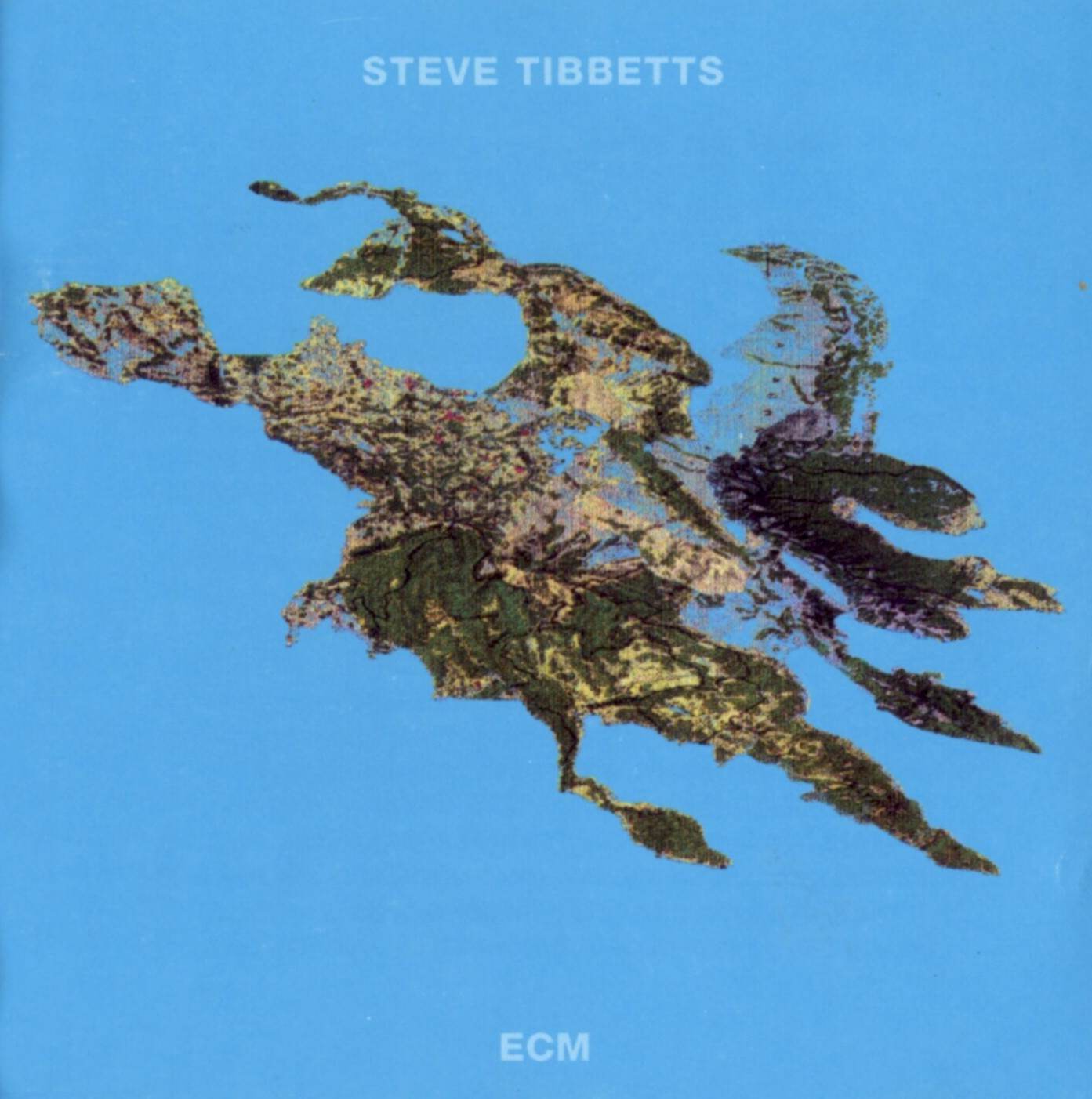
With this release, Steve Tibbetts turned a new leaf in his cartographic imagination. The album’s title betrays its creator’s humility, acknowledging the incompleteness of any landscape, which is never more than a cultural possibility. We see this the moment that signature slack-jawed guitar and worldly percussion paint for us a big map indeed in “Black Mountain Side.” And what’s this? A Led Zeppelin tune, artfully arranged and wrapped in a sparkling bow as only Tibbetts can tie it. But even when he strays into the dripping caverns of “Black Year,” where flames have burnt out long ago yet still flicker with feeling, we are never lost, for there is always something familiar to hold on to. Tracks like this and “Big Idea” teeter at the edge of an all-out frenzy, but stay respectfully perched atop cold mountains, watching the plains with eagle eyes. Each hit of the steel drum forms a new cloud, rustling the foliage in “Wish” and hopping like a bird from branch to branch. The finger tapping and kalimba-infused connections of “Mile 234” make it one of the more masterful turns on this trip. Some of that same instrumental color bleeds into “100 Moons” before an acoustic/electric dance lays track in “Wait.” Sampled voices flow throughout “3 Letters,” turning like a diorama lit by strings, and finish as if living in reverse, turning light into dark, warm and sustained by a maternal hope.

If the majority of Tibbetts’s work is a chant, then Big Map Idea is a lullaby. It is a florid expression of its ancestors, using a relatively intimate palette, one where wings and earth are far closer to one another than logic would dictate.

<< Keith Jarrett: Dark Intervals (ECM 1379)
>> Jan Garbarek: Legend of The Seven Dreams (ECM 1381)

Keith Jarrett: Dark Intervals (ECM 1379)

Keith Jarrett
Dark Intervals

Keith Jarrett piano
Recorded April 11, 1987 at Suntory Hall, Tokyo
Engineer: Kimio Oikawa
Produced by Manfred Eicher

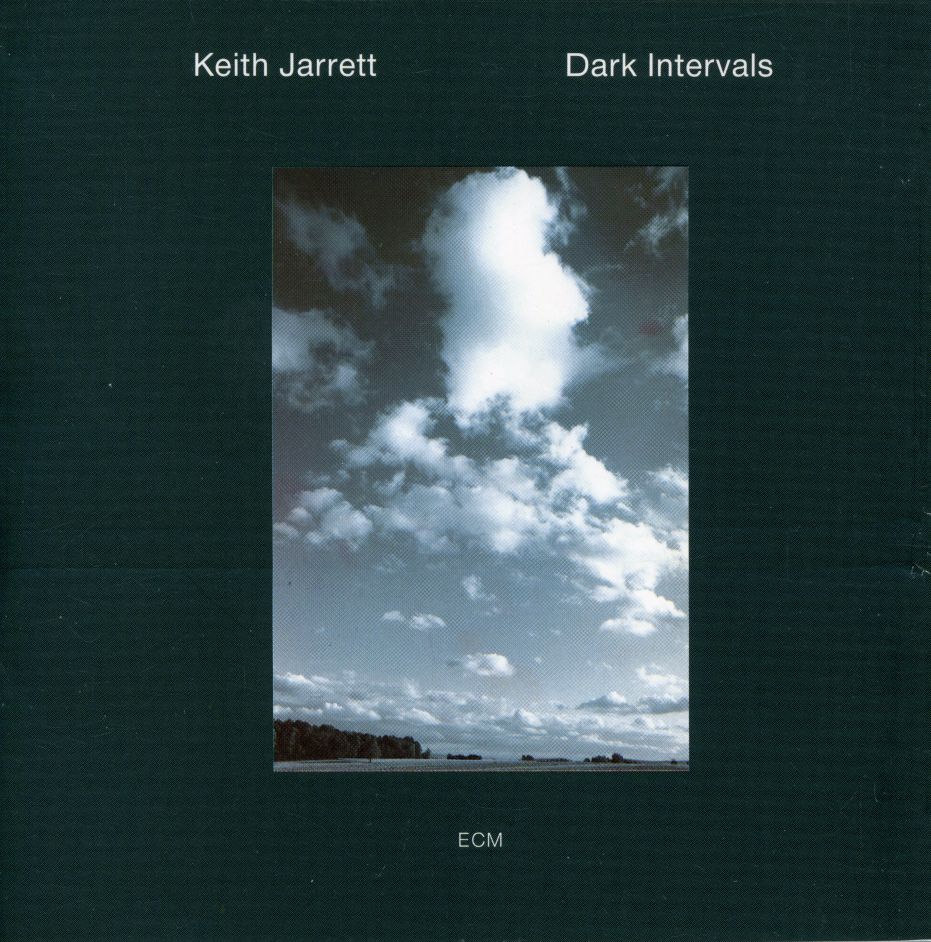
Keith Jarrett weaves a special kind of spell in his improvisations, one somehow connected to a greater humanity, for though the music and playing are ethereal, one is never mistaken that they are anything but earthly. Jarrett is not a mere vessel, but a creative force of flesh and bone whose fingers speak in ways we can only understand without words. This live recording from Tokyo’s Suntory Hall expands that flesh, and feels so intimate it might as well have grown away from others in the cave of his private studio.

In the roiling cascade of light and shadow that is “Opening,” there is much to ponder. At nearly 13 minutes, it is the set’s longest, and sweeps us away in an undercurrent of molten echoes. “Hymn” is a more resplendent foray into Jarrett’s emotional recesses, one that speaks as much to the future as it does to the past while embracing in its tender heart the impossibility of the present. Its light is always flecked with dust kicked up by the footsteps of a lost people whose only shelter is any that may be found. “Americana” breathes with a heaving gentility, one that soars even as it dreams on foot. “Entrance” walks with a gentle assurance onto the stage, trailing a monochromatic veil and finding solace in a skyward glance. “Parallels” is, ironically, the most skewed track on the album and yet also manages in its teetering journey to string a well-anchored tightrope between loss and resolve. “Fire Dance” is a spinning top of exaltation, a hand made of sparks stirring one’s emotional pot until it boils, while “Ritual Prayer” is proof positive of the lifetime’s worth of inspiration Jarrett must have absorbed from Gurdjieff. This piece is rich with spiritual beauty and is one of Jarrett’s most selfless exhalations ever recorded. “Recitative” is another gentle bob on the waters of introspection, a protracted fall into repentant pitch. There is forgiveness in this blindness, for only in the echo of a vibrating string can one feel the light of release.

<< Heinz Reber: MNAOMAI, MNOMAI (ECM 1378 NS)
>> Steve Tibbetts: Big Map Idea (ECM 1380)