Terje Rypdal: Odyssey – In Studio & In Concert (ECM 2136-38)

Terje Rypdal
Odyssey – In Studio & In Concert

Terje Rypdal electric guitar, synthesizer, soprano saxophone
Torbjørn Sunde trombone
Brynjulf Blix organ
Sveinung Hovensjø bass guitar
Svein Christiansen drums
Swedish Radio Jazz Group
Odyssey (ECM 1067/68)
Recorded August 1975 at Arne Bendiksen Studio, Oslo
Engineer: Jan Erik Kongshaug
Produced by Manfred Eicher

My first encounter with Odyssey came in the late nineties. Still young in my ECM explorations and having just barely crossed over into Jan Garbarek’s Visible World, I wasn’t quite sure what to make of the journey that label stalwart Terje Rypdal (a name as yet unfamiliar) had just taken me on. The CD fell out of rotation quickly, I’m afraid to say, buried under the pile of New Series albums then dominating my attention. Years later, and well into my own listening odyssey, I returned to it, only to find that it had never left me.

Rypdal has, of course, been under the ECM umbrella since almost the very beginning. The release of his self-titled debut in 1971 sparked an intrepid flame that continues to burn through a wide spectrum of colors. As the informative liner notes from John Kelman tell us, the band that was to define Odyssey was the product of circumstance. Drawing on a pool of musicians from previous sessions, including bassist Sveinung Hovensjø from 1973’s What Comes After, he also welcomed unexpected talents into the fold, such as drummer Svein Christiansen and organist Brynjulf Blix, the latter of whom contributed heavily to the album’s well-aged luster. The resulting sound proved a defining one, as inescapable bass lines danced touch-and-go with the guitarist’s unbridled narratives. We hear this most in the solid underpinnings of “Midnite.” Hovensjø lays down the rules for all of its 17 minutes, leaving Rypdal to stretch them to the pathos of his progressive solitude. Those carefully pedaled strings and alluring soprano sax (played by Rypdal himself) careen through its nocturnal billows with humble ferocity as Torbjørn Sunde brings comparable light to the sky with muted trombone. If the plangent cry of “Darkness Falls” that precedes this and opens the album tells us anything, it is that here is a terrain of emotional clarity and immediacy. The magic of this rendering lies in its continual flux, in its refusal to settle into one topographic pattern. The following “Adagio” plunges the album to new depths, even as it raises the bar from which it hangs. Solina strings owe their thickness to the charcoal yet discernible picture into which Rypdal’s guitar spills ether: a shout of autonomy in its coolest disguise. “Better Off Without You” walks in organic circles, occasionally poking its head above the watery depths of Blix’s ostinato haze, keeping an eye trained “Over Birkerot.” In this punchier setting, Rypdal keeps his feet planted amid a chain of horn blasts (think Hans Zimmer’s Inception soundtrack on a smaller scale). His cathartic rock-out midway through is a chance to let hair fly and pulls open the ribbon of “Fare Well.” Along with the final “Ballade,” it finds the musicians in languid suspension, crossing vibraphone-like paths toward elegiac destinations. It may feel blinding, but we can be sure this light comes to us by the force of a distant hope.
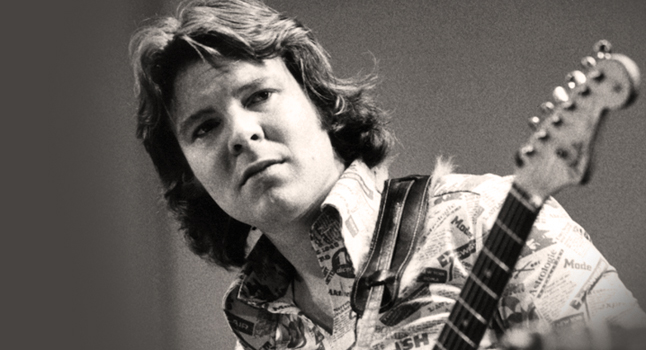
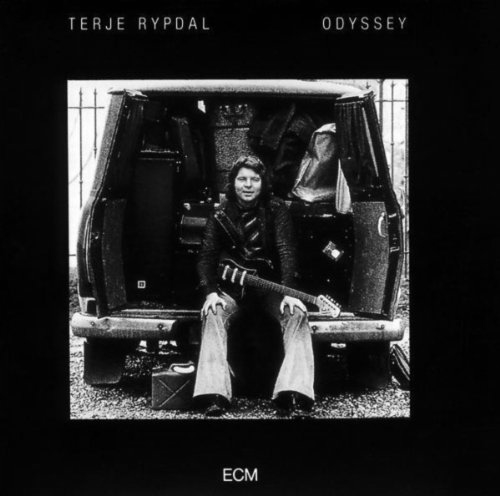
Rypdal has an incisive way of building anticipation, of dropping his solos at the most carefully thought-out points, his guitar an endless book of codas. Like the photo that graces its cover, Odyssey captures the life of a nomadic musician in candid monochrome. And while the album had been reissued on CD prior to this New & Old Masters set, the 24-minute “Rolling Stone” sadly did not survive that first digital makeover. An organ-infused underwater symphony of legendary status, its primal bass line and whammy bar ornaments flow like a meeting between Bill Laswell and Robin Guthrie before bringing on the album’s most rock-oriented developments. It also charts Rypdal in a pivotal moment of self-discovery where his tone began to coalesce into the sound for which he has come to be known. What a treasure to have in restored form.

As if this weren’t already enough to celebrate, ECM has gone above and beyond with another gem from the archives:

Unfinished Highballs
Recorded June 1976 by Swedish Radio, Estrad, Södertälje
Recording producer: Bosse Broberg
Engineer: Ola Kejving

This commissioned radio performance from 1976 features a streamlined Odyssey band (sans Sunde) fronting the 15-piece Swedish Radio Jazz Group. At under four minutes, the title track might blow by like the foreword to a novel were it not for its sheer theatricality. Rypdal’s vision cuts the darkness with a film projector’s eye, and blends into the Matterhorn bass of “The Golden Eye.” Icy synths challenge the thaw of Blix’s electric piano as fiery horns uncurl their tongues from the firmament and lick the snowcapped mountains of an unbridled story. Rypdal lifts this image skyward on waxen wings, which, unlike those of Icarus, are impervious to the light on which they feed. Next on this spacy ride is “Scarlet Mistress.” At once sharpened by muted trumpet and rounded by swinging textures, it gives wide relief to Rypdal’s laser etchings. One feels in its background the kick of eras when music’s enervation thrived in proportion to the harshness of its sociopolitical climate, so that the clubs of the 20s and 30s resurrect themselves and dance their ghostly dance. The soprano returns for a spell, for all a moonbeam peeking out from the clouds into a well of chords that pull us into “Dawn.” Melodies unwind, each a snake wrapped around the wrist of a god who whips it free into the glittering sky. Some enticing bass work dances amid Rypdal’s shimmers of water-harp enchantment, lowering us on a fishhook into the depths of “Dine And Dance To The Music Of The Waves,” in which sitar-like sounds pave a Nazca runway for the soprano’s grand coverage of worldly joy. Christiansen is the contortionist’s backbone of “Talking Back.” Sporting also high-flying reeds from Lennart Åberg and Ulf Andersson, its attunement is downright symbiotic. A real highlight. And speaking of which, where else to end but in “Bright Lights – Big City,” closing out the set on a signature dronescape.

With such a full sense of architecture to explore, it’s no wonder this newly unearthed companion has held its shape. In elevating the big band to a level of orchestral aliveness so rarely achieved, Rypdal has left a mark that is not only indelible, but also inimitable. With a nostalgic sound that distinguishes so much of ECM’s output from the decade, Odyssey – In Studio & In Concert shares the pedestal with Keith Jarrett’s Sleeper as release event of the year.

<< Eberhard Weber: Yellow Fields (ECM 1066)
>> Kenny Wheeler: Gnu High (ECM 1069)


Terje Rypdal: Skywards (ECM 1608)

Terje Rypdal
Skywards

Terje Rypdal electric guitar
Palle Mikkelborg trumpet
Terje Tønnesen violin
David Darling cello
Christian Eggen piano, keyboards
Paolo Vinaccia drums, percussion
Jon Christensen drums
Recorded February 1996 at Rainbow Studio, Oslo
Engineer: Jan Erik Kongshaug
Produced by Manfred Eicher

If Terje Rypdal’s instrument is his axe, then he has ground it to an edge like no other, and perhaps few places so finely as on Skywards. The result of a Lillehammer Festival commission, his jeweled exposition is an aural thank you note to the unquantifiable contributions that ECM has made, via producer Manfred Eicher, to the Scandinavian soundscape. One could hardly script a more fitting lineup for such a task. Joining the Norwegian renaissance man are trumpeter Palle Mikkelborg, cellist David Darling, drummers Paolo Vinaccia and Jon Christensen, violinist Terje Tønnesen (heard recently on If Mountains Could Sing, and Christian Eggen on keyboards (familiar to Rypdal followers as conductor for Undisonus and Q.E.D.). Of these, it is Mikkelborg who leads the way most economically, as in the central “Out Of This World,” transplanted from the Lillehammer stage and redressed here in Oslo’s Rainbow Stuio. The sincerity of his gambit bleeds into Rypdal’s own blazing chess moves against a backcloth of shifting voices. The guitarist writhes as if singing, even as Eggen exposes ancient shadows whose dance has remained unchanged since its inception. Before kissing this quasar, however, we are treated to the earth-friendly title piece. Its anthemic strains carry the torch of “The Return Of Per Ulv,” of which it is a shining reflection, and unwraps also the album’s hallmarks: drums like speech, synths like water, and glorious leads. “Into The Wilderness” bears the frostbite of the Norwegian film, Kjærlighetens kjøtere (Zero Kelvin), for which he composed it. Yet it brings warm thoughts, wrapped in savannah dreams, the creaking of bones, and subterranean currents. In this cinematic enclave we encounter a host of idioms, all tied by a quiet splendor that burgeons even as it fades. David Lynch-like atmospheres mix freely with turpentine and darkening reality, where the sunlight now becomes a ghost wished for to be gone. “The Pleasure Is Mine, I’m Sure” is another cinematic bow to the legions of our shared past. In its wake treads the ostinato of “It’s Not Over Until The Fat Lady Sings!” skirted by drums and overlaid by Rypdal’s collected, fierce lyricism. The set ends with “Shining” and “Remember To Remember,” each a reworking of an earlier motive, mineral from the soil, trembling with romantic charge.

A perfect marriage of concept, cover, and content, Skywards guides the way with light while leaving footprints of shadow. A fantastically beautiful record.

Terje Rypdal: Double Concerto / 5th Symphony (ECM 1567)

Terje Rypdal
Double Concerto / 5th Symphony

Terje Rypdal guitar
Ronni Le Tekro guitar
Riga Festival Orchestra
Normunds Šnē
 conductor
Recorded June 1998, Riga, and August 1998, Nyhagen
Engineers: Audun Strype and Dag Stokke
Produced by Manfred Eicher

Ever the slippery idiomatic eel, Terje Rypdal holds his own as composer in two massive works, the Double Concerto for two electric guitars and symphony orchestra and the 5th Symphony, totaling eight movements of classical brilliance. While the influences are as maverick as he, the overall consistency of texture is refreshing and clean. Rypdal and fellow guitarist Ronni Le Tekro build on a mutual appreciation as soloists for the opus 58 Concerto. Erkki-Sven Tüür fans will find much to admire here in the adroit incorporation of percussion and brass against a Baroque-flavored counterpoint in the leading motives of the first movement. After these pyrotechnic swoops, the meditations of the second movement are a welcome reprieve. Yet the torch still burns all the way to the fourth, braving a storm of Glenn Branca proportion toward cinematic resolution.

If the concerto is about closure, then Rypdal’s opus 50 is about openness. The 5th Symphony reveals a detailed aesthetic that builds with molecules of descriptive energy, as what at one moment may evoke the sway of windblown trees may trade places the next with a waterfall’s shimmering veil. From this cascade emerges a faunal English horn, poking its head through the foliage like a curious deer whose need for caution pales in the light of the comfort that surrounds it. From a dissonant rumbling from below, a wayfaring piano anoints us with slumber, pulling threads of pathos to harp-gilded crests and falls. A thorough and pervasive atmosphere wins out, hurling us into oblivion.

Rypdal swings from innocence to fortitude at the flick of a pick (or pen, as the case might be). Like the oceans of Solaris, his music is ethereal even as it feeds on our darkest fears.

<< Mozart: Piano Concertos, etc. (ECM 1565/66 NS)
>> Giya Kancheli: Caris Mere (ECM 1568 NS)

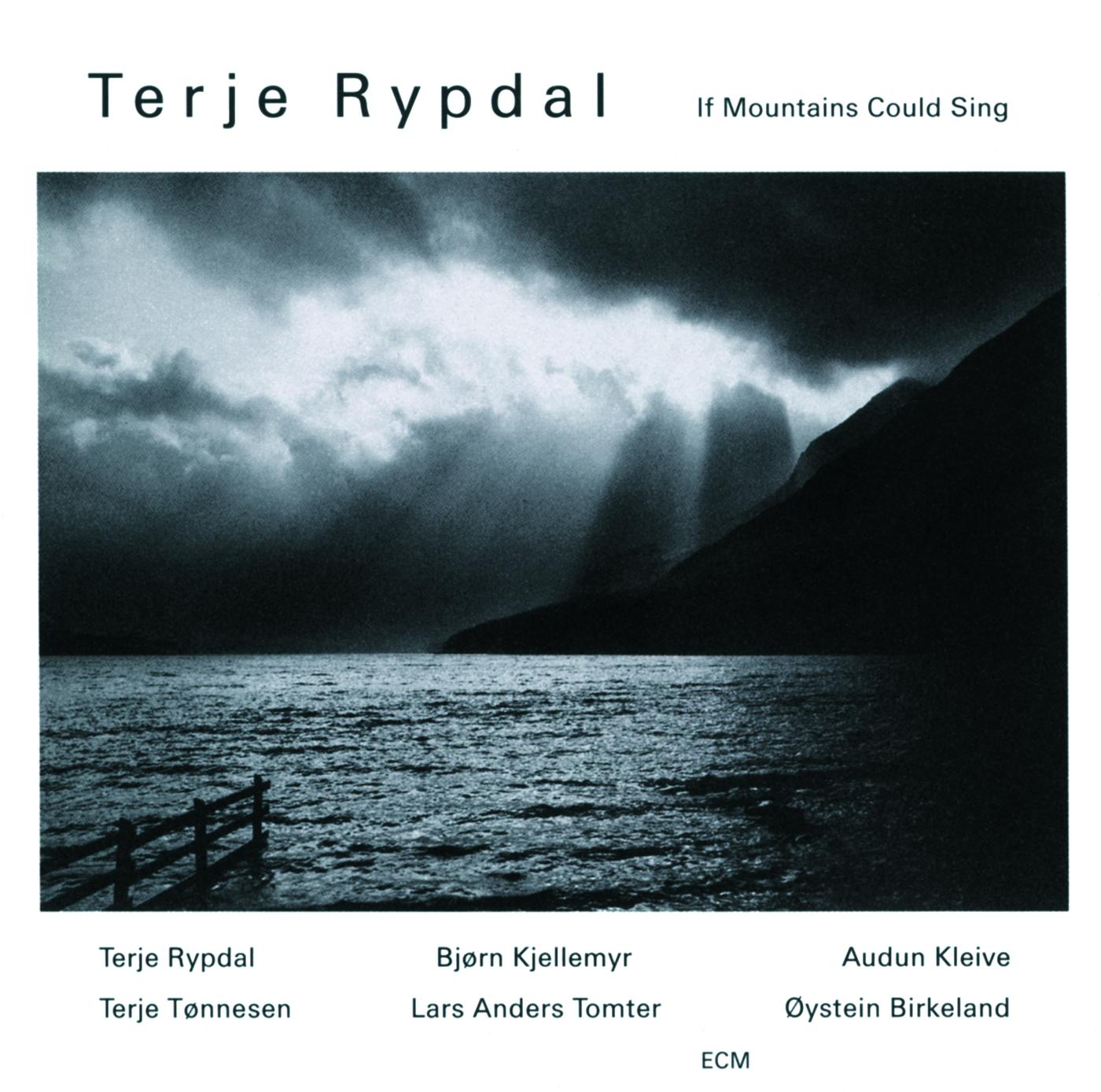
Terje Rypdal: If Mountains Could Sing (ECM 1554)

Terje Rypdal
If Mountains Could Sing

Terje Rypdal electric guitars
Bjørn Kjellemyr basses
Audun Kleive drums
Terje Tønnesen violin
Lars Anders Tomter viola
Øystein Birkeland cello
Christian Eggen conductor
Recorded January and June 1994 at Rainbow Studio, Oslo
Engineer: Jan Erik Kongshaug
Produced by Manfred Eicher

I start this review where I might end it, by marking If Mountains Could Sing as one of Terje Rypdal’s finest achievements. Marrying the Norwegian guitarist’s penchant for magnesium fire with his comparable passion for classical textures, this record gives us the clearest intersection of his split idiomatic personality since Descendre. “The Return Of Per Ulv” kicks off a journey that is modest in length—just shy of 48 minutes—yet anything but in scope and palette. Despite the odd title (“Per Ulv” being the Norwegian moniker for Wile E. Coyote), the smoothness of its melodic line, downright edible phrasing, and fluid bass playing (courtesy of Bjørn Kjellemyr) at once evoke snow and thaw, a landscape of discovery stretching beneath steel gray skies. If ECM were to make a single Best Of album for the label as a whole, omitting this one would be tantamount to crime. Running a close second is “Dancing Without Reindeers,” which after a pizzicato burst walks the violin off the plank into an ocean schooled by drummer Audun Kleive, who chronological ECM followers would have last heard with Jon Balke on Further. Kleive, in fact, shows incredible dynamic sensitivity throughout, supplying whispers of cymbal and snare in “It’s In The Air” and “Foran Peisen” as Rypdal awakens like some giant dragon from hibernation, splashing through the puddles of “But On The Other Hand” after a cosmic storm, and anchoring “Private Eye” with depth of experience. As for the composer behind all this, he breeds lifetimes of haze against tidal strings in the arresting title track and conjures up the object of Per Ulv’s ever-unrequited chase in “One For The Roadrunner” to gut-wrenching effect. The rhythm section gets its last gasp in “Genie” before he signs this love letter on a note of “Lonesome Guitar.”

Here we have a pinpoint of dawn stretched into a canvas large enough to fit any and all listeners. We can walk and admire, lounge or run as we please through its many moods, always knowing that the music is here for us and us alone. Open this door and don’t listen back.

<< Surman/Krog/Rypdal/Storaas: Nordic Quartet (ECM 1553)
>> Sándor Veress: Passacaglia Concertante, etc. (ECM 1555 NS)

Bjørnstad/Darling/Rypdal/Christensen: The Sea (ECM 1545)

The Sea

Ketil Bjørnstad piano
David Darling cello
Terje Rypdal guitar
Jon Christensen drums
Recorded September 1994 at Rainbow Studio, Oslo
Engineer: Jan Erik Kongshaug
Produced by Manfred Eicher

The twelve parts that comprise The Sea are of a proportion far beyond aquatic, for their magic lies in the hands and hearts of four musicians who came together for a session as ever-changing as its namesake. The number would seem to be significant: months in a year, hours in a day, each a cycle rendered timeless through a story that bleeds and weeps. David Darling’s trembling cello lets out the first cry, eddying with all the force of nature at the edge of a bow. Pianist Ketil Bjørnstad therefrom unfurls a theme for the ages, drifting as might a reader’s eyes pass over the words of a favorite letter. As the hearts of the session, his keys drip glitter and shadow in equal, sometimes comingling, measure. Drummer Jon Christensen knocks at a ghostly door suspended above the horizon, leaving guitarist Terje Rypdal to complete the picture, breaching vapor and phosphorous. Such is the first ray of light to spoke from this sonic hub, spinning to the pulse of Bjørnstad’s heart-tugging ostinatos in a pregnant and billowing unity. Somehow, the stars feel closer, each a solar flare arcing into rebirth. But the breath is always damp, the air even more so, while the language falters to hold its shape in the presence of something so free. Of note is Part VIII, a duet between Bjørnstad and Darling that presages The River and a beautiful lead-in to an enchanting closing of the triangle. The spectrum of Christensen’s palette grows richly and organically as threads wind together, each color a drop into the inky cascade of its rapture. Part XII closes the album with Bjørnstad at his solemn best, far from shore.

The power of this music is its ability to adapt to whatever mood you bring to it. The listener is its vessel. The Sea is also a remarkable feat of engineering, fully expressing ECM’s commitment not only to the evocation but also embodiment of concept. But though it might very well flourish in the flesh and machines that produced it, it ultimately flows from, and returns to, the currents of which it is composed.

<< Tomasz Stanko Quartet: Matka Joanna (ECM 1544)
>> Azimuth: Azimuth / The Touchstone / Départ (ECM 1546-48)

Terje Rypdal: Q.E.D. (ECM 1474)

Terje Rypdal
Q.E.D.

Terje Rypdal electric guitar
Borealis Ensemble
Christian Eggen conductor
Recorded August (Q.E.D.) and December (Largo) 1991 at Rainbow Studio, Oslo
Engineer: Jan Erik Kongshaug
Produced by Manfred Eicher

Quod erat demonstrandum (Latin: “which was to be demonstrated”) traditionally denotes the completion of a mathematical proof or philosophical argument. As Terje Rypdal’s opus 52, however, it seems to mark the start of one. The 36-minute work for electric guitar and chamber ensemble is, on the surface, a hard sell. Jazz purists may be perplexed by its chamber music abstractions, while the classical side of the fence may find it lacking in innovation. In the absence of expectation, however, one encounters an unpretentious and atmospheric work of sometimes startling beauty. The 1st movement sets a deceptive tone. Its abstract conglomeration of strings and winds flits through the trees like a Cheshire cat. The 2nd movement, however, introduces Rypdal’s electric, which sings amid a brassy swell of delirium into the 3rd movement. His labyrinthine keening works especially well here while the insistent strings build tension. The deep rumblings of the 4th, however, open like the gates of an alluring netherworld, where orientation is a bluff, grained like a hoarse voice in the echo chamber of time. This seems to be the center of all the activity we have endured—all the more so when we contrast it with the hulking 5th movement, which juxtaposes edges rounded and serrated, cacophonous and nearly silent, gilded by Rypdal’s reversed guitar and flung into a molten pit of scrapes and scrambles. To this, Rypdal appends his Largo, op. 55, a 17-minute stretch that further maps the subterranean concerns of Q.E.D.’s 4th movement. The composer’s ever-mournful song blasts its heat waves through the chest with the insistence of a dragon yet the gentility of a feather caressed against the cheek of one’s preconceptions.

A curious and multifaceted thing, Q.E.D. is filled with mysterious rewards for those patient enough to seek them out. By no means where one should start with Rypdal, but nevertheless a competent blip on ECM’s eclectic radar.

<< Heinz Holliger: Scardanelli-Zyklus (ECM 1472/73 NS)
>> Miroslav Vitous/Jan Garbarek: Atmos (ECM 1475)

Terje Rypdal: The Singles Collection (ECM 1383)

Terje Rypdal
The Singles Collection

Terje Rypdal guitar
Allan Dangerfield keyboards, synclavier
Bjørn Kjellemyr bass
Audun Kleive drums
Recorded August 1988 at Rainbow Studio, Oslo
Engineer: Jan Erik Kongshaug
Produced by Manfred Eicher

Long before ECM released its first remix album (for Nils Petter Molvær’s Khmer), it put out this, its first singles collection. Or so it’s nice to think: the title actually has nothing to do with the content. For their third album, Terje Rypdal & the Chasers instead spit out one of the most transcendent rock albums this side of the Milky Way. So much of that transcendence lies in the bandleader’s characteristic sere. When spurred on by the keyboard stylings of Allan Dangerfield and Audun Kleive’s clear-and-present drumming, he simply can’t go wrong. Yet what truly impresses me about this record is the playing of bassist Bjørn Kjellemyr. His sound, depth, and prowess are flat-out inspiring and constitute the red thread running through this set of 10 blistering cuts. His tight spirals in “Sprøtt” (Crazy), for example, rev up the action into the stratosphere, where Rypdal tills vast climates of thematic information over a nostalgic 80s beat and a Hammond organ so intense it’s almost vitriolic. “Coyote” is another Kjellemyr showcase. Along with the worldly percussion, his thrumming heart animates this track with Steve Tibbett-like expansiveness. The bassist isn’t all winces and head-nods, however, for in “Mystery Man” we find a fat slice of noir gilded in weeping tenderness. Still, he does wind a fuse that Rypdal follows into the passage of “The Last Hero,” lighting it into a hard-edged jam. Not to be outdone, of course, Rypdal cracks his whip with enough force to send us into the next county. The drum- and bass-heavy “U.’N.I.,” for one, is the perfect foil for his ring of fire, and in “Steady” he rides a rollercoaster whose tracks are marked by chromatic footfalls and skipping drums. He also excels in the slower numbers. From the twinkling synths of “Strange Behaviour” and on through the pentatonic infusions of “Somehow, Somewhere” to the final “Crooner Song,” he keens across the airwaves with the conviction of one who knows his emotions fairly and squarely. His provocatively titled opener, “There Is A Hot Lady In My Bedroom And I Need A Drink,” pretty much says it all, for here is a guitarist with a thousand stories to tell. With a powerful sense of development and musical architecture, his tunes are like landscapes razed and re-gentrified with every lick.

If you want to know Rypdal’s strengths as composer, you need look no further than Descendre, but for those who also want to experience the rawness of his talents on the axe, this one’s for you. Prepare to rock out.

<< Keith Jarrett: Personal Mountains (ECM 1382)
>> Stephan Micus: The Music Of Stones (ECM 1384)

Terje Rypdal & The Chasers: Blue (ECM 1346)

Terje Rypdal & The Chasers
Blue

Terje Rypdal electric guitar, keyboards
Bjørn Kjellemyr electric and acoustic bass
Audun Kleive drums, percussion
Recorded November 1986 at Rainbow Studio, Oslo
Engineer: Jan Erik Kongshaug
Produced by Manfred Eicher

Terje Rypdal, Bjørn Kjellemyr, and Audun Kleive continue where they left off on Chaser with this equally memorable set. Blue is not a companion album, however. It is the yin to the other’s yang: on the surface they are solid teardrops of color, but closer listening reveals an eye of one in the other. Swiveling in at a mere 90 seconds, “The Curse” provides an alluring introduction that fades all too quickly into the bass-driven groove of “Kompet Går.” Rypdal may run like a melodic rat with his tail on fire at first, but soon paints the sky with cool winds in a free anthem of strings and rhythms. These last are ever an audible undercurrent to what’s going on above the surface. Their analog warmth lends particular comfort to “I Disremember Quite Well,” where it is enhanced by a hum of bass. Rypdal’s inescapable lyricism is the calm before a quiet storm that rains liquid flame into the cauldron of “Og Hva Synes Vi Om Det.” Every utterance of the bass is like a bubble of lava popping, every echo a dying bird going down in smoke. Even the drum machine in “Last Nite” somehow enchants us, holding on to Rypdal’s feathered back as he peaks above the clouds in denial of the deserts below. The title track lowers us slowly on the bass’s thickly wound strings, Rypdal the melodic bait on this hook, twirled like a ribbon around the finger of a forgetful deity. “Tanga” gets us back into the swing of things with a catchy vamp, even as Rypdal works a magical mood far away. This excursion grinds to a halt in a crunchy solo before “Om Bare,” a solo punctuated by outbursts from synth, casts us into the sea.

Essential for the Rypdal fan.

<< Keith Jarrett: Book Of Ways (ECM 1344/45)
>> Gidon Kremer: Edition Lockenhaus Vols. 4 & 5 (ECM 1347/48 NS)

Terje Rypdal/David Darling: Eos (ECM 1263)

Terje Rypdal
David Darling
Eos

Terje Rypdal electronic guitar, casio mt-30
David Darling cello, electric cello
Recorded May 1983 at Talent Studio, Oslo
Engineer: Jan Erik Kongshaug
Produced by Manfred Eicher

Once more the old mysterious glimmer steals
From thy pure brows, and from thy shoulders pure,
And bosom beating with a heart renewed.
–Alfred Lord Tennyson

Eos. Greek goddess of the dawn. Aurora to the Romans. She of the rosy fingers and golden arms. A welcome companion as we take in these private explorations from Norwegian guitarist Terje Rypdal and American cellist David Darling. Although further collaborations would reveal themselves on The Sea and Skywards, it was on Eos that they first tested the former’s mettle against the latter’s fluid tensions. The session begins where you might, depending on your temperament, least or most expect: in the solar eclipse of “Laser.” Rypdal sharpens his tools alone, raining sparks and molten glass. From this lit match burns a slow and epic fuse in the 14-and-a-half-minute title improvisation. Here the unlikely duo charts its deepest waters, covering our expectations in a muslin screen. Like a dream, it pulls at our feet with heartrending pathos, Rypdal bleeding coronas as he croaks into life. After this graft of spiritual skin, we continue our slumber in “Bedtime Story,” where an angelic drone cradles Darling’s plaintive acoustic and finds a willing partner in Rypdal’s amplified warble. Yet the skies begin to pale in “Light Years,” where the promise of interstellar travel becomes a fantasy for the lonely. As the stars wash into a white blanket around us, we see in the eyes of the cosmos a dire reflection. The world as we know it has vanished, and we are the only ones left with any concept of time. Our guide is the “Melody” that follows. Its wrists are frail, dusted like Saturn’s rings, and equally impossible to grasp. Still they lead, bringing to bear a false promise in “Mirage.” Rypdal’s snaking lines burrow into this pizzicato landscape without ever looking back, shaking off the residue of memory in favor of an enlightened solitude. This leaves us in the sweetness of “Adagietto,” where loving arms grow from dark matter like dandelions, blown into countless galaxies by the breath of Theia herself.

<< Kenny Wheeler: Double, Double You (ECM 1262)
>> Alfred Harth: This Earth! (ECM 1264)