Ralph Alessi: Quiver (ECM 2438)

Quiver

Ralph Alessi
Quiver

Ralph Alessi trumpet
Gary Versace piano
Drew Gress double bass
Nasheet Waits drums
Recorded September 2014 at Rainbow Studio, Oslo
Engineer: Jan Erik Kongshaug
Mixed October 2015 at Avatar Studios, New York by James A. Farber (engineer), Manfred Eicher, and Ralph Alessi
Produced by Manfred Eicher
Release date: February 19, 2016

Trumpeter Ralph Alessi returns to ECM, following his leader debut for the label, with an ace band of pianist Gary Versace, bassist Drew Gress, and drummer Nasheet Waits. This time around, his signature balance of openness and angularity is in fuller effect, made even more prosaic by Versace’s touch. Gress brings his own thorough palette to the studio, while Waits—with whom Alessi first played in Fred Hersch’s quintet—walks a delicate seam both inside and outside the pocket.

Alessi Solo

Over the course of ten originals, Alessi guides his painterly cohort through a gamut of hues. From the primer of “Here Tomorrow,” he moves ever-onward toward the next brushstroke before the current one has even the slightest chance to dry. As a player of genuine dynamism, Alessi treats the melancholy of “Window Goodbyes” (the title references his five-year-old daughter’s habit of waving from the window as he leaves for a tour) and “Shush” with as much rapt attention as any upbeat blending (of which the album is bereft until the closing “Do Over”).

The rubato “Smooth Descent” is a wondrous exhibition for Versace and Gress, both of whom widen its scope with every note they choose. “Gone Today, Here Tomorrow” and “Scratch” are the most cubist detours of the set, although both leave plenty of room between Alessi’s blasts of exposition to find our own way. Through it all, he shows narrative purpose in his playing. Whether in the somber intro of “Heist” or colorful exegesis of “I to I,” he understands the value of any language—in this case, music—to provoke meaning in the flesh. We might therefore think of the album’s blushing title track as the trembling of a body, although it makes just as much sense to imagine it as a bag slung across the back, each arrow it holds a melodic weapon rounded to heal rather than harm.

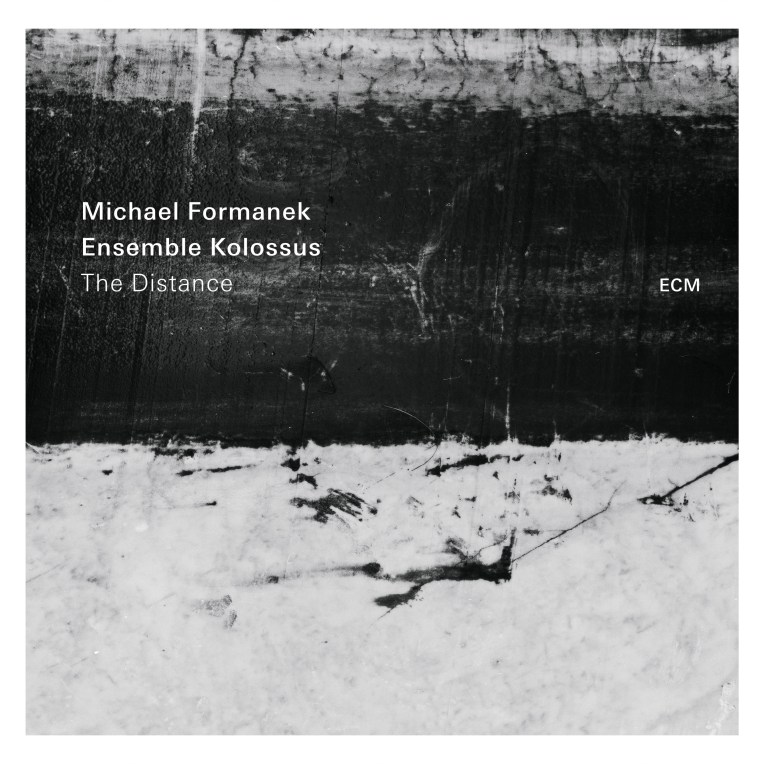
Michael Formanek’s Ensemble Kolossus: The Distance (ECM 2484)

2484 X

Michael Formanek’s Ensemble Kolossus
The Distance

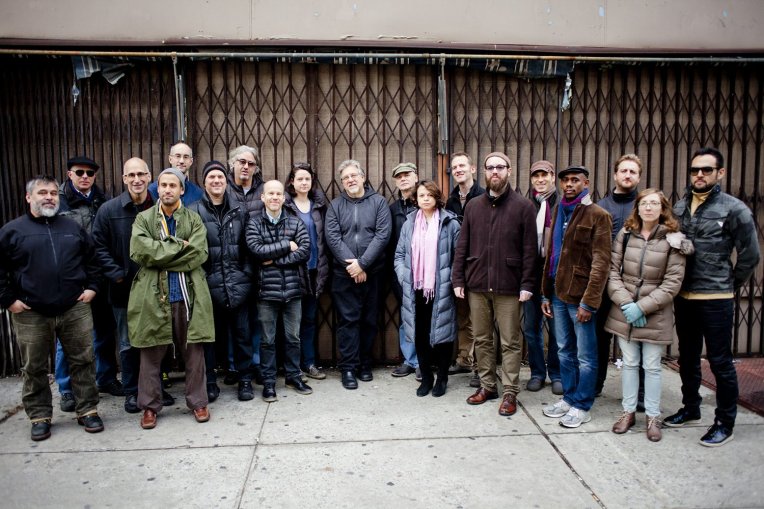
Ensemble Kolossus
Loren Stillman alto saxophone
Oscar Noriega alto saxophone, clarinet, bass clarinet
Chris Speed tenor saxophone, clarinet
Brian Settles tenor saxophone, flute
Tim Berne baritone saxophone
Dave Ballou trumpet
Ralph Alessi trumpet
Shane Endsley trumpet
Kirk Knuffke trumpet, cornet
Alan Ferber trombone
Jacob Garchik trombone
Jeff Nelson bass trombone, contrabass trombone
Patricia Franceschy marimba
Mary Halvorson guitar
Kris Davis piano
Michael Formanek double bass
Tomas Fujiwara drums
Mark Helias conductor
Recorded December 2014 at Systems Two, Brooklyn, NY
Engineer: Jon Rosenberg
Mixing: David Torn
Mastering: Christoph Stickel and Manfred Eicher at MSM Studios, München
Executive producer: Manfred Eicher
Release date: February 12, 2016

After two eminent quartet outings for ECM, The Distancedemonstrates Michael Formanek’s redefinition of big band jazz. Although the bassist and composer cites influences as diverse as Olivier Messiaen and Charles Mingus, his music is more than the sum of its parts, a palette that yields fresh hues with every listen. Drawing on talents both within and without his usual camp, the album pays equal tribute to the known and unknown and activates the sound of each and every player.

Most of this sonic continent is inhabited by denizens of Formanek’s octagonal Exoskeleton Suite. The suite is introduced by a prelude that embodies its title better than anything that follows it. The bandleader’s soloing indeed acts like a protective shell around the many chemical reactions taking place within it. Analyzing them with scientific precision are pianist Kris Davis and drummer Tomas Fujiwara, both of whom turn method into esotery in compact sweeps of accord.

In light of this opening statement, “Part I – Impenetrable” feels like newfound freedom. Pewter cloudbursts give way to Loren Stillman’s nostalgic altoism, which like a child overturning a log uncovers a wriggling ecosystem that would otherwise remain hidden. “Part II – Beneath the Shell” fast-forwards into evening, where a groove inhales the secrets exhaled by its predecessor. Chris Speed works his tenor into the very heart of things, while Kirk Knuffke’s cornet flickers like a candle in a room that smells of rum and ink. “Part III – @heart” is a showpiece for trombonist Ben Gerstein, whose elicitation of harmonics and other peripheral signatures works into a string-bending, metallic fringe of extreme beauty.

“Part IV – Echoes” is a rift in vast ocean waters, of which trumpeter Ralph Alessi and trombonist Alan Ferber are master navigators. Where Alessi cuts his map with an X-ACTO knife, Ferber glues those pieces into a new one, leaving guitarist Mary Halvorson to recalibrate the compass in “Part V – Without Regrets.” Taking the flow into unexpected directions, she forges a chamber aesthetic to the rhythms slithering between her strings. “Part VI – Shucking While Jiving” features a string of brilliant soloists, including Tim Berne on baritone saxophone, Brian Settles on tenor, Jacob Garchik on trombone, and Jeff Nelson on bass trombone. This one marks a tectonic shift in place and time. Smooth yet also pockmarked with worthy interruptions, its atmosphere combusts by influence of ecstatic kinesis. “Part VII – A Repitle Dysfunction” returns to the fragmentary intimacies of Part V, only now with the wall-breaking marimba of Patricia Franceschy and clarinet of Oscar Noriega. Fujiwara and Davis, too, shine through the ruins with their ancient light, as precise as an eclipse. All of which funnels into “Part VIII – Metamorphic,” a collective improvisation for the full ensemble that describes a landscape formed as if through-composed.

EK
(Photo credit: John Rogers)

The suite’s prelude is itself preluded by the title track, which eases Settles onto a locomotive track of horns and brushed drums. The force of it moves just so, blurring trees on its journey toward empty coastline. In a development so misty and cinematic that it could almost be mistaken for a Gavin Bryars ensemble piece, it interlocks with its surroundings—less like a puzzle and more like a leaf among a spray of others.

Formanek has always been unafraid to bend his scores to their limits and let their rougher edges flap for want of new connections, but here his art achieves even deeper relevance in that regard. The result is not a message in a bottle, but a bottle in a message.

Open Land: Meeting John Abercrombie (ECM 5053)

Open Land

Open Land: Meeting John Abercrombie

A film by Arno Oehri & Oliver Primus
A Music Heritage Production
Release date: June 15, 2018

Open Land: Meeting John Abercrombie is a curious film. On the one hand, it’s the only documentary on the late guitarist, and for that reason alone has value. On the other, it’s such a cursory treatment of an immense talent that I would hesitate to recommend it except to the most die-hard fans.

As the delicate strains of “Sad Song” waft through a nocturnal New York City montage, we’re promised an intimate look at an intimate artist—one whose discography on ECM and beyond reads like a film unto itself. And in this regard the directors tick the usual boxes when it comes to a standard biographical portrait. We learn of Abercrombie’s earliest inspirations, listening as a boy to the likes of Chuck Berry, Fats Domino, and Little Richard and feeling a fuse ignited within by the electric guitar. After convincing his parents to buy him one, he finds himself smitten by its possibilities. “This was my salvation,” he says of the instrument as a divining rod for discovering his path.

03

He tells us of his parents, who, despite their hesitations, let him study at Berklee College of Music—a rather unusual gesture for the times, as jazz was still an “underground” music. He lived in Boston for eight years, studying for half of them, started gigging, and began attending jazz concerts on a regular basis. His growing reputation earned him walk-in rights to The Jazz Workshop, a prestigious club where all the greats played just feet in front of him. “I thought the mothership had just landed from space,” he says of hearing John Coltrane live for the first time. He still had a lot to learn.

02

No such documentary would be complete without contributions from those who knew him best. We meet his wife Lisa, who speaks of her husband’s unerring love, as expressed in a willingness to put his music on hold while she finished her schooling in California, and in his acceptance of people as they were. “The deepest part of him is music,” she says, yet in the same breath acknowledges his ability to make everyone feel just as vital to living.

04

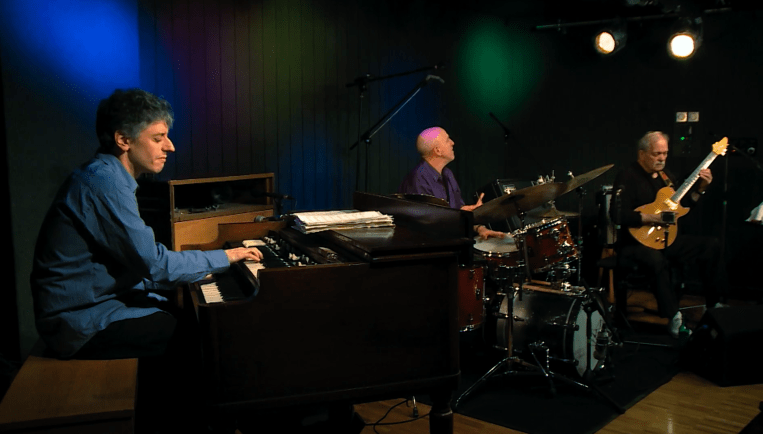
Drummer Adam Nussbaum and keyboardist Gary Versace share their own fond memories of going on the road with Abercrombie. They remember his humor, his practical nature, and the trust he placed in his fellow musicians. Thus, we come to something of a double meaning in the film’s title: his openness was not only musical but also interpersonal. As if to prove that statement, we encounter some wondrous footage of Abercrombie, Nussbaum, and Versace playing “Another Ralph’s” at Jazztage 2014 in Eschen, Liechtenstein. Through 12 minutes of delicate fire, the trio works its magic with ease.

05

All of which points to the film’s greatest weakness, which should have been its strength: namely, the music itself. Throughout we hear selections from Wait Till You See Her (2009), Within A Song (2012), The Third Quartet (2007), 39 Steps (2013), Class Trip (2004), Current Events (1986), and Timeless (1975). The first thing to notice is that, among this latter-day selection, we don’t hear any music from a 20th-century recording until an hour into the film. Anyone being introduced to Abercrombie’s music through this documentary alone might therefore mistake him for a laid-back picker, as there’s no attempt whatsoever to flesh out his variety, as expressed in such albums as Night (1984), Getting There (1988), and Animato (1989), to say little of the dynamism of Timeless itself. Neither is there discussion of his non-ECM recordings, including his groundbreaking work with Stark Reality and Billy Cobham, in the early 1970s.

06

Many of these musical selections share a feeling of melancholy, a characterization that fittingly describes his most personal writing and a quality that brought him and ECM producer Manfred Eicher together in the first place. But this is half of his personality at best, by no means the only lens through which to scrutinize his art. A related misstep, for example, concerns his first studio appearance on Barry Miles’s Scatbird (1972), which Abercrombie talks about at some length twice in the documentary. And yet, we don’t hear a lick of it.

07

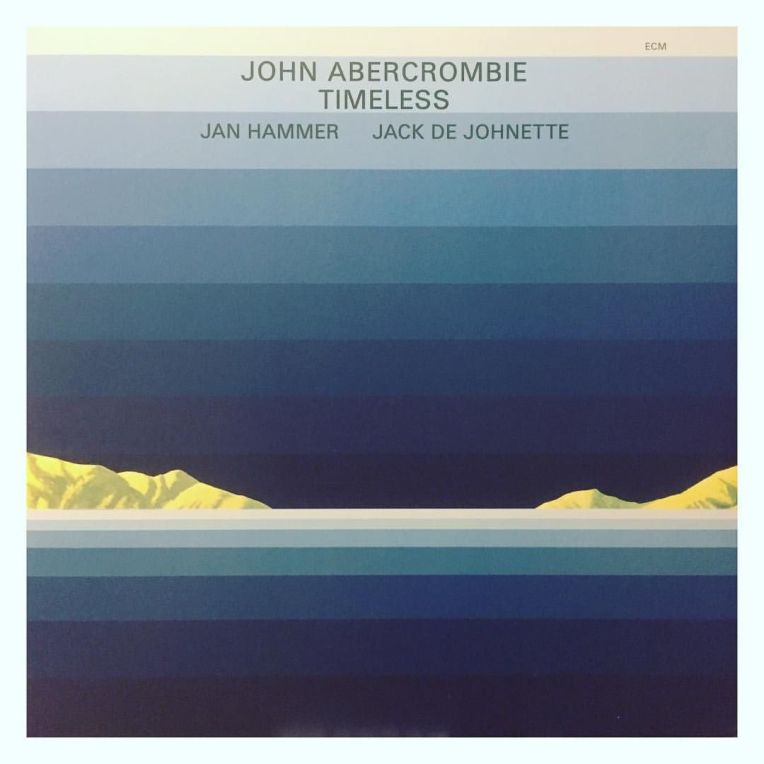
We are, however, treated to Abercrombie’s recollections of making Timeless, a record that came about through Eicher’s persistence alone. Under the influence of Indian fusion (by way of John McLaughlin) in vogue at the time, he created a melody over an E-major drone, showed it to keyboardist Jan Hammer and drummer Jack DeJohnette, and the rest was history. We learn, too, that Manfred Eicher turned off all the lights in the control room while listening back to “Timeless,” which until then had no title. Abercrombie cites this as the moment his identity as a leader, composer, and performer gelled. Fascinating, to say the least.

Timeless

While the film has other issues—notably its hesitant editing and filler visuals that take up valuable real estate in time—these are tolerable in light of the fact that so little music is offered. Witnessing Abercrombie at home on the piano, for example, is unabashedly beautiful, but gone too soon.

01

Open Land is ultimately one of those situations where our love for the subject outweighs our criticism of presentation. But as someone who simply plays what he likes, working with two parts intuition for every part intention, Abercrombie isn’t all that dynamic when it comes to describing his music or process. All of which makes for a lovely piece of apocrypha, to be sure, but far from the best introduction to the man’s life, art, and musical significance. For that, look no further than The First Quartet and its in-depth liner notes by John Kelman, whose laser-focused passion for and knowledge of this music speak to the worth of experience not only for artists but also those who admire their creations.

John Abercrombie: The First Quartet (ECM 2478-80)

The First Quartet

John Abercrombie
The First Quartet

Release date: November 6, 2015

The three albums reissued for this Old & New Masters set were the missing pieces in John Abercrombie’s discographic puzzle for ECM. Released less than two years before his death in 2017, the present collection comprises a vital document not with regard to its bandleader but also the label he would call his primary home after the release of Timeless in 1975. As Abercrombie recalls in John Kelman’s superb liner notes, “[T]hat was my first real break; it helped me find my own way, because I was basically a John McLaughlin rip-off at the time.” Whether we agree with the latter self-assessment, the album was a watershed moment of jazz history in which Abercrombie and producer Manfred Eicher collaborated on a lasting statement.

Abercrombie, Kelman goes on, fell in with bassist George Mraz and drummer Peter Donald while studying at the Berklee College of Music in Boston (where he was roommates with Mraz and keyboardist Jan Hammer). After moving to New York, he squared the circle upon meeting pianist Richie Beirach. While building his profile as both musician and composer, Eicher gifted him with a Revox reel-to-reel tape recorder, which along with the piano would become his primary compositional tool for years to come. It was around that time that the quartet featured here came together in the studio under Eicher’s watch. As Kelman notes of their first session, “Arcade doesn’t sound like a nascent group still finding its way.” Indeed, what we have here is music that comes to us as if midstream, matured and ready to be experienced without any other filter than the decades it took to reach us in digital form.

Arcade

Arcade (ECM 1133)

John Abercrombie guitar, electric mandolin
Richard Beirach piano
George Mraz bass
Peter Donald drums
Recorded December 1978 at Talent Studio, Oslo
Engineer: Jan Erik Kongshaug
Produced by Manfred Eicher
Original release date: March 1, 1979

Toward the end of Akira Kurosawa’s Kagemusha, a rainbow spreads its band across the ocean to warn General Katsuyori not to proceed into the Battle of Nagashino that lies ahead, lest he meet with certain doom. Tragically, he ignores it and rushes himself and his men into an all-out massacre. Such omens are rare outside of the cinematic imagination. And yet, here we find a similar image gracing the cover of Arcade, signaling to us a music that doesheed that omen and luxuriates in the sonic benefits of its deference to a higher power.
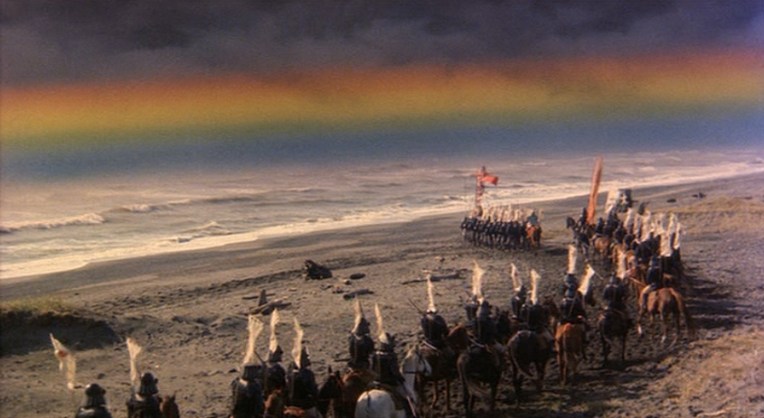
Kagemusha
Film still from Kagemusha (1980)

The title track, with its buoyant bass line courtesy of George Mraz (onetime member of the Oscar Peterson Quartet) and an effervescent Richard Beirach (rightful heir to the Tatum/Evans legacy) on piano, frames John Abercrombie’s adventurous fingers like gloves, making shadow puppets against the taut screen of Peter Donald’s drumming. This formula works from the get-go and provides plenty of magic from which the quartet spins one glorious melody after another. A splash of rain brings us to the “Nightlake” with downcast eyes as Abercrombie lays his rubato soloing over a liquid rhythm section. The results showcase the quartet at its best. “Paramour” is another stunner, working over the listener in waves. Mraz digs deep into his emotional reserves for this one. Meanwhile, things are a bit more cosmic on “Neptune,” where arco bass cuts a swath of moonlight in nebular darkness. Abercrombie launches tiny rockets into the stars with his electric mandolin, tracing new constellations on the way to becoming one himself. In closing, the group shows us what “Alchemy” is all about. From its lead filings arises a golden phoenix. Every appendage is an instrument animating the harmonious whole, tickled by Beirach’s ivory and gilded in a layer of cymbals. As its heart contracts, the guitar lets out a plaintive cry, running ever so delicately into the shadows of resolution.

Abercrombie’s pinpoint precision abounds, his mid-heavy picking amplified to buttery sweetness, and shares notable interplay with Beirach. Over a yielding backing, these sustained reverberations occasionally coalesce in bright tutti passages. The resulting sound is enchantment.

<< Walcott/Cherry/Vasconcelos: CODONA (ECM 1132)
>> Tom van der Geld: Path (ECM 1134)

… . …

Abercrombie Quartet

Abercrombie Quartet (ECM 1164)

John Abercrombie guitar, mandolin guitar
Richard Beirach piano
George Mraz bass
Peter Donald drums
Recorded November 1979 at Talent Studio
Engineer: Jan Erik Kongshaug
Produced by Manfred Eicher
Original release date: 1980

One year after debuting with Arcade, the John Abercrombie Quartet cut out the auditory paper doll that is this curiously overlooked successor. What set the quartet apart from its contemporaries was not only the fluid playing of its frontman and the ways in which it intertwines with that of musicians who are beyond intuitive, but also the sense of development in the structuring and ordering of tunes. Beginning with the pianistic groove of “Blue Wolf” and ending on the acoustically minded “Foolish Dog,” this self-titled peregrination winds itself into a tour de force of solemn virtuosity. From Beirach’s overwhelming cascades to Mraz’s contortions, we encounter a virtual entity of unity whose heartbeat counts off to Donald’s drumming and whose eyes glow with Abercrombie’s characteristic pale fire. This body unfolds into a misty landscape, where the gusts of “Dear Rain” spread melodies into harmonic pastures. Looser gestures like “Stray” (here, both verb and noun) share appendages with the resignation of “Madagascar,” which falls like a sheet from a clothesline in an oncoming storm. As the quartet grows in, Abercrombie’s gentle remonstrations graze the bellies of clouds with the barest touch of curled fingers, allowing “Riddles” to build their conversational nests in the branches of an undisclosed longing.

No matter how “into it” these musicians get, they always display an admirable sense of control, so committed are they to the thematic altar around which they cast their spells. There is a sound that lingers on the palate, one that finds in its cessation the birth of something new.

<< Azimuth: Départ (ECM 1163)
>> Gary Peacock: Shift In The Wind (ECM 1165)

… . …
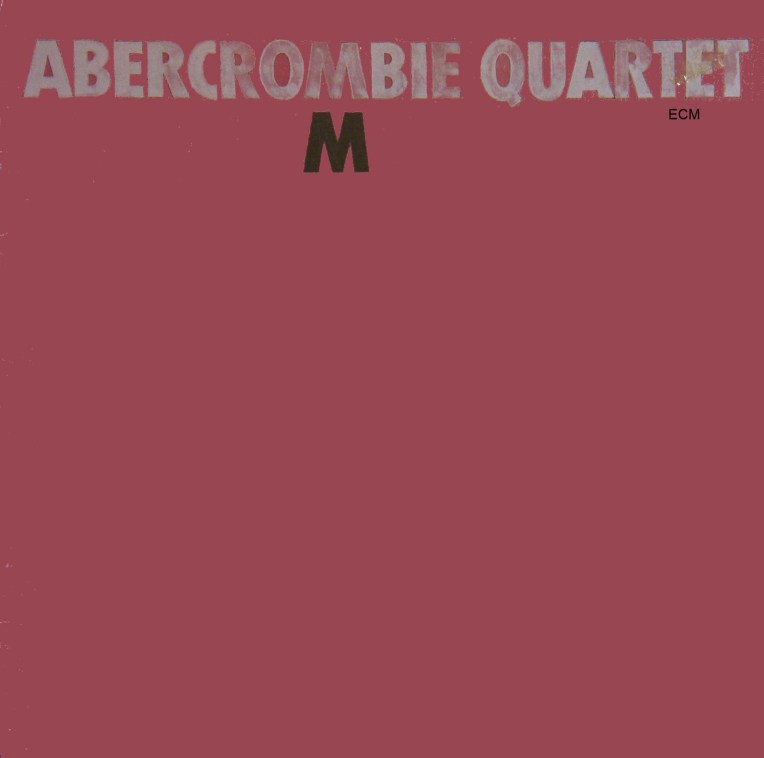
M

(ECM 1191)

John Abercrombie electric and acoustic guitars
Richard Beirach piano
George Mraz bass
Peter Donald drums
Recorded November 1980 at Tonstudio Bauer, Ludwigsburg
Engineer: Martin Wieland
Produced by Manfred Eicher
Original release date: 1981

For its third ECM outing, the John Abercrombie Quartet produced this viscous and mysterious entity known simply as M. This seven-part exercise in burnished reflection plows its foggiest waters in “Boat Song.” Abercrombie’s guitar weeps like bells over a harbor, skimmed for flotsam by Beirach’s somber piano. At nearly ten minutes, this is the longest track of the album, and its darkness haunts all that proceeds from it. We encounter this also in “To Be” (a rubato wave notable for Mraz’s effortless bassing), and the harmonic inversions of “Veils.” Here, Abercrombie’s sinewy melodic lines stretch farthest, slowly immersing hands into the “Pebbles” in which we find closure. Donald’s drumming is particularly fine here and shines like sunrays from cloud-break.
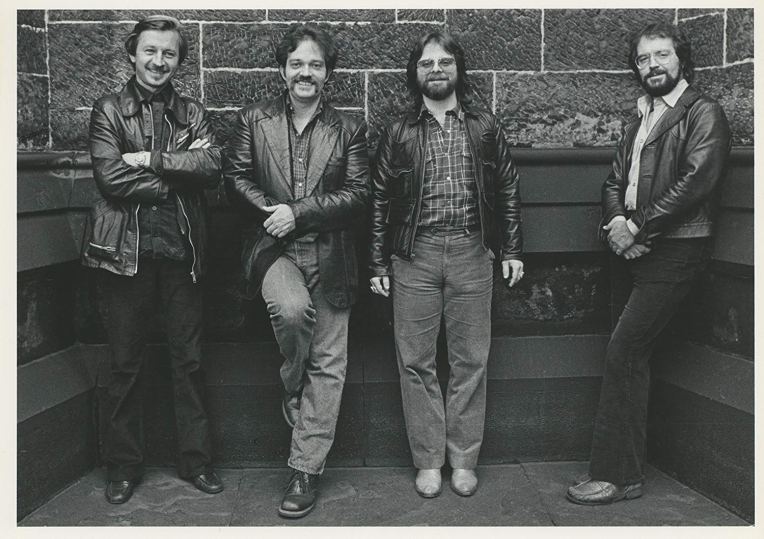
JAQ
(Photo credit: Rick Laird)

Despite Abercrombie’s often-piercing swan dives and a pirouetting rhythm section, even the liveliest moments in “What Are The Rules” (a rhetorical move proving there need be none) or “Flashback” never lift their feet too high off the ground. The latter’s circular conversations draw around us a perimeter that we are free to overstep. Yet after being bathed in such sonic finery, we feel reluctant to do so. The result is one of Abercrombie’s lushest albums, with a somewhat obscure and tinny production style that writes a different story every time.

Taken as a trilogy, these albums are a time capsule of creative evolution into which the listener may step in, reading each tune like a cross-section of its own becoming in service of a whole that will only continue to grow as it ages now—remastered, revitalized, and released for all to share.

<< Pat Metheny & Lyle Mays: As Falls Wichita, So Falls Wichita Falls (ECM 1190)
>> Rypdal/Vitous/DeJohnette: To Be Continued (ECM 1192)

Lucian Ban / Alex Simu: Free Fall

Free Fall

In 2018, the Romanian duo of pianist Lucian Ban and clarinetist Alex Simu toured their homeland in a series of concerts inspired by the improvisational genius of Jimmy Giuffre. What transpired throughout this particular performance, captured at Bucharest’s French Institute, is a fitting embodiment inspired by one of jazz’ humblest stalwarts.

Ban’s “Quiet Storm” opens the concert by immersing listeners in the robust tenderness for which Giuffre will be forever known. Harnessing an illustrative power akin to incidental music of the theater, Simu comports himself like an actor on stage, deviating just enough from the script to wrap his performance in a cloak of individuality. Following this, two entirely improvised interludes (the jagged title track and more liquescent “Mysteries,” an album highlight) sandwich Carla Bley’s “Jesus Maria,” which in its present iteration feels as spontaneous as it does timeless. Moving with ghostly patience, it crowns the metaphysical heart stirring within each of these songs.

Simu offers two originals. “Near” finds him unaccompanied on a custom bass clarinet, expounding upon the influences of Giuffre’s playing, while “The Pilgrim” lures Ban into a gorgeously restrained exercise in itineracy. Two tunes by Giuffre close out the set. Where “Cry, Want” is a bluesy affair bathed in modal shadow, “Used To Be” bids farewell on an optimistic note, sending off the spirit of a fallen hero on a pyre of reed and ivory.

(This review originally appeared in the March 2019 issue of The New York City Jazz Record, a full PDF of which is available here.)

Aaron Parks: Little Big

little big

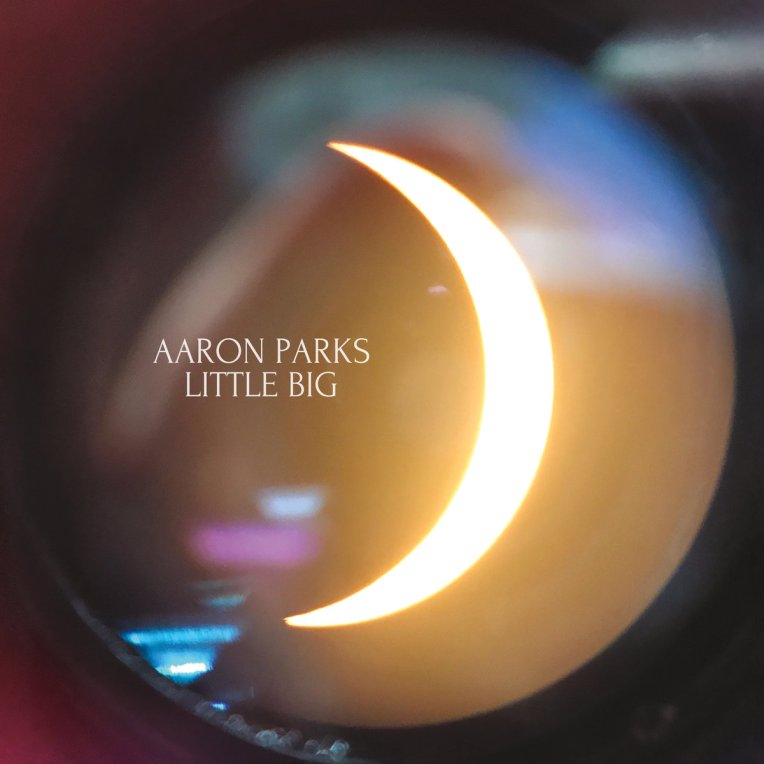
Little Big is an album you’ll want to spin like a globe, placing your finger anywhere and opening your eyes to take joy in where it lands. From first to last, Aaron Parks amps up his artistry in a ripe configuration with guitarist Greg Tuohey, bassist David Ginyard and drummer Tommy Crane. Gliding through a set of 14 originals, the itinerant keyboard player renders a sound perhaps best characterized as photorealistic.

Little Big runs on a spirit of genuine appreciation, be it for childhood (“Kid”), love (“Good Morning”) or worlds within our own (“Aquarium”). Every surface reflects some form of nostalgia, made possible only by the quality of its summoners. Parks and Tuohey are as inseparable yet distinct as gesso and pigment, each defining the other in mutual appreciation, while Ginyard and Crane uphold their canvas with algorithmic integrity. As a whole, these musicians render tessellations of melody and rhythm that would give M.C. Escher a run for his money.

Parks’ writing speaks power into being, unrolling the full breadth of this quartet’s capabilities across the brain. From the intimate piano solos “Lilac” and “Hearth” to the representative “Rising Mind” and “Doors Open,” a purpose-driven energy prevails. Among the music’s many strengths is its evocative clarity, exemplified to the fullest in “Small Planet.” The steampunk ambiance of “Professor Strangeweather” offers another highlight in treating each instrument like a cog for a balanced machine. “Digital Society,” by its own measure, grounds us in the here and now through its bitmapping of the modern soul. If the band’s name tells us anything more, it’s that once any contradiction becomes a reality, you wonder why you ever thought of it as a contradiction to begin with.

(This review originally appeared in the February 2019 issue of The New York City Jazz Record, a full PDF of which is available here.)

Rudy Royston: Flatbed Buggy

flatbed buggy

With Flatbed Buggy, drummer Rudy Royston has come into his own as a composer. Joined by reedplayer John Ellis (chiefly on bass clarinet), accordion player Gary Versace, cellist Hank Roberts and bassist Joe Martin he channels influences as diverse as Bill Frisell and Ron Miles, tied together by memories of his partial Texas upbringing in a melodically rich chamber suite.

Tempting as it is to be enchanted by this unique combination, it feels as organic as the music itself. To be sure, each instrument has inherent qualities. Bass clarinet and cello form an especially flexible spine, accordion a robust pair of lungs, bass legs on which to stand and drums a brain to prompt every member into action. But it’s the way in which they combine in the guise of one body that makes them stand out. Between opener “Soul Train” and brief outro “I Guess It’s Time To Go,” listeners are led from sunrise to sunset with the vividness of a favorite childhood memory. The past is therefore a running theme of Flatbed Buggy, the very title evoking country life in a time buried under the detritus of recent history and which reaches fullest evocation in “Twirler” and “Hourglass.”

While there are obvious examples of virtuosity, such as the whimsical round of solos in “Bobblehead” and thoughtful contributions of Versace and Ellis in the title track, a collective spirit overrides concerns of individual expression. Likewise in the swinging contours of “The Roadside Flowers” and two starkly narrative tracks “boy…MAN,” which shuttles bass through a loom of block chords, and the more ponderous “girl…WOMAN.” Whether in these protracted examples or the three jauntier interludes sprinkled throughout, this music is sincere, vividly articulated and not afraid of a little dirt under the fingernails.

(This review originally appeared in the February 2019 issue of The New York City Jazz Record, a full PDF of which is available here.)

Yonezawa/Kamaguchi/Kobayashi: Boundary

Boundary.jpg

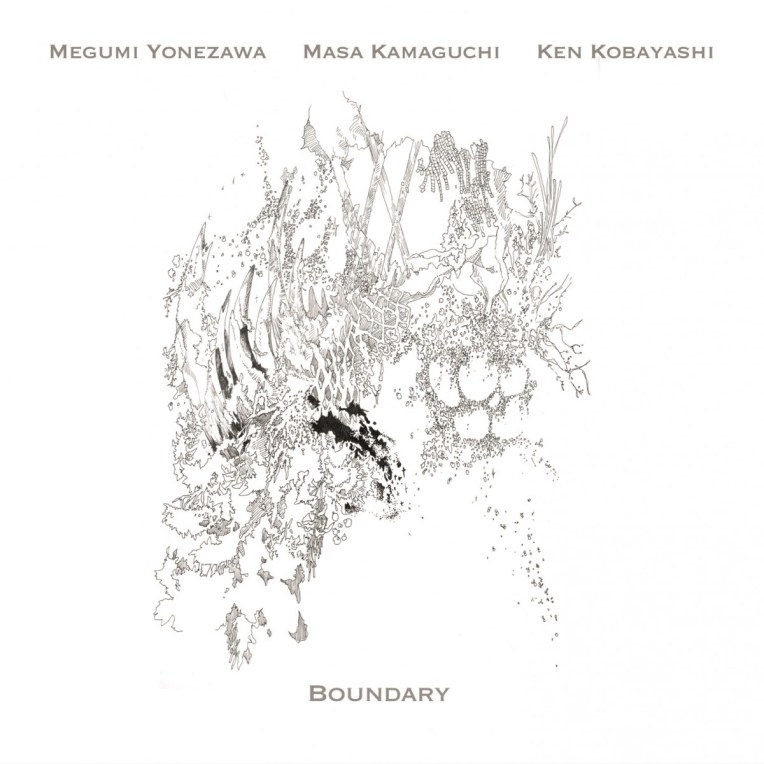
After scrimshawing a name for herself in the ivory of jazz as sidewoman for saxophonist Greg Osby and following her 2016 leader debut A Result of the Colors (see my review for All About Jazz here), pianist Megumi Yonezawa releases her deepest personal statement to date. Boundary triangulates her tactful artistry with bassist Masa Kamaguchi and drummer Ken Kobayashi in a set of nine freely improvised tunes, plus a lone standard for good measure. If said standard—Sammy Fain/Irving Kahal’s “I’ll Be Seeing You”—feels like a message that has traveled light-years to get here and shows the trio at its most resonant, then the spontaneous wonders cushioning it feel like messages yet to be revealed and show the trio at its most inward. As in the droplets of piano that open the title track, each turn of phrase makes known a realm that only the ears can grasp.

While other titles offer descriptors of what one encounters here, their truth is limited. “Alchemy,” for example, does indeed come across as a sonic conversion of base elements, even as one is constantly reminded of something far more precious than gold: namely, the coherence of flesh, bone and dedication that only musicians who listen to each other this closely can achieve. “Tremor,” too, despite an underlying quiver of spontaneity, names the album’s steadiest departure. Then there’s “Wavelength,” a duet between Kamaguchi and Kobayashi implying something greater than synergy: dialogue.

Even without such trail markers, one can hear the cartographic sincerity of “Reef” and tactile intensity of “Nostalgio” as if they were one and the same. The most absorbing promises are fulfilled in “Veil” and “Onement.” Where the former is as beautiful as it is intrepid, the latter swirls with life-giving immediacy. Mirroring the patient unfolding of “Meryon,” they seek catharsis on the path to getting there, so that by the end a new beginning has already opened its eyes for want of another day.

(This review originally appeared in the February 2019 issue of The New York City Jazz Record, a full PDF of which is available here.)

Kyoko Kitamura’s Tidepool Fauna: Protean Labyrinth

Protean Labyrinth

Protean Labyrinth is a tunnel burrowing into the linguistic soil from which we all sprout. It’s a sensation best expressed in a handful of tracks bearing the title “Push.” Of these, “Push Four” is the most emblematic, a spontaneous ramble, which, like the album as a whole, achieves coherence by virtue of its passage through time—pushing indeed against the temptation of meaning in favor of instinctive understanding. At the center of this aphasia is vocalist Kyoko Kitamura, who doesn’t so much lead the band as strike it like flint on rock. Tenor saxophonist Ingrid Laubrock, bassist Ken Filiano and drummer Dayeon Seok are chemically bound to her at every moment, tasting the air of possibility like a three-pronged tongue.

Despite the guiding scores from which the music is drawn, the quartet undermines any purchase of exposition. What starts as a bright groove one moment might morph into throaty sinews of darkness the next. That such changes occur without force or hierarchical touch is testament to these musicians’ willingness to smash their compass the moment it’s calibrated. The finest turns are “Deadbolt” and “No Exit,” both masterful containments of wildness. Each is a glass house filled with vocal stones—not thrown but handled so much that they’ve become rounded with care.

Kitamura’s voice, brimming with fierce humility, is central to these goings on. In “Lure,” each of her utterances is an Ouroboros of potential meaning sacrificed on the altar of its own becoming and in “Slide” she breaks out the vocal champagne, bubbling and frothing her way through a subterranean mythos. This is the underside of language, a sonic entity that grows and moves of its own accord.

(This review, in its original form, appeared in the December 2018 issue of The New York City Jazz Record, a full PDF of which is available here.)