Keith Jarrett Trio: Tribute (ECM 1420/21)


Keith Jarrett Trio
Tribute

Keith Jarrett piano
Gary Peacock bass
Jack DeJohnette drums
Recorded October 15, 1989, Philharmonie, Köln
Engineers: Jan Erik Kongshaug and O. Fries
Produced by Manfred Eicher

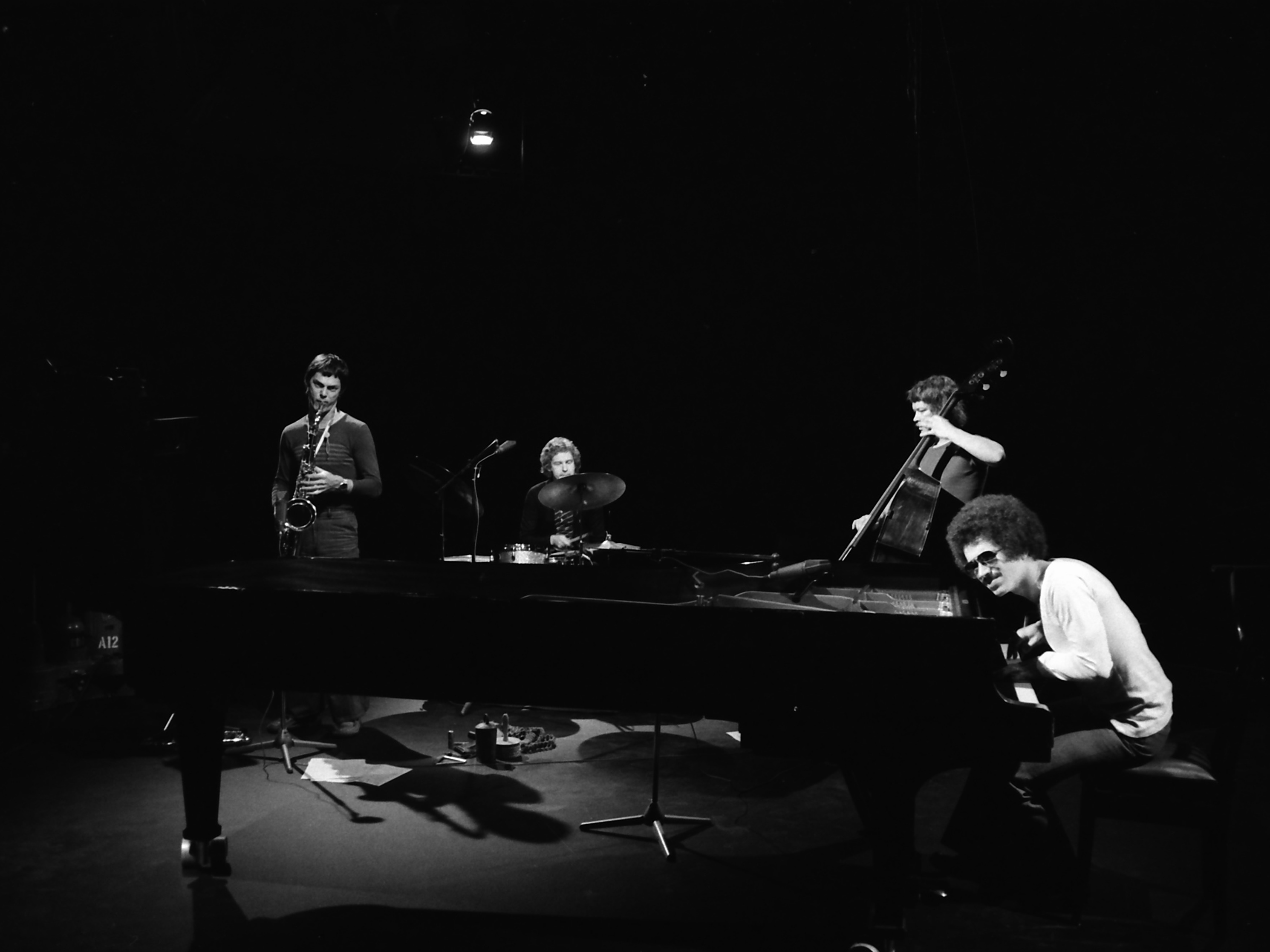
No one makes live records quite like the Keith Jarrett Trio, whose inimitable skills and synergy ensure us that every tune breathes with all the life it deserves. As one of the few groups that can draw in a crowd thousands of miles and years away into that indefinable moment of expression, it transcends the confines of the concert hall, of the jazz club, of the audience’s adoration. All of these recede the moment you put this music on and let it fill your own space and time with the love and passion what bore it. We hear this especially in the balladry, of which Jarrett proves an adept exponent in “Lover Man.” Dedicated (as all pieces on Tribute are to those who once performed them, hereafter in parentheses) to Lee Konitz, the piece expands such notions of genre to begin with, unraveling from characteristically somber piano intros a world of sentiment. Peacock is especially notable in his first solo of the night, tracing an outline that DeJohnette is more than happy to color in. Jarrett maintains enviable subtlety in his improvisations, working in a clever nod to “The Girl from Ipanema.” He dances on air, even as he plunges his hands into a watery keyboard and mixes the sediments until they shine. DeJohnette, meanwhile, works wonders with his snare, unfolding a ponderous yet somehow buoyant solo: a drop of melancholy in an otherwise joyful sea. All this in the opening number? Yes, it’s that good.

Such things are de rigueur in Jarrett Land. One could expound at great length, for example, on “I Hear A Rhapsody” (Jim Hall). From the fluid intro and swinging groove it dovetails to DeJohnette’s popcorn bursts, there’s so much to acknowledge for fear of doing the music injustice. DeJohnette and Peacock generally keep the flame low and steady as Jarrett turns all manner of somersaults, each a storm cloud waiting to burst, yet which instead couches rainbows. Down one of these Jarrett slides into a pot of golden applause. “Little Girl Blue” (Nancy Wilson) turns with the grace of a plumed bird bowing into the wind. Peacock again walks that fine line between heartbeat and fluster. The more up-tempo “Solar” (Bill Evans) finds Jarrett working his usual eddies into relief. One really notices the acoustics of the concert space, linking Jarrett’s submissions to the rhythm section’s stellar flip-flopping and moving us seamlessly into the exhilarating, sparkling piece of music-making that is “Sun Prayer.” A quintessential Jarrett tune if ever there was one, one feels in its shape a musical life lived to its fullest. DeJohnette flashes his powers as Jarrett weaves some of his densest pianism yet before baying into a translucent cove, where floats the detritus of a promise so enormous that it cannot help but embrace the world. “Just In Time” (Charlie Parker) delights with its odd timing, which sends Jarrett on a simply unstoppable journey as Peacock rides the DeJohnette train to Smoothville. The trio digs even deeper in quiet stunners like “Smoke Gets In Your Eyes” (Coleman Hawkins), “All Of You” (Miles Davis), “It’s Easy To Remember” (John Coltrane), and “Ballad Of The Sad Young Men” (Anita O’Day), the latter graced by DeJohnette’s steam-engine brushes. A highlight in the album’s second half.

From the buoyant piano intro, “All The Things You Are” (Sonny Rollins) puts one in mind first of Gary Burton at the vibes before unleashing a rhythm section aflame, making for one of the trio’s most exhilarating tracks anywhere. More pure Jarrett follows in “U Dance.” This joyous romp seems porous, but would withstand even the sharpest bullets of criticism. A spirited turn from DeJohnette bridges us into the tune’s closing half, where we find ourselves still dancing even as the music recedes into the distance from which it spoke.

I typically don’t read other reviews before writing mine, but in my gathering of information for this one I took a look at the comments on Amazon, only to be shocked at one customer who proceeds to tell us how, listening to “Ballad Of The Sad Young Men” while driving, he (?) became so fed up with DeJohnette’s drumming that he rolled down his window and threw the CD onto the highway. Everyone is, of course, entitled to personal opinion, and my reviews are never meant to be prescriptive, but I find it baffling that anyone could react against DeJohnette so strongly on the basis of such an exhilarating album. Chalk it up to my drumming ignorance, but I daresay that DeJohnette’s is some of the best around. Among other things, on this recording he seems to have upped his snare work to something special in the grammar of his kit. I underscore this point only to prevent potential listeners from missing out on a tremendous experience.

Gorgeous to the last drop.

<< Jan Garbarek: I Took Up The Runes (ECM 1419)
>> Gesualdo: Tenebrae (ECM 1422/23 NS)

Keith Jarrett: Paris Concert (ECM 1401)

Keith Jarrett
Paris Concert

Keith Jarrett piano
Recorded October 17, 1988 at Salle Pleyel, Paris
Engineer: Peter Laenger, Andreas Neubronner
Produced by Manfred Eicher

Arguably the most stunning live recording in Keith Jarrett’s solo archive, the Paris Concert may just surpass its Köln predecessor in the sheer naturalness of its unfolding. The recording consists of three tracks, the first of which is simply dated “October 17, 1988” and clocks in at nearly 40 minutes. The music finds depth in its power to spin a self-contained mythology, in its being a window through which one stares to see bits of self. Over a plodding low F he culls handfuls of nebulae, building towering structures of stone and song, and throwing from them streamers of melodies into the vales below until one of those melodies takes wing by the feathers of sunset. It is soft and pale, able to navigate entire continents with barely a flap, and writes across the sky a message for all: Just listen, and you will see. From a thick octave chain Jarrett hangs heavier and heavier ornaments. The development thereof is rigorous yet caged, seeming to run in place not because it cannot move forward but because it cannot look behind, and blossoms into a sustain-pedaled passage so ineffable that it transcends the boundaries of the concert hall, whispers light into our minds, and holds a finger to the lips of thought—a swansong that begins another life.

Jarrett spins his tapestries as might a skilled filmmaker, at once letting the actors bring their own experience to the project while at the same time guiding their story arc from somewhere off screen. The two epilogues are thus like alternate endings. “The Wind,” by jazz pianist Russ Freeman, opens with a Steve Reichian flourish and glides into a slow and bluesy love affair with shadows. This slow-motion tumble down the rabbit hole of the night ends with the patter of rainfall and leaves us to contemplate what we have just heard. The simply titled “Blues,” on the other hand, takes a standard progression and draws from it colors we never knew it had. It glows at Jarrett’s fingertips, distills the purity of his expressive vision, and gives us the resolution we crave.

A Keith Jarrett solo improvisation is, at its most selfless, a drop into an ocean of feeling far outside the realm of articulation. One feels it in the bones, in the brain, and most importantly in the heart, but always as one part of a thread stretching as far as listeners can see into both the past and the future. We encounter that thread as one might a rainbow: the closer we run toward it, the farther it travels away from us. Only when we look inward do we discover where it begins and ends.

<< Meredith Monk: Book of Days (ECM 1399 NS)
>> Agnes Buen Garnås/Jan Garbarek: Rosensfole (ECM 1402)

Keith Jarrett: Personal Mountains (ECM 1382)


Keith Jarrett
Personal Mountains

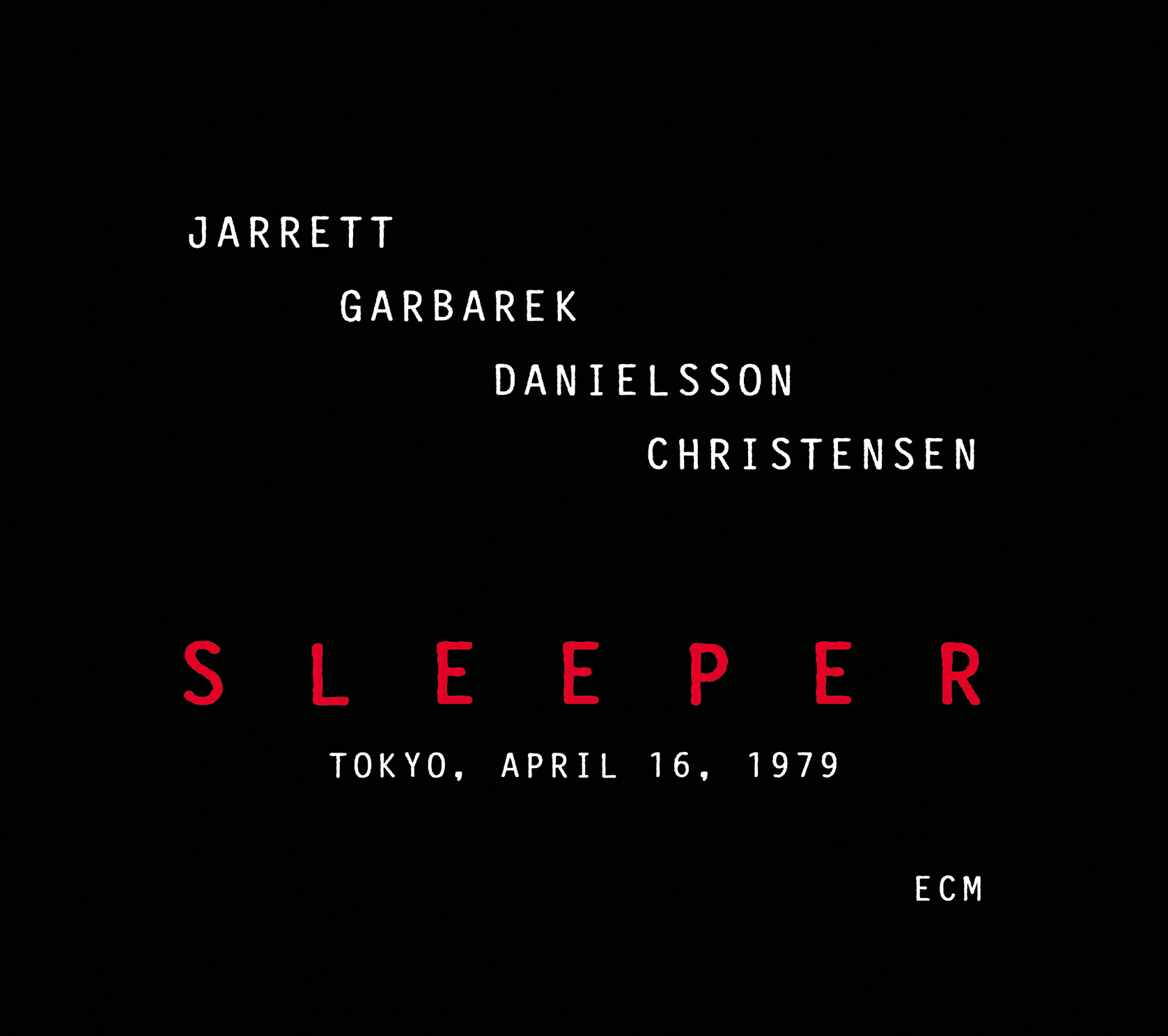
Keith Jarrett piano, percussion
Jan Garbarek tenor and soprano saxophones
Palle Danielsson bass
Jon Christensen drums
Recorded in concert, April 1979, Tokyo
Engineer: Jan Erik Kongshaug
Produced by Manfred Eicher

Despite being recorded in 1979, it would be a full decade before this jewel of a live recording from Keith Jarrett’s unparalleled European quartet (with Jan Garbarek on saxophone, Palle Danielsson on bass, and Jon Christensen on drums) would find itself sleeved and catalogued at last. From note one Personal Mountains paints melodic vistas of great majesty wrapped in a bow of rarified execution. As throughout, Garbarek’s blustery tone in the title opener proclaims themes with crystal-clear diction across the widening sky of Jarrett’s pianism. Jarrett himself takes an early leap in this outing, riding the rhythm section like a thoroughbred into open fields. He turns night into day with every chord, the fullness of his sound accentuated especially by Christensen’s rolling thunder as he unravels wonder after wonder. Yet even as Garbarek works his chromatic magic for the betterment of something profound, Christensen and Danielsson are given no small spotlight in which to shuffle their dialogue into a hollering tumble. Thus are we jettisoned skyward into an unexpected turn of phrase. Garbarek constructs hang gliders of melody in the thick night, every dip a chance to rise again. Meanwhile, Jarrett sews our hearts into the folds of a time unbound, thus moving us smoothly into “Prism.” Our usher this time is Danielsson, who pulls Jarrett’s ballad energy through a brushed corridor. Jarrett has all he needs from Garbarek to burn the midnight oil with a sparkling tapestry of soloing. His gentle cascades then release us into “Oasis” before Garbarek’s sharply inclined theme breaks the waves. Jarrett is again wondrous, spinning the finest spider’s thread into a wheel of adhesive memories. Offset by Christensen’s vibrancy, he and the others forge a vision for all senses. Jarrett invites us all by his lonesome into the aptly titled “Innocence.” Like a candle that barely trembles in the rhythm section’s sleeping breaths, his playing makes string games of moonbeams with the conviction of a dream. Of the latter we hear but a snippet in “Late Night Willie.” This gentle groove—bluesy enough to have Jarrett whooping all the same—gives us a soulful Garbarek and an overall elasticity which hurls us into an even deeper appreciation for the art at hand.

There is something magical about the pairing of Garbarek and Jarrett that brings out the best in both. And with such fine rhythmic support—and, to be sure, Danielsson and Christensen are as much melodicians as they are rhythmatists—one can hardly ask for anything grander. Although this is a live recording, one would hardly know it from the rapt silence that embraces this music until the audience’s applause breaks the spell.

<< Jan Garbarek: Legend of The Seven Dreams (ECM 1381)
>> Terje Rypdal: The Singles Collection (ECM 1383)

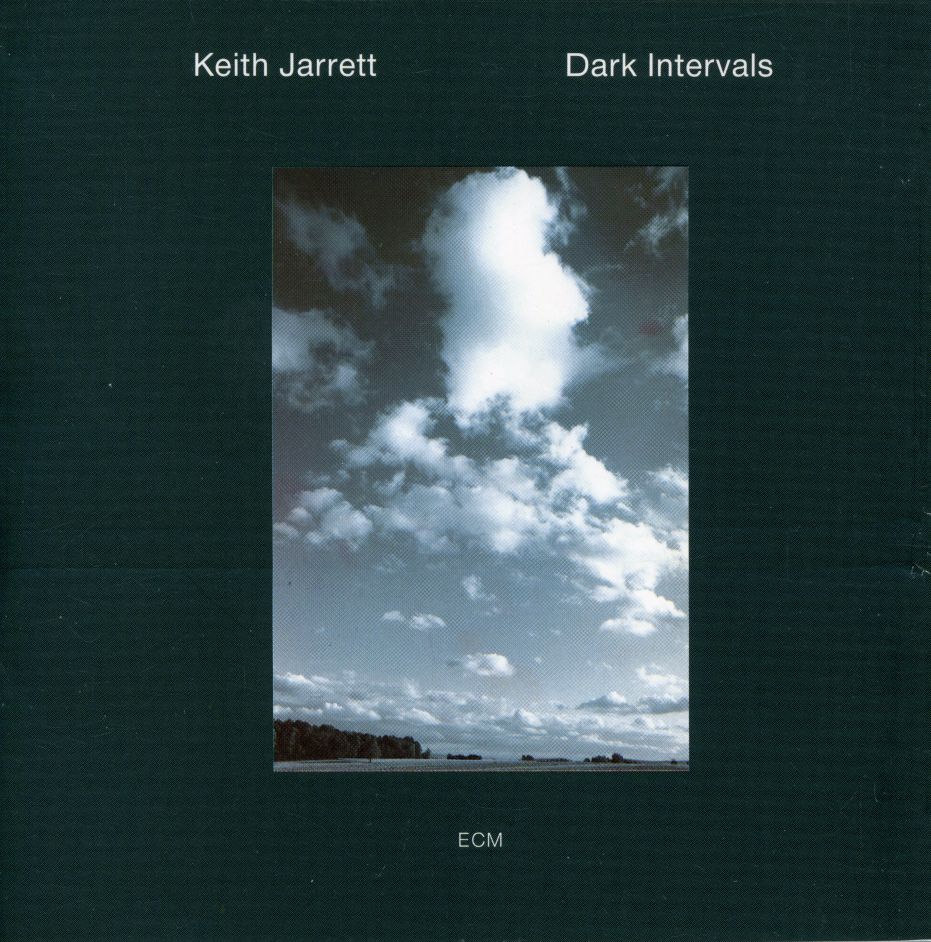
Keith Jarrett: Dark Intervals (ECM 1379)

Keith Jarrett
Dark Intervals

Keith Jarrett piano
Recorded April 11, 1987 at Suntory Hall, Tokyo
Engineer: Kimio Oikawa
Produced by Manfred Eicher

Keith Jarrett weaves a special kind of spell in his improvisations, one somehow connected to a greater humanity, for though the music and playing are ethereal, one is never mistaken that they are anything but earthly. Jarrett is not a mere vessel, but a creative force of flesh and bone whose fingers speak in ways we can only understand without words. This live recording from Tokyo’s Suntory Hall expands that flesh, and feels so intimate it might as well have grown away from others in the cave of his private studio.

In the roiling cascade of light and shadow that is “Opening,” there is much to ponder. At nearly 13 minutes, it is the set’s longest, and sweeps us away in an undercurrent of molten echoes. “Hymn” is a more resplendent foray into Jarrett’s emotional recesses, one that speaks as much to the future as it does to the past while embracing in its tender heart the impossibility of the present. Its light is always flecked with dust kicked up by the footsteps of a lost people whose only shelter is any that may be found. “Americana” breathes with a heaving gentility, one that soars even as it dreams on foot. “Entrance” walks with a gentle assurance onto the stage, trailing a monochromatic veil and finding solace in a skyward glance. “Parallels” is, ironically, the most skewed track on the album and yet also manages in its teetering journey to string a well-anchored tightrope between loss and resolve. “Fire Dance” is a spinning top of exaltation, a hand made of sparks stirring one’s emotional pot until it boils, while “Ritual Prayer” is proof positive of the lifetime’s worth of inspiration Jarrett must have absorbed from Gurdjieff. This piece is rich with spiritual beauty and is one of Jarrett’s most selfless exhalations ever recorded. “Recitative” is another gentle bob on the waters of introspection, a protracted fall into repentant pitch. There is forgiveness in this blindness, for only in the echo of a vibrating string can one feel the light of release.

<< Heinz Reber: MNAOMAI, MNOMAI (ECM 1378 NS)
>> Steve Tibbetts: Big Map Idea (ECM 1380)

Keith Jarrett: Book Of Ways (ECM 1344/45)

Keith Jarrett
Book Of Ways

Keith Jarrett clavichord
Recorded July 1986 at Tonstudio Bauer, Ludwigsburg
Engineer: Martin Wieland
Produced by Manfred Eicher

Trying to describe Keith Jarrett’s alchemical explorations of the clavichord is like trying to describe love: if you’ve never fallen in it, the words of others mean little. All I can do is share and hope my impressions might speak, for the album promises something so ineffable that it can only be expressed in music.

Over the course of nineteen improvisations, Jarrett transcends both the medium and the message in search of something untouched for centuries. He burrows into the heart of this nearly forgotten instrument, seeming to make music as if only after centuries of slumber. By the time he awakes, his body has fused with every molecule of metal and wood, so that he need only step into a latter-day age, where the magic of technology allows us a glimpse of that anatomy, wavering and fair.

1
Like some vast lute, curled into a withering plant of dedicatory power, it wishes itself clean of all earthly things, finding balance in song where there can be no troubadours to sing.

2
It is a self-sustaining lantern, whose oil is memory and whose flame is the flick of a maiden’s tongue along the edges of speech.

3
It is a scribe in a dimly lit cave, where every note is the scrawl of a quill on cracked parchment, sipping nourishment from an inkwell.

4
It is a taste of birth on the mind’s palette. A tearful wish discarded like so many handkerchiefs along garden paths. A joyful reunion reflected in her broach. A portrait in miniature, forgotten in a decaying drawer next to her brittle volume of poetry. She hums, her throat wound like a string.

5
It is a dream, wistful yet morose, putting a stopper into the night’s hidden vial. There it holds us, ever thoughtful, winded like an errant pageboy cursed with an undeliverable charge.

6
It is a child of time who speaks through dance, our feet its only partners. It looks to itself for guidance, only to touch an anxious moth who hopes the window will melt away, as if its millennia of grime will somehow afford a view of the impossible horizon.

7
It tickles the feet of our childhood, making us laugh in ways we have since denied.

8
It trembles like a plucked string that, once slowed to show every nuance of its warbling activation, finds much to fear in its own echo.

9
It turns to every Baroque master who sat alone at a keyboard and painted the room with novel sounds.

10
It is a percussive message that knocks on every castle door and rattles the bones in its crypt.

11
It is a love letter, a heart unfolded into the map of another heart. A dewy pasture that remembers lovelier days when the torturous end of an age was not upon us.

12
It strums an unmade bed in the hopes of recreating the music that once rustled there, but alas, there is only the lingering scent of a love that can never be washed away.

13
It is a necklace of memories, each bead more translucent than the last.

14
It opens our eyes to the clouds and to the trembling Tree of Life that hangs the wash of history from its boughs.

15
It carries us down an eroded stairway, even as it lifts us to the top of the tower.

16
It is a forlorn carnation, every petal the leaf of a story whose only tether is its maternal stem.

17
It upholds a chivalrous decorum, tilting its hat to the unbroken gait of a faithful horse. Through thick and thin, it has batted neither tail nor eye at knighthood’s unstoppable demise.

18
It is a funereal ode, a pyre burning to its glowing orange roots.

19
It brings us full circle to the avenues from which that first shadow extended before a dying sun.

Not only does this recording show us a book of ways, it also shows us the way of books, for it teaches us that the written word, like music, is but a stepping-stone to silent understanding.

<< Enrico Rava/Dino Saluzzi Quintet: Volver (ECM 1343)
>> Terje Rypdal & The Chasers: Blue (ECM 1346)

Keith Jarrett Trio: Standards Live (ECM 1317)

Keith Jarrett Trio
Standards Live

Keith Jarrett piano
Gary Peacock bass
Jack DeJohnette drums
Recorded July 2, 1985 at the Palais dis Congrès Studios de la Grand Armée
Engineer: Martin Wieland
Produced by Manfred Eicher

Take one look at the thoughtful cover art of this seminal Keith Jarrett release, and you’ll gain immediate insight into what makes his trio click. Each curvaceous line brings a lifetime of movement, of study, and of passion to bear on the music at hand. And with these six standards resurrected to such profound levels, there’s nothing not to like.

Just let the groove of “Falling In Love With Love” have its way, and the quicksand of the trio’s genius has you by the heart. Jarrett is in his element, crying his way through sibilant improvisatory arcs. Peacock surfaces for an engaging solo, Jarrett watching from the sidelines with duly attentive chording before sharing an intuitive stichomythia with DeJohnette. Peacock grabs the spotlight again in “The Old Country,” in which piano and drums spread a subtle launching pad for his low yet adroit flights. Jarrett builds on these, dancing on air through every motivic change before putting the starlight back into “Stella By Starlight.” Ever the sonic chameleon in a world of primary colors, he achieves the musical equivalent of alchemy once his ever-faithful rhythm section dashes in its own mysterious elements. A magnetic bass solo draws DeJohnette’s cymbals like iron filings before ending in a forgiving embrace. “Too Young To Go Steady” receives an absorbing treatment, the band whipping up a soft peak that melts smoothly into resolution. Next is a spirited version of “The Way You Look Tonight,” which unpacks oodles of bliss and shows the trio form at its finest. A whoop-worthy solo from DeJohnette forms an enlivening bridge to the vamp, playing us out into “The Wrong Blues,” which does everything oh so right.

While all the tunes on this album are classic, the untouchable performances make them doubly so.

Beyond recommended.

<< Kim Kashkashian/Robert Levin: Elegies (ECM 1316 NS)
>> Stephan Micus: Ocean (ECM 1318)

Keith Jarrett: Spirits (ECM 1333/34)

Keith Jarrett
Spirits

Keith Jarrett piano, flutes, soprano saxophone, guitar, percussion
Recorded May through July 1985 at Cavelight Studios, New Jersey
Engineer: Martin Wieland
Produced by Keith Jarrett and Manfred Eicher

Spirits is more than a jewel in the rough. It is the rough of a jewel. By this, I mean to say that through its hard-won journey Keith Jarrett has peered into the heart of darkness that is life and compressed it into a diamond so honest that no amount of polishing will wear away its blemishes. Recorded at his home studio, then post-processed by ECM engineer Martin Wieland, this is a most personal album of boundless expression. Then again, so is every Jarrett album. The difference is in the instrumentation: an unusual array of flutes, keys, and percussion, overdubbed in various combinations and densities (Jarrett even picks up a guitar, which he treats more like a sitar). Jarrett also sings, wails as if in and of the earth, finding in Nature a single feather plucked from nowhere. Bird-less, it has no recourse to flight, and can only call to a sky it will never know.

Though splashed over two discs in 26 parts, this heartrending session takes breath into the same pair of lungs throughout. Moods range from jubilation to a burrowing pensiveness, but always with an ear attuned to catharsis. The nearly two-hour purge turns repression into a path, beginning deep in the heart of ritual, where drums and flutes tread in place of feet and throats, and ending in the recesses of a Renaissance dream, where shepherds, troubadours, and shamans share their slumber. Jarrett’s occasional chants flirt with the exigencies of articulation, all the while forming steady yet somehow ungraspable touchstones along the way. The expected pianism is kept to a graceful minimum, giving way instead to wondrous ruminations on soprano saxophone and other suspended airs.

In so many other hands, such an album would come across as a trite exercise in tribalism, but in Jarrett’s it emotes with full transparency. By far his most colorful release, it marks a shift in method. Where before he charted every possible recess of the structure at hand, here he allows that structure to build itself around him in a shelter of the psyche. The result is a freestanding insight into the pathos of creation. Probably not the one you’ll want to start with, but by no means a prism to bar from the light of your curiosity.

<< Paul Hindemith: Viola Sonatas (ECM 1330-32 NS)
>> Steve Tibbetts: Exploded View (ECM 1335)

Keith Jarrett Trio: Setting Standards – New York Sessions (ECM 2030-32)

2030_32

Keith Jarrett Trio
Setting Standards – New York Sessions

Keith Jarrett piano
Gary Peacock double-bass
Jack DeJohnette drums
Recorded January 1983 at Power Station, New York City
Engineer: Jan Erik Kongshaug
Produced by Manfred Eicher

“I feel we are an underground band that has, just by accident, a large public.”
–Keith Jarrett, on his trio with Gary Peacock and Jack DeJohnette

The piano is considered by some to be a “complete” instrument. On it, one can compose anything from a simple etude to the grandest of symphonies, and its most adored practitioners may be said to be whole at the keyboard. The beauty of a player like Keith Jarrett is that he makes the piano sound so gorgeously incomplete, emphasizing as he does the unfathomable volume of sentiments he would convey through it if given the time. As it is, we get the barest taste of immortality. Jarrett carries the entire weight of any composition in even the most linear of melodic lines. In doing so, he opens doors that few could step through unharmed.

And yet, step through them the rare soul has, and perhaps none so ingenious as bassist Gary Peacock and drummer Jack DeJohnette. When listening to the bliss that rolls off Jazz’s proverbial tongue throughout Setting Standards, however, we must constantly remind ourselves that the three albums collected therein represent the first time Jarrett, Peacock, and DeJohnette had ever stepped into the studio as a bona fide trio. The three men were, of course, far from strangers, but produced such unreal synergy in these unrehearsed sessions that they might as well have been cut from the same cloth. The trio would also prove in a way cathartic for Jarrett, who was already beginning to buckle under the pressures of an increasingly demanding listenership. For this, he turned to the tried and true, if not to the plied and blue, for solace.

With Standards, Vol. 1 (ECM 1255) Jarrett and company set things straight from the get-go by showing us the “Meaning Of The Blues.” This swath of melodious rain is the trio form at its best and never lets up until the very end. DeJohnette’s charcoal sketches in background add a quiet boldness. “All The Things You Are” is a more lighthearted, though no less intense, construction, and haunts Peacock’s nimble fingerwork with a visceral chord progression. Smoothness abounds in “It Never Entered My Mind,” a gentle tune that puts a new twist on the pessimism of balladry by resolving itself at moments into a hopeful groove. A hefty splash of freedom awaits us in “The Masquerade Is Over.” Peacock is on fire here, giving just the sort of fuel that Jarrett sets to such glorious conflagration. The latter’s soloing proves that not only is the masquerade over, but also that these musicians never hid behind masks in the first place. If any single facet of this jewel can be singled out, it is the stunning fifteen-and-a-half-minute rendition of “God Bless The Child” that concludes it. Peacock excels, taking the swing around the bar and back again.

<< John Surman: Such Winters of Memory (ECM 1254)
>> Charlie Mariano: Jyothi (ECM 1256)

… . …

ECM 1289

Standards, Vol. 2 (ECM 1289) is a shaded glen in Volume One’s verdant forest. Its mood is summed up perfectly in the title of the opening “So Tender,” which after a slow intro falls into the unity that so distinguishes this trio. Jarrett dances not on air but on fire in his pointillist lines, while Peacock and DeJohnette both captivate with their subtle, popping sound. “Moon And Sand” is an equally smooth ride through less traveled territories and finds Jarrett in a gentler mood. DeJohnette is also at his most delicate here, drawing circles in the sand with his brush. For “In Love In Vain” Jarrett spins from thematic threads a twin self, who for all his similarities breathes a different sort of politics in one of the set’s finest tunes. With every grunt, Jarrett voices only the tip of his creative iceberg. Peacock delights with a very elastic solo, which no matter how far it stretches stays locked to its theme as if by finger trap. Jarrett is at his lyrical best in “Never Let Me Go,” and skips to his Lou in “If I Should Lose You” before laying down the poetry of “I Fall In Love Too Easily” with a thick, tangible power.

<< Eberhard Weber: Chorus (ECM 1288)
>> Everyman Band: Without Warning (ECM 1290)

… . …

ECM 1276

Prior to the release of Setting Standards, I hadn’t yet encountered the free play session that is Changes (ECM 1276) and what a joyful surprise it turned out to be, for never has the trio emoted in such a blissful mode. “Flying” is a heavenly diptych honed in delicacy and abandon. Here the band describes a decidedly aquatic territory, each tattered thread of melody flowing like the tendrils of a throbbing deep-sea creature whose eyes are its hearts. Jarrett spreads and shoots straight like an octopus, every pad suctioning to a new and exciting motif. Peacock, meanwhile, threads his fingers through a vast oceanic harp, stretching his emotive capacity to its limits. DeJohnette surfaces with a deeply digging solo before we end with Jarrett alone in a quiet, dissipating reflection. Peacock trails his starfish of a bass line through the pianistic coral reef of Part 2, he and DeJohnette inking their solos before hollering their way into an inescapable passion. The set ends in the refractions of “Prism.” And indeed the trio as a unit is not unlike a prism, separating every ray of light into its composite colors, likewise every ray of darkness into its whispered secrets. Jarrett’s expulsions heighten every inarticulable word that he writes, the breath of an energy that cannot be contained. The farther these reveries drift, the more life experience they carry back into the fold when they return.

<< Arvo Pärt: Tabula rasa (ECM 1275 NS)
>> John Adams: Harmonium (ECM 1277 NS)

… . …

In a society gone astray from musical immediacy, it’s safe to point out Jarrett’s nexus as one of the more reliable vestiges where melody still blooms. With an average track length of nine minutes, these are quiet and endlessly interesting epics. Say what you will about Jarrett’s singing, which has sadly turned not a few off from these recordings, but I believe Peter Rüedi puts it best in his insightful liner notes when he says, “His groans and vocal outbursts, considered by many to be a quirk, are in fact nothing but a form of suffering at the thought that the abyss between the piano and sung melody can ultimately never be bridged, not even by Jarrett himself.” To these ears, Jarrett’s voice welcomes us into the intimacy of his creative spirit, so unfathomably expanded in the company of two fine musicians (and even finer spirits) whose talents can’t help but sing in their own complementary registers. And on that note, we mustn’t forget the contributions of Jarrett’s band mates, who constitute far more than anything the mere rubric of “rhythm section” might ever imply. How can we, for example, not shake our heads in wonder at DeJohnette’s consistent inventiveness, which singlehandedly reshaped the idioms at hand. And then there is Peacock, who for me is the bread and butter of the first two sessions. So carefully negotiating his path through various leaps and bounds, he seems to anticipate everything Jarrett throws his way. Just listen to his soloing on “It Never Entered My Mind” and “God Bless The Child,” and these words will mean nothing.

Through the two standards albums, Jarrett put the “Song” back into the Great American Songbook, and in Changes enlarged it with “Prism.” Now given the proper archival treatment in this 3-disc Old & New Masters edition commemorating 25 years of music-making, this unassuming surge of sonic bliss is now ours to cherish at will.

The camaraderie expressed in the booklet’s final session photo speaks for itself:

Keith Jarrett: Invocations/The Moth and the Flame (ECM 1201/02)

ECM 1201_02

Keith Jarrett
Invocations/The Moth and the Flame

Keith Jarrett pipe organ, soprano saxophone, piano
Recorded November 1979 at Tonstudio Bauer, Ludwigsburg (The Moth and the Flame) and October 1980 at Ottobeuren Abbey (Invocations)
Engineer: Martin Wieland
Produced by Manfred Eicher

Among ECM’s many mainstays, Keith Jarrett would seem to have been given the most freedom, and it is within that freedom that he excels. In this fascinating double album, a standout even in his extensive résumé, Jarrett fleshes a sparse skeleton with intimate venation. The first half consists of Invocations, a meditative dialogue between organ and soprano saxophone. The latter alone bookends this antiphonal “text” with self-effacing distance. Equal parts hope and doubt, every word both a star and the supernova that ends it, Invocations ranks among Jarrett’s most introspective works. Of the organ solos, “Mirages, Realities” is the profoundest example. Building over a steady pulse, it is more akin to Arvo Pärt’s Mein Weg hat Gipfel und Wellentäler than to anything in the Jarrett oeuvre. In its lilting phrases, one finds a backward fall into a void where only sound describes reality. On the other hand, the lofty chords and denser architectures of “Power, Resolve” and “Celebration” clearly recall Jarrett’s Spheres. The most affecting verses, however, are to be found when organ and saxophone unify, especially in “Recognition,” which stretches the listener in opposing directions, only to meet in self-realization.

After the suspensions of the program’s first half, the five-part The Moth and the Flame floats a thousand pianistic lotuses—and with no less grand a sweep. Between the heartland spirit that permeates Part II and the iron-and-air elegy that is Part V, Jarrett maps out a tessellation of emotion, not unlike the spirals of Staircase. He winds his way with mirth through every dip of flight, splitting prismatically at the center in Part III. Like a spinning top, its myriad emotions funnel into a single point, wobbling until equilibrium is achieved.

This album, as much as any other in the Jarrett landscape, shows a deep commitment to personal development. He plows these instruments like the fields of his very heart. He is that moth, drawn to a musical flame which, rather than burning him, fuels his humanity all the more.

<< Jan Garbarek: Eventyr (ECM 1200)
>> Egberto Gismonti: Sanfona (ECM 1203/04)