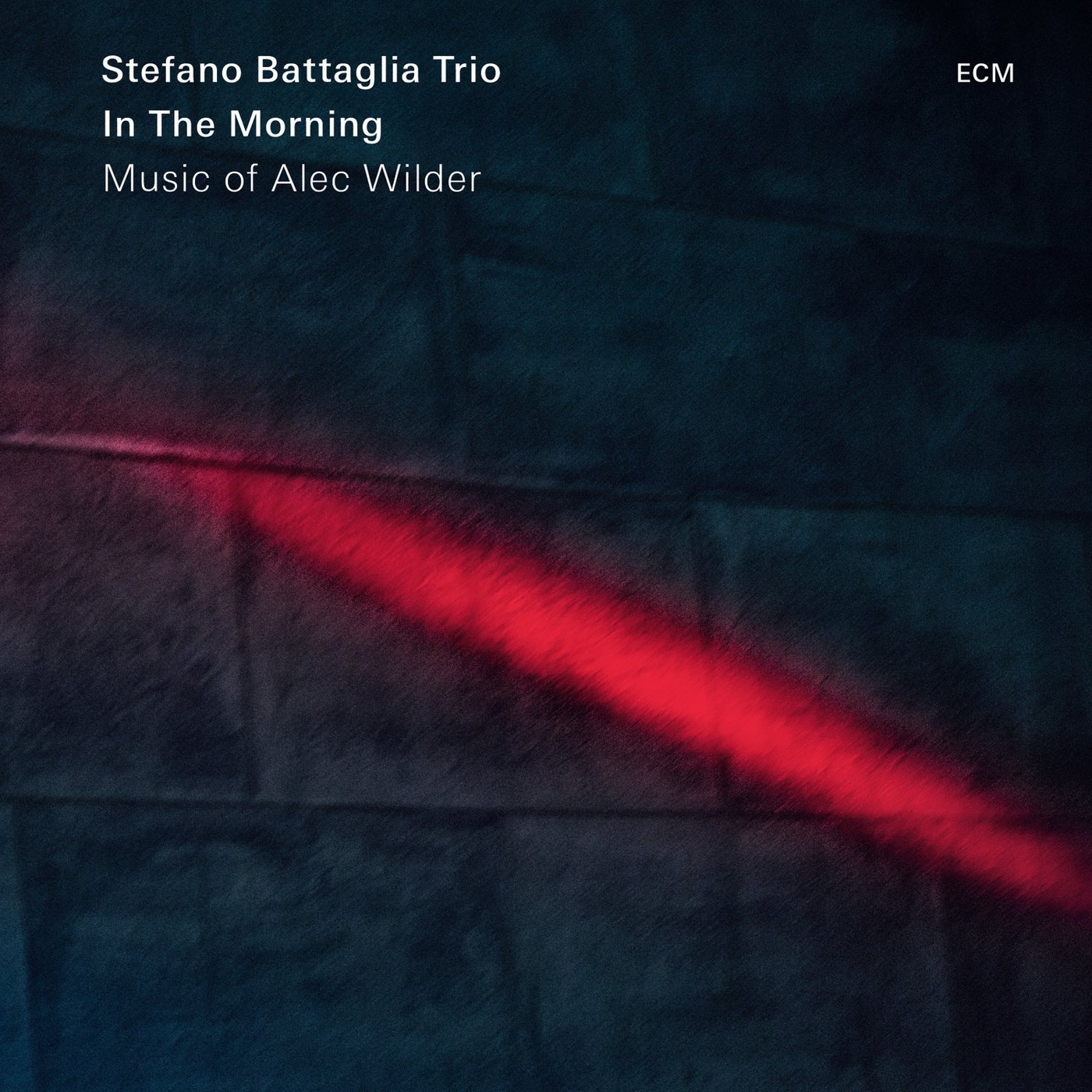
Stefano Battaglia Trio: In The Morning (ECM 2429)

In The Morning

Stefano Battaglia Trio
In The Morning – Music of Alec Wilder

Stefano Battaglia piano
Salvatore Maiore double bass
Robert Dani drums
Recorded live April 28, 2014 at Teatro Vittoria, Torino
Engineer: Stefano Amerio
Concert produced by Torino Jazz Festival
Artistic director: Stefano Zenni
Album produced by Manfred Eicher
U.S. release date: August 28, 2015

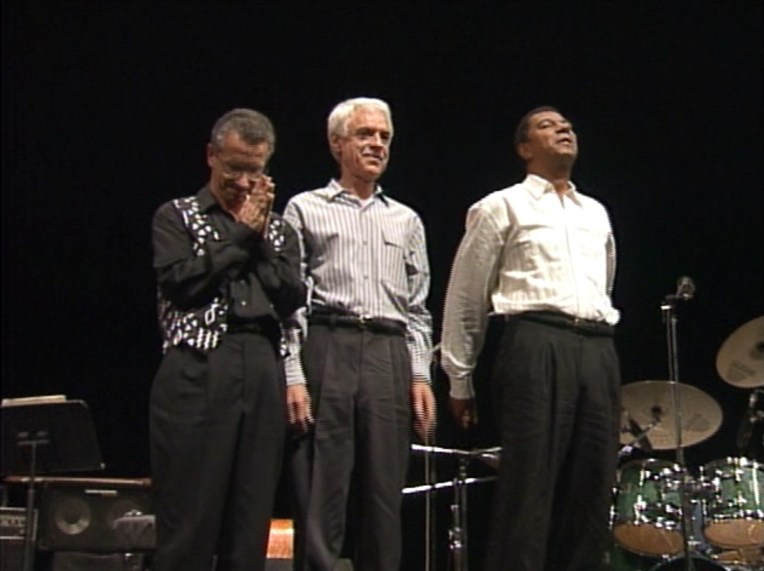
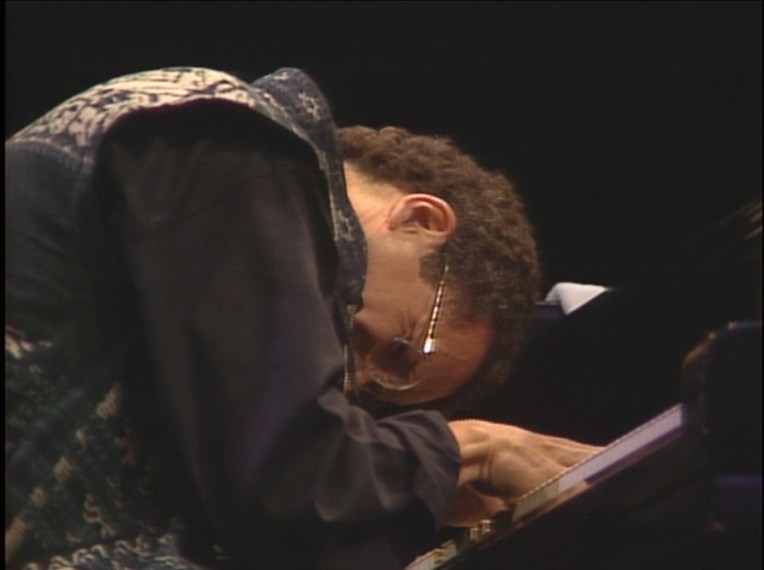
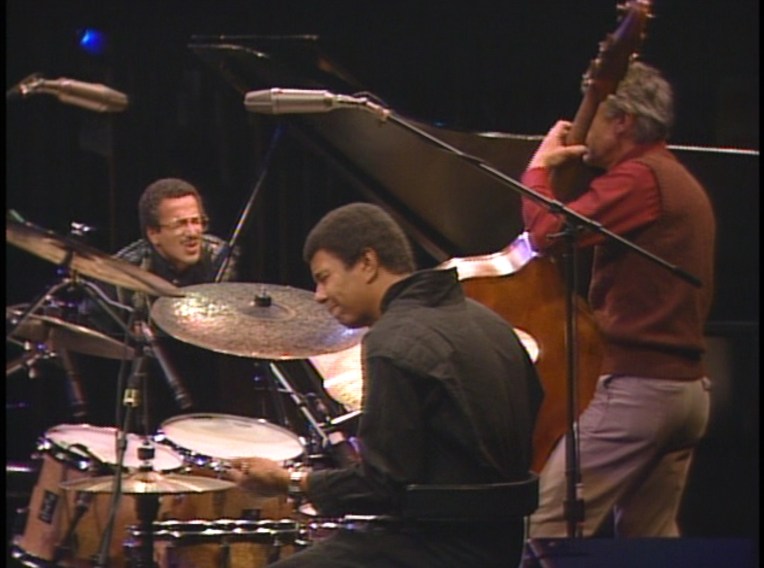
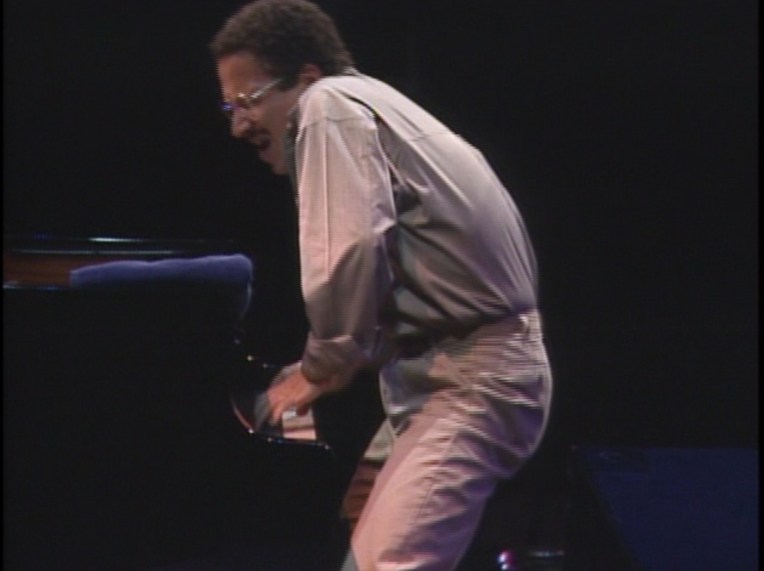
Pianist Stefano Battaglia and his trio with bassist Salvatore Maiore and drummer Roberto Dani have redefined the capabilities of the jazz trio by going inward. Each of these musicians is capable of engrossing power, but expresses that power by increasingly vulnerable means. This is also the trio’s strength: in finding the gentlest persuasion into a tune, effects thereof linger as unbreakable memories.

Battaglia’s has always been a thematic trio. Having oared mythical waters in The River of Anyder and the follow-up Songways, they now take on the music of American popular songwriter Alec Wilder (1907-1980) in a set of seven tunes arranged by the bandleader. In this album’s press release, Battaglia recalls his early encounters with Wilder by way of Keith Jarrett, who had recorded such songs as “While We’re young” and “Moon And Sand” with his trio. One listen to the Battaglia’s trio take on the latter tune, and you’ll realize that, while they might not have the depth of output of Jarrett’s, there’s no denying their contributions will be deemed every bit as significant when ECM’s entire history is one day taken into account. Levels of phrasing, immediate structure, and narrative in this 2014 live recording are no less indicative of genius.

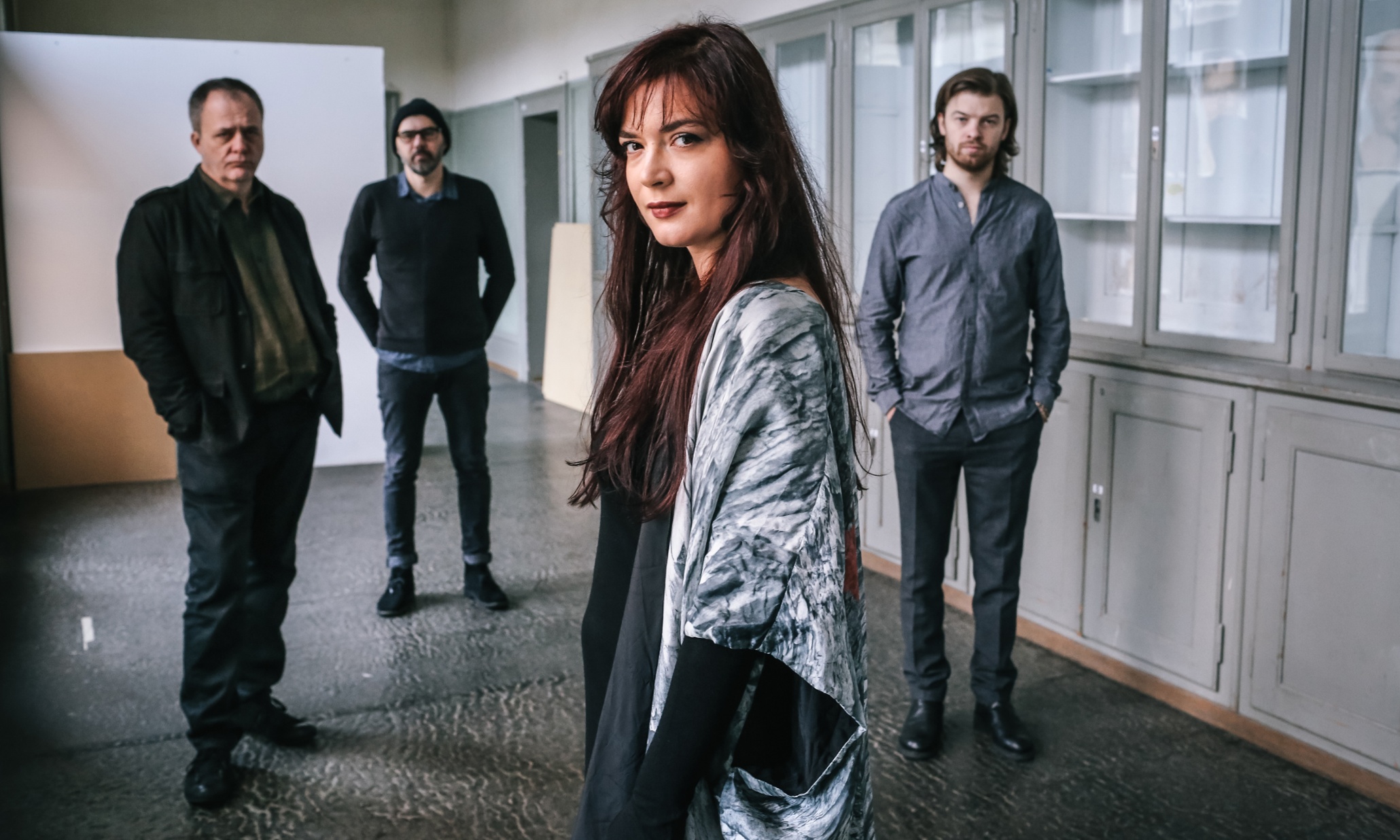
Battaglia Trio
(Photo credit: Caterina di Perri)

Wilder was proficient across genres, composing not only popular but also art songs, opera, musicals, film scores, and chamber music. If any claim to eclecticism can be read into his oeuvre, it will also be found in Battaglia’s approach to interpretation. His enchantment translates into an enchantment all its own. Such is obvious in the title track alone, which links the first in the concert’s chain of exquisite realizations. With its arid and rolling heartbeat, this morning song proceeds evenly for the most part, though half-step dissonances add a feeling of recoil and the sweet pain of trekking through uncharted improvisation. This tune also shows the trio at its most egalitarian. Even the bass solo seems to arise from among like elements in a slowly churning pool of energies—a matter of focus over form.

“River Run” opens with bass harmonics, shallow percussion, and dampened piano, all working a spidery craft into focus until botanical artistries emerge. Battaglia opens the keyboard like a book whose pages are thumb-worn by former journeys yet whose ink still glistens with the musings of this one. And while each album has shown the evolution of the trio as a unit, Dani in particular has grown into a master colorist. The way he wanders while sharing the spirit of Battaglia and Maiore’s interlock is astonishing here, perhaps more the result of committing to the moment than of arbitrary forethought.

At just over four minutes, “When I Am Dead My Dearest” occupies the least space of the set list, but with no loss of scope. Of all the tracks it is the most songlike, an etude of quality over quantity. From the shortest the trio moves to the longest. “The Lake Isle Of Innisfree” is an album unto itself, a dramatic piece that moves from abstraction to photorealism over the course of 16 minutes. The center cushions a bass monologue in the attention of an audience so rapt it hardly seems to be there. Battaglia’s re-entry is as drum-like as Dani’s is pianistic as both work these waters into a foam, exhaled along the shoreline through malleted cymbals.

“Where Do You Go?” is another beauty, swimming with ideas beneath its combination skin. Battaglia gives fullness to every utterance and allows the trio to land as surely as it takes off. Last is “Chick Lorimer,” which rearranges Wilder’s setting of Carl Sandburg into a wordless but no-less-poetic expression of freer textures. The trio closes the door with magic, leaving us spellbound for having partaken of its affinity.

(To hear samples of In The Morning, please click here.)

Manu Katché: Touchstone For Manu (ECM 2419)

Touchstone for Manu

Manu Katché
Touchstone For Manu

Recorded 2004-2012
Produced by Manfred Eicher
U.S. release date: August 7, 2014

Whenever we say artists have “left their mark,” we tend to mean they’ve taken something away from the surface of the context in question and left something of themselves in its place. In the case of drummer Manu Katché, however, it’s as if he has left a shadow behind—a melodic spirit, if you will—through which one might come to appreciate the glow of his music. The fact that ECM already had a fixed set of 40-album “Touchstones” series yet determined that Katché was deserving of his own outlying nod confirms this status: fully a part of the ECM canon yet always catching a thermal to the next horizon.

Touchstone For Manu is not only significant for Katché’s subtle grooves and intimate hooks, but also for attracting an all-star cast of musicians to join him in the journey. Trumpeters as diverse as Mathias Eick, Tomasz Stanko, and Nils Petter Molvær variously grace his jet streams, while saxophonists Jan Garbarek, Trygve Seim, and Tore Brunborg underscore the former’s silver with streaks of gold. Guitarist Jacob Young casts his quiet nets of influence, while pianists Marcin Wasilewski, Jason Rebello, and Jim Watson bring their distinctive touches to bear on the improvisational quotient. Bassists Slawomir Kurkiewicz and Pino Palladino round out the guest list, with Katché as maître d’.

Katché portrait
(Photo credit: Gildas Bouclé)

The starter is “Song For Her,” one of three tracks off his second ECM leader date, 2007’s Playground. For one who’s composing is prone to aerial atmospheres, this is an ideal place to start. Eick’s trumpet is a fine vehicle both here and in “So Groovy,” which in title and realization might as well be Katché’s mission statement. Proof also that, while these may sound to some like nothing more than simple exercises, a closer listen reveals the depth of talent needed to express their simplicity. The tonal purity of the musicians involved is no small feat, and to give this music the attention it deserves requires of the would-be Katché interpreter total commitment to feel and structure. Just listen to the synchronicity of Kurkiewicz and Katché as they navigate the changes, and Wasilewski with them as he dabs his spontaneous commentary during a stretch of downtime. Such decisions require a tactile, careful ear. In “Morning Joy,” too, we feel that artfulness of participation, and find further evidence of Katché’s diversity. He can linger with languor, laugh in slow motion, and soar on wings of memory rather than of matter.

Before the first and second tunes of this playground, however, we zoom out to reveal the 2005 ECM debut, Neighbourhood. As my first encounter with the drummer, it has always been a personal favorite, but regardless of your album affiliations it’s difficult to deny “Number One” as one of his most exquisite tracks on record. For starters, it boasts the finery of a dream band, fronting Stanko and Garbarek over two thirds of the Wasilewski trio and Katché’s metronome. The set-up to its piano-driven groove shows patience, tracing rims and cymbals in preparation for “Take Off And Land.” The pianism is top-flight, as are contributions all around, each playing an equal role in a macramé of forces.

From Katché’s 2010 Third Round we get the uninterrupted triptych of “Keep On Trippin,’” “Senses,” and “Swing Piece.” These represent the more upbeat of Katché’s albums, and one brimming with happiness. Palladino’s electric bass is a welcome color change next to that organic kit, and has a more focused sound in trio with Rebello’s piano. Young’s guitar and Brunborg’s soprano add water and light, respectively, in the first tune, while the second and third, smooth as an ice skater’s blade, take the leader’s egalitarian aesthetic to new depths.

When Katché gave an interview to NPR about his 2012 self-titled album, he discussed, among other things, the importance of tuning his drums throughout the recording process. I’ll never forget reading an online comment by someone who balked at this idea, claiming it as the mark of a “musical imposter.” Trolls will be trolls, but it bears elaboration to say that many drummers across genres, cultures, and time periods have relied on the benefits of tuning to match their instruments with others in an ensemble. Where, for example, would an entire tradition of Indian tabla playing be without it? Or, for that matter, the western classical orchestra, in which the timpani—which Katché studied at the Paris Conservatory—must be precisely tuned to suit the needs of the score. The tuning is obvious from the three selections of that album here. Just listen to the way in which his snare and cymbals seem to sing in “Running After Years,” a track that further shows Katché at the height of his compositional powers, blending all the characteristics of his previous efforts into a fresh and all-inclusive sound. Molvær is an ideal addition to the drummer’s evolving nexus, his resonant horn careening through the clouds with an attunement all his own, as Brunborg’s tenor traces parabolas alongside Molvær’s plane trails and Watson’s pianism reminds us of the earth we’ve left behind.

In “Slowing The Tides,” Molvær employs a technique made famous by Jon Hassell, adding harmonies by singing through his trumpet. Watson’s Hammond organ, here and on the final track, “Bliss,” adds simmering heat. Katché’s robust beat engenders wry twists from Watson, playing us out from a program of shape and shift. So are we reminded that no fireworks are needed to create wonderment in rhythm. Sometimes, a groove just needs room to grow.

Elina Duni Quartet: Dallëndyshe (ECM 2401)

2401 X

Elina Duni Quartet
Dallëndyshe

Elina Duni voice
Colin Vallon piano
Patrice Moret double bass
Norbert Pfammatter drums
Recorded July 2014, La Buissonne, Pernes-les-Fontaines
Engineers: Gérard de Haro and Nicolas Baillard
Produced by Manfred Eicher
U.S. release date: 2 June 2015

When we left that day
losing sight of our land
all the men with one big sigh
called their women with a cry…

“Exile has always been humanity’s burden and love its faithful companion,” writes Elina Duni in a liner note for Dallёndyshe (The Swallow), follow-up to her ECM debut, Matanё Malit. Once more joined by pianist Colin Vallon, bassist Patrice Moret, and drummer Norbert Pfammatter, Duni presents a compelling new set of jazz-infused folk songs from her birth land of Albania, each wrapping its narrative arms around the primal losses of families and lovers broken by separation. With more lucidity than ever, she uses her voice to weave stories of uncompromising intimacy, a feeling only enhanced by the sensitivity of her bandmates. That said, the roles of her musicians aren’t merely programmatic, but pulse like vital organs of the present arrangements.

Elina Duni Quartet
(Photo credit: Nicolas Masson)

Much of that vitality is to be found in Vallon’s pianism, which casts its melodic nets far and wide throughout “Ylberin.” The title makes reference to rainbows, a nickname given to men by the women they’ve left behind. By a similarly ephemeral sense of beauty, Vallon expands Duni’s vocal colors to the indefinable gradients between them. As in “Unë në kodër, ti në kodër” (Me on a hill, you on a hill) that follows it, the lyrics only thinly disguise a vehemence toward separation. Through these songs, Duni puts herself in the hearts of those forced into seclusion, cursing the rifts of years as her sorrow approaches a state of ashes.

Pfammatter’s drumming borrows its tools of expression from those same interstices, moving through the Byzantine channels of “Ti ri ti ti klarinatë,” an onomatopoetic gem from the Arvanites of Greece, with the surety of a vine along a wall, and rustling through the brush of “Delja rude” (Sheared Sheep) like an open wind. The latter is an album highlight and points to the cathartic nature of this music. In a press release, Duni indeed claims an affinity with the blues, noting, “One of the fascinating things about music of the Balkans, in a lot of the folk music, is the idea that the pain has to be sung. And in singing you go beyond it.” This feeling of transcendence is especially audible in the bassing of Moret, who binds his pages with openness, whether bringing lucid attention to the gently propulsive “Bukuroshe” (Beautiful Girl) or drawing a bow crosswise to the low drums of “Kur të pashë” (When I Saw You), a traditional tune from Kosovo.

All three musicians tell parallel stories throughout the album, no less lyrical than Duni’s—not only reflecting on the narrative at hand but also drawing connections to times and places beyond observable borders. Yet it is Duni who carries the most potent magic in her satchel, into which she reaches and flings the cloud paintings of two modern songs onto canvas. Album opener “Fëllënza” (The Partridge) was written by singer and poet Muharrem Gurra, a trailblazer of Albanian popular song, and is the most embodied of the set. Like the partridge itself, it survives on barest trills and cautious movements, each more graceful than the last. Here we encounter a maternal voice for the world, seeking to use its hands for protection alone. “Sytë” (The Eyes), with music and lyrics by Isak Muçolli, is another classic, this one made famous by legendary Albanian singer Nexhmije Pagarusha. Duni brings out its innermost qualities in an attempt to part a veil of tears.

Music video for “Sytë” (with English subtitles):

But it is in the older songs where her heart carries the most blood to its destination. Duni stands, for all a melodic tower, in “Unë do të vete” (I am going to go) and “Nënë moj” (O, Mother), around which improvisational gatherings abound, while the whispered frame of “Taksirat” (The Mishap) snakes its way through desert grooves. Yet nowhere is her yearning so tangible as in the title song, which comes from the Albanian diaspora of Italy and treads nakedly to the sole accompaniment of piano. The voice is a landscape all its own, Duni seems to say, and my footprints are all that remain. Each has note value, and your soul will be the next one to sing it.

(To hear samples of Dallëndyshe, please click here.)

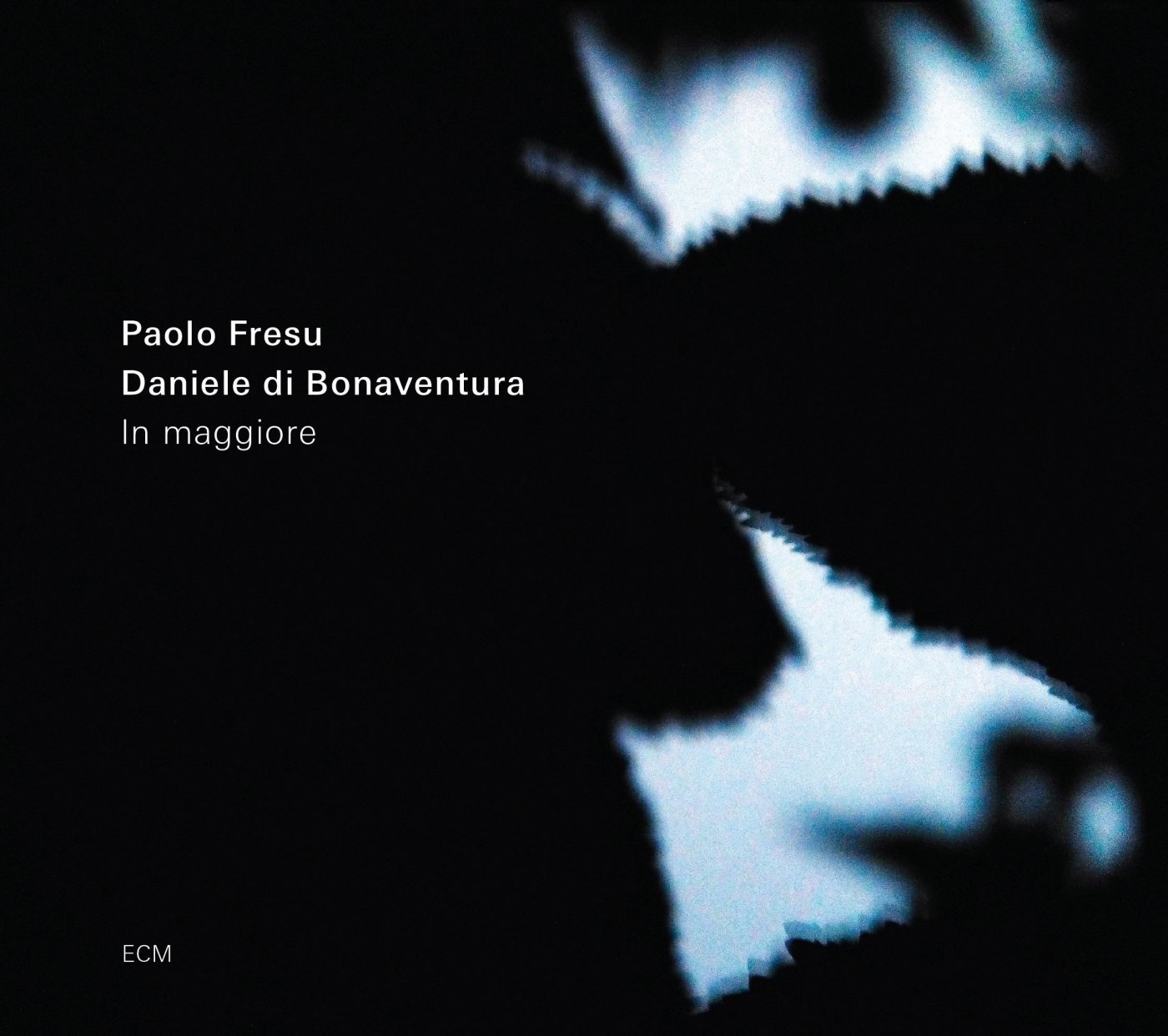
Paolo Fresu/Daniele di Bonaventura: In maggiore (ECM 2412)

In maggiore

In maggiore

Paolo Fresu trumpet, flugelhorn
Daniele di Bonaventura bandoneón
Recorded May 2014, Auditorio Stelio Molo RSI, Lugano
Engineer: Stefano Amerio
Produced by Manfred Eicher
Release date: 20 March 2015 (Europe only)

Trumpeter Paolo Fresu hails from the island of Sardinia, bandoneonist Daniele di Bonaventura from the coastal town of Fermo on the Italian mainland. Water and land may separate their origins, but together they make music so unified that a single landscape is enough to define them in this context. Their first ECM appearance on Mistico Mediterraneo placed their collaboration at the center of a project fusing improvisation with Corsican chant. With nothing but air between them here, they create a chant all their own, a language that breathes in and sings out.

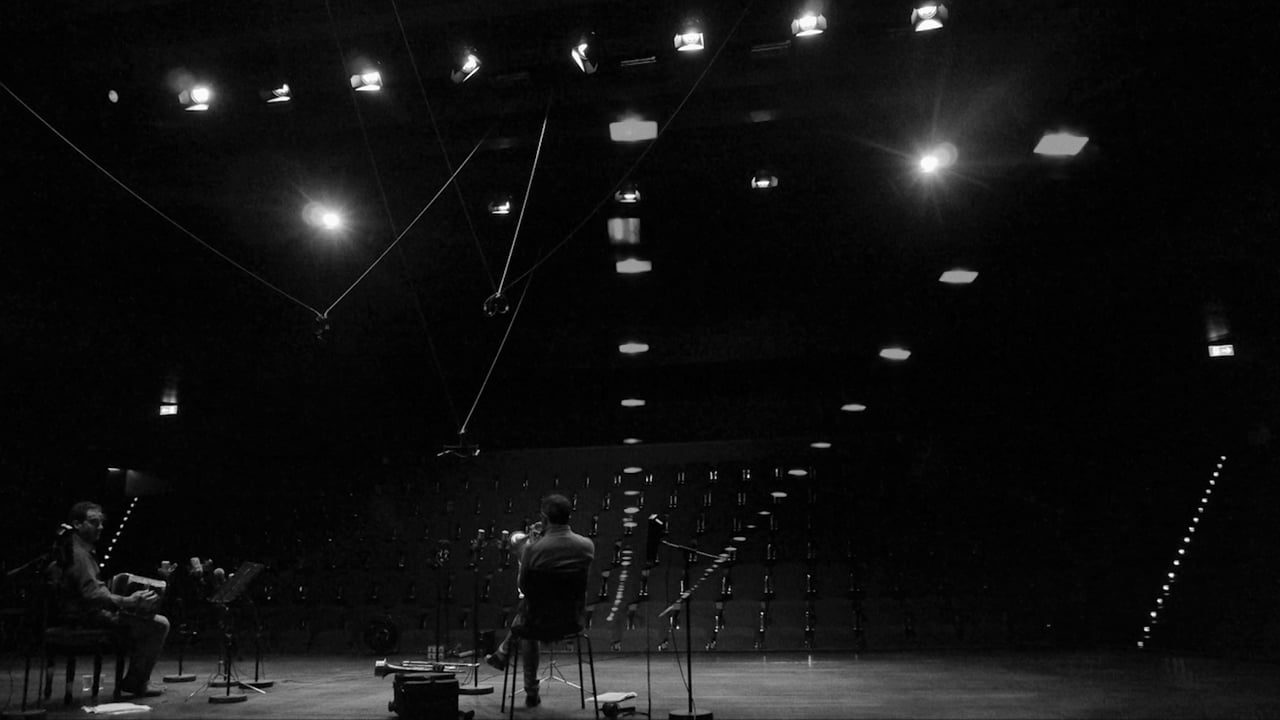
“Da Capo Cadenza” is the first of three tunes by di Bonaventura. Fresu’s lucid colorations cross every tee of the composer’s bellowed writing. The feeling of cinema is so strong here, it’s no wonder that the recording session should be the subject of Italian filmmaker Fabrizio Ferraro’s documentary Wenn aus dem Himmel, which turns the creation of this music into a meditation on spatial crossings.

Wenn aus dem Himmel still

This set opener is also a fine example of flugelhorn virtuosity, not in terms of technical flourish (a given) but of emotional integrity. His way with a horn lends itself to poetry, but versifies with a style that shades any description of it. To experience its atmospheric range, listeners need only immerse themselves in the duo’s take on Brazilian composer Chico Buarque’s “O que será,” last heard on an ECM album of the same name by Stefano Bollani and Hamilton de Holanda. The version here follows a progression that characterizes many on this album, building from caution to confidence as it gathers momentum into the Chilean resistance song ”El pueblo unido jamàs serà vencido” of Sergio Ortega. Despite, if not because of, the delicacy with which Fresu and di Bonaventura breeze through these changes, a raw, underlying power begins to emerge.

Fresu deepens the flugelhorn in three tunes from his own pen, including “Calmo” and the title track, both lyrical highlights. The latter tune closes out a disc that, despite its general quietude, stays on in the memory as a blast of renewable energy. As Fresu’s final note trails into non-existence, it carries into tomorrow the certainty of another sunrise. Other highlights from this darker instrument can be found in the freely improvised “Sketches” and delightful, if somber, take on “Quando me’n vò” from Puccini’s La Bohème. It is music that has lived many lives before, and lives again, as it will ever onward.

Close to center is di Bonaventura’s “Kyrie Eleison,” a wordless solo moves with the quiet strength of a hymn. Beyond it are tracks that employ muted trumpet, which at Fresu’s fingertips invokes early Miles Davis, even as it oozes a distinct charisma. Along with his own “Ton Kozh” and di Bonaventura’s “La mia terra,” Uruguayan singer-songwriter Jaime Roos’s “Se va la murga” stands as an album touch-point. The latter is lovingly arranged and awakens percussive details from within the instruments. By it is revealed an inner pulse that binds their art within the acoustics of the Lugano recording studio in which they find themselves transfixed for this enchanting hour. Di Bonaventura carries enough weight in his bellows to support the grandest sweeps from Fresu and, by the same token, enough airiness to guide his lightest feathers, unbroken, to shore.

More playful elaborations make the four minutes of Neapolitan composer Ernesto de Curtis’s “Non ti scordar di me” (Do not forget me) pass by with the wistfulness of youth itself, thereby enhancing the nostalgic hope of the title. But nowhere does the muted trumpet speak so forthrightly as in “Te recuerdo Amanda.” This aching melody by Chilean songwriter Victor Jara flows through brass like time itself, bypassing layers of history to let its voice be known. And, really, that’s the essence of this music. It is so personal that it becomes relatable on a purely human scale, shed of politics and origins until only the musicians and audiences remain, bound by mutual recognition that life is infinitely more important than its hindrances.

(To hear samples of In maggiore, please click here.)

Suite for Sampler – Selected Signs, II (ECM 1750)

Selected Signs II

Suite for Sampler – Selected Signs, II

This second ECM anthology was released in the spring of 2000, three years after the first, and shows the broadening of the label’s ocean in that short yet productive span. This album’s predecessor sustained itself on breath, featuring as it did a generous helping of Tomasz Stanko, and here too we encounter the clarinet of Gianluigi Trovesi and accordion of Gianni Coscia in the title track from from In cerca di cibo, which opens new contexts still. The tune was originally composed by Fiorenzo Carpi for a 1971 TV mini-series about Pinocchio, and perhaps one can read the stirrings of life in dormant wood passing over Trovesi’s reed. A leafy introduction from pianist Bobo Stenson then draws us into the forested “Polska of Despair (I),” off his trio album Serenity. As bassist Anders Jormin and drummer Jon Christensen fall into frame, the evolution of ECM’s sound practice discloses a yearning for space in jazz structures. The distance applied to Christensen’s drums is especially evident against the foregrounded cymbals and makes for effective contrast within a single instrument.

“Vilderness 2” significantly changes up the palette with Nils Petter Molvær’s electronics-heavy assembly, flowing into a blinding sun with every mechanism shining. The enhancements of guitarist Eivind Aarset add crosswind to the flight, while drum ‘n’ bass thermals puff their sporadic dragons into being. This one is off Molvær’s second ECM leader date, Solid Ether, the title of which produces as much as it describes.

Greek pianist Vassilis Tsabropoulos, a classically trained musician turned jazz architect, made an intensely melodic splash with Achirana, on which he debuted a trio with bassist Arild Andersen and drummer John Marshall. The smoothness of his improvising on the selected sign “Mystic,” which demonstrates the ECM ethos of melody having a life of its own, turns the program in yet another direction. And just when we are about to slip along an atmospheric slope into misty uncertainty, Trovesi and Coscia bring us back to where we started, extolling the virtues of “Django,” by jazz pianist John Lewis. It’s a subdued romp, but one of assertive whimsy.

Epigraphs was the second duo album from pianist Ketil Bjørnstad and cellist David Darling, and from it we encounter a fresh pairing of tracks. The aching “Upland” carries the flow of this compilation even deeper into the rock, while “Song for TKJD” drifts along the currents of Darling’s electric cello and Bjørnstad’s poetic commentary. Lest we get too attached to reverie, the first two movements of Heiner Goebbels’s Suite for Sampler and Orchestra (from the album Surrogate Cities) fragments all expectation with an electro-acoustic blend of cantorial sampling and string swells that recalls John Zorn’s Kristallnacht, ending this album with a reminder that beauty sometimes comes at the price of senseless destruction, and vice versa.

<< Claudio Puntin/Gerður Gunnarsdóttir: Ýlir (ECM 1749)
>> John Taylor Trio: Rosslyn (
ECM 1751)

Third Reel: Many More Days (ECM 2431)

2431 X

Third Reel
Many More Days

Nicolas Masson tenor and soprano saxophones, clarinet
Roberto Pianca guitar
Emanuele Maniscalco drums, piano
Recorded August 2014, Auditorio Stelio Molo RSI, Lugano
Engineer: Lara Persia
Executive producer RSI: Paolo Keller
Produced by Manfred Eicher
U.S. release date: 2 June 2015

One might characterize multi-reedist Nicolas Masson, guitarist Roberto Pianca, and drummer Emanuele Maniscalco—a.k.a. Third Reel—as having carved a niche for themselves. Truer to say they’ve painted a context around that niche, which has taken shape from sheer formlessness into a tributary, emptying into a sea of shadows. Shadows, because the trio’s gestures seem to grow only darker with time, denying the convenience of light in favor of what can be felt in its absence.

If Third Reel’s self-titled ECM debut was the sun, then Many More Days is its corona, a dream to the former’s waking and a push toward those regions of the psyche wherein eddy fresh rhythmic motives. Days thus feels distinctly microscopic compared to its predecessor, even as it seems to travel farther. “For the first album we deliberately chose to almost never play a strict tempo,” Masson tells between sound and space, “we wanted to explore different ways to play in a very organic, non-linear way. For the second album, we wanted to keep the idea of short pieces, the same basic approach to interacting together, the same flow but with a more defined contour.” Along with the album’s temporal coming of age is the internal addition of Maniscalco’s pianism, which, Masson notes, hints at a chamber music aesthetic that sheds a few layers of jazz toward an art form less interested in genre than in generation.

Maniscalco yields a sizable share of the album’s compositions, ranging from the strangely comforting aneurysms of “Afterwards” to the burnished sounds of “Two-Part Chorale.” Such titles indicate a reflexive naming process. And yet, wherever they might fall into their respective slots, one knows the sacredness of their urgency, which apportions equal value to density and dissolution. Relationships between clarinet and piano or tenor saxophone and drums treat the album’s nervous system as a map to be rewritten. Pianca’s spider-veined chords in “Fourth Reel” and surface tensions in “Gilberto Stimmung” enhance the anatomical aspect, receding but never gone, even in the quiet foray of “Strand.” Each note is an eye in search of a face.

Although the two albums are different, I tell Masson they share a common approach to performance, which feels “bacterial,” as if every composed theme were a culture in a petri dish allowed to germinate and grow until it becomes its own unexpected entity. Though he agrees with this analogy, he cautions against painting Third Reel with a single brush:

“Most of the written material has no preconceived scenario, can be used for different musical purposes, and can take various forms according to the needs of a set or simply the inspiration of the moment. We’re trying to maintain an instinctive approach to the interpretation of our compositions, which are conceived with this idea in mind from the beginning. We’re all writing music for the trio, so I’m only speaking for myself, but in fact many times the idea I had in mind when composing was quite different from the results. We’re trying to leave enough space in our compositions to allow for multiple interpretations and developments. It is true that some pieces have a life of their own—we bring a few dots on a piece music paper and we just let them grow as we play. However, we don’t restrict ourselves to a single concept. If a tune feels complete by just reading it from top to bottom, without improvisations or variations, it’s also fine.”

While such openness might lead to chaos and wildness in the hands of others, in theirs it blossoms in thoughtful radiation. Masson’s own compositions, in particular the emblematic “Simple,” are self-deciphering codes—in other words, pieces that ask nothing of us in return for their admissions except our willingness to hear them as they are. Masson’s writing frames an organic triptych lodged in the album’s center. His “White” was inspired by Masabumi Kikuchi’s Sunrise, to which one may liken a kindred contemplation, while the title track follows clearer peaks and valleys. The same combination of drums, guitar, and saxophone graces Pianca’s “Happy People,” which nestles itself between them in a mosaic of endearing immediacy. Masson observes in retrospect how these three pieces “mark a turning point in the album’s dramaturgy, from the more intimate, chamber music-like pieces to the more expressive, lyrical pieces,” and the attentive listener is sure to feel this shift in visceral spades.

Between the parabolic “Hill” and the galactic compressions of “Fast Forward,” Masson’s pieces underscore Third Reel’s commitment to let the music go on only as long as it wants to. Each track, no matter how short, precludes the need for elaboration or reduction. I asked Masson whether any given performance of a particular piece influences its duration in real time, or where the band has a sense about how long a piece should go beforehand, to which he responded:

“The performance and the moment has a direct influence on a given piece’s duration, whether it is 2 or 20 minutes long. When we play live, we often connect compositions with open improvisations and therefore what is written becomes part of a bigger piece, like musical crossings to change direction and explore new territories. In the studio, however, we approached the material more with the idea of playing miniatures, each one of them being like a microcosm belonging to a bigger system or characters in a story. The studio in which we recorded both albums also played a good part in the outcome. We recorded at Swiss Radio’s Auditorio Stelio Molo in Lugano, Switzerland. The studio is actually a large wooden concert room designed primarily for classical music. It has beautiful acoustic qualities, with lots of reverb. This room is very inspiring, and the sound so detailed there, that it made us extremely cautious of the slightest changes in dynamics and sound textures. It definitely helped us being focused on the balance of each song. We tried to play only what we felt was necessary.”

Video from the CD release concert at Scnaffhauser Jazz Festival:

In the context of the Lugano studio, we can thank and acknowledge engineer Lara Persia, who may or may not be the subject of “Lara’s Song.” Either way, this piece, written by Pianca, does have something of the technician’s presence about it, the lone silhouette at the mixing board, her hands moving about the knobs and buttons to bring out the moment of the moment. It is therefore, and above all, a song of trust, an opening of newborn eyes, a quiet resignation into being in the world and its many purposes of living.

Behind it all, of course, is producer Manfred Eicher, whose tireless commitment to new music is expressly realized in this project. Indeed, Masson credits Eicher and ECM for playing no small role in the band’s evolution. “Working with Manfred Eicher as a producer is a unique experience,” he says, echoing many others in the sentiment, “and I think he helped us reveal a part of our musical personality and take it to the next level. However, playing live is still another story than making a studio recording, we stretch out more in concert, we’re taking more risks. We’re still experimenting but our musical identity got stronger and I personally feel more confident in what I have to offer.” That said, there is plenty of confidence in the dramaturgy of Days, proceeding as it does with such unhurried graciousness. With it, Masson and his bandmates have assured their place in the label’s history, from which key records by Paul Motian, Dewey Redman, Don Cherry, Keith Jarrett, Bill Frisell, Joe Lovano, and many others have fed into Third Reel’s dedication to liberty and abiding integrity of sound.

(To hear samples of Many More Days in its studio form, click here.)

Andy Sheppard Quartet: Surrounded by Sea (ECM 2432)

Surrounded by Sea

Andy Sheppard Quartet
Surrounded by Sea

Andy Sheppard tenor and soprano saxophones
Eivind Aarset guitar
Michel Benita double bass
Sebastian Rochford drums
Recorded August 2014, Auditorio Stelio Molo RSI, Lugano
Engineer: Stefano Amerio
Produced by Manfred Eicher
U.S. release date: 2 June 2015

Surrounded by Sea marks the fifth ECM appearance by English saxophonist Andy Sheppard. To the configuration of bassist Michel Benita and drummer Sebastian Rochford (with whom he previously recorded as Trio Libero) he now welcomes the ambient touch of guitarist Eivind Aarset. The latter, perhaps more than any other, evokes the encompassing waters of the album’s title, and draws on the relationship formed on Sheppard’s ECM debut, Movements in Colour.

ASQ

Emphasis sides with Sheppard’s compositions, which have the first and final word on Surrounded by Sea. “Tipping Point,” co-written with Benita, opens the set on a distant shore. Given its delicate bass ostinato and cavernous sustains (courtesy of Aarset), one could be forgiven in mistaking it for Arild Andersen’s Hyperborean. But tenor and drums paint a clearly different picture, Sheppard working his blemish-less magic into the fade-in. Intensely melodic yet never overwhelming, he balances mild and sharp like a chef aiming to please as many diners as possible without losing his originality. Already we can tell this will be a fruitful leap inward for the saxophonist, as well as a memorable masterstroke of overall production, writing, and performance that never wavers on its way toward the closing “Looking For Ornette,” which shines all the more poignantly in the wake of its namesake’s recent death. Sheppard cites Coleman as a towering influence, but one may also detect a little of Lee Konitz (cf. Angel Song) in the playing.

Between these two signposts, Sheppard’s new quartet charts the melodic valleys between his mountainous originals. Both “Origin Of Species” and “Medication” spotlight Benita’s versatile stylistics, ranging from starkly original contemplations to Eberhard Weber-like infrastructures. Each theme is stretched like taffy into an intensely flavored ocean for Sheppard’s vessels, which find their grooves in the motions of the waves. Two further tunes—“The Impossibility Of Silence” and “I See Your Eyes Before Me”—are by comparison more bodily than environmental, steeping in the viscosity of Aarset’s magic and drawing nourishment from Rochford’s carefully knotted roots.

Bassist and drummer each contribute their own tunes, which between the David Lynchean swagger of Benita’s “A Letter” and the psychedelic charge of Rochford’s “They Aren’t Perfect And Neither Am I” forge a wide spectrum of emotional courage. It’s as if every mood were a skin the band as a whole could put on and take off at will, just as the sky dons and discards shades from dusk to dawn. In that same spirit of variation, the quartet pays homage to the unexpected in an atmospheric rendition of Elvis Costello’s “I Want To Vanish,” in which Sheppard’s soprano, as windswept as the grasslands, settles into the comforts of brushed drums and more selective bassing. As in the traditional Gaelic “Aoidh, Na Dean Cadal Idir” (Aoidh, Don’t Sleep At All), scattered in three parts throughout the album, Sheppard and his companions make every note count. But like Pi, we need only know the first few numbers after the decimal to recognize their infinite potential.

(To hear samples of Surrounded by Sea, click here.)

Cyminology: Phoenix (ECM 2397)

Phoenix

Cyminology
Phoenix

Cymin Samawatie vocals
Benedikt Jahnel piano
Ralf Schwarz double bass
Ketan Bhatti drums, percussion
Martin Stegner viola
Recorded March 2014 at Rainbow Studio, Oslo
Engineer: Jan Erik Kongshaug
Produced by Manfred Eicher
Release date: 20 February 2015 (Europe only)

My melodies are reaching your heart, how come?
My words are easing your pain, how come?
Everything that I do, I don’t do it myself, how come?
I live for the ones, who love me
Why not for myself?

Cymin Samawatie, whose band Cyminology has swum twice in ECM waters (cf. 2009’s As Ney and 2011’s Saburi), is a crosser of barriers at once ethnic, linguistic, and musical. Such a characterization risks painting the German-Iranian singer as an enigma, when in fact she gives voice to her gifts through love of sentiment, empathy for politics, and humility of creation in a way so grounded, it feels as if she is singing as much for you alone as for the world. Samawatie’s backing trio of pianist Benedikt Jahnel, bassist Ralf Schwarz, and drummer Ketan Bhatti now welcomes violist Martin Stegner, whose presence is as defining as it is dressed in shadow. The voices of his bow constitute nominal additions, but their presence removes a few more layers of perception to reveal the naked truth of every note they touch.

Cyminology

The appropriately titled Phoenix revisits Iranian poet Forough Farrokhzaad (1935-1967), from whose own premature ashes emerged the winged verses explored therein. Farrokhzaad paints a veritable world around her body, which in “Aaftaab” and “Gozaraan” binds the narrator hand and food with ribbons of love’s many unspoken hues. The latter song’s improvisatory colors slip into a black hole as quickly as they emerge from one, feeling through the dark as if by every word, a fingertip. This is much in contrast with the former song, which unfolds, fractal-like, inlaying repeated patterns and meshing viola and voice interchangeably. Likewise, Farrokhzaad’s shapes tend toward a yin and yang relationship, whereby every pool of light contains one fish of dark, and vice versa. Like the stars she collects in “Harire Buse,” which accompanies Samawatie by bass alone, they shine only because of the unknowable pitch in which they swim.

Yet nowhere does Farrokhzaad—and Samawatie, by extension—speak so inwardly as in the closing “Baraaye To.” Here drums and bass shed their rigid constructions to better comprehend Cymin’s realisms as she sings:

I am writing this poem for you
In the sunset, in the thirsty summer
On a half gone, fatal way
In the old grave of my endless pain

Let my eyes overflow again
with dewdrops

The day will come when your yearning sight
Will fall on this painful tune
Searching within my words
You will say: “This was my mother”

Throughout this incremental, emotional implosion, the band’s melodic blush yields more than the sum of its parts and proves that life can be written only on the palimpsest of memory.

The distinction of Cyminology as a vocally-centered group is that its instrumentalists also emit a poetry of their own, every bit as verbal as their bandleader’s. This is nowhere truer than throughout Samawatie’s own songs, wherein members of the rhythm section, into which the piano grows to be an interlocking part, punctuate each other’s sentences until they are spherical—global, if you will. Her texts may be far more concise, but their impact is anything but. In the pulsing infrastructure of “Che Gune Ast,” she activates a fierce individuality. From the pulsing pianism, which gives a sun for drums to compass their solar system, to the viola’s innocence, which feels almost blood-related to the breath-drawn bass, Samawatie’s singing tracks every change of mood as if it were a diary in real time. “Talaash Makon” is another duet, this time pairing her with Jahnel, whose defining pianism sets up one patch of earth per footstep. The band saves its deepest poetry for “Baraaye Ranj,” which, although effectively wordless, nevertheless alters its own DNA as if by language alone.

From Nimā Yushij (1896-1960), so-called father of Persian poetry, comes the album’s title poem. Over the course of its two parts, Samawatie embodies the fabled bird’s tragic cycle, which in this context becomes an exercise in self-reflection. The viola reveals itself as a descriptive force, soaring with arpeggios before landing on the mountain from which Yushij unspools its sorrowful cry. In Part II, the instrumentalists are Erdnase-shuffled into Samawatie’s muscular legato, by which new details emerge from every listen.

A canonical Sufi poem by Hāfez (c. 1325-1390) completes the mosaic. The mournful “Dishab” is the album in miniature, blending clearly defined voices into an even more clearly defined whole, while holding on to one elemental mantra: there can be no water without land. And indeed, as a whole these melodies reach out their talons and pull until sky and earth become one horizon, opening an internal eye that interlocks with the external knowing of being gazed upon. By this dynamic, the listener turns into participant and allows the music to be reborn through the act of knowing it.

(To hear samples of Phoenix, you may watch the EPK above or click here.)