Jan Garbarek: Selected Recordings (:rarum 2)

Garbarek

Jan Garbarek
Selected Recordings
Release date: April 29, 2002

After the broad yet intimate selected recordings of Keith Jarrett, it’s only natural that the :rarum series should follow up with another two-disc album from another of its biggest talents: Jan Garbarek. The Norwegian saxophonist and composer has left his fingerprints on many an object in the ECM curio cabinet, and in so doing has gifted listeners with countless hours of creative engagement, ideas, and memories. Indeed, perhaps more than those of most artists on the label, his albums are easily connected to times, places, and experiences for nearly everyone who has followed his career.

One thing that distinguishes this compilation from those that follow it is the abundance of title tracks, as if each were sigil of the past. From the anthemic enmeshments with Keith Jarrett on 1974’s Belonging and 1978’s My Song to his interdisciplinary collaborations with Shankar (Song For Everyone, 1985), Ustad Fateh Ali Khan (Ragas and Sagas, 1992), and Anouar Brahem (Madar, 1994), his saxophone is a cleansing harmonizer. Dominant but never dominating, its echoes carry every message as if it were the last. Like a strip of cloth washed in a river and wrung out to dry in the sun, it changes color in the evaporation process. Other noteworthy titles abound. Personal favorites include 1985’s It’s OK to listen to the gray voice, a timeless theme rendered by David Torn on guitar synthesizer, Eberhard Weber on bass, and Michael DiPasqua on drums that keeps us earthbound by the gentlest of gravities; 1992’s Twelve Moons, in which drummer Manu Katché and percussionist Marilyn Mazur add fire and attunement to one of his most mature melodies; and 1989’s Rosensfole, which elevates his arrangements of folk songs sung by Agnes Buen Garnås. It’s an album so brilliant and relatively neglected in the Garbarek catalog that I almost wish there was more of it here to entice newcomers to its wonders. Seek it out if you haven’t already.

Then again, any Garbarek admirer will know he has always been adept at creating traditions from scratch. Whether weaving himself into the rainforest with guitarist Egberto Gismonti and bassist Charlie Haden in “Cego Aderaldo” (Folk Songs, 1981) or rendering aching parabolas of honest reflection with organist Kjell Johnsen in “Iskirken” (Aftenland, 1980), or even riding the wave of windharp with Ralph Towner on 12-string guitar in “Viddene” (Dis, 1977), his music comes to us fully formed and preloaded with histories of their own. That thread of ancient purpose is woven through “Lillekort” (Eventyr, 1981), a track combining the signatures of percussionist Nana Vaconcelos and guitarist John Abercrombie on mandoguitar, and a turning point in the engineering of Garbarek’s sound. It continues on in “The Path” (Paths, Prints, 1982), a balancing act of sun and shade shared with guitarist Bill Frisell, bassist Eberhard Weber, and drummer Jon Christensen, as well as “Its Name Is Secret Road” and “Aichuri, The Song Man,” both solo excursions documented on 1988’s Legend Of The Seven Dreams. Said thread reaches something of a terminus in Part 1 of the floating “Molde Canticle,” from 1990’s I Took Up The Runes.

This collection offers even more joys for veterans and newcomers alike, such the classical piece “Windsong” (Luminessence, 1975), written by Keith Jarrett and performed with the Stuttgart Südfunk Symphony Orchestra, and the iconic cries of “Skrik & Hyl” (Dansere, 1976), with pianist Bobo Stenson, bassist Palle Danielsson, and drummer Jon Christensen. There’s even a haunting nod to 1991’s StAR with bassist Miroslav Vitous and drummer Peter Erskine.

But the two most important touchstones of my own Garbarek discovery are also to be found in these borders. First is “Parce Mihi Domine” (Officium, 1994). This profound collaboration with the Hilliard Ensemble was my introduction to Garbarek at a time when I was only immersed in ECM’s New Series classical releases, and which compelled me to purchase one of Garbarek’s own albums, Visible World, thus opening the doors to ECM proper. The beginning of that 1996 masterpiece, “Red Wind,” has always been a special one for that reason alone. With barest means—Garbarek on synths and soprano and Mazur on percussion—it meshes beautiful details and unfettered expression and stands as a testament to a relationship between musician and producer that will never be equaled in the hall of mirrors that is our audible universe.

Keith Jarrett: Selected Recordings (:rarum 1)

Jarrett

Keith Jarrett
Selected Recordings
Release date: April 29, 2002

Between 2002 and 2004, and following its “Works” series in the mid 1980s, ECM Records produced twenty “Selected Recordings” compilations under the overarching title of :rarum. A fitting word (Latin for “rarity”) to designate the uniqueness of ECM’s output, scope, and vision. In addition to their archival significance and 24-bit remastering, these releases are special for being curated by the artists themselves. The first two—this one dedicated to Keith Jarrett and the next to Jan Garbarek—are double-disc lenses of insight into what these perennial figures deem important in their own creative lives. The relatively longer format allows for multiple pieces to be chosen from the same album, so that sequences within sequences are given room to breathe, grow, and invite fresh interpretations from the listener.

Jarrett’s self-regard may or may not match your own chosen path through his discography, but once immersed in his clavichord improvisations (1987’s Book Of Ways), it’s difficult to imagine a more personal way to begin. Unfolding in a style that is at once Baroque and postmodern, sounding as they do like the lute of a mute troubadour, these pieces come to us with an apparent sense of age and rustic simplicity. The recording regards these wonders in the moments of their creation—not so much traveling back in time as pulling the past forward to be with us in the present. Other unaccompanied endeavors are faithfully represented here. Worthy of note are his detailed exploration of the piano’s innards on “Munich, Part IV” (Concerts, 1982); the haunting, open-throated supernovas of his organ improvisation, “Hymn Of Remembrance” (Hymns/Spheres, 1976); and his quiet build from stillness to melodic monument in “Recitative” (Dark Intervals, 1988). The latter album is perhaps among his most overlooked masterstrokes and further yields the anthemic gem of “Americana.”

Even deeper self-examinations await in his soprano saxophone playing, artfully represented in two tracks from 1981’s Invocations/The Moth and the Flame, and in his multi-instrumental Spirits from 1986, on which he emotes through an array of winds and percussion besides. Thus reduced to five selections (numbers 16, 20, 2, 13, and 25, for those keeping score), the full brunt of that divisive album’s 26 is made more palatable and clarifies just how much terrain he could cover when left to his own devices.

With the exception of the solo concerts, Jarrett’s finest pianism was always to be found with two legendary bands. The first was his so-called European Quartet with saxophonist Jan Garbarek, bassist Palle Danielsson, and drummer Jon Christensen, of whose phenomenal run is offered a broad cross-section. From the unabashed confidence of “’Long As You Know You’re Living Yours” (Belonging, 1974) and the lyrical integrations of “My Song” (from the 1978 album of the same name) all the way to the sharp-edged blues of “Late Night Willie” (Personal Mountains, 1989), the promise of homecoming is never far. In addition to sporting one of the few rhythm sections substantial enough to sustain Jarrett’s high metabolism, the quartet also found an ideal harmonic partner for him in Garbarek.

And then, of course, there is the “Standards Trio” with bassist Gary Peacock and drummer Jack DeJohnette. More than a band (and, by that measure, more than a standards machine), it was a world unto itself where timeless tunes and spontaneous miracles danced as equals. The title track of 1991’s The Cure is as much atmospherically as it is technically unchained, while 1995’s At The Blue Note shows a tessellated rapport in “Bop-Be” and “No Lonely Nights.”

At the risk of belaboring a simile I’ve used before, Jarrett’s oeuvre is like a globe that one could spin and land a finger on anywhere to plot a path of genius. In this collection, we find as intimate an itinerary as one could chart through the experiences of an artist without equal, not even to himself.

Collin Walcott: Works

Walcott

Collin Walcott
Works
Release date: September 19, 1988

Multi-instrumentalist and frequent traveler (in both the geographic and metaphysical sense) Collin Walcott was another of ECM’s shining stars whose light faded all too soon. I imagine each listener remembers him in their own way. Throughout the gray matter between my ears, his influence echoes with blessed assurance that music is a divine gift and must be treated as such by giver and receiver alike. Nowhere was this so clear as in his collaboration with trumpeter Don Cherry and percussionist Nana Vasconcelos. The trio, known as CODONA (so named for the first syllables of their names), has been widely cited as the birthplace of “world music.” But in their hands, notes and rhythms pointed to the fact that all music is of and about the world—not that theirs was in any way more so. From the CODONA trilogy, spanning 1979 to 1983, this final “Works” compilation trains its telescope on six distinct constellations. Walcott’s primary instrument here is the sitar, through which he sang as if it were a part of his body. If his notecraft breathed life into a hybrid bird in “Like That Of Sky,” then so did it silence the firmament in “Travel By Night.” Whether alone (“Lullaby”) or multiplied (“Godumaduma”), he could always be counted on to deliver a message for the weary soul. And in “Hey Da Ba Doom,” a folk song for the ages, he touched the sky itself with his voice. On the other side of the moon, he performed with guitarist Ralph Towner and bassist Glen Moore on Oregon’s “Travel By Day” (Crossing, 1985). The quiet exuberance of this track is echoed in “Song Of The Morrow” (Grazing Dreams, 1977), for which he is joined by Cherry on trumpet, John Abercrombie on guitar, Palle Danielsson on bass, and Dom Um Romao on percussion. This ensemble’s ability to evoke free-floating atmospheres even when rhythms coincide is remarkable.

Yet Walcott was always at his most meditative by his lonesome or in small configurations. Such was the case on Cloud Dance. His 1976 leader debut yields some of his most compelling improvisations, including “Scimitar” and “Padma,” both lightning-in-a-bottle duets for tabla and electric guitar (the latter played by Abercrombie), and “Prancing,” for tabla and bass (courtesy of Dave Holland). And then there is his solo percussion foray, “Awakening,” on 1981’s Dawn Dance. Such activations of sound speak to the soul in a language that transcends borders of land, skin, and politic, shedding light on the scars that bind us all as children of pain. And though we may weep at the absence of his star, we can take comfort in the beauty of the supernova that replaced it.

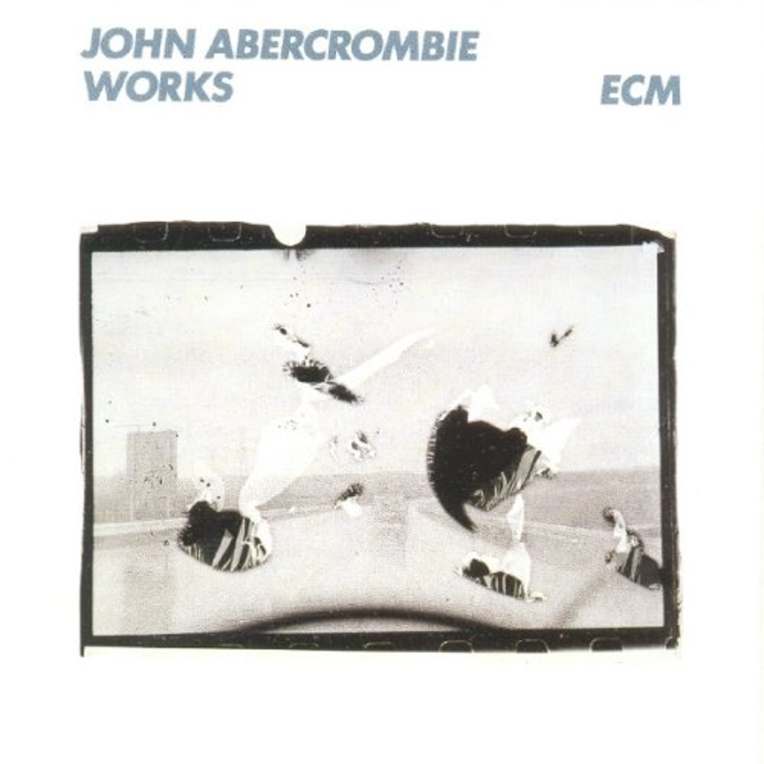
John Abercrombie: Works

Abercrombie

John Abercrombie
Works
Release date: September 19, 1988

John Abercrombie is easily remembered as one of the most virtuosic jazz guitarists to ever run a finger across a fret board. He was also a marvelous composer, as attested by the appropriately named Timeless. From that 1975 leader debut are fished out two personal favorites from the Abercrombie pond, both of which find him in the company of keyboardist Jan Hammer and drummer Jack DeJohnette. The traction of “Red And Orange” finds each musician at once exploding with singularity and interlocking without a gap in sight. Abercrombie and Hammer dialogue fearlessly, while DeJohnette never lets up his intensity. “Ralph’s Piano Waltz” is another gem, this time with an airier energy and syncopation. After these brightly lit forays, Night adds to that trio the tenor saxophone of Mike Brecker. The 1984 album’s title track swaps Hammer’s synth for piano beneath Brecker’s melodic insistency. Unlike the atmospherically kindred “Nightlake” (Arcade, 1979), with Richie Beirach on piano, George Mraz on bass, and Peter Donald on drums, and in which Abercrombie’s sound is astonishingly smooth yet precise, it finds the bandleader in a more mood-setting role.

The year 1978 yields three albums as different as they are defining. Where “Backward Glance” (Characters) is a guitar-only splash of moonlight through trees of memory, “Dream Stalker” (New Directions) is a collective improvisation with Lester Bowie on trumpet, Eddie Gomez on bass, and DeJohnette at the kit. Carry the DeJohnette and add a Dave Holland on bass, and you have “Sing Song” (Gateway 2), a fascinating congregation grounded in sonic truth. Shout out to the glorious exchange when DeJohnette hits a bell-like cymbal and Abercrombie responds with a cluster of resonant notes. Extraordinary.

All that’s left to discuss is “Isla.” This duet with Ralph Towner on 12-string guitar, from 1982’s Five Years Later, is a woundless combination. Like Abercrombie’s body of work as a whole, it’s a fantasy so powerful that it stands as reality.

This collection is all kinds of wonderful, and as good a place as any to start if you are new to this unparalleled talent.

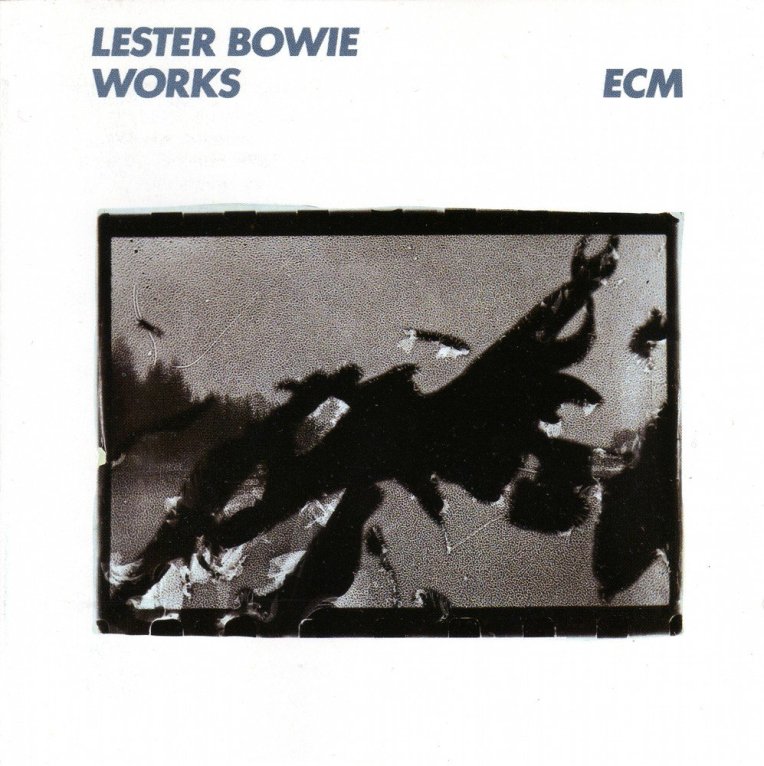
Lester Bowie: Works


Bowie

Lester Bowie
Works
Release date: September 19, 1988

Trumpeter Lester Bowie, gone too soon but never forgotten, made his mark both within and beyond the borders of ECM, but we can be thankful that some of his most indelible impressions were archived on the German record label by one producer—Manfred Eicher—who understood his significance in jazz history in ways few others could. Given that Bowie was a cofounder of the Art Ensemble of Chicago, it only makes sense that this “Works” compilation dedicated to him should open with “Charlie M” from the band’s 1980 classic, Full Force. In that context, Joseph Jarman and Roscoe Mitchell (reeds), Malachi Favors Maghostus (bass), and Famoudou Don Moye (drums and percussion) were more than fellow musicians; they were brothers at the deepest level. Biting into this slice of old school pie, Bowie brings his bluesy incisors into contact. Maghostus is also memorable, foregrounded in the mix and driving us asymptotically toward hope.

As expressive as he was among extended family, he was also given creative freedom by ECM to develop an impactful body of solo work. In 1981, his first foray into that self-directed realm, The Great Pretender, yields the enigmatic “Rose Drop.” Alongside Donald Smith on celesta, Fred Williams on bass, and Phillip Wilson on drums, Bowie looses barely a breath yet spins an organic segue into “B Funk” (Avant Pop, 1986). This one features his Brass Fantasy ensemble in a dissonant take on “We Want the Funk.” Playful vocalizations and even more playful spirit, combined with Bob Stewart’s distorted tuba and Bowie’s mounting wail, make it one brilliant cover. “When The Spirit Returns” (I Only Have Eyes For You, 1985) is more in that vein, building from a slow march into big band blowout.

But the most personal foray into his creative chambers is still to be found on All The Magic! The music of that 1983 album is worthy of the title, as it casts a consummate spell through barest of materials. Whether having a conversation with the self in “Deb Deb’s Face” or injecting a dose of whimsy via “Monkey Waltz,” unleashing a distorted call to arms in “Fradulent Fanfare” or crying for the season with church bells in the background of “Almost Christmas,” he reveals sides to his instrument that few have dared explore. Concluding the first half of that same session, as well as this collection so graciously sampling it, is “Let The Good Times Roll,” a dip into Dixieland waters featuring the operatic stylings of vocalists David Peaston and Fontella Bass in a setting of epic and joyful proportions.

Close your eyes and point to anywhere in Bowie’s discography, and you’ll find him to be a light in the darkness. The trumpet turned from brass to flint in his hands, his breath the spark giving it a voice. And here some of his brightest campfires have been gathered from the blazing trail he left behind.

Bill Frisell: Works

Frisell

Bill Frisell
Works
Release date: September 19, 1988

Number 12 of ECM’s “Works” series ushers us into the woods behind guitarist Bill Frisell’s musical homestead. It’s a damp, shadowy, and at times warped place to be, but nonetheless familiar. As with many of its predecessors, the juxtaposition of tracks suggests new associations even as it invites further reshuffling in our analysis. In this case, it behooves us to start plurally and work our way to the singular.

One of Frisell’s all-time standouts, “When We Go,” is blessedly included. Taken from 1985’s Rambler, it drops Frisell into a band only ECM could have put together with Kenny Wheeler (trumpet), Bob Stewart (tuba), Jerome Harris (electric bass), and Paul Motian (drums). The tune’s balance of carnivalesque and fantastic progressions is uniquely Frisell’s own, and the sound of his guitar—fluid yet crisp—is winning. “Wizard Of Odds,” from the same session, is likewise emblematic. These two alone serve as a viable introduction to his totality as a player.

From quintet to quartet, Frisell joins another dream team of John Surman (soprano saxophone), Paul Bley (piano), and Motian. “Monica Jane” (Fragments, 1986) mixes Bley’s bluesy backing, Surman’s swanky surrealism, and that unmistakable guitar until only shadows remain. “Conception Vessel” (it should’ve happened a long time ago, 1985) is a trio setting with Joe Lovano (tenor saxophone) and Motian once again. Lovano brings harmonic wonders to bear, while Motian himself is so organically integrated that one hardly notices him. A rather different sound emerges by way of “Black Is The Color Of My True Love’s Hair” (Bass Desires, 1986), in which bassist Marc Johnson and drummer Peter Erskine provide a pliant backdrop for Frisell’s instrument, which touches the edges of consciousness as a brush to hair.

“The Beach” (In Line, 1983) is a duo with bassist Arild Andersen, whose arco harmonics ignite heat lightening above Frisell’s deserted farmland, leaving us to witness another masterstroke in “Throughout.” Later adapted by Gavin Bryars as Sub Rosa (which actually concludes the Frisell collection released on ECM’s :rarum series), it mixes the oil and water of acoustic and electric guitars with alchemical assurance. A year before that, Frisell laid down the truly solo “Etude” on Motian’s 1982 wonder, Psalm, the touchless notecraft of which curls arms around ears.

Looking back on these, we can see any number of other possible paths through their uncongested streets, of which the one presented here is a page in an atlas of possibilities. However we choose to regard them, we can be sure they will always take us somewhere far away and make it feel like home.

Pat Metheny: Works II

Metheny 2

Pat Metheny
Works II
Release date: September 19, 1988

One of the benefits of ECM’s “Works” collections is their fashioning of new narratives from preexisting material. This album is particularly successful in that regard. Like cut-and-paste poetry, it connects disparate events with uncanny coherence. It’s also unique for being the only sequel in the series, and for instigating a new and final set of five, redesigned covers and all. Here we are treated to highlights from some of Metheny’s most painterly work on record, and from sometimes-unexpected sources.

As for the expected, the compilation unearths two gems from 1976’s Bright Size Life. The trio of Metheny, bassist Jaco Pastorius, and drummer Bob Moses must be heard to be believed (as first-time listeners, I imagine, hardly believed what they heard when this leader debut was released). Where “Unquity Road” casts a spell from note one, constructing from found items a house no proverbial wolf could ever blow down, “Unity Village” is a congregation of electric guitars that allows the wind of our listening to pass through unobstructed. Such ventilation is key to Metheny’s art: furthering the gospel of melody by allowing creativity to flow directed. The detour of “Oasis” (Watercolors, 1977), in which bassist Eberhard Weber draws sustaining threads across Metheny’s sparkling arpeggios, segues back into that glorious trio with “Sirabhorn.” Another classic stopover plants us squarely in the Pat Metheny Group’s 1983 live album Travels. “Farmer’s Trust” is noteworthy for its birdlike environment and aching lyricism.

Two somewhat surprising trees sprout from 1980’s 80/81 and 1984’s Rejoicing. The first, “Open,” finds Metheny unraveling an especially tight knot in the company of Dewey Redman and Mike Brecker (tenor saxophones), Charlie Haden (bass), and Jack DeJohnette (drums). The second, “Story From A Stranger,” joins Haden and drummer Billy Higgins at the hip alongside Metheny’s synth guitar. Every chord change is a new phase of life, a coming of age in the truest sense and a gentle reminder that nostalgia may yet be felt and conveyed for things we’ve never even experienced.

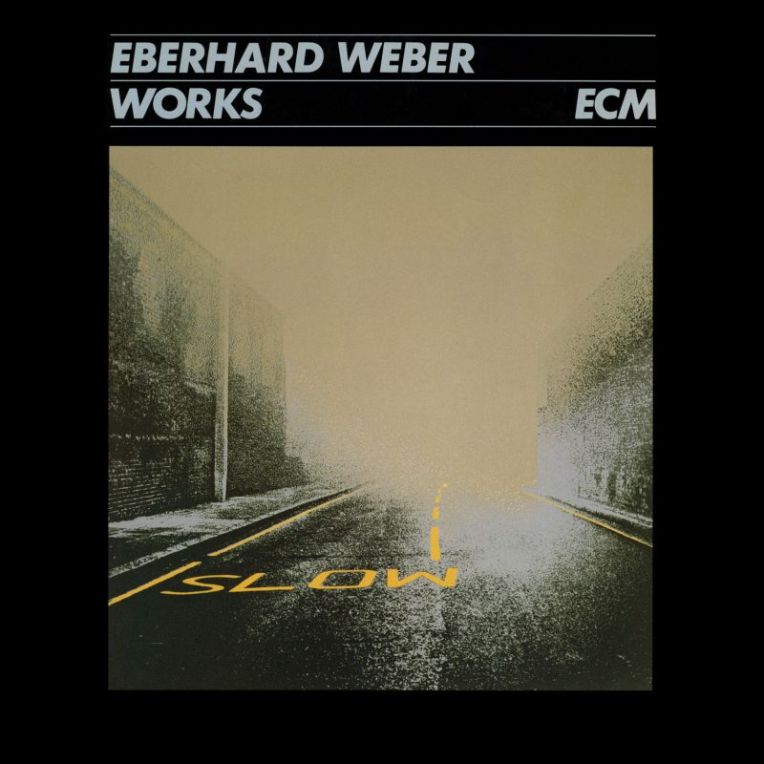
Eberhard Weber: Works

Weber

Eberhard Weber
Works
Release date: April 1, 1985

Our tenth stop along the “Works” railway attests to the unique attunement of Eberhard Weber’s talents as bassist and composer to the ECM universe. In the former capacity, he contributed an unmistakable style to myriad recordings as sideman, and by the time of this compilation had already established an indelible footprint. A particularly evocative example comes to us by way of guitarist Ralph Towner’s 1975 masterpiece, Solstice. In the track “Sand,” Weber’s cello and bass render textures of glass, water, and stone alike. Jan Garbarek’s soprano saxophone is a seagull crying overhead as Towner’s 12-string laps the shore with phases of time and Jon Christensen’s colorful percussion sets Weber coolly aflame.

Even more substantial offerings are to be found in Weber’s own work as leader, as in “More Colours” from his 1974 debut, The Colours Of Chloë. Over the cellos of the Stuttgart Südfunk Symphony Orchestra, he paints with his own cello like a water droplet hitting the water in time-lapse sequence. The piano of Rainer Brüninghaus traces the ripples of its disappearance, as if to carve its memory in mindful stone. It’s a configuration echoed in “Moana II” (The Following Morning, 1977), in which Weber’s bass, in search of a beat, finds only electroacoustic expanse. Further colors abound in 1978’s Yellow Fields, of which “Touch” evokes the blush of first love through the lenses of Charlie Mariano (soprano saxophone), Brüninghaus (keyboards), and Christensen (drums). The music is parthenogenetic and eternal, spotlighting Mariano’s purposeful lines and Christensen’s blinding cymbal work. From the light to the night, we find ourselves endowed with “Eyes That Can See In The Dark.” Interpreted by the same instrumentation, though now with John Marshall replacing Christensen, this masterpiece from 1978’s Silent Feet is easily one of Weber’s crowning achievements for its joyful register. “A Dark Spell,” from 1980’s Little Movements, continues in that vein. Its explosion of piano and cymbals sets up a smooth ride across flatter terrain, as Weber’s fluid bass and Brüninghaus’s pianism glide—sometimes crossing paths, sometimes in parallel—toward a groovy, dramatic finish.

Perhaps more than any other of the “Works” series, this one shows the evolution not only of an artist in his prime but also of music itself at a watershed moment in recorded history, traced in the orthography of a label unafraid to open the very doors it builds.

Terje Rypdal: Works

Rypdal

Terje Rypdal
Works
Release date: April 1, 1985

Norwegian guitarist Terje Rypdal almost singlehandedly defined an era with his signature electric sound. While that sound had much to do with his balancing of lyricism and grunge, and of his classical and rock leanings, it was forged in no small way in his compositional foundry. Such eclectic roots were already well-watered by the time of his 1971 self-titled ECM debut, from which “Rainbow” is included in this deserving collection. Joined by Jan Garbarek on flute, Eckehard Fintl on oboe, Arild Andersen on bass, and Jon Christensen on percussion, Rypdal delineates a resonant dream space where symphonies and concertos go to be reborn.

Though the works featured here are not presented in chronological order, it makes sense to do so here. Next in the chain is “The Hunt” (Whenever I Seem To Be Far Away, 1974). This relatively surreal tune marries the Mellotron of Pete Knutsen with the deep digs of bassist Sveinung Hovensjø, while the French horn of Odd Ulleberg exchanges letters of the soul with Rypdal through forested landscapes. Said letters might as well be signed “Better Off Without You” (Odyssey, 1975), in which Rypdal’s delicate arpeggio draws a trajectory through the heat distortion of Brynjulf Blix’s organ. The title track of 1978’s Waves carries over the same Hovensjø/Christensen rhythm section over the uninhabited spaces mapped by Palle Mikkelborg on trumpet and keyboards. Rypdal takes an immaterial rather than physical role, brushing on the atmosphere one shadowy strand at a time.

“Den Forste Sne” references Rypdal’s marvelous 1979 trio album with bassist Miroslav Vitous and drummer Jack DeJohnette. The latter’s call is so bright that it would blind Vitous and Rypdal were it not for their solar responses. “Topplue, Votter & Skjerf,” from the 1981 follow-up To Be Continued, casts Rypdal in a leading role. Like a warrior without armor, he wields only melody and protective instincts. Between those two signposts stretches the hybrid banner of Descendre. With Mikkelborg and Christensen at his side, he digs through clouds like an archaeologist of the ether in “Innseiling” and sings like liquid mercury personified in that 1980 album’s title track. These are, however, but a few of his many facets, all of which are worth exploring in a career that continues to evolve with listeners firmly in mind.