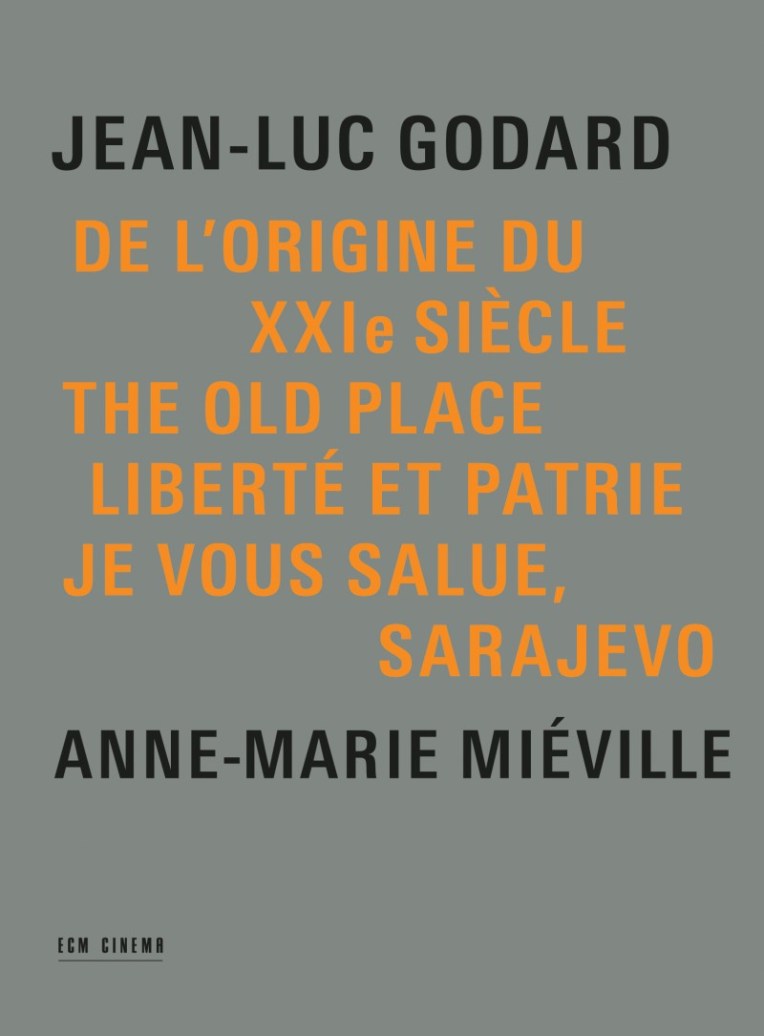
Jean-Luc Godard / Anne-Marie Miéville: Four Short Films (ECM Cinema)

Four Short Films

Jean-Luc Godard
Anne-Marie Miéville
Four Short Films

Produced and edited by Manfred Eicher
Editorial assistance: Sophie Schricker
Release date: April 24, 2006

“Culture is the rule, art is the exception.”

Jean-Luc Godard’s relationship with ECM Records and its producer, Manfred Eicher, seems as inevitable as the output of both artists is prolific. Eicher understands that the relationship between sound and image is at its most beautiful when contrapuntal, as proven by his own foray into filmmaking when he co-directed and -wrote the film Holozän with Heinz Bütler in 1992, to say little of his meticulous attention to album art and presentation. Godard, for his part, practically invented the cinematic language with which he is so often associated. Said language has always been as much about the ears as the eyes, and has intensified as his awareness of ECM has grown. Godard, on Eicher: “Every time he sends us music we have the impression this is somebody who is giving us something to listen to, sound from a place which comes from the same family as the place to which one should go. He is in a world which is not the same as ours but is on friendly terms with ours. And he says with his music: Carry on living, carry on working!”
Or 1

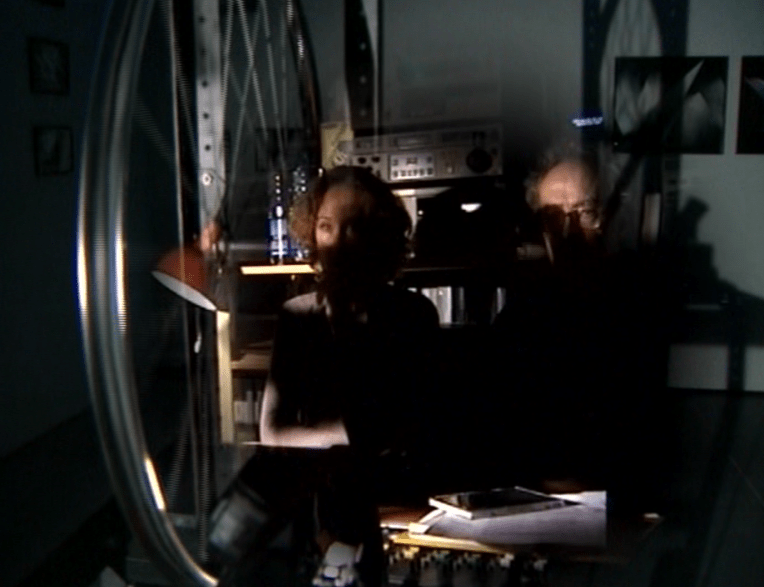
And carry on he does in this lovingly packaged DVD, for which Eicher has assembled a selection of Godard’s collaborations with Anne-Marie Miéville. The latter’s genius was already confirmed by her second film, 1985’s Le Livre de Marie (The Book of Mary), which served as prelude for Godard’s excoriating Je vous salue, Marie (Hail Mary) of the same year. In that pairing, Miéville’s laser focus on intersections of gender, space, and history found a kindred spirit in Godard. It was only a matter of time before the two would mesh their talents.
Or 3

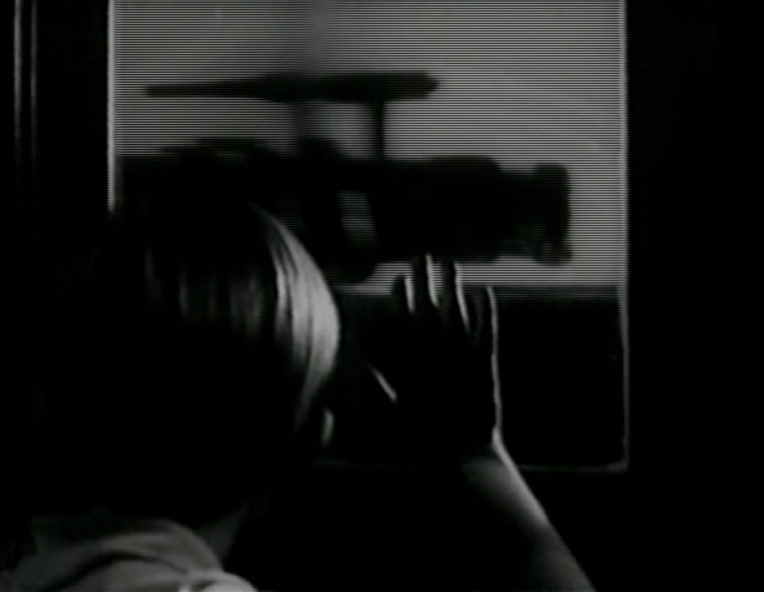
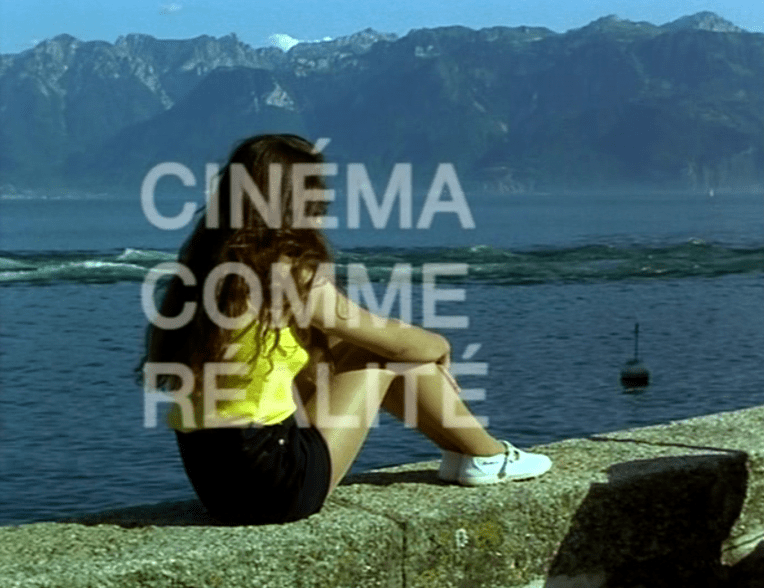
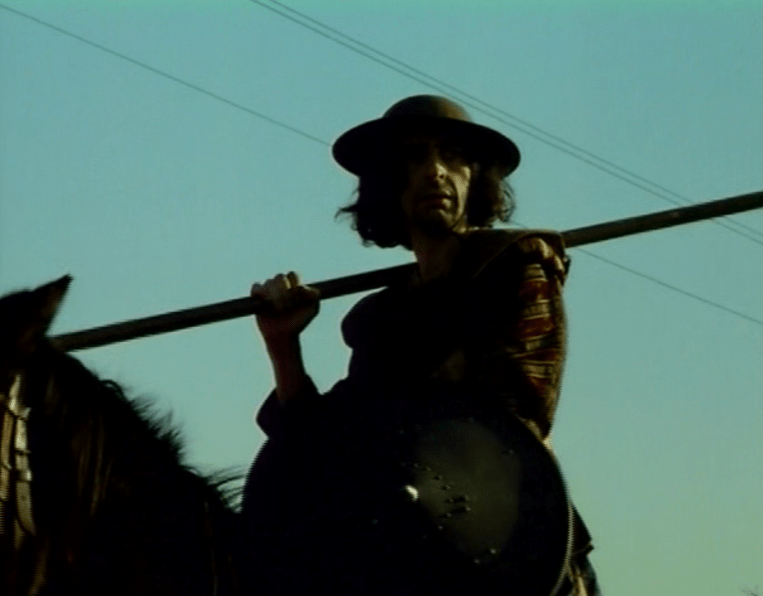
De l’origine du XXIe siècle (On the Origin of the Twenty-First Century) was a commission for the opening of the 2000 Cannes Festival. It’s a veritable gymnasium for Godard’s wordplay. His language spits out the ruptures of an intrusive capitalism. We encounter a man playing violin on a country path as Sarah Leonard sings Górecki’s O Domina Nostra, interrupted by a gun shot and a scream. “You don’t wage war against outlaws,” says Miéville. “You exterminate them.” The people are always playing by an instruction manual written on the bodies of those who came before. Images of hanging, death, and torture ensue—not as an extension of shock value but as a critique of the master’s tools.
Or 2

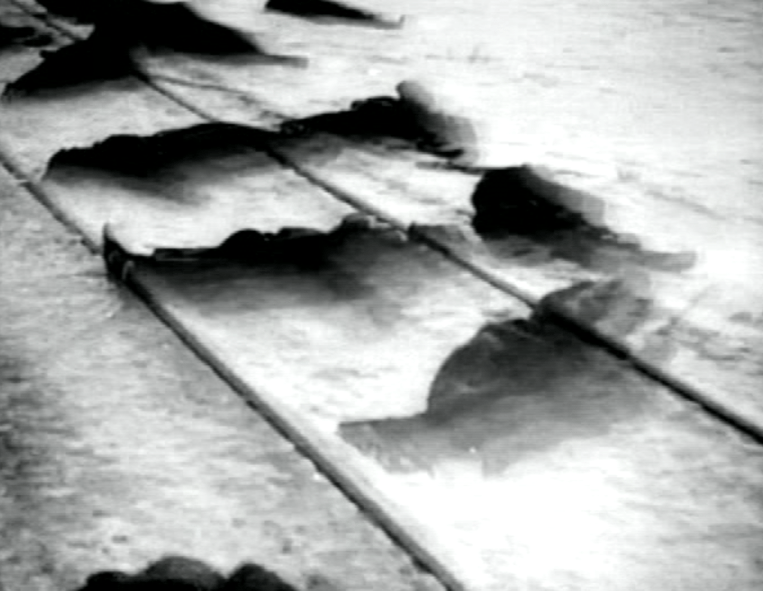
“The spirit borrows from matter the perceptions it draws its nourishment from,” our narrator soliloquizes, “and gives them back as movement stamped with freedom.” Indeed, this is the process of speech at work, as words and impulses are scrambled and reshuffled to the tune of editorial improvisation. On that note, there is a haunting sequence in which The Shining’s Danny Torrance rides his tricycle through hallway as Hans Otte’s Das Buch der Klänge plays. The minimal leanings of this music ensure that the threat of death is a coercive tactic to bring about negations on a grander scale. It reminds us that the human is empty without the possibility of destruction. As if to underscore this point, shades of Vietnam, of whispered lives given credence by historical memory, are given a blood transfusion of sound and movement.
Or 5

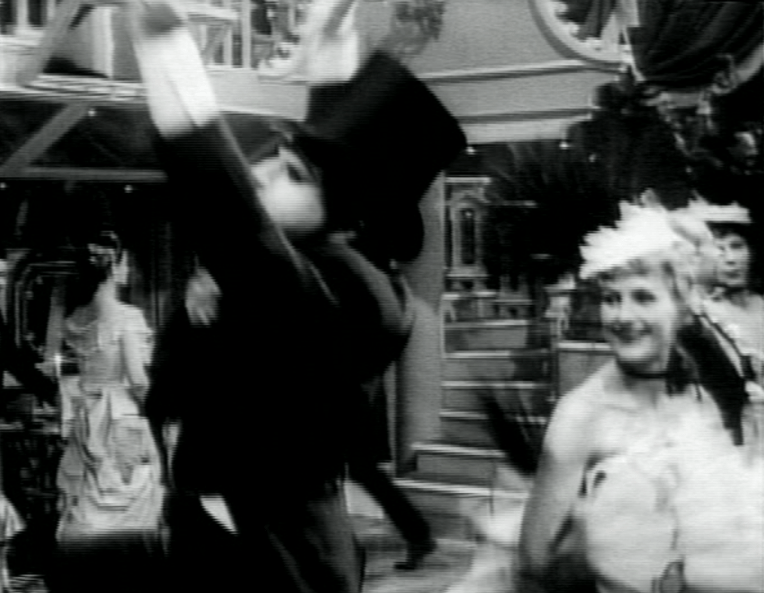
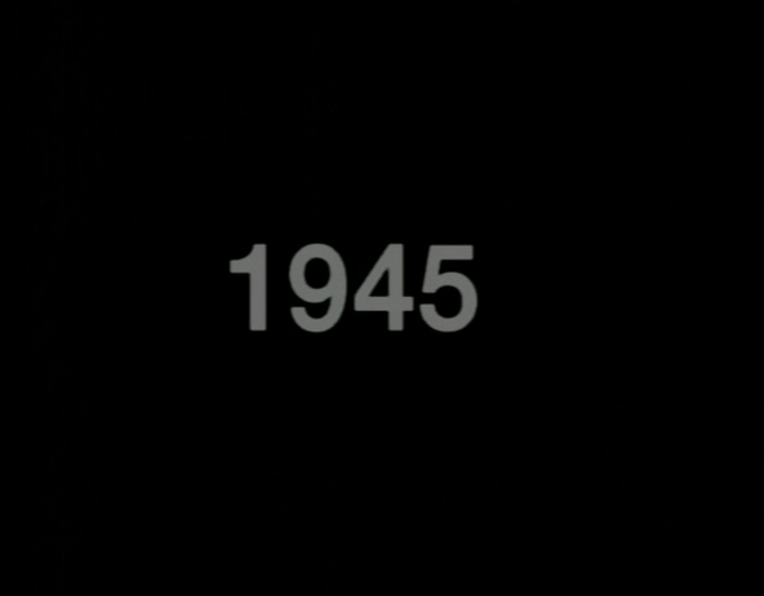
The victory of war is necessarily predicated on defeat, and in these fan-leaves one understands that life is reducible to the spines connecting them. As a boy looks at the tanks outside his train window, on his face is written the enterprise of colonial interpretation, by which lands are divided on a first-come-first-served basis. “The state’s rationale,” we are told, “directly opposes the sovereign value of love,” and in that statement burns a world of understanding. In the boy’s countenance is a capacity for love clipped by passing trees until its edges are as frayed as mortality. The negative spaces between those tendrils is where the musk of reality develops its pungency. In tying the iconic images of cinema with those of history, as funneled through the atrocities of Nazi killings and other warmongerings, Godard and Miéville elucidate the cinematic tendencies of history and the historical tendencies of cinema. These connections are powerful enough to enliven mere numbers flashed on a screen, as intertitles flash years of significance: a dance chart between the frivolity of the West and the death of the East. By the end, Godard has proven that one cannot represent the 20th century without evil.
Or 4

“Society makes the body something more than it is, and the soul something less.”
Old 2

Like its predecessor, The Old Place examines the role of art in history, only this time in still rather than moving images. Says Michael Althen of this piece, commissioned by the New York Museum of Modern Art in 1999, “[T]he aim is not to give an overview of art history but to cut a path through the forest by asking how art relates to reality and its horrors.” Throughout its mid-length duration, reflections on art and its traces cross swords with future-oriented impulses. The questions it poses are not meant to be answered, but taken as wholesale embodiments of cultural memory, which tends to account for reality via myths and legends. As in the opening image of a monkey dangling from a tree, it is dependent on the presence of gravity to give hierarchical sensibilities a grounding from which to suspend our inhibitions.

Old 1

Against a musical collage drawn from pigments mixed by Tomasz Stanko, David Darling/Ketil Bjørnstad, Keith Jarrett, Federico Mompou, Dimitri Shostakovich, and more, the role of text functions more greatly in this film than in its predecessor. Recognizing these snippets from the ECM catalogue provides a fleshly satisfaction, and lends new interpretations to their already-deep entrenchment in the bodies of those who create and consume them. In their usage is a coded message, which tells us that choosing materials is choosing mortalities. As if to say that agreement with the self is far more important than with the world, for only the self receives recognition in return for inviting interpretation, and touches upon the web of human activity by its remnants alone.
Old 5

Crimes against humanity cannot be art because they shed light on darkness. It is the same with cinema: both are speaking the same language of death. The will to flight is humanity’s default setting, yet impossible to achieve, because creation has its hold on us so much so that we can only mock its divinity with illusions of our own. Image-based mediums render escape impossible because they are the undeniable incarnation of our fixation with darkness. As Godard puts it, “Maybe we’re the ghosts of people taken away when everybody vanished.” In that thought experiment is expressed the vagueness of expression, despite the explicitness of its products. In this respect, art and cinema equally tread the border zones of silence.
Old 4

“Art is normally not something to be touched, but regarded at a respectable distance, protected by law.”
Old 6

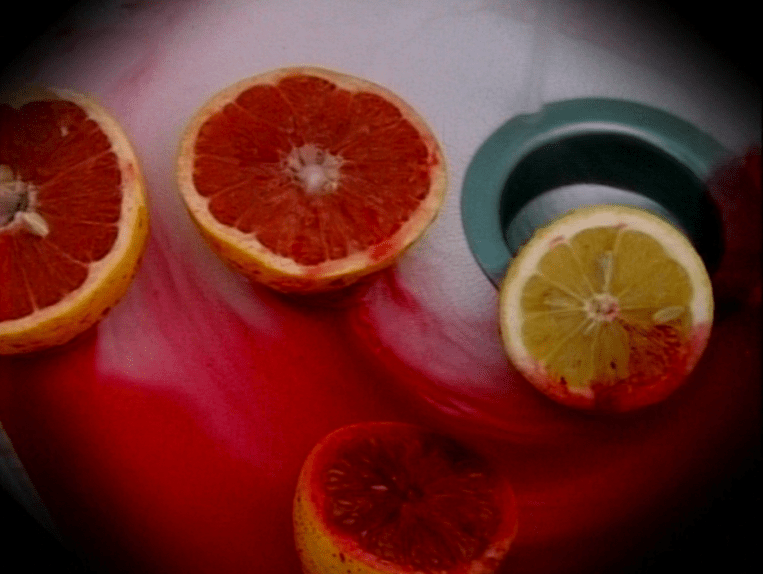
Moments can only be objects in art: paintings, sculptures, film stills. And as Godard and Miéville peek through the cinematic portal, we are reminded that construction is sovereign in both realms. The problem of progress, then, is not a lack of paths but of homes to return to. A paucity of materials, if you will, resulting from a ban on exploration. To be consciously alive is to articulate one’s vibrations in some form of impulsive communication, and shifts of color may be defined only in a realm of light and movement. Movement is essential in the artist’s brush, in transporting the work and giving it illusory stasis on a museum wall. The religiosity of painting is a means of asserting that humanity has a right to continue.
Lib 5

“In a plane, you never see the whole sky.”
Lib 1

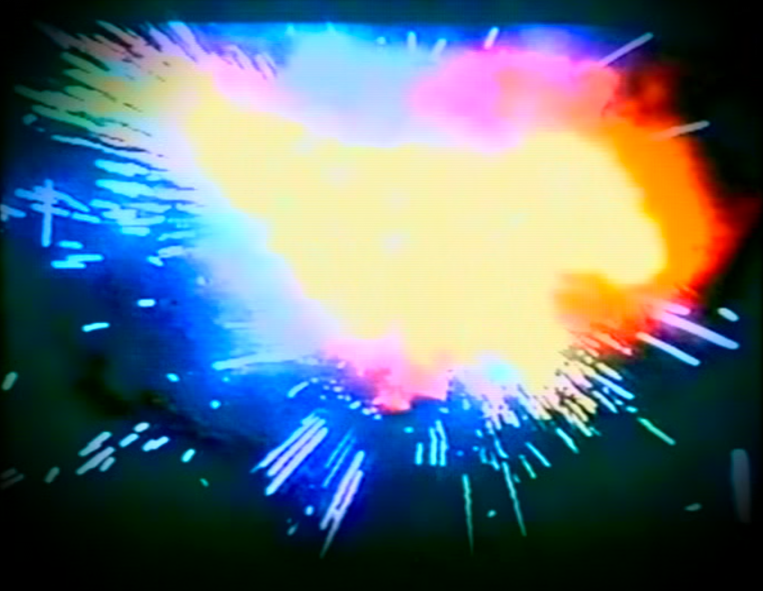
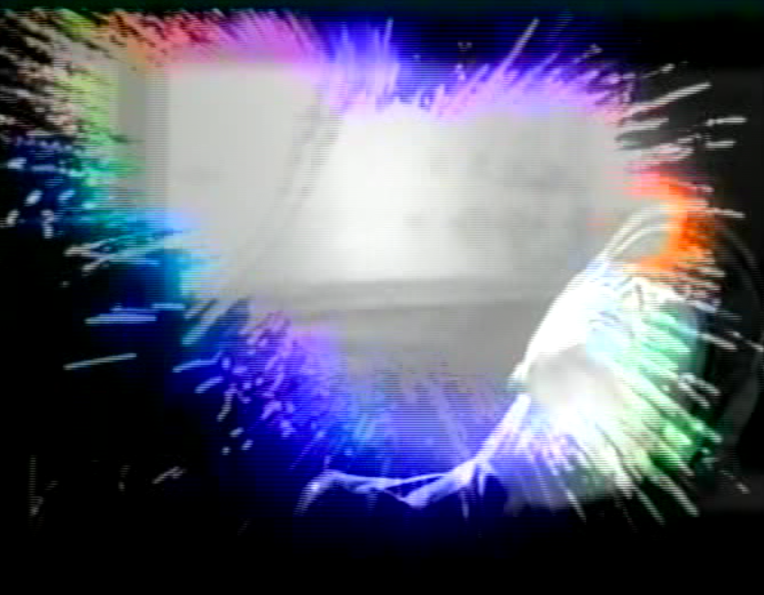
Liberté et Patrie (Freedom and Fatherland), a commission for the 2002 Swiss Expo, was rarely seen until its release here on DVD. Something of a companion piece to the previous, it’s yet another dance between content and form, where liberty isn’t so much an illusion as it is hope for illusion. In this instance, the string quartets of Beethoven figure heavily, and with good reason: for the stereotypically tortured composer’s soul was swimming in contradictions. In this combination, we find that the boldest art can live without the rest of us to validate it. As war and technology flicker across the eyes like fire slashing through celluloid, we find ourselves as spectators making pathological errors of liberty in order to parse shadow from freedom. Whereas liberty is stationary, the film seems to claim, freedom is itinerant. This casts a fishing line back to the idea of movement as expressed in the previous film, and puts a finger on the pulse that animates these filmmakers in their walk with life.
Lib 4

“Representations depend on will.”

Sara 1

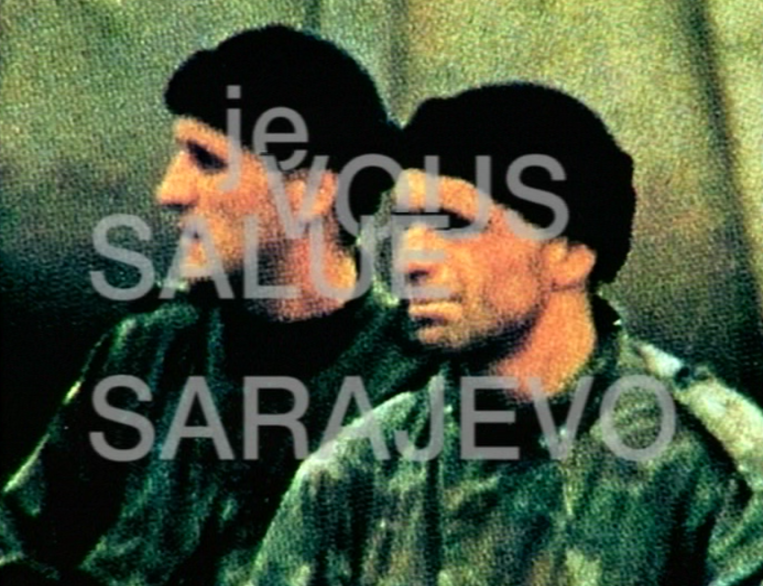
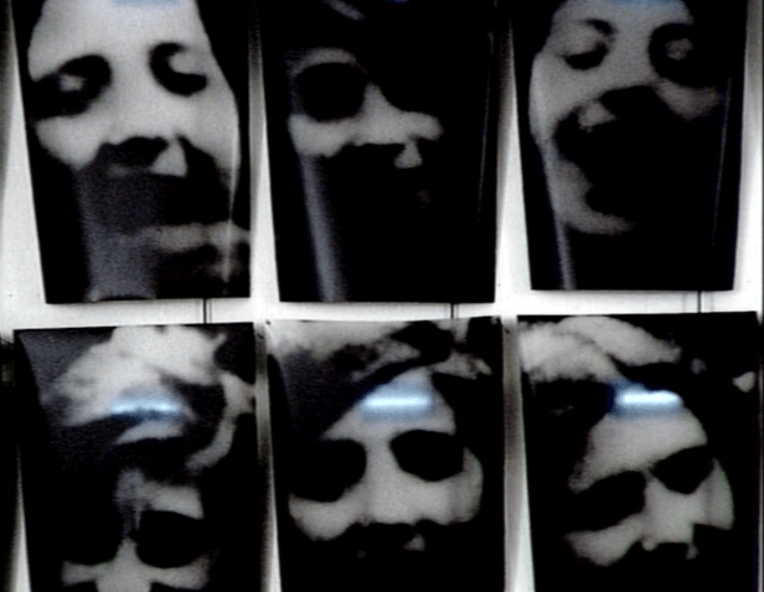
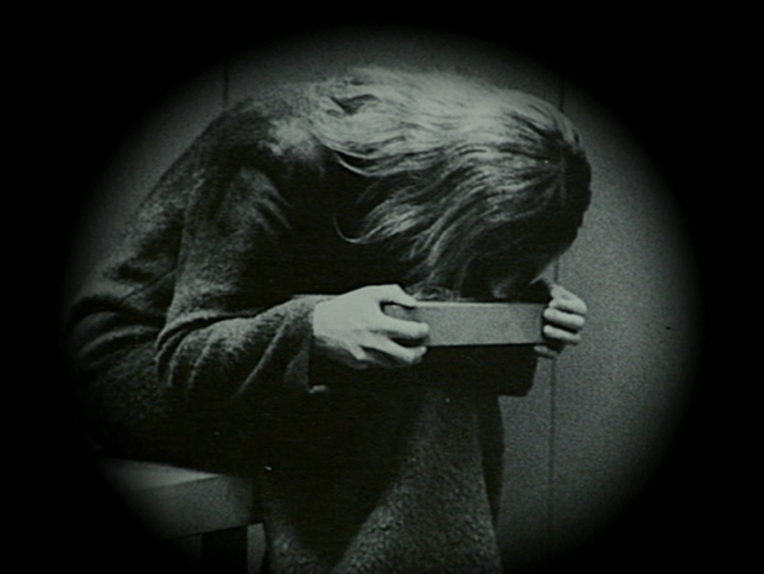
Je vous salue, Sarajevo (Hail Sarajevo) is a morsel of history in and of itself. Made in 1993, when the Bosnian War was at its apex, it compresses untold hours of action into two minutes. Arvo Pärt’s Silhouans Song lends it urgency, a feeling of searching and never finding a clue toward uncovering the heart of atrocity. “In a sense, fear is the daughter of God,” says Godard, “redeemed on Good Friday night.” With that theme, he personifies fear as an intercessor between reality and fantasy. By looking at a single photograph of the war, building it organ by organ, he shows that the purpose of art is to express the death of exception, the organizing principle behind torture and rule. Flesh can never be a canvas when its display is only for the wickedness of ephemeral violence.
Sara 3

“I’ve seen so many people live so badly, and so many die so well.”

Lib 3

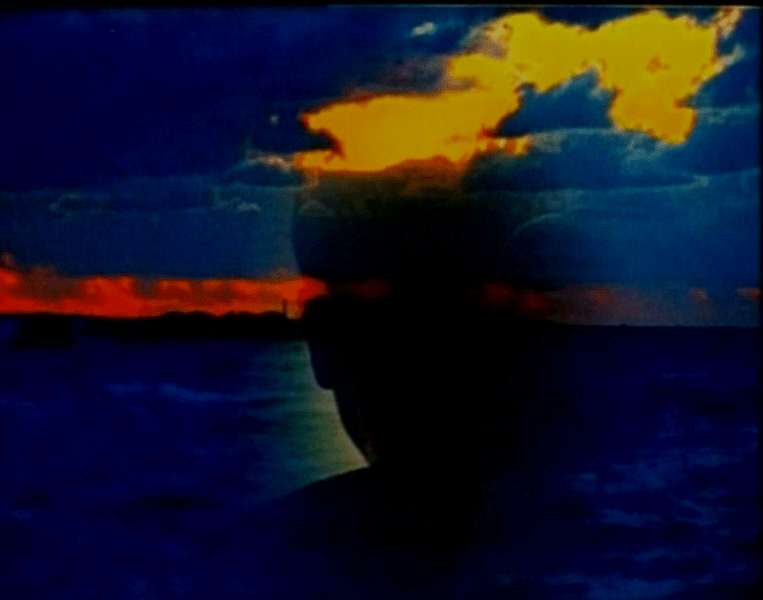
In addition to musical allusions, these films include quotations from Godard’s own films, including À bout de souffle (Breathless), Passion, and others. And Miéville’s own Le Livre de Marie gets a nod as a reflection of a brush poised before an already-bloodied canvas. Another layer is added by the fact that certain ECM covers have also been drawn from these films. The result is a multisensory conversation. And while these are non-narrative pieces, they are heavy with stories. Cinema is the knife that cuts through reality with fantasy, and fantasy with reality.
Lib 2

These films comprise a haunting yawn into the great goodnight, each the crater of a meteor falling in slow motion before the dawn of an era comes to a close as extinction squeezes the land dry of its most formidable juices. A cup brimming with blood in our own image.
Old 7

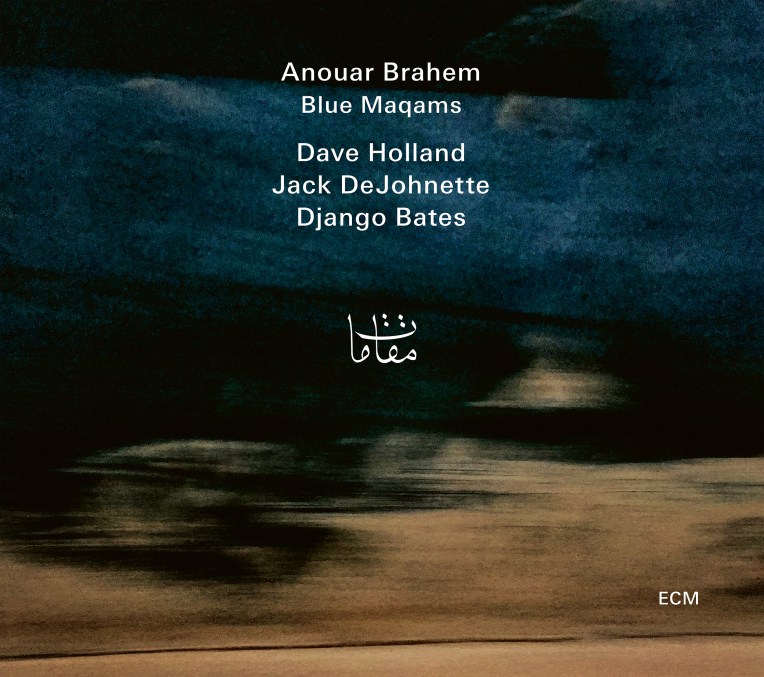
Anouar Brahem: Blue Maqams (ECM 2580)

2580 X

Anouar Brahem
Blue Maqams

Anouar Brahem oud
Dave Holland double bass
Jack DeJohnette drums
Django Bates piano
Recorded May 2017 at Avatar Studios, New York
Engineer: James A. Farber
Assistant: Nate Odden
Produced by Manfred Eicher
U.S. release date: October 13, 2017

If you’ve ever awoken from a dream with enchanting music on the brain, only to have it fade as the day wears on, Anouar Brahem’s Blue Maqamsmay just recapture the feeling of preserving it. The album is at once a return to form and a new direction for the Tunisian oudist, reuniting him with bassist Dave Holland (cf. 1998’s Thimar) and recording for the first time with drummer Jack DeJohnette and pianist Django Bates.

The introductory oud of “Opening Day,” solo but never alone, is a voice of pale light out of darkness, a careful witness of things just visible enough to understand. Holland listens from the periphery before locking step. DeJohnette feathers the edges, while Bates offers his gentle inclusions with the felicity of a poet. Thus complete, the quartet’s sound embarks as one body, lucid and self-aware.

Patience is the blood of Blue Maqams, as proven in “La Nuit.” Arpeggios from the keyboard are the nerves to Brahem’s soft impulses as deep notes flow duskily beneath. Only after six and a half minutes do bass and drums make their anchorage known, a formula replicated in “The Recovered Road to Al-Sham.” Such meticulously rooted stems produce ample flowers, and none so supple as the title track. Here Brahem and DeJohnette engage dialectically before a snaking theme works its way into the ventricles. Brahem’s cadenza—a thread of mournfulness in an otherwise peaceful weave—is the album’s conscience.

Bates delights in the duet “La Passante,” a tender segue into “Bom Dia Rio.” The latter is, along with “Bahia,” the smoothest joint of the set. A seamless ride through ocean waves and playful nights, it builds passion out of thin air and contrasts with “Persepolis’s Mirage,” in which we encounter something convoluted, emotional, emigrational. “Unexpected Outcome” closes the door by opening another. A steady rhythm section gives Brahem and Bates plenty of room to glide as the bandleader’s voice carries winged messages. Everything funnels into a final shimmer, making for one of the most stunning assemblages to ever graze its hands across ECM waters.

Kristjan Randalu: Absence (ECM 2586)

2586 X

Kristjan Randalu
Absence

Kristjan Randlu piano
Ben Monder guitar
Markku Ounaskari drums
Recorded July 2017, Studios La Buissonne, Pernes-les-Fontaines
Engineers: Gérard de Haro and Nicolas Baillard
Produced by Manfred Eicher
U.S. release date: April 6, 2018

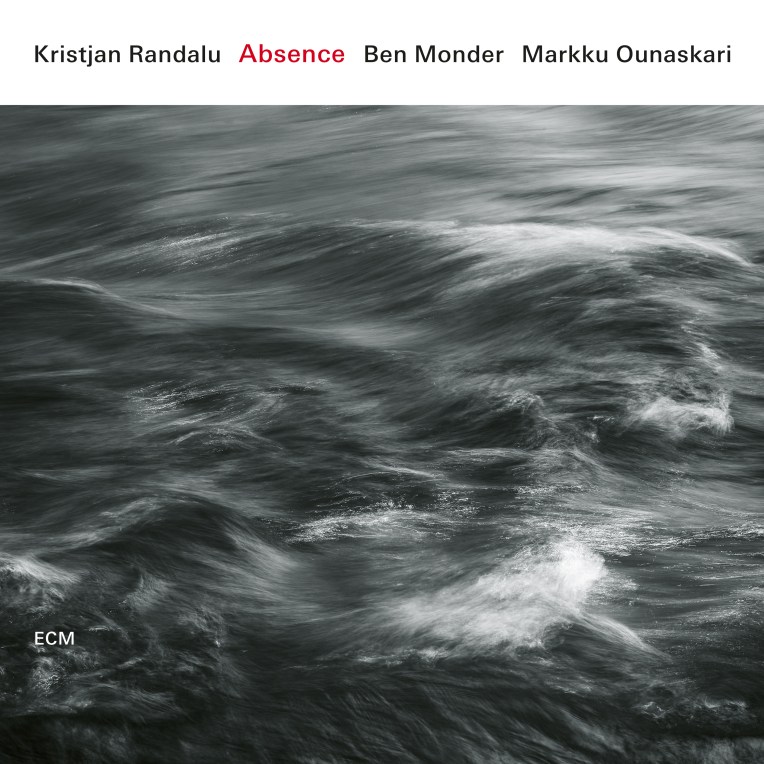
In the past decade, ECM Records has welcomed a range of new artists into its fold, but perhaps none so unassuming as Kristjan Randalu. Equally versed in classical and jazz performance, the Estonian pianist offers a debut that forgoes breaking ground in favor of the tectonic shifts beneath it. The title of Absence therefore accurately describes the music’s lack of allegiance to ear-catching grooves and sly hooks. Randalu and his bandmates—guitarist Ben Monder and drummer Markku Ounaskari—explore new territory without mapping it, per se, as the latter would imply a sense of colonial control in which they are clearly uninterested.

The album’s topography is nevertheless trail-marked by four of its briefer artistic statements. “Lumi I” and “Lumi II” are the most revealing in terms of process. Monder’s painterly sensibilities are free to roam here, as also in counterparts “Adaptation I” and “Adaptation II.” Together, these tracks illustrate the band’s core principles. Whether grounded in occasional arpeggios or expanding like lungs filling with air, they show a contemplative, physical awareness achieving greatest symmetry in “Partly Clouded.”

Although the album for the most part treads an even atmospheric keel, there are standouts. “Forecast,” for one, opens from Randalu’s crystalline intro into the album’s first and longest tune. But the brightest stars in the mix are “Sisu” and “Escapism,” both of which render some of the most achingly cinematic vistas to be developed out of the ECM camera in a long time. Working slowly and surely and with promises of nothing other than their own honest reflections, both are deeply moving works of art. The same holds true of the concluding title track, a lyrical vehicle for Monder’s balladry that ends with a tender kiss. An appropriate way to finish, to be sure: rewarding love with love, in the hopes of birthing more in kind.

(This review originally appeared in the June 2018 issue of The New York City Jazz Record, a full PDF of which is available here.)

Maciej Obara Quartet: Unloved (ECM 2573)

Unloved

Maciej Obara Quartet
Unloved

Maciej Obara alto saxophone
Dominik Wania piano
Ole Morten Vågan double bass
Gard Nilssen drums
Recorded January 2017 at Rainbow Studio, Oslo
Engineer: Jan Erik Kongshaug
Produced by Manfred Eicher
U.S. release date: November 10, 2017

In keeping with its commitment to fresh artistry, ECM presents the studio debut of Polish alto saxophonist Maciej Obara and his young quartet. As an improviser, Obara understands the fleeting nature of spontaneous creation, accordingly emoting with the soul of a poet—which is to say, wasting neither sentiments nor space to contain them. Case in point is the album’s opener, “Ula.” It introduces a tangible sound ideally suited to ECM’s visually-minded ethos. Remarkable about Obara is the gesso-like way in which he listens before applying his own strokes to any given canvas. Like any skilled oil painter, he knows that certain layers must dry before others can be added with clarity. In that vein, pianist Dominik Wania provides the broadest textural palette, giving just the right amount of uplift for the bandleader’s reed. Wania’s intros are especially well blended and draw from a variety of reference points. He brings shades of John Cage’s In a landscape to the album’s title track by Krzysztof Komeda (the only one here not penned by Obara) and in his extended setup of “Echoes” polishes a mirror without an inkling of vanity to show for it.

Bassist Ole Morten Vågan and drummer Gard Nilssen are purveyors of a mature subtlety by which give and take are rendered synonymous. In “One For,” they understand the lyrical potential of negative space. Interlocking in the freely-flowing “Joli Bord” and the concluding “Storyteller,” they sharpen serious arrows in preparation for whimsical targets. In terms of airtime, the piano trio is this record’s core, but Obara, in being so often backgrounded, unfolds his solos with an intensity made even more remarkable for selectiveness. His sound is unpretentious yet stands tall, fulfilling melodic promises with feeling rather than technique. It’s a surreal yet somehow organic form of communication that sticks as many feathers to each thematic bone until flight becomes achievable. The result is humility made musically incarnate and ready to fly.

(This review originally appeared in the June 2018 issue of The New York City Jazz Record, a full PDF of which is available here.)

Django Bates’ Belovèd: The Study Of Touch (ECM 2534)

The Study of Touch

Django Bates’ Belovèd
The Study Of Touch

Django Bates piano
Petter Eldh double bass
Peter Bruun drums
Recorded June 2016 at Rainbow Studio, Oslo
Engineer: Jan Erik Kongshaug
Produced by Manfred Eicher
U.S. release date: November 3, 2017

British pianist Django Bates makes his ECM leader debut with The Study Of Touch, and by its release gives hope to fatalists who see the piano trio as a dying genre. Bates himself was only convinced of throwing his own hat into that congested ring upon hearing his future bandmates—bassist Petter Eldh and drummer Peter Bruun—in the halls of Copenhagen’s Rhythmic Music Conservatory, where he’d just begun teaching in 2005. First conceived as an improvisation outfit, his Belovèd trio grew to encompass the formative influence of Charlie Parker as a springboard for Bates’ own writing. Parker’s spirited “Passport” is, in fact, one of only two non-originals on the program. The other, “This World” by Iain Ballamy, harks to the saxophonist’s All Men Amen (B&W, 1995), on which Bates appeared. Significantly enough, on Ballamy’s album this tune’s title was followed by four ellipses, whereas here those ellipses are gone, implying expressive surety. This symbolic change speaks to something vital about Bates’ artistry, by which each gesture feels as inevitable as the mind-melded contributions of his rhythm section. It’s there in the topsy-turvy feel of “We Are Not Lost, We Are Simply Finding Our Way” and underlying blues of “Senza Bitterness.” Such balance of slip and grip can only come from many hours of playing together without a roadmap.

Despite the many personal associations on which the tunes are founded, if not also because of them, listeners can’t help but merge at any given moment onto the band’s ever-changing fast lane of thought. Between the reflective “Little Petherick” and meatier “Slippage Street,” tessellated “Giorgiantics” and lushly colored “Peonies As Promised,” one encounters the clarity of anatomical drawing. The title track, along with the opener and closer, underscore this impression, sowing a sound defined by that which it refuses to define. Hence the prescience of touch as a theme for music rendered in that most asymptotic of contact zones between time and space, leaving us with one of the finest trio records of this millennium so far.

(This review originally appeared in the June 2018 issue of The New York City Jazz Record, a full PDF of which is available here.)

ECM: Between the Lines

On June 4, 2018, WKCR DJ Andrew Castillo and I presented an encore of sorts to our 15-hour traversal of the entire ECM catalog. Under the theme “Between the Lines,” I curated a playlist of world music and folk-leaning tracks that explore yet another major facet of the label’s output. The episode is now available to listen by clicking the PLAY button below. You may also download the full episode by clicking here. Scroll down for a full playlist, including links to my reviews of each album:

LEAD-IN
Bengt Berger
Bitter Funeral Beer (ECM 1179)
“Tongsi”

[INTRODUCTION @ 00:04:59]

00:09:14
CODONA
Codona 3 (ECM 1243)
“Goshakabuchi”

00:20:07
Jean-Louis Matinier / Marco Ambrosini
Inventio (ECM 2348)
“Wiosna”

00:24:46
Trio Mediaeval
Folk Songs (ECM 2003)
“Det Lisle Banet”

[BREAK @ 00:29:23]

00:32:29
Eleni Karaindrou
The Weeping Meadow (ECM New Series 1885)
“The Weeping Meadow”

00:36:14
David Darling
Cello (ECM 1464)
“No Place Nowhere”

00:40:52
Ketil Bjørnstad / David Darling
The River (ECM 1593)
“The River II”

[BREAK @ 00:46:37]

00:49:32
Stephan Micus
Twilight Fields (ECM 1358)
“Part 4”

00:59:27
Stephan Micus
Desert Poems (ECM 1757)
“Adela”

01:05:07
Stephan Micus
on the wing (ECM 1987)
“The Bride”

[BREAK @ 01:11:20]

01:15:26
Anja Lechner / Vassilis Tsabropoulos
Chants, Hymns and Dances (ECM New Series 1888)
“Assyrian Women Mourners”

01:21:27
The Gurdjieff Folk Instruments Ensemble
Music of Georges I. Gurdjieff (ECM 2236)
“Atarnakh, Kurd Song”

01:25:17
The Gurdjieff Ensemble
Komitas (ECM 2451)
“Hov Arek”

[BREAK @ 01:28:47]

01:31:42
Savina Yannatou
Songs Of An Other (ECM 2057)
“Ah, Marouli”

01:35:05
Savina Yannatou
Songs of Thessaloniki (ECM 2398)
“Qele-Qele”

01:38:20
Robin Williamson
The seed-at-zero (ECM 1732)
“Skull And Nettlework”

[BREAK @ 01:41:06]

01:44:28
Sinikka Langeland
The half-finished heaven (ECM 2377)
“The Light Streams In”

01:48:54
Per Gudmundson / Ale Möller / Lena Willemark
Frifot (ECM 1690)
“Metaren”

01:52:04
Nils Økland Band
Kjølvatn (ECM 2383)
“Mali”

[BREAK @ 01:56:00]

01:59:10
Yeahwon Shin
Lua ya (ECM 2337)
“The Orchard Road”

02:01:19
Ambrose Field / John Potter
Being Dufay (ECM New Series 2071)
“Je Me Complains”

[BREAK @ 02:07:38]

02:09:43
Amina Alaoui
Arco Iris (ECM 2180)
“Fado menor”

02:15:01
Arianna Savall / Petter Udland Johansen
Hirundo Maris (ECM New Series 2227)
“Buenas Noches”

02:20:42
Jan Garbarek
Visible World (ECM 1585)
“Evening Land”

[CONCLUDING REMARKS @ 02:33:10]

LEAD-OUT @ 02:35:12
Shankar
Who’s To Know (ECM 1195)
“Ragam-Tanam-Pallavi”

Back on the air tonight with “ECM: Between the Lines”

Join me and host Andrew Castillo tonight (June 4) on WKCR’s Jazz Alternatives program, from 6-9pm EST for a special standalone program called “ECM: Between the Lines.” After chronicling a wealth of personal favorites from the label’s inception to the present along the jazz spectrum, I wanted to offer a specially curated playlist of music that leans closer to “folk” and “world music.” ECM has historically blurred the lines between such idioms, and tonight’s program will, I hope, serve to deepen that impression. We’ll be hearing some fantastic music from the label’s least definable genre-benders, including Stephan Micus, Robin Williamson, and Savina Yannatou, even as we chart worldly intersections with jazz per se, as in the foundational work of CODONA. There’ll be plenty to explore and discover, so the more the merrier!

Click the logo below to be directed to the WKCR website, where you may stream us live by clicking the “LISTEN” icon on the top-right corner of the screen. As always, if you’re unable to tune in, we’ll be archiving the program here for future streaming and downloads.

WKCR

ECM by the Decades: The 2010s

On May 21, 2018, WKCR DJ Andrew Castillo and I presented the last in our five-part series, “ECM by the Decades,” focusing this time on the 2010s. The episode is now available to listen by clicking the PLAY button below. You may also download the full episode by clicking here. Scroll down for a full playlist, including links to my reviews (where available) of each album:


LEAD-IN
Nik Bärtsch’s Ronin
Awase (ECM 2603)
“Modul 36”

[INTRO @ 00:13:32]

00:17:20
Eivind Aarset
Dream Logic (ECM 2301)
“Homage To Greene”

00:22:47
Dominic Miller
Silent Light (ECM 2518)
“Water”

00:28:09
Björn Meyer
Provenance (ECM 2566)
“Provenance”

[BREAK @ 00:34:13]

00:36:47
Stefano Battaglia Trio
Songways (ECM 2286)
“Songways”

00:45:22
Colin Vallon Trio
Danse (ECM 2517)
“Kid”

00:51:28
Django Bates’ Belovèd
The Study Of Touch (ECM 2534)
“Little Petherick”

[BREAK @ 00:57:48]

01:01:03
Sokratis Sinopoulos Quartet
Eight Winds (ECM 2407)
“In Circles”
(April 2014)

01:06:18
Michel Benita Ethics
River Silver (ECM 2483)
“Back From The Moon”

01:12:01
Anouar Brahem
Blue Maqams (ECM 2580)
“Bahia”

[BREAK @ 01:20:42]

01:22:46
Jacob Young
Forever Young (ECM 2366)
“Bounce”

01:30:29
Ferenc Snétberger
Titok (ECM 2468)
“Rambling”

01:37:50
Jakob Bro
Streams (ECM 2499)
“Heroines”

[BREAK @ 01:43:21]

01:45:53
Andrew Cyrille Quartet
The Declaration of Musical Independence (ECM 2430)
“Say”

01:50:48
Thomas Strønen
Time Is A Blind Guide (ECM 2467)
“The Stone Carriers”

01:57:27
Mathias Eick
Ravensburg (ECM 2584)
“Children”

[BREAK @ 02:03:10]

02:07:30
Aaron Parks
Find The Way (ECM 2489)
“Adrift”

02:13:07
Bobo Stenson Trio
Contra la indecision (ECM 2582)
“Élégie”

02:19:14
Shinya Fukumori Trio
For 2 Akis (ECM 2574)
“Mangetsu no Yube”

[BREAK @ 02:22:37]

02:26:56
Kristjan Randalu
Absence (ECM 2586)
“Sisu”

02:31:39
Maciej Obara Quartet
Unloved (ECM 2573)
“Unloved”

02:38:49
Ralph Towner / Wolfgang Muthspiel / Slava Grigoryan
Travel Guide (ECM 2310)
“Duende”

[CONCLUDING REMARKS @ 02:43:18]

LEAD-OUT
Elina Duni
Partir (ECM 2587)
“Amara Terra Mia”

ECM by the Decades: Final Installment Tonight

Join me and host Andrew Castillo tonight (May 21) on WKCR’s Jazz Alternatives program, from 6-9pm EST. We’re continuing where we left off, closing out our series with a selection of personal ECM catalog favorites from 2010 to the present. Click the logo below to be directed to the WKCR website, where you may stream us live by clicking the “LISTEN” icon on the top-right corner of the screen. As always, if you’re unable to tune in, we’ll be archiving the program here for future streaming and downloads.

WKCR